
Your Zucchini Quit Producing This Month Because Of One Fruit You Left On The Vine
Follow us on Google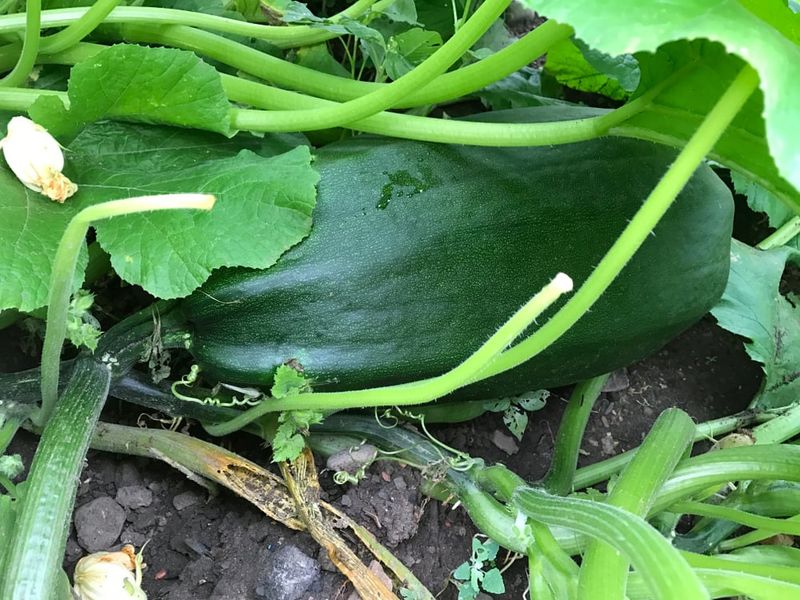
You walk out to the garden expecting a pile of zucchini, and the plant just sits there, green and leafy but not giving you a thing. That giant fruit you missed a week ago is still hanging on the vine, and now you’re wondering if it’s the reason everything stopped.
The short answer is: it might be part of the problem, but probably not the whole story. Heat, dry soil, poor pollination, and a handful of other factors can all put a zucchini plant on pause, so it’s worth checking a few things before you assume one big squash is to blame.
An Overgrown Zucchini May Reduce Later Production
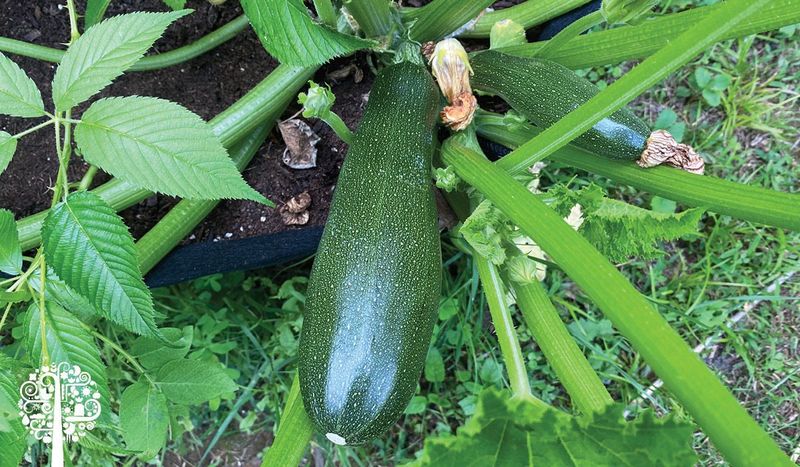
Spotting a zucchini the size of a baseball bat on your plant is a little alarming, especially when you realize new fruit stopped showing up right around the same time. Zucchini, or Cucurbita pepo, is harvested as an immature summer squash, and extension programs across Utah, California, Illinois, and Minnesota all associate fruit left on the plant too long with fewer new fruits or flowers down the line.
That connection is real, but it does not mean one oversized squash flipped a switch and shut everything down.
UC Integrated Pest Management guidance notes that leaving fruit on the plant too long may result in fewer later flowers and reduced yield. Utah State Extension puts it plainly: production drops significantly when zucchini is allowed to grow too large.
Both sources support removal as a useful corrective action, not a guaranteed cure.
The strongest direct research comes from controlled zucchini experiments. A Penn State-published study on Cucurbita pepo fruit dominance found that the presence of 6- to 15-day-old fruit reduced the chance of new female flowers and increased abortion of later fruit.
Those findings came from research conditions, not a backyard in Ohio or Texas, so they do not establish a universal threshold like one fruit equals one month of silence.
Heat, drought, poor pollination, pests, disease, plant age, and excess nitrogen can all create the same pause you are seeing right now. The oversized fruit is a reasonable first thing to check and remove, but plan to look at the rest of the plant too before you expect a quick turnaround.
Developing Fruit Can Redirect Reproductive Resources
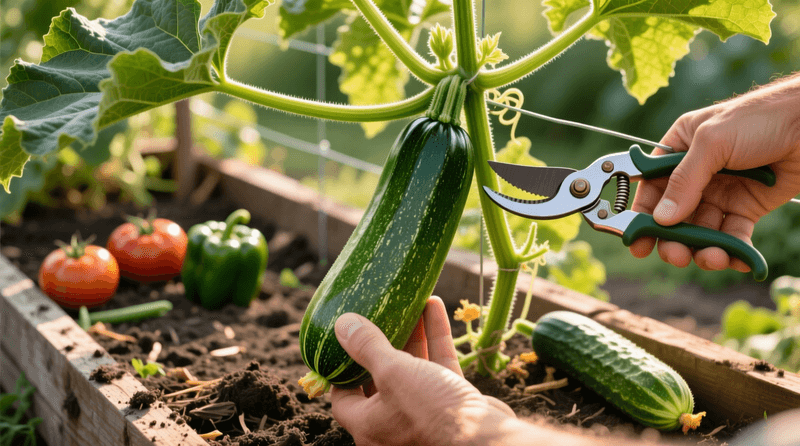
A zucchini plant’s main job is to make seeds. Once a fruit starts filling with mature seeds, the plant tends to put more of its energy toward finishing that fruit rather than starting new ones.
Gardeners sometimes describe this as the plant “thinking” it is done for the season, but that is a useful shorthand, not biology. The actual mechanism involves resource allocation and hormonal signaling, not a conscious decision.
The Cucurbita pepo fruit dominance research showed that seed number inside a developing fruit influences how the plant distributes resources and whether later female flowers form or abort. More seeds in an existing fruit correlated with stronger suppression of new fruit development.
That is a meaningful finding, but it describes patterns observed under research conditions, not a guaranteed outcome for every plant in every yard.
A related but separate line of evidence comes from Cucurbita texana, a wild relative of zucchini. A study published in the International Journal of Plant Sciences found that branches carrying fruit produced fewer female flowers than fruitless branches, and that fruit presence was linked to changes in internal ethylene concentrations that affect sex expression.
That study supports the general idea of fruit dominance in this plant family, but it is not direct proof that one backyard zucchini shuts down one backyard plant.
Removing the oversized fruit is a reasonable step to take. Think of it as clearing a traffic jam rather than flipping a switch.
The road may open up, or there may be another slowdown further along that also needs attention.
Remove the Oversized Fruit Without Hurting the Plant
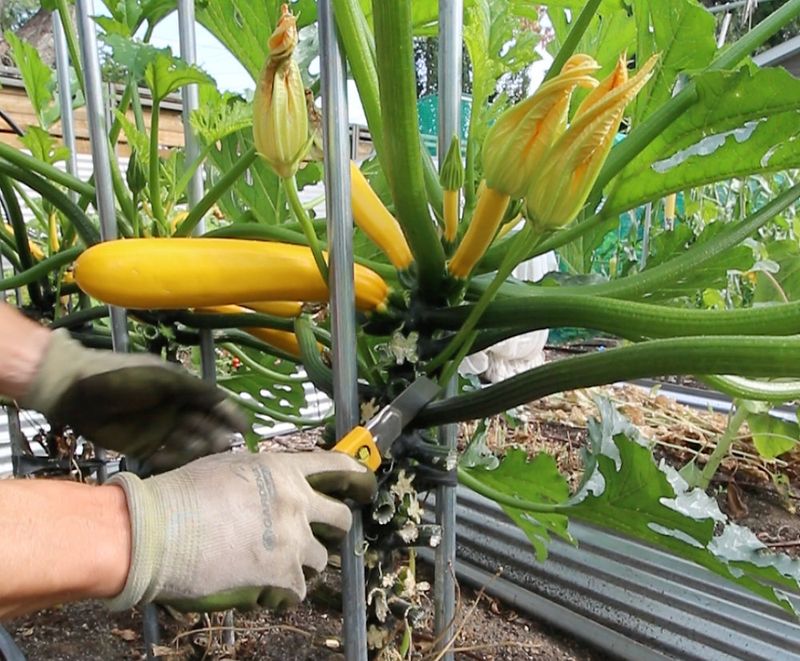
Before you grab that giant zucchini and yank, stop. Twisting or pulling can tear the stem, crack the main vine, or knock over neighboring growth, and none of that helps the plant recover.
The right move is to use a clean knife or pruners, cut cleanly through the stem, and leave a short stub attached to the plant.
Utah State University Extension recommends cutting summer squash from the vine rather than pulling or twisting. Wear gloves if you have them, because zucchini stems and leaf stalks are prickly enough to scratch bare hands.
Step carefully around the base of the plant so you do not crush the crown or snap any side stems while you work.
Most extension guides, including University of Minnesota Extension on growing summer squash, suggest checking plants every one to two days and harvesting elongated zucchini around 6 to 8 inches long. At that size the skin is still tender, the seeds are small, and the plant keeps setting new fruit.
Variety and personal preference matter too, so a slightly larger harvest is fine if the texture still suits you.
Once the fruit is off the plant, take a look at it. Illinois Extension notes that sound large fruit works well for stuffing or grating into baked goods.
If the flesh is still firm and the fruit smells fine, put it to use. Discard or compost fruit that is moldy, decaying, or severely insect-damaged according to your local composting rules.
One more caution: if a zucchini tastes strongly bitter, do not eat it and do not serve it to others. Oregon State University Extension warns that extreme bitterness in cucurbits signals cucurbitacins, compounds that can cause stomach cramps and diarrhea.
Size alone does not make a zucchini unsafe, but a pronounced bitter taste is a clear reason to stop.
Check the Flowers Before You Expect New Fruit
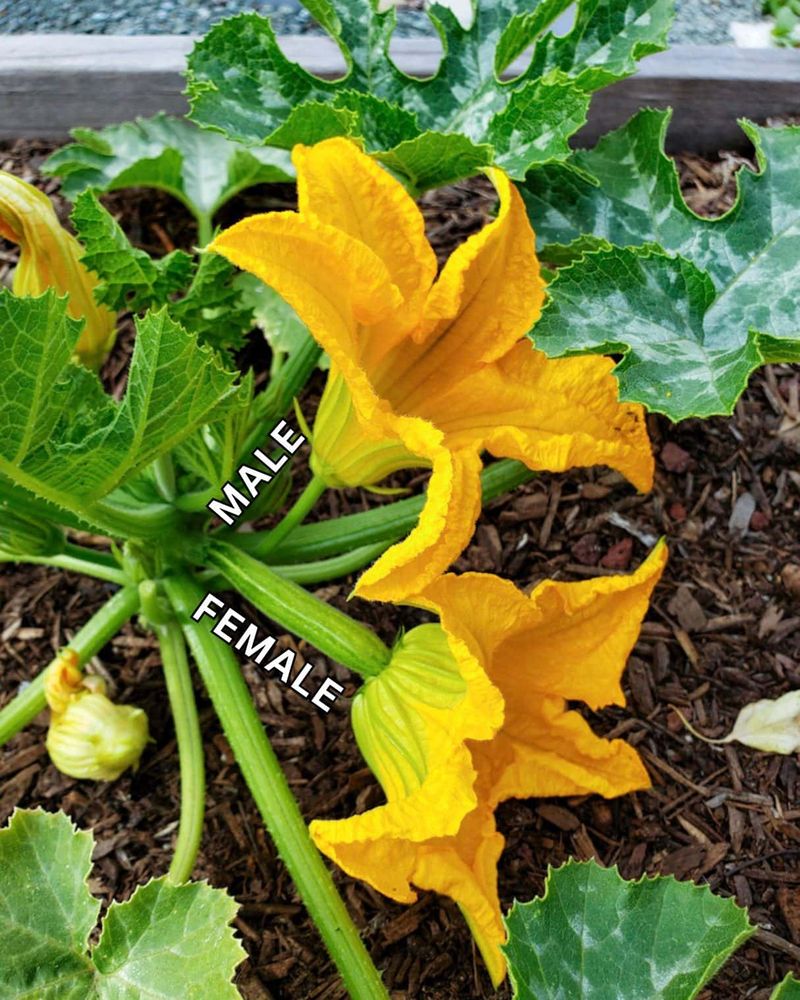
After the oversized fruit is off the plant, resist the urge to stand back and wait for zucchini to appear. Walk up close and look at the flowers first, because the flowers will tell you whether the plant is ready to produce or whether something else is still in the way.
University of New Hampshire Extension explains that zucchini plants produce two distinct flower types. Female flowers have a small swollen bump behind the petals that looks like a tiny zucchini in miniature.
Male flowers have a narrow, plain stem with no swelling. Only female flowers develop into fruit, and a pollinator must carry pollen from a male flower to a female flower for that development to happen normally.
Early in the season, or during a stress period, plants sometimes push out mostly male flowers. That is normal.
The female flowers usually follow within a week or two, so patience helps here.
Poor pollination shows up in a specific way. Young fruit starts to form behind the female flower, then shrivels, stays narrow, or drops off within a few days.
If you are seeing that pattern, the plant is trying to produce but pollen is not reaching the female flowers reliably.
Hand-pollination is a practical fix for a small garden when that pattern appears. In the morning, while flowers are freshly open, use a clean cotton swab or the inside of a freshly picked male flower to transfer pollen directly to the sticky center of a female flower.
Squash flowers generally stay open for only one day, so timing matters. This will not solve heat or disease problems, but it can bridge a gap when pollinators are scarce or active at the wrong time of day.
Heat and Moisture Can Create the Same Pause
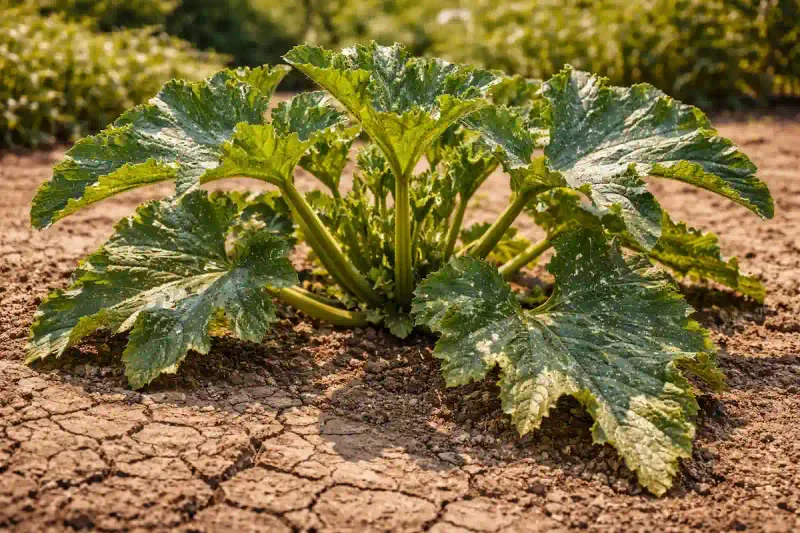
Pull out a giant zucchini, check the flowers, and still no new fruit after a week. Before you blame the plant, check the weather.
A stretch of very hot days can shift a zucchini toward producing more male flowers and fewer female flowers, which means fewer opportunities for fruit to form regardless of what you removed.
University of Minnesota Extension notes that hot days above 90 degrees Fahrenheit combined with nights above 70 degrees Fahrenheit can push squash plants toward more male flowers. University of Maryland Extension identifies day temperatures above 95 degrees Fahrenheit and nights above 75 degrees Fahrenheit as conditions that can disrupt pollination in sensitive vegetable crops.
Those are regional warning ranges observed in Minnesota and Maryland, not universal failure points for every variety or climate zone.
Drought stress during flowering and fruit enlargement compounds the heat problem. A plant scrambling to find water has less capacity to set and hold new fruit.
UMass Extension vegetable notes connect moisture stress during fruit development with poor fruit set and quality.
The goal is steady, consistent moisture that prevents drought stress without creating standing water or saturated roots. UConn Extension guidance on drought and heat supports deep, infrequent watering over constant shallow watering.
How often you water depends on your soil type, container size, local rainfall, and how hot your summers run, so there is no single schedule that works from Vermont to Arizona.
If you have had a heat wave and the soil has been dry, address the moisture first and give the plant a few more days before drawing conclusions about the oversized fruit.
Wilting and Stem Damage Suggest a Different Problem
A plant that has stopped setting fruit but still stands upright and looks mostly green is a different situation from a plant that collapses quickly on a morning when the soil is not dry. Wilting that happens fast, despite adequate moisture, is a signal to look more closely at the stem rather than the fruit history.
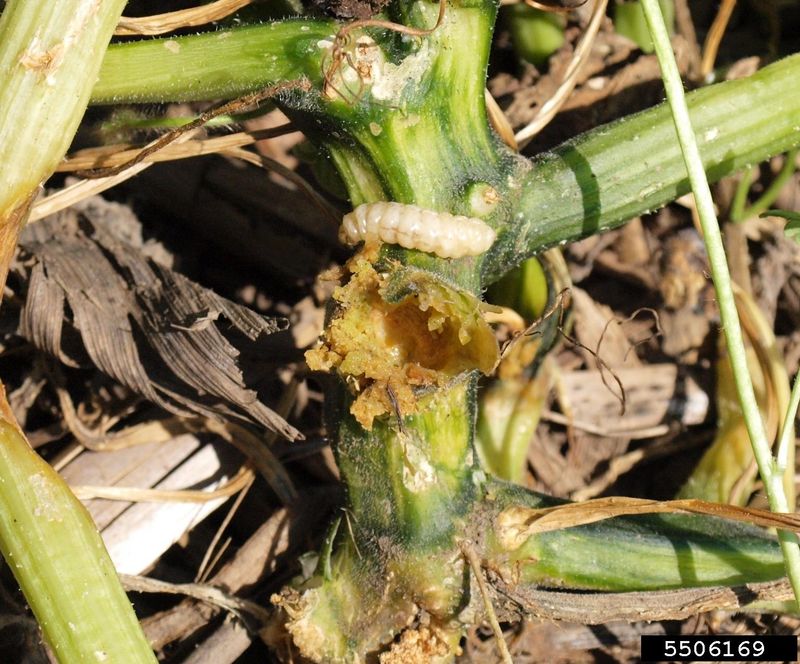
University of Minnesota Extension’s squash wilting diagnostic tool points toward squash vine borer as a likely culprit when a plant wilts rapidly despite adequate soil moisture. Look at the base of the main stem, near the soil line.
Small holes and orange to green sawdust-like material, called frass, near the stem indicate that a borer larva has tunneled inside. A production pause caused by an oversized fruit does not produce those symptoms.
Minnesota Extension’s summer squash guide also names cucumber beetles, squash bugs, powdery mildew, and viral diseases as common contributors to declining production later in the season. Cucumber beetles chew on leaves, flowers, and fruit.
Squash bugs cluster on stems and leaves and cause yellowing and collapse over time. Powdery mildew coats leaves with a white dusty film that reduces the plant’s ability to photosynthesize.
None of those problems should be diagnosed from a production pause alone. Look for the physical signs: holes, frass, insect clusters, chewed edges, white coating, or unusual discoloration.
If you find them, the oversized fruit was probably not the main issue, and removing it will not fix what is actually wrong.
Older plants also simply lose steam. A zucchini that has been producing since late spring may slow down in midsummer not because of any pest or problem, but because it has reached the natural end of its productive cycle.
Use a Simple Check Before Adding More Fertilizer
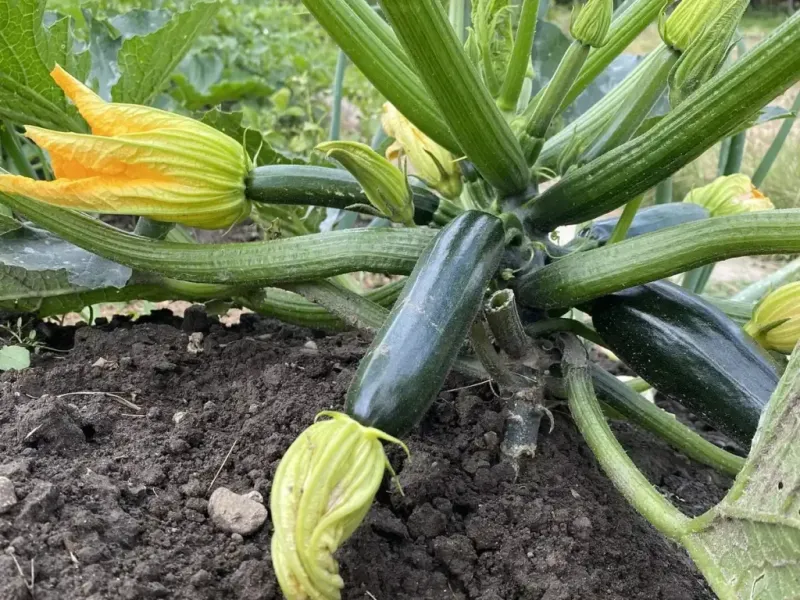
When a zucchini plant goes quiet, the temptation is to do something big: dump fertilizer on it, water it twice a day, or pull the whole plant. A calmer approach works better.
Start with the basics in order, and let the plant respond before you add more variables.
Remove the oversized fruit first, using a clean cut with pruners or a knife. Then inspect the flowers for female blooms with swollen ovaries, and watch whether young fruit holds or shrivels over the next few days.
Check soil moisture and make sure the plant is getting deep, consistent water rather than frequent shallow sprinkles. Look at daytime and nighttime temperatures, and scan the stem base for any sign of pest damage.
Minnesota Extension recommends harvesting zucchini every one to two days once the plant is producing, because keeping up with young fruit is one of the most effective ways to prevent the oversized-fruit problem from repeating. Set a reminder if you need to.
Four to eight days is genuinely all it takes for a zucchini to go from ideal to oversized.
Hold off on adding fertilizer unless you have a soil test or a crop-specific reason to do so. UC IPM guidance on growing squash and Minnesota Extension heat guidance both point out that excess nitrogen pushes plants toward lush foliage at the expense of flowers and fruit.
Adding a high-nitrogen fertilizer to a plant that is already struggling can make the leaves look great while fruit production stays flat or gets worse.
The oversized zucchini may well have been part of the problem, and removing it is the right first move. Whether production picks back up depends on the whole picture: plant health, pollination, moisture, temperature, and whatever else is happening in your particular garden this season.