
That Purple Weed Taking Over Your North Carolina Lawn Is Actually A Native Worth Keeping
Follow us on Google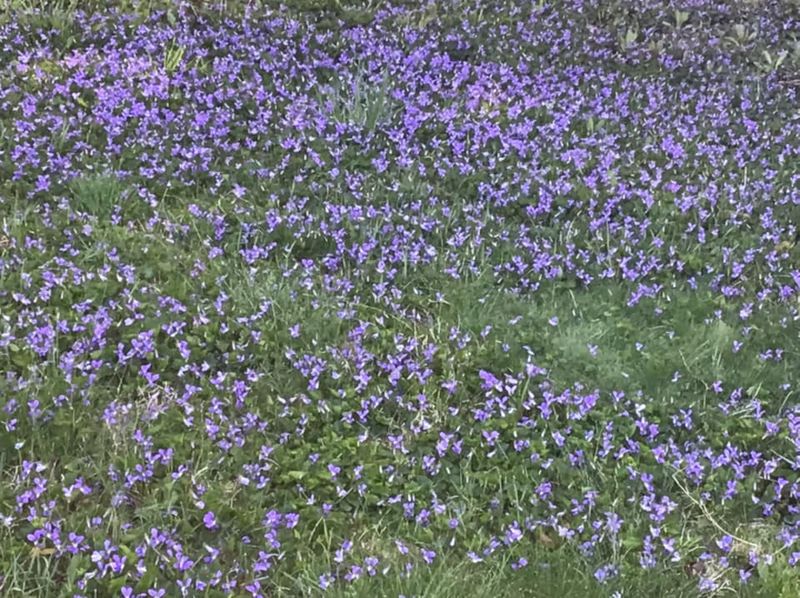
You step outside one February morning and notice it: a spreading patch of purple flowers pushing up through the grass before anything else has even thought about blooming.
Before you reach for the weed puller, slow down, because that plant might actually be working in your favor.
The purple weed in your North Carolina lawn could be common blue violet, a native perennial with real value for local wildlife.
But the first step is making sure you actually have a violet, not one of its look-alikes, because that answer changes everything about what you should do next.
A Purple Lawn Patch May Be Wild Violet
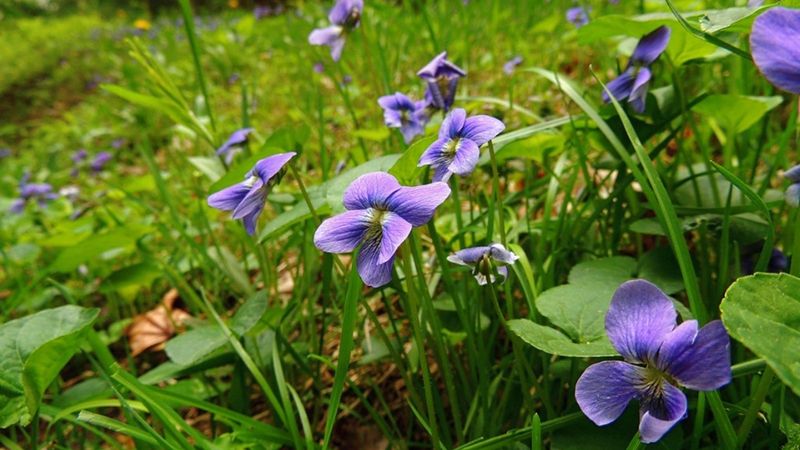
Somewhere between the last frost and the first warm Saturday of the year, a patch of purple appears in the lawn and refuses to be ignored.
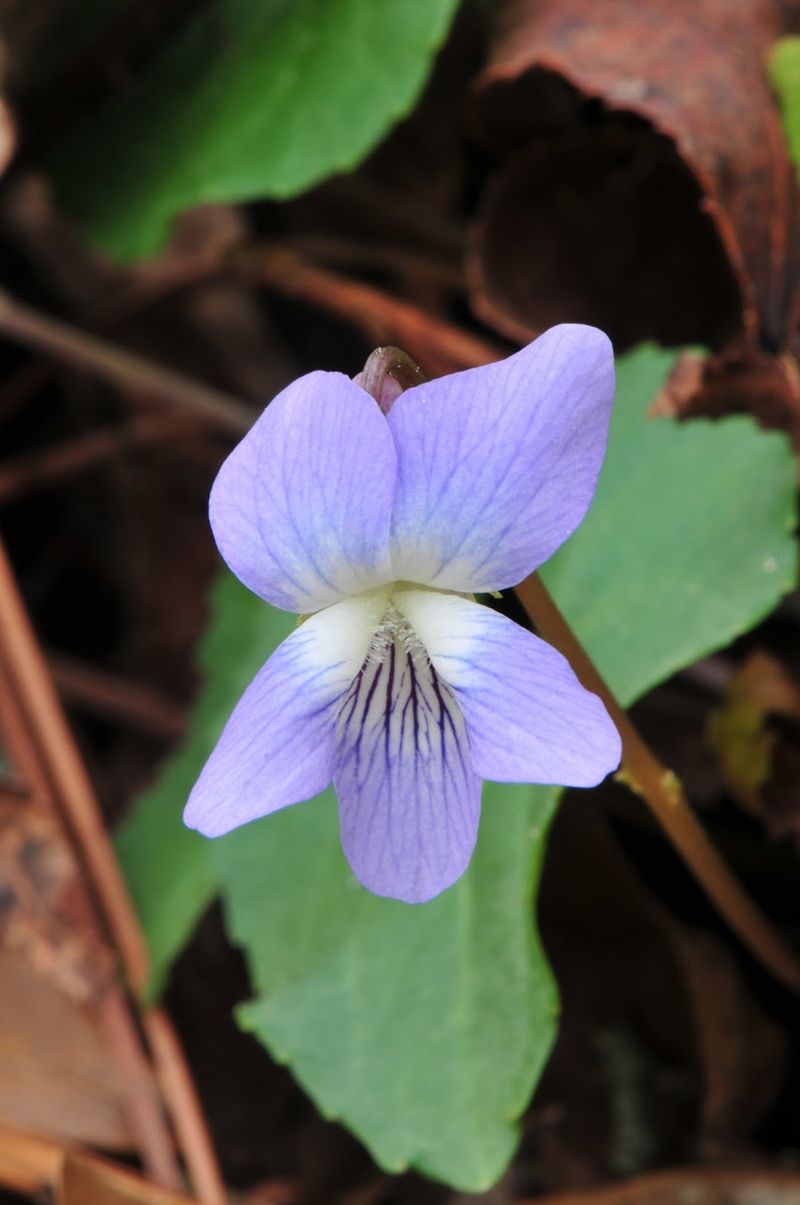
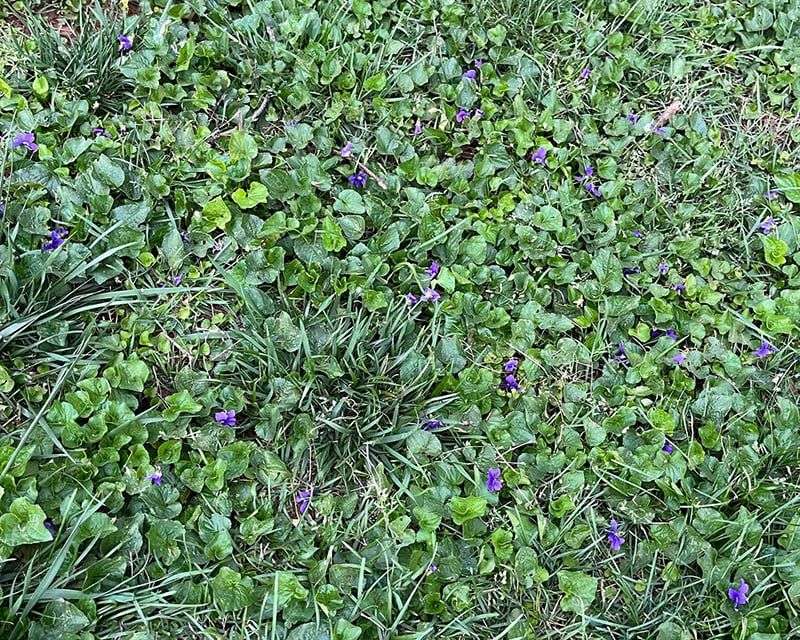
That plant is probably common blue violet, known scientifically as Viola sororia, a native perennial that has grown in North Carolina’s woods, meadows, and yard edges long before anyone planted a lawn over its territory.
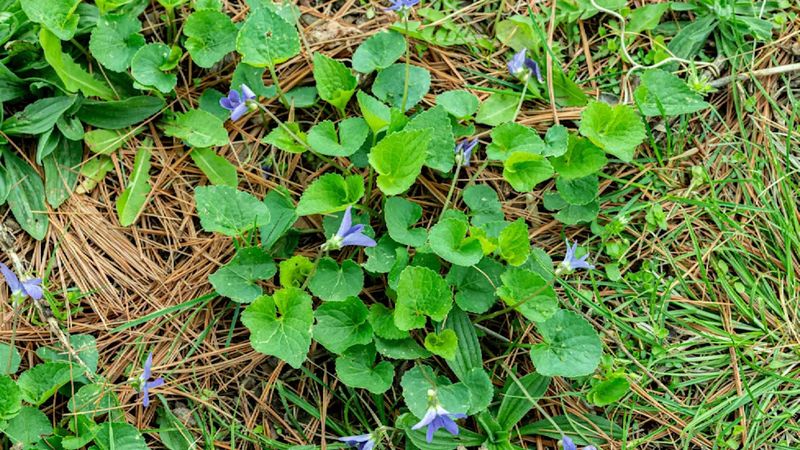
Wild violet stays low, usually under 12 inches tall, forming dense clumps of leaves that stay green well into fall.
The flowers range from deep purple to blue-violet to nearly white, and they bloom from roughly February through May across most of the state.
Each flower rises on its own stem, separate from the foliage, which is one of the first things to notice when you are trying to figure out what you are looking at.
NC State Extension lists Viola sororia as a recommended plant for lawns, naturalized areas, pollinator gardens, and shade gardens, which tells you something important: this is not just a tolerated weed.
It is a plant that earns its place in the right spot.
At the same time, NC State’s turf guidance recognizes that wild violet can behave as a persistent lawn weed when it spreads into areas where you need durable grass.
The honest headline, then, is conditional.
Your purple patch may be a native worth keeping in a defined, low-traffic corner of the yard.
The right call depends on what the plant actually is, where it is growing, and how much of the lawn it is claiming.
Identify it first, then decide whether to tolerate it, manage its edges, or remove it entirely from spots where the turf needs to perform.
Check The Plant Before You Keep It
Purple is not a plant family.
Before you decide to protect that patch, take two minutes to get a closer look, because the difference between a native violet and an introduced weed matters a lot for any decision you make afterward.
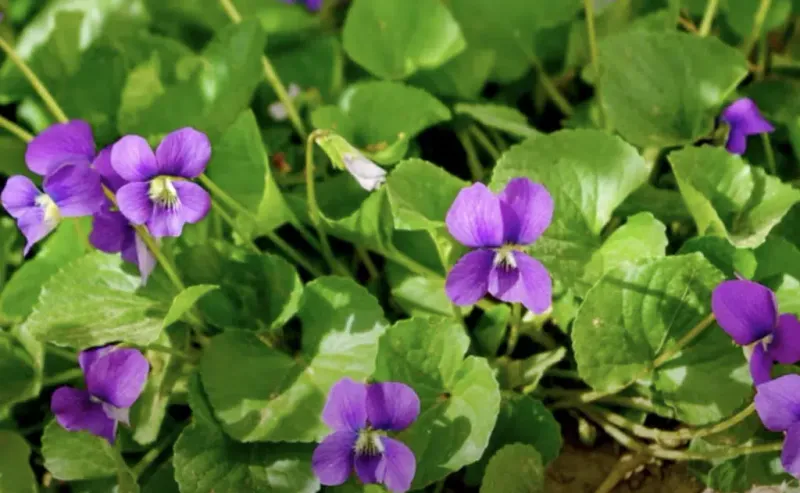
Wild violet has a few reliable features.
The leaves are heart-shaped with rounded teeth along the edges, and they grow directly from the base of the plant rather than up a central stem.
The flowers have five unequal, open petals, and those flowers rise on their own separate stems.
According to NC State Extension’s wild violet profile, the petals can be deep violet, blue-violet, or nearly white with violet veining, but the open five-petal shape stays consistent.
That open, almost pansy-like face is your best quick confirmation.
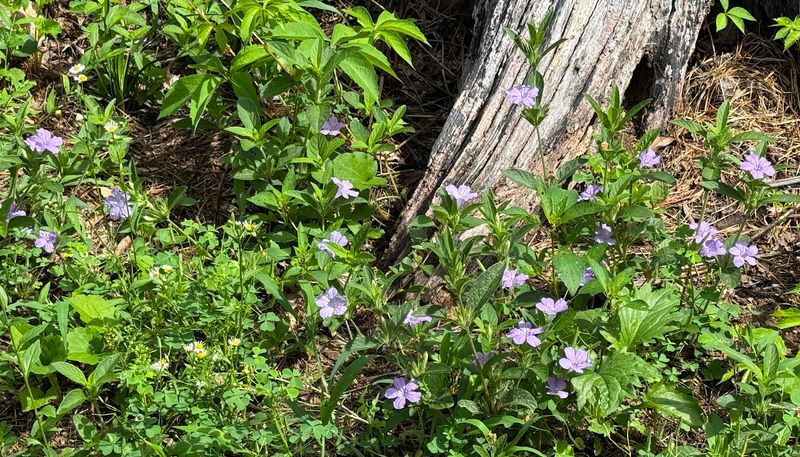
Purple deadnettle, Lamium purpureum, is one of the most common look-alikes you will find in a North Carolina lawn in late winter and early spring.
It is an introduced winter annual from Europe and Asia, not a native plant, and NC State’s purple deadnettle fact sheet explains the key differences: square stems, opposite leaves that clasp the stem, and small tubular flowers clustered near the top.
The upper leaves often turn purplish, which is where the color confusion starts.
Henbit, another common lawn annual, also has square stems and tubular pink-purple flowers.
A quick field check: pinch the stem.
Round and flexible means you might have a violet.
Square and firm means you are probably holding deadnettle or henbit, and Penn State Extension’s guide to these three look-alike weeds confirms how reliably that square stem separates them from true violets.
Color alone is not enough to justify a conservation decision, so take the extra 60 seconds to check the leaf shape and stem before you make up your mind.
Wildlife Benefits Come With Limits
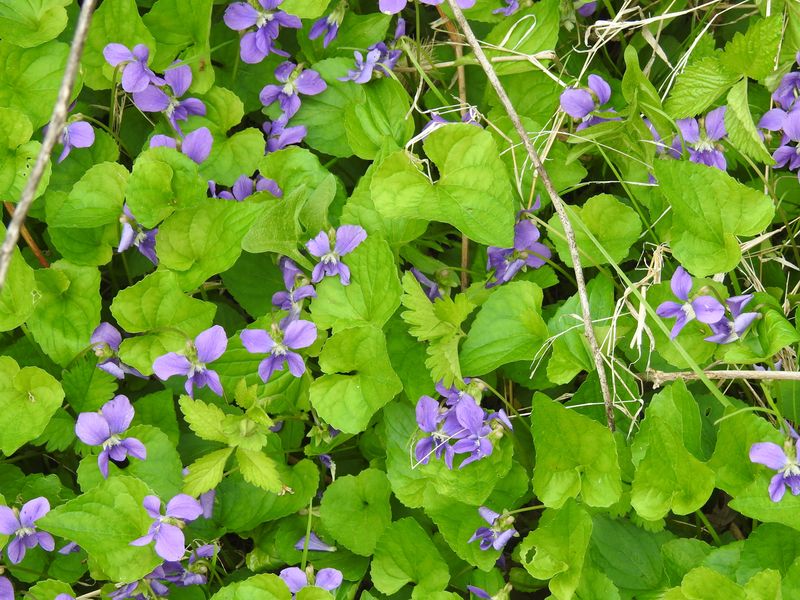
Wild violet does pull its ecological weight, but the story is more specific than most people expect.
The early flowers, blooming when February and March still feel uncertain, offer pollen and nectar to some native bees and flies at a time when other food sources are genuinely scarce.
That early timing matters more than the total number of species that use the plant.
The more notable role, though, is what happens after the flowers fade.
Violet leaves are a host plant for fritillary butterfly caterpillars, meaning the larvae actually eat the foliage.
University of Minnesota Extension’s wild violet profile notes that the bloom season is short and only a limited number of bee species forage on violet flowers, so the plant’s strongest contribution to local wildlife is as a caterpillar food source rather than as a major nectar provider for adult pollinators.
North Carolina’s butterfly records confirm that fritillary species use common blue violet as a larval host plant, and the NC Parks butterfly database documents these relationships across the state.
That said, adult fritillaries also need nectar from other flowering plants, so one violet patch is a piece of the habitat puzzle, not the whole picture.
None of this connects wild violet to monarch caterpillars, which depend on milkweed, or to any reduction in ticks, mosquitoes, or other household pests.
The wildlife value is real and worth knowing about, but it is narrower than the headline might suggest.
Think of wild violet as one genuinely useful native plant in a yard that works best when it includes goldenrod, Joe Pye weed, and other flowering plants alongside it.
Shade And Moisture Can Give Violets An Edge
Walk around your yard and notice where the violet patch is thickest.
Chances are it is sitting beneath a tree, along a fence line that blocks the afternoon sun, or in a low spot that stays damp after rain.
That is not a coincidence.
Wild violet genuinely prefers moist, shaded conditions, and those are exactly the spots where many common lawn grasses start to thin and struggle.
NC State’s TurfFiles wild violet page notes that the plant often thrives where lawn grasses do poorly, particularly under low light and in sites with higher soil moisture.
The violet is not causing the thin turf; it is simply better suited to those conditions than the grass you planted.
Several factors play into this.
Low light reduces photosynthesis in sun-loving grasses like bermuda or zoysia.
Poor drainage keeps the soil saturated longer than roots can handle.
Piedmont red clay compacts easily under foot traffic and sheds water before it absorbs, creating dry-then-wet cycles that stress turf.
Extension advice on controlling wild violet consistently points to site conditions as the underlying reason it persists.
Before you blame the violet, consider whether the site is genuinely suited to a grass lawn.
NC State’s guidance on selecting and managing lawn grasses for shade is honest about how few turf species tolerate deep shade well.
In mountain yards with dense tree canopy or in shaded Coastal Plain corners, the patch of violet might be telling you something useful: the site wants a different planting plan, not a different herbicide.
Keep A Small Patch Away From High-Traffic Areas
Knowing the plant is native and genuinely useful does not mean every square foot of your lawn should become a violet colony.
The practical question is where the plant can coexist with a yard that a family actually uses.
A small, defined patch beneath a tree, along a woodland edge, or in a shaded corner that nobody walks through regularly is a reasonable place to let wild violet stay.
NC State’s native plants handbook describes common blue violet as an attractive, functional addition to turfgrass and naturalized areas, framing it as a plant worth incorporating rather than automatically eliminating.
That framing fits a low-traffic spot well.
Play areas, paths, gathering spaces, and anywhere kids or pets run regularly need durable turf that can take a beating.
Wild violet is not that plant.
It forms soft clumps that flatten under repeated foot traffic and does not recover the way a well-maintained bermuda or tall fescue lawn does.
NC State TurfFiles acknowledges the tension directly: wild violet is both a recommended native and a persistent lawn weed, depending entirely on where it is growing.
Selective tolerance means you are making a conscious choice about one specific area, not abandoning the whole lawn.
Mow your active turf areas normally, keep the violet patch to a defined zone, and check its edges a few times each season.
University of Minnesota Extension recommends exactly this approach: tolerate a patch where it fits, and manage it actively where it does not.
Keeping violets will not reduce ticks or mosquitoes in your yard, so base that decision on the plant’s habitat value and your own tolerance for a mixed lawn, not on pest-control hopes.
Plan For Rhizomes And New Seedlings
Here is where it gets tricky.
Wild violet does not stay politely in the spot where you first noticed it.
The plant spreads in two ways at once, and understanding both is the difference between intentional tolerance and a yard that is mostly violet by June.
Underground stems called rhizomes push outward from an established clump, sending up new growth a few inches at a time.
Above ground, the seed capsules mature in late spring and early summer and release seeds forcefully, scattering them several feet from the parent plant.
Ants may carry seeds even farther, attracted by a small fatty structure attached to each one.
University of Minnesota Extension’s wild violet resource covers both of these dispersal mechanisms and explains why a single patch can expand into a colony faster than most homeowners expect.
Normal mowing keeps violet flowers from setting seed in your active lawn areas, which slows one of the two spread pathways.
For unwanted patches at the edges of your tolerance zone, hand-digging is the most practical approach for small areas.
Wait until after a rain or water the area first so the soil is loose, then dig out as much of the rhizome network as you can reach.
Leaving root fragments behind means regrowth is likely, so plan to check the area again in 4 to 6 weeks.
NC State’s TurfFiles guidance on wild violet is clear that one removal effort rarely finishes the job.
Monitoring is the actual management tool here.
Set a reminder to walk the edges of your defined violet area a few times each growing season, pull any runners that have crossed the boundary, and treat the whole process as an ongoing conversation with the plant rather than a one-time fix.
Strengthen The Turf Or Change The Planting
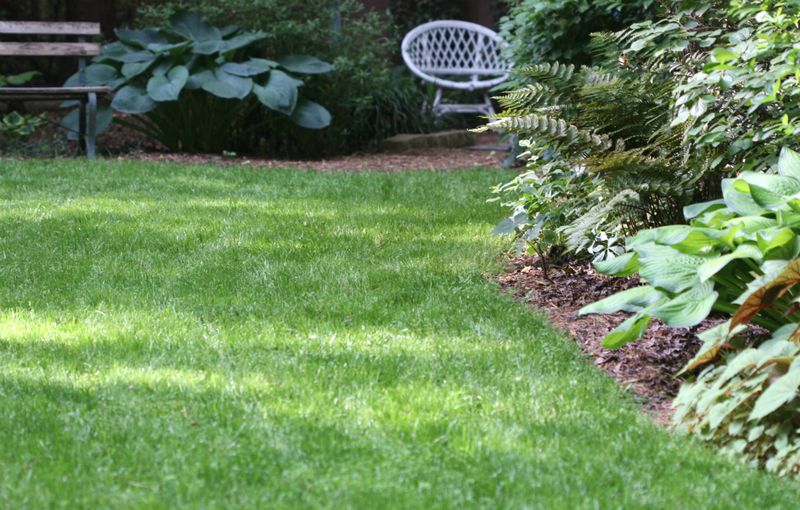
Dense, healthy turf is genuinely the best long-term defense against violet expansion in areas where you want grass.
A thick stand of well-adapted grass simply leaves less open ground for violet seedlings to establish, and that is a more durable solution than repeated hand-pulling alone.
The key word is adapted.
Forcing bermudagrass to grow under a 60-year-old oak in the Piedmont is a losing battle no matter how faithfully you fertilize.
NC State’s Carolina Lawns guide walks through the major turf species for North Carolina and their light, water, and soil requirements.
Tall fescue handles shade and the state’s cool-season periods better than bermuda or zoysia, making it a more realistic choice for partially shaded Piedmont yards.
Even tall fescue has limits, though, and NC State’s shade guidance is honest that no common turf grass performs well in deep, continuous shade.
Once you have the right grass species in place, mowing at the correct height matters more than most homeowners realize.
Cutting too short weakens the grass, thins the canopy, and opens exactly the kind of bare patches where violet rhizomes and seedlings get a foothold.
Fertilizing on a schedule matched to your grass type and watering deeply but infrequently all support the dense root system that crowds out opportunistic plants.
In spots where even a shade-tolerant grass struggles, the more satisfying fix may be to stop fighting the site.
NC State’s shade lawn guidance and the native plants handbook both suggest converting difficult shaded areas to a ground cover, naturalized planting, or shade garden.
Native ferns, wild ginger, or a mulched bed with shade-tolerant shrubs can look intentional and require far less maintenance than a grass lawn that never quite fills in.
Use Chemical Control Only For A Specific Need
Sometimes hand-digging is not realistic.
A violet colony that has spread across a large section of lawn you genuinely need for family use may call for a postemergence herbicide, and that is a legitimate choice when the situation warrants it.
Wild violet’s waxy leaves make it harder to control chemically than many common lawn weeds, and its rhizome network means a single application often does not finish the job.
The NC State 2024 Agricultural Chemicals Manual lists postemergence options for wild violet in turf, but the right product depends on your grass species, the application site, and your status as a homeowner versus a licensed applicator.
Some products listed in that manual are restricted to commercial use.
Repeat treatment is commonly necessary, and products that affect broadleaf plants can injure desirable plants nearby if you are not careful about timing and application method.
Do not pick a product based on the manual alone.
Read the current product label before you buy or apply anything, because label directions are legally binding and may have changed since any publication date.
Check that the product is registered for use on your specific turf type, confirm any North Carolina-specific requirements, and follow all personal protective equipment instructions.
If you are uncertain, your county’s NC State Extension office can help you narrow the options for your specific yard situation.
Chemical control is one tool for a specific problem in a specific place, not a first response to any purple flower in the lawn.
Protect the areas where your lawn genuinely needs to perform, keep the herbicide away from the bounded violet patch you decided to keep, and let that native corner do its quiet work for the bees and fritillaries that find it each spring.
A yard that holds both a durable play area and one intentional patch of native ground is a reasonable, honest outcome, and it is one most North Carolina families can actually maintain.