
Your Tomatoes Are Stuck Orange For Weeks Because The Heat Is Cooking Them Before They Turn Red
Follow us on Google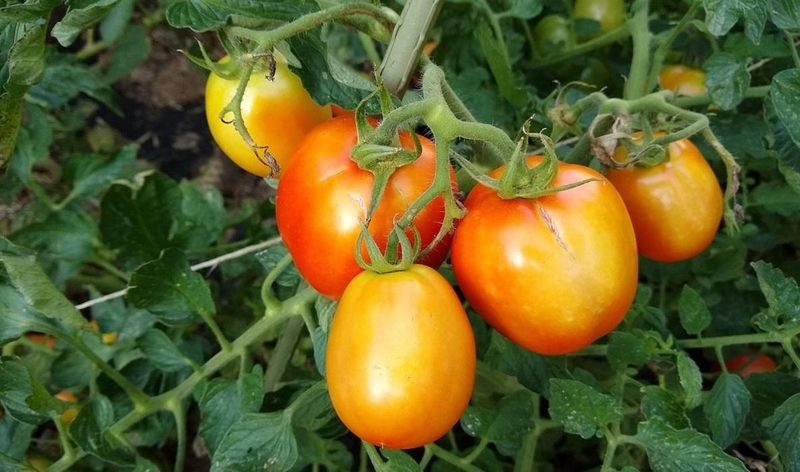
You walk out to the garden expecting red tomatoes and find a vine full of orange ones that have been sitting there for days, looking almost ripe but never quite getting there.
The fruit is not diseased, and nothing is visibly wrong with the plant.
What’s actually happening is that prolonged heat can shut down the pigment that makes red tomatoes red, leaving healthy fruit stuck at an orange stage while it keeps softening.
Once you understand that, the fix becomes straightforward and you can do most of it today.
Why Heat Can Leave Red Tomatoes Orange
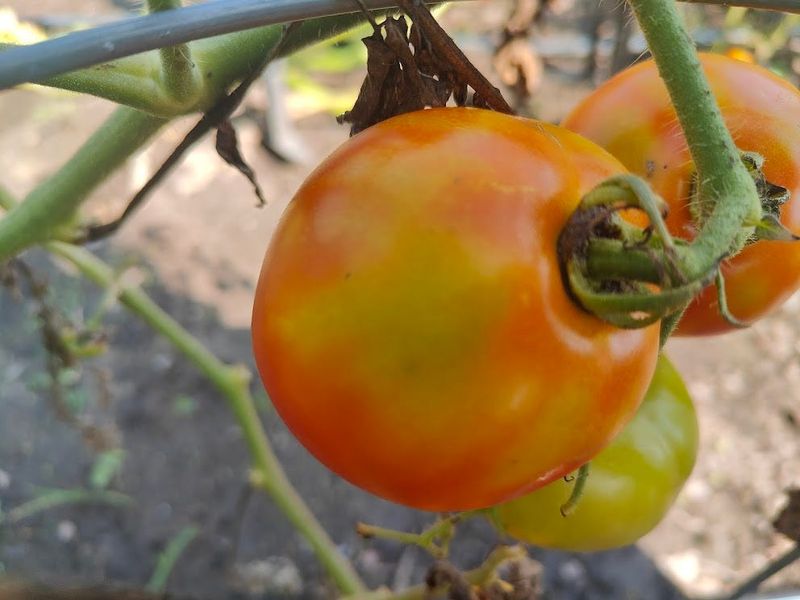
Red tomatoes get their color mostly from lycopene, a pigment that builds up as the fruit matures.
The catch is that lycopene production is sensitive to heat.
When fruit temperatures stay elevated for an extended stretch, lycopene accumulation slows or stops, and a red variety can stay orange, develop uneven color, or never fully deepen the way you expect.
The fruit is not being cooked in any literal sense.
High temperatures disrupt the chemistry behind pigment development, but other parts of ripening keep moving.
University of Minnesota Extension notes that the most favorable ripening range is about 68 degrees F to 77 degrees F, and that red pigments are generally not produced above about 85 degrees F.
Penn State Extension adds that ripening can become abnormal above about 80 degrees F, though no single cutoff applies identically to every variety or every garden.
So when daytime temperatures push into the 90s and nights stay warm, the window for lycopene production narrows considerably.
The tomato keeps softening on schedule, but the red color lags behind.
You end up with fruit that feels nearly ripe and tastes close, but looks like it stalled halfway through.
This does not happen to every tomato in every garden.
Foliage cover, soil moisture, humidity, and cultivar genetics all play a role.
The heat explanation fits best when you are growing a standard red variety and the color delay coincides with a genuine hot spell, not when the whole garden has been struggling for other reasons.
Orange Color Does Not Automatically Mean Disease
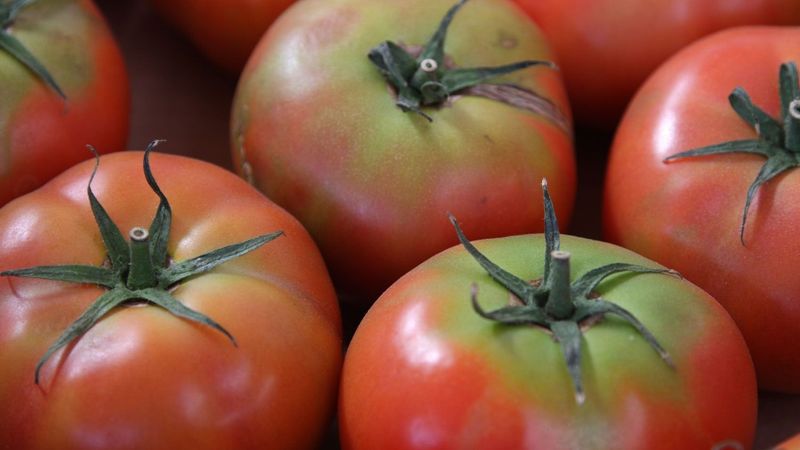
Seeing a vine full of orange fruit can feel alarming, especially if you have heard that color problems signal disease.
Most of the time, uniformly orange fruit on an otherwise healthy-looking plant is not a sign that something is seriously wrong.
Heat-related pigment delays often show up across the whole fruit evenly, without spots, decay, or distorted skin.
The patterns worth paying attention to are different from simple orange color.
University of Minnesota Extension describes several tomato disorders that can look like ripening problems but have distinct signatures.
Yellow-shoulder disorder, for example, leaves the area near the stem hard and green or yellow while the rest of the fruit may turn red.
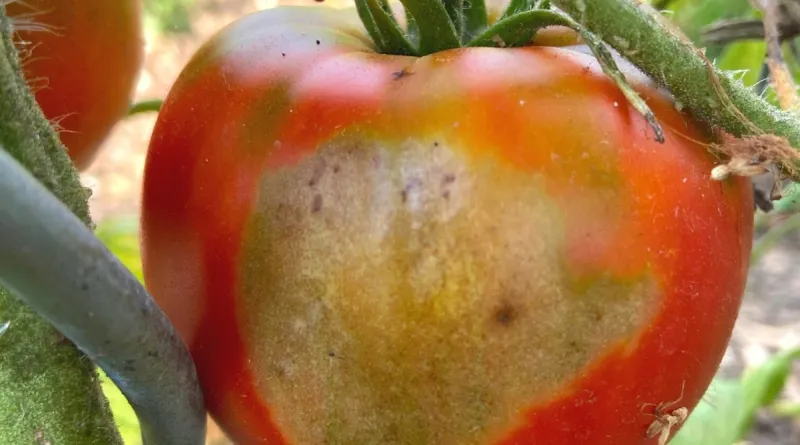
Sunscald creates a pale, white, or bleached patch on the side of the fruit that faced intense direct sun, often after foliage was removed or lost.
Decay shows up as soft, leaking, or moldy areas rather than even color.
Viruses and other diseases can also affect color, but they usually come with other symptoms: distorted or mottled leaves, stunted growth, mosaic patterns on foliage, or fruit that is misshapen rather than just orange.
Penn State Extension notes that color alone is weak evidence for a disease diagnosis.
Also worth remembering: not every tomato is supposed to turn red.
Naturally orange, yellow, pink, brown, and striped cultivars are healthy at their expected mature color.
If you are not sure what variety you planted, check the seed packet or plant tag before assuming something went wrong.
Judge the fruit against what it was bred to look like, not against the red slicers at the grocery store.
Color Can Stall While Softening Continues
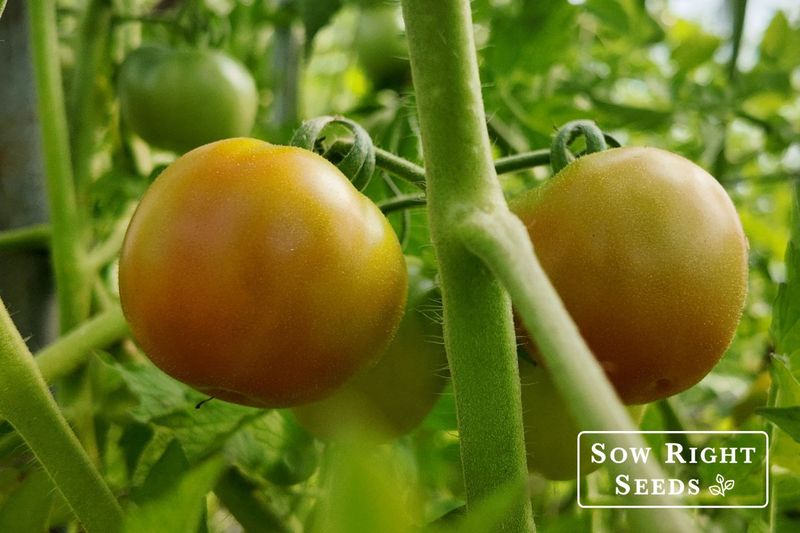
One of the most confusing things about heat-affected tomatoes is that they can feel ripe before they look ripe.
That is because color change, softening, and full flavor development are separate processes, and heat does not slow them all equally.
A tomato can reach a soft, yielding texture while its lycopene production is still suppressed, leaving it orange and ready to eat at the same time.
A 2025 peer-reviewed study found that mature-green tomatoes held at elevated temperatures developed orange color because lycopene accumulation was reduced, while fruit held at extremely high temperatures failed to ripen normally at all.
Those were controlled laboratory conditions, so your backyard results will vary depending on the variety, the actual fruit temperature, and how long the heat lasts.
But the underlying chemistry matches what many gardeners observe during a prolonged hot spell.
Penn State Extension also notes that heat stress can cause faster-than-expected softening alongside color delays, which is why some gardeners find fruit that is already soft and slightly overripe while still orange.
Waiting for full red color in those conditions means waiting too long.
Cool weather can also delay ripening, though for a different reason.
Nights that drop below about 55 degrees F slow the whole ripening process, not just pigment development.
So before assuming heat is the culprit, consider what the overnight temperatures have been doing.
A stretch of very warm days and warm nights points toward heat as the likely explanation.
A cool, slow season points somewhere else.
Harvest When The Tomato Begins To Change Color
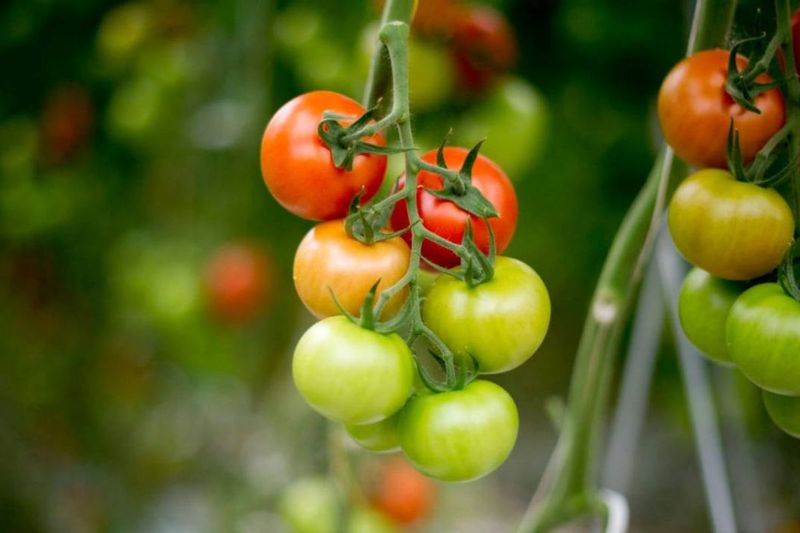
The best move during a heat wave is to stop waiting for full red color on the vine and start harvesting earlier.
Two stages matter here.
A mature-green tomato has reached its full size, and if you cut one open, the seeds are surrounded by clear jelly and the flesh looks developed.
A breaker-stage tomato has already begun showing the first visible blush of color at the blossom end, a signal that the ripening process is underway and the fruit can finish without the plant.
Penn State Extension explains that once a tomato reaches the breaker stage, it will complete ripening whether it stays on the vine or comes inside.
That is the fruit you want to target when daytime temperatures are hitting about 90 degrees F or higher.
Pulling it off the vine removes it from conditions that suppress lycopene and puts it somewhere you control.
Harvesting at the right time also reduces other risks.
Fruit left on the plant through a heat wave is more likely to crack from uneven watering, develop sunscald if foliage thins out, or attract birds and insects once it softens.
University of Illinois Extension recommends picking tomatoes when color has started during hot weather and finishing them indoors at about 70 degrees F to 75 degrees F.
What you should not do is pull every green tomato off the plant.
Small, uniformly dark-green fruit that has not reached internal maturity may stay green, develop poor flavor, or decay before it ripens.
University of Minnesota Extension and Oregon State University Extension both describe mature-green fruit as full-sized with internally developed seeds.
Size, a lighter or whitish green near the blossom end, and that first hint of color are your practical signals that a tomato is ready to come inside.
Finish Suitable Fruit Ripening Indoors
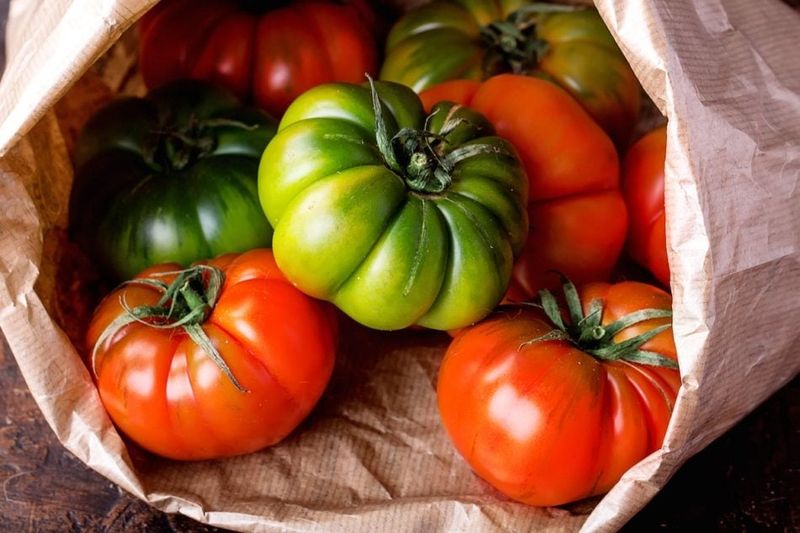
Bringing tomatoes inside to finish ripening is simpler than it sounds.
Set them in a single layer on a counter or table at a stable room temperature, somewhere between about 65 degrees F and 75 degrees F.
Leave a little space between them so air can circulate.
That is the core of it.
Sunlight is not required.
University of Minnesota Extension is clear that warm temperature matters far more than light for indoor ripening.
A bright windowsill is fine if it stays moderate, but direct sun through glass can overheat the fruit and actually slow or damage the process you are trying to encourage.
A spot on the kitchen counter away from a heat vent works well.
A paper bag with a few small holes poked in it can help.
Tomatoes naturally release ethylene gas as they ripen, and a loosely closed bag holds some of that gas around the fruit, which can speed things along.
University of Illinois Extension notes that partly colored fruit may ripen in about 1 to 5 days in a bag at room temperature.
Mature-green tomatoes stored at a slightly cooler 60 degrees F to 70 degrees F may take several weeks, according to Oregon State University Extension.
Check the fruit daily.
Remove anything that has started leaking, developed a soft spot that feels mushy rather than just ripe, or shows any mold.
One decaying tomato can speed up spoilage in the others nearby.
Oregon State Extension’s high-desert gardening guidance reinforces that the bag method supports ripening but cannot fix fruit that was harvested too early, is already damaged, or has begun to decay.
Keep Unripe Tomatoes Out Of The Refrigerator
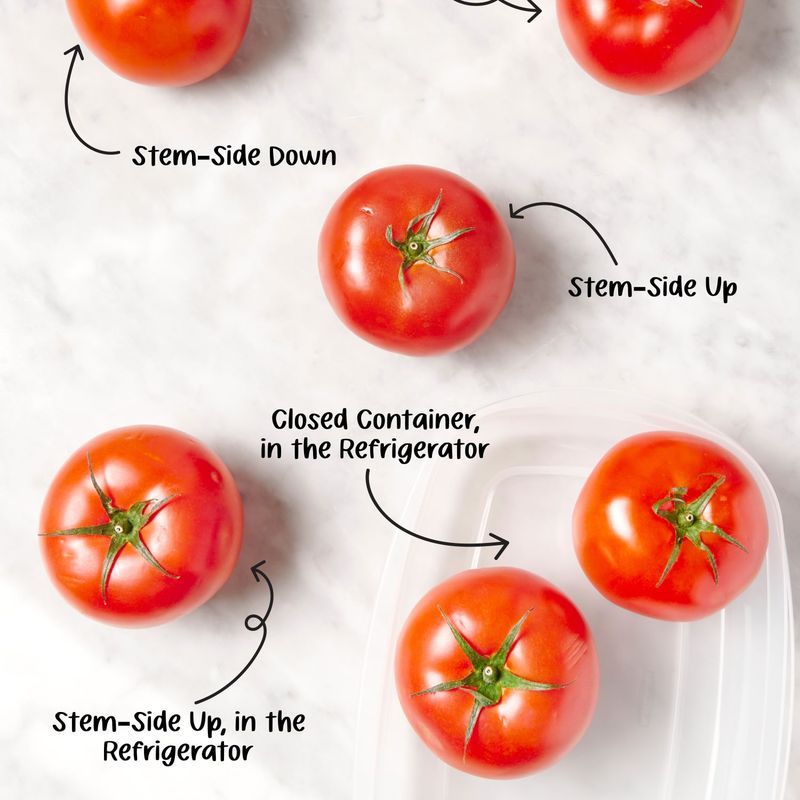
The refrigerator is the wrong place for a tomato that has not finished ripening.
Temperatures below about 50 degrees F can cause chilling injury, which harms the fruit’s ability to ripen normally and can damage its flavor even after it warms back up.
Oregon State University Extension and Penn State Extension both advise keeping unripe tomatoes at room temperature rather than refrigerating them.
The rule changes once a tomato is fully ripe.
At that point, you can refrigerate it briefly to slow softening if you are not ready to eat it.
University of Illinois Extension notes that fully ripe tomatoes can go into the refrigerator for short-term storage, but they are better if you let them return to room temperature before eating when possible.
Penn State Extension also points out that a bright room is an acceptable ripening location as long as it stays at a moderate, stable temperature.
The goal is consistency.
Swings between hot and cold, or exposure to intense direct heat from a south-facing window in summer, can interfere with the process just as much as the refrigerator can.
A shaded counter in a room you keep at normal indoor temperatures is genuinely the simplest and most reliable setup.
Protect Developing Fruit During The Heat Wave
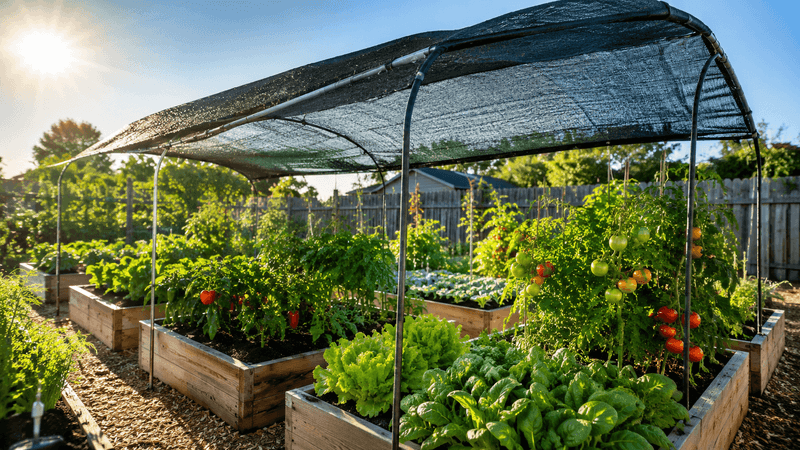
Fruit already on the vine deserves some protection while the heat wave runs its course.
The measures that help most are the ones that reduce overall plant stress, because a stressed plant is less able to support normal ripening even when temperatures eventually drop.
Water deeply and less frequently rather than giving the plants a shallow sprinkle every day.
Deep watering encourages roots to go down where soil stays cooler and more stable.
University of Minnesota Extension notes that sandy soil may need watering about twice a week, while heavier or organic-rich soil may only need it once a week.
Check the soil a few inches down before you water rather than following a fixed calendar.
Mulch is one of the most useful tools you have right now.
A 2-inch to 3-inch layer of straw, shredded leaves, or wood chips around the base of the plant slows evaporation and keeps soil temperature from spiking.
University of Minnesota Extension’s mulching guidance supports using organic mulch to moderate soil conditions during heat stress.
Temporary shade cloth can also help during the hottest part of the day.
Minnesota Extension recommends 30 to 40 percent shade cloth for peak heat, and Penn State Extension lists shade cloth as one option for managing tomato heat stress.
Install it securely so it does not crush plants or block airflow, and plan to remove it once temperatures moderate.
Keep enough healthy foliage on the plant to shade the developing fruit.
Removing too many leaves exposes tomatoes to sunscald, which creates bleached or hardened patches that will not ripen normally.
Oregon State University Extension’s heat wave garden guide reinforces that these steps protect future quality but cannot undo pigment damage or sunscald that has already occurred.
Skip Fixes That Can Make The Problem Worse
A few popular instincts can actually set your harvest back rather than help it.
Stripping leaves so sunlight can supposedly ripen the fruit is one of the most common.
Tomato leaves produce sugars and help shade the fruit from intense sun.
Remove diseased or severely damaged foliage, but do not bare the plant during a heat wave.
University of Illinois Extension and University of Minnesota Extension both caution against aggressive leaf removal that exposes fruit to sunscald.
Adding calcium or fertilizer to turn orange tomatoes red is also not supported for heat-delayed pigment problems.
Soil tests should guide any fertilizer decisions.
Penn State Extension notes that nutrient applications after symptoms appear will not necessarily correct fruit that is already affected, and excess nitrogen can push the plant toward foliage rather than fruit.
Indoor ripening is a partial fix, not a cure-all.
Penn State Extension is straightforward that indoor ripening cannot reverse sunscald, severe yellow shoulders, virus-related disorders, decay, or damage from harvesting fruit that was not yet mature.
If you bring in a tomato with a hardened bleached patch or a leaking soft spot, a warm counter will not fix it.
The honest takeaway is that an otherwise healthy red tomato caught in prolonged heat often has a real path forward.
Pick it at the breaker stage, set it on the counter at room temperature, and check it daily.
Whether the problem is heat or something else entirely depends on the whole picture, the plant, the fruit pattern, the weather, and the variety.
Color alone tells only part of the story, and that is actually a useful thing to know.