
What Brown Edges On Your North Carolina Hydrangea Leaves Are Really Telling You In Late Summer
Follow us on Google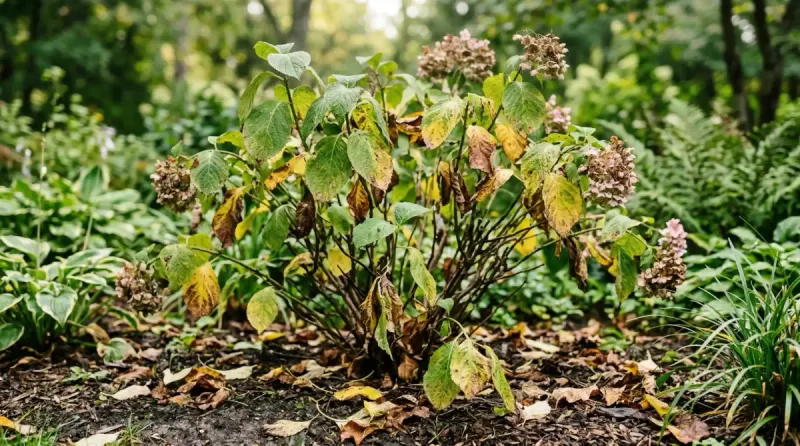
You walk past your hydrangea on a muggy August afternoon and stop cold.
The leaf edges are brown and crispy, like someone held a match too close, and your first instinct is to grab the hose.
Before you do, it is worth knowing that those brown margins are a symptom, not a verdict, and the right fix depends entirely on what is actually happening in the soil beneath that plant.
North Carolina summers are tough on hydrangeas, and the answer hiding in those crispy edges might surprise you.
Leaf Scorch Is One Likely Explanation
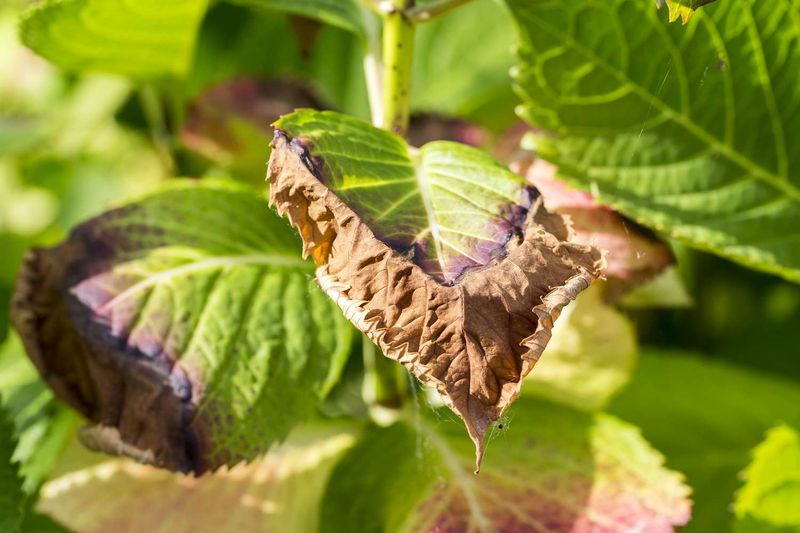
Picture a continuous brown band creeping around the outer edge of a hydrangea leaf, dry and brittle to the touch, while the center of the leaf stays green.
That pattern is often consistent with leaf scorch, one of the first possibilities worth investigating when you notice this kind of damage in late summer.
Scorch is not a disease in the traditional sense.
It is a water-balance problem, a mismatch between how fast the leaf is losing moisture and how fast the roots can send replacement water up through the plant.
Hot late-summer weather, intense afternoon sun, drying wind, and reflected heat from driveways or walls can all push foliage to lose moisture faster than the root system can keep up.
NC State Extension diagnostic tables specifically list hot, dry weather, limited or damaged roots, drought, and compaction among the causes of scorched leaf margins, making clear that the root side of the equation matters just as much as the air temperature.
A plant can scorch even after receiving some water if the roots are struggling for any reason.
Here is something worth knowing before you panic: mild scorch does not automatically mean the plant is dying.
The browned tissue will not turn green again, that part of the leaf is gone for the season, but if the stems feel firm and new leaves look normal, the plant may be doing better than it looks.
Missouri Botanical Garden guidance on scorch and heat stress notes that a plant can survive with damaged foliage as long as stems and roots remain healthy.
The visual is alarming, but the real story is underground.
Check the soil before you reach for anything else.
Why Late Summer Reveals Water Imbalance
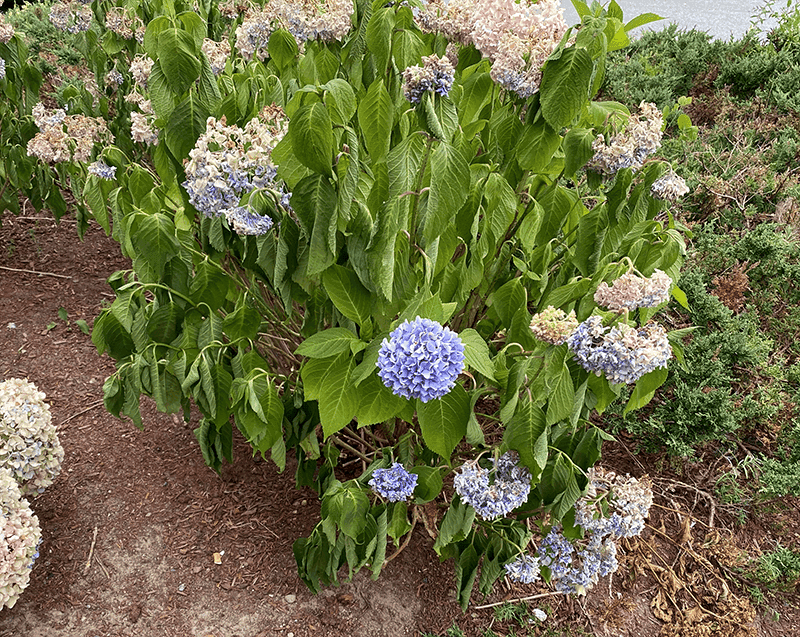
Many Piedmont gardeners water faithfully all spring and then watch their hydrangeas fall apart in August anyway.
That is genuinely confusing, and it points to something important: a plant can show drought-like symptoms even when it has received irrigation.
Late summer in North Carolina stacks the conditions against hydrangeas in a way that earlier months simply do not.
Heat and intense afternoon exposure push the leaf surface to release moisture at a faster rate than usual.
Drying wind accelerates the process.
Reflected heat from a concrete patio or a south-facing brick wall can raise the temperature around the plant well above what the air thermometer reads.
All of that increases demand on the root system, which has to work harder to keep foliage supplied.
When roots cannot keep pace, the outermost leaf tissue, farthest from the water supply, browns first.
The root side of the problem looks different depending on where you garden in North Carolina.
Sandy Coastal Plain soil drains quickly and can dry out several inches down within a day or two after rain.
Piedmont red clay behaves in the opposite way, staying wet below a dry-looking surface crust or becoming so compacted that roots cannot spread or breathe properly.
NC State Extension drought guidance cautions that drought-like symptoms can have several causes, and that soil type shapes how quickly stress develops.
A plant growing in compacted clay near a Piedmont driveway and a plant growing in sandy soil near the coast can both show crispy brown margins for completely different reasons.
Do not assume that one explanation covers all of North Carolina.
Let the Soil Choose Your Next Move
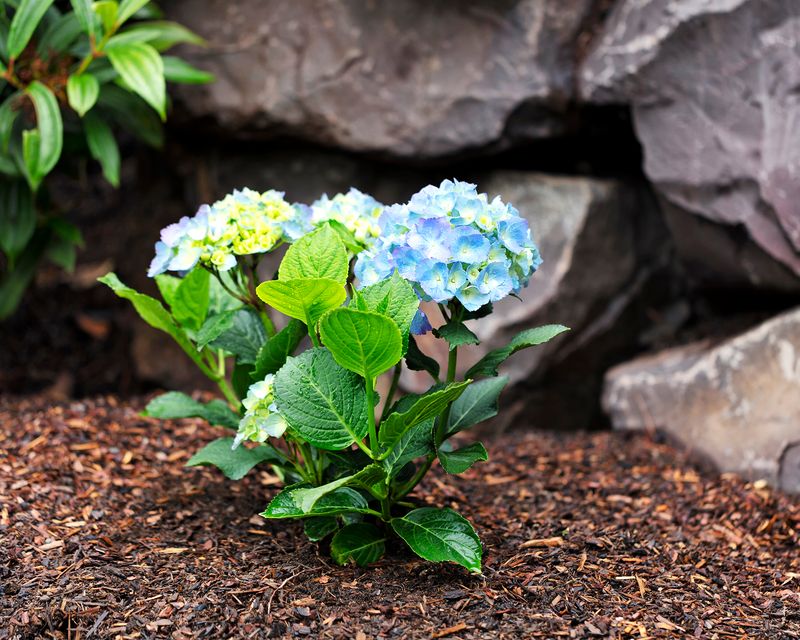
The leaf surface will mislead you every time.
Crispy edges look urgent, and the instinct is to water immediately, but the actual decision point is 3 inches underground.
Push your finger or a wooden dowel into the soil roughly 3 inches down, away from the main stem and out toward the outer edge of where the roots spread.
What you find there determines what you do next.
If the soil at that depth feels dry and crumbly, then a slow, deep watering is the right response.
NC State Extension’s drought care guidance recommends watering the entire root zone, which for an established shrub extends well beyond the main stem, often 2 to 3 times the distance from the stem out to the dripline.
Water slowly enough that the soil can absorb it rather than letting it sheet off across a clay slope or a compacted surface.
Early morning is the best time, it gives foliage a chance to dry before evening and puts water where it matters, at the roots, not on the leaves.
Deep, infrequent watering builds a stronger root system than short daily splashes.
A brief daily rinse wets only the top inch or two of soil and encourages shallow roots that are even more vulnerable to heat and dry spells.
Watering deeply every few days, adjusting based on rainfall and how quickly your particular soil dries, trains roots to follow moisture downward where temperatures stay cooler and supply lasts longer.
If the soil already feels moist at 3 inches, stop before adding more water.
A moist root zone with brown leaf edges is telling you something different, and the next section covers exactly that situation.
The soil check is genuinely the most useful thing you can do before any other step.
When More Water Can Make the Problem Worse
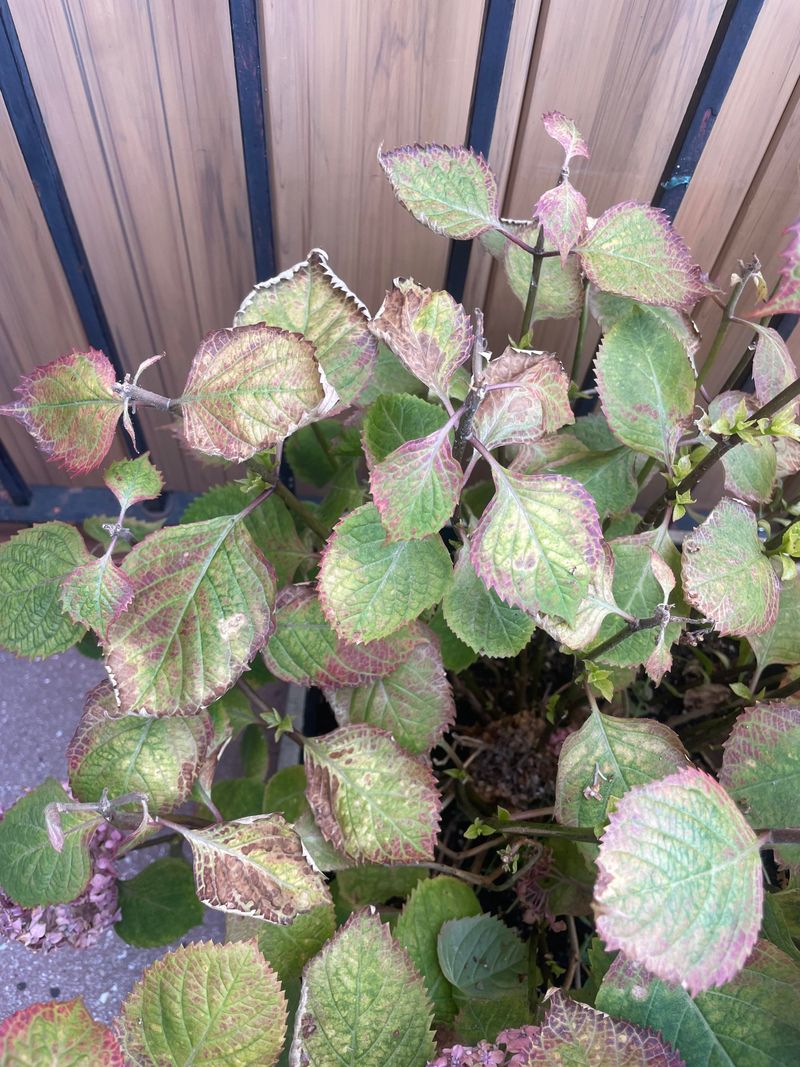
Moist soil and crispy leaf edges together are a signal to stop and look more carefully before touching the hose.
Adding water to a root zone that is already wet can make conditions worse, not better, especially if drainage is the underlying problem.
Roots sitting in saturated soil lose the ability to take up water and oxygen, and the plant can look drought-stressed even while its roots are drowning.
Walk around the plant after a rain and watch whether water pools nearby.
Check whether the planting site sits in a low spot, whether the bed was amended in a way that created a bowl effect in heavy clay, or whether a hardscape feature is directing runoff toward the roots.
Compacted soil is worth investigating too, especially in yards with foot traffic or heavy clay that has never been loosened.
NC State Extension diagnostic tables associate brown margins not only with dry conditions but also with root or crown injury and overwatering, which is a useful reminder that the same symptom can have opposite causes.
Containers deserve a separate look.
A potted hydrangea heats up and dries faster than surrounding garden soil on a sunny patio, but a container with poor drainage can also keep roots saturated while the top inch of mix looks dry.
NC State Extension container plant guidance notes that watering and drainage problems can cause leaf scorch, tip burn, and even root collapse in container-grown plants.
Check the drainage hole and lift the pot if you can; a waterlogged root ball is much heavier than a properly draining one.
If you fertilized recently and the edges are brown, consider fertilizer injury as a possibility.
Concentrated salts from over-application or from fertilizing a stressed plant can dehydrate roots and produce marginal burns.
University of Maryland Extension guidance on fertilizing trees and shrubs distinguishes fertilizer injury from nutrient deficiency, which more often shows as yellowing between leaf veins or pale new growth rather than simply crispy late-summer edges.
Do not add fertilizer, aluminum sulfate, Epsom salts, or other amendments to a stressed plant just because the edges are brown.
The Hydrangea Type Changes the Site Advice
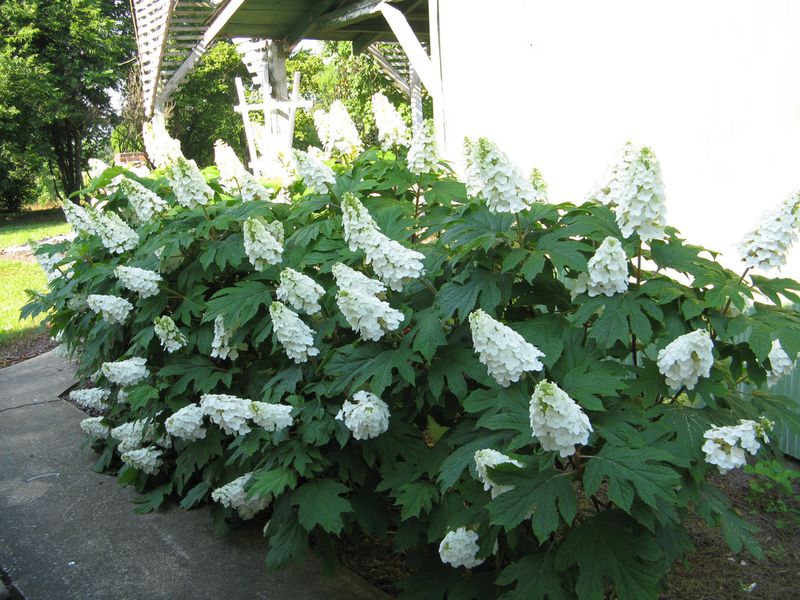
Not every hydrangea is equally bothered by a North Carolina August, and treating them all the same is one of the most common mistakes in the garden.
The species you have planted determines how much afternoon sun is reasonable, how consistently the soil needs to stay moist, and whether recurring scorch points to a fixable care problem or a genuine site mismatch.
Bigleaf hydrangea, Hydrangea macrophylla, is the most vulnerable of the three common types in late-summer heat.
NC State Extension’s plant profile for Hydrangea macrophylla recommends dappled light or afternoon shade along with consistent moisture and well-drained soil.
A bigleaf hydrangea planted against a west-facing brick wall in full afternoon exposure is genuinely fighting its site, and no amount of extra watering will fully compensate for the wrong placement.
If yours scorches every August in the same spot, the long-term answer is probably a shadier location, not a different watering schedule.
Oakleaf hydrangea, Hydrangea quercifolia, is native to the Southeast and generally handles more sun than its bigleaf cousin.
NC State’s oakleaf hydrangea profile describes it as adaptable to partial shade or moderate sun with average to moist, well-drained soil.
It is a better candidate for a sunnier spot, though consistent moisture and summer mulch still help during heat waves.
Panicle hydrangea, Hydrangea paniculata, is the most sun-tolerant of the group.
The NC State profile for the ‘Limelight’ cultivar describes it as suited to full sun, and established panicle hydrangeas can handle brief dry spells better than bigleaf types.
That said, moisture and mulch still benefit even the toughest panicle varieties, and a newly planted panicle hydrangea needs consistent water through its first season or two before those tolerances apply.
NC State’s broader hydrangeas in the garden overview is a useful reference for comparing types before choosing a planting site or making a move.
Distinct Spots Point to a Different Investigation
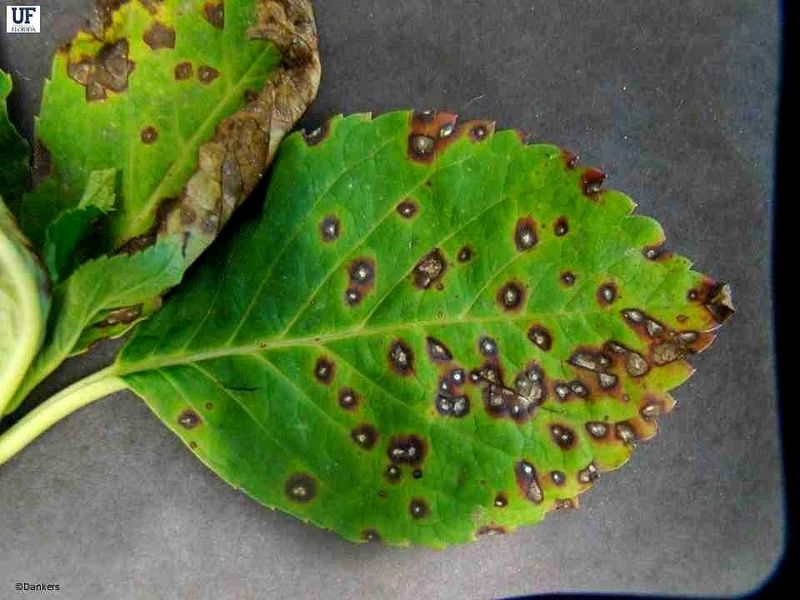
A continuous dry band around the leaf margin and scattered round spots with colored borders are two very different things, and confusing them leads to the wrong response.
Crispy, brown margins that run along the outer edge of the leaf in an unbroken line are more consistent with environmental scorch.
But if you see round or irregular spots, purple or reddish borders, tan or gray centers, yellow halos, tiny shot holes, or damage concentrated on the lower leaves, you are looking at a different problem that deserves its own investigation.
Cercospora leaf spot is a common fungal disease of hydrangeas in warm, wet summers, and it looks nothing like scorch.
University of Minnesota Extension’s hydrangea diagnosis tool describes Cercospora as purple-to-brown spots with darker borders and tan-to-gray centers, a pattern that is easy to distinguish from the unbroken brittle margin of heat stress once you know what to look for.
Visual symptoms can overlap, though, and appearance alone does not establish a definitive diagnosis.
Some gardeners worry about bacterial leaf scorch when they see brown hydrangea margins.
That concern is understandable but worth clarifying.
Penn State Extension’s bacterial leaf scorch resource explains that bacterial leaf scorch is primarily a chronic xylem disease of trees, including oak, elm, sycamore, mulberry, and sweetgum.
Brown margins on a hydrangea alone do not establish that diagnosis, and laboratory testing is required for confirmation.
Do not treat a hydrangea for bacterial leaf scorch based on appearance.
Fungicide is not a general treatment for environmental scorch, and applying it without a confirmed disease diagnosis wastes money and can harm beneficial insects.
Penn State Extension’s hydrangea disease guide outlines which diseases respond to fungicide and under what circumstances.
When spotting, defoliation, distorted growth, or suspected root disease persists or worsens, contact your county Extension office or submit a sample to the NC State Plant Disease and Insect Clinic for a proper diagnosis before spending money on any treatment.
A Low-Stress Recovery Plan
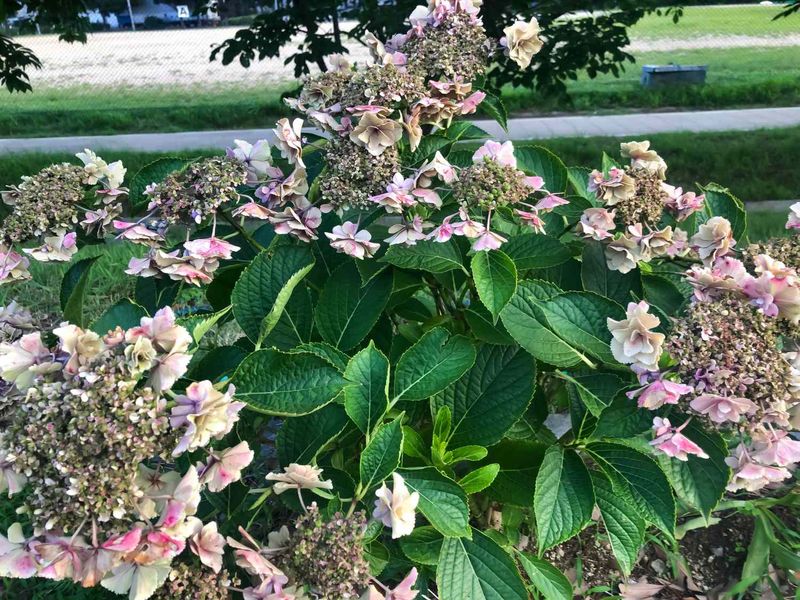
Most of the work now is stepping back rather than doing more.
Leave the damaged leaves on the plant for the time being.
Those scorched margins look bad, but the green tissue that remains is still doing useful work, capturing light and feeding the roots through the rest of summer.
Stripping the plant of foliage removes that capacity and can push the plant to put out tender new growth that is even more vulnerable to heat stress.
If a few leaves are so badly burned that they look more brown than green, removing them lightly for appearance is fine.
Avoid hard late-summer pruning, especially on bigleaf hydrangeas.
NC State Extension notes that bigleaf hydrangea often blooms on previous-season growth, what gardeners call old wood, and pruning after August 1 can remove the buds that would have flowered next spring.
A cosmetic trim is very different from cutting the plant back hard.
OSU Extension’s guide to helping hydrangeas through heat waves recommends deep watering, skipping fertilizer during heat stress, and resisting heavy pruning after scorch.
Those three steps together give the plant the best chance to hold what it has and recover quietly as temperatures ease in September.
Mulch is one of the most practical things you can add right now.
NC State Extension drought guidance recommends approximately 2 inches of mulch in landscape beds to moderate soil temperature and slow moisture loss.
Keep it pulled back from the base of the stem, about 6 inches of clearance, to prevent moisture buildup and disease pressure at the crown.
If the same plant scorches every August in the same spot, that is a site problem, and mulch, mulch is one layer of a broader approach that may eventually include moving the plant or choosing a more tolerant variety.
A hydrangea that survives a tough summer with its roots and stems intact is not a failure, it is a plant that just needs a little more of the right help.