
Your Sunflower Stopped Following The Sun Because It Grew Up And Now Faces East To Pull In 5x More Bees
Follow us on Google
Walk out to your garden on a summer morning and you might notice something odd: your sunflower head is locked in place, staring east while the sun climbs overhead and moves on without it.
That fixed position is not a sign of trouble.
For a mature common sunflower, Helianthus annuus, it is simply what grown-up plants do, and that eastward tilt may actually help morning pollinators find the flower faster than you’d expect.
Why Mature Common Sunflowers Often Face East
Stand in your backyard at noon and watch your sunflower.
The head does not swing toward the sky the way it did when the plant was young.
For most mature common sunflowers, Helianthus annuus, that stillness is completely normal, and a fixed east-facing head is generally not a reason to worry as long as the stem looks sturdy, the leaves are green and full, and the flower itself appears healthy.
The key word here is “mature.” West Virginia University Extension’s overview of heliotropism explains that sunflower heads track the sun during their growing phase but tend to settle into a fixed position once the plant reaches maturity.
That settled position is usually somewhere near east, the direction the head faced at sunrise before growth slowed and the stem stiffened for good.
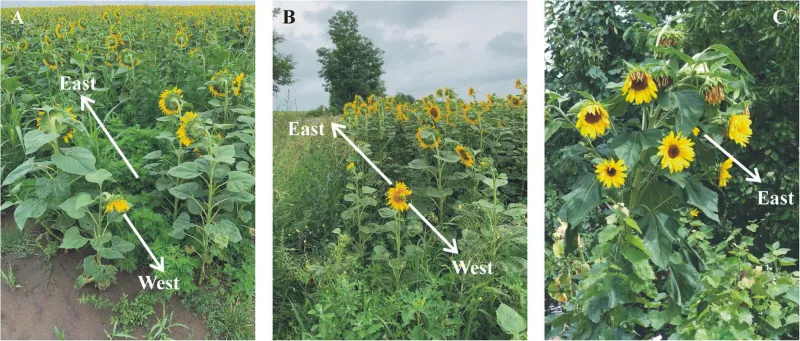
Research published on mature sunflower inflorescence orientation found that mature Helianthus annuus heads predominantly face geographic east, though the pattern is strongest in the standard cultivated annual form.
Different Helianthus species, branching ornamental cultivars, and plants grown under unusual conditions may not follow this rule as consistently.
So if your neighbor’s multi-branching sunflower faces a slightly different direction, that is not cause for alarm either.
The NC Extension plant profile for common sunflower notes that each head is actually a composite structure packed with small individual florets, which means orientation can affect how quickly those florets warm up and release pollen.
That morning warmth connection is real, and it matters for pollinators, though the full picture is more nuanced than a simple “east equals best” rule.
Orientation alone does not tell you whether your plant is thriving or struggling, so check the whole plant before drawing any conclusions.
Young Heads Track Before They Open
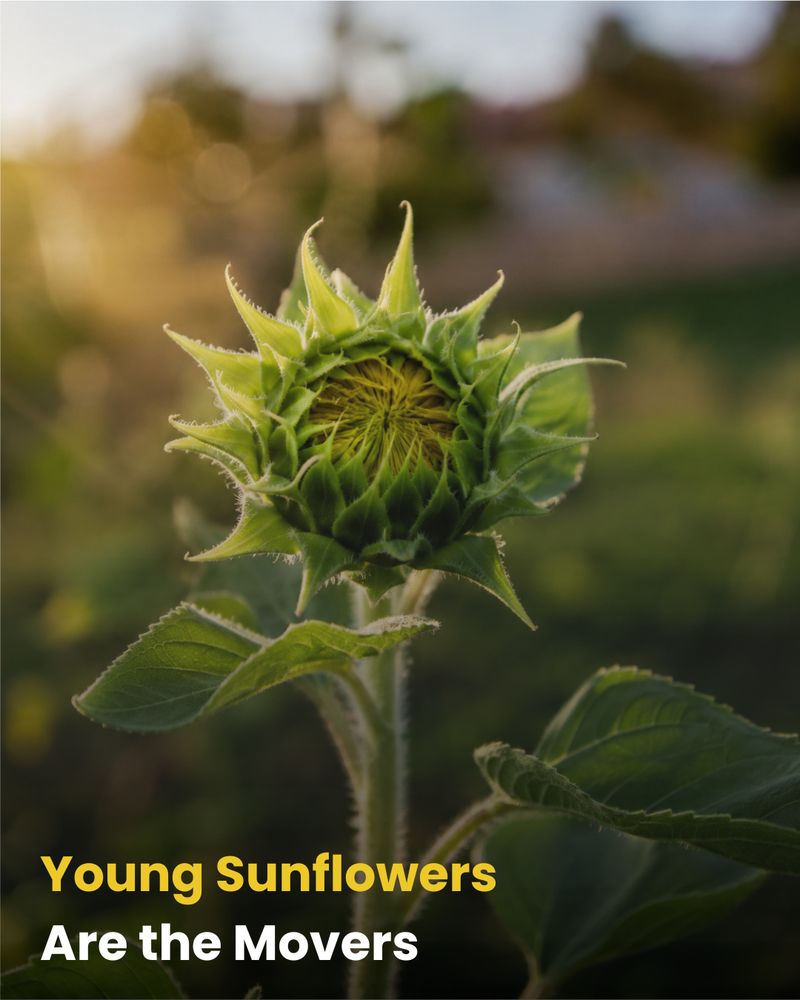
Before a sunflower opens its face to pollinators, it spends its youth doing something quietly remarkable: following the sun from east to west across the sky, then resetting overnight so it greets the next sunrise facing east again.
Gardeners who watch carefully during this stage sometimes think the plant is broken when it stops.
It is not broken.
It has simply finished growing up.
This sun-tracking behavior is called heliotropism, meaning the plant moves in response to light.
WVU Extension describes heliotropism as a response driven by unequal growth on opposite sides of the stem.
When the sun is in the east, the shaded west side of the stem grows slightly faster, pushing the head eastward.
In the afternoon, the pattern reverses.
At night, the stem resets, and by morning the head is pointing east again, ready to catch the first light.
The mechanism behind this overnight reset involves the plant’s internal clock.
Atamian et al., writing in Science, showed that circadian regulation coordinates this movement, not just raw light intensity.
That means the plant is running on a biological schedule, not simply bending toward wherever the sun happens to be at a given moment.
Once the flower head opens fully, a stage called anthesis, the rapid cell growth that powered all that movement slows dramatically.
The stem stiffens, the circadian-driven elongation on alternate sides essentially stops, and the head stays where it landed.
Optical modeling of sunflower head orientation supports the idea that the final resting position facing east is a predictable outcome of this developmental sequence, not a random result.
The plant did not forget how to track the sun.
It simply no longer has the growth fuel to do it.
Morning Warmth Can Influence Pollinator Timing
Most pollinators do not start foraging at first light.
They wait for temperatures to climb enough to make flying worthwhile.
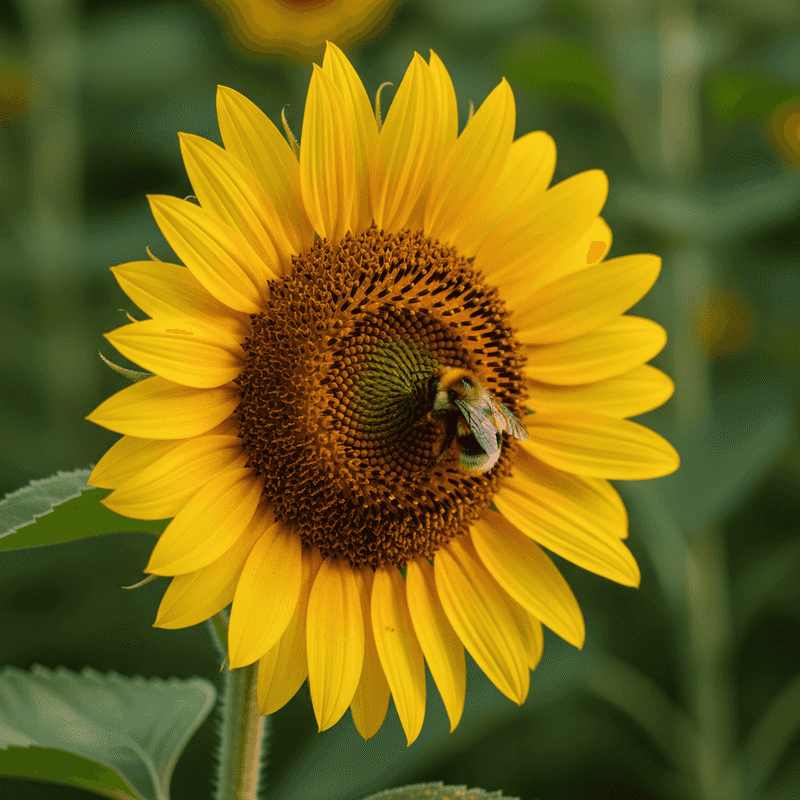
An east-facing sunflower head catches the low morning sun directly and warms up faster than a head pointing west or north, and that temperature difference turns out to matter more than you might expect.
Research in New Phytologist on flower orientation and floral temperature found that east-facing heads reached warmer temperatures earlier in the morning, which coincided with earlier pollen release and more pollinator visits during that morning window.
The researchers also tested whether temperature alone drove the effect by artificially warming west-facing heads.
Changing the temperature changed pollen-release timing, which suggests heat is at least one real mechanism, though probably not the only one at work.
Think of the flower head as a small solar collector that also happens to be a breakfast spot.
Bees, flies, and other insects that visit sunflowers for pollen and nectar benefit from a warm landing pad that offers ready food early in the day.
A head that warms faster serves that need sooner.
That said, this advantage is not universal.
Latitude, cloud patterns, surrounding structures, and the angle of a specific plant all affect how much direct morning light actually reaches the head.
The research on optical geometry, linking eastward orientation with maximized light absorption, describes conditions that apply under particular sky and geometry scenarios, not in every climate or garden layout.
A head that faces slightly northeast because of how your plant grew, or one that is partly shaded by a fence in the morning, may not receive the same benefit.
The mechanism is real, the advantage is conditional.
The Fivefold Pollinator Claim Has Limits
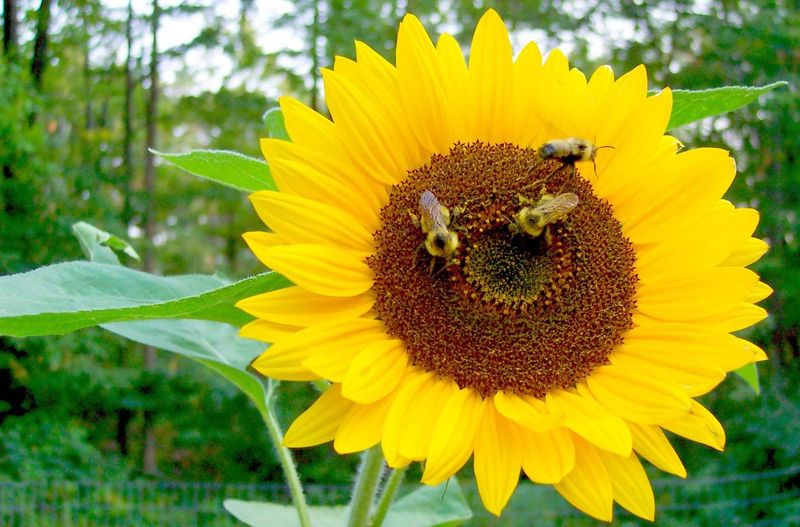
The headline number that made sunflower orientation famous is roughly five times more pollinator visits for east-facing plants compared to west-facing ones.
That figure is real, but the context around it changes what it actually means for your backyard.
The Atamian et al. 2016 study produced that comparison by taking mature sunflower plants and experimentally orienting some to face east and others to face west, then counting pollinator visits during an early-morning observation window.
During that specific morning period, east-facing plants received roughly five times as many visits.
That is a striking difference, and it reflects a real morning warming and timing effect.
But the comparison was early-morning only, it involved experimentally placed plants rather than naturally growing ones, and it measured visits during the study period rather than total daily activity across an entire growing season.
A more recent field study adds a significant qualification.
A 2024 study in The Plant Journal examining commercial sunflower plantations found that total pollinator visits across the full day were independent of head orientation under its field conditions.
When you count all visits from morning through afternoon, the east-facing advantage that shows up early may even out as the day progresses and more pollinators become active regardless of which way the flower faces.
What does this mean practically?
Your east-facing sunflower may genuinely attract more visitors during the morning hours, especially on cooler days when temperature is a bigger factor in when insects start foraging.
But you should not expect five times more bees all day, every day, compared to every other flower in your yard.
The fivefold figure describes a specific experimental morning, not a promise about your garden.
Leave a Healthy Mature Stem Alone
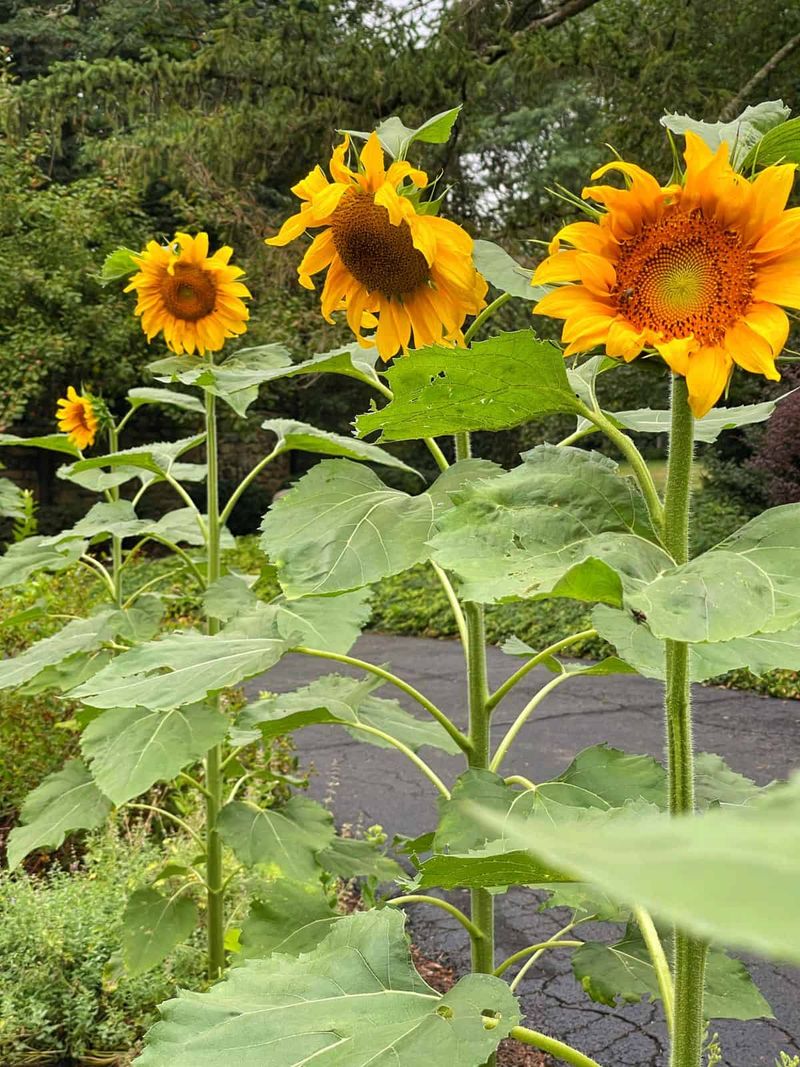
Once you understand why your sunflower faces east, the next temptation is to do something about it, maybe twist the pot, rotate the stake, or nudge the stem so the face catches more afternoon sun.
Resist that urge.
A mature sunflower stem no longer performs the differential growth movements that established its orientation in the first place, so repositioning it does not recreate any developmental process.
You would just be forcing a stiff stem into a new angle.
The Science paper on circadian regulation of sunflower heliotropism makes clear that the growth-based mechanism behind tracking shuts down as the plant matures.
The stem has essentially set like concrete.
Twisting it risks cracking the tissue, breaking surface roots, or snapping the neck of the plant just below the head, none of which improves pollination.
WVU Extension’s sunflower growing guide and University of Minnesota Extension’s sunflower guidance both focus on supporting the plant’s natural growth rather than redirecting it.
Their advice points toward proper watering, soil preparation, and sun exposure from the start, not corrective manipulation after the head has opened.
Staking is a different matter entirely.
A tall sunflower variety that tops 6 feet can become top-heavy as the head fills with seeds, and a windy afternoon can snap it at the base.
Driving a stake into the ground beside the stem and securing it loosely with soft ties supports the plant against wind without attempting to change its direction.
That kind of mechanical support is practical and safe.
Rotating the plant to face a different direction is neither.
If you are worried about your sunflower’s health, look at the stem for soft spots or lesions, check the leaves for yellowing or wilting that goes beyond normal afternoon droop, and examine the florets for signs of mold or pest damage.
Orientation alone does not diagnose a sick plant.
Support the Plant With Suitable Growing Conditions
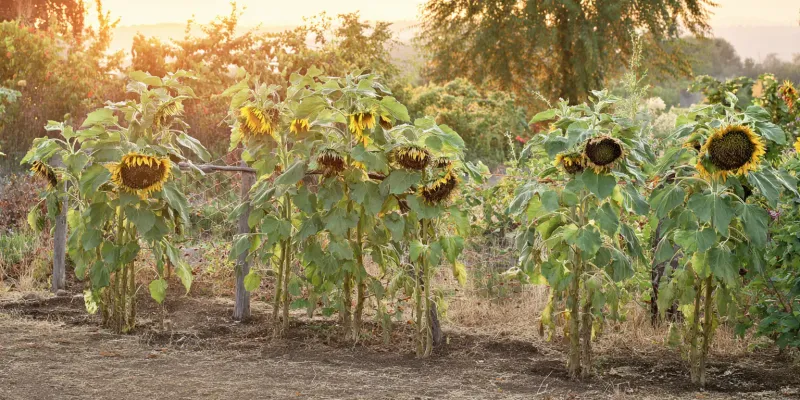
The best thing you can do for your sunflower’s pollinator appeal has nothing to do with its compass direction.
Strong, healthy plants produce more florets, release pollen over a longer period, and hold up better through heat and wind.
Getting the basics right from the start makes a bigger difference than anything you might try to adjust after the head opens.
Sunflowers want full sun, meaning at least 6 to 8 hours of direct light per day, and well-drained soil.
University of Minnesota Extension recommends a soil pH of approximately 6.0 to 6.8 for common sunflowers, and spacing that depends heavily on cultivar.
Shorter varieties in the 2-to-5-foot range can go about 6 inches apart, standard tall types need at least 12 inches, and giant varieties do best with around 24 inches of space.
Branching types that produce multiple heads may need 18 to 24 inches to spread properly.
Direct-sow seeds after your local danger of frost has passed, not according to a single national calendar date.
Illinois Extension points to mid-May as a reasonable window for much of the Midwest, but frost timing varies even within a single state, and gardeners in Florida, the Southwest, high elevations, or the Pacific Northwest will need to adjust accordingly.
Plant seeds about 1 inch deep, and expect germination in roughly 7 to 10 days under warm, suitable conditions.
Water matters most during the 20 days before and after flowering for tall plants.
Utah State University Extension’s cut-flower production guidance uses approximately 1 inch of water per week as a general reference, but actual need shifts with rainfall, soil type, heat, and plant size.
Avoid standing water around the base.
On fertilizer, more is not better.
Sunflowers can perform well in relatively modest soil, and heavy nitrogen applications tend to push leafy green growth at the expense of flowers.
A soil test is a smarter first step than reaching for a bag of fertilizer.
If your soil is already reasonably fertile, you may not need to add anything at all.
Build More Than a One-Flower Pollinator Garden
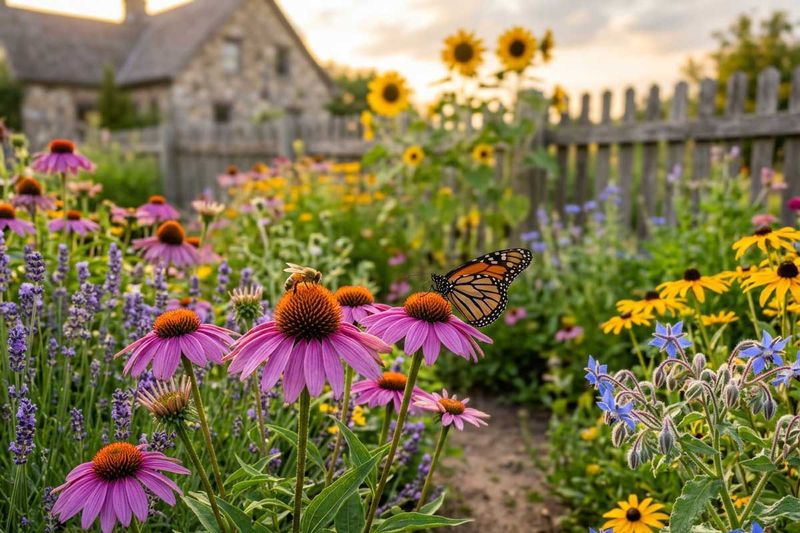
A single east-facing sunflower is a good thing, but it is one food source on a busy foraging route, not a complete solution to supporting pollinators in your yard.
The insects that visit your sunflower also need flowers that bloom at different times of year, places to nest, and a yard that does not regularly expose them to pesticides.
University of Minnesota Extension’s guidance on annual flowers for pollinators emphasizes variety and bloom succession.
Sunflowers bloom in summer and into early fall, which is helpful, but a yard that also offers early-spring and late-fall flowers gives pollinators a longer season of reliable food.
Coneflowers, native asters, and goldenrod are a few examples that extend that window in many US regions.
The visitors on your sunflower are not all the same insect.
Research on pollination in sunflower crops found that wild bees enhance honey bee pollination, meaning that a mix of species, including bumble bees, sweat bees, leafcutter bees, flies, and others, can collectively outperform any single pollinator type.
What draws that variety is not one flower facing a particular direction.
It is a garden with diverse food, reduced chemical exposure, and places for ground-nesting and cavity-nesting insects to live.
Temperature, wind, cloud cover, time of day, and nearby forage all shape what you actually observe visiting your flowers on any given morning.
On a cool, overcast day, even a perfectly east-facing sunflower may see few visitors simply because conditions are not right for foraging.
The New Phytologist study on floral temperature and pollinator visits makes clear that multiple factors interact to determine visitation, not orientation alone.
Common sunflower, Helianthus annuus, has a broad native range across much of the central and western United States according to the USDA Plants Database profile for Helianthus annuus, but cultivated annual varieties are not interchangeable with every regional native perennial Helianthus species.
If supporting local pollinators is your goal, adding a few regionally native plants alongside your annual sunflowers gives those insects something genuinely familiar.
Your east-facing sunflower is doing its part, it just works better as one voice in a fuller chorus.