
You Can Grow A Year Of Kitchen Spices In One Sunny Windowsill For Almost Nothing
Follow us on Google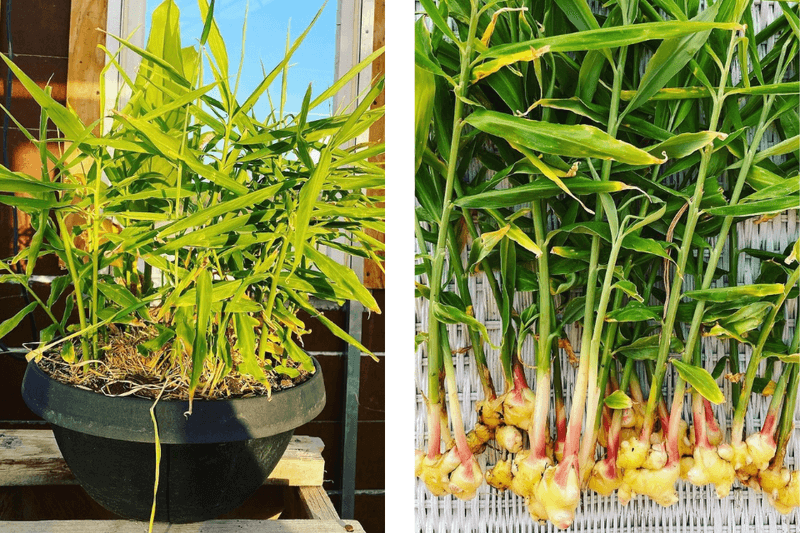
Grocery stores already stock the starting material for three of the most useful culinary plants you can grow at home: ginger, turmeric, and lemongrass.
A bright window, a couple of roomy pots, and a little patience can get all three growing on your counter or floor.
The honest version of this project is not a free spice cabinet, but it is a small living pantry that puts fresh flavor within arm’s reach on a modest budget.
Set A Realistic Harvest Goal
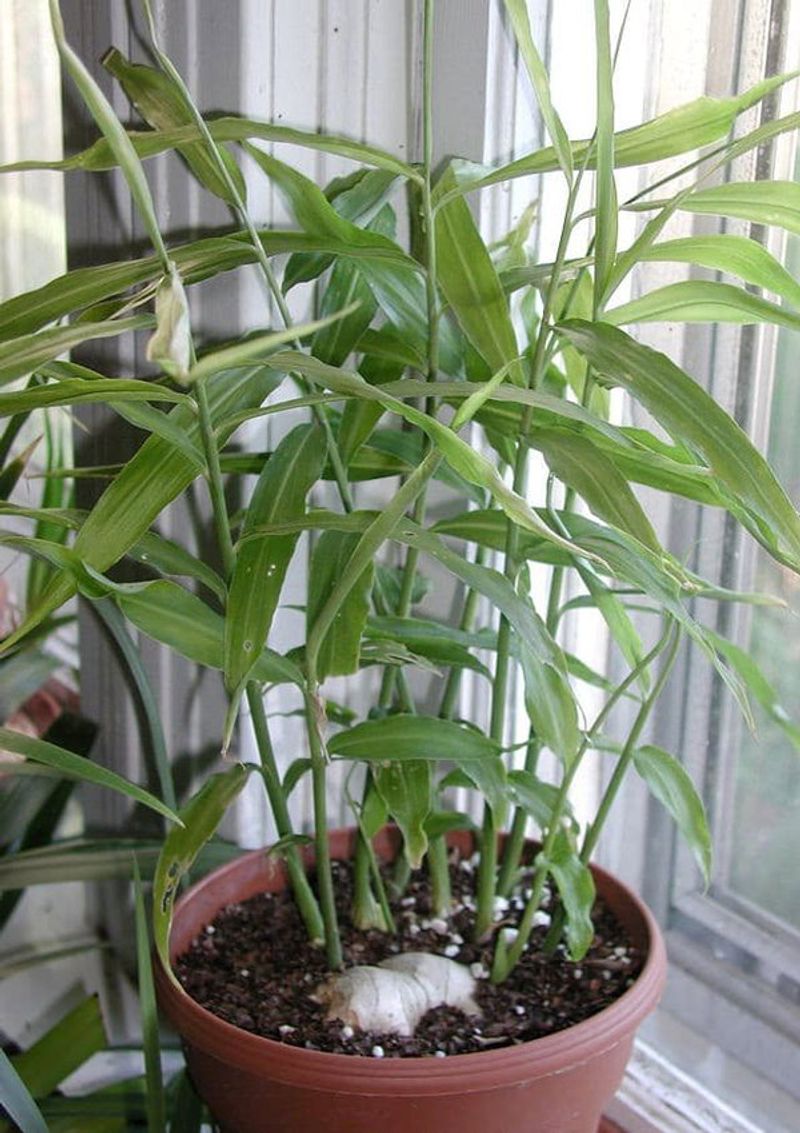
Grocery-store ginger (Zingiber officinale), turmeric (Curcuma longa), and lemongrass (Cymbopogon citratus) can all be started from produce you pick up on a regular shopping run, and that is genuinely useful.
What they cannot do, at least not reliably, is replace every jar of dried spice in your kitchen from a single windowsill.
Ginger and turmeric grow underground as rhizomes, which are thickened modified stems.
You plant them, wait months for foliage to appear, and then harvest the rhizomes only after the plant signals it is done for the season.
University of Vermont Extension notes that mature ginger and turmeric commonly take 8 to 10 months from planting to harvest, and each plant occupies a container large enough to sit on a floor rather than a windowsill edge.
Lemongrass is harvested differently.
You cut the lower stalks rather than dig up roots, so the harvest is above ground and more visible.
The catch is that indoor plants produce fewer stalks than outdoor ones because household windows rarely deliver the light intensity of a full summer garden.
Utah State University Extension confirms that indoor lemongrass yields tend to run lower than outdoor production.
A windowsill is best understood as a place to sprout rhizomes, overwinter plants between seasons, and collect the occasional fresh cutting.
Illinois Extension reports inconsistent yields from single south-facing windowsill setups and recommends grow lights for anyone aiming at consistent production.
Set your goal as stretching a grocery purchase with modest fresh harvests, and this project delivers real value.
Choose Grocery Material That Can Grow
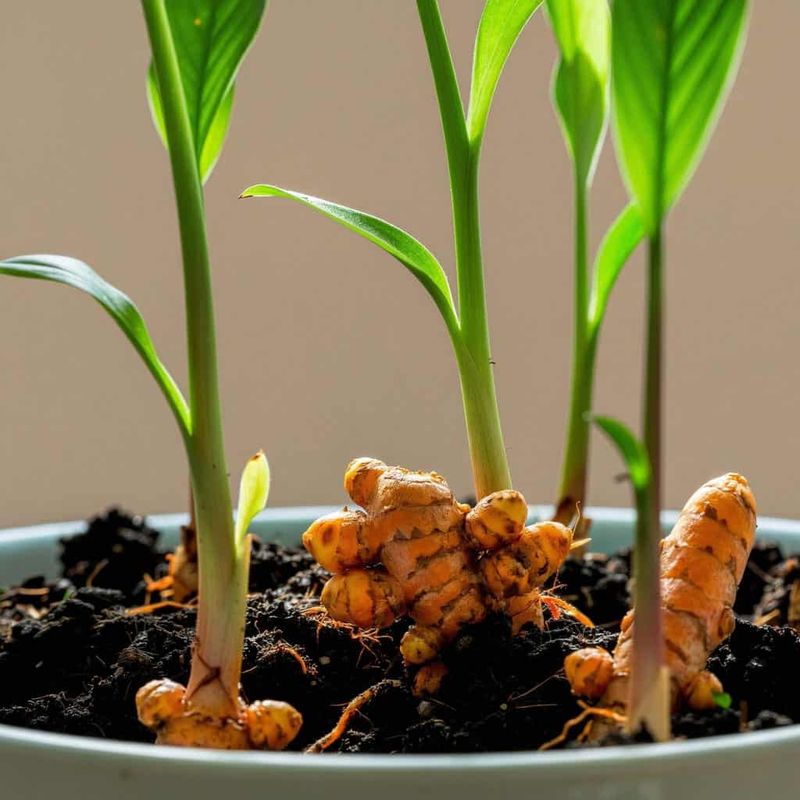
Not every piece of ginger or turmeric on the produce shelf will sprout, and that is worth knowing before you get home.
Look for rhizomes that feel firm and heavy, not soft or shriveled.
On ginger, the small rounded bumps along the surface are growth buds, and you want at least one or two clearly visible on each piece you buy.
Turmeric rhizomes are smaller and more finger-like, but the same rule applies: choose pieces that look alive, not desiccated.
Grocery-store rhizomes are sometimes treated with sprout-retardant compounds to extend shelf life.
Texas A&M AgriLife Extension recommends soaking rhizomes overnight, roughly 24 hours, before planting to help counteract any treatment.
It is a low-effort step that costs nothing and can meaningfully improve your sprout rate.
University of Florida IFAS identifies clean, disease-free planting material as the preferred option and notes that imported food rhizomes carry a greater pathogen risk than dedicated planting stock.
Inspect each piece carefully and skip anything with soft spots, mold, or visible damage.
For lemongrass, choose two or three stalks with plump, bulbous bases that are pale green or white near the bottom.
Stalks that have been trimmed close to the base or look dried out at the cut end are less likely to root well.
North Carolina Cooperative Extension also advises letting cut ginger rhizome surfaces dry for at least a day before planting to reduce the chance of rot where the cut was made.
Plant Ginger And Turmeric In Roomy Pots
Planting ginger and turmeric is more like tucking something in than pushing a seed into soil.
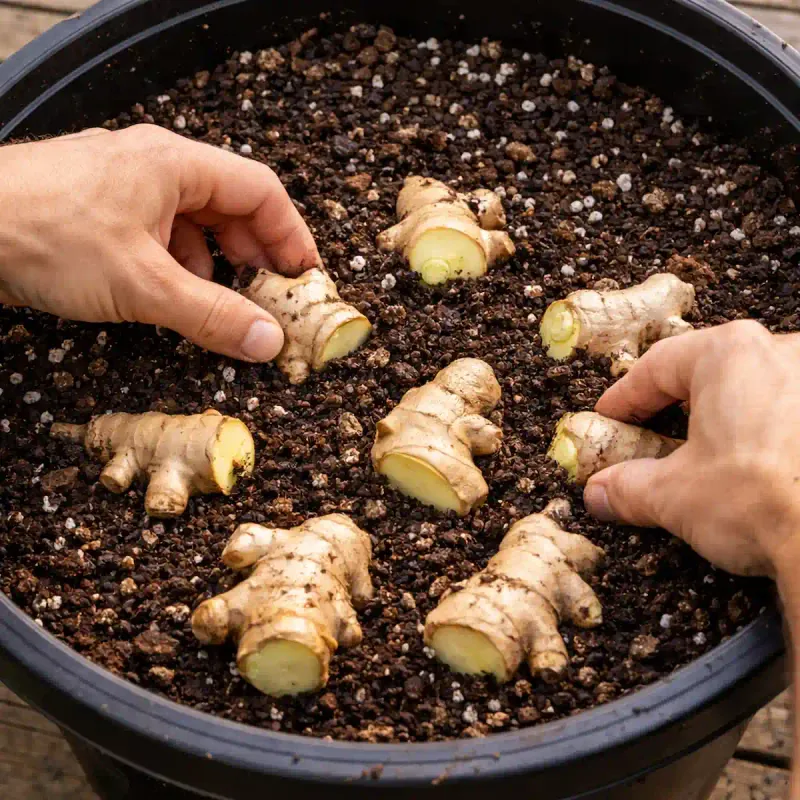
Cut the ginger rhizome into pieces roughly 1 to 3 inches long, or about 1 to 2 ounces each, making sure each piece carries at least two of those small rounded buds.
Let the cut surfaces air-dry for a full day before planting so the exposed flesh has time to callous over.
Lay each piece horizontally in the container with the buds pointing upward.
Cover with about 1 to 2 inches of potting mix, water gently, and then set the pot somewhere warm.
University of Vermont Extension puts the useful temperature range at about 68 to 80 degrees Fahrenheit for indoor ginger and turmeric, and notes that light is not needed until shoots break the surface.
Keep the soil moist but never soggy during this waiting period.
Sprouting can take anywhere from 3 to 8 weeks.
Virginia Cooperative Extension notes that ginger can take 50 days or more under some indoor conditions, so patience matters more than checking the pot daily.
If the surface dries out, water it, but excess moisture sitting around an unsprouted rhizome is the most common early failure.
Container size is where many first-time growers underestimate the plant.
A 12-inch pot is a practical minimum for a single rhizome piece, but a 5-gallon container gives the roots more room to develop.
University of Florida IFAS describes three rhizomes fitting comfortably in a 15-gallon container, which gives a sense of how much space a meaningful harvest actually requires.
A narrow windowsill ledge is a good place to start seeds or herbs, but ginger and turmeric containers usually end up on the floor beside the window.
Build The Indoor Setup Around Light And Drainage
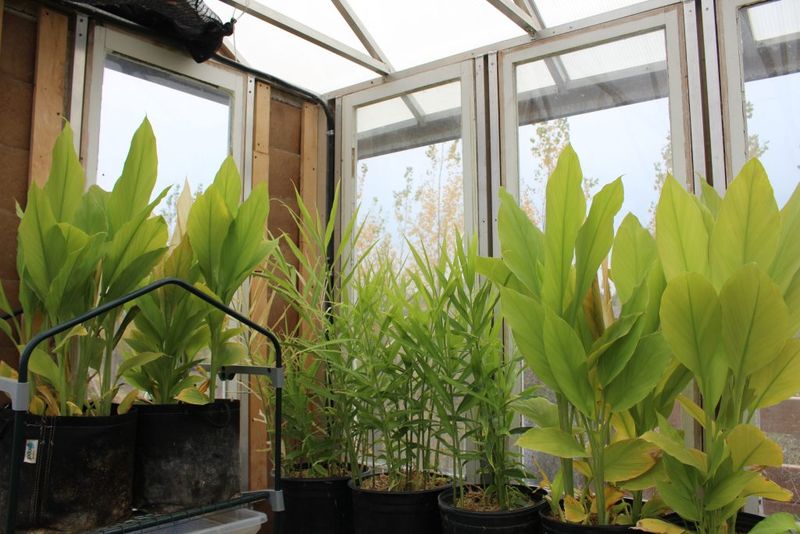
Two conditions decide whether your indoor culinary plants thrive or slowly sulk: how much light they receive and how well water moves through their containers.
Get both right and the plants have a real chance.
Let either one slip and you will spend months wondering why nothing is happening.
Drainage comes first because it is the easier fix.
Every container needs holes in the bottom, and the potting mix should be loose and fast-draining rather than a dense, moisture-retaining blend.
Virginia Cooperative Extension points to excess moisture as a leading cause of rhizome rot indoors, so a tray under the pot is useful only if you empty it after watering rather than letting the container sit in standing water.
Light is the harder problem to solve in most homes.
Penn State Extension recommends about 6 hours of direct sunlight for most indoor herbs, and a south-facing window is generally the strongest option a typical house offers.
East- and west-facing windows can work, but they deliver less intensity, especially from November through February when the sun angle drops.
University of Illinois Extension notes that winter light through a north- or east-facing window is often insufficient for consistent herb growth.
For lemongrass specifically, University of California Agriculture and Natural Resources recommends either about 6 hours of bright window light or 12 to 16 hours under supplemental LED or fluorescent grow lights.
University of Minnesota Extension explains that indoor light intensity is often far lower than outdoor levels, which is why a grow light improves consistency without guaranteeing a large harvest.
Treat supplemental lighting as a useful upgrade, not a promise of abundance.
Root Lemongrass Then Give It Room
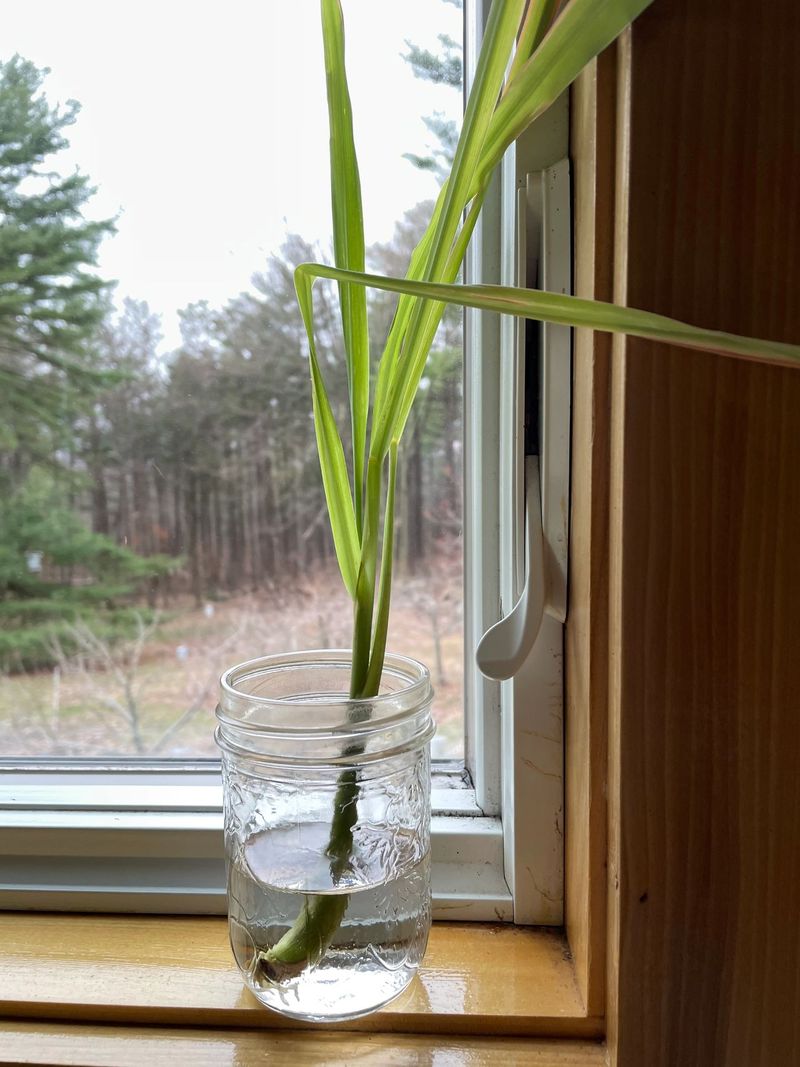
Lemongrass is the fastest starter of the three plants covered here, and watching it root in a jar of water is one of those small kitchen experiments that actually works.
Place two or three stalks with their bulbous bases submerged in about 3 to 4 inches of water and set the jar near your brightest window.
Change the water once a week to keep it fresh.
Roots typically appear within 2 to 3 weeks.
Once several roots are an inch or two long, the stalks are ready to move into soil.
University of California Agriculture and Natural Resources recommends loose, fast-draining potting mix that stays moist but never waterlogged, which is the same drainage principle that applies to ginger and turmeric.
New stalks may appear within about 3 months, but indoor production is usually lower than what you would get from the same plant spending summer outside.
Utah State University Extension and Illinois Extension both note that lemongrass grows into a substantial clump outdoors, commonly 3 to 4 feet tall and 2 to 3 feet wide, and that indoor growth tends to be more modest.
Plan for a container large enough to move, because the plant benefits from spending warm months outside on a porch or patio.
When you do harvest, cut no more than one-third of the clump at a time, slicing near the base just above the roots.
UC Agriculture and Natural Resources specifically recommends this one-third limit to keep the clump productive.
The outer leaf edges are sharp enough to cut skin, so a pair of gloves makes the job cleaner and more comfortable.
If children or pets are nearby, keep the container out of reach of those long, blade-like leaves.
Plan Around Dormancy And Regional Seasons
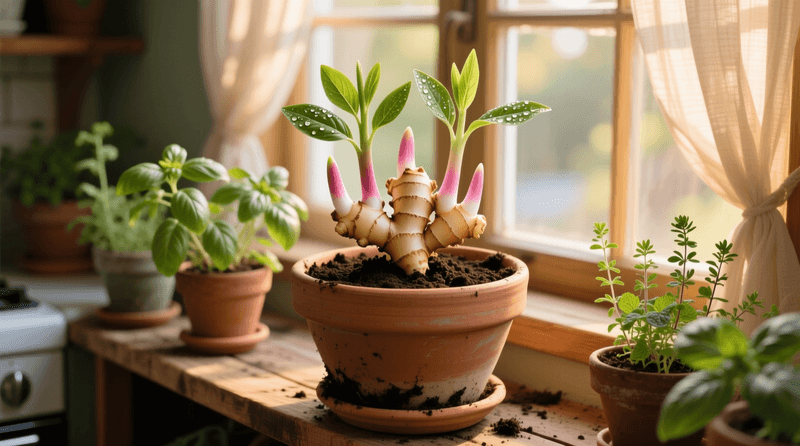
Timing matters more with these three plants than with most kitchen herbs, and your region shapes the calendar as much as anything else.
Ginger and turmeric are tropical plants that need warmth throughout their growing cycle.
Temperatures below 50 degrees Fahrenheit can damage or kill them, so any window that gets cold drafts in winter is a risk.
University of Vermont Extension explains that ginger and turmeric signal harvest readiness when the foliage yellows, dries back, and the plant enters dormancy.
That process typically happens after about 8 to 10 months of growth.
Waiting for that signal rather than digging early gives you the most developed rhizomes.
Baby ginger is one exception worth knowing.
You can harvest younger ginger rhizomes after roughly 5 to 8 months, and UC Master Gardeners describe baby ginger as tender, milder in flavor, and less shelf-stable than mature ginger.
Use it fresh within a few days rather than storing it.
University of Florida IFAS notes that the same early-harvest timing and storage characteristics have not been as thoroughly documented for turmeric, so treat baby turmeric harvests as experimental rather than a reliable shortcut.
Lemongrass handles the seasonal calendar differently.
Illinois Extension recommends moving lemongrass outdoors after frost danger has passed in spring and bringing it back inside before cold weather arrives in fall.
In warm, frost-free parts of the country, such as coastal Southern California, South Florida, or the Gulf Coast, these plants may spend most of the year outside and produce considerably more.
In the Northeast, Midwest, and higher elevations, they may need indoor starting, supplemental lighting, and heated overwintering space to survive at all.
Oregon State University Extension confirms that overwintering tropical container plants indoors is a common and workable strategy in colder regions, though it adds to the care involved.
Use Modest Harvests Well
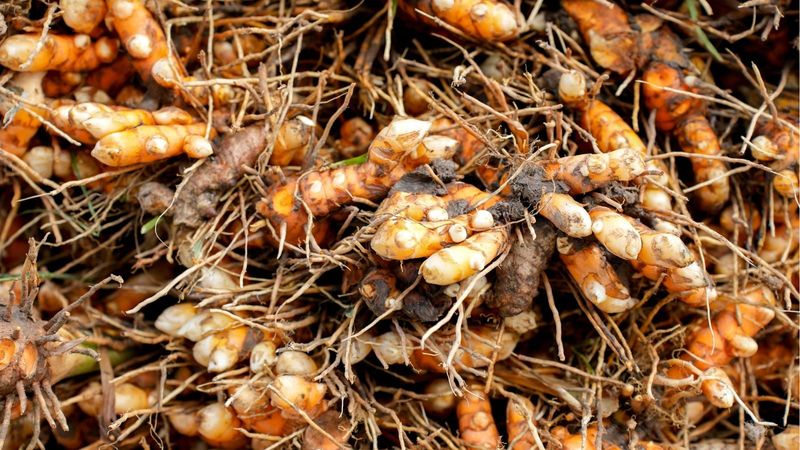
After months of tending, the harvest moment for ginger and turmeric is satisfying in a quiet way.
When the foliage has died back, tip the container gently and work through the soil with your hands to find the rhizomes.
University of Vermont Extension suggests saving some of the freshest-looking rhizome pieces to restart the next growing cycle, which means your grocery purchase can carry forward into future seasons.
Rinse everything under running water before using it.
FDA guidance on produce safety notes that washing under running water reduces surface contamination, though it does not eliminate all risk.
Discard any rhizome that shows soft spots, mold, or an off smell.
Virginia Cooperative Extension recommends the same practice: use what looks clean and healthy, and compost anything questionable.
Baby ginger, harvested a few months before full dormancy, works well grated into stir-fries, steeped for tea, or sliced thin for quick pickles.
Use it within a few days because its tender skin and higher moisture content mean it does not keep as long as mature ginger.
Lemongrass stalks, cut in thirds of the clump at a time, can go directly into soups, curries, or a simple syrup.
UC Agriculture and Natural Resources reminds cooks to handle the outer leaves carefully, as the edges are sharp enough to nick a finger.
The honest accounting of this project is that containers, potting mix, and possibly a grow light represent real costs that vary by household.
What you get in return is not a year’s worth of spices but a small, living connection to where flavor comes from, and the occasional harvest that genuinely stretches what you would have bought anyway.