
Your Potted Geranium Makes Plenty Of Leaves When It Wants Food More Than Sun
Follow us on Google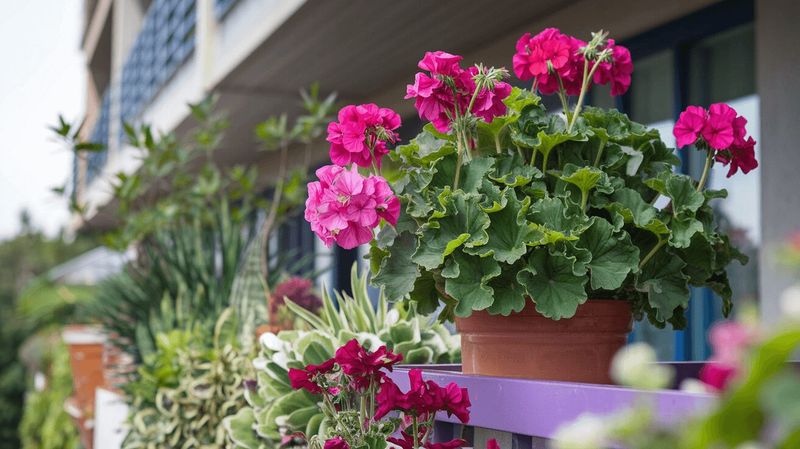
Morning coffee in hand, you step onto the porch and there it sits, your potted geranium, thick with green leaves and stubbornly short on flowers. It looks healthy, so the missing color feels like a small betrayal.
Here is the twist most folks miss. That leafy pileup is rarely a sun problem, it is usually a food problem, or the wrong kind of food at the wrong time.
Pelargonium x hortorum is a heavy feeder in a pot, and it will happily grow a bush while forgetting to throw a party. Fix the meal, tweak a few habits, and those blooms come back fast.
Let us walk through what your plant is actually asking for.
1. Too Much Leafy Green Means the Wrong Kind of Meal
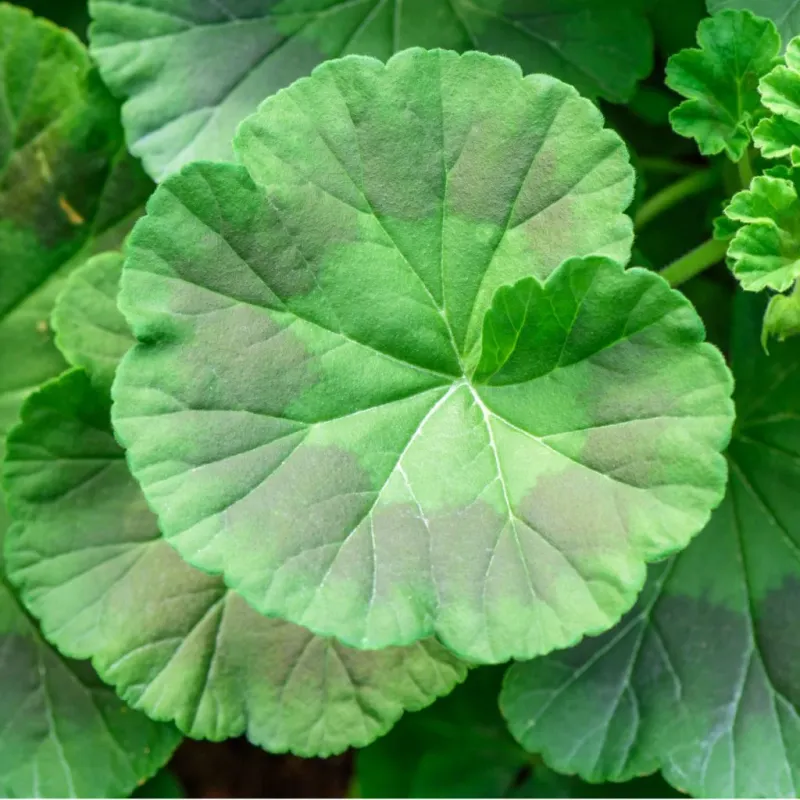
You bought a flowering plant and ended up with a shrub. That green explosion is often a nutrient imbalance, not a lack of light.
Fertilizer labels carry three numbers, the NPK ratio. Those stand for Nitrogen, Phosphorus, and Potassium.
Nitrogen pushes leaves and stems hard. Feed too much of it and your geranium pours all its energy into foliage while quietly shelving the flower hormones.
Potted geraniums lose nutrients fast because water flushes them out the drainage holes. So they need steady feeding, but the balance matters more than the amount.
Start with a balanced liquid feed like 10-10-10 or 20-20-20 to keep growth even.
Once you spot buds forming, lean toward more phosphorus, the middle number. A blend like 5-10-10 or 3-9-12 nudges the plant toward root strength and flower formation instead of more leaves.
Phosphorus is the quiet partner that helps buds actually open.
Mix your liquid feed at half the label strength and apply every seven to ten days. Half strength prevents salt buildup in the soil, which can burn roots and stall blooms.
Think of it as small, frequent meals rather than one giant plate. Your plant handles steady snacks far better than a nitrogen feast that never turns into flowers.
2. Give Your Geraniums a Full Day of Sun, But Mind the Heat
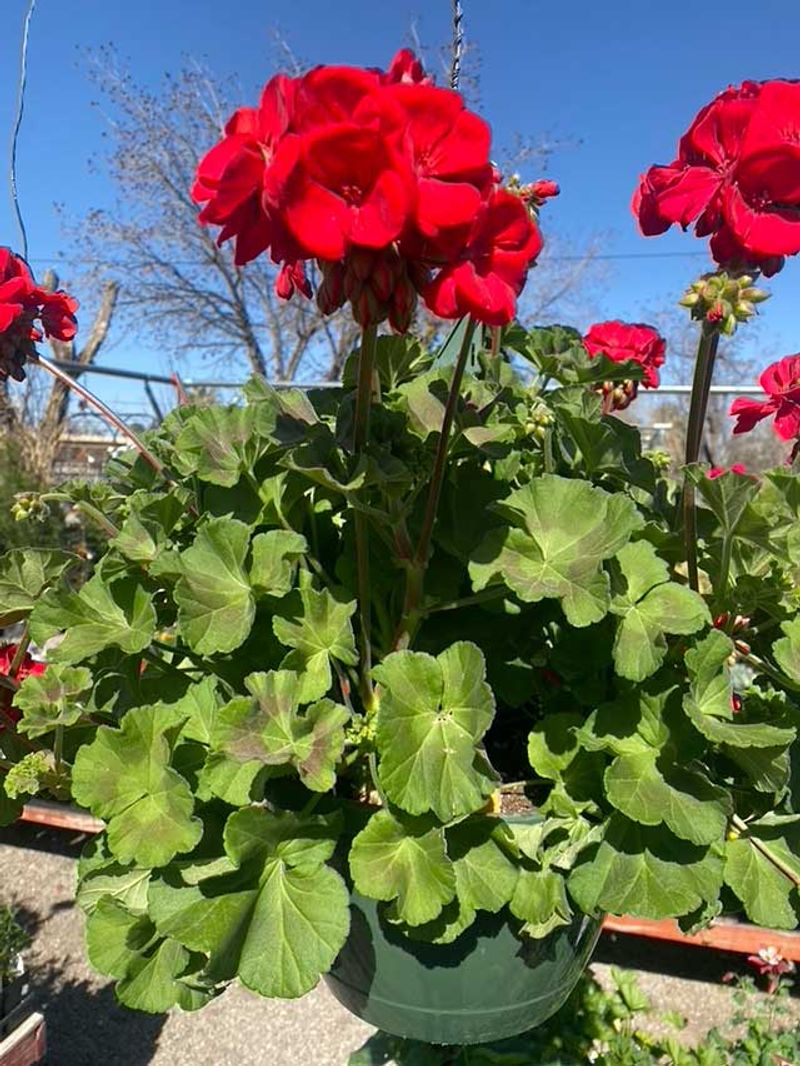
Endless sun sounds like the obvious answer, yet geraniums play it more carefully than that. These plants trace back to the bright, dry hills of South Africa, so they crave light for strong stems and steady flowers.
Aim for at least six hours of direct sun each day. In many northern and temperate parts of the country, full sun from morning to evening suits them fine.
The trouble shows up in hotter regions. When afternoon temperatures push past 90 degrees Fahrenheit, roughly 32 Celsius, geraniums take what feels like a heat check.
They pause blooming to protect themselves, dropping flowers to save energy.
In the Deep South and other scorching zones, give pots morning sun and light afternoon shade. Morning light is gentler and does the work without the burn.
Then a patio umbrella, a porch overhang, or a taller neighbor plant can shield them from the brutal midday rays.
Being in a pot is your secret weapon here. You can slide the container two feet over and change its whole day.
If leaves look scorched and blooms stall in July, do not add more sun, subtract some heat. That small move often restarts the flower show within a week or two.
3. The Secret to Happy Roots Is Not Too Wet, Not Too Dry
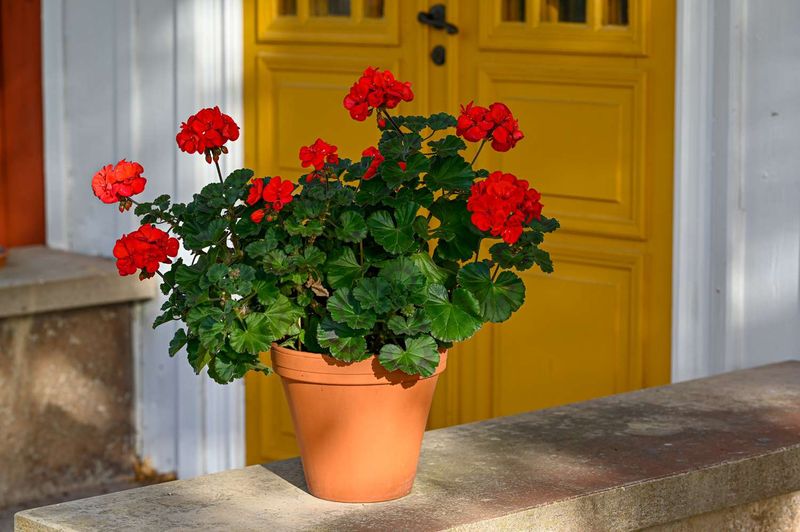
More water rarely means more flowers with geraniums. Overwatering is one of the fastest ways to lose them.
Geraniums hate wet feet. Constantly soggy soil chokes the roots and invites root rot, a quiet killer that flips your plant from making blooms to fighting for its life.
Go too dry too long, though, and you get wilting and yellow leaves. The goal is a rhythm, not a schedule.
When you water, soak the pot until it runs out the bottom. That drink reaches the whole root ball.
Then step back and let the top layer dry before the next round.
Use the finger test. Poke about one to two inches into the soil, roughly 2.5 to 5 centimeters.
Dry at your fingertip means it is time. Still damp means wait.
In mild weather, that often lands around every three to five days. During peak summer, hanging baskets battered by sun and wind may need water daily.
Every pot must have real drainage holes, no exceptions.
Water in the morning when you can. Leaves dry before evening, which cuts down on fungal problems that thrive in cool, damp overnight air.
Your roots want a steady tide, not a permanent swamp.
4. Pinch Off Fading Blooms to Keep the Party Going
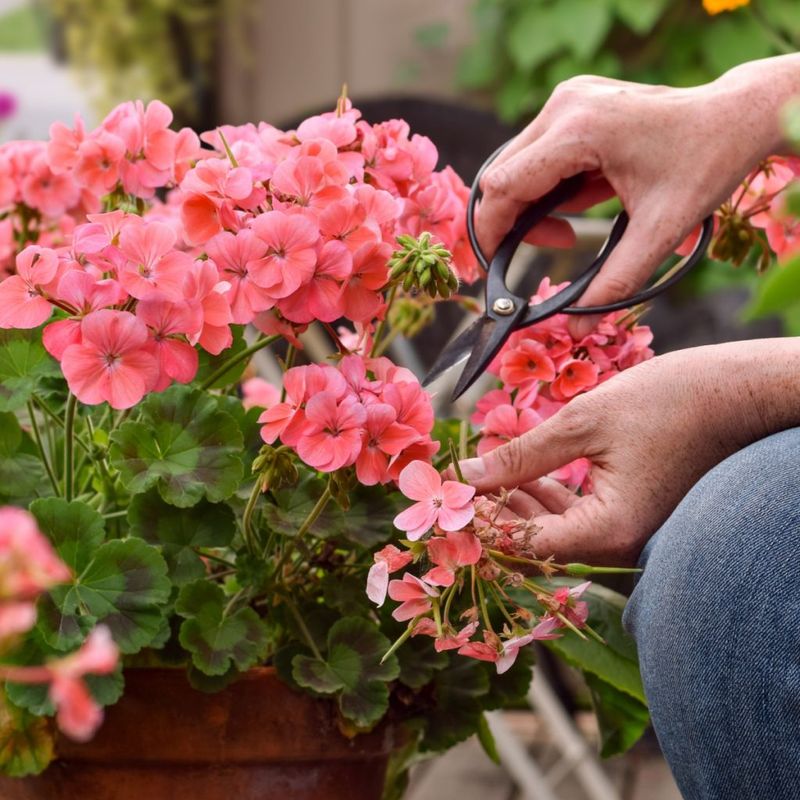
Picture the patio set for an evening cookout, string lights up, burgers going, and your geranium half hidden behind a cluster of brown, crispy flower heads. Those spent blooms are not just ugly, they are thieves.
When a geranium flower fades, the plant shifts gears toward making seeds. Seed production pulls resources away from forming fresh buds.
Your plant thinks its job is done for the season.
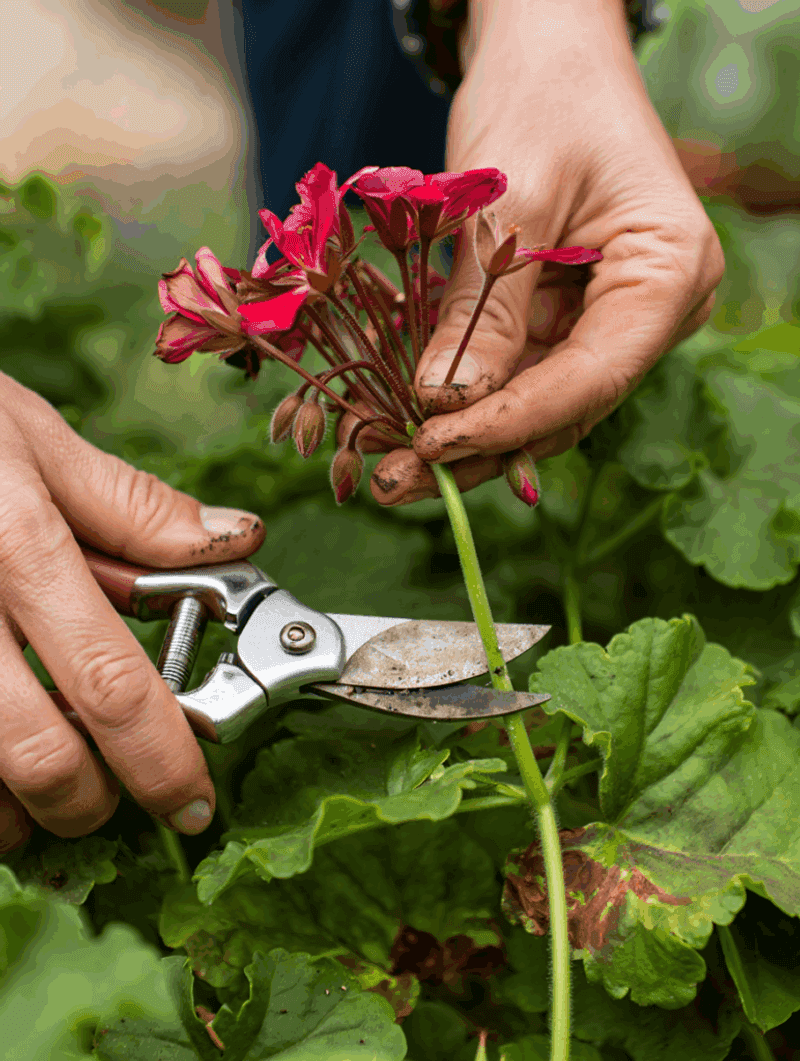
Deadheading, the simple act of removing spent flowers, tells it otherwise. Remove the faded ones and the plant redirects that energy right back into new blossoms.
Do it correctly for the best payoff. Follow the flower stem down to where it meets a leaf node or the main stem.
Snap or snip it off there. Pulling just the top petals leaves the stalk behind, which still drains energy.
Make it a two minute habit while your coffee cools. A quick pass every few days keeps color rolling for weeks longer than a plant left to seed.
Come the next porch evening, your geranium looks like it planned the whole thing.
5. Grow Strong, Not Leggy, with Regular Trims
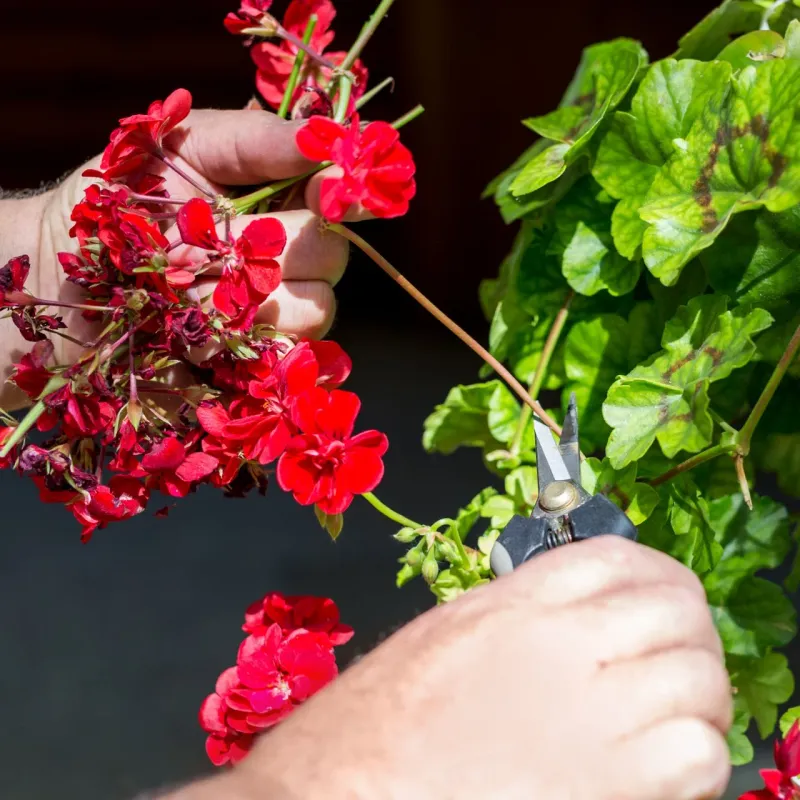
Some geraniums stretch. Long bare stems reach for the sky, a few sad flowers dangle at the tips, and the middle looks like a plucked chicken.
That legginess is a cry for a haircut.
Left alone, those weak stems flop and topple, and they never give you the full, flower-packed look you pictured on the porch railing.
Pinching and pruning fix the shape by forcing the plant to branch. Every cut creates new growing points, and more growing points mean more places for flowers to form.
You trade height for width, and width is where the blooms live.
In spring, when fresh growth appears, pinch the stem tips just above a leaf node. That single move redirects energy sideways instead of skyward.
For a badly overgrown plant, be braver. Cut stems back to about four to six inches, roughly 10 to 15 centimeters, in early spring.
Always use clean, sharp pruners so cuts heal fast and disease stays out.
The plant looks bare for a couple of weeks, which tests your nerve. But it bounces back bushier and stronger, ready to carry twice the color it did before.
6. The Right Pot and Soil Set Up Plenty of Flowers
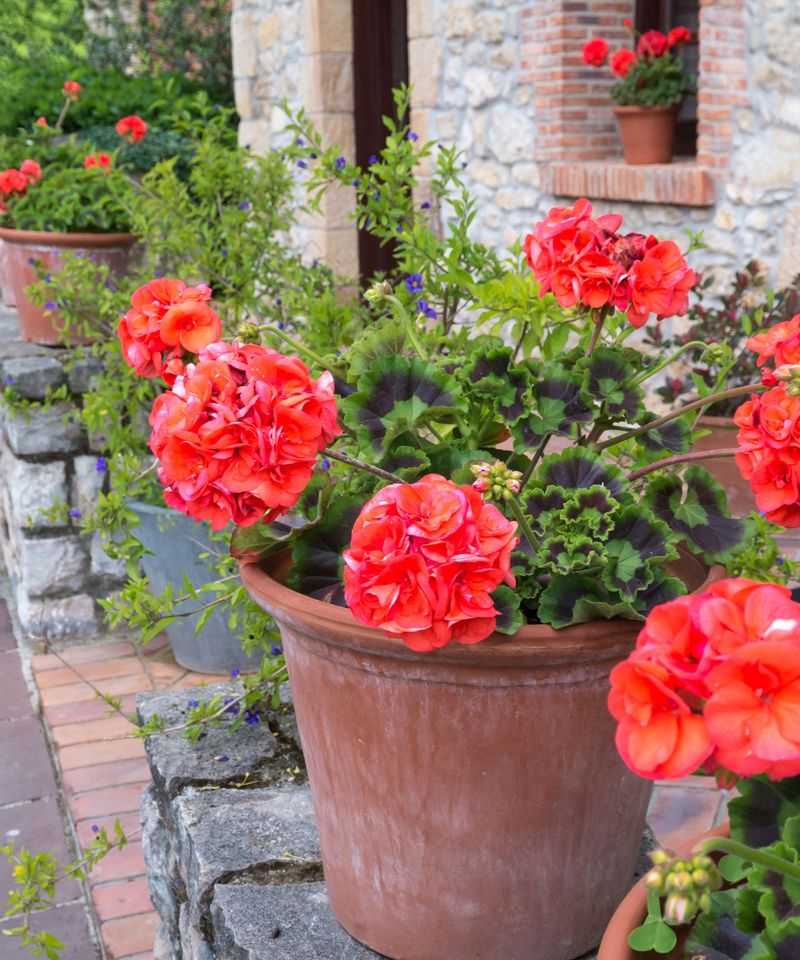
Your pot choice is not just about looks, it shapes whether you get blooms at all. Geraniums are odd in that they flower better when their roots feel a little snug.
Drop one into a giant pot and it spends the season building roots to fill the space, not flowers to fill your eye. A slightly cozy container keeps the plant focused on the show.
Soil matters just as much. Reach for a quality potting mix made for containers.
Those mixes drain well and hold air around the roots. Heavy garden soil packs down, traps water, and marches your plant straight toward root rot.
Check for drainage holes before you plant. No holes means standing water, and standing water means trouble no watering skill can undo.
Geraniums prefer soil that runs slightly acidic to neutral, a pH between 6.0 and 6.5. Most bagged container mixes already land in that range.
Repot once a year into a pot only one or two sizes larger, refreshing the soil as you go. Fresh mix resets nutrients and structure.
That steady, well-drained home does more for blooms than any single feeding ever will.
7. Temperature Swings Quietly Stall Your Blooms
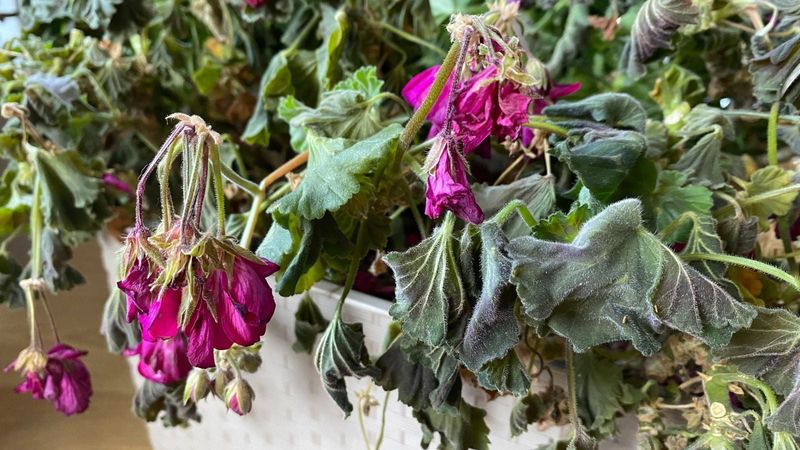
Heat gets the blame, but cold and sudden change trip up geraniums just as often. Your plant likes steady, and it sulks when conditions lurch around.
Comfort runs in a narrow band. Daytime temperatures between 60 and 75 degrees Fahrenheit, roughly 15 to 24 Celsius, keep flowers coming.
Nights between 50 and 65 degrees, about 10 to 18 Celsius, seal the deal.
Push past the edges and blooming slows. Nights below 50 degrees Fahrenheit put growth on hold, while stretches above 85 degrees, around 29 Celsius, make the plant pause and coast.
Abrupt moves shock them too. Haul a geranium from bright sun into deep shade overnight and it may drop leaves while it recalibrates.
Ease transitions over several days so the plant adjusts without a tantrum.
This is where pot life pays off again. On a cold snap in spring or fall, drag containers near a warm wall or under an eave.
During a brutal heat wave, shift them to gentler light. You are basically playing weather buffer for a plant that cannot walk itself out of trouble.
Read the forecast, nudge the pots, and your geranium keeps its rhythm through the shoulder seasons.
8. Watch for Pests Before They Steal the Show
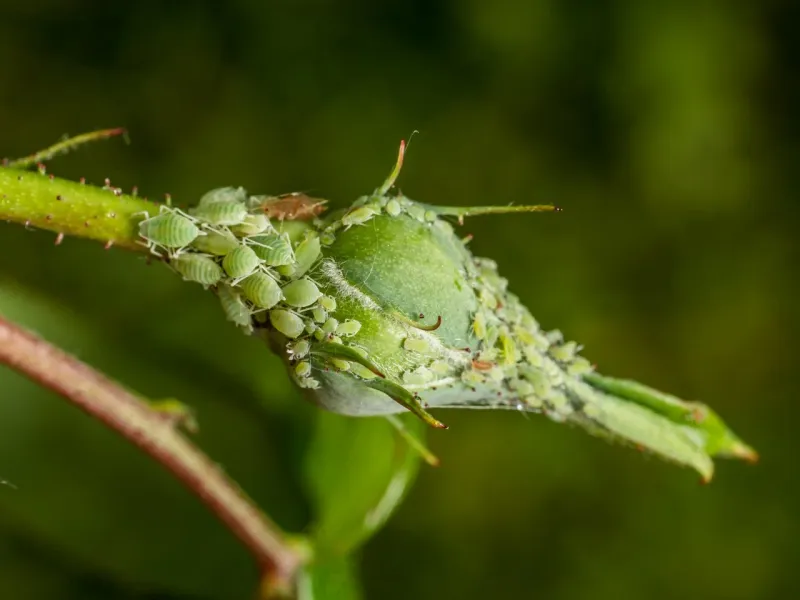
A well-fed geranium usually shrugs off bugs, but a stressed one becomes a buffet. Aphids and whiteflies are the two you will meet most on a container plant.
Aphids are tiny soft insects that cluster on new growth and buds, sucking sap and leaving sticky residue. Whiteflies scatter like a puff of dust when you brush the leaves.
Both weaken the plant and drag flower production down.
Flip a few leaves during your morning deadheading pass. Catching a small colony early beats fighting a full infestation later.
For light cases, a firm spray of water knocks many pests off. Insecticidal soap, applied to the undersides of leaves where they hide, handles heavier crowds.
Reapply every five to seven days until the population fades, since one treatment rarely clears them all.
Good air movement is your prevention layer. Space pots so leaves are not crowded, especially in humid stretches when fungal spots and pests both thrive.
According to Clemson Cooperative Extension, healthy, unstressed geraniums resist most common problems far better than struggling ones.
So the pest plan starts with everything above, food, water, light, and trimming. A strong plant fights its own battles.
9. What Else Actually Helps Your Geranium Thrive
By now the big levers are in your hands. Balanced food that shifts toward phosphorus at budding, six hours of sun without the worst heat, steady watering, deadheading, smart pruning, a snug pot, and a watchful eye on weather and bugs.
A couple of small habits round it out. Turn the pot a quarter every week so all sides get light and the plant grows even instead of leaning toward the window or railing.
Clear fallen leaves and spent petals off the soil surface. Debris holds moisture and gives fungus a place to settle.
A tidy pot breathes better.
Keep your feeding honest, too. Flush the pot with plain water once a month to wash out salt that builds up from fertilizer.
Roots stay cleaner and take up nutrients more freely afterward.
None of these steps works alone. Think of them as layers, each covering a gap the others leave.
Miss one and the plant limps. Stack them and it hums.
Give it a week or two after you correct the feeding, and the buds usually return. Your porch fills back in with color, and the green shrub becomes the flowering plant you paid for.
You have got this handled now.