
The Weird Green Yard Fruit That Survived The Ice Age By Becoming Useful To Us
Follow us on Google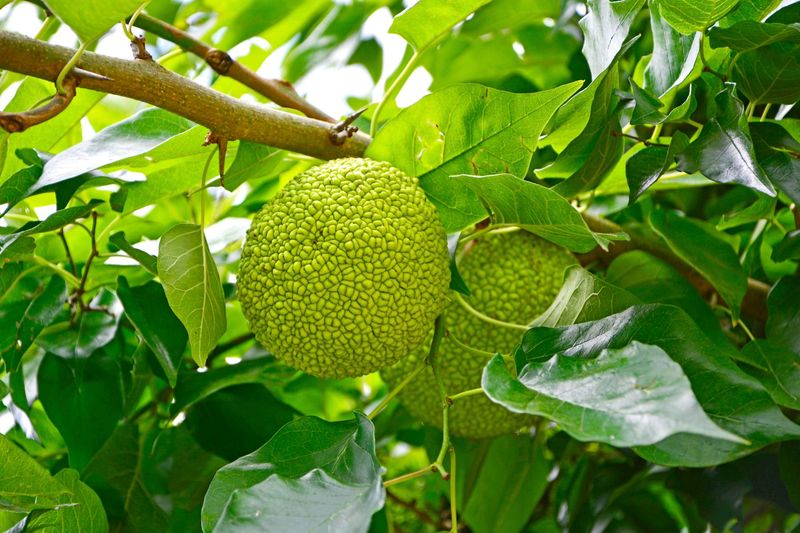
You stepped on it before you saw it, a lumpy green ball the size of a softball, heavy as a baseball, and covered in wrinkles like a brain left out in the sun. It did not fall from any fruit tree you recognize, and it smells faintly citrusy but looks like nothing you would ever eat.
That strange object is the Osage orange, and its story stretches back to a world of giant animals that no longer exist. Understanding what it is and where it came from turns a puzzling yard nuisance into one of the most interesting trees in North America.
The Strange Green Fruit Is Osage Orange
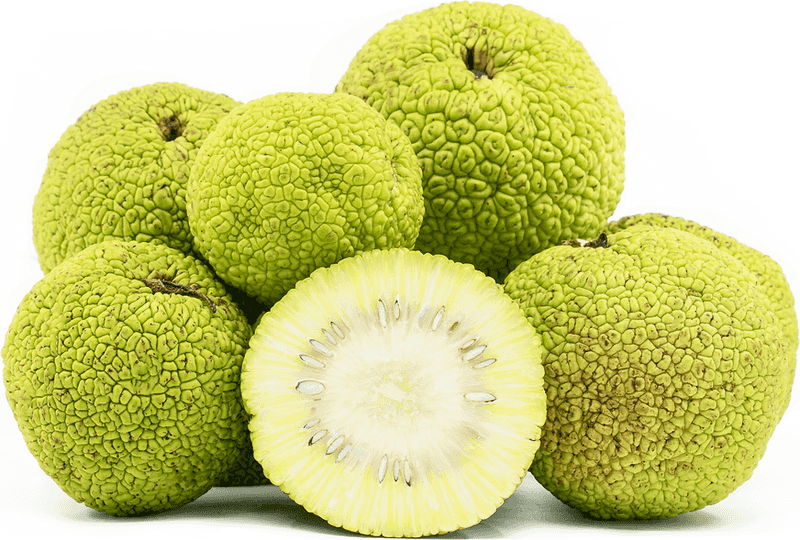
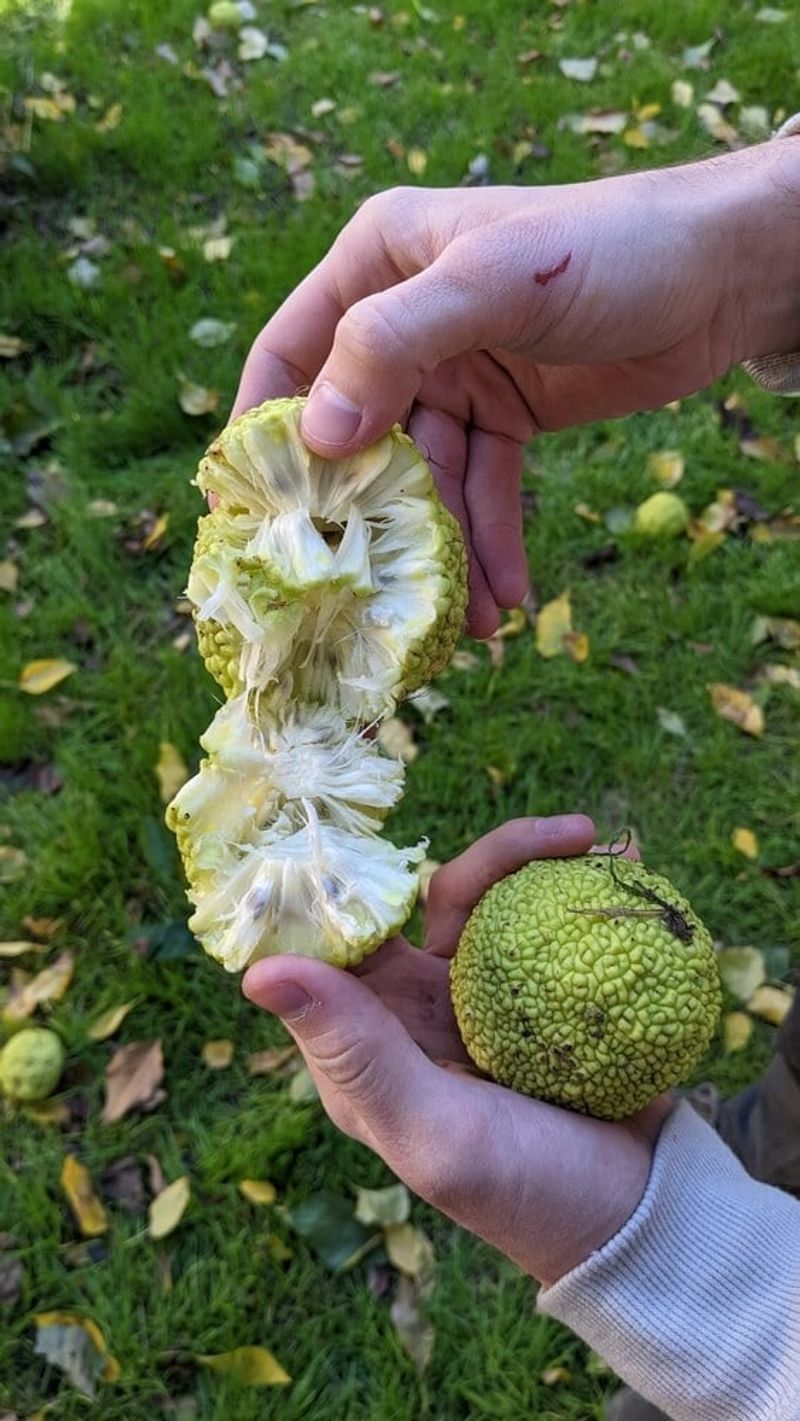
Pick it up and you will notice the weight right away, a pale green or yellow-green sphere usually between 4 and 6 inches across, rough and wrinkled like a tightly packed cauliflower head. That is the Osage orange, known botanically as Maclura pomifera and called by several other names depending on where you live: hedge apple, horse apple, bodark, or bois d’arc.
The last two names come from French traders who borrowed the Osage word for the wood, which translates loosely as wood of the bow.
The tree behind the fruit is a deciduous member of the mulberry family, not the citrus family. Cut a branch and you will find orange-brown inner wood that is almost shocking in its color.
The bark and twigs carry stout, sharp thorns on most forms, and the leaves are glossy with smooth edges, shaped a bit like a stretched teardrop. Break a stem or nick the fruit and a milky, sticky sap oozes out, which is one of the first clues that this is not a conventional yard fruit.
The fruit itself is not a single fleshy structure. Illinois Extension explains that it is a multiple fruit, meaning dozens of small individual fruiting structures have fused together into one dense, fibrous mass packed with seeds and bitter tissue.
Only female trees produce it, because Osage orange is dioecious, a term that simply means male and female flowers grow on separate trees. A male tree in your yard will never make this fruit, and a female tree will make it every fall whether you want it to or not.
Knowing which sex you have changes almost every decision that follows.
Why Scientists See an Ice Age Legacy
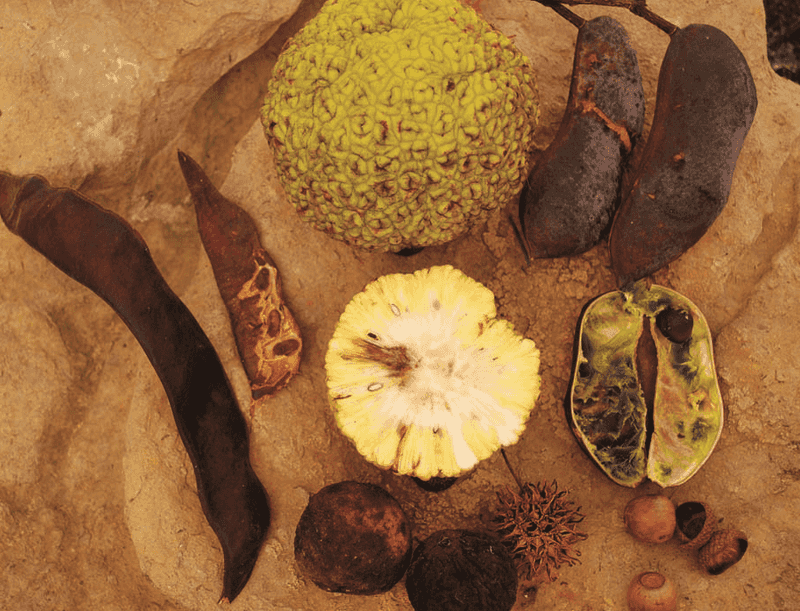
A fruit this large and this heavy should be disappearing across the landscape every fall, carried off and planted by animals that eat it eagerly. Instead, it mostly piles up under the parent tree and rots.
That mismatch is the starting point for one of the more fascinating ideas in North American ecology.
Scientists use the term evolutionary anachronism to describe a plant whose traits appear better matched to an earlier world than to the one it lives in now. The Osage orange is a leading example.
Phylogenetic research on Maclura and its relatives supports the hypothesis that this fruit’s large size and dense structure may reflect adaptation to dispersal by the giant herbivores of the Pleistocene epoch, the period that ended roughly 10,000 to 12,000 years ago when mammoths, mastodons, giant ground sloths, and horses vanished from North America. A fruit built for an animal the size of a mastodon makes no practical sense for a squirrel.
The foundational framing for this kind of thinking came from Janzen and Martin’s influential 1982 paper on neotropical anachronisms, which argued that many large, fleshy fruits in the Americas evolved alongside now-extinct megafauna. The inference is ecological and phylogenetic, not a direct fossil observation of a mammoth eating an Osage orange.
No such evidence exists. Scientists are reading the fruit’s structure the way a detective reads a scene after the fact.
Squirrels do sometimes tear into the fruit to reach the seeds, and research on squirrel behavior shows they occasionally cache or move individual fruits, but generally only short distances. That kind of dispersal keeps most seeds close to the parent tree.
So the Osage orange enters every new growing season carrying fruit traits shaped for a world that no longer exists, waiting for a disperser that never shows up.
People Put Its Wood And Thorns To Work
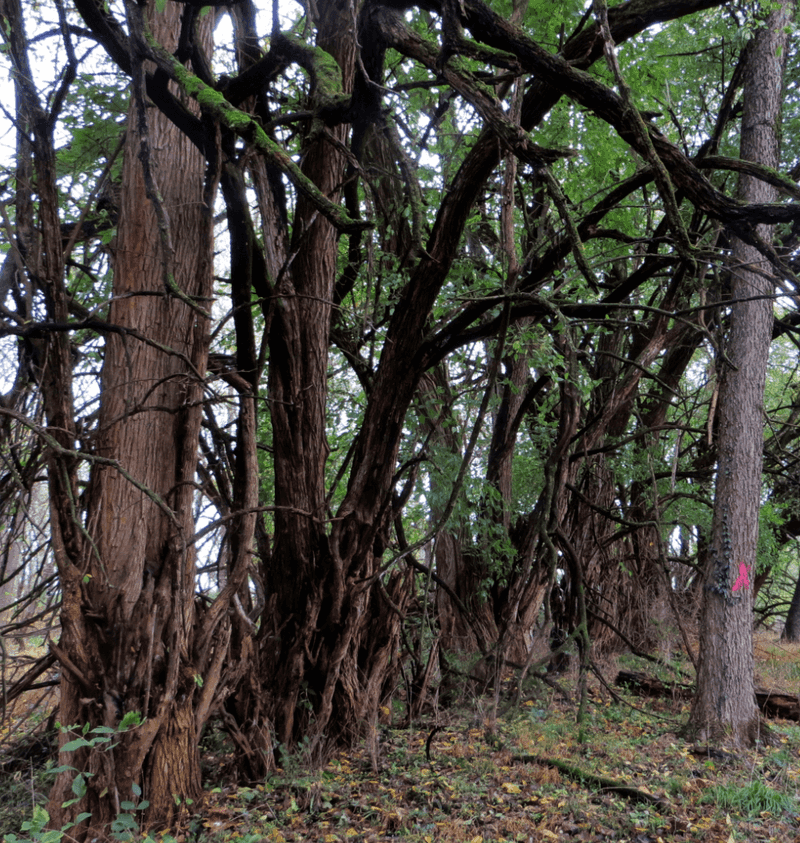
The tree’s story after the Ice Age is really a story about usefulness. Native peoples across the south-central United States recognized early that Osage orange wood is unlike almost anything else that grows here.
It is exceptionally hard, dense, and naturally resistant to decay, and it bends under stress rather than splitting cleanly, which makes it ideal for a bow. National Park Service documentation describes how Native peoples prized the wood for bows and other tools, and historical sources record that a single Osage orange bow could be worth a horse and a blanket in trade, a remarkable price for a piece of wood.
Settlers moving across the Great Plains in the nineteenth century found a different use for the thorns. Before barbed wire became widely available after the mid-1870s, a farmer needed a fence that cattle, hogs, and horses would respect.
Osage orange trees planted about 1 foot apart in a row and trained or woven together as they grew formed a barrier that promoters described as pig tight, horse high, and bull strong. That phrase spread across agricultural newspapers and seed catalogs, and planting boomed.
The USDA Forest Service silvics record describes Osage orange as one of the most widely planted tree species in North American history, which is a striking fact for a tree with almost no commercial timber value.
Beyond the living fence, settlers cut the trees for fence posts that could outlast cedar in wet soil, split them for firewood that burns hot and long, and planted them in rows as windbreaks to slow prairie wind across open fields. Every one of those uses meant more trees were propagated and distributed far outside the original native range.
Human hands moved this tree across the continent, not dispersal by large animals.
Native Range, Planted Range, And Naturalized Trees
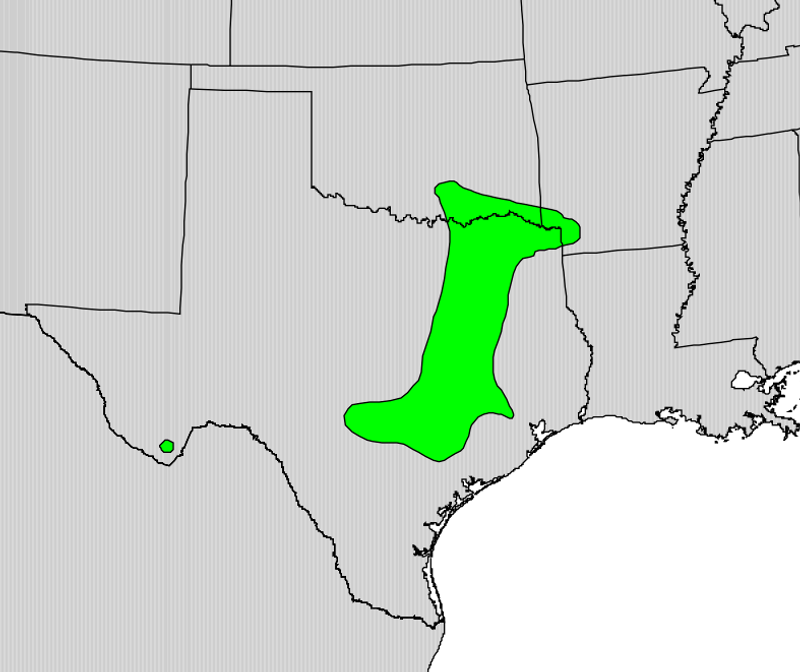
Many people assume a tree this common must be native across most of the country. The actual native range is much smaller.
Osage orange is native to parts of Arkansas, Oklahoma, and Texas, a compact south-central region where the tree evolved alongside the rest of the local flora. Everywhere else, the trees you see reflect human planting, naturalized spread, or some combination of the two.
Oregon State’s landscape plant database notes the limited native origin while documenting the tree’s broad modern distribution across much of the eastern United States and Great Plains. If you find one along a Midwestern field edge, a suburban lot boundary, or an old farm fence line, that tree almost certainly arrived because someone planted it there, or because seeds from a planted tree found their way into the soil nearby.
The Nebraska Forest Service documents the state’s long history as a major center of Osage orange hedge planting, and Nebraska Forest Service guidance treats it as a historically planted species rather than a native one.
The distinction matters for a couple of practical reasons. A tree that is not locally native does not automatically get credit for supporting local wildlife the way a true native would.
And in some settings, Osage orange can behave in ways that concern land managers. The USDA NRCS plant fact sheet notes that the species can become weedy or spread aggressively in disturbed, overgrazed, or poorly managed areas.
That is not the same as being invasive everywhere, and the label does not apply nationwide. Before planting near a prairie remnant, a preserve, or unmanaged natural habitat, check your state’s current invasive-plant and natural-resources guidance to see how local land managers view it.
Hedge Apples Are Not A Reliable Pest Repellent
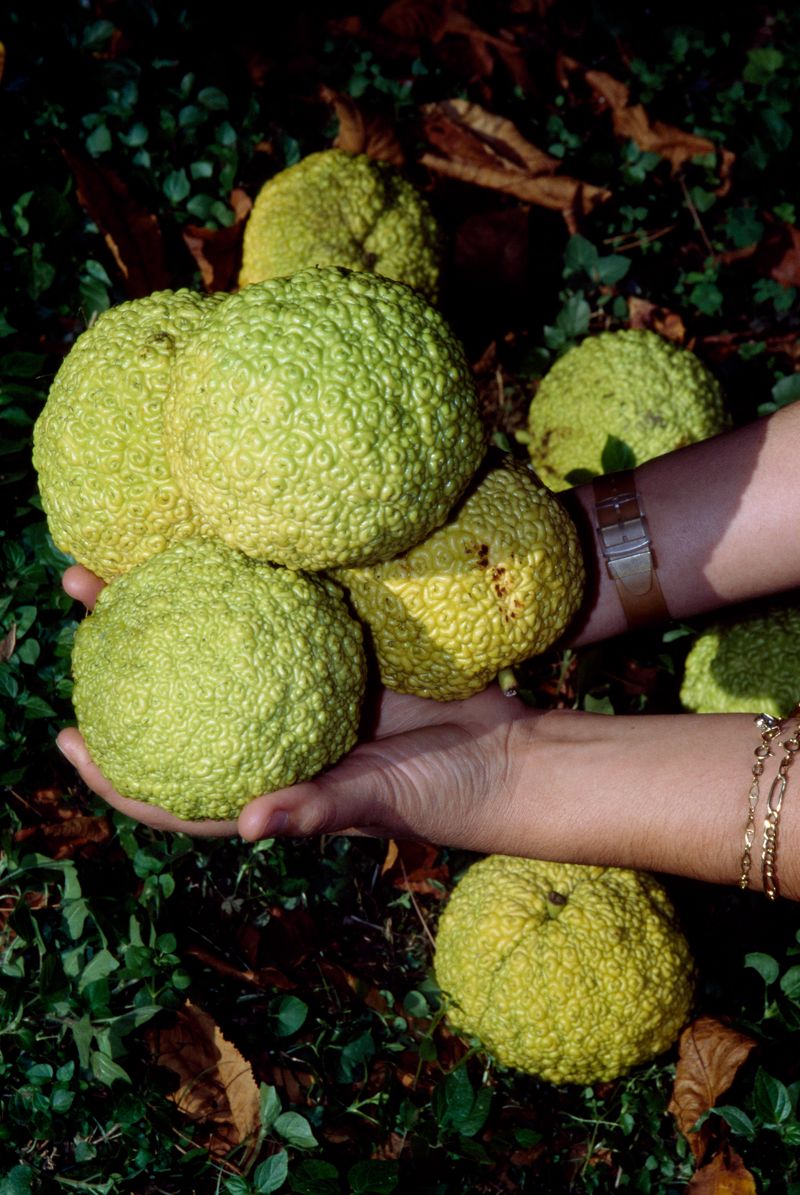
Walk through any rural hardware store in October and you will probably see a bin of Osage orange fruits near the door with a handwritten sign about keeping spiders away. The idea is appealing: a natural, chemical-free way to protect your basement or pantry.
The problem is that the evidence does not back it up for whole fruit.
The Burke Museum at the University of Washington states plainly that no evidence shows Osage orange fruit repels spiders, and notes that spiders have been found building webs directly on the fruit. The confusion partly comes from real laboratory work.
Iowa State University Extension explains that isolated compounds from Osage orange, particularly two isoflavones called osajin and pomiferin, have shown repellent activity against German cockroaches, mosquitoes, houseflies, and maize weevils in controlled tests. Extracting and concentrating those compounds is not the same as setting a whole fruit on your windowsill.
A fruit sitting in a corner releases very little of those compounds into the surrounding air at useful concentrations.
There are also practical handling concerns worth knowing. The milky latex inside the fruit and stems can irritate skin, so gloves are a sensible precaution any time you cut or handle the fruit.
Illinois Extension warns that cattle can choke on the large fruits, so do not toss them into a pasture or leave them where livestock can reach them freely. Rotting fruit in a basement or pantry becomes soft, messy, and attractive to squirrels and chipmunks if it is near an opening.
Treat the fruit as an ecological curiosity with a genuinely interesting story, not as a household pesticide or animal feed.
Decide Whether The Fruit Belongs In Your Yard
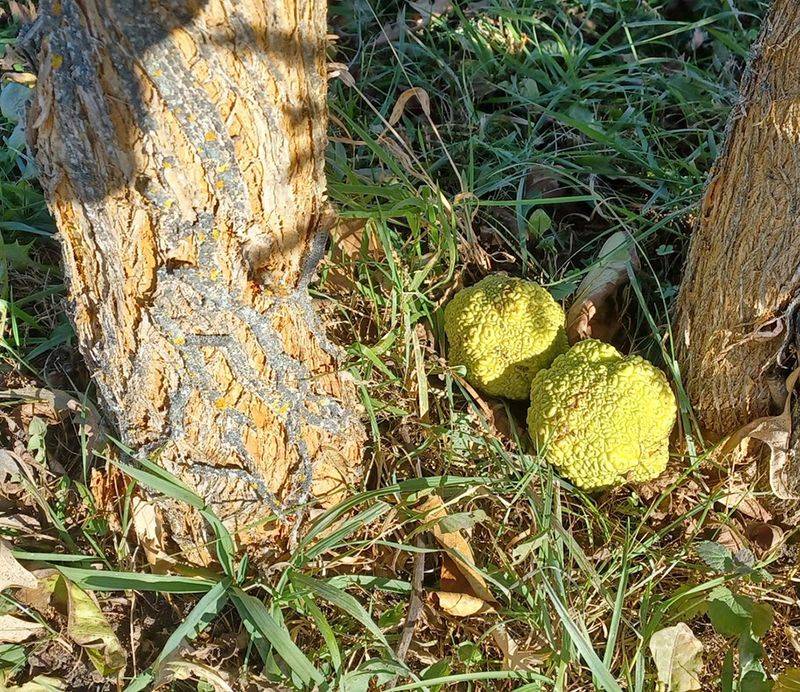
Standing under a mature Osage orange in September, watching a 2-pound fruit drop from 40 feet up, you understand immediately why placement matters. A female tree is a seasonal commitment.
Every fall it will cover the ground with heavy, awkward fruits that roll underfoot, attract wildlife, and need to be raked or hauled away before someone trips on one.
Beyond the fruit, many forms of this tree carry stout thorns that can puncture shoes and injure pets. Keep thorny forms away from play areas, dog paths, sidewalks, driveways, and outdoor seating.
A tree that eventually reaches 35 to 50 feet tall with a spread of 30 to 40 feet is not a casual foundation planting or a tree you tuck in near a fence and forget. Give it genuine room, away from power lines, rooflines, and anything you do not want shaded or scratched.
The good news is that Osage orange is genuinely tough once it is established. It prefers full sun and tolerates a wide range of soils, including dry, alkaline, compacted, and occasionally wet ground.
North Carolina State Extension notes that ideal growth calls for full sun and roughly 40 to 45 inches of annual rainfall or supplemental irrigation, a figure that fits much of the eastern United States but may require irrigation in drier parts of the Great Plains or the West. New trees still need regular watering for the first season or two while roots develop, even though the mature tree handles drought well.
Iowa State University Extension places Osage orange in USDA hardiness zones 4 through 9, which covers most of the continental United States for winter cold tolerance, but zone alone does not tell you whether the tree fits your site, your rainfall pattern, or your available space. Use the zone as one data point, not a green light.
And if root sprouts from a neglected tree have already colonized a fence line on your property, know that removing established root systems takes real effort.
Select A Cultivar By Verified Traits
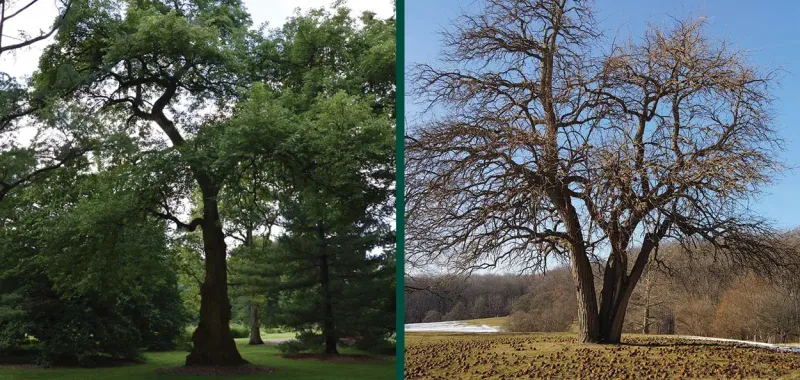
Buying a named cultivar instead of a random nursery seedling gives you more control over what actually ends up in your yard, but only if you verify what you are buying before you pay for it. The most important question is sex: a male tree will never produce the large fallen fruits that create cleanup work and trip hazards.
That single fact changes the entire maintenance picture.
University of Illinois Extension’s tree selector lists cultivars including ‘Double O,’ ‘Wichita,’ and ‘White Shield’ as examples of named Osage orange selections, noting that some are described as fruitless or nearly thornless. Do not take those descriptions at face value without confirmation from the nursery you are buying from.
Cultivar traits, including thorn density, mature size, and sex, can vary by source, propagation method, and growing conditions. A tree labeled nearly thornless at one nursery may develop more pronounced thorns under different site conditions or if it was propagated from a different source plant.
Ask the nursery specifically whether the plant is male, what its documented thorn characteristics are, and what mature size to expect at your site. A reputable nursery should be able to answer all three questions.
If the answer is vague, treat that as a reason to keep asking or to shop elsewhere. A fruitless male tree that still carries heavy thorns creates different concerns than a fruitless male with minimal thorns, and neither is the same as a fruiting female.
Matching the right cultivar to your specific situation, whether that is a windbreak, a specimen tree in an open lawn, or a hedge along a back boundary, is worth the extra conversation before you plant.
Grow It From A Nursery Tree Or Seed
For most homeowners, buying a nursery-grown tree is the practical starting point. A named cultivar from a reputable source gives you a reasonable expectation of sex, thorn character, and mature form.
You skip the mess of handling fresh fruit, and you get a tree with a head start in root development. Plant it in full sun, water it consistently through the first two growing seasons, and give it the space a large tree deserves.
Seed propagation is a real option if you want to grow your own, and USDA Forest Service silvics guidance lays out the steps clearly. Clean the seeds from ripe fruit, then either soak them in water for about 48 hours or give them roughly 30 days of cold stratification in a moist medium in your refrigerator before sowing.
Plant them about one-quarter to one-half inch deep in firm soil with full light, consistent moisture, and control of competing weeds during establishment. Germination rates improve noticeably when seeds are not competing with heavy grass cover in the first few weeks.
Wear gloves whenever you cut or clean the fruit. The latex irritates skin, the fruit is heavy and awkward to work with, and the process is messy enough that doing it over a bucket outdoors is smarter than doing it at the kitchen sink.
Keep cut fruit away from children and pets. Illinois Extension notes that the fruit is not known to be poisonous but is generally unpalatable, and the latex can cause skin irritation on contact.
Seed-grown trees will vary in sex and thorniness, so expect a few years before you know what you have.
What you end up with, whether from a nursery tag or a stratified seed, is a tree carrying roughly 10,000 years of evolutionary history in its fruit and a few centuries of human ingenuity in its distribution. It did not need people to survive as a species, but people found it so useful that they carried it across a continent.
That is a different kind of story, and a more honest one.