
The Plant Most People Guess Wrong Often Turns Out To Be The Better Garden Choice
Follow us on Google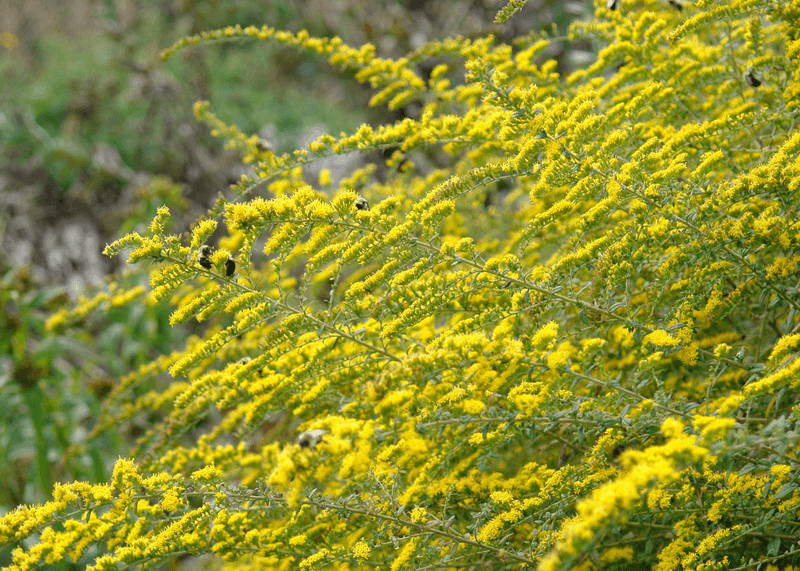
Every fall, a bright yellow plant lights up roadsides, vacant lots, and garden edges, and plenty of homeowners blame it for their sneezing. That blame is usually aimed at the wrong plant.
The one most commonly mistaken for a problem turns out, with the right identification and a little planning, to be a genuinely useful addition to a yard. Getting the two apart is the first step toward a healthier, lower-maintenance garden bed.
Goldenrod And Ragweed Create A Common Mix-Up
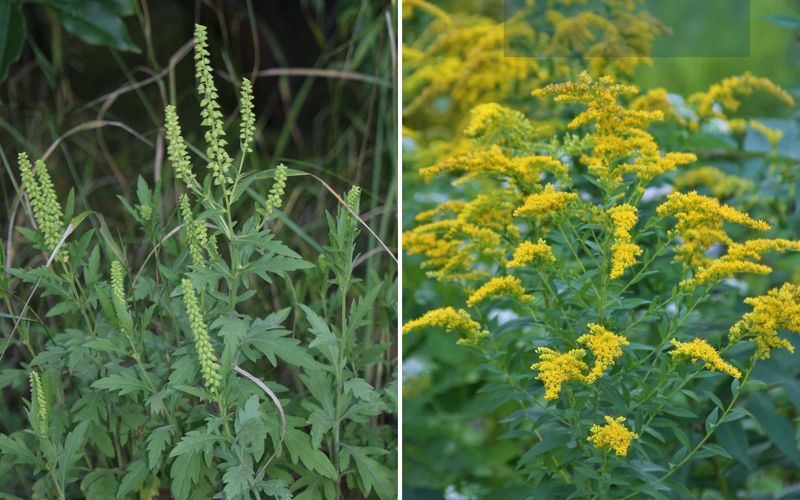
Walk along almost any sunny roadside in late August or early September and you will likely spot two very different plants growing just a few feet apart. One holds bright yellow flower clusters high on an upright stem.
The other blends into the background with small greenish flowers that most people walk right past without a second look. That pairing is at the heart of a common confusion that sends homeowners pulling the wrong plant every fall.
The plant behind this mix-up is most plausibly goldenrod, Solidago spp., a genus of herbaceous perennials that bloom at roughly the same time as ragweed, Ambrosia spp., and can grow in similar open or disturbed habitats. Because both appear in late summer and fall, and because ragweed is a well-known allergy trigger, goldenrod often gets the mistaken blame.
Clemson University’s Home and Garden Information Center offers a clear side-by-side comparison that walks through the key differences.
The most reliable way to tell them apart is to look at the whole plant, not just one leaf. Goldenrod generally produces conspicuous yellow flower clusters concentrated toward the top of a more upright central stem.
Ragweed branches more broadly and carries small greenish flowers on green spikes that are easy to overlook unless you are looking for them.
Leaf shape varies considerably among Solidago species, so a single leaf photo or a blurry picture from across the yard is not enough to make a confident call. Step close, look at the flowers, observe the overall shape, and compare the full form of the plant before deciding whether to pull it or keep it.
Ragweed Is A Major Fall Allergy Trigger
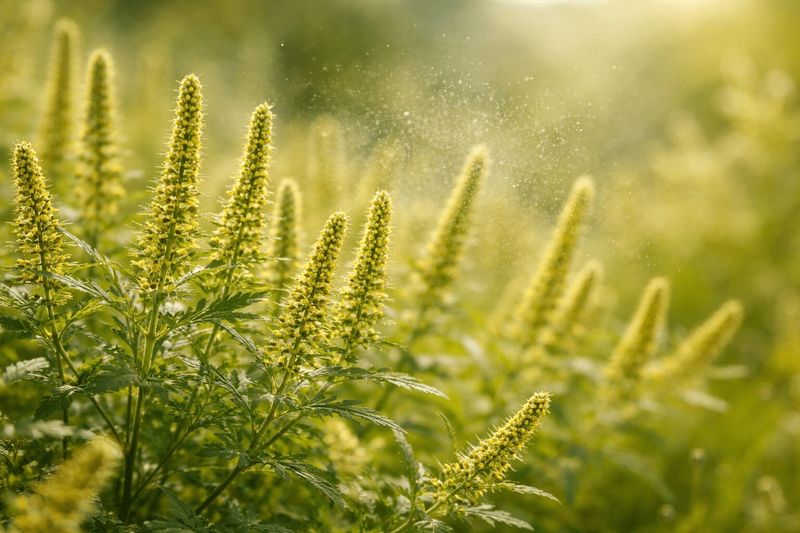
Ragweed is a genuinely serious allergy plant, and the timing makes it easy to understand why so many people connect fall sneezing to whatever yellow plant they see nearby. The American College of Allergy, Asthma and Immunology reports that ragweed commonly blooms from August into November across much of the United States, with pollen levels often peaking around mid-September.
A single ragweed plant can release billions of pollen grains during that stretch.
What makes ragweed so effective as an airborne allergen is the weight of its pollen. The grains are light and windborne, meaning they travel easily without any insect help.
Goldenrod pollen works differently. It is generally heavier and stickier, designed to cling to bees, butterflies, and other visiting insects rather than float through the air.
University of Florida IFAS Extension explains that insect-pollinated plants like goldenrod are rarely responsible for airborne hay fever because their pollen does not travel freely on the wind. That said, direct contact or unusual exposures can still trigger a reaction in sensitive individuals, so goldenrod should not be called completely allergy-safe.
Ragweed is a major source of fall allergy symptoms, but it is not the only one. Other windborne pollens, mold spores, and additional allergens can cause the same sneezing and itchy eyes in the same season.
Pulling every yellow-flowered plant from your yard will not solve the problem if ragweed is still growing two properties over.
When fall symptoms are interfering with your life and you are not sure what is causing them, professional evaluation and testing are the right next step. Removing plants by flower color alone is not a reliable treatment plan.
Goldenrod Extends The Pollinator Season
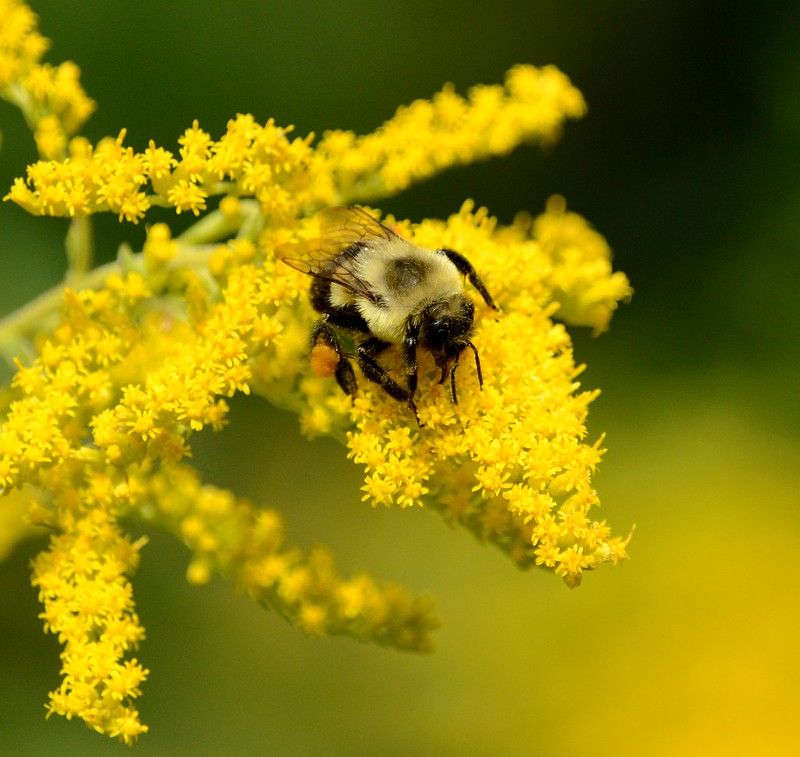
By late September, most of the spring and early summer flowers in a typical yard have finished. Coneflowers are done, bee balm is long past, and garden beds can look sparse right when migrating butterflies and native bees are still actively searching for food.
A correctly identified goldenrod fills that gap in a way few other plants can.
According to the USDA Natural Resources Conservation Service plant guide for showy goldenrod, goldenrods are valuable late-season nectar sources and several native bee genera specialize on Solidago pollen. Bees, butterflies, wasps, flies, and beetles all visit the flowers.
Some of the insects that feed on goldenrod also attract birds and support parasitoid wasps that prey on garden pests, though goldenrod alone should not be counted on as a pest-control solution.
Penn State Extension describes goldenrod as a plant that can tolerate difficult soil and require relatively little maintenance after it has settled in. That combination of late-season timing, pollinator value, and low upkeep is what makes a correctly identified and appropriately placed goldenrod a more practical choice than an unwanted patch of ragweed near a porch or play area.
Those benefits depend on the species, cultivar, region, and site. Goldenrod works best as one plant in a diverse fall planting rather than the only flower in the yard.
A mix of late-season natives gives pollinators more food options and gives your garden more visual interest without putting all the work on one plant.
Choose The Species Or Cultivar Before You Plant
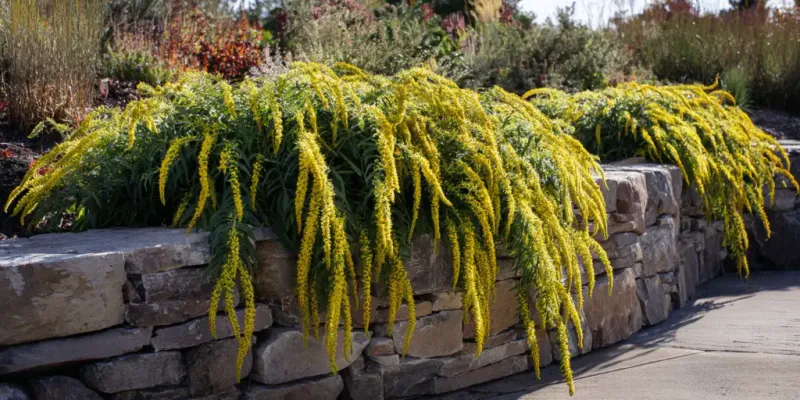
Goldenrod is not one plant. The genus Solidago includes roughly 120 to 138 species, according to extension and USDA sources, and they differ enough in height, moisture preference, native range, and spreading habit that treating them as interchangeable is a recipe for disappointment or a maintenance headache.
Size alone tells the story. North Carolina State University Extension lists goldenrod species suited to coastal, Piedmont, and mountain conditions, each with different site requirements.
On the smaller end, the cultivar ‘Golden Fleece’ tops out at about 15 inches, which fits neatly into a front border without crowding its neighbors. ‘Fireworks’ reaches 24 to 36 inches and arches outward in a way that earns its name. Some species grow more than 6 feet tall, which Penn State Extension notes is better suited to a meadow or a large pollinator planting than a narrow suburban bed.
Growth habit matters just as much as height. Some goldenrods spread through rhizomes, the underground stems that let a plant quietly expand its footprint over several seasons.
Others form tighter clumps that stay where you put them. For a small residential border, a compact or clump-forming selection is the practical choice.
Save the vigorous, spreading types for larger spaces where you want quick coverage and do not mind managing the edges.
Before you buy, check the nursery label for mature width and read the regional extension advice for your state. Do not assume that a plant labeled goldenrod is native to your specific area.
Native status varies by species and by region, and a non-native goldenrod may behave differently in your soil than a locally adapted one would.
Match Goldenrod To Light Soil And Moisture
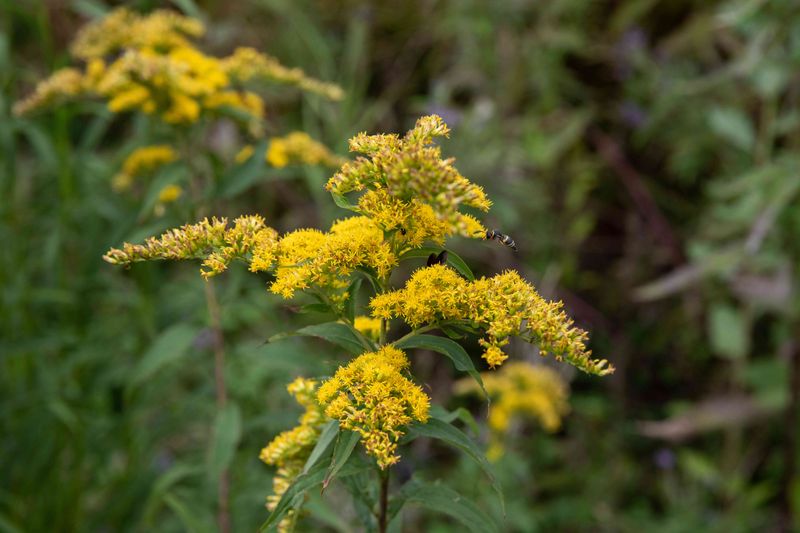
Putting the right goldenrod in the wrong spot is one of the fastest ways to turn a low-maintenance plant into an annual frustration. Site conditions matter more than the plant label’s general promise, and a little homework before you dig saves a lot of corrective work later.
Most prairie-type goldenrods perform best in full sun, which means at least 6 hours of direct light per day, with average to dry, well-drained soil. Many tolerate clay and poor soil, which makes them useful in spots where other perennials struggle.
NC State Extension’s plant toolbox notes that some species instead prefer moist soil, woodland edges, or wet areas, so the match between plant and site needs to be deliberate rather than assumed.
Hardiness zones tell you only how cold a winter the plant can survive. They do not account for summer heat, humidity, rainfall patterns, drainage, or elevation, all of which can change how a goldenrod performs from one yard to the next.
A zone 6 garden in the mid-Atlantic and a zone 6 garden in the southern Appalachians are different growing environments, even on paper they look the same.
The first growing season is the one that requires your attention. The USDA plant guide for showy goldenrod describes the first year as the most critical period for establishment and notes that plants need less irrigation once they are settled in.
Water new plants during extended dry spells, especially if you are planting in late summer or early fall. Calling goldenrod drought-proof is an overstatement that sets up new plants to fail.
Control Spread With Spacing And Division
Goldenrod’s main practical drawback is not its pollen and not its looks. It is the way certain species quietly expand their territory through underground rhizomes, especially in moist, fertile soil.
A plant that looked manageable in its first season can push into neighboring perennials by its third, and a narrow residential bed has little room for that kind of quiet takeover.
Spacing is your first line of defense. A planning range of roughly 2 to 4 feet from neighboring plants gives most goldenrods room to reach their mature width without crowding.
That number should be adjusted to whatever the nursery label lists as the cultivar’s actual mature spread, because the range varies considerably across species.
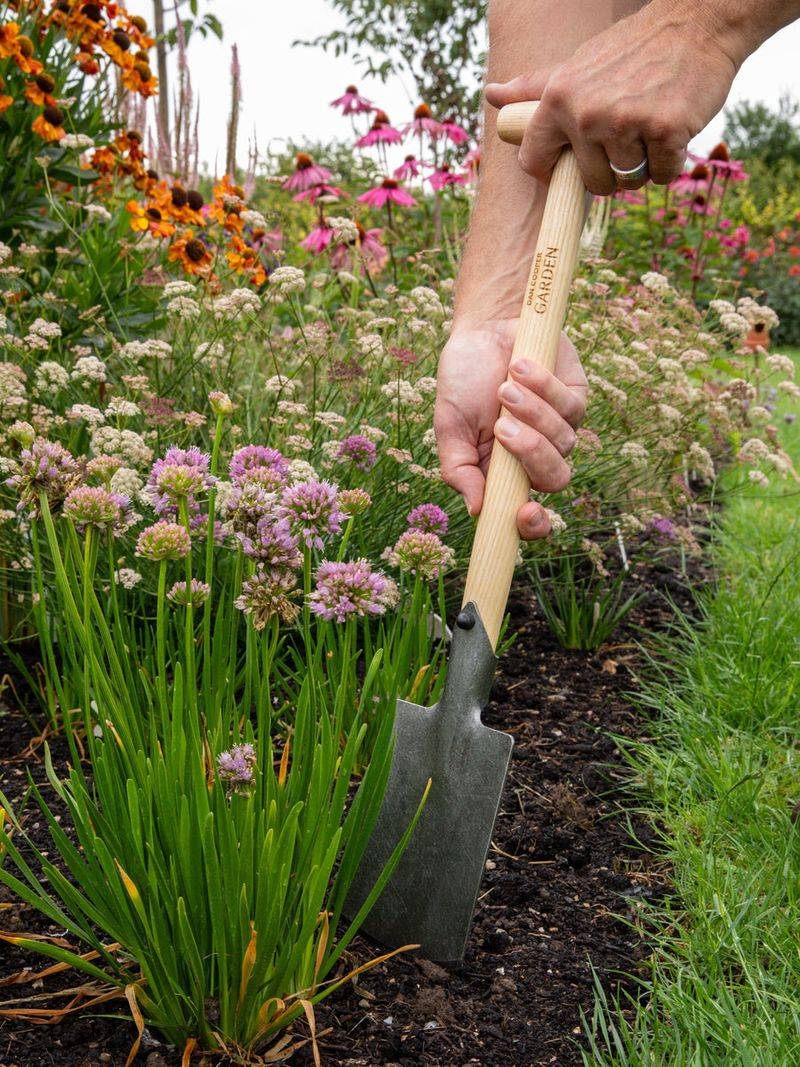
Iowa State University Extension recommends division as a control and renewal method, placing it in early spring for many goldenrods. Faster-spreading types may need dividing every 2 to 3 years to keep them from overtaking the bed.
More restrained, clump-forming cultivars can go 4 to 5 years between divisions. Timing and frequency vary by species, so check your specific plant’s guidance rather than applying one rule to all of them.
The simplest way to avoid a spread problem is to choose a compact or clump-forming cultivar from the start. Penn State Extension recommends those selections for smaller gardens and reserves vigorous rhizomatous types for meadows and larger pollinator plantings where spread is welcome rather than a problem.
Picking the right form upfront means less corrective digging later, and division when it does happen gives you divisions to share or relocate rather than just more yard work.
Make The Final Choice With Identification And Safety In Mind
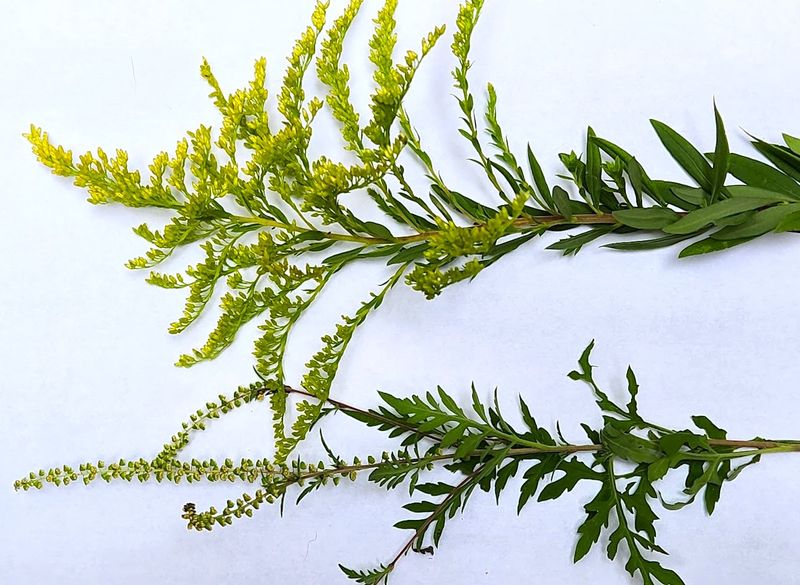
Before you pull a plant or add one to a bed, confirm what you are actually looking at. The whole-plant comparison described earlier in this article is the right starting point.
Flower color, flower structure, stem habit, and overall branching pattern together give a much more reliable answer than one leaf or a quick phone photo from ten feet away.
Once you have a confident identification, check the species or cultivar’s regional suitability, mature size, moisture needs, and spreading habit before you commit to a planting spot. A goldenrod that fits your light, drainage, and available space can be a more useful neighbor than a patch of ragweed near a patio or a play area.
That comparison holds when the identification is right and the selection fits the site. Neither plant should be judged by flower color alone.
Allergy management belongs in its own category. The American College of Allergy, Asthma and Immunology recommends professional evaluation and testing when the cause of fall symptoms is uncertain.
Removing goldenrod will not reduce your exposure to ragweed pollen, which travels on the wind from plants you may never see. Focus on confirmed triggers and reduce contact with those, not with whatever plant happens to be yellow.
Safety around pets and children deserves a specific note. Common garden goldenrods are not the same as rayless goldenrod, Isocoma pluriflora, which the ASPCA lists as toxic to horses.
Keep pets and children from eating any unidentified plant, and do not assume that a plant is safe simply because it shares part of a common name with something familiar. A correctly identified, well-placed goldenrod can earn its spot in your yard by feeding pollinators late into the season when almost nothing else does.