
Your Mole May Eat Grubs, But That Does Not Mean It Is Protecting Your Lawn All Season
Follow us on Google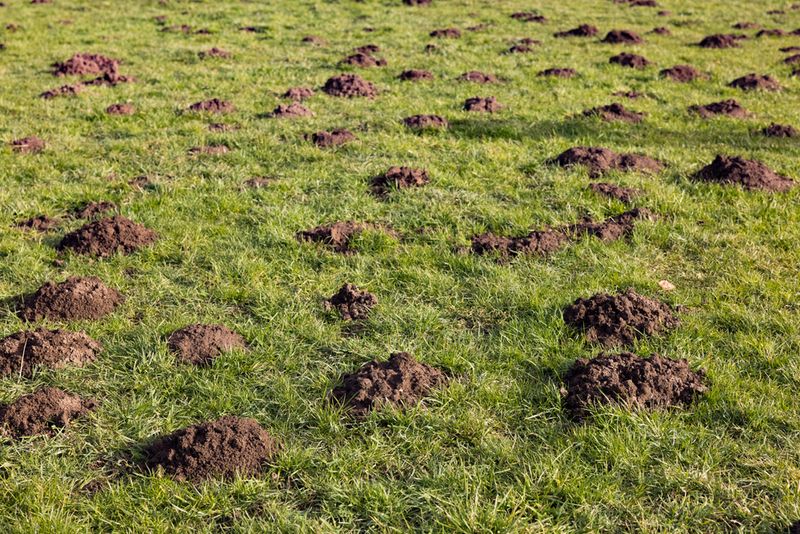
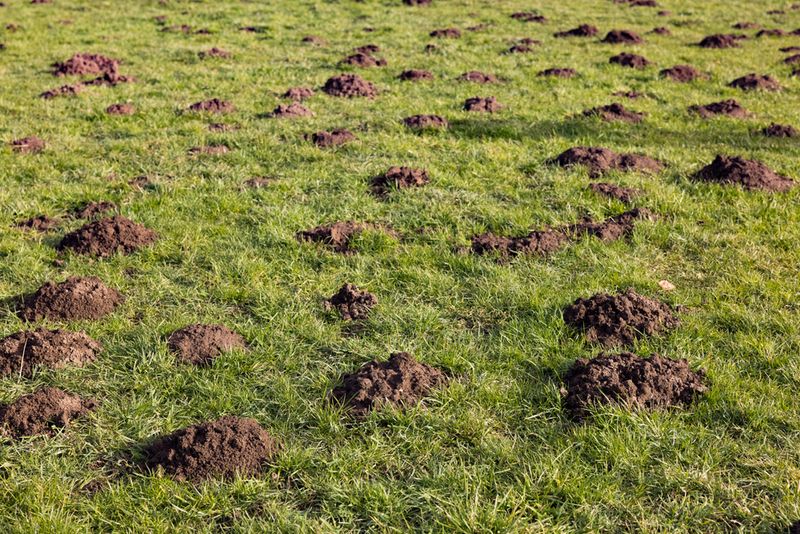
You walk out on a Saturday morning, coffee in hand, and your lawn looks like something tunneled through it overnight, because something did.
Before you reach for a trap or a bag of grub killer, there is a more useful question to ask: what is that mole actually doing down there, and is it helping or hurting your grass.
The answer is more complicated than the raised ridges make it look, and getting it right can save you money, protect some genuinely useful soil life, and keep your yard healthier through the season.
A Mole May Eat Grubs—but It Does Not Prove You Have Them
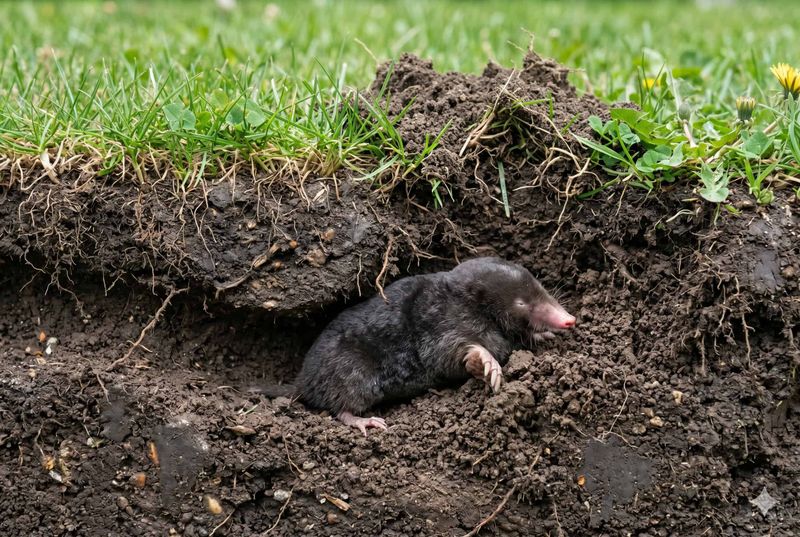
Somewhere under your grass right now, a mole is moving fast.
University of Maryland Extension notes that Eastern moles consume insects, mostly grubs and worms, and may eat 70 to 100 percent of their body weight every single day.
That is a real appetite, and yes, white grubs are on the menu alongside beetles, ants, and other soil invertebrates.
But here is where the story gets more complicated.
Earthworms are often the main course, especially in spring and early summer when grub populations are low or still developing deep in the soil.
University of Missouri Extension describes earthworms and white grubs as preferred mole foods, but also lists beetles, spiders, snails, and other invertebrates as part of the diet.
A mole is not a targeted pest-control service.
It eats what it finds.
So when you spot fresh ridges across your turf, that mole might be chasing grubs, or it might be following a trail of earthworms through moist spring soil.
Its presence does not confirm that grubs are present, that grubs are causing your thinning grass, or that the mole will steadily reduce a damaging grub population all season long.
Those high daily food needs describe how much energy the animal burns, not how many lawn-damaging larvae it removes from your specific yard.
Treat the mole as a possible ally, but a conditional one.
Confirm grubs separately before deciding anything else.
The Tunnel, Not Root-Eating, Often Causes the Visible Damage
Many homeowners assume the mole is down there chewing grass roots, because the grass is dying and the mole is clearly active.
Maryland Extension’s guide to animals digging in lawns makes the distinction clearly: moles generally do not eat grass roots.
The damage you see is a side effect of digging, not direct feeding.
Shallow tunnels can lift or partially uproot turf, leaving roots exposed to drying air.
Raised ridges of loose soil are also vulnerable to mower scalping, which strips the grass crown and leaves bare patches that look far worse than the original disturbance.
The mole is essentially an unintentional landscaper working just below the surface, and its excavation causes real cosmetic and structural harm without any chewing involved.
The animal you actually want to watch for if roots are being eaten is the vole, a small rodent that looks a bit like a chunky mouse.
Maryland Extension’s mole resource notes that voles can feed directly on roots, bulbs, stems, and bark.
Voles create surface paths or narrow runways through matted grass, often visible after snow melts.
Moles, by contrast, push up raised ridges of soil and leave volcano-shaped mounds of fresh dirt.
Getting the identification right matters before you do anything else.
If roots and bulbs are disappearing, look for vole runways rather than mole ridges, because the control approach for each animal is different.
Treat Mole Tunnels as a Clue, Not a Grub Diagnosis
Animal digging is an easy thing to misread.
UNH Cooperative Extension points out that mole activity is not a reliable indicator of a grub infestation, because moles also pursue earthworms and other beneficial soil organisms that have nothing to do with lawn damage.
Reaching for grub control every time you see a raised tunnel means treating a problem you may not actually have.
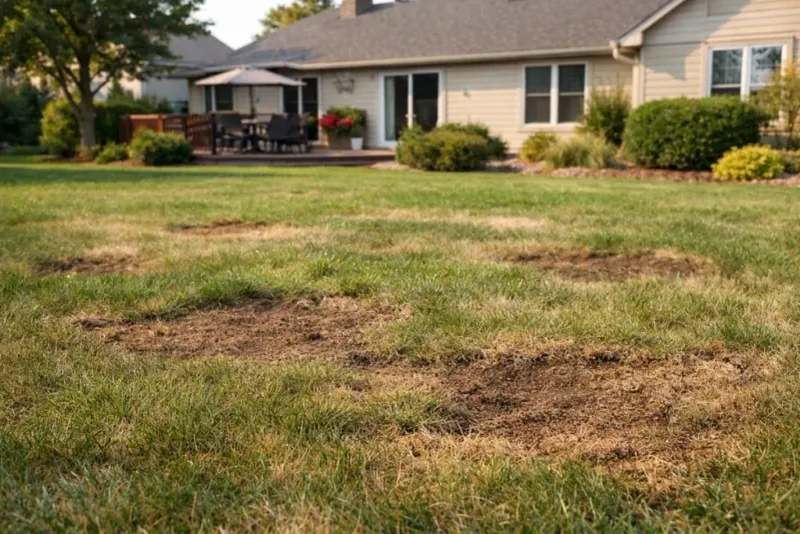
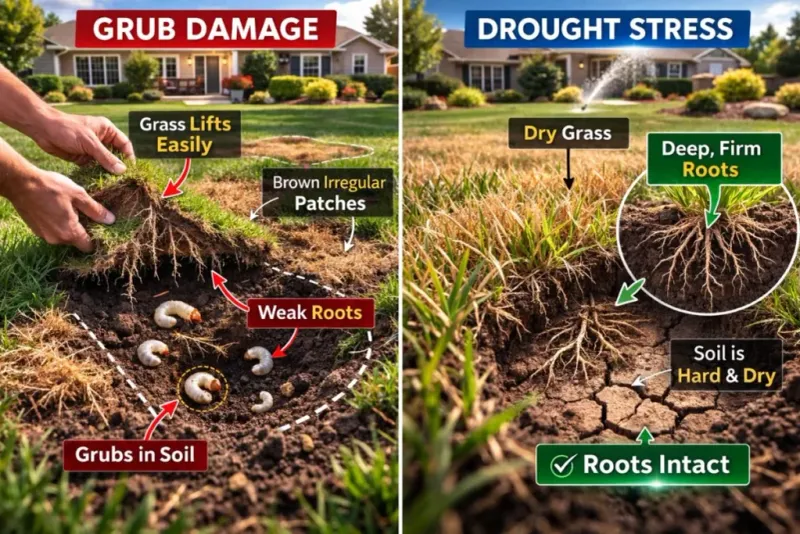
Thinning or browning turf has a long list of possible causes.
Drought is one of the most common and most misdiagnosed.
Maryland Extension’s lawn-digging guide lists drought, disease, shade, compaction, chinch bugs, and sod webworms as conditions that can produce symptoms nearly identical to grub feeding.
A lawn stressed by dry weather or poor drainage can thin out and brown in patterns that look exactly like subsurface pest damage.
Before you apply anything, take a few minutes to rule out the simpler explanations.
Check whether the brown areas follow shade patterns or low spots that drain poorly.
Press on the turf and see whether it feels spongy or firm.
Pull lightly on dying grass to feel whether the roots are intact or whether the turf lifts like a loose mat, which is a more specific sign of root damage.
Mole tunnels are worth noting and watching, but they are the beginning of your investigation, not the end of it.
Let the turf itself tell you what is actually wrong before you commit to a treatment plan.
Dig and Count Before You Treat
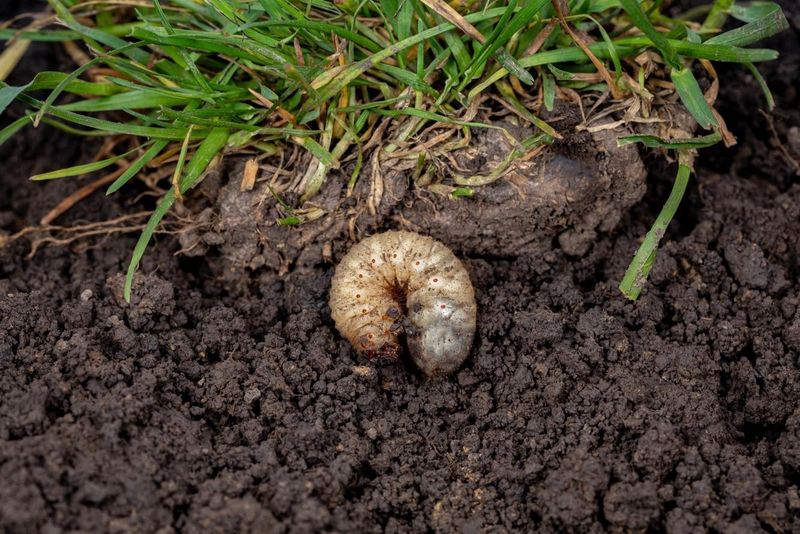
Counting grubs takes about ten minutes and gives you real information instead of guesswork.
Penn State Extension recommends cutting and peeling back roughly a 1-square-foot section of turf at the border between healthy and damaged grass, then examining about 2 to 4 inches of soil, turf, and thatch for the pale, C-shaped larvae.
Do not sample just one spot.
Grub distribution across a lawn is rarely uniform, so pulling sections from two or three locations gives you a much better picture of what is actually happening.
UNH Extension advises replacing the sod promptly after each inspection and watering the replaced section if the soil is dry.
A little care at this step keeps your sample sites from turning into new bare patches.
Write down the count from each square-foot section.
You are looking for a pattern across several samples, not a single dramatic number.
A few grubs in one spot and none in three others tells a very different story than a consistent count of eight or more across every section you check.
Finding grubs does not automatically mean treatment is needed.
Grub presence, grub species, visible turf injury, and your local soil and climate conditions all factor into whether control makes sense.
The count gives you evidence.
What you do with that evidence depends on context, which the next section covers.
Interpret Grub Counts and Timing Locally
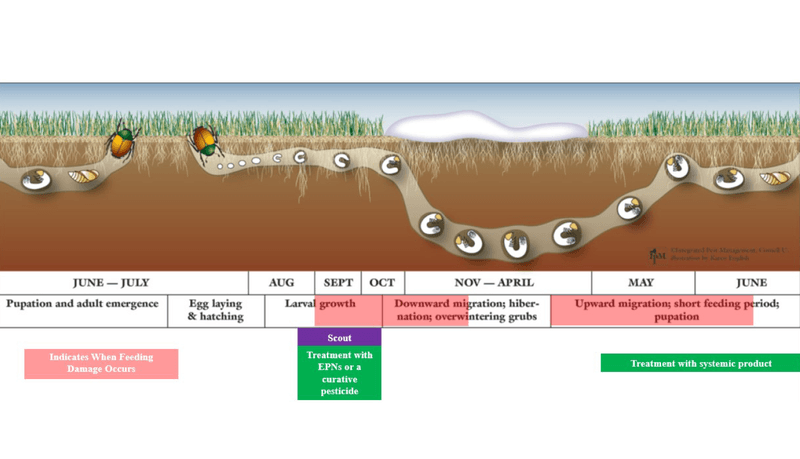
No single grub number applies to every lawn in every state, and extension services are candid about that.
Penn State Extension describes 5 to 10 grubs per square foot as a commonly used curative-treatment threshold for many Pennsylvania lawns.
UNH Cooperative Extension describes 10 or more per square foot as a serious infestation.
Purdue Extension cautions that fewer than 5 grubs per square foot rarely warrants treatment, but even a count of 20 may cause little obvious damage in some conditions depending on turf health, soil type, and moisture.
Those three numbers from three respected universities are not contradictions.
They reflect real differences in turf type, grub species, soil conditions, and what homeowners in each region consider acceptable.
A lawn with deep roots and good fertility can tolerate more subsurface feeding than a thin, compacted, drought-stressed one.
Your count means more when you match it to your specific turf condition.
Timing matters too, and it varies by grub species and geography.
Annual white grubs, including Japanese beetle larvae, are generally more active and closer to the surface in late summer, making that the more useful scouting and curative-treatment window in many parts of the country.
Illinois Extension recommends mid to late August for annual grubs in northern and central Illinois, while Penn State points to late summer through early September for many Pennsylvania lawns.
Those dates do not translate directly to the Southeast, the Southwest, or the Pacific Northwest, where grub species and life cycles differ.
Follow your local cooperative extension’s current recommendations for species, timing, and thresholds.
A number that triggers treatment in New Hampshire may be perfectly manageable in a well-irrigated Kentucky bluegrass lawn in Ohio.
Build Turf That Can Tolerate Some Feeding
Healthy turf is genuinely more forgiving.
A lawn mowed at 3 inches or higher develops a deeper root system that can absorb some subsurface feeding, whether from grubs, tunneling disturbance, or dry spells, without collapsing into bare patches.
UNH Extension recommends mowing at least 2 inches high, with 3 inches or more as the better target for building that root depth advantage.
Soil testing every 2 to 3 years is another step that pays off quietly over time.
When pH and fertility are in the right range for your grass type, the turf fills in more densely, recovers faster from disturbance, and competes better against weeds that move into stressed areas.
UNH also recommends overseeding sparse areas in spring or fall, timed to your local climate and grass species, as a way to restore density before thin spots become real problems.
None of these steps are guarantees.
A lawn in excellent condition can still suffer from a heavy grub year, a severe drought, or persistent mole activity in a concentrated area.
Think of good turf maintenance as raising the floor, not building a ceiling.
The grass becomes a quieter ally that absorbs more before it shows damage.
These habits also reduce the pressure to reach for chemical controls at the first sign of trouble.
A thick, well-rooted lawn gives you time to inspect, identify, and respond thoughtfully instead of reacting to symptoms before you know their cause.
Flatten and Repair Minor Mole Disturbance
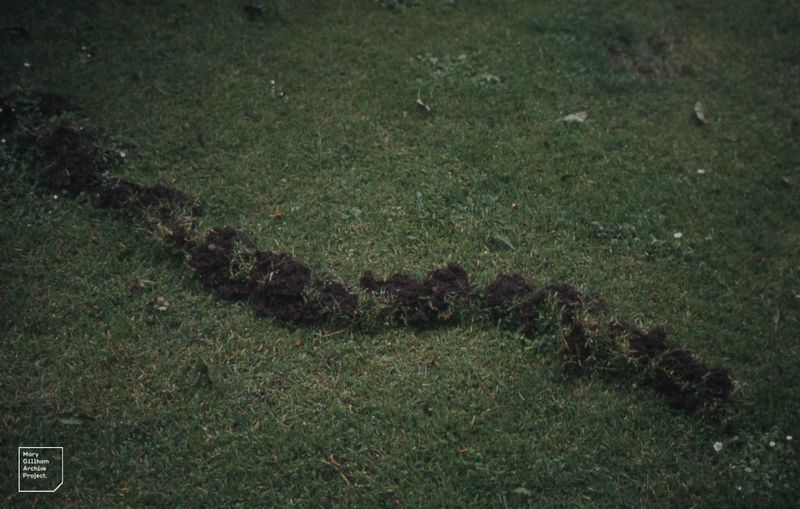
Most mole damage in a home lawn is fixable with a boot and a handful of grass seed.
Maryland Extension recommends pressing raised tunnels flat with your foot or leveling them with a rake.
Collapsing the air void under a ridge reconnects the exposed roots to moist soil and stops the drying that causes the most visible grass loss.
Once the ridge is flat, check whether the grass in that strip is still alive.
If it is green and the roots are intact, a good watering and a few days of recovery are often enough.
If the turf looks thin or the soil is bare, overseed the area with a grass variety that matches your existing lawn, or replace small patches with sod for faster coverage.
Repair thin spots in early fall or early spring when temperatures favor germination and establishment for most cool-season grasses, or in late spring for warm-season types.
Further control may not be necessary at all.
Maryland Extension notes that mole populations and activity levels can decline naturally as soil moisture, temperature, and food availability shift through the seasons.
A stretch of dry weather pushes earthworms deeper, and the mole may simply move on or reduce its surface tunneling without any intervention from you.
If the ridges are limited to one area of the yard, do not interfere with drainage or play space, and are not getting worse week over week, flattening and reseeding is a reasonable first response.
Watch for another two to three weeks before deciding whether removal is worth considering.
Trap Only When an Active Tunnel Causes a Real Problem
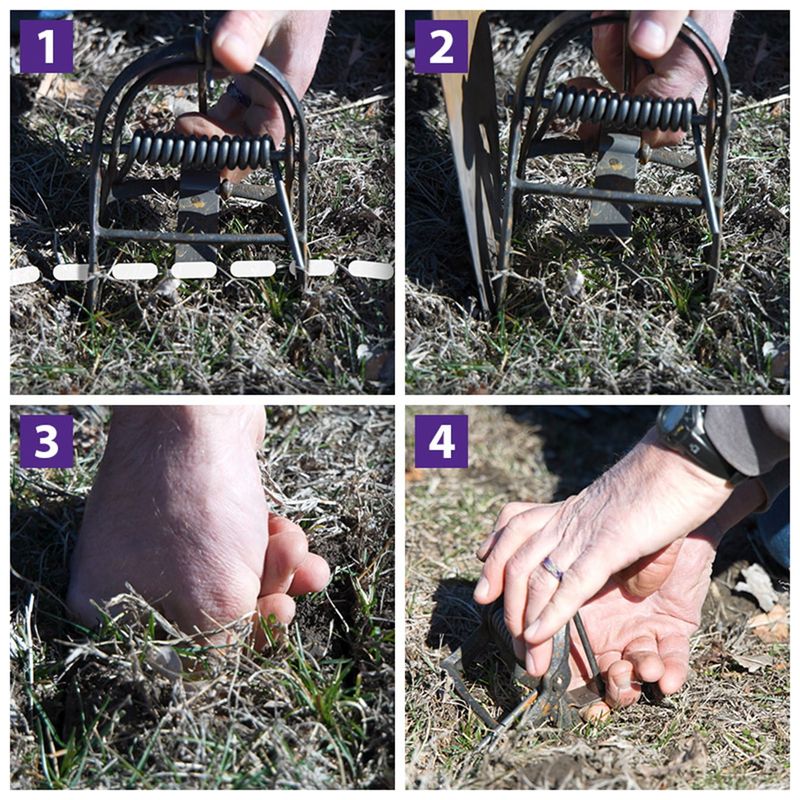
Before setting any trap, you need to know which tunnels are actually in use.
Flatten short sections of three or four different ridges, mark each one with a small flag or stick, and check them again in 24 to 48 hours.
A tunnel that has been rebuilt or pushed back up within that window is active.
Penn State Extension recommends placing a properly selected trap in a fresh, active, relatively straight main tunnel rather than in a meandering surface runway that may have been used only once as a feeding path.
Illinois Extension echoes that guidance, noting that trap placement in an active main run gives you a much better chance of success than setting a trap anywhere you see a ridge.
Straight tunnels that run in a consistent direction across the yard are more likely to be regularly traveled main runs.
Skip the popular shortcuts.
Castor bean products, ultrasonic stakes, vibration devices, mothballs, chewing gum, flooding, and household chemicals are not reliable controls.
Penn State Extension reports doubtful or unproven effectiveness for many of these, and some create real risks for children, pets, and soil health.
Maryland Extension advises avoiding poison baits because they can expose hawks, owls, dogs, and other animals that come into contact with a poisoned mole.
Broadcasting grub insecticides just to drive a mole away is also a poor strategy, because a mole sustained by earthworms may keep digging long after the grubs are gone, and soil insecticides can harm the very organisms that keep your soil healthy.
Any pesticide you do use must be applied strictly according to its current registered label.
The EPA is clear that the label is the law, and rates, timing, and restrictions vary by product and location.
Check with your local cooperative extension office for species-specific and regionally appropriate guidance before purchasing anything.
The practical rule is straightforward: tolerate and repair minor disturbance when you can, and consider targeted trapping only when active tunneling is genuinely getting in the way of how you use your yard.