
Your Indoor Lavender Keeps Dying Every Winter Because The Pot You Love Holds Too Much Water
Follow us on Google
That pretty pot on your windowsill may be the reason your lavender fades each winter. A decorative pot with no drain hole can trap runoff, and a pot that is too big can keep unused mix wet for too long.
Roots sitting in wet mix struggle, and lavender is not built for that. Here is a quick check you can do today, plus a fix that lets you keep the pot you love.
Lift the Pot Before You Water
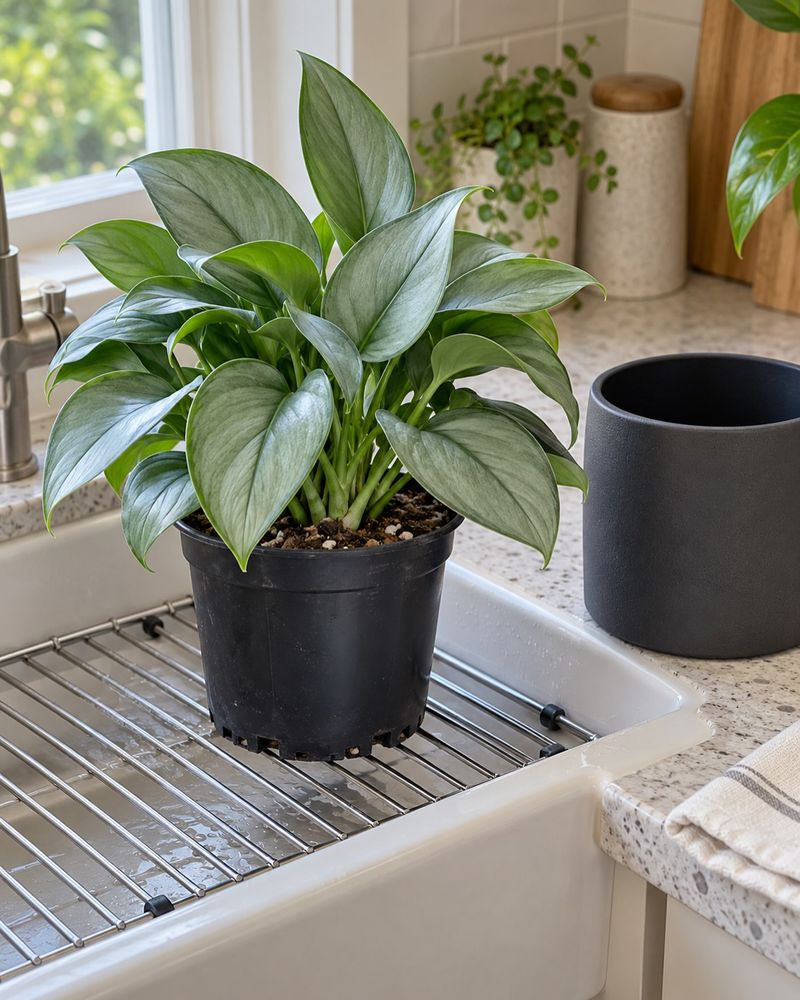
Picture a gray January afternoon, a lavender on the windowsill, and a watering can in your hand. Before you pour, stop and try something different.
Lift the plant out of its decorative pot.
Many people find the surprise right there. Tip the inner pot gently and look at the bottom of the outer pot.
If you see a puddle, that water has had nowhere to go, and your lavender roots may have been sitting in it. Illinois Extension container drainage guidance explains that a pot without drainage gives extra water no easy way out.
Now check three things. First, is there pooled water below the plant?
Second, are the drainage holes in the inner pot blocked by roots or packed mix? Third, does the mix still feel wet when you push a finger about an inch or two down?
Pour out any standing water right away. Then feel the mix before deciding whether to water at all.
Virginia Cooperative Extension advises watering thoroughly and then waiting for the root zone to dry sufficiently before the next watering, so the mix is your guide, not the calendar.
This check is a clue, not a diagnosis. Finding water does not prove your lavender has root rot.
It only tells you that water is being managed poorly, and that is a problem you can fix in about five minutes. You can read more in Virginia Cooperative Extension watering advice.
Wet Roots Need Air
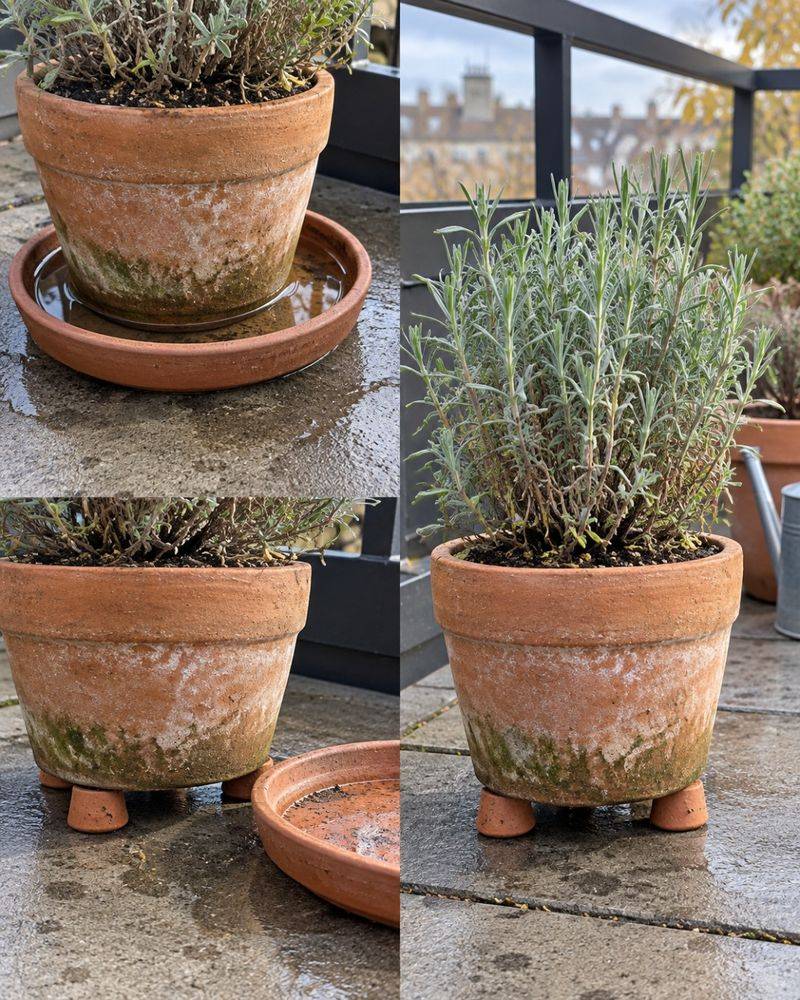
Roots breathe. It sounds odd, but they take in oxygen from tiny air pockets in the mix.
When the mix stays soaked, those pockets fill with water and the roots can run short of air.
Lavender (Lavandula) is a Mediterranean plant that wants well-drained growing medium. Iowa State Extension lavender guidance points to good drainage as a basic need.
Waterlogged roots can rot, and rotting roots cannot feed the plant.
Here is where the pretty pot comes in. If runoff collects in a no-hole outer pot, the bottom of the inner pot can wick that water back up, and the mix stays wet longer than you planned.
Think of it as asking your lavender to wear wet socks all winter.
But a no-hole pot alone does not prove your plant is overwatered. Many things can slow a lavender down, including weak light, how often you water, disease, and the plant itself.
Virginia Cooperative Extension notes that both too much and too little water cause stress, so the pot is one suspect, not the only one. See the Virginia Cooperative Extension container watering guide for more.
So treat wet mix as a pattern to watch. If the mix is damp days after watering and water pools below, you have found a likely contributor you can change today.
Keep the Decorative Pot
Good news for anyone who loves their pot. You do not have to give it up.
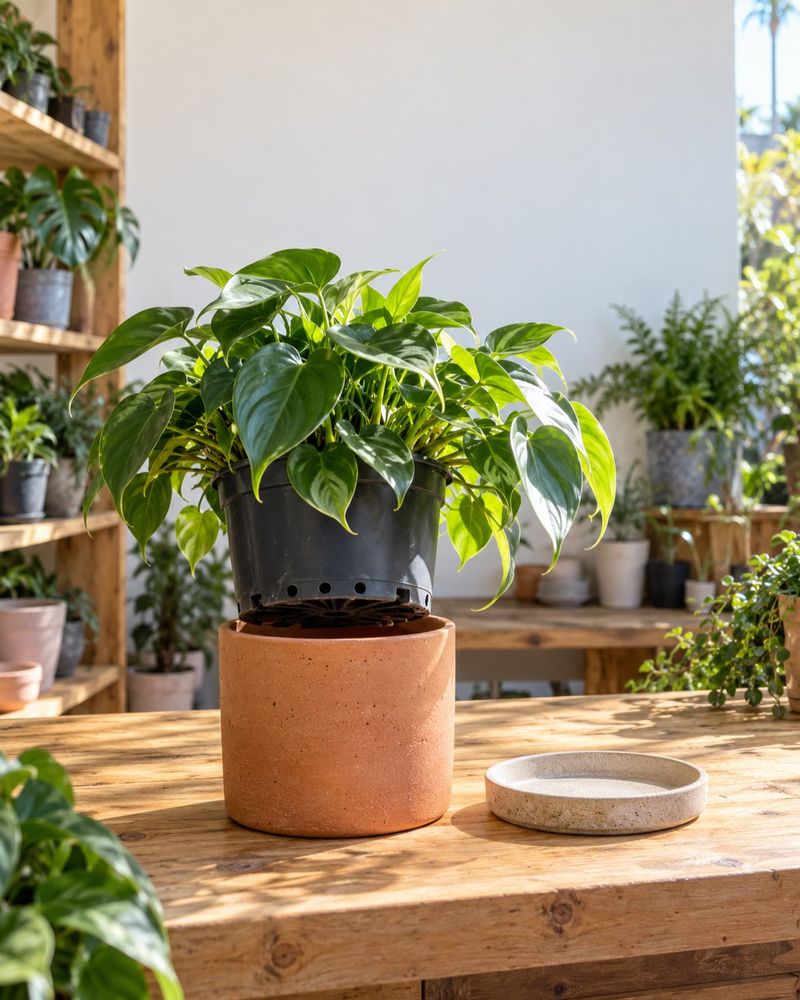
A decorative pot without a drain hole can work well as an outer pot, often called a cachepot (say it cash-po), as long as the plant lives in a draining inner pot.
Start by growing the lavender in a plastic or clay pot with drainage holes. Slip that pot inside the decorative one.
For watering, lift the inner pot out and take it to the sink.
Water thoroughly, then let it drain until the dripping stops. Wait a few minutes, then set it back.
Finally, empty any water that collected in the outer pot. That step matters most, because the decorative pot only helps if it never turns into a bathtub.
A word on gravel. Some people add a layer in the bottom of the soil-filled pot, hoping it will drain better.
Illinois Extension calls this a myth, since saturated mix can sit above the gravel. Gravel does not replace drainage holes.
If your outer pot is deep, a layer of gravel in the outer pot can hold the inner pot above collected runoff. The inner pot still needs holes, and you still need to check for runoff.
This setup fixes trapped water. It cannot fix low light, disease, or a plant that was struggling before.
Think of it as one layer of a wider plan.
A Larger Pot Can Keep More Mix Wet
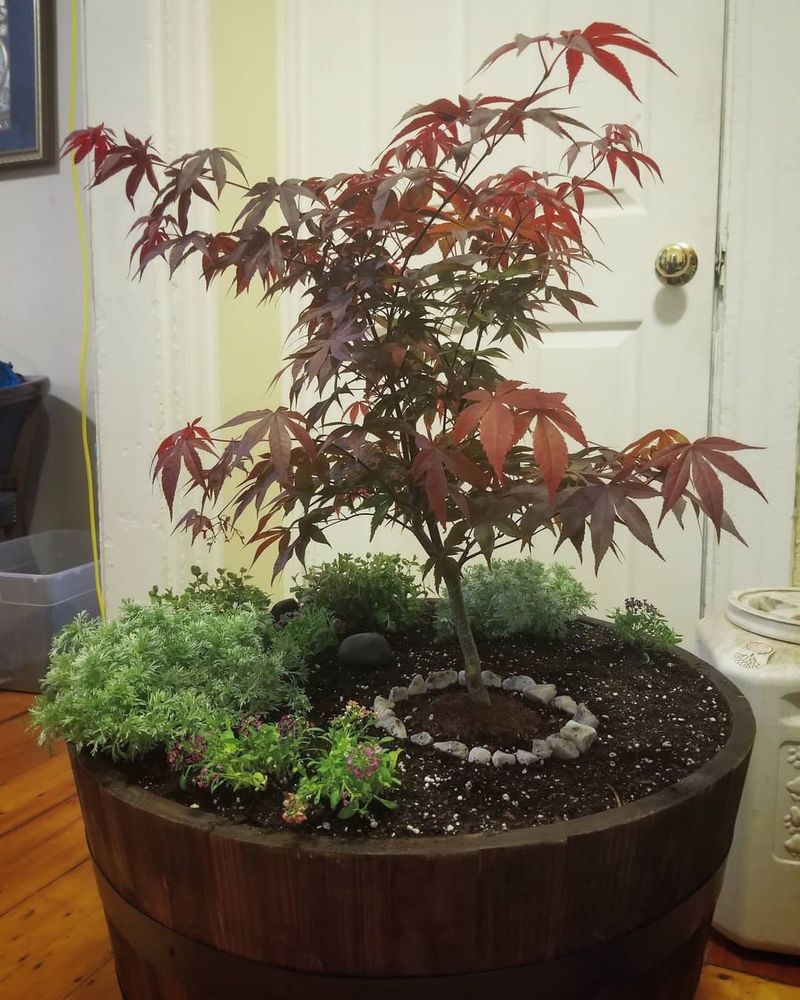
Bigger sounds kinder, but not for a small lavender. A pot much larger than the root system leaves lots of mix with no roots to drink from it.
That unused mix can stay wet longer than the mix near the plant.
Picture a tiny plant in a big bowl of damp soil. The roots drink only from their small corner, and the rest holds water like a sponge.
Illinois Extension container size guidance supports choosing a pot proportionate to the plant.
Size alone does not prove overwatering. A roomy pot with a light, fast-draining mix and careful watering can do fine.
It is simply one more reason the mix may stay wet.
When you repot, pick a container only slightly wider than the root ball, such as one or two inches wider. Make sure it has drainage holes.
Then water by touch. Iowa State Extension suggests checking whether the potting soil is dry to the touch.
Water thoroughly, and let the root zone dry sufficiently before you water again, as Virginia Cooperative Extension advises.
No fixed schedule works for every home. Light, temperature, mix, pot material, and plant size all change how fast things dry.
And do not let the whole root ball go bone-dry, either. You are aiming for a pause, not a drought.
Check the Mix Before You Water a Wilted Plant
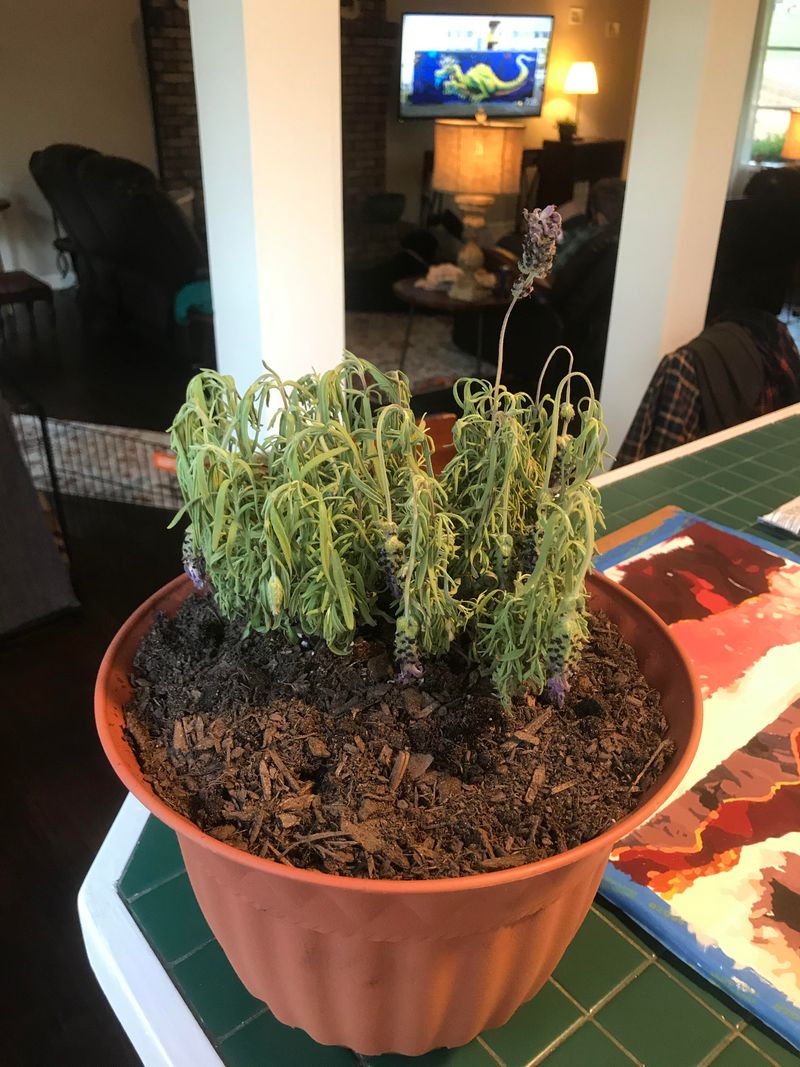
Wilted lavender looks thirsty, so most of us grab the watering can. Hold on.
A droopy plant does not tell you whether it needs water, because too much water can cause wilting too.
Roots that are stressed by soggy mix cannot move water up to the leaves well. The plant droops either way.
That is why the mix has to answer the question, not the leaves.
Other clues can raise your suspicion. Look for yellowing leaves, soft leaves or stems, leaf drop, and sometimes a rotten smell from the mix.
Virginia Cooperative Extension lists overwatering among the causes of these signs. UC Agriculture and Natural Resources lavender guidance also covers disease problems in lavender.
None of these signs confirm root rot. They are hints, and several can come from dry mix, poor light, or disease.
So here is your next step. Push a finger an inch or two into the mix before adding any water.
If it is wet, wait and lift the pot to look for pooled runoff. If it is dry, water thoroughly and let it drain.
One symptom is a clue, not a verdict. Look at the mix, the pot, and the plant together before you decide.
Winter Light Also Matters
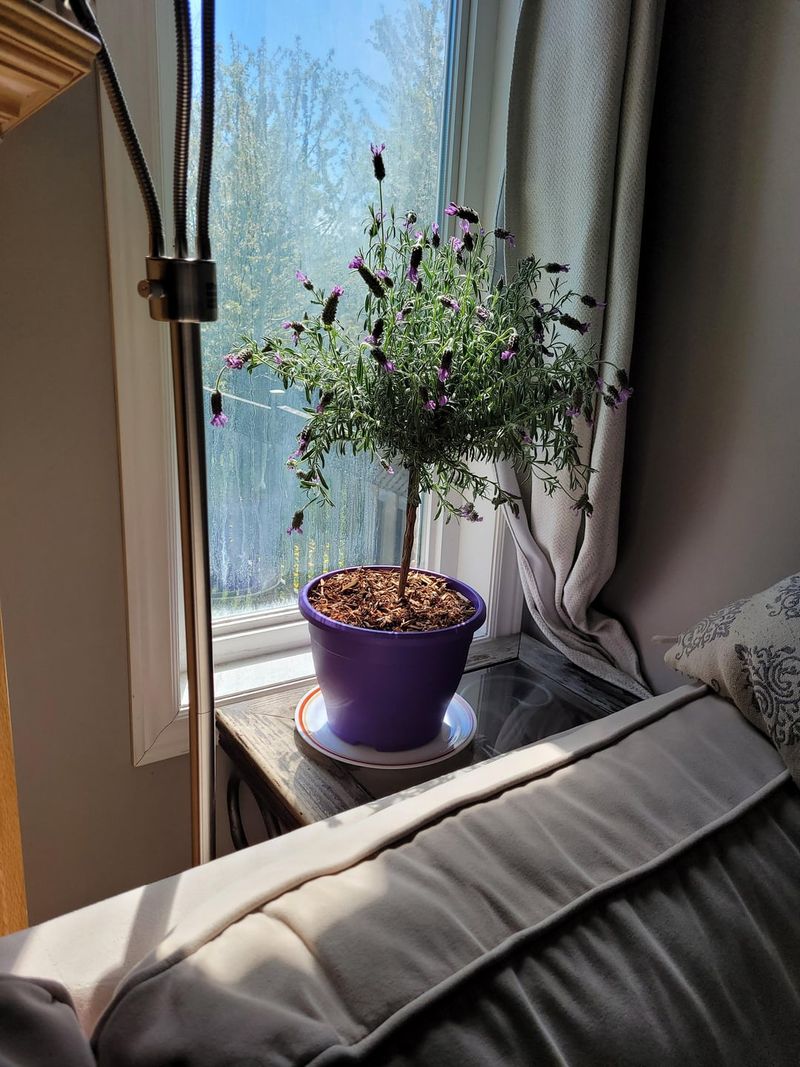
Drainage is only half the story. Winter indoors is dim, and lavender is a sun lover.
Even a perfect pot cannot make up for weak light.
Colorado State University PlantTalk says indoor lavender needs at least four to five hours of sun. Iowa State Extension says direct sun is often the limit indoors and gives four to six hours as an ideal for herbs.
Treat those numbers as practical guidance. They do not promise that your window gives enough.
Slower winter growth matters too. When a plant grows less, it may use less water, so mix can stay damp longer than it did in summer.
That is one more reason to check the mix instead of watering on habit.
Lavender also varies by species and cultivar, and outdoor winter hardiness is not the same as doing well in a warm room. Iowa State’s lavender guidance makes this clear.
The University of Arkansas Extension suggests a sunny, cool room for indoor lavender, but it does not give one temperature that fits every home.
So work through it in order. Check drainage and moisture first.
Then reassess light and the rest of the conditions around your plant.
A lavender asks for little, mainly sun and a dry-ish foot. Give it those, and it will tell you the rest.
