
Your Geraniums Sleep Through a North Carolina Winter in the Garage and Wake Up Ready for Spring
Follow us on Google
Yes, your patio geraniums can sleep through a North Carolina winter in the garage, no grow lights needed. The catch is that the garage must stay above freezing, and you need to pick a storage method that fits.
It is a quiet way to save plants you already own and skip the leggy stems that come from windowsill babysitting. Here is how it works, step by step, and what to expect when spring arrives.
Know which geranium you’re saving
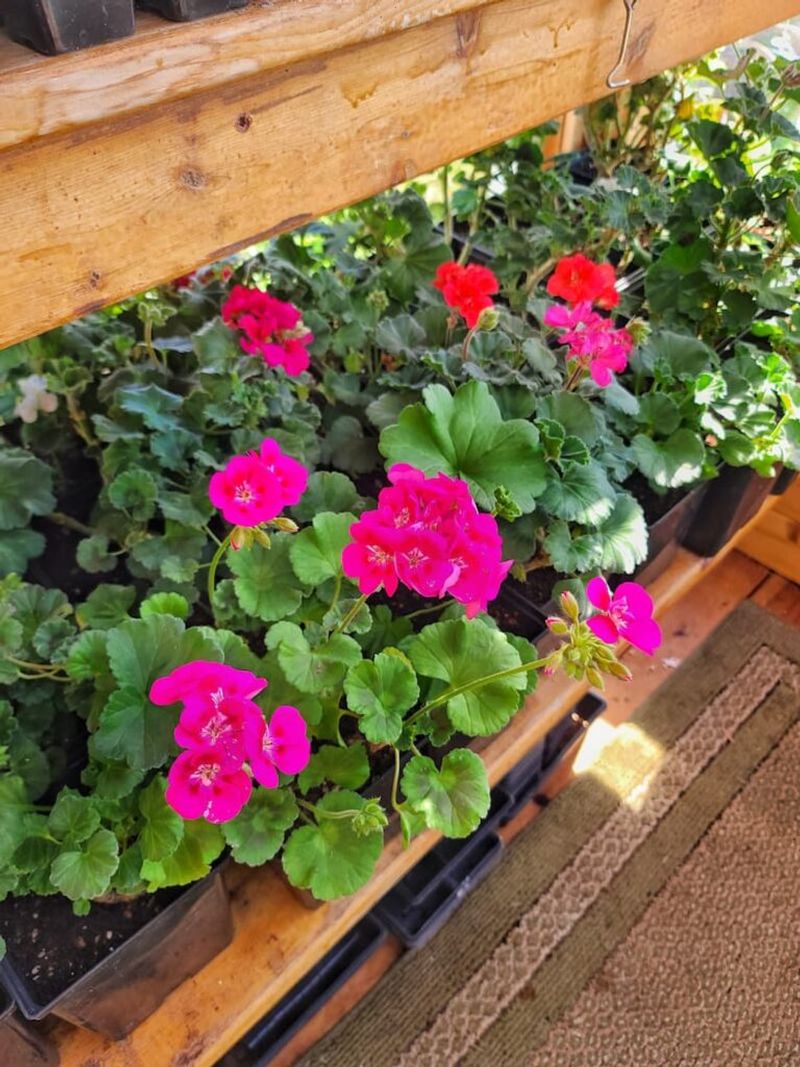
Walk past any porch in the Piedmont in July and you will see them. Bold red, pink, and salmon blooms on round, softly scented leaves.
Those are bedding geraniums, and most of them are Pelargonium, not the hardy cranesbills sold as perennials.
That difference matters. Hardy cranesbills shrug off cold and come back on their own.
Pelargoniums are tender plants from warmer places, and a hard freeze can finish them. Arkansas Extension warns that stored geraniums can rot if they freeze, so cold protection is the whole game.
North Carolina winters are mild, but surprise cold snaps still arrive. NC State Extension notes that geraniums are frost-sensitive and can be brought inside as whole plants or cuttings.
It does not lay out a detailed garage routine, so the steps in this article borrow from extension services in other states.
Here is the appealing part. Instead of keeping a plant actively growing indoors, you can let it go dormant, which means resting with little or no growth.
A resting plant does not need a grow light or a sunny window.
Think of it as a long nap in a cool, dark closet. Everything after this depends on a few choices, starting with the temperature of the space you plan to use.
The instructions here are for common bedding geraniums, not every plant that carries the name.
Check the garage temperature first
Most people assume a garage is a safe, sleepy place. Then a January night drops into the teens and the plants inside freeze solid.
A garage is only a cool place, not a guaranteed frost-free one.
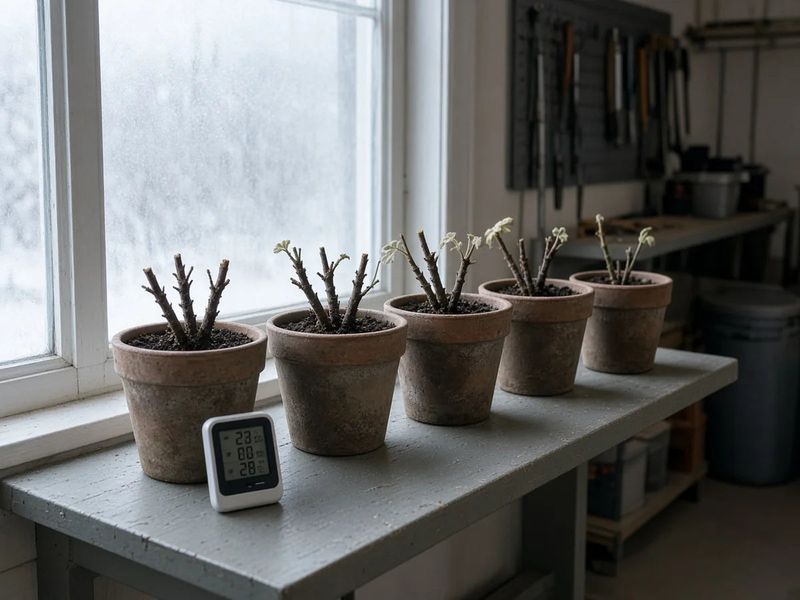
Iowa State Extension points out that an unheated garage can swing much colder or warmer than you expect, and it recommends monitoring the space. So buy a cheap thermometer, ideally one that records the low, and watch it for a few weeks before you commit.
Aim for roughly 45 to 50 degrees Fahrenheit. University of Minnesota Extension gives that range for potted storage, and published advice for bare-root plants varies a bit, as you will see later.
Treat every number as approximate.
Place the thermometer where the plants will sit, not by the door. Attached garages in the Piedmont and Coastal Plain often stay warmer than detached ones, and a spot against the house wall can beat a spot near the overhead door.
Cold air sneaks in under that door.
If readings dip near freezing on a cold night, move the plants to a warmer closet or basement. If the space runs warm, closer to 60, the plants may wake early and stretch for light that is not there.
A cool, dark space is the goal. A space that freezes is a loss waiting to happen.
Choose a healthy plant to save
Not every geranium deserves a winter bed. Some are already telling you a story you do not want to carry into the garage.
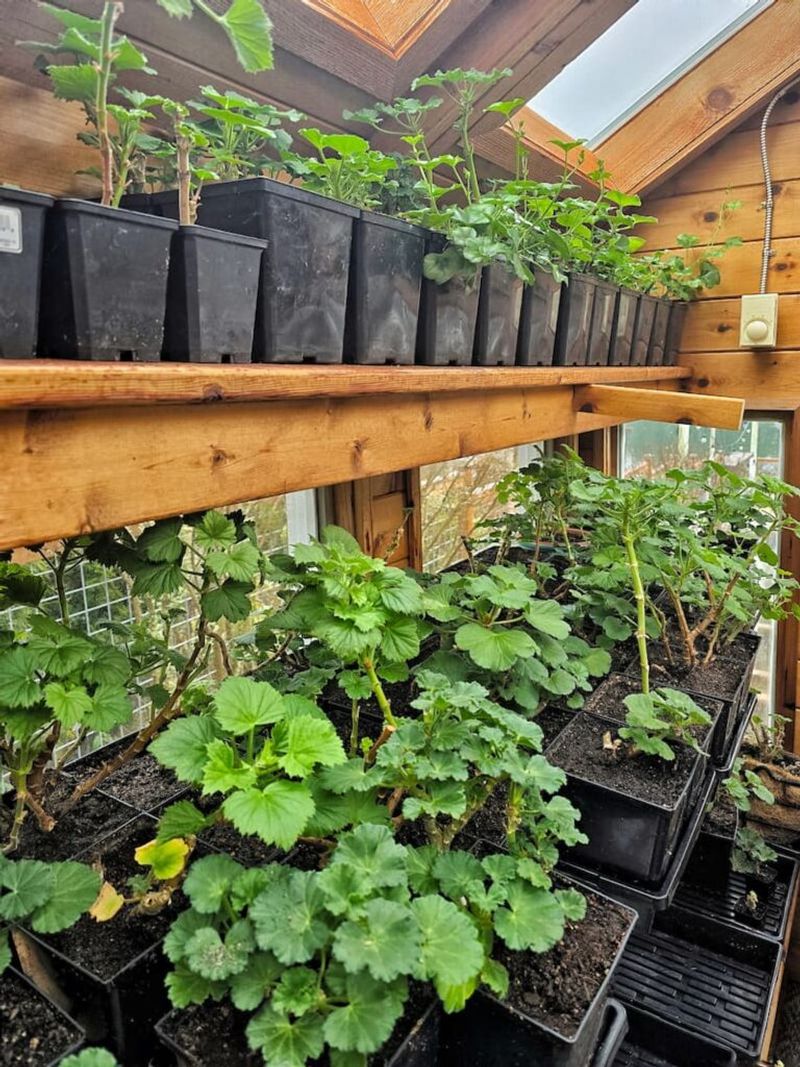
Look closely before the first frost. Purdue Extension says to discard plants with leaf spots, wilting, darkened or rotting stems, shriveling, or blotchy color.
Those are signs of trouble, and storage will not fix them.
Illinois Extension adds that diseased or insect-infested plants are poor candidates. A bug that hitchhikes into the garage can spread to everything else on the shelf, so check leaf undersides too.
Pick the plants with firm stems and clean, even green leaves. Maybe the big salmon one by the steps looks great, and the leggy one by the mailbox looks tired.
Save the first and let the second go.
Healthy does not mean guaranteed. A strong plant has better odds, but some will not wake up in spring, and that is normal.
If a plant is a favorite, take a few cuttings as backup. Minnesota Extension calls bare-root storage challenging and suggests cuttings as insurance.
You do not need a full propagation project. One or two rooted tips in a pot on a bright sill can be your safety net.
Pick bare-root or potted storage
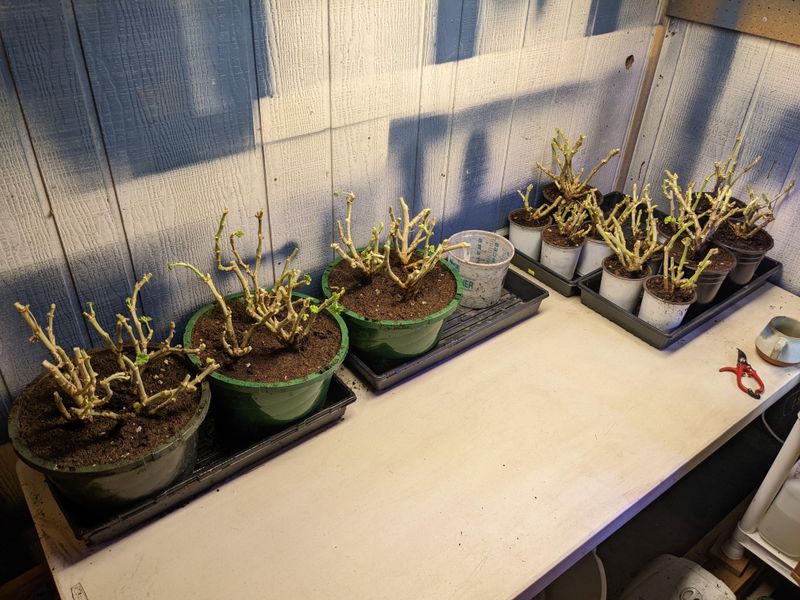
You have two documented ways to put a geranium to bed, and they are not interchangeable. One strips the soil away.
The other leaves the plant right where it is.
With bare-root storage, you dig the plant before frost and shake the soil from the roots. It then rests in a paper bag or hangs upside down.
Iowa State Extension describes this approach and gives its own temperature range.
With potted storage, the plant stays in its container and goes into dark storage. Minnesota Extension recommends this for plants kept at about 45 to 50 degrees, with a different moisture routine.
Neither method is the winner. Bare-root saves shelf space, which helps if you have a dozen plants and one small garage corner.
Potted storage is simpler to set up if you already grew the plants in containers.
Here is the rule that keeps people out of trouble. Pick one method per plant and follow only that method’s care.
Do not soak a potted plant like a bare-root one, and do not hang a potted plant upside down.
The next two sections cover each routine on its own. Read both, then decide which fits your space and your patience.
Either way, the plant stays dormant and needs no light.
Check bare-root plants through winter
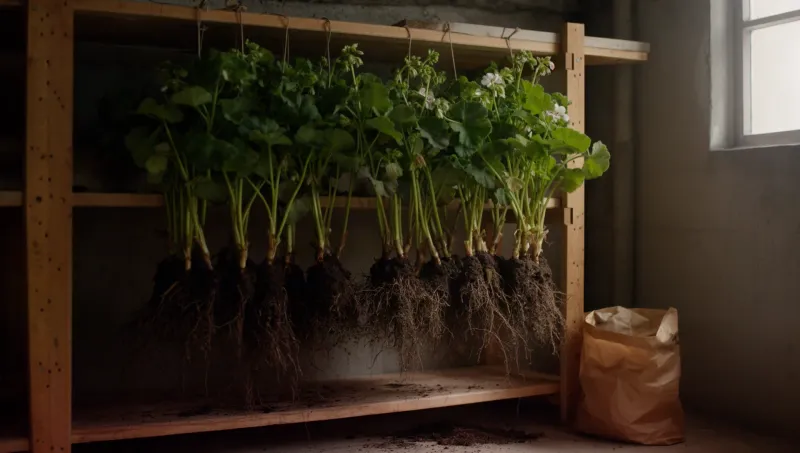
Bare-root plants look dramatic. A bundle of dry stems and roots hanging in the dark does not seem alive, yet that is the point.
Dig the plant before frost. Shake the soil from the roots, then place the plant in an open paper bag or hang it upside down in a cool, dark spot.
Skip plastic bags, which trap moisture.
Temperature guidance varies here. Cornell Cooperative Extension gives an ideal range of 45 to 50 degrees, while Iowa State says 45 to 55.
Treat these as approximate, and keep the space frost-free.
Cornell also describes a bare-root routine of soaking the roots for 1 to 2 hours, two or three times over the winter. Check that the stems stay firm.
This soaking belongs only to bare-root plants.
Stems that turn mushy or shriveled badly are a warning sign. Remove any plant that clearly failed, so it does not affect its neighbors.
In late March or early April, pot the healthy roots in fresh potting mix. Cornell says new growth may take several weeks, so patience matters.
A plant that looks like a stick in April may still be waking up.
Water potted plants about once a month
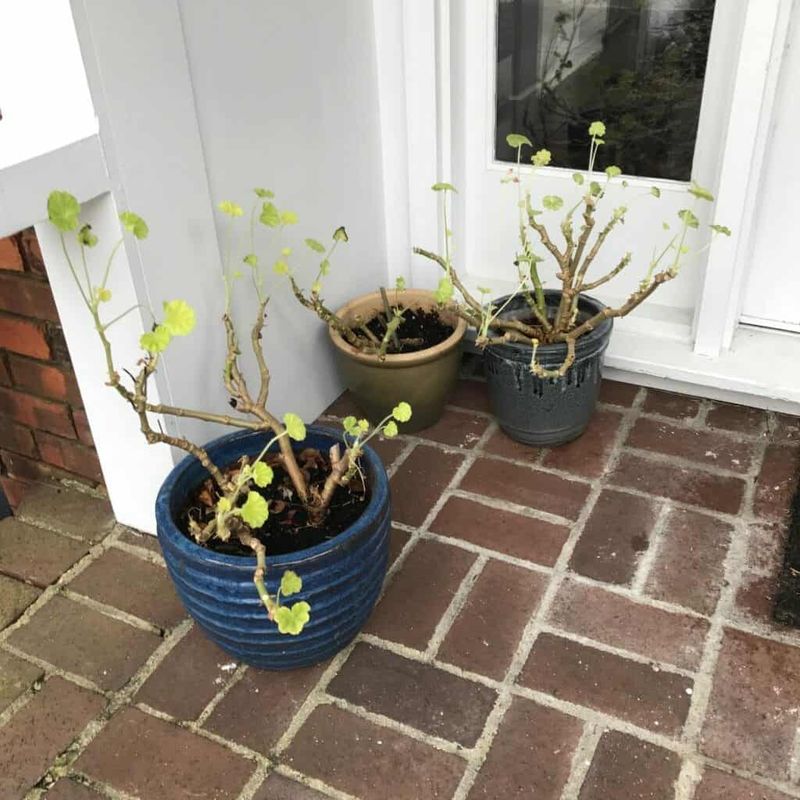
Potted geraniums have a simpler winter. They sit in their containers, in the dark, and mostly mind their own business.
Move the pots into storage before frost arrives. Minnesota Extension recommends a cool, dark spot at about 45 to 50 degrees and watering about once a month.
That monthly drink surprises people. Dormant does not mean the plant needs zero water.
It means little or no active growth, so the roots need only a small amount of moisture to stay alive.
Give each pot a modest watering, not a soaking, and let any extra drain away. Put a reminder on your phone for the first of the month so the job does not slip.
Keep this separate from the bare-root routine. Do not soak the roots of a potted plant, and do not follow the bare-root soaking schedule for a pot.
Check the thermometer each time you water. A mild week in the Sandhills or on the coast can warm a garage more than you would guess, and a cold snap in the mountains can push it the other way.
Leaves may yellow and drop during storage. That can be normal for a resting plant, though mushy stems or mold are signs of trouble worth acting on.
Restart growth in bright light
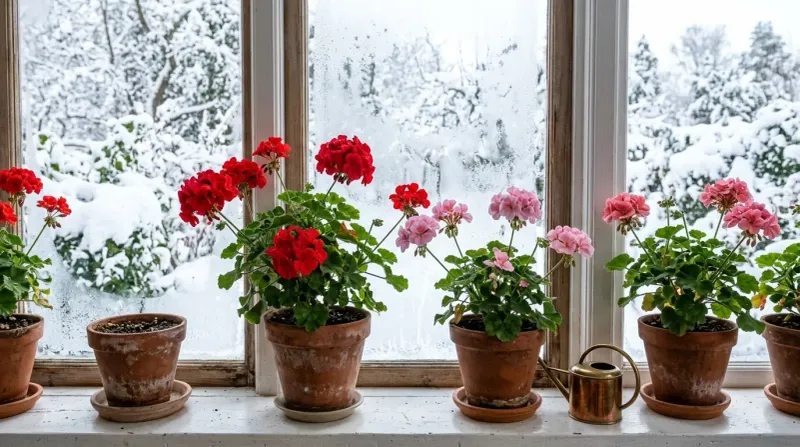
Spring is when the darkness ends. Dormant storage needs no light, but a waking plant does.
Move the geranium to a sunny window or under artificial light. Minnesota Extension advises removing dead material, resuming regular watering, and waiting for new growth before fertilizing.
Purdue Extension also calls for bright light once growth resumes.
Low light during active growth is how you get lanky, stretched stems. That is the leggy look dormant storage helps you avoid, as long as you bring the plant into light at the right time.
Bare-root plants need extra patience. Pot healthy roots in late March or early April, and expect that Cornell says new growth may take several weeks.
Do not expect blooms right away.
Some plants will not make it. A few may sulk, and that is part of the deal, which is why cuttings are handy insurance.
Move plants outdoors only after the last frost has truly passed in your part of the state, and harden them off over a few days.
Dormant garage storage is a reasonable option for North Carolina gardeners with a space that stays frost-free, not a promise. When the first green shoot appears, you will know the quiet winter worked.
