
This Florida Shrub Hiding In Ordinary Yards Is Every Bit As Dangerous As A Cottonmouth
Follow us on Google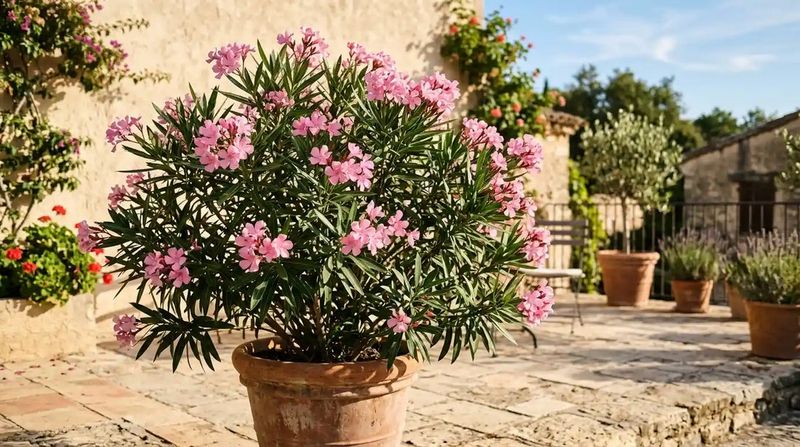
You are pruning a hedge on a hot Florida afternoon, and the shrub in your hands may be one of the most poisonous plants in the neighborhood. Common oleander is a likely suspect, and it earns the cottonmouth comparison because it can cause serious harm.
The two hazards work very differently, though, and knowing how makes you safer. Here is how to spot it, handle it, and respond if someone eats it.
Common Oleander Is a Likely Candidate
Picture a pink-flowered hedge along a driveway in Central Florida, glossy and cheerful and easy to ignore. That is often how UF/IFAS describes common oleander in the landscape, a fast-growing shrub or small tree that Florida gardeners plant widely.
It is a likely candidate for the shrub in the headline, not a confirmed one.
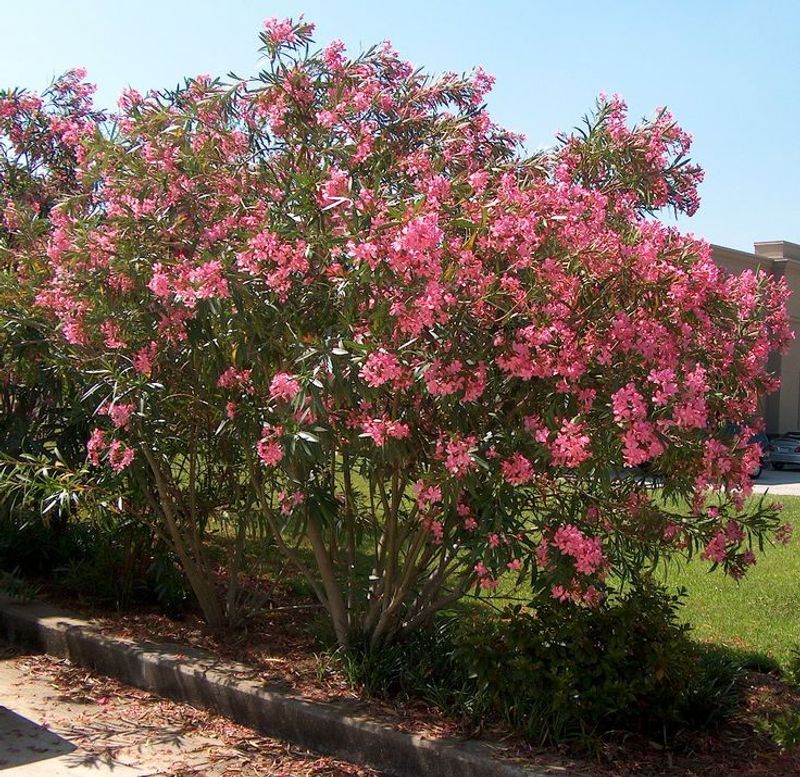
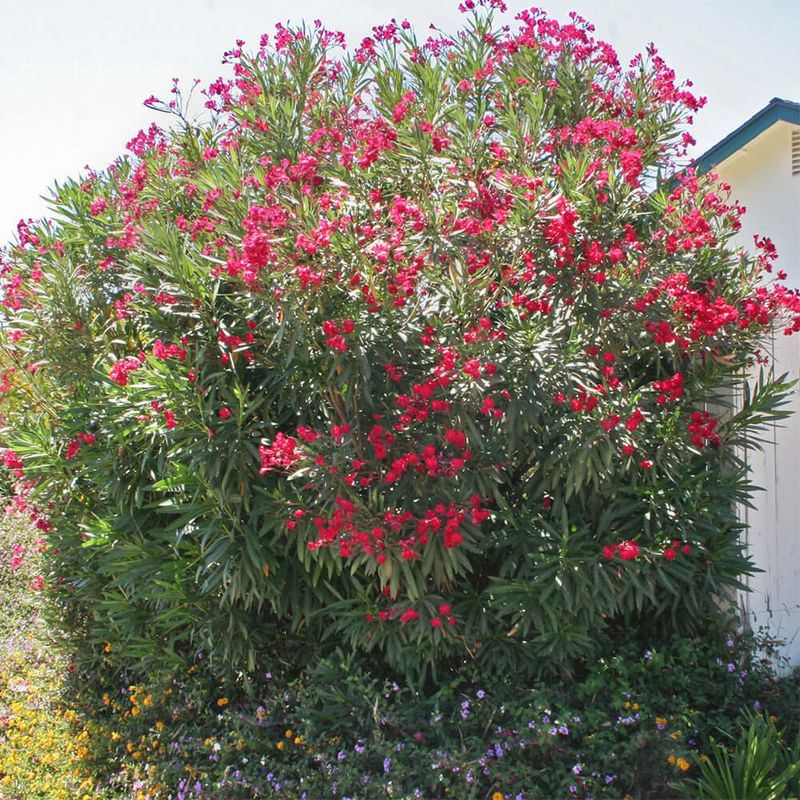
Here are the clues worth checking. UF/IFAS lists a height of roughly 6.5 to 19.5 feet, narrow dark-green leaves about 8 to 18 centimeters long, and leaves that often grow in whorls of three or four.
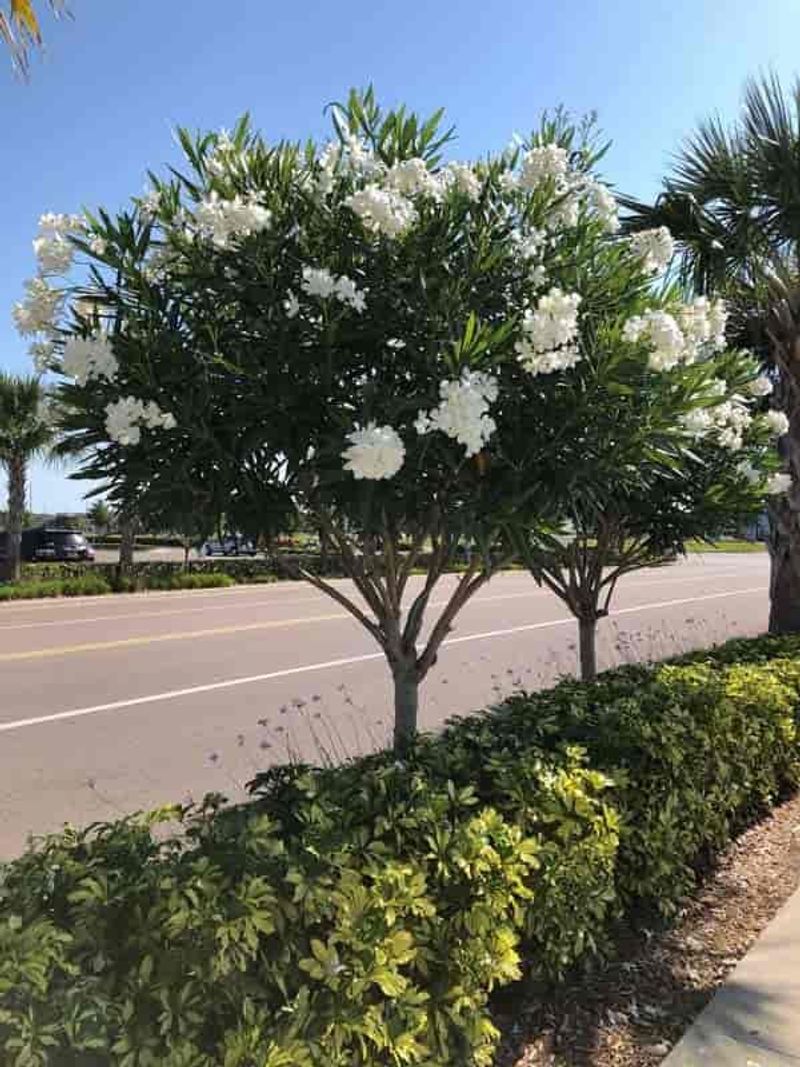
Flowers can be white, pink, red, coral, or yellow.
Now the catch. These clues tell you what to look at, but they do not prove what you have.
A general description or a flower color cannot settle it, and a photo sent to your local extension office can.
Yellow flowers add a twist. Yellow oleander is a separate plant that is also toxic, and UF/IFAS Extension in Charlotte County notes it can turn up in mature landscapes or as a pass-along plant.
So never name a shrub by flower color alone.
Treat any unidentified shrub with care until someone confirms it. That small habit keeps a friendly hedge from becoming a surprise.
The Risk Changes With the Kind of Exposure
Most people hear the word poisonous and picture one big danger. With oleander, the risk actually depends on how you meet the plant.
UF/IFAS says all parts contain toxic cardiac glycosides, which are natural compounds that affect the heart.
Eating is the major concern. Ingestion can cause nausea, vomiting, abdominal pain, diarrhea, and dangerous heart effects in people and animals.
No dependable human dose threshold exists, so nobody should guess how much is too much.
Sap is a different story. Fresh-cut sap can cause contact dermatitis, which is an itchy skin rash, and the landscape guide also warns about sap reaching mucous membranes such as the eyes and mouth.
Touching an intact plant is not likely to cause life-threatening poisoning.
Smoke is the third route. UF/IFAS Gardening Solutions warns that burning plant material can cause respiratory problems.
That is why a brush pile is the wrong place for trimmings.
These three routes do not carry identical risks. Knowing which one you are dealing with tells you what to do next.
Oleander and Cottonmouths Pose Different Hazards
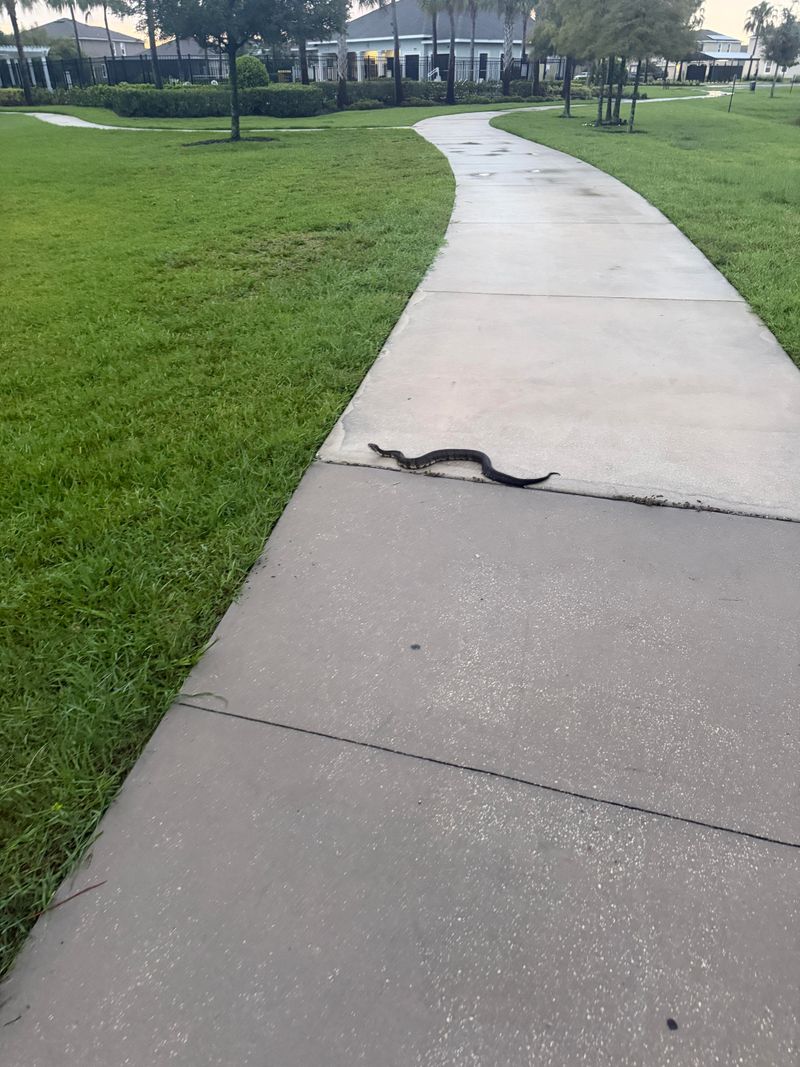
A cottonmouth acts. Oleander waits.
That is the simplest way to see the difference between them.
A cottonmouth is a venomous Florida snake, and harm happens through a bite. UF/IFAS covers how to recognize Florida’s venomous snakes, and CDC guidance is a useful place to read about venomous animal bites.
Oleander does nothing on its own. Poisoning depends on exposure, especially someone eating part of the plant, as the UF/IFAS poisonous plant publication explains.
So is the comparison fair? Both can cause serious harm, and both deserve respect.
But the sources do not measure how likely either one is to hurt you, and they do not show the two are equal.
The practical lesson is simple. You step around a snake by watching where you walk.
You manage oleander by controlling who can eat it and how you handle it.
Handle Cuttings Carefully and Keep Them Contained
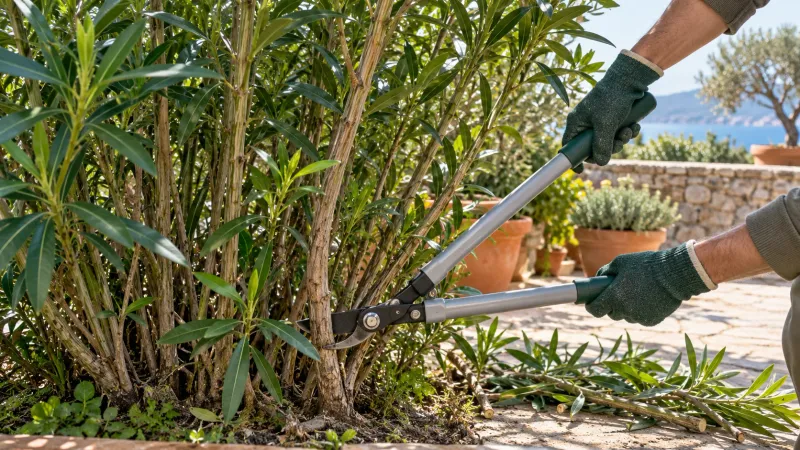
Pruning day is when most people actually touch oleander. Because fresh-cut sap can irritate skin, UF/IFAS recommends wearing gloves or washing your hands promptly after touching cuttings.
Next, think about who shares the yard. Keep the plant and its trimmings away from small children, pets, and grazing animals, since eating any part is the major poisoning concern.
A pile of clippings left by the fence is exactly the kind of thing a curious dog or a goat will investigate.
Bag trimmings and put them where animals and kids cannot reach. Do not leave them on the lawn to dry out, because dried material is still plant material.
Then comes the rule many gardeners forget. Never burn oleander trimmings.
UF/IFAS notes that smoke from burned plant material can cause respiratory problems.
None of this says you must pull out your shrub. It just asks for a few calm habits, and those habits genuinely cover sap, ingestion, and smoke in one go.
Call Poison Control After Possible Human Ingestion
If someone may have eaten oleander, make the call first. Dial Florida Poison Control at 1-800-222-1222 right away, and do not wait to see whether symptoms show up.
You can find contact information for the Florida Poison Control Centers on their site.
Do not try to make the person vomit unless poison control or a health professional tells you to. MedlinePlus guidance on oleander poisoning points readers toward professional help rather than home fixes.
Skip the home remedies too. No tea, no folk cure, and no guessing about how much was swallowed, because no reliable human dose threshold exists.
When you call, have a few facts ready. Know roughly what part of the plant was eaten, when it happened, and the age of the person.
If you can, keep a sample of the plant for identification.
A quick call costs little and gives you real guidance. Keep that number saved in your phone.
Contact a Veterinarian About Possible Pet Ingestion
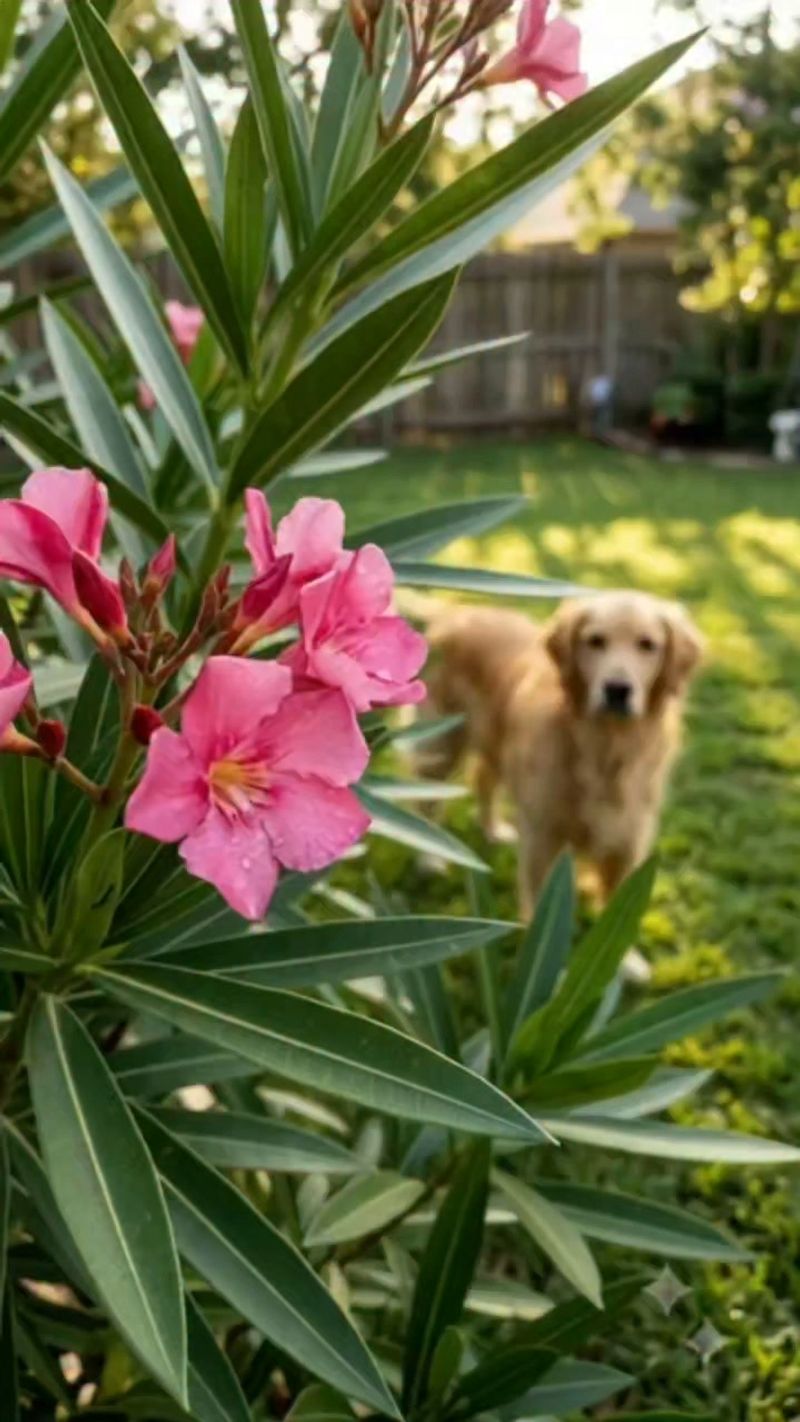
Pets investigate with their mouths, so your dog or cat may be the first to nibble a leaf. If you think a pet has eaten oleander, call a veterinarian or an animal poison-control service promptly.
Do not hold off while you watch for symptoms.
The ASPCA lists oleander as toxic to dogs, cats, and horses. Its possible signs include drooling, abdominal pain, diarrhea, and depression.
Treat that list as a set of possible signs, not a full checklist. An animal can be in trouble without showing every sign, or any of them yet.
When you call, tell them the pet’s species and size, what part of the plant you think was eaten, and when. Bring a piece of the plant if you can do so safely.
Calm planning beats panic. A shrub that is fenced off or trimmed back from pet areas gives you one less worry, and a phone number ready gives you the rest.
