
The Height Of Your Last Mow This Fall Shapes Next Spring’s Lawn More Than Any Summer Cut
Follow us on Google
Your last mow of the fall does shape how your lawn spends the winter, because it decides whether tall grass flops over and mats down under the snow. That matted grass is where snow mold likes to set up shop.
Here is the practical part. The final cut is one useful piece of a bigger picture, and a few simple choices can help you handle it well.
Fall Mowing Helps, But It Is Not the Whole Story
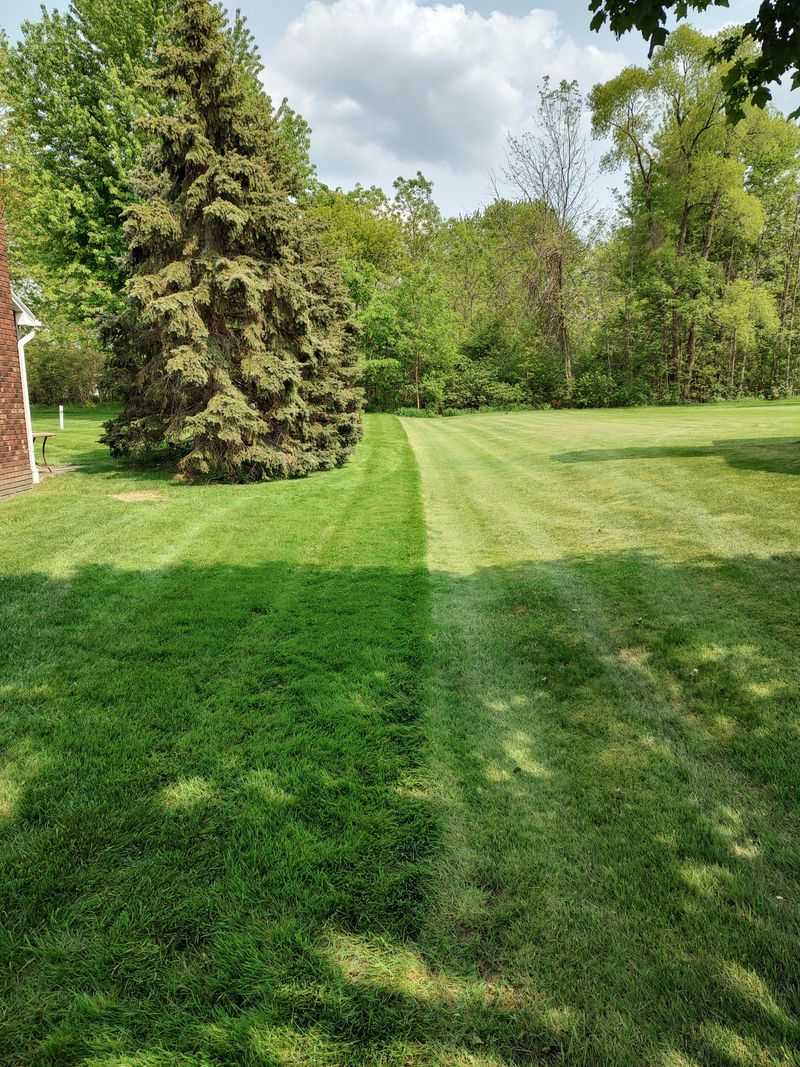
Picture a Saturday in late October, the air sharp and the mower still warm in the garage. You wonder if this is the cut that sets up next spring.
It plays a real part, though not the starring one.
Fall mowing height can affect winter lawn conditions. Grass left very tall can fall over and lie in a wet mat under snow, and that is the kind of spot where snow mold can grow.
Extension guidance, such as this University of Minnesota fall lawn care Q and A, supports mowing while grass is still growing and avoiding a lawn left excessively tall going into winter.
Now the honest limit. The sources we reviewed back a role for fall mowing, but they do not rank it against your summer cuts.
They also do not show that one final cut decides how the lawn comes back. So the headline idea is best read as a useful nudge, not a verdict.
Snow mold depends on a crowd of factors. Snow cover, moisture, leaves, nitrogen, drainage, shade, and grass type all pitch in, as Penn State Extension explains for gray snow mold.
Mowing cannot erase that risk.
Your job is simple. Keep mowing as long as the grass grows, then leave it at a height that fits your grass and region, without scalping it.
The next sections show how.
What Lets Snow Mold Take Hold?
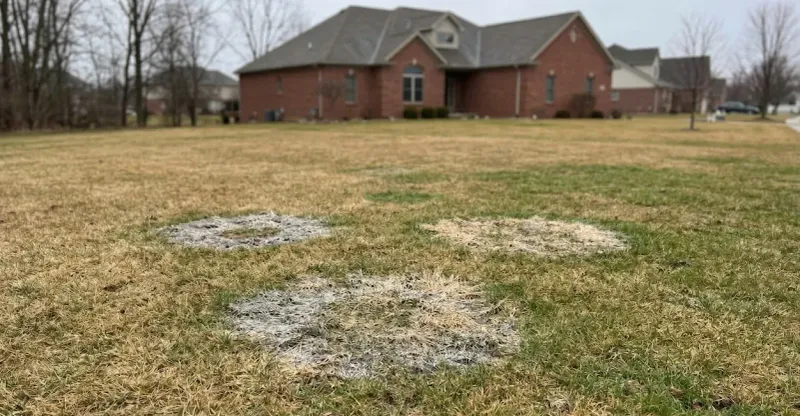
Snow mold is a cold-weather fungus, and it works like a houseguest that only shows up when conditions get cozy for it. Cool, damp air and a long blanket of snow are its favorite setup.
Gray snow mold is the one strongly tied to sustained snow cover. Deep snow that settles onto unfrozen turf raises the risk, and Illinois Extension notes that tall, matted grass and extra fall nitrogen can also favor it.
Wisconsin guidance, in its lawn maintenance article, says gray snow mold may need about 60 days of continuous snow cover.
Pink snow mold plays by different rules. It can show up during long stretches of cool, wet weather even when there is no snow at all.
So a snowless winter does not fully let you off the hook.
That is why mowing height is only one piece. Shade keeps turf damp, poor drainage leaves water sitting, and some grass species and cultivars are more susceptible than others.
A lawn with a bad history of snow mold may also be more likely to see it again.
Appropriate mowing may help limit tall, matted grass, but it cannot remove the risk. Think of it as tidying the stage, not canceling the show.
When to Make the Last Cut
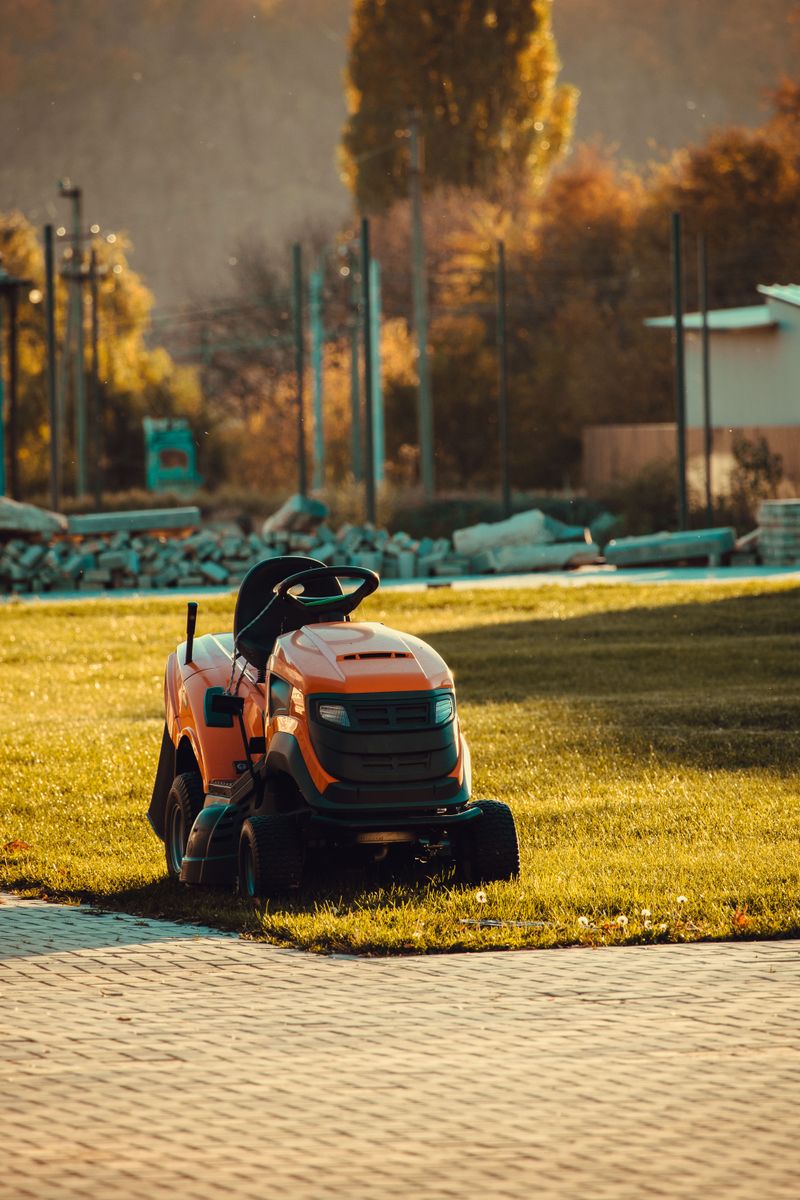
Forget the calendar. The right final mow is the one your grass tells you about.
If it is still growing, keep cutting.
Minnesota Extension says growth generally slows to a stop around late October in Minnesota, as described in its mowing practices guide. That is a local example.
Your own region may stop earlier or much later, so watch the grass, not a date.
Do not scalp the lawn in a rush to go short. Cutting too short stresses turf, and Wisconsin guidance in its lawn maintenance article says to remove no more than one-third of the blade at a time.
If your grass is 3 inches tall, a single cut should not go below 2 inches.
Some lawns run taller than normal. If yours does, ease it down over several mowings rather than one big chop.
Minnesota turf specialists suggest, in their fall lawn care Q and A, that a lawn kept above 3 inches can be brought down to 3 inches before winter with several cuts at that height.
Also, mow only when the lawn is dry enough that the mower does not rut the soil or tear the turf. A calm, steady approach beats a last-minute buzz cut.
Why Regional Height Advice Differs
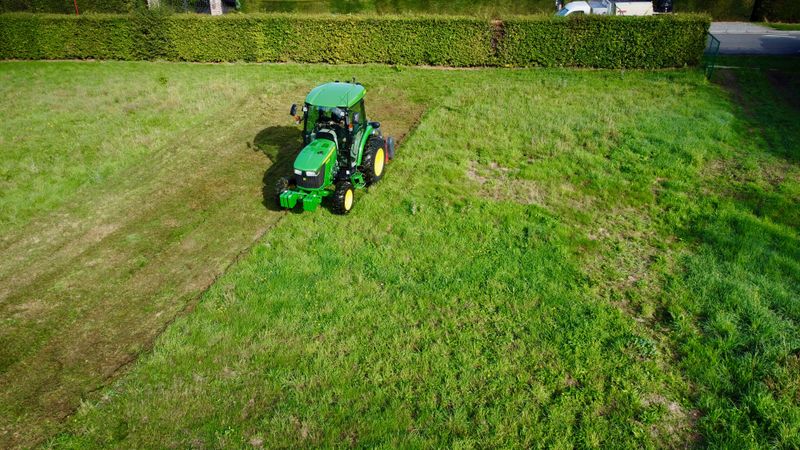
Ask three neighbors from three states and you may hear three different numbers. That is not a mistake.
Climate, grass type, and snow patterns vary, and so does the advice.
Wisconsin Extension recommends keeping grass at 2.5 to 3.5 inches through winter dormancy, according to its lawn maintenance guidance. Illinois Extension advises a final height of roughly 2 inches, as covered in its winter damage guide.
Minnesota Extension takes a slightly different angle. Rather than naming one magic number, it cautions against going too short, and its late fall lawn care advice points to not dropping below about 2 inches.
The sources reviewed do not point to one national ideal. Each number belongs to its own region and its own lawns.
Treating any of them as a rule for the whole country would be a stretch.
So how do you choose? Start with your usual summer height, since a sudden change is hard on grass.
Then check with your local extension office for your grass type, and aim for the range they recommend. If your area is not covered by these three states, local guidance matters even more.
Clear Heavy Leaves and Watch Late Nitrogen
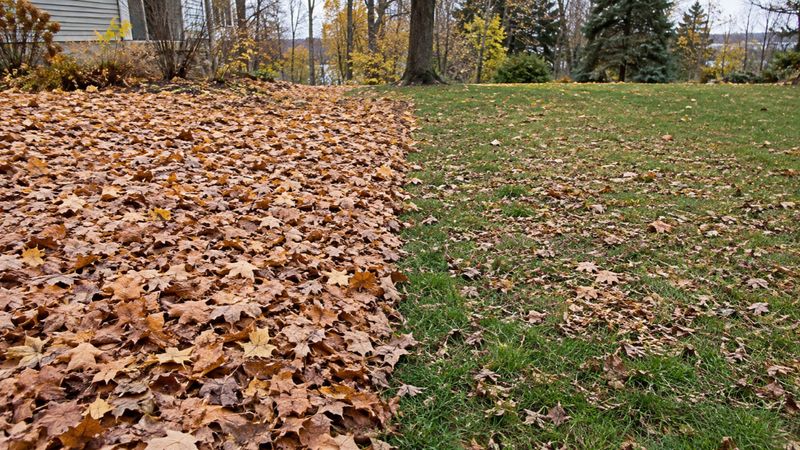
A deep pile of wet leaves works like a soggy blanket on grass. It blocks light, holds moisture, and can smother turf over winter.
Illinois Extension lists leaves and debris as one factor tied to winter disease in its winter damage guidance. Wisconsin Extension also covers the issue in its piece on winter leaf coverage.
The fix is simple. Rake or mow up thick layers before snow arrives.
Not every leaf is a problem. A light scatter of shredded leaves, where you can still see grass through them, is a very different thing from a deep mat.
Mowing over leaves a few times can chop them small enough to settle in.
Nitrogen needs a timing check. Illinois Extension advises against nitrogen within about six weeks of a killing frost or when snow is expected, as noted in its gray snow mold page.
Wisconsin says late-fall nitrogen can raise snow-mold risk in its lawn maintenance article.
That does not mean all fall fertilizing is harmful. Recommendations depend on timing and region, so check your local extension schedule before you spread anything.
Skipping the very late feeding is the main point.
Most Spring Patches Need Time, Not Fungicide
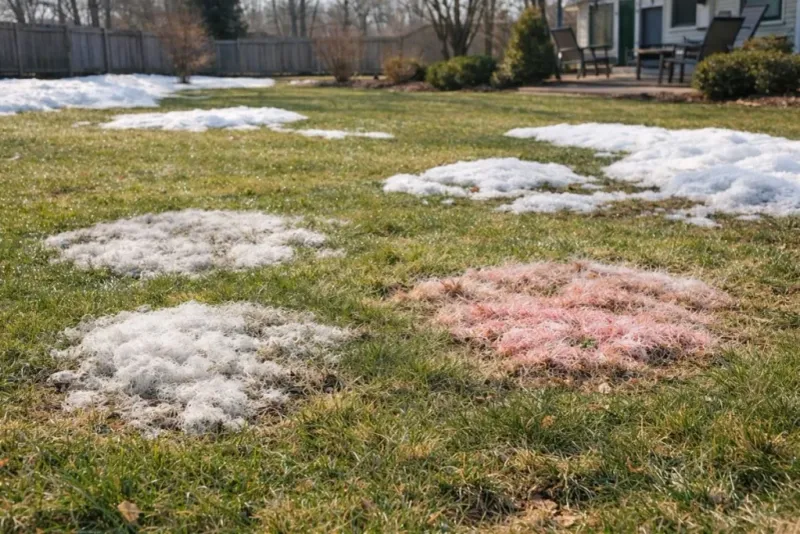
The snow melts and there it is, a gray or pinkish patch that looks like the lawn gave up. Take a breath before you reach for anything in a bottle.
Snow mold often damages leaf blades rather than the crowns and roots. As Penn State Extension describes for gray snow mold, mature turf commonly recovers as it dries and grows.
Patches can look dramatic and still bounce back.
Wait until the soil is no longer soggy, then rake the matted grass lightly. That lifts the blades and lets air in so the area dries faster.
Raking wet ground can tear up turf, so patience counts.
If a spot stays bare or badly damaged after the lawn greens up, overseeding may be needed there. Treat that as a small repair job, not a lawn-wide project.
Spring fungicide is not the answer. Minnesota Extension says spring fungicide applications do not help snow-mold patches.
By the time you see the patch, the fungus has already done its work.
Good mowing is one helpful part of lawn care, not a cure or a guarantee. Some winters will be rough anyway, and most lawns forgive them.
