
Your Coneflowers Droop In The Heat, But One Quiet Thing Under The Soil Is The Real Culprit
Follow us on Google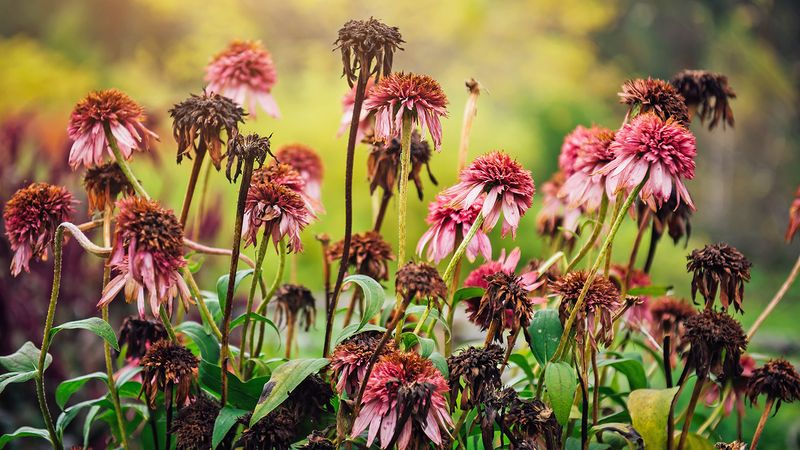
Step outside on a sweltering July afternoon and your purple coneflowers may be hanging their heads like they gave up entirely.
Before you grab the hose or start digging, it helps to know that drooping during a heat wave does not always mean your plants are in trouble.
A healthy coneflower can wilt temporarily when hot, dry wind pulls moisture out of its leaves faster than the roots can push it back up, and then bounce back completely by morning.
The real question is whether your plant recovers on its own or stays wilted, because that difference points you toward very different fixes.
Heat May Be the Whole Problem
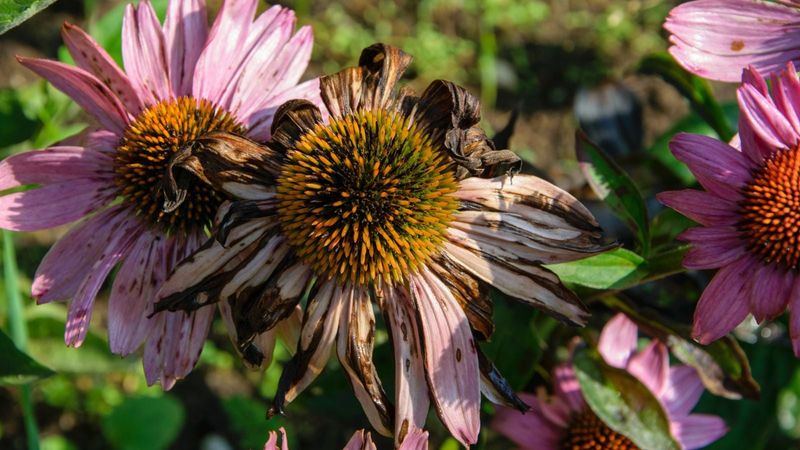
Coneflowers are tougher than they look, but even a tough plant hits a wall when temperatures climb past 90 degrees Fahrenheit and a dry wind is pulling moisture off every leaf at the same time.
During that kind of weather, water evaporates from the foliage faster than the roots can move it upward through the stems, and the plant droops as a result.
University of Minnesota Extension guidance on heat stress confirms that even adequately watered plants can temporarily wilt during extreme heat, which means the droop you see at two in the afternoon may not signal a problem at all.
Purple coneflower, known botanically as Echinacea purpurea, is a full-sun perennial native to the central and eastern United States.
It commonly reaches 2 to 4 feet tall and, once established in the ground, handles drought reasonably well.
Illinois Extension’s profile of purple coneflower describes it as preferring well-drained soil and full sun, which tells you something about where it thrives and where it may struggle.
The single most useful observation you can make is timing.
A plant that droops by midday and then stands back up by evening or the following morning is almost certainly responding to temporary heat stress, not a hidden soil failure.
That recovery pattern is your first piece of evidence, and it matters more than the droop itself.
Persistent Wetness Raises a Different Concern
Soil that stays waterlogged is a different story.
When the ground around your coneflower remains saturated for an extended stretch, the roots lose access to the oxygen they need to function.
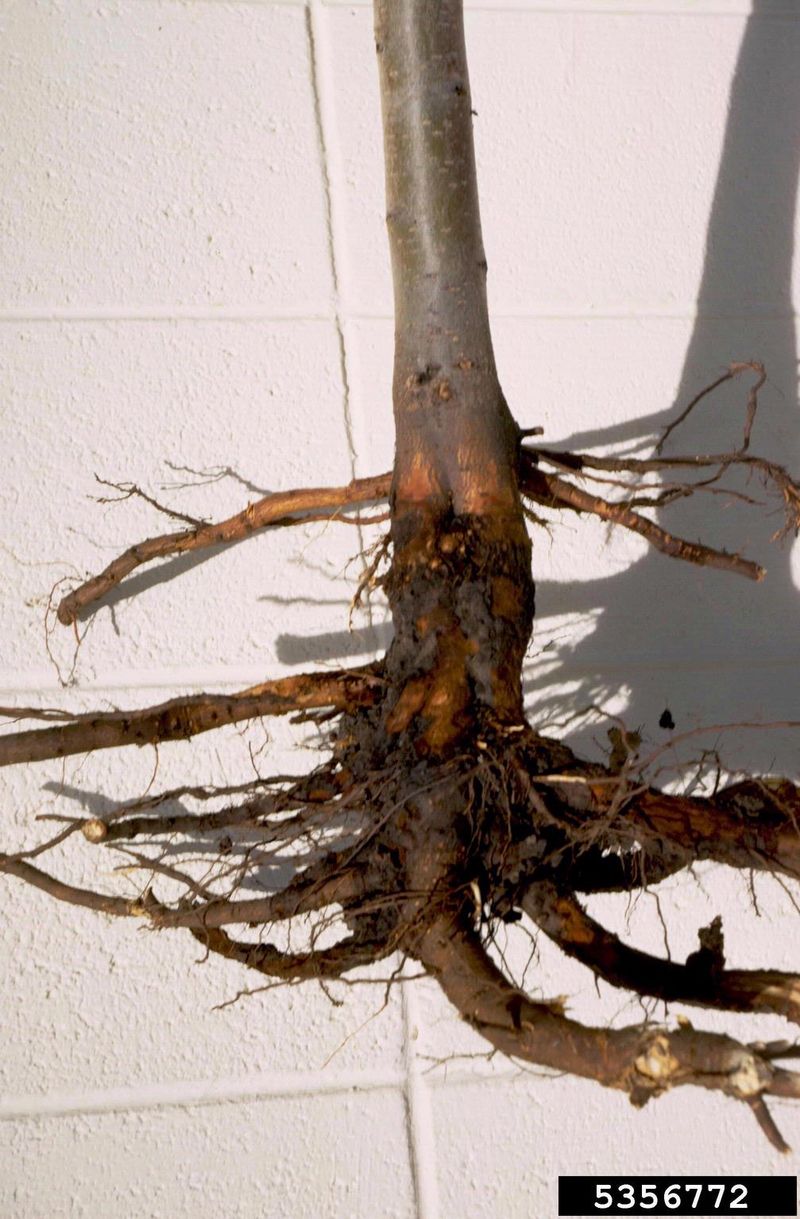
Roots sitting in oxygen-depleted soil begin to weaken, and that weakened tissue becomes vulnerable to crown rot and root rot, both of which can spread quickly in warm, wet conditions.
Penn State Extension’s overview of Echinacea diseases documents that coneflowers are susceptible to Sclerotinia and Sclerotium crown rot, pathogens that can cause dark lower stems, mushy roots, persistent wilting, and plant death.
The tricky part is that a plant with damaged roots may look exactly like a thirsty plant during a heat wave, because its roots can no longer move water effectively even when the soil is wet.
That is the quiet trap.
The leaves droop, you assume drought, you add more water, and the saturated conditions get worse.
Illinois Extension’s guidance on drowning and edema in plants explains that prolonged saturation can deprive roots of oxygen and set off a chain of damage that mimics drought stress from above the soil line.
Persistent wilting that does not improve overnight, combined with soil that feels squishy, mulch pressing against the crown, or lower stems that look dark and collapsed, gives you a cluster of clues worth investigating rather than a single symptom to water away.
Use Recovery And Soil Moisture As Your First Tests
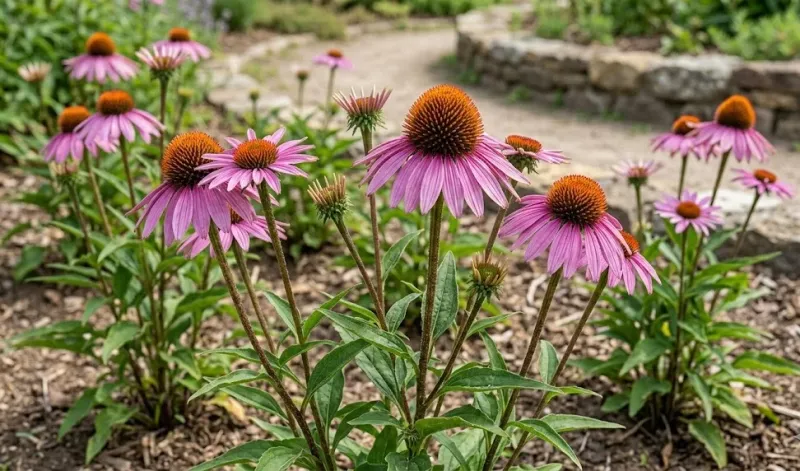
Before you reach for the hose or start pulling plants, run two quick checks.
First, wait until the evening or the following morning and see whether the coneflower has straightened back up.
A plant that recovers once temperatures drop is giving you strong evidence of temporary heat stress, not a soil emergency.
If the plant stays wilted after the heat breaks, move to the second check: push your finger or a stick about 1 to 2 inches into the soil near the root zone and feel what is there.
Oregon State Extension recommends checking soil moisture at that depth before watering during a heat event, then watering deeply enough to reach at least 6 inches down when the root zone is actually dry.
Dry soil at that depth is a reason to water.
Soil that feels wet or muddy is a reason to investigate drainage, not add more water.
Newly planted coneflowers and container-grown plants need more frequent checks than established in-ground plants during extreme heat, because their root systems are smaller and less able to buffer against rapid moisture swings.
An established plant competing with tree roots nearby may also need closer attention.
Wilting alone cannot tell you which of these situations you are in, so the moisture check is the step that turns a symptom into a direction.
Inspect the Crown Without Assuming a Diagnosis
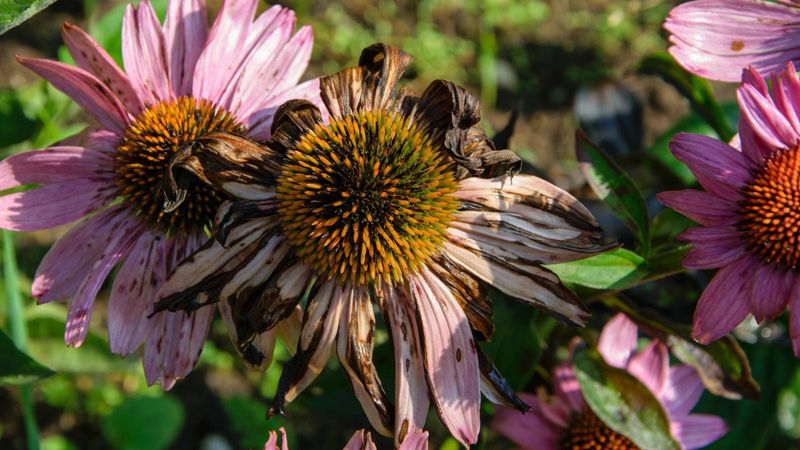
Pulling back the mulch around a wilted coneflower feels a little like opening the hood of a car when a warning light comes on.
You may not know exactly what you are looking at, but you will know right away whether something looks wrong.
The crown is the point where the stems meet the roots, right at or just below the soil line, and that is where rot tends to start.
Look for tissue that is dark, wet, soft, or collapsing inward.
A sour or musty odor near the base of the plant is another warning sign.
Roots that are brown and mushy rather than firm and pale suggest that something beyond ordinary drought stress is at work.
Penn State Extension’s disease guide for Echinacea describes these symptoms as consistent with crown and root rot pathogens, while Illinois Extension’s Fusarium wilt resource notes that vascular diseases can also produce wilting with discoloration in the lower stem tissue.
On the other hand, roots that are pale and firm, stems that are green and solid all the way to the soil, and no odor at the crown point away from rot and toward environmental stress.
These observations sharpen your suspicion in one direction or the other, but they do not prove a specific pathogen.
Try to disturb only the mulch and a small amount of surface soil during the inspection, because unnecessary root damage on a stressed plant adds a problem instead of solving one.
Keep Mulch Helpful And Water Moving
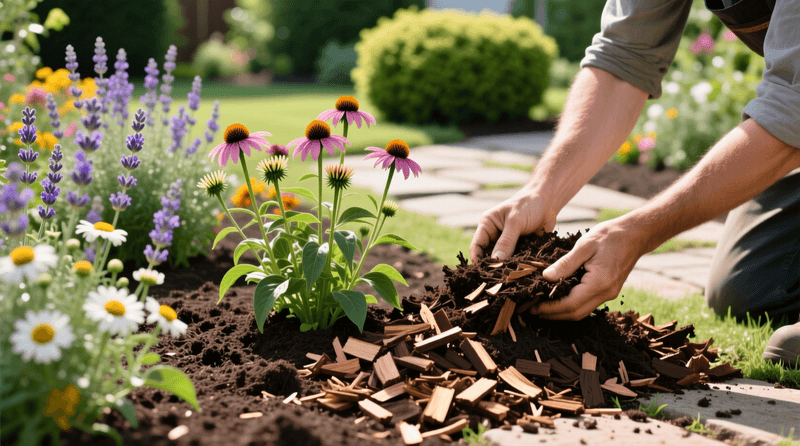
Mulch is genuinely one of the best tools you have during a heat wave.
A proper layer reduces how fast moisture evaporates from the soil, moderates soil temperature, and suppresses weeds that compete with your plants for water.
University of Minnesota Extension’s guide to mulching for soil health supports keeping organic mulch at about 2 to 4 inches deep for garden beds.
Done right, mulch helps your coneflowers through the worst of summer.
The problem shows up when mulch is piled too deep, when it is packed against the stems, or when it sits on top of soil that drains poorly.
Mulch pressed against the crown traps moisture against the stem base and keeps that tissue constantly wet, which is exactly the condition that encourages rot.
Penn State Extension guidance on perennial care specifically recommends keeping mulch away from the crown to reduce rot risk.
Pull it back a few inches from the base of each plant and let the crown breathe.
If your bed stays squishy for 6 or more hours after rain or a watering session, drainage is not adequate for coneflowers.
Safer remedies include redirecting downspout runoff away from the bed, correcting the grade so water flows away from the planting area, raising the bed above the surrounding grade, or moving the plant to a better-drained spot.
Improving soil structure with suitable organic matter such as finished compost can help over time.
Do not casually mix sand into clay soil, because Illinois Extension warns that modest amounts of sand mixed into clay can create a dense, concrete-like mixture that makes drainage worse, not better.
Water Deeply When the Root Zone Is Dry
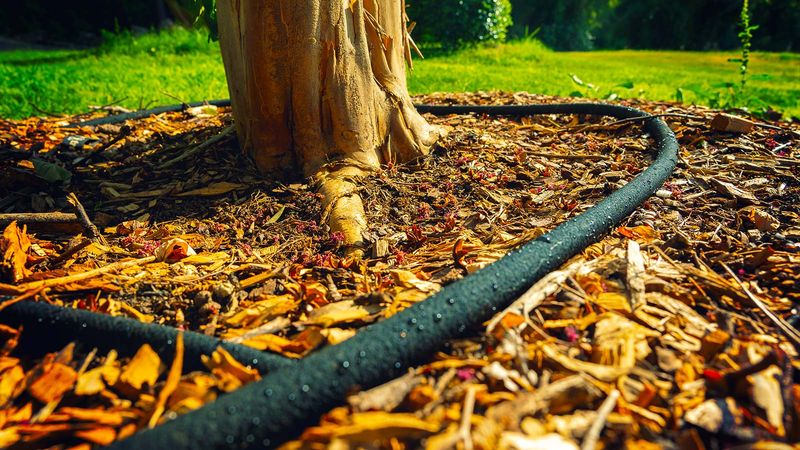
Once you have confirmed that the soil below the surface is actually dry, watering becomes the right move, even if the leaves are drooping in the heat.
The goal is to moisten the root zone to at least 6 inches down, not just wet the top inch and move on.
Shallow, frequent sprinkling encourages roots to stay near the surface, where they are most exposed to heat and dry air.
A soaker hose or drip irrigation line delivers water slowly at soil level, which gives it time to soak in rather than run off.
Oregon State Extension recommends watering at the soil surface, preferably in the morning, to reduce evaporation and avoid leaving foliage wet overnight.
Morning watering also means the root zone has moisture available before the hottest part of the day arrives.
Resist the urge to set a rigid daily schedule.
How often your coneflower needs water depends on your soil texture, how well it drains, the current weather, how long the plant has been in the ground, and whether it is in a container.
A container on a south-facing patio may need water every day or even twice a day during a heat wave, while an established in-ground plant in a well-drained loam bed might need a deep soak only once or twice a week.
Let the soil moisture check, not the calendar, drive the decision.
Rule Out Flopping, Cultivar Differences, And Disease
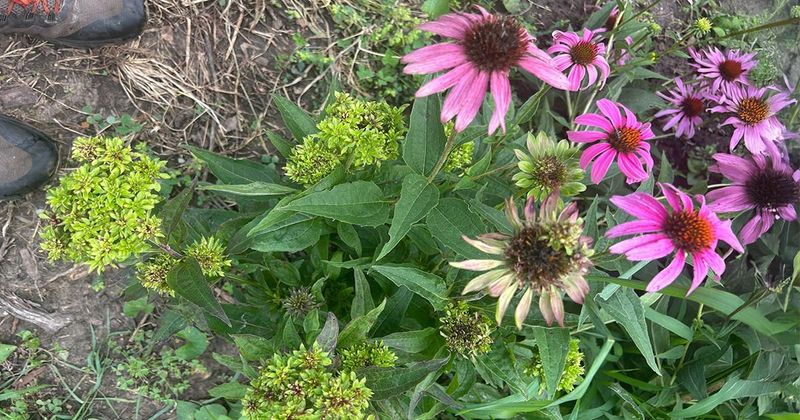
Not every collapsed coneflower is a sick coneflower.
Some modern cultivars grow tall enough that their own flowers weigh the stems down, especially after a heavy rain or in a bed where fertilizer pushed a lot of leafy growth.
Illinois Extension notes that excessive growth and heavy fertilization can cause coneflowers to flop, and that this is a different problem from wilting.
The test is simple: squeeze the stem gently near the base.
If it feels firm and green all the way down, the plant is not water-starved.
It is just top-heavy, and staking or cutting back nearby plants for air circulation may help more than any soil work.
Species and cultivar selection also matter more than many gardeners realize.
Purple coneflower handles somewhat richer, moister soil reasonably well, but pale purple coneflower, Echinacea pallida, is associated with drier, poorer soils and develops a deeper taproot suited to those conditions.
NC State Extension’s profile of Echinacea pallida reflects those different site preferences.
Advice that works for one species does not automatically transfer to every Echinacea hybrid on the market.
Aster yellows is worth knowing about as a separate edge case.
This disease, spread by leafhoppers, does not cause ordinary heat droop.
Instead, it produces distorted flowers that turn green or form tufted, abnormal growth, along with yellowing, stunting, and strange leaf development throughout the plant.
Illinois Extension’s aster yellows guide is clear that there is no treatment that cures an infected plant.
Removal of the entire plant, roots included, followed by disposal rather than composting, is the recommended response.
Choose Correction Before Chemical Treatment

Running through the steps in order protects both your plant and your time.
Let a heat-drooping coneflower recover overnight before doing anything else.
If it bounces back, the problem solved itself.
If it stays wilted, check the soil moisture below the surface, then pull back the mulch and look at the crown and lower stems for the physical signs described earlier.
When drainage is the underlying issue, fix the drainage first.
University of Georgia Extension’s drainage guide emphasizes correcting site conditions over reaching for products.
Fungicides are not interchangeable tools, and they cannot compensate for soil that stays waterlogged.
Illinois Extension’s drowning and edema resource warns that fungicides may not reverse advanced root damage even when applied correctly, because the physical injury to root tissue is already done.
If the crown and roots show serious decay and the plant has not recovered after temperatures cooled and drainage improved, removal may be the most practical path.
A plant with a mostly destroyed root system cannot be reliably saved by any product.
Replace it in a better-drained spot, or amend the bed before replanting.
The coneflower that does recover after a drainage fix or a deep soak on dry soil is a reminder that diagnosis first, treatment second, is almost always the more useful sequence.
Most drooping coneflowers need observation more than intervention.