
More Ladybugs In Your Pennsylvania Garden Means Fewer Aphids Ruining Your Roses
Follow us on Google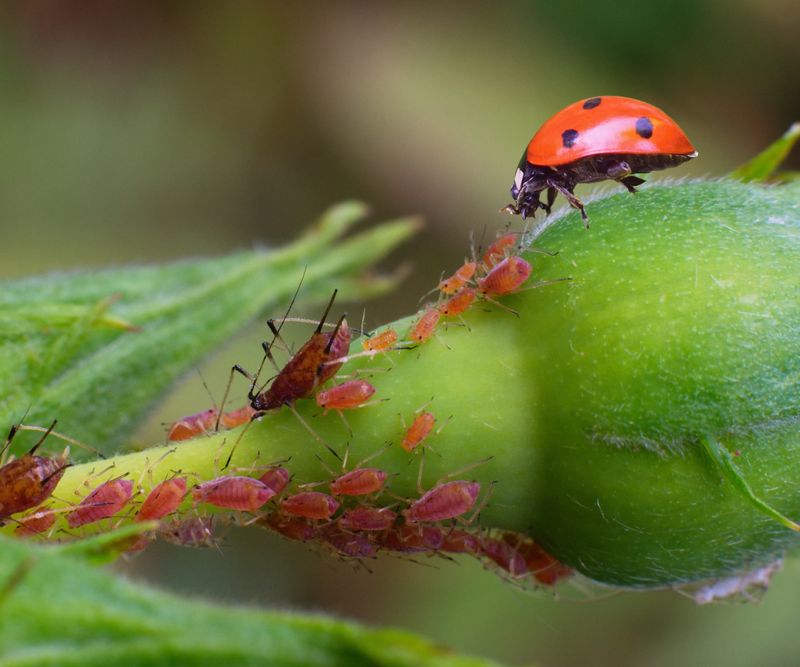
Walk out to your rosebush on a warm May morning in Pennsylvania and you might find the new growth absolutely smothered in tiny green or black insects, clustered so thick the stems look fuzzy.
Those are aphids, and they’re after the same tender tissue your rose just spent weeks pushing out.
The good news is that lady beetles and a whole crew of other predators are probably already moving through your yard, and there’s a lot you can do to help them.
But adding more ladybugs does not automatically mean fewer aphids, and understanding why makes all the difference.
Aphids Target Tender Garden Growth
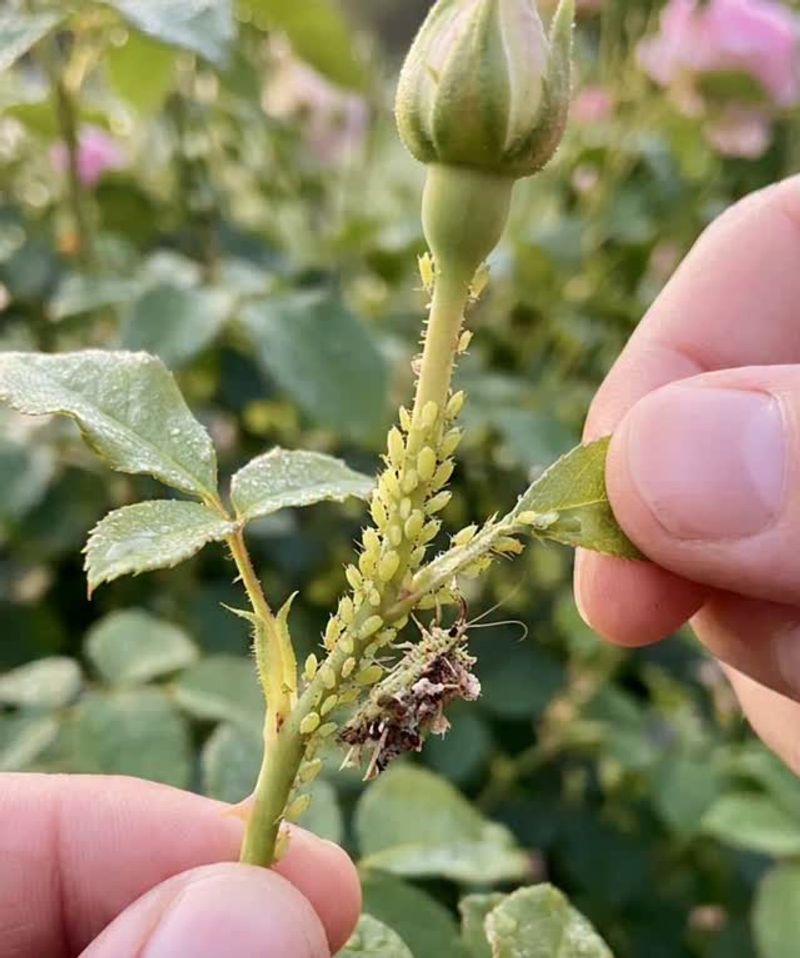
Spot a rose stem in late April or May that looks almost furry, and you have found an aphid colony doing exactly what aphids do.
These tiny insects, most smaller than a sesame seed, pierce the soft tissue of new shoots and drink the sap.
Penn State Extension’s guide to aphids on ornamentals explains that heavy feeding can distort new leaves, weaken developing shoots, and coat stems and nearby foliage in a sticky substance called honeydew.
That honeydew is more than a nuisance.
It draws ants, coats leaves in a shiny film, and eventually grows a black fungus called sooty mold that blocks sunlight and makes a once-beautiful shrub look like it caught a disease.
In southeastern Pennsylvania, where summers turn humid fast, that mold can spread quickly once honeydew builds up.
Here is the part that surprises many gardeners: a moderate aphid colony on an established, otherwise healthy rosebush is not automatically a crisis.
UC IPM’s aphid management guidance notes that many plants tolerate some feeding and can outgrow minor damage, especially when natural enemies are present.
The right question is not “how do I kill every aphid” but “is this colony actually hurting my plant, and do I have help already on the way.” Persistent feeding, visibly curled or stunted new growth, declining plant vigor, or a heavy honeydew buildup are the signals that call for a closer look and a proportional response.
The Best Aphid Hunters May Look Like Alligators
Lady beetles get most of the credit, but the adult red-and-black beetles you recognize from childhood are only part of the story.
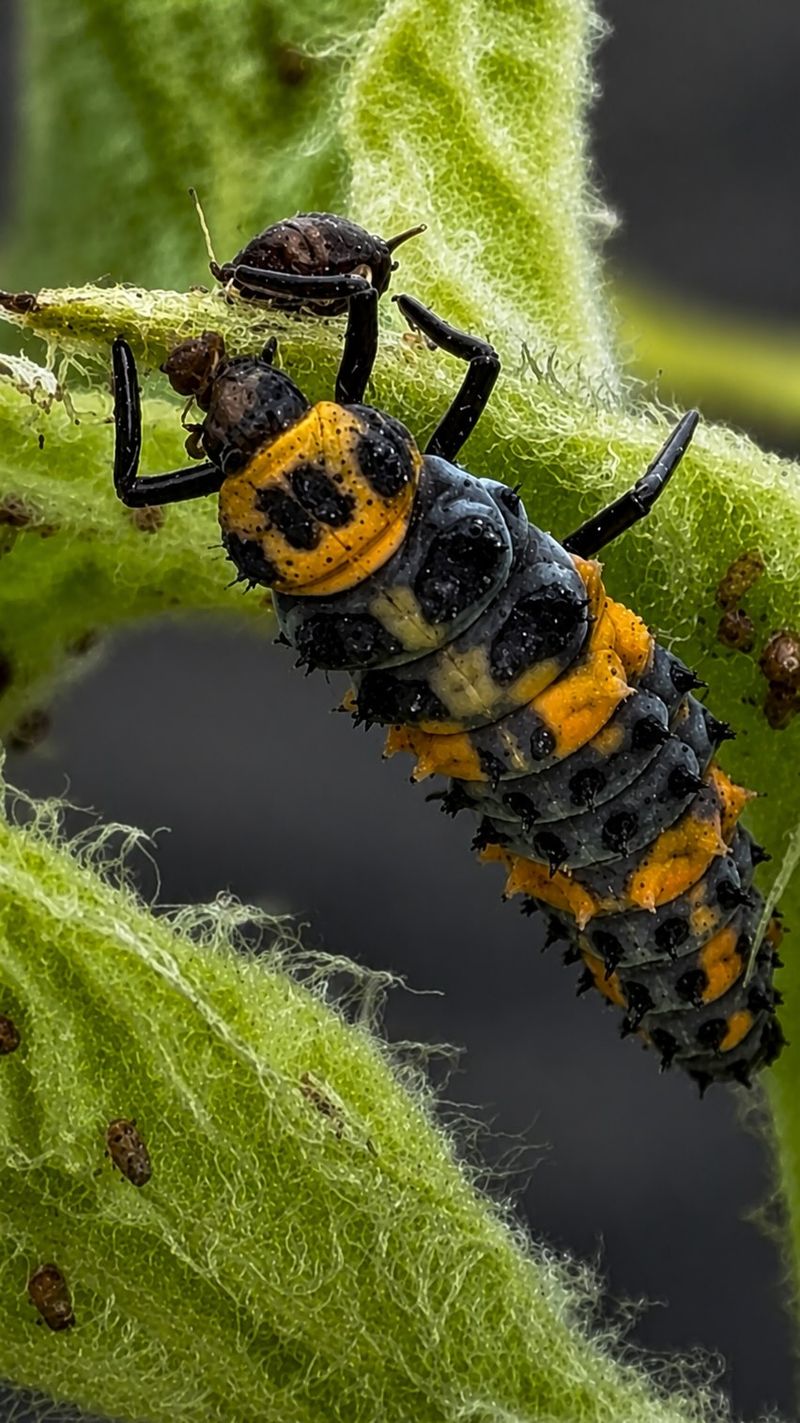
The larvae are actually the more voracious feeders, and they look nothing like what you’d expect.
They are dark, spiny, and low-slung, resembling tiny alligators no bigger than a pencil eraser, often with orange or red spots along their sides.
UC IPM’s lady beetle identification resource emphasizes that these larvae are active predators that consume aphids throughout their development.
Many Pennsylvania gardeners spray them by mistake, assuming the strange-looking insects are pests.
Before reaching for anything, take a second look at anything dark and crawling near your aphid cluster.
Build a simple inspection routine during the rapid spring growth period, roughly from mid-April through early June depending on whether you garden in the warmer Delaware Valley or the cooler northern tier.
Check new growth and the undersides of leaves once or twice a week.
You are looking for aphid clusters, yes, but also for the predators already working the problem.
UC IPM advises checking leaf undersides specifically because many aphid species concentrate there, and so do the predators chasing them.
Beyond lady beetle larvae, watch for lacewing eggs, which look like tiny white spheres on hair-thin stalks attached to leaves.
Syrphid fly larvae, sometimes called flower-fly maggots, are pale, slug-like, and move slowly across aphid colonies eating as they go.
Parasitized aphids turn tan and papery, what gardeners call mummy aphids, a sign that parasitic wasps have already done their work.
Seeing any of these is a genuine reason to hold off on intervention and let the predator team finish the job.
Build Habitat for the Whole Predator Team
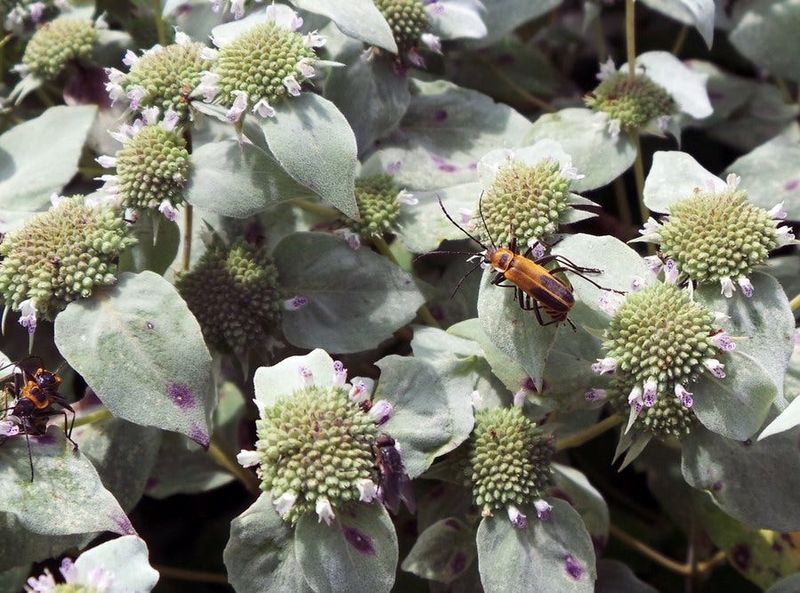
Lady beetles share the aphid-control work with a whole community of other predators, and treating the garden as habitat for all of them pays off more than focusing on one species.
Lacewing larvae, syrphid-fly larvae, parasitic wasps, soldier beetles, and spiders all contribute to keeping soft-bodied pests in check.
No single predator does the job alone.
Penn State Extension’s guide to attracting beneficial insects says that encouraging the beneficial insects already moving through your yard is generally preferable to buying and releasing them in a home garden.
The reasoning is practical: predators that establish themselves naturally are already adapted to local conditions, and they stay.
Bought beetles often do not.
The most useful thing you can do is give these predators a reason to linger.
Flowering plants that supply pollen and nectar are the foundation.
Penn State’s landscaping guide for beneficial insects recommends plants like dill, coriander, fennel, yarrow, coneflower (Echinacea purpurea), sunflowers, goldenrod, and asters.
A sequence of bloom times from spring through fall keeps beneficial insects fed well beyond the short window when aphids are most abundant.
Pennsylvania native plants add another layer.
Penn State’s native perennial planting guide highlights bee balm (Monarda didyma), black-eyed Susan (Rudbeckia hirta), goldenrod (Solidago spp.), native asters, and mountain mint (Pycnanthemum spp.) as strong choices for supporting broader insect diversity.
These plants genuinely help, but no single species will reliably eliminate rose aphids on its own.
Think of the planting as building a neighborhood, not hiring a single contractor.
Check Whether Ants Are Guarding the Aphids
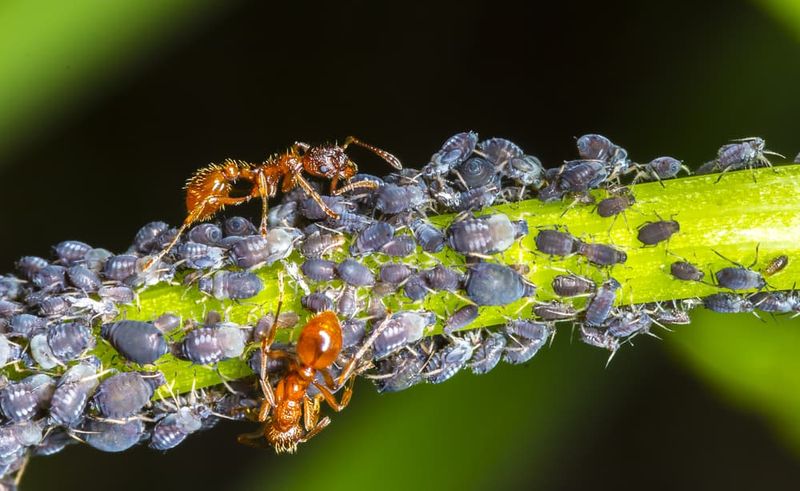
Sometimes the predators are present and working, but the aphid colony barely shrinks.
Ants are often the reason.
Certain ant species actively farm aphids for their honeydew, and they will chase off or physically remove lady beetles, lacewing larvae, and other predators that get too close.
During your weekly inspections, watch for ants moving in a steady line up and down your rose canes or vegetable stems.
UC IPM’s aphid guidance explains that ants can interfere with biological control enough to make it appear ineffective, when the real problem is ant protection, not a shortage of predators.
Managing the ants is one step in a proportional response, not a complete solution on its own.
A sticky barrier applied to the base of a rose cane or a physical collar can slow ant traffic without harming the predators working the upper plant.
Penn State’s integrated pest management framework treats ant management as one component of a layered approach, not a standalone fix.
If you address the ants and give the predator team a few days to work, you may find the colony shrinks on its own.
If the aphids persist and plant damage is building, that is when you move to the next step.
Proportionality matters here.
A handful of ants and a small aphid cluster on one cane is a different situation from a full-scale ant highway protecting a colony that has spread across an entire shrub.
Match your response to what you actually see, not to the worst-case version of the problem.
Use Water Before You Reach for Insecticide
A small aphid colony on a rose or vegetable plant does not call for a trip to the garden center.
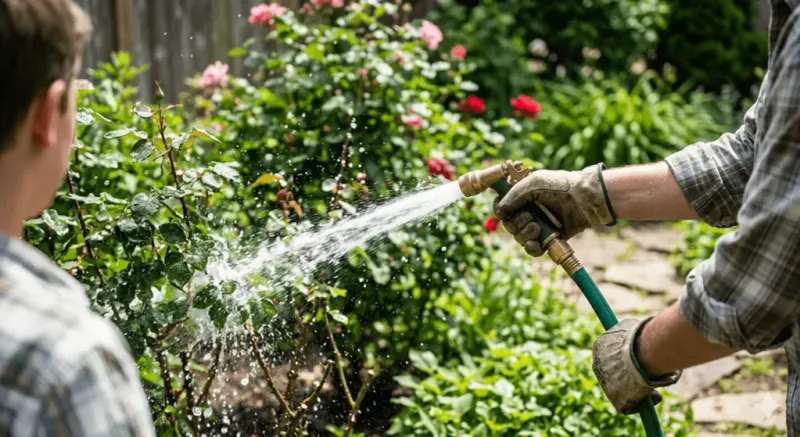
A strong stream of water from a hose is the first and often most effective response, and it costs nothing.
Penn State Extension recommends water as a nonchemical management option for aphids on ornamental plants, and it works by physically knocking insects off stems and leaf undersides, where they typically cannot climb back.
Aim the stream at new growth and the undersides of leaves, which is where aphids concentrate.
Do this in the morning so foliage dries before evening, which helps reduce fungal problems during Pennsylvania’s humid summers.
Repeat the treatment every 2 to 3 days for a week or two and keep monitoring.
Water treatment is not a one-and-done fix, it is the first move in an ongoing check-in with your plant.
Protect tender buds and open flowers from a blast that is too forceful.
A gentle to moderate pressure works on soft new growth without snapping stems or bruising petals.
The goal is to dislodge insects, not damage the plant you are trying to protect.
If the colony persists after several water treatments, growth is visibly distorted, or the plant is declining, a more targeted product may be appropriate.
Penn State Extension advises choosing products carefully to protect beneficial insects still working the plant.
EPA guidance on insecticides requires that any product be labeled for the specific plant and pest.
Read and follow the label exactly.
A product that is not labeled for your rose or your aphid species is not a legal or safe option, regardless of what worked for a neighbor.
Released Lady Beetles Often Do Not Stay
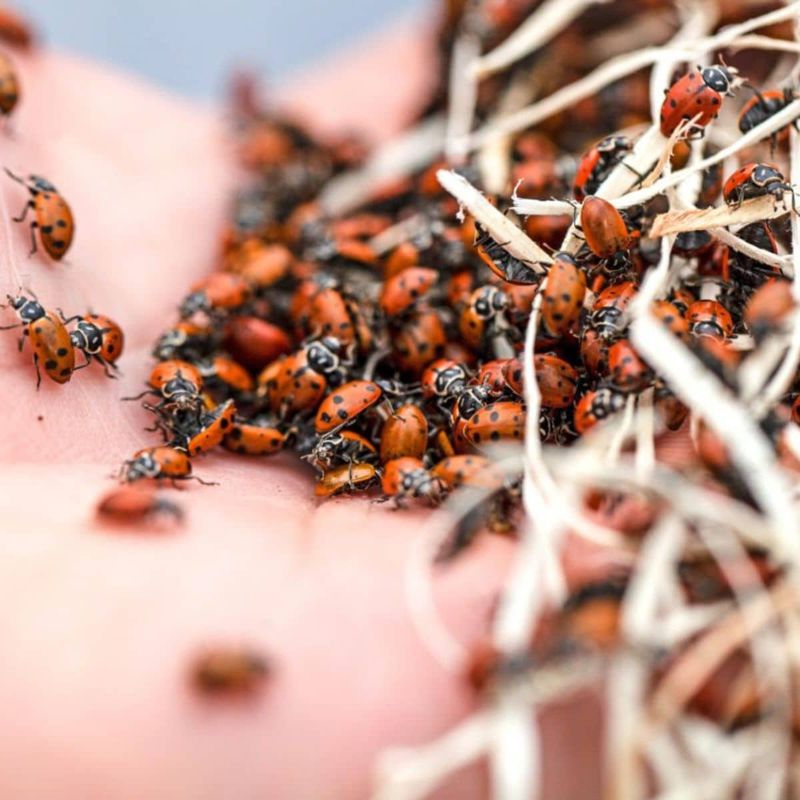
Walk into a garden center or search online and you will find containers of live lady beetles for sale, usually the convergent lady beetle (Hippodamia convergens), with packaging that promises fast aphid control.
The idea is appealing.
The reality is more complicated.
University of Minnesota Extension notes that most commercially released lady beetles disperse from a yard within a few days.
These beetles are typically collected from overwintering aggregations in the wild, often in California foothills, and they arrive with a strong biological drive to migrate.
Releasing them into a Pennsylvania backyard in June does not override that drive.
The research behind commercial releases is real but limited in scope.
A California Agriculture study on lady beetle releases found that commercially available convergent lady beetles reduced aphids on potted roses under controlled conditions.
But a separate peer-reviewed study on uncaged landscape roses found that effective control required roughly 2,300 beetles per square meter of shrub surface.
That is a research finding from California, not a dosage recommendation for a Pennsylvania homeowner with one or two rosebushes.
UC IPM also describes a California example in which about 1,500 beetles were applied twice to a single heavily infested rose.
These numbers show how demanding a release would need to be to match controlled study conditions, not how many beetles to buy for your garden.
Open Pennsylvania landscapes add wind, competing prey, neighboring vegetation, birds, summer thunderstorms, and many escape routes that enclosed or potted-plant studies simply do not include, as greenhouse research on ladybird aphid control confirms when distinguishing enclosed from open settings.
If you decide to try a release anyway, a few steps may improve immediate contact with the aphid colony.
Keep the beetles cool until you are ready, release them at dusk when they are less likely to fly immediately, lightly mist both the beetles and the infested plant, and place them at the base of the plant rather than dropping them from above.
These measures may help more beetles reach the aphids before dispersing.
They do not guarantee the beetles will stay.
Layer Decisions Instead of Chasing a Perfect Garden
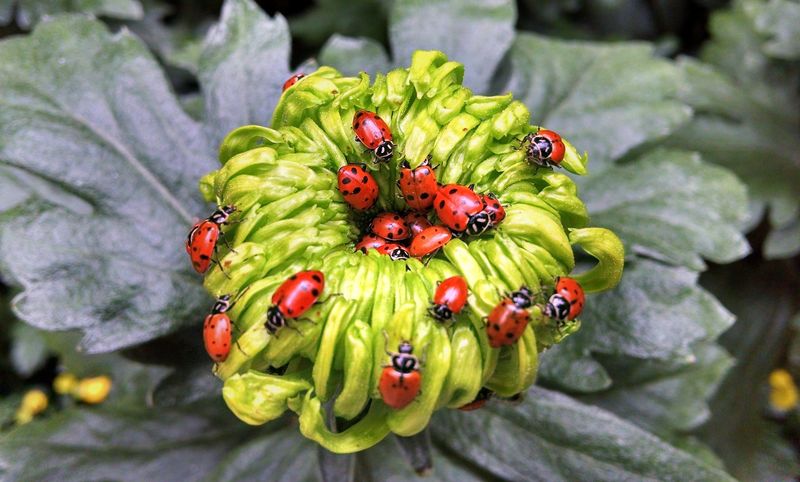
Aphid management works best when you treat it as a series of proportional decisions rather than a single action.
Start by identifying what you actually have.
Aphids on a healthy, established rosebush in the Susquehanna Valley in early June are a different situation from a collapsing new shrub in a shaded Poconos yard with a heavy ant trail and no predators in sight.
Established plants can tolerate some aphid feeding.
Reserve stronger intervention for colonies that persist despite natural enemies and water treatment, for new growth that is visibly distorted or stunted, for plants showing declining vigor, or for heavy honeydew buildup that is promoting sooty mold.
UC IPM frames aphid management around this kind of proportional threshold rather than automatic treatment at first sight.
When treatment is genuinely warranted, product choice matters as much as timing.
Penn State Extension warns that broad-spectrum insecticides can kill lady beetles, lacewings, and other beneficial insects along with the aphids.
When those predators are gone, a surviving aphid population can rebound faster than before, leaving the plant worse off than if you had waited.
EPA guidance is clear that any insecticide must be labeled for the specific plant and target pest.
Follow the label exactly, it is the legal document governing how that product may be used.
Penn State Extension’s aphid resource and its integrated pest management framework both describe a layered approach: identify the pest, support existing beneficial insects, monitor regularly, use cultural and physical controls first, and bring in targeted treatments only when damage justifies it.
That sequence is not complicated.
It is just slower than grabbing a spray bottle, and it actually works with the biology of your garden instead of against it.
Let Lady Beetles Help Without Expecting a Miracle
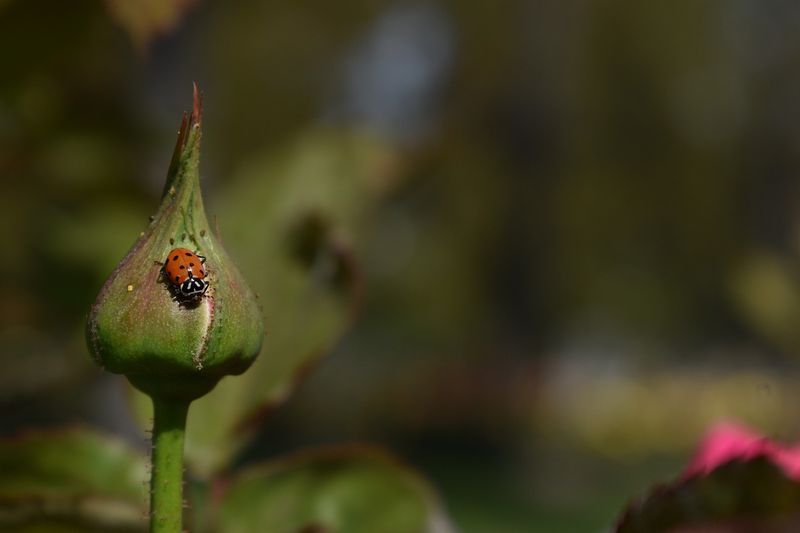
The headline on this article makes a confident promise, and it deserves an honest answer.
Lady beetles can genuinely contribute to aphid suppression, and a yard that supports them is better positioned than one that does not.
But adding more lady beetles does not reliably produce fewer aphids, and no rosebush comes with a guarantee.
Pennsylvania actually has several different lady beetle species, and they are not all the same.
Native species like the two-spotted lady beetle (Adalia bipunctata) and the seven-spotted lady beetle (Coccinella septempunctata) are familiar garden allies.
The multicolored Asian lady beetle (Harmonia axyridis) is a different matter.
Penn State Extension’s invasive species profile notes that it does eat aphids and can provide useful pest control, but it also invades homes in fall, sometimes in large numbers, and has documented ecological concerns involving competition with native lady beetle species.
UC IPM’s profile of the multicolored Asian lady beetle presents the same balanced picture.
It is not simply good or bad, it is complicated.
The routine that actually holds up looks like this: inspect your plants weekly, recognize larvae before you spray anything, protect the predator community by avoiding broad-spectrum pesticides, add flowering habitat that keeps beneficial insects fed across the season, manage ants when you see them tending a colony, and rinse small infestations with water before escalating.
Penn State Extension’s attracting beneficial insects guidance frames this as the foundation of a home-garden strategy, with commercial releases as a limited and unreliable supplement rather than the starting point.
Lady beetles are genuine partners in a healthy garden.
They work best when you build conditions for them to thrive, not when you treat them like a product you apply and forget.