
Florida Plants And Yard Design That May Support Kestrel Habitat, And What That Could Mean For The Lizards And Bugs In Your Garden
Follow us on Google
A small, colorful falcon no bigger than a blue jay can hover over a Florida yard like a tiny helicopter, drop fast, and come up with a grasshopper in its talons.
That bird is the Southeastern American Kestrel, and some Florida homeowners near open fields or pastures have started wondering whether the right plants could bring one in.
The honest answer is more interesting than a simple yes.
No plant has been shown to summon a kestrel, but the way you design your yard can make it a better or worse place for one to hunt, and understanding that tradeoff tells you something real about the food web living just outside your back door.
Meet Florida’s Small Falcon
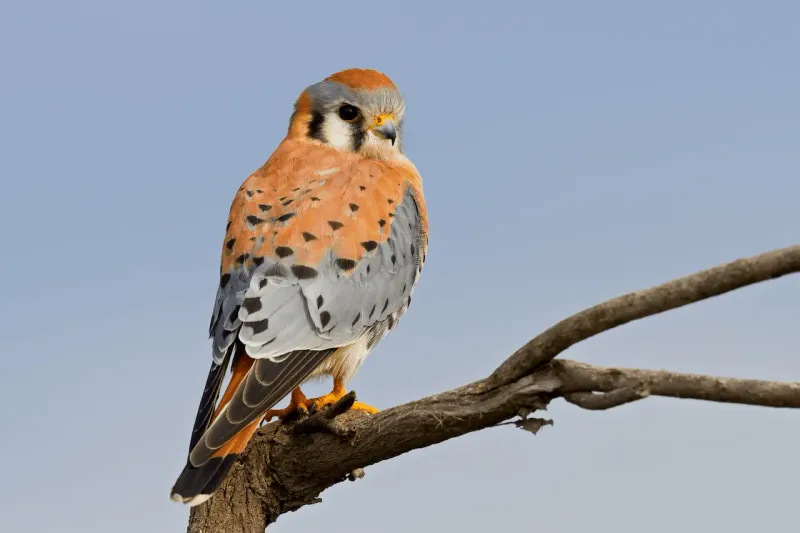
Florida’s resident kestrel is not the same bird you might see on a highway wire in Ohio.
The Southeastern American Kestrel, Falco sparverius paulus, is a smaller, paler subspecies that lives in Florida year-round and is listed as threatened by the state.
FWC research on Florida’s resident kestrels identifies grasshoppers and small lizards as major prey items, with spiders, frogs, worms, and other insects rounding out the menu.
That broad diet is the first thing to understand before expecting the bird to behave like a targeted pest-control service.
Kestrels hunt from exposed perches or by hovering above short, open ground.
They spot prey by sight, so dense vegetation is a wall, not a hunting ground.
When a kestrel does land in your yard, it is reading the landscape for visibility, not sniffing out a particular flower.
A second bird complicates the picture from September through April.
Northern American Kestrels migrate into Florida for winter, and the two subspecies can look similar in the field.
The resident Southeastern bird is non-migratory and generally smaller, but a casual observer may not tell them apart at a distance.
Seasonal behavior and territory use can differ, so what you see hovering over your lawn in January may be a winter visitor rather than a year-round neighbor.
Both birds eat a wide range of prey.
Cornell Lab’s kestrel life-history account lists insects, small mammals, lizards, spiders, frogs, and even small birds as part of the American kestrel’s recorded diet.
Any yard that hosts a kestrel is hosting a generalist hunter, not a specialist in garden pests.
No Plant Summons A Kestrel
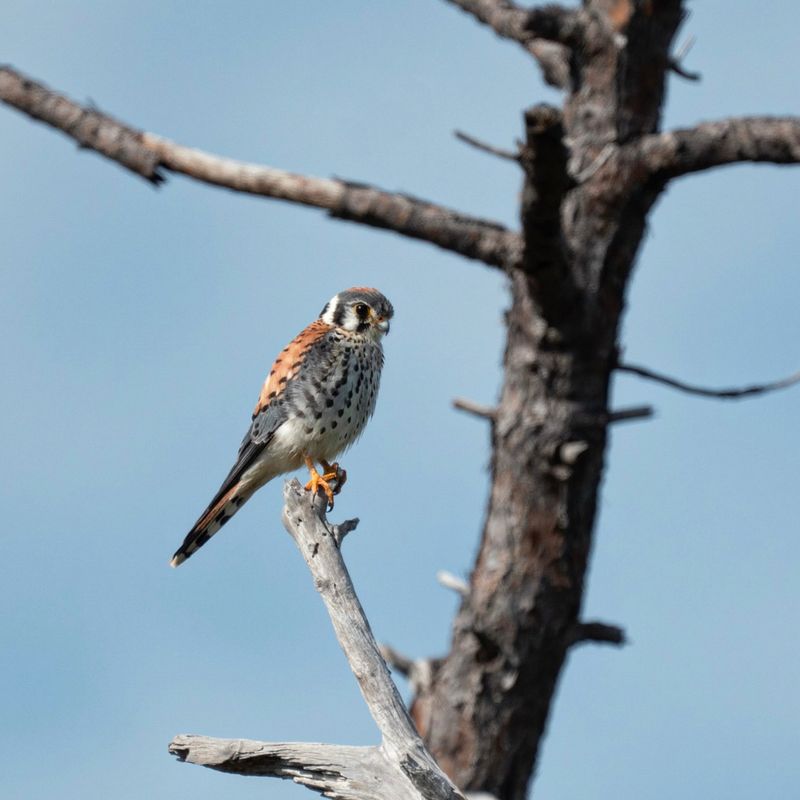
Here is where the headline needs a correction right up front.
No published source establishes that planting firebush, beautyberry, muhly grass, or any other Florida ornamental will reliably bring a kestrel into your yard.
That is not a technicality, it is the whole story.
What the evidence does support is habitat structure.
Forest Service species review for American kestrels documents a consistent preference for open, sunny areas with short or sparse ground cover where the bird can see prey from a distance.
Elevated perches, nesting cavities, and a reliable supply of visible, mobile prey matter far more than any specific plant name on a tag at the garden center.
Dense shrub walls and tightly packed pollinator beds can actually work against a kestrel visit.
A yard filled wall-to-wall with knee-high grasses and three-foot flowering plants gives the bird nowhere to read the ground.
Many Central Florida homeowners who want to support native wildlife fill every square foot with plants, which is wonderful for butterflies and bees, but it creates the visual equivalent of a corn maze for a hunting falcon.
The design principle that makes sense from kestrel habitat research is a mosaic, not a monoculture.
Leave a sunny open patch at the center or front of the space, keep some of that ground vegetation short or sparse, and push taller plants toward the edges.
That layout is an inference drawn from documented habitat requirements, not a tested recipe proven to guarantee kestrel visits.
Treat it as a reasonable starting point, and judge the results honestly over time.
Choose Plants For Habitat, Not Hype
Plant diversity genuinely matters for supporting the insects, lizards, and other small creatures that make a yard worth hunting.
The goal is not one magic species but a layered palette that provides flowers, fruit, structure, and cover across different heights and seasons.
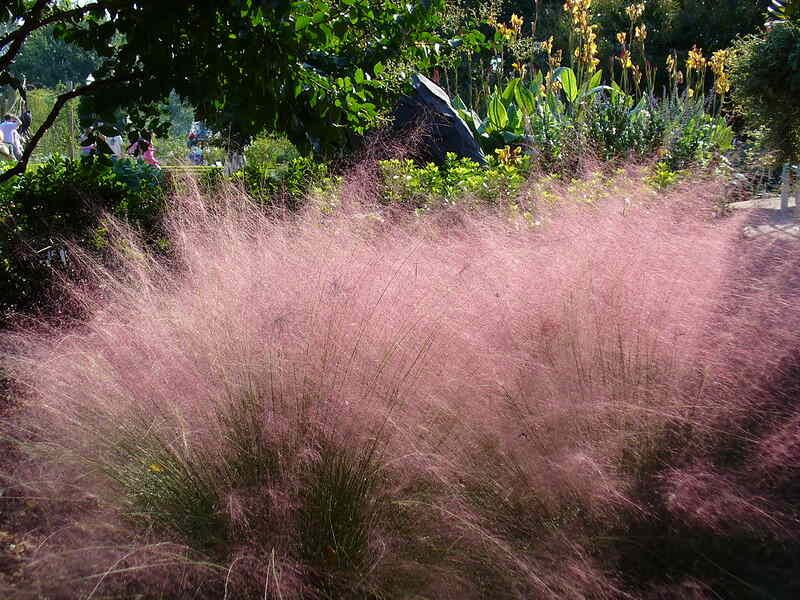
Pink muhly grass, Muhlenbergia capillaris, is a Florida-friendly native grass that produces its famous pink-purple plumes in fall and supports insects throughout the growing season.
UF/IFAS guidance on Florida wildlife plants lists firebush, Hamelia patens, among plants that attract hummingbirds and other wildlife with its tubular red flowers, and native milkweeds support monarchs and other pollinators while hosting the insects that feed up the food chain.
American beautyberry, Callicarpa americana, provides clusters of bright purple fruit that feed birds and cover for small creatures at shrub height.
Live oak, Quercus virginiana, is a cornerstone species that supports hundreds of insect species and provides canopy structure, and it is one of the best long-term investments for wildlife habitat in a Florida yard.
Coontie, Zamia integrifolia, is worth adding for its deep drought and salt tolerance, and it is the only larval host plant for the Atala butterfly in Florida.
UF/IFAS documentation on coontie carries an important warning: every part of the plant is poisonous, with the seeds especially toxic.
Do not treat it as a carefree edible-landscape plant, and think carefully before putting it where children or pets explore unsupervised.
Site conditions matter as much as the plant list.
Coastal yards on the Gulf or Atlantic side face salt spray that limits choices.
South Florida’s shallow limestone soil and year-round warmth support different species than the sandy, occasionally freeze-touched soils of the Panhandle.
UF/IFAS guidance on cultivating biodiversity in edible and wildlife landscapes recommends matching plant selection to local conditions rather than following a statewide one-size list.
Leave Room For The Hunt
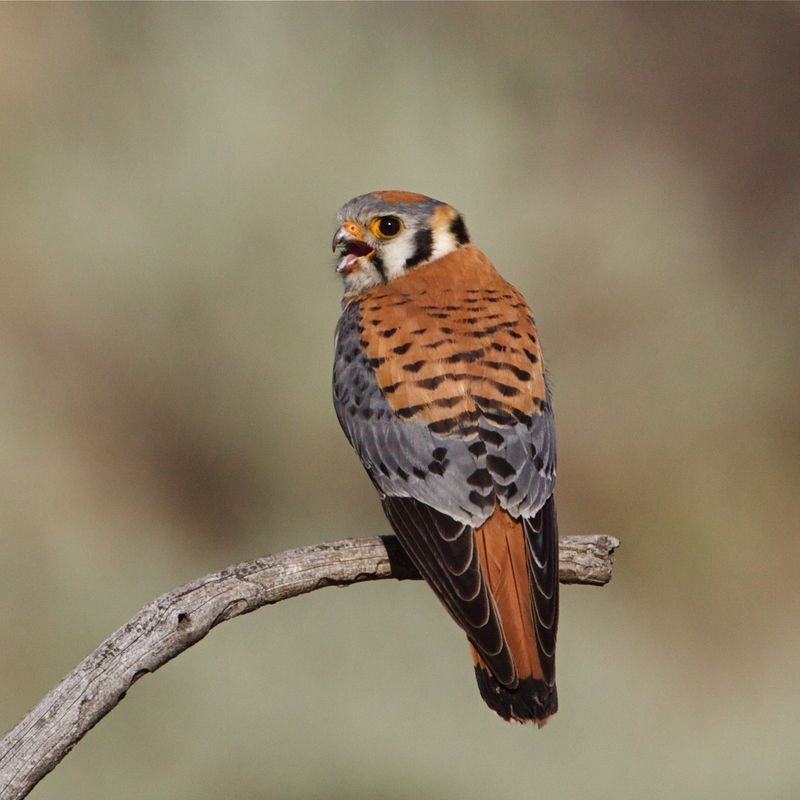
Translating plant choices into a layout that could actually support a kestrel visit starts with one decision: protect the open space first.
Before adding another shrub, look at your yard and identify the sunniest, most open section.
That patch is more valuable to a hunting kestrel than any specific plant you could put in its place.
FWC’s research profile on Florida’s resident kestrels notes that kestrels depend on visibility across their foraging areas, and the U.S.
Forest Service review reports a general preference for elevated perches at roughly 16 feet or higher above the ground.
A safe, existing tree at that height serves that function better than any improvised structure.
A dead standing tree, called a snag, can also provide both a perch and a natural cavity, but only if a qualified arborist has confirmed it is structurally sound and not near a home, road, play area, or power line.
Place taller shrubs and trees toward the yard’s edges or corners, keep the center open, and maintain a clear sightline across the ground from any perch you have available.
Short grass or bare-ish sandy patches are actually more useful than a lush, manicured lawn for a bird that needs to see a grasshopper move from 20 feet up.
Yard size and surrounding habitat are honest limiting factors.
The Forest Service kestrel review documents Florida territory sizes ranging from 124 to 783 acres.
A quarter-acre suburban lot sits inside that territory at best, and a kestrel may pass through or hunt briefly without ever treating your yard as a regular stop.
Design for the possibility, not the promise.
The Lizards Count Too
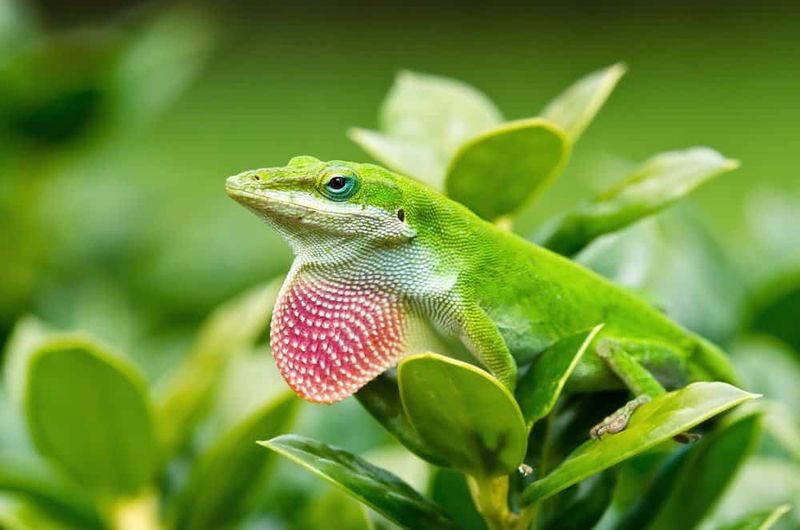
Kestrels eat lizards, and that fact complicates the pest-control story in a way worth sitting with for a moment.
Florida’s green anole, Anolis carolinensis, is a common resident of yards across the state, and it spends its days hunting insects.
Fewer anoles in your garden does not automatically mean fewer pests.
Cornell Lab’s kestrel life-history account documents lizards as a regular prey item, not an occasional snack.
A kestrel hunting your yard may take a green anole that would otherwise have eaten a dozen whiteflies that afternoon.
That is not a failure of the system, it is just how a food web actually works, and it is a tradeoff worth naming honestly.
UF/IFAS research on biodiversity in Florida landscapes describes native lizards as beneficial animals that contribute to insect control in yard settings.
Spiders, frogs, and other small wildlife fill similar roles.
When a kestrel takes any of them, the yard loses a predator along with the prey.
The more useful way to think about this is not as a win-loss calculation but as a community of predators and prey in balance.
A yard that supports multiple layers of predation, kestrels occasionally overhead, lizards in the shrubs, spiders in the mulch, is more resilient than one stripped down to a single control strategy.
Success looks like a yard that hums with small life, not one that has been picked clean.
Losing a few anoles to a passing kestrel is part of that system, not a sign something went wrong.
Why A Nest Box Usually Fails The Backyard Test
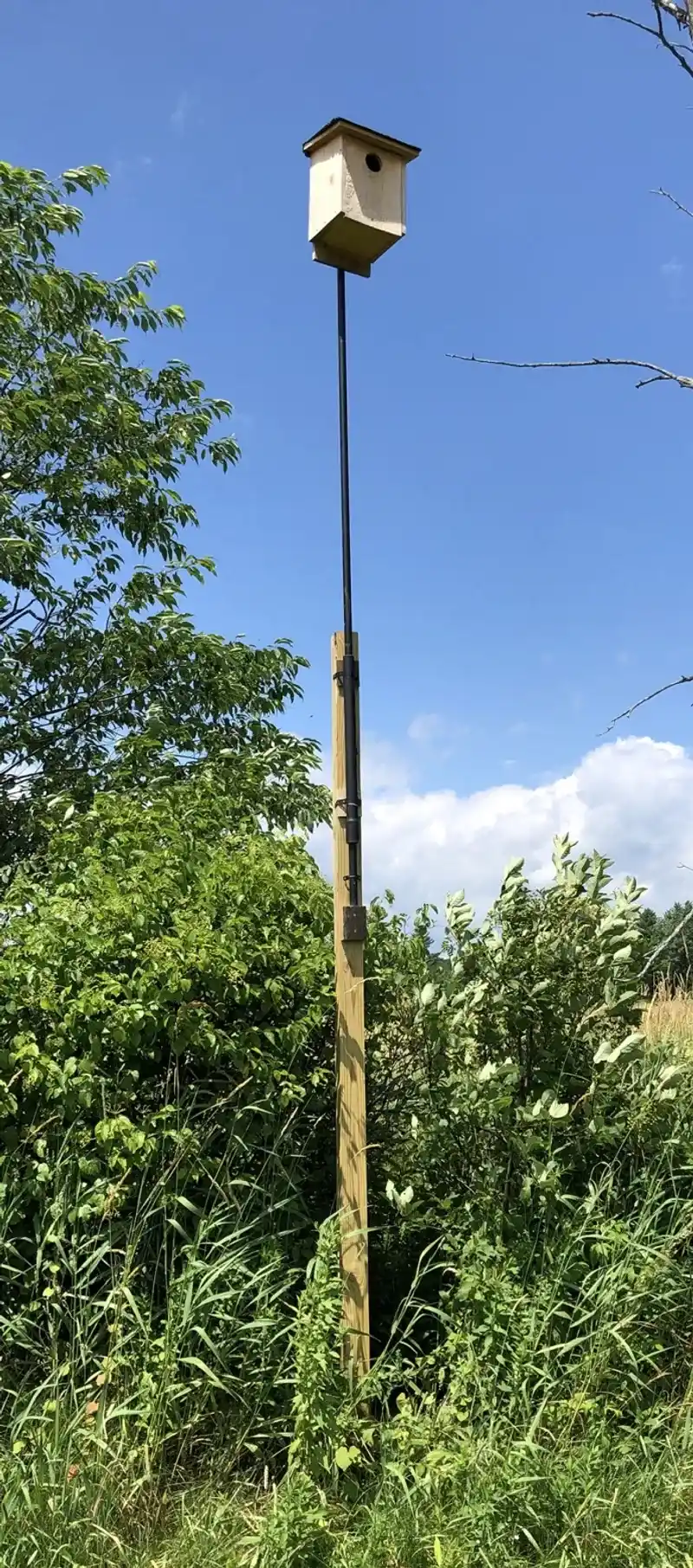
Nest boxes get mentioned in almost every kestrel article, and they can genuinely help in the right location.
But the right location is rarely a fenced suburban quarter-acre, and being clear about that upfront saves a lot of wasted effort and misplaced hope.
FWC’s nest-box guidance for Southeastern American Kestrels specifies boxes mounted 10 to 20 feet above the ground, with an entrance hole of about 3 inches in diameter.
Those are the box specs.
The harder requirement is the surrounding habitat: FWC recommends at least 124 acres of suitable open land around the box, with boxes spaced roughly one-half mile apart from each other.
A standard residential lot surrounded by other residential lots does not come close to meeting those conditions.
Kestrels cannot excavate their own cavities.
They depend entirely on holes made by woodpeckers, natural decay, or nest boxes.
A safe, cavity-bearing snag on a large rural property can serve that function, but the key word is safe.
Dead trees near homes, roads, children’s play areas, or power lines require professional evaluation before being left standing.
Do not let enthusiasm for wildlife habitat override basic structural safety.
FWC’s American Kestrel profile also makes clear that the bird is protected under the Migratory Bird Treaty Act and listed as threatened by Florida.
Certain activities involving kestrels require permits under FWC rules.
Do not disturb active nests, remove occupied cavities, or attach a box to a utility pole without written permission from the utility company.
The bird is protected for a reason, and the rules exist to keep well-meaning actions from causing harm.
Use Kestrels As One IPM Layer
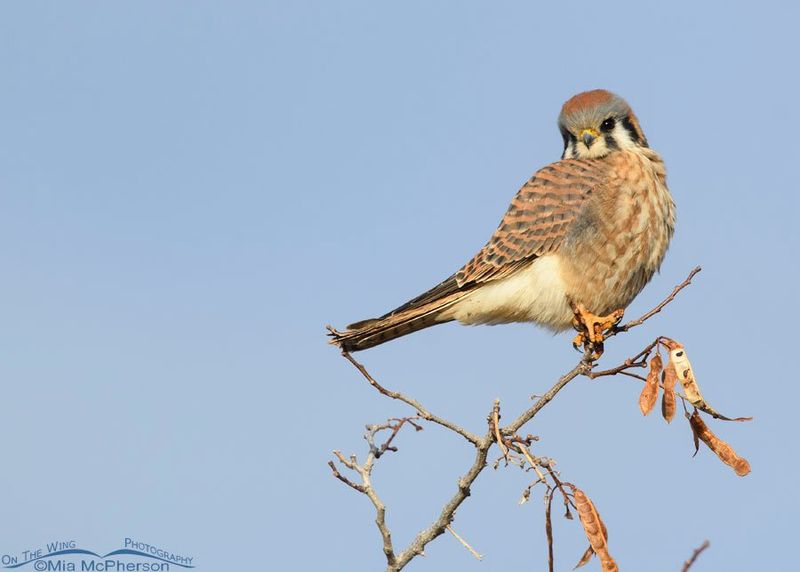
A kestrel passing through your yard adds one layer of natural pest pressure.
It does not replace a pest management plan, and treating it as a substitute is how gardens get damaged while the homeowner waits for a bird that may never arrive.
Kestrels hunt visible, mobile prey.
Grasshoppers bouncing through short grass, crickets crossing an open patch, beetles moving across bare soil, those are realistic targets.
FWC’s research on Florida’s resident kestrels confirms grasshoppers and insects as major prey items.
Whiteflies clustered on the underside of a leaf, thrips hiding in a flower bud, scale insects cemented to a stem, root-knot nematodes working through the soil, those pests live outside a kestrel’s hunting range entirely.
Do not expect the bird to address them.
UF/IFAS guidance on landscape integrated pest management lays out the actual process: identify the pest accurately, monitor its numbers over time, decide whether the damage has reached a level you cannot accept, and try cultural or mechanical controls first.
Change irrigation timing if root rot or fungal problems are involved.
Hand-remove lubber grasshoppers when the population is manageable.
Choose resistant plant varieties when replanting.
If treatment becomes necessary, select the least disruptive labeled option and follow the label precisely.
Broad-spectrum insecticide sprays can strip the insects that kestrels and other predators depend on, and Cornell Lab notes that pesticide exposure and prey-base loss are documented concerns for kestrel populations.
Never use rodenticides or other toxicants to try to manipulate the food web.
Poisoned prey can harm raptors and other wildlife, and baiting or feeding kestrels is not a legal or safe management strategy.
Keep the pest management work measured, targeted, and grounded in what you can actually observe and control.
Build A Yard That Does More Than One Job
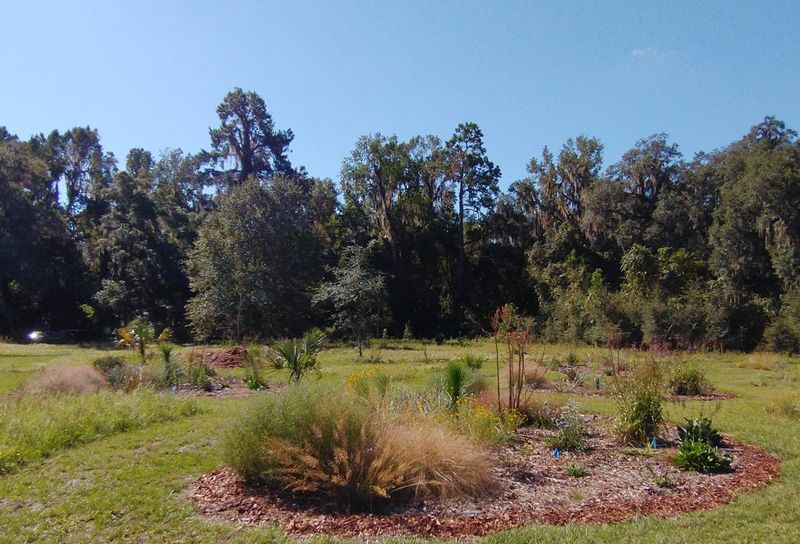
The most honest action plan for a Florida homeowner interested in kestrels is also the most broadly useful one: build a yard that supports a whole community of wildlife, not a yard engineered around a single bird that may or may not show up.
Preserve open, sunny space at the center of your design.
Use a diverse palette of site-appropriate native plants along the edges to support insects, pollinators, and the small creatures that form the base of the food web.
Protect any structurally safe cavity habitat on your property, and report active kestrel nests to FWC rather than disturbing them.
Continue monitoring pests with the UF/IFAS integrated pest management approach and intervene only when damage reaches a level that genuinely warrants it.
Judge the design by what it supports, not by whether it eliminates every bug or every lizard.
A yard that hosts gulf fritillaries on the firebush, anoles in the shrub edges, spiders in the mulch, and the occasional kestrel overhead is doing something real.
The Forest Service kestrel review makes clear that territory size and habitat quality across a wide landscape drive where these birds actually settle, and FWC data show Florida kestrel territories ranging from 124 to 783 acres.
No single homeowner controls that scale.
What you can control is your corner of it.
Make your corner genuinely useful, and let the outcome be what it is.
A yard that works for a kestrel works for most of the rest of Florida’s wildlife too, and that is a reasonable thing to be proud of.