
Your Christmas Cactus Segments Went Soft And Wrinkled Overnight, But Watering It Now Is What Finishes It Off
Follow us on Google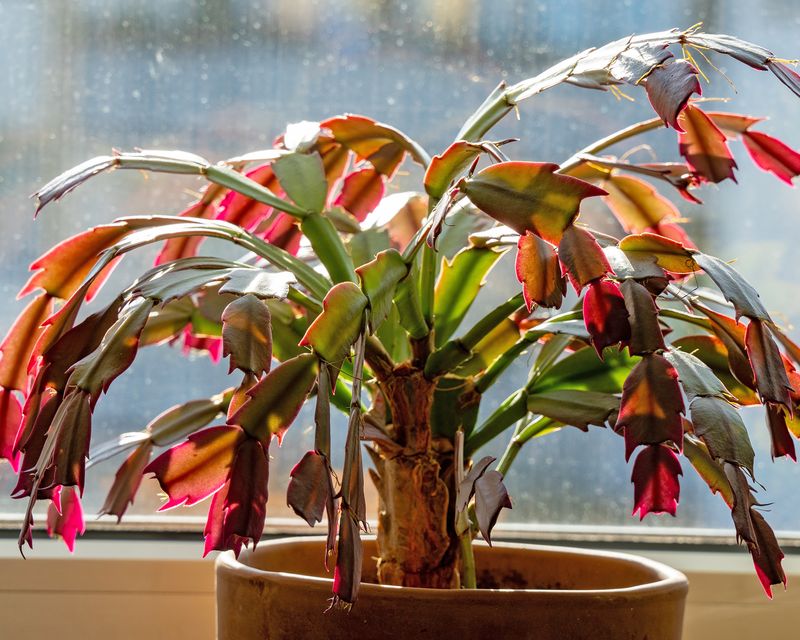
Something is wrong with your holiday cactus, and you noticed it fast.
The stem segments look soft, almost deflated, and your first instinct is to grab the watering can.
Before you do, there is one thing worth knowing: soft, wrinkled segments can mean the plant is thirsty, but they can also mean the roots are already in trouble, and adding water to a damaged root zone can make things worse.
Wrinkled Segments Do Not Diagnose The Problem
Put the watering can down for just a moment.
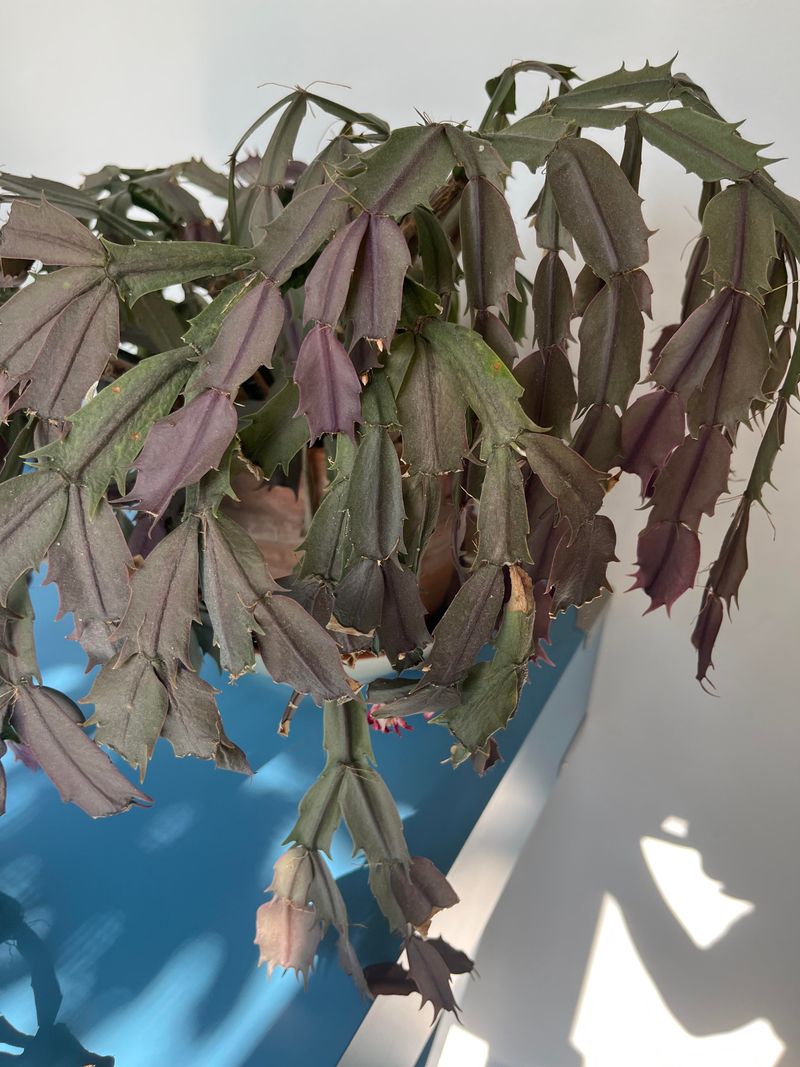
Soft, wrinkled segments on a holiday cactus show that something is wrong, but they do not tell you what.
That same deflated look can come from a plant that has gone too long without water, or from a plant whose roots have been sitting in wet soil long enough to stop working.
The fix for one situation is the opposite of the fix for the other.
The plants sold as Christmas cacti are a group of related hybrids, and North Carolina State Extension notes that most store-bought holiday cacti are actually Schlumbergera truncata or similar hybrids, sometimes called Thanksgiving cactus.
Their flattened, jointed structures are stem segments, not true leaves.
In nature, these plants grow on trees and rocky outcroppings in humid forests, where water moves through quickly and rarely pools around the roots.
That natural habit matters because it explains what goes wrong indoors.
When a pot holds water too long, the roots can break down and lose the ability to absorb enough moisture to support the stems above.
The plant looks thirsty even though the soil is wet, because University of Illinois Extension identifies overwatering and root damage as common causes of limp, shriveled holiday cactus growth.
But dehydration, drafts, pests, and other stress can produce the same wilted look.
The wrinkled segments are a signal to investigate, not a prescription for watering.
Checking the root zone first is the only way to know which direction to go, and that check takes about two minutes.
The Potting Mix Gives The First Clue
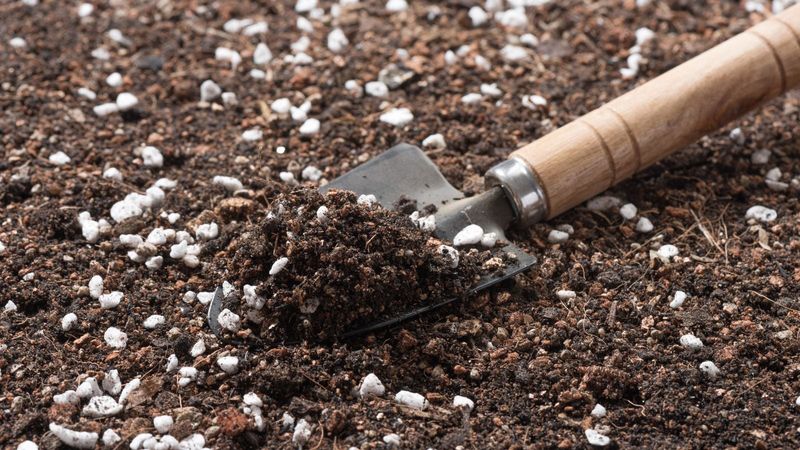
Before touching the watering can, push your finger into the potting mix.
Not just the surface, go down about one to two inches for a small pot, closer to three inches for a larger container.
The surface can fool you in both directions: it may feel dry while the center stays wet, or a water-repellent mix may look damp on top while the root ball underneath is bone dry.
Virginia Cooperative Extension recommends checking approximately 1 to 3 inches deep, depending on container size, rather than judging by the surface or following a fixed weekly schedule.
That advice holds for holiday cacti because drying time changes with every variable in the room: pot diameter, root mass, the type of mix, the light level, indoor temperature, and how dry the air is during heating season.
A genuinely dry mix will feel powdery or barely cool at depth.
A wet or saturated mix will feel cold, dense, and may smell sour or earthy in a way that seems off.
If the mix is wet and the segments are still limp, University of Minnesota Extension guidance on holiday cacti points toward root inspection rather than more water.
One more thing to watch for: if you water and the liquid drains almost immediately out the bottom while the root ball still feels light, the mix may have dried to the point where it repels water.
A single quick pour may have wet only the edges.
That situation calls for slow, repeated passes, not an assumption that the plant has been fully watered.
The mix check is your decision point: dry sends you toward watering, wet sends you toward the roots.
Dry Mix Means The Roots May Still Work
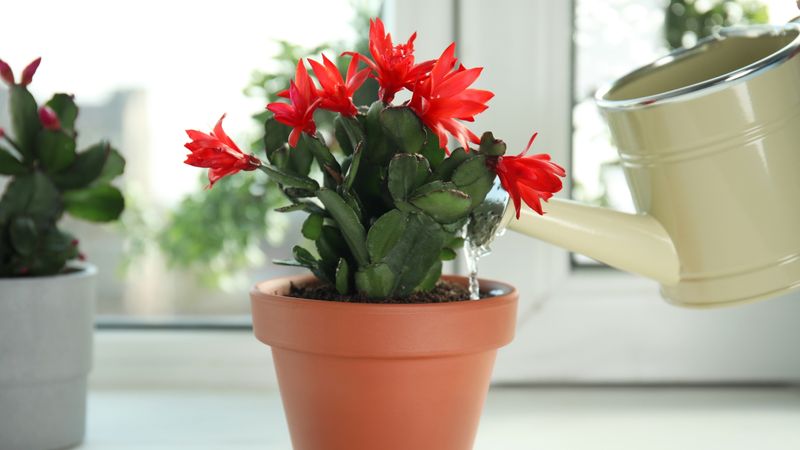
Dry mix is actually good news at this stage, because it means watering may be the right move after all.
A holiday cactus that has gone too long without water, with roots that are still firm and functional, can recover after a thorough drink.
The key word is thorough.
Start by confirming the pot has an open drainage hole.
A container without one traps water at the bottom no matter how carefully you pour, and that standing water is exactly what causes root problems over time.
University of Florida IFAS guidance on Christmas cactus care emphasizes that proper drainage is a basic requirement, not an optional detail.
Water slowly and steadily until water flows freely from the drainage hole, then stop.
Empty the saucer or the decorative outer pot within about 30 minutes.
Leaving the container sitting in a puddle of its own runoff defeats the purpose of having drainage in the first place.
Avoid the habit of giving small splashes every few days.
University of Minnesota Extension advises watering thoroughly so the entire root zone gets moisture, rather than repeatedly wetting only the top layer.
If the mix has become so dry that water beads up and runs straight down the sides of the pot, try a few slow passes with a thin stream, pausing between each one to let the mix absorb.
Do not promise yourself that the plant will perk up overnight, because recovery time depends on how long it was dry, how much root mass it has, and the conditions in the room.
But dry mix plus firm roots is the situation where watering helps rather than harms.
Mushy Roots Turn Water Into More Damage
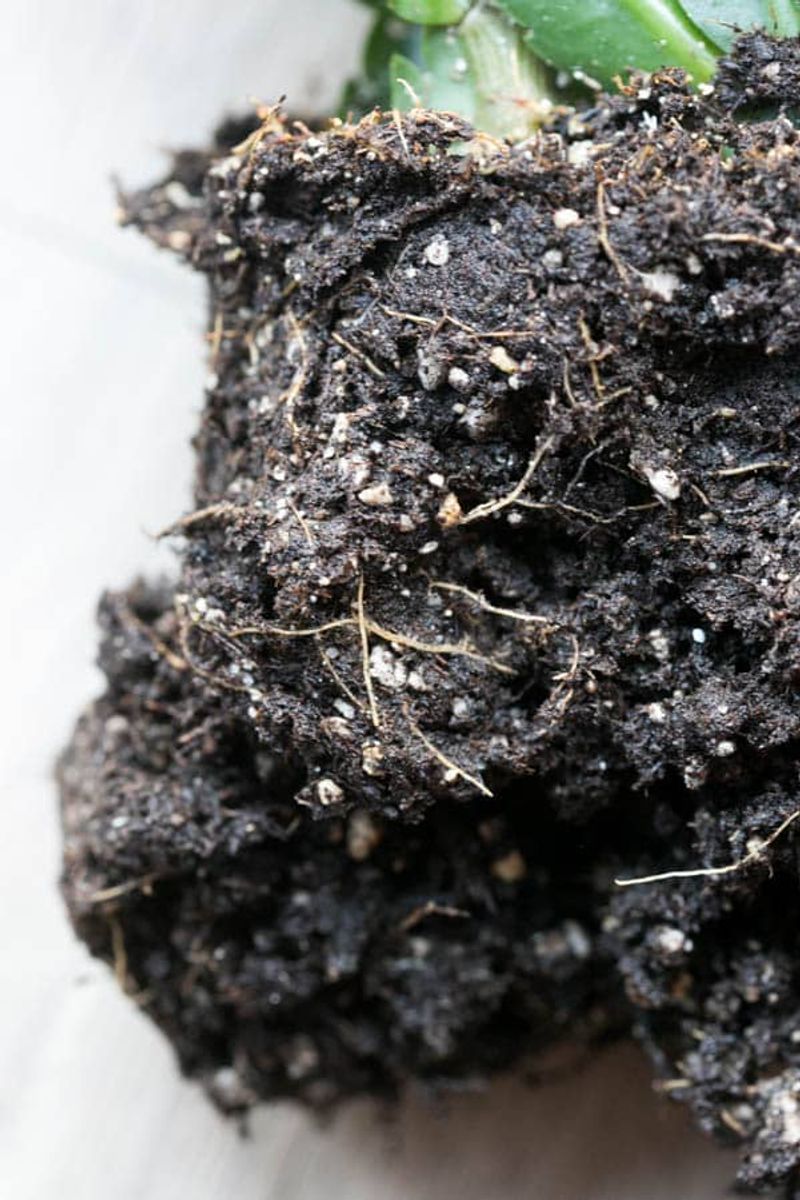
Wet mix and a still-limp plant is the combination that calls for a closer look.
Slide the plant gently out of its pot.
You do not need special tools for this, just tip the container sideways and ease the root ball out with your hand supporting the base.
Healthy roots should be firm and relatively light in color, tan or off-white.
What you do not want to see is roots that are brown, black, water-soaked, or soft enough to fall apart when you touch them.
Those roots have lost the ability to absorb enough water to support the stems above, and adding more water to the mix cannot restore them.
University of Wisconsin Extension advises removing damaged roots and repotting in fresh, well-drained mix when root rot is found.
Trim away the dead or mushy portions using clean scissors or pruners.
Wipe the blades with rubbing alcohol between cuts if the rot looks extensive, to avoid spreading anything from one root to another.
Discard the old potting mix entirely rather than reusing it.
Saturated soil that caused the problem once will hold onto moisture the same way again.
Repot the surviving root tissue into a fresh, fast-draining mix, something designed for cacti and succulents or a standard potting mix cut with perlite.
Connecticut Agricultural Experiment Station guidance on houseplant problems supports using well-drained media to reduce root disease pressure.
Choose a pot that is appropriately sized, not dramatically larger than the root ball, because excess soil around the roots stays wet longer.
Do not water heavily right after repotting.
Let the plant settle for a day or two, then water lightly and watch how the mix dries before establishing a new routine.
Some Collapse Calls For A Different Response
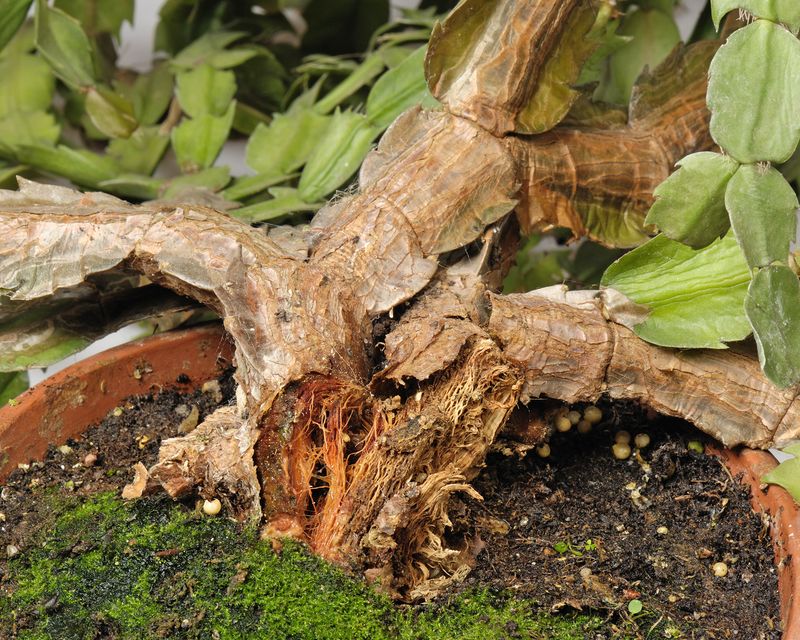
Not every sudden change in a holiday cactus comes from root rot, and not every root problem responds to repotting.
A specific pattern is worth knowing before you invest effort in a plant that may not be recoverable.
Bacterial soft rot looks different from ordinary root damage.
Instead of gradual wilting across the whole plant, you may notice black, wet, slimy lesions starting near the soil line, followed by branches that go limp and collapse quickly.
The tissue feels slick rather than simply soft.
University of Minnesota Extension recommends destroying plants that show this pattern rather than attempting routine watering adjustments, because bacterial soft rot does not respond the way root rot does.
Beyond disease, a sudden overnight change can also follow something more ordinary.
A missed watering, a cold draft from a window left open, exposure to a heat vent blowing dry air, an abrupt move from one room to another, or pest damage to the roots or stems can all produce soft or wilted segments.
University of Arkansas Cooperative Extension notes that environmental stress, including temperature swings and drafts, can affect holiday cactus health and contribute to bud or flower drop.
None of those possibilities replace the soil and root check.
They are additional things to look for once you have ruled out a watering problem.
UMass Amherst research on commercial holiday cactus production identifies several stress factors beyond watering that affect stem and bud health.
If the roots look clean and the mix was dry, environmental stress is the more likely explanation, and adjusting the plant’s location may help more than any change to your watering routine.
A Damaged Plant Can Regrow From Cuttings
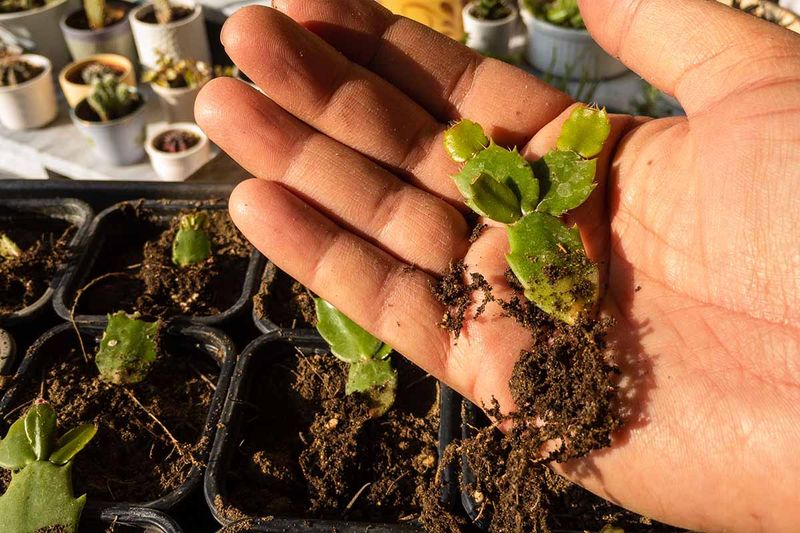
When root damage is severe enough that only a fraction of the original roots survive, the remaining roots may not be able to support every stem the plant is carrying.
Reducing the amount of top growth gives those surviving roots a fighting chance, and healthy cuttings taken at the same time serve as a backup in case the main plant does not pull through.
University of Wisconsin Extension recommends taking cuttings of healthy stem sections as insurance when a holiday cactus has suffered significant root loss.
Choose segments that look firm and show no sign of rot or discoloration.
A cutting of about 2 to 5 segments is a practical size, large enough to root successfully but small enough to handle easily.
Let the cut end sit in open air for a few hours or up to a day so the wound can dry and firm up slightly.
Then press the base of the cutting about half an inch into a rooting medium that drains well but holds just enough moisture to support root development.
Perlite, coarse sand, or a cactus and succulent mix all work.
Iowa State University Extension notes that holiday cactus cuttings can root in roughly 2 to 8 weeks, though timing varies with temperature, light, humidity, and rooting medium.
Keep the medium consistently moist but not soggy during the rooting period.
Place the cuttings in bright, indirect light and avoid direct afternoon sun.
University of Minnesota Extension supports propagation as a practical recovery strategy after root damage, not as a guaranteed rescue, but as a way to preserve the plant’s genetics while the parent plant recovers or does not.
Do not attempt to root cuttings showing any sign of bacterial soft rot, because the disease can travel in infected tissue.
Better Drying Prevents The Next Crisis
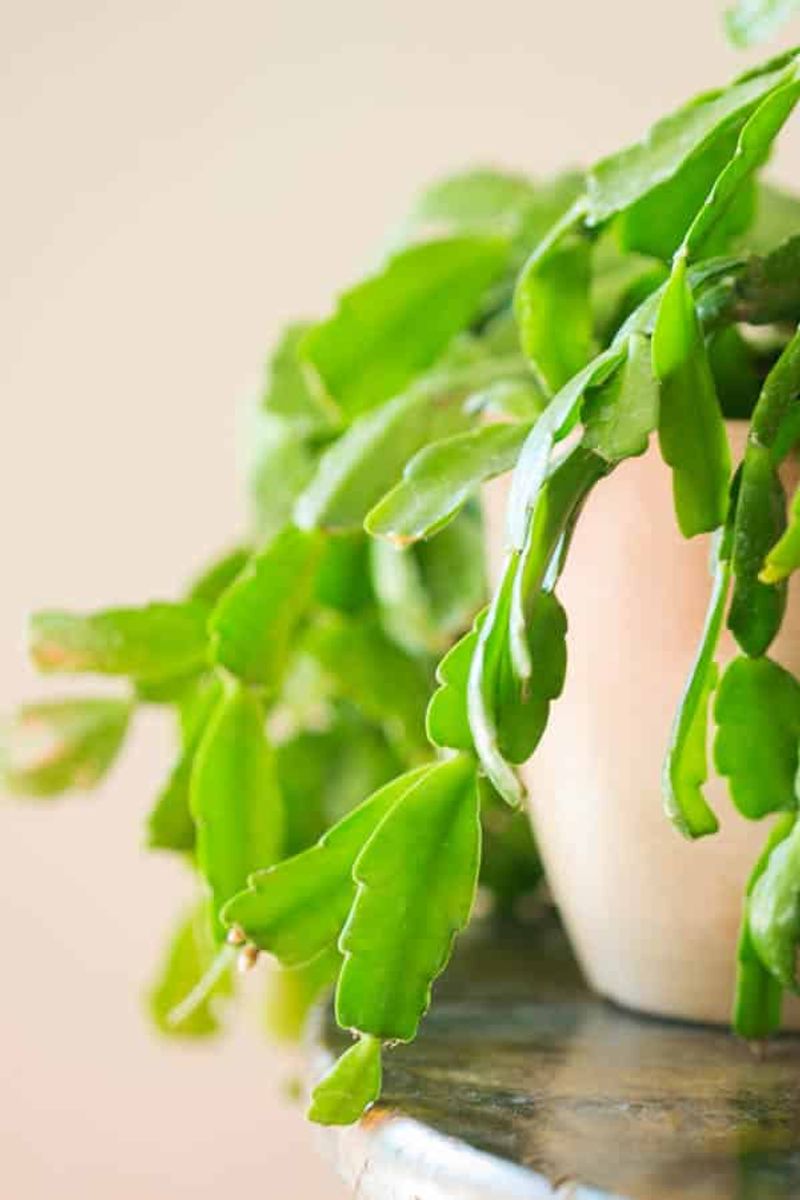
Once the immediate problem is handled, the goal is building a routine that keeps you from returning to this same moment six months from now.
Most of what prevents soft, wrinkled segments comes down to three things: light placement, drainage, and how you decide when to water.
Place the plant in bright, indirect light.
A spot near a window that gets good light without intense afternoon sun works well for most indoor settings.
Iowa State University Extension recommends keeping holiday cacti around 60 to 70 degrees Fahrenheit for general care, with slightly cooler temperatures often used to encourage bud set.
Keep the plant away from heating vents, exterior doors, and windows that let in cold drafts during winter.
Make sure the pot has a functional drainage hole and that the saucer stays empty after each watering.
No standing water, ever.
Between waterings, let the mix dry somewhat before adding more moisture.
During active growth, that might mean checking every few days and watering when the top inch or two feels dry.
University of Florida IFAS guidance notes that the mix should not be allowed to stay saturated, but it should not be pushed to complete dryness during budding or flowering either, because excessive dryness at those stages can cause buds and flowers to drop.
Replace the calendar with a habit.
Instead of watering every Tuesday or every ten days, check the mix.
Stick your finger in.
Feel whether it is dry or still cool and damp below the surface.
University of Minnesota Extension supports this approach because drying time changes too much between seasons, rooms, and container sizes for a fixed schedule to stay reliable.
Moisture level, root health, and drainage determine the next step, and a wrinkled segment is only the beginning of that conversation, not the end of it.