
August Fertilizer and Texas Bougainvillea: A Regional Guide to Better Fall Color
Follow us on Google
Bougainvillea (Bougainvillea glabra) puts on some of the most jaw-dropping color a Texas porch can offer, and right now, in the heat of late summer, a lot of gardeners are wondering whether to reach for the fertilizer bag.
The answer is not as simple as the advice you may have seen online.
Where you live in Texas, how your plant is growing, and what the soil is doing matter far more than any single August feeding.
This guide walks through what your bougainvillea actually needs right now to have a real shot at fall color, without putting the plant at risk heading into cooler weather.
August Feeding Is Not a Texas Rule
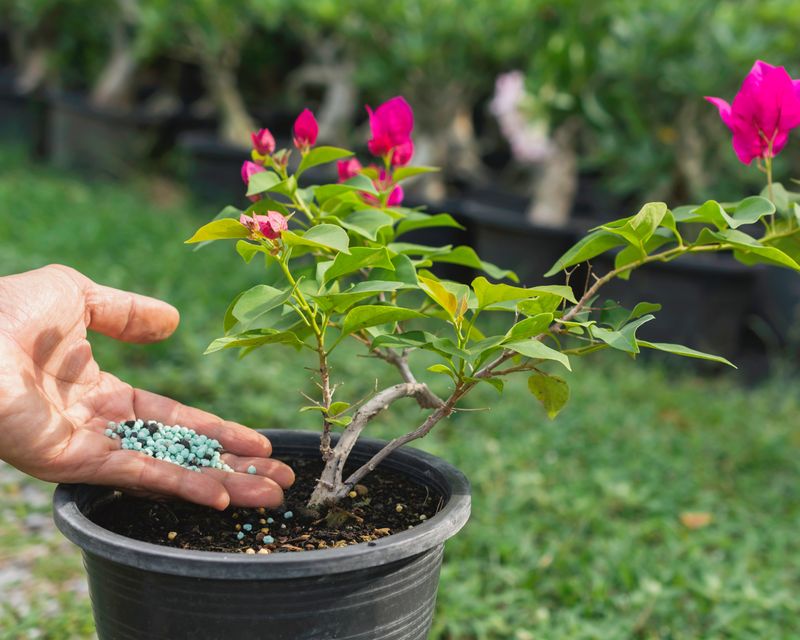
Pull back on the fertilizer bag for a moment, because the advice that August feeding unlocks nonstop bougainvillea blooms across Texas is too broad to be trusted as written.
Texas A&M AgriLife Extension guidance on fertilizing woody ornamentals is direct: avoid applying fertilizer to woody ornamentals from August 1 until late fall.
The reason is practical.
Late-season fertilizer can push a flush of tender new growth right before temperatures drop, and that soft tissue is the first thing a freeze damages.
South Texas is the exception the same source names.
Freeze damage in that region is generally less severe, so a late-summer application may support late-fall and winter growth there.
But South Texas is not uniformly frost-free, and the Rio Grande Valley can still see freezing temperatures in an unusual winter.
A gardener in Laredo or Harlingen is not in the same position as one in Amarillo, Lubbock, Abilene, or even San Antonio.
Before you decide anything about fertilizer, ask yourself four questions.
First, where in Texas are you?
Second, is your plant in a container or in the ground?
Third, is it actively growing right now, or is it stressed and struggling?
Fourth, what is your local freeze exposure like, and do you have a protected microclimate or a way to cover the plant?
Texas A&M plant-selection guidance recommends outdoor bougainvillea primarily for extreme southern Texas, with winter protection required elsewhere.
That context reframes the whole feeding question.
This article is not promising nonstop blooms.
It is giving you a better shot at fall color while keeping the plant safe.
Sun Sets the Blooming Ceiling
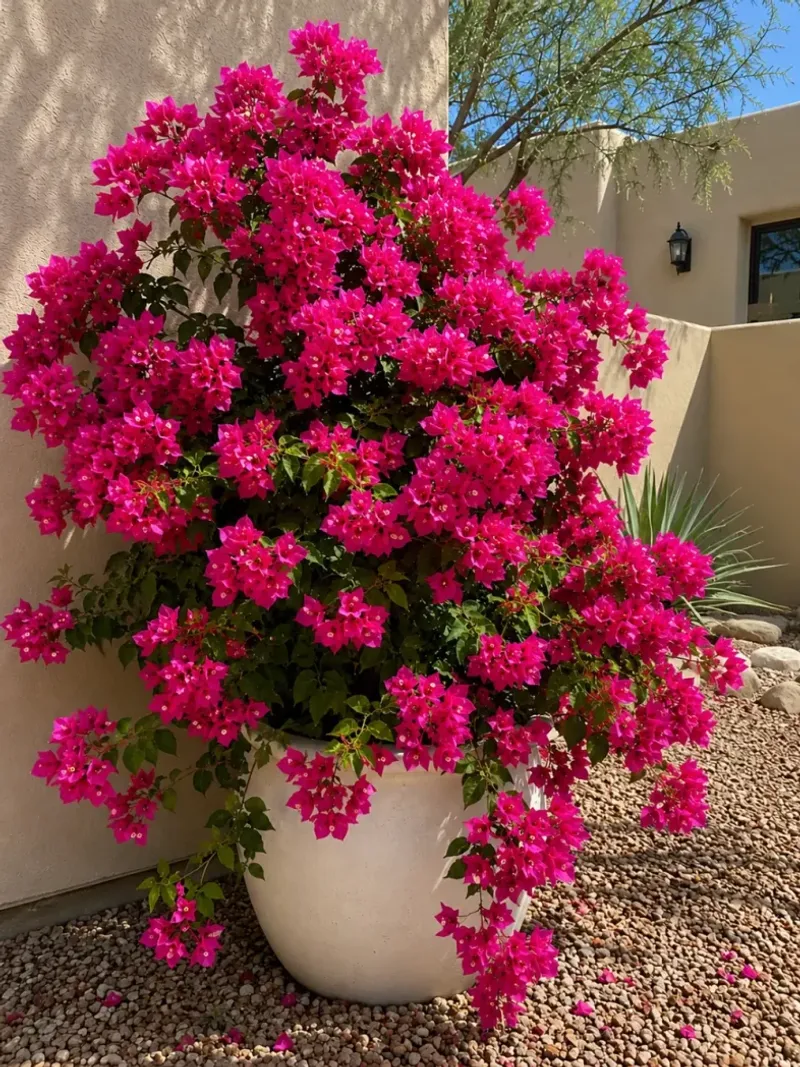
Forget the fertilizer question for a minute, because no amount of feeding overcomes a shady spot.
Bougainvillea is a sun plant in the most serious sense of the phrase.
Texas A&M’s bougainvillea care reference lists at least 4 hours of direct sunlight daily as a minimum, and practical Texas guidance pushes that closer to 5 or more hours of afternoon sun for strong flowering.
Afternoon sun in Texas is intense, which is exactly what bougainvillea wants.
Step outside and watch your plant’s location from about 10 a.m. through 4 p.m.
A live oak that seemed far enough away in spring may now be casting a wider canopy.
A roofline that cleared the plant in June might be throwing shade across it by late July as the sun angle shifts.
Seasonal shade is a real bloom thief, and many Central Texas gardeners discover it only when the color fades mid-summer.
If your plant is in a container, you can move it.
Find the brightest wall available, ideally a south- or west-facing surface that reflects heat and light back onto the plant.
A light-colored stucco or brick wall can add several degrees of warmth and extend the usable season slightly in borderline climates.
An established in-ground vine is harder to relocate, so focus on what you can control.
Trim nearby branches that are encroaching on the plant’s sun exposure.
Do not attempt to move a large rooted vine in August heat.
Instead, treat this summer as a scouting season and plan a better planting location for next year if the current spot is genuinely too shaded.
Light is the ceiling on blooming, and no other input raises it.
Let the Soil Dry, Not the Plant
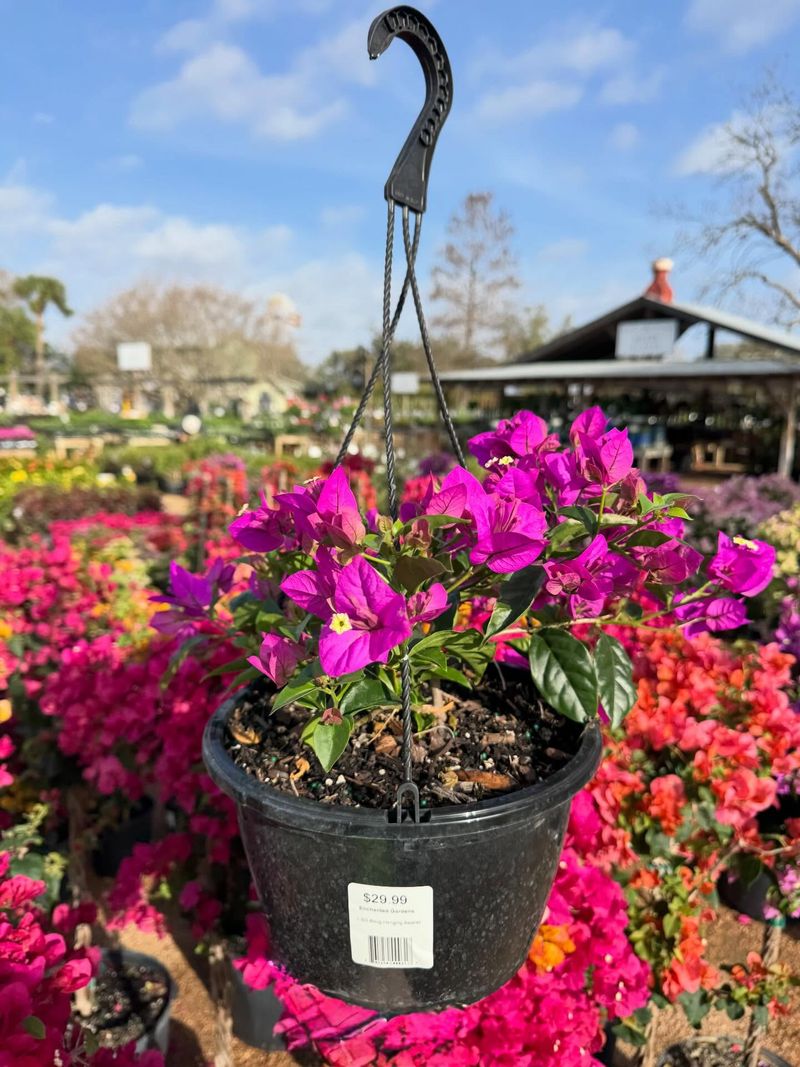
Bougainvillea has a reputation as a drought-tolerant plant, and that reputation is earned, but it comes with a limit that matters in Texas summers.
University of Florida IFAS bougainvillea guidance describes the plant as drought-tolerant and specifically warns against overwatering or waterlogged soil.
Roots sitting in wet ground cannot breathe, and a plant with compromised roots will not flower.
Excess water is one of the most common reasons a Texas bougainvillea looks green and leafy but stubbornly refuses to bloom.
The goal is to let the soil become somewhat dry between waterings, not to push the plant into crisis.
Research on bougainvillea flowering response to drought stress found that moderate stress produced more flowers than either severe stress or very frequent watering.
That finding does not justify withholding water during a 105-degree stretch in West Texas.
Severe wilting causes leaf drop, bud loss, and real plant decline that can take weeks to reverse.
Drainage is where many Texas gardeners lose this battle before it starts.
Blackland clay in North and Central Texas holds water long after a rain.
Caliche layers in the Hill Country and West Texas block drainage entirely.
Texas Master Gardener guidance emphasizes well-drained soil as a non-negotiable requirement.
If your in-ground plant sits in compacted or poorly drained soil, the watering schedule matters less than fixing the drainage problem.
For containers, check that drainage holes are open and unobstructed.
Empty the saucer after every rain or irrigation so the pot is not sitting in standing water.
How often you water depends on pot size, soil mix, current heat, wind exposure, and whether the plant is still establishing.
A small pot in direct afternoon sun in August may need water every day or two.
A large in-ground plant in loamy soil may go a week between deep irrigations.
Watch the plant and the soil, not the calendar.
When Fertilizer Actually Helps
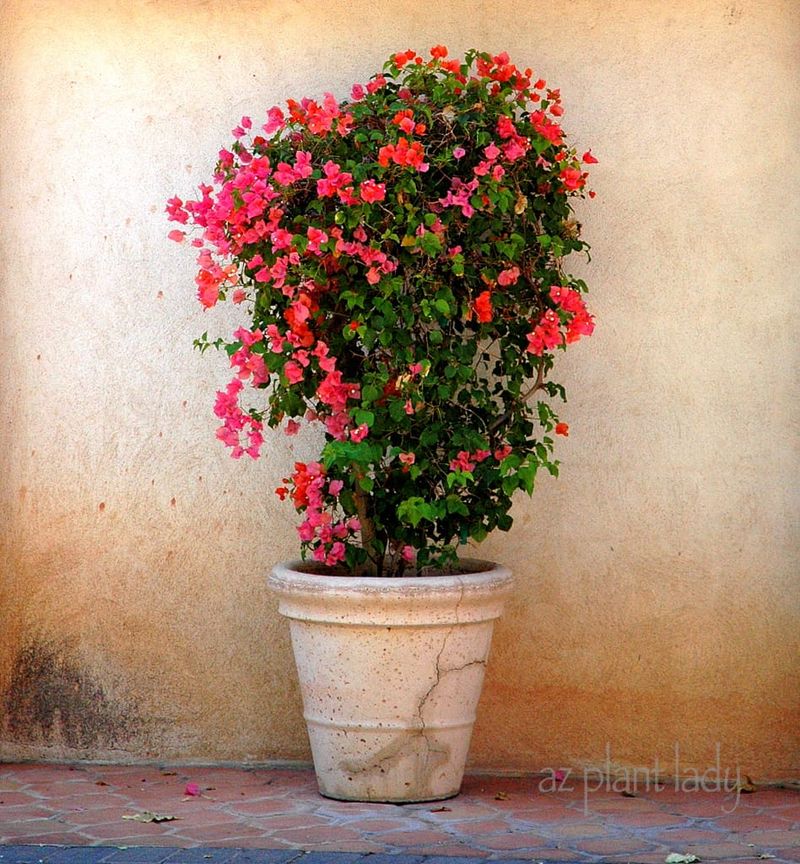
Here is where the feeding question gets specific enough to be useful.
Container bougainvillea and established in-ground plants behave differently, and treating them the same way is where a lot of gardeners go wrong.
A pot loses nutrients faster than garden soil does.
Every time you water a container, some of those dissolved minerals drain out the bottom.
An actively growing container plant showing pale leaves, slow growth, or genuinely reduced color may have a real nutrient need by late summer.
That is a situation where a modest, label-directed fertilizer application can help.
Galveston County Master Gardener guidance describes dilute soluble feeding for container bougainvillea during active growth, though those recommendations apply to containers and are not a statewide prescription for landscape plants.
An established in-ground bougainvillea in reasonably fertile soil often needs little or no supplemental fertilizer.
Texas A&M AgriLife Extension’s fertilizing guidance is clear that fertilizer recommendations should come from soil or foliar analysis, not from habit or guesswork.
Excess nitrogen is the specific problem to avoid.
Too much nitrogen pushes leafy green growth at the expense of flowering bracts, which is the opposite of what you want.
UF/IFAS bougainvillea care guidance also flags excess nitrogen as a bloom suppressant.
Do not treat a high-phosphorus bloom booster as a guaranteed solution either.
Phosphorus accumulates in soil and should not be added without a demonstrated need confirmed by testing.
If you decide feeding is justified, follow the product label exactly and never exceed its stated rate.
Do not apply fertilizer to bone-dry soil, because concentrated salts can damage roots.
Water the plant lightly first, then apply.
And if you are in North Texas, Central Texas, the Hill Country, or West Texas, the August 1 caution from Texas A&M applies to you.
Fertilizer is one small piece of care, not the bloom trigger the headline promised.
Late Pruning Can Steal Fall Color
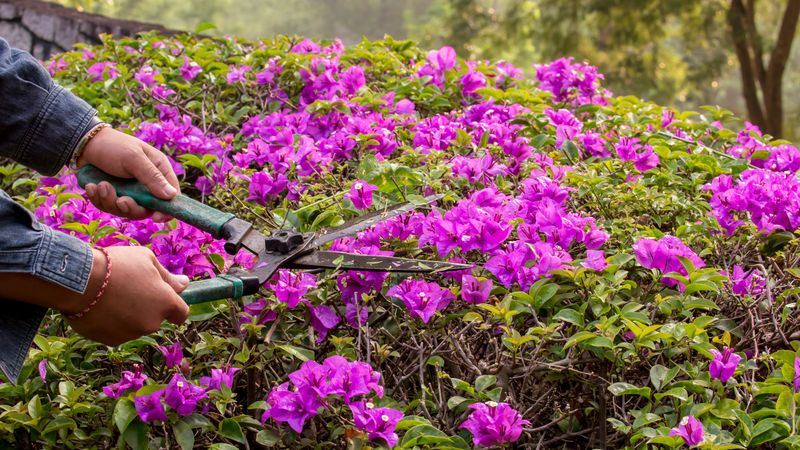
The impulse to grab the pruning shears in August and cut the plant back hard is understandable.
You want new growth, new tips, new color.
The problem is that bougainvillea flowers on current-season growth, and those active tips you are about to cut are often the exact wood that would have produced the next flush of bracts.
UF/IFAS bougainvillea guidance advises against late-summer or early-fall pruning when winter flowering is the goal, specifically because it removes active flowering wood and can stimulate a wave of tender new growth before cold weather arrives.
Extension pruning guidance for bougainvillea supports waiting until after a bloom cycle finishes or until late winter, depending on your region and cultivar.
What you can do right now is remove growth that is genuinely dead, clearly damaged, or positioned in a way that creates a safety problem, such as a long cane reaching over a walkway.
That kind of targeted cleanup does not cost you flowering wood.
Anything beyond that should wait.
Before you touch the plant at all, suit up properly.
Texas Master Gardener plant-library notes on bougainvillea describe the thorns as sharp and commonly around 1 to 2 inches long.
Heavy leather gloves and long sleeves are not optional.
A quick reach into the canopy without protection can leave you with puncture wounds deep enough to need attention.
Major shaping, structural pruning, or any work meant to redirect the plant’s energy should wait until after the next bloom cycle winds down or until late winter just before new spring growth begins.
Patience here actually produces more flowers, not fewer.
Texas Freeze Risk Changes the Plan
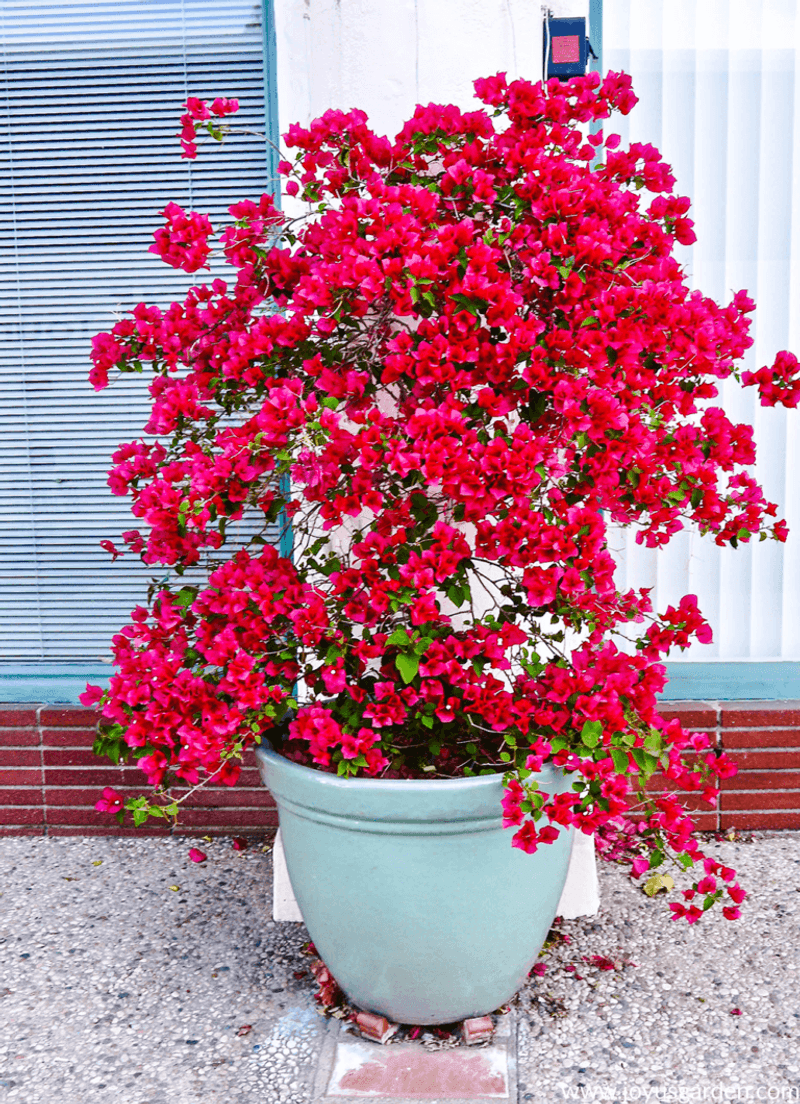
Fall color sounds like a simple goal until you remember that Texas winters can arrive fast and hit hard.
Any late-summer decision you make about fertilizer, pruning, or watering feeds directly into how well your plant handles the cold months ahead.
Texas A&M AgriLife Extension plant-selection guidance recommends outdoor bougainvillea primarily for extreme southern Texas, with winter protection required everywhere else.
That is not a minor footnote.
North Texas, Central Texas, the Hill Country, West Texas, and the Panhandle all carry meaningful freeze risk, and a bougainvillea that gets hit by a hard freeze without protection may die back to the roots or be lost entirely.
Texas A&M’s frosts and freezes guidance notes that bougainvillea can be damaged or killed below 32 degrees Fahrenheit, particularly when freezing temperatures persist for more than a few hours.
A single cold night is not the same as a sustained hard freeze, but both are possible in most of the state.
A container plant has one major advantage here: you can move it.
Before the first expected freeze, which can arrive as early as late October in North Texas and as late as December or January in the lower Gulf Coast, have a plan for where the pot goes.
A garage, a covered porch, or a bright interior room all work better than leaving the plant exposed.
The same Texas A&M fertilizing guidance that warns against August feeding in most of the state ties that caution directly to freeze vulnerability.
Late fertilizer creates soft new growth right when you want the plant to be toughening up, not pushing tender shoots.
Prioritizing the plant’s survival through winter is worth more than one extra flush of bracts in October.
Scout New Growth Before You Spray
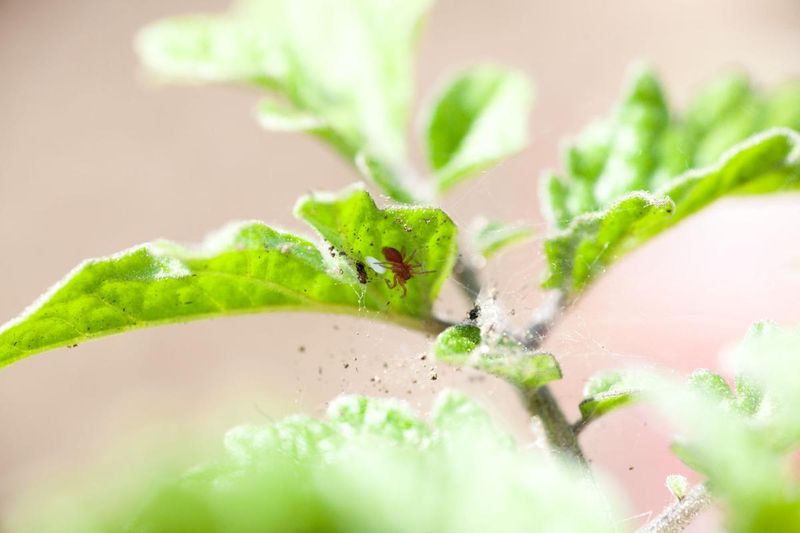
New growth on bougainvillea is tender, and tender growth attracts the insects that want to set up camp before you notice them.
Late summer in Texas is a good time to slow down and actually look at the plant instead of just admiring it from a distance.
Check the soft new shoots and the undersides of leaves carefully.
Spider mites leave a specific signature: tiny stippled dots on leaf surfaces where they have been feeding, and fine webbing in the angles between stems and leaves.
Aphids tend to cluster on the newest, softest growth and can distort those tips as they feed.
Where aphids have been working, you may also see a sticky residue called honeydew and a dark coating called sooty mold growing on top of it.
Scale insects look like small bumps attached to stems and are easy to miss if you are not looking closely.
UF/IFAS guidance on identifying pest damage by symptom makes the point that accurate identification comes before any treatment decision.
A few aphids on one shoot does not call for a broad-spectrum insecticide.
Start with hand removal or a firm spray of water directed at the affected growth.
That approach protects the beneficial insects, including predatory wasps and lady beetles, that are already working on your behalf.
UF/IFAS integrated pest management guidance is consistent on this point: assess the level of damage, try the least disruptive option first, and follow the product label carefully if a pesticide becomes genuinely necessary.
Spraying every time you see an insect harms the garden more than it helps, and it is not what your bougainvillea needs right now.
Fall Color Follows More Than Feeding
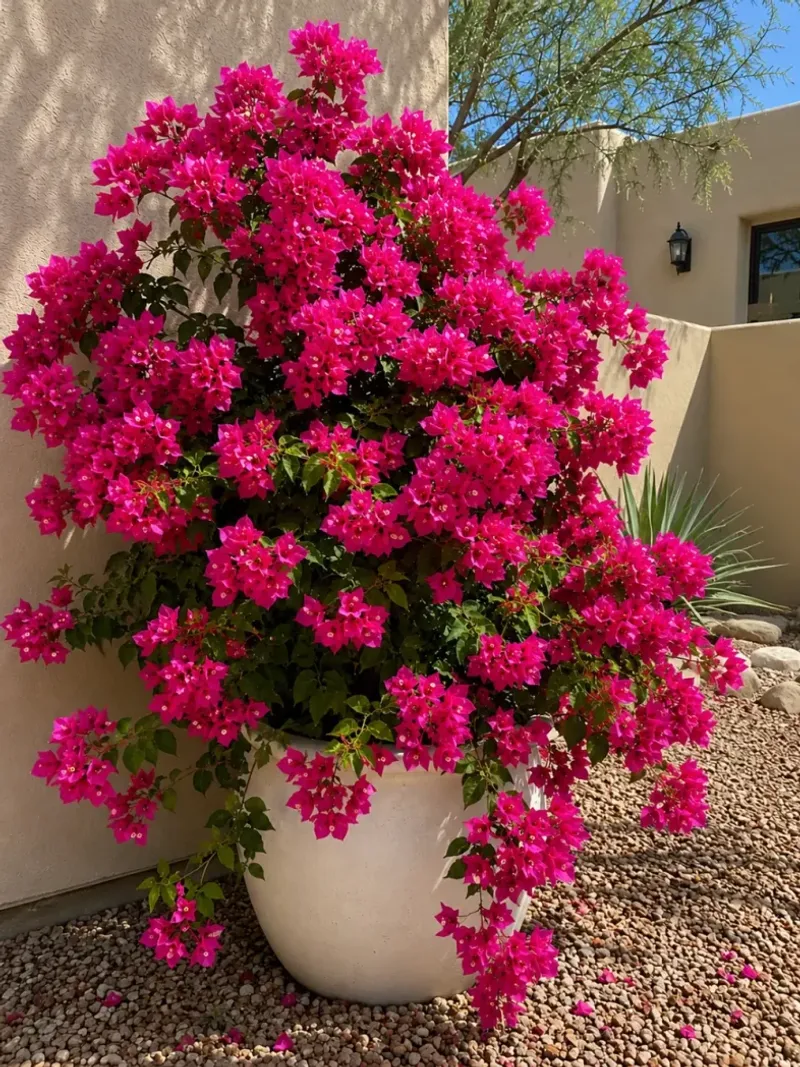
Your bougainvillea’s shot at fall color does not hinge on a single fertilizer application.
The plant responds to a combination of factors working together, and understanding that combination is what actually moves the needle.
Extension pruning and flowering guidance for bougainvillea confirms that flowering is shaped by current-season growth, cultivar, light availability, water stress, temperature, and day length.
As nights grow longer heading into September and October, many bougainvillea cultivars respond to that shift in light by setting buds.
Texas A&M’s Compost Bin newsletter on bougainvillea notes that spring and fall, when day and night are closer in length, are naturally favorable flowering periods.
Some of the fall color you hope for may arrive on its own as the season turns, independent of what you fed the plant in August.
Cultivar matters too.
University of Florida extension material on flowering shrubs notes that bougainvillea cultivars vary in their repeat-blooming behavior, with some flowering more freely through the warm season and others responding more strongly to specific environmental cues.
Knowing your cultivar’s tendencies helps set realistic expectations.
Here is the practical checklist for right now: give the plant the brightest location available, aim for 5 or more hours of direct sun daily, make sure drainage is working, water to allow some drying between irrigations without pushing severe wilting, hold off on heavy nitrogen unless a container plant shows a genuine need, skip the hard pruning, scout for pests, and have a freeze plan ready before October.
Whole-plant care gives you better odds of fall color than any single action.
The plant does its best work when you remove the obstacles in its way.