
Native Pennsylvania Perennials That Outshine Black-Eyed Susans In Every Border
Follow us on Google
The spring sun peeks over the ridge on an early May morning, and you step out with coffee in hand, ready to plan this season’s blooms.
You spy that familiar patch of Black-Eyed Susans, a cheerful yellow beacon you have always loved.
But a tiny thought nags at you: is this really the best your Pennsylvania border can be?
Plenty of native perennials offer that sunny charm and so much more, often with less fuss and a deeper punch for pollinators and birds.
1. The Truth About Black-Eyed Susans (Rudbeckia hirta)
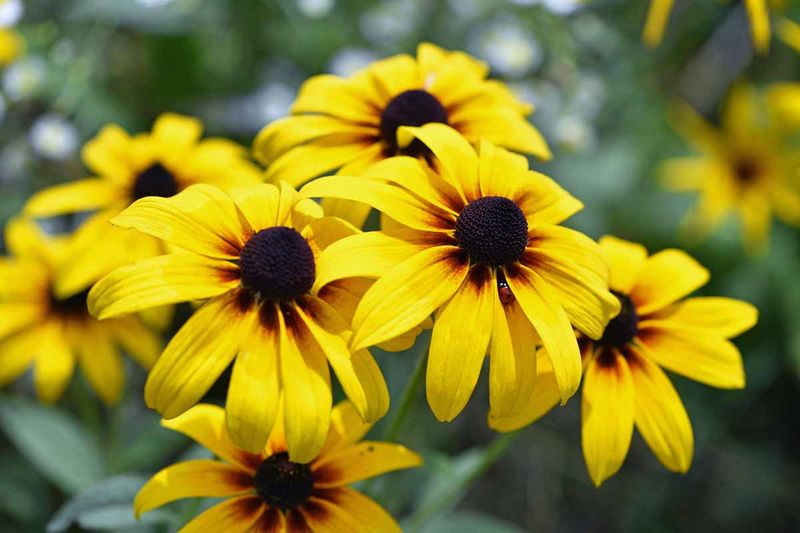
You know that cheerful yellow burst of a Black-Eyed Susan, Rudbeckia hirta, it has been a garden staple for years.
But here is where it gets tricky.
While it is certainly a native wildflower, it is actually a short-lived perennial, often behaving more like a biennial in your garden.
It readily self-seeds, which is why it seems to return, but you might find its presence fleeting or sparse where you truly want consistent color.
This plant, though tough and drought-resistant, can develop unsightly black spot on its leaves during humid Pennsylvania summers, especially with overhead watering.
It does attract some pollinators and hosts about 18 species of insects, but many gardeners notice other plants are far busier with buzzing activity.
Consider Rudbeckia hirta a valuable pioneer plant, excellent for quickly colonizing disturbed ground.
It is perhaps not the long-term anchor your perennial border genuinely deserves.
You want a plant that stands strong year after year, building a resilient display for your backyard cookouts.
2. Orange Coneflower Offers A More Lasting Glow (Rudbeckia fulgida)
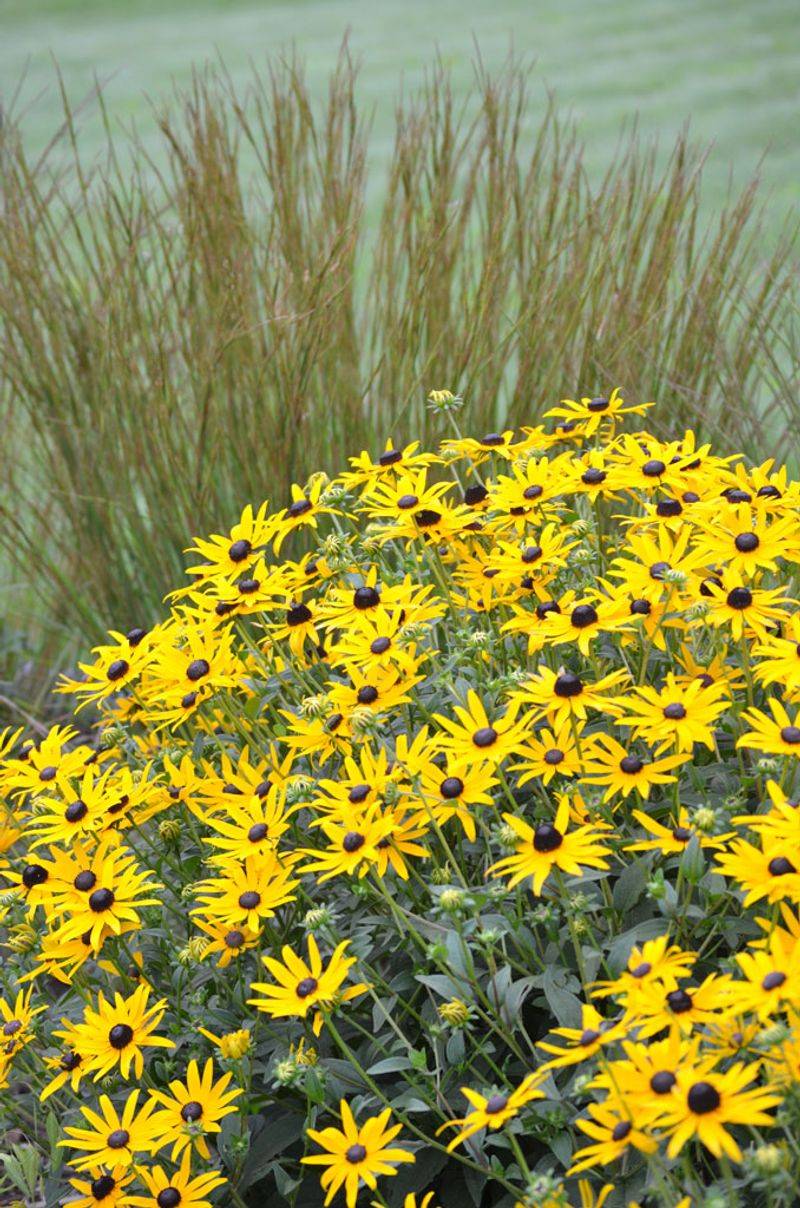
If you crave that cheerful, sunny yellow pop but seek something reliable and enduring, then the Orange Coneflower, Rudbeckia fulgida, is your quiet hero.
This plant is like the steadfast older sibling to the common Black-Eyed Susan, offering all the charm with added staying power.
Unlike its shorter-lived relative, Rudbeckia fulgida is a true, long-lived perennial that forms tidy clumps in your border.
Imagine a generous spread of golden-yellow blooms from mid-summer, generally July, all the way through late autumn, often until the first hard frost.
These plants grow to a manageable 24 to 30 inches tall and spread about 12 to 24 inches wide.
They tolerate drought, road salt, and even poorer soils, though they prefer average to dry, well-drained soil in full sun.
They are a magnet for local pollinators across the Allegheny Plateau and Susquehanna Valley alike.
So you get a consistent display without the annual re-seeding roulette.
3. Bee Balm Attracts More Than Just Buzz (Monarda didyma)
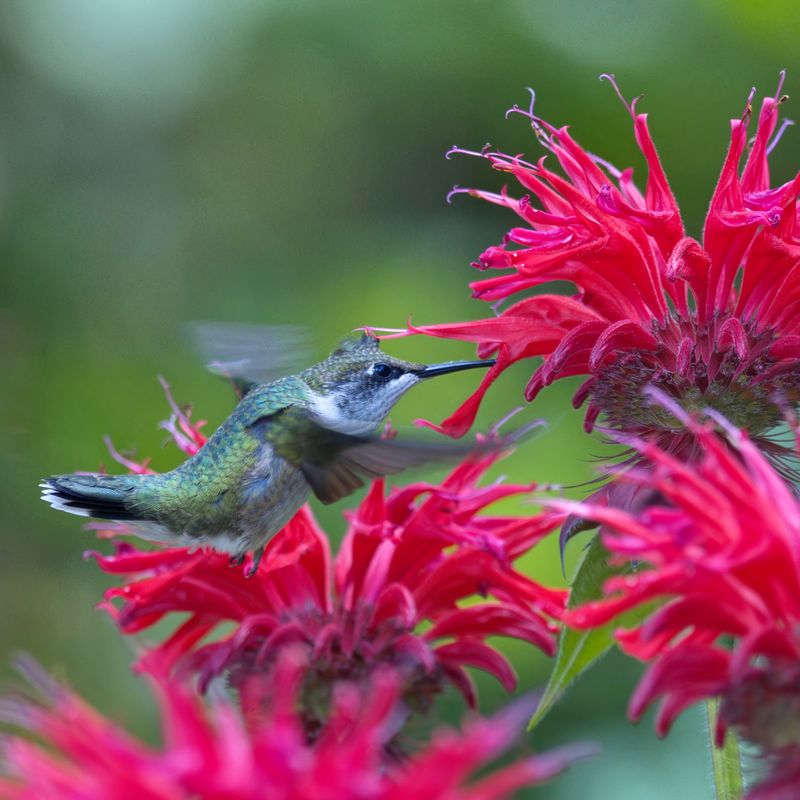
You step into your garden on a warm summer evening, a gentle breeze carrying a sweet, minty fragrance, and suddenly a flash of red zips past.
That is the magic of Bee Balm, Monarda didyma, and it brings so much more than just a buzz to your border.
Many gardeners want to attract pollinators, but Bee Balm genuinely draws a broader cast than most flowers, including hummingbirds, native bees, and butterflies.
Its showy blooms come in vibrant red, soft pink, or rich purple, creating a stunning visual impact.
If you garden in southeastern Pennsylvania with its humid summers, Bee Balm will thrive, loving the moisture.
For wetter spots near a downspout, Monarda didyma grows 2 to 4 feet tall in sun or partial shade.
If your soil is more average, its cousin Monarda fistulosa reaches 2 to 5 feet and is quite adaptable.
Give these plants a little room, they are enthusiastic naturalizers, and every porch evening becomes a lively show.
4. Asters Bring Late-Season Spectacle And Sustenance (Symphyotrichum spp.)
It is that time of year again, when summer’s blaze fades and you watch your borders slowly go quiet.
This often leaves a huge gap just as monarch butterflies and other pollinators make their critical fall migrations across Pennsylvania, searching for vital nectar.
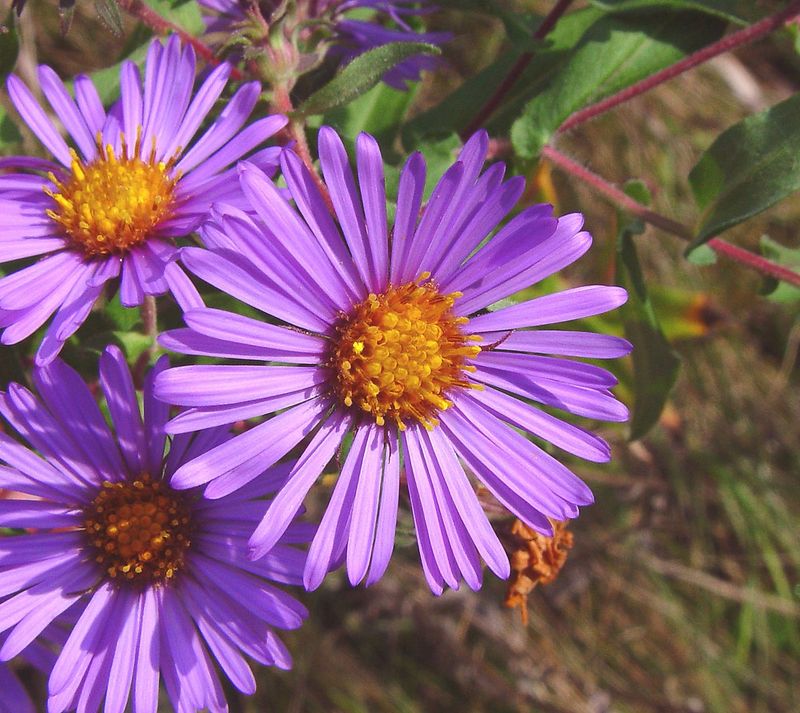
Native asters, Symphyotrichum spp., become your garden’s unsung heroes here, delivering a late-season spectacle that is also a lifeline.
They provide an abundance of nectar well into autumn, offering essential fuel for migrating insects and late-flying bees.
Consider the New England aster, Symphyotrichum novae-angliae, which can reach an impressive 6 feet tall with lavender-pink blooms from August right up until the first frost.
It adapts from wet to dry soils and full to partial sun.
For drier, sunnier spots, the Smooth Blue Aster, Symphyotrichum laeve, offers blue flowers and grows 2 to 4 feet tall.
Planting these means your garden becomes a vital refueling station, bustling with activity while other yards have long since retired.
5. Goldenrod: The Misunderstood Gold Standard (Solidago spp.)
For years, many gardeners have eyed goldenrod with suspicion, convinced its cheerful yellow plumes were the source of their late-summer sniffles.
This is a common myth, and one that causes many to miss out on one of Pennsylvania’s most valuable natives.
Here is the surprising fact: goldenrod is actually pollinated by insects, not wind, so it is not the culprit behind your seasonal allergies.
The real offender is usually ragweed, which has inconspicuous green flowers and relies on wind.
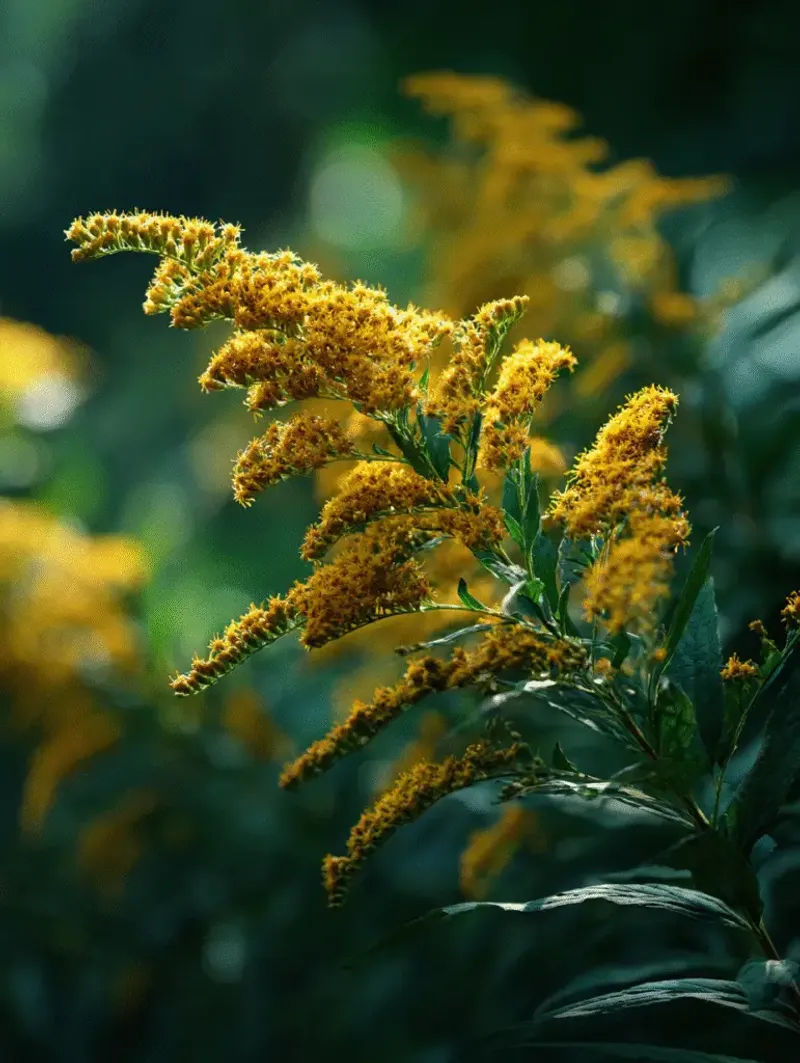
Goldenrod, Solidago spp., is a true powerhouse for late-season pollinators, providing abundant nectar when other flowers are scarce.
Bees, butterflies, and even hummingbirds flock to its graceful golden spires.
For your central Pennsylvania garden, a clump-forming variety like Gray Goldenrod, Solidago nemoralis, grows to about 2 feet in sun to shade with dry soil.
Wrinkle-Leaf Goldenrod, Solidago rugosa, adapts to most soils in sunny spots.
Letting goldenrod grace your borders means your garden genuinely gives back to nature without a single sneeze.
6. Milkweed: The Monarch’s Lifeline (Asclepias spp.)
You want to make a tangible difference in your backyard, a choice that actually helps one of our most iconic yet struggling native insects.
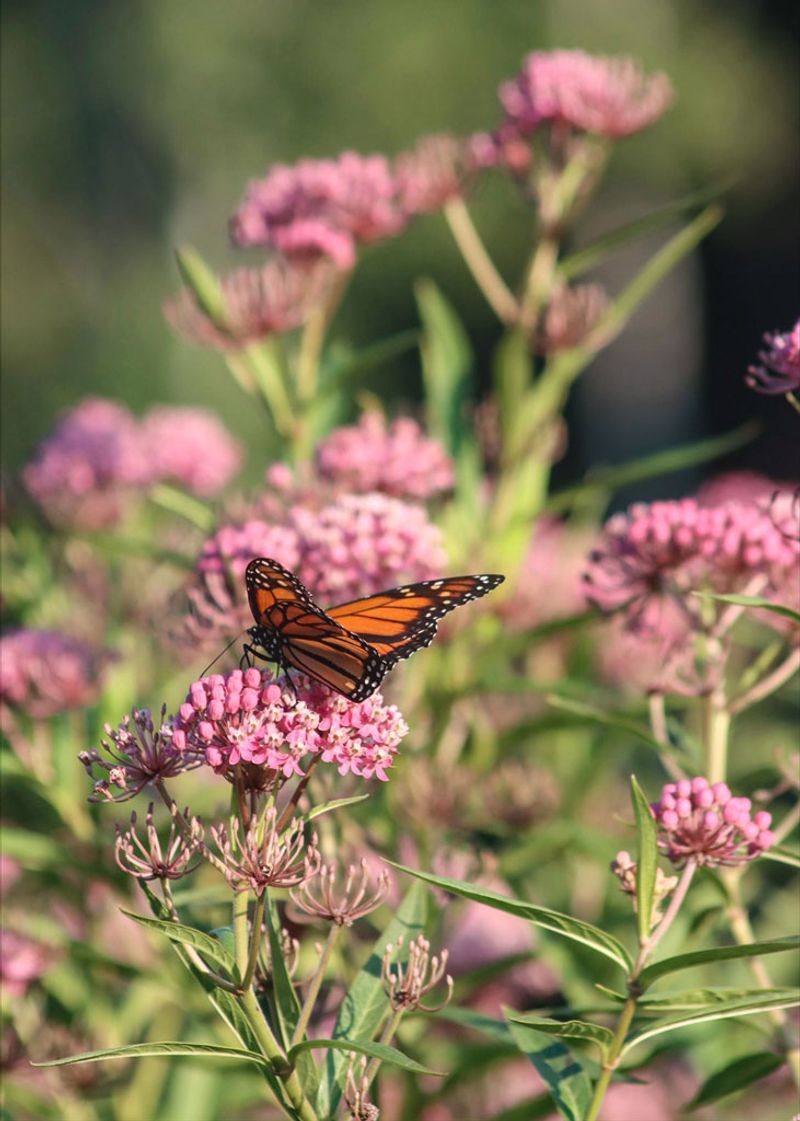
The truth is stark: milkweed, Asclepias spp., is the only plant that monarch butterfly caterpillars can eat.
Without it, these migratory butterflies cannot complete their life cycle, so a patch of milkweed becomes a profound act of conservation.
Imagine watching tiny caterpillars munching away, growing stronger each day, a testament to your gardening choices.
For dry, sunny spots common in the central valleys or western Pennsylvania, Butterfly Weed, Asclepias tuberosa, is spectacular.
It bursts with vibrant orange flowers from June to July, growing 1 to 2 feet tall.
If your yard has wetter areas, perhaps a rain garden in the Delaware Valley or near Lake Erie, then Swamp Milkweed, Asclepias incarnata, is your plant.
It thrives in moist to wet soils in full sun, producing soft pink flowers monarchs adore.
Planting milkweed is genuinely growing hope for these magnificent creatures.
7. Turtlehead Thrives Where Others Sulk (Chelone glabra)
Perhaps you have a tricky, damp corner in your garden, a spot with plenty of moisture but also some shade, where sun-loving favorites just sulk.
Do not give up on it.
Here is a surprising fact: there is a native Pennsylvania perennial designed for exactly those conditions, with a bloom so unusual it becomes a conversation starter.
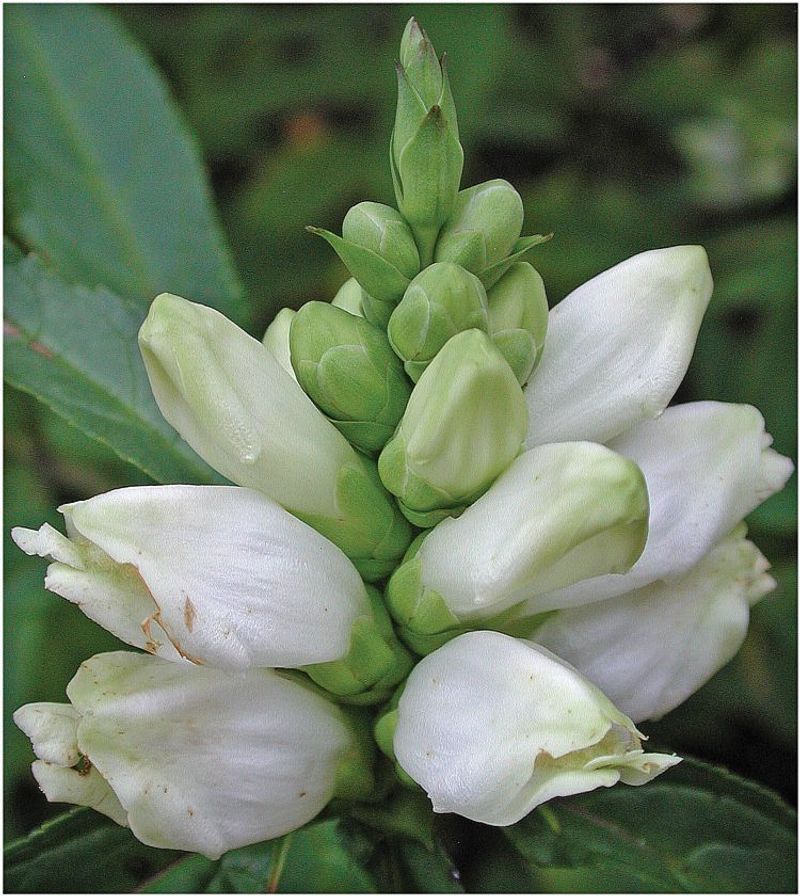
Enter Turtlehead, Chelone glabra, named for its charmingly hooded flowers that genuinely resemble a turtle’s head.
These fascinating plants produce distinctive pink or white blossoms from August into September, extending your garden’s interest into the late season.
Turtlehead thrives in moist, partly shaded locations, making it perfect for areas that stay damp after summer thunderstorms or in the cooler microclimates of the Poconos and Laurel Highlands.
It prefers rich, slightly acidic soils improved with leaf compost, and reaches 24 to 30 inches tall.
An added bonus, Turtlehead is genuinely deer-resistant, a real advantage for many Pennsylvania gardeners.
So your damp, challenging spots can actually become vibrant focal points few other plants can match.
8. Joe Pye Weed Anchors The Back Border (Eutrochium purpureum)
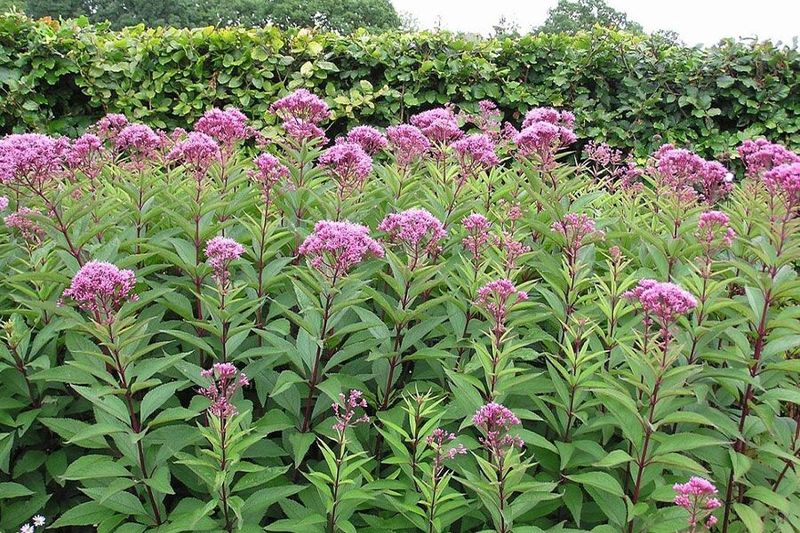
Stand at the back of a summer border and picture a plant that towers overhead, crowned with dusty mauve-pink flowers alive with butterflies.
Joe Pye Weed, Eutrochium purpureum, delivers exactly that kind of drama that a Black-Eyed Susan simply cannot.
This statuesque native climbs 5 to 7 feet tall, giving your garden real vertical structure and a sense of depth.
Its large, domed flower heads bloom from July into September and become a landing pad for tiger swallowtails, monarchs, and native bees.
It loves moist to average soils and full to partial sun, which suits many spots across the Susquehanna Valley and the northern tier.
Space plants about 3 feet apart so air moves freely, which helps reduce powdery mildew in humid summers.
Give it a drink during dry spells, watering to about 1 inch per week when rain does not fall.
Come fall, leave the seed heads standing.
Goldfinches and other songbirds will work them over through the cold months, and you get a little wildlife theater right outside the window.
9. Cultivating A Thriving Pennsylvania Landscape
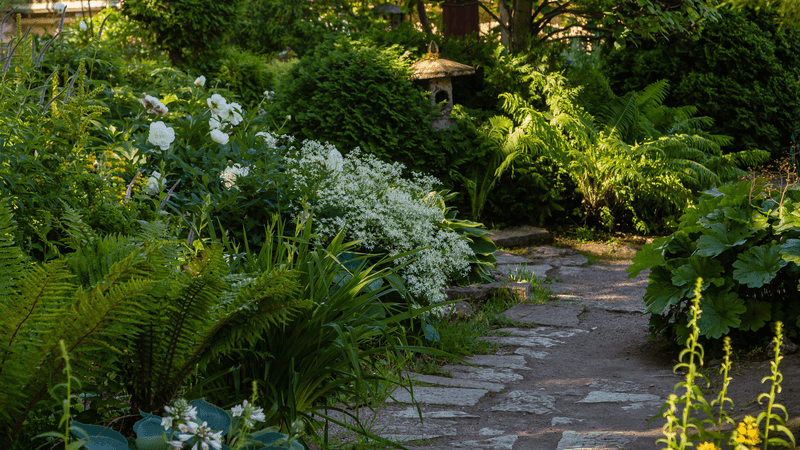
Choosing native perennials that outshine Black-Eyed Susans means creating a border that is both stunning and woven into Pennsylvania’s natural rhythm.
Remember that our state stretches across USDA zones from 5a in colder northern elevations to 8a in the warmest southeastern pockets near Philadelphia.
The growing season ranges from about 120 days in the northern mountains to a generous 200 days in the southeast, with last frost dates as early as April 1 in the Delaware Valley and as late as early June at higher elevations.
Understanding your soil matters, since Pennsylvania ranges from fertile limestone valleys to thin, acidic shale and glaciated ground in the west.
Penn State Extension offers soil testing for around 10 to 15 dollars, a small investment for real insight into your pH and composition.
That knowledge helps you avoid forcing plants into unsuitable spots.
If deer are a persistent challenge, layer in genuinely deer-resistant options and a 2-foot fence with 6 inches bent outward.
Even Japanese beetles and spotted lanternflies become easier to manage when a diverse native garden supports natural predators.
You are actually crafting a resilient oasis, and that is something to feel a little proud of.