
The Meaning Behind Seeing Mockingbirds That Sing From The Same Spot In Your Florida Yard
Follow us on Google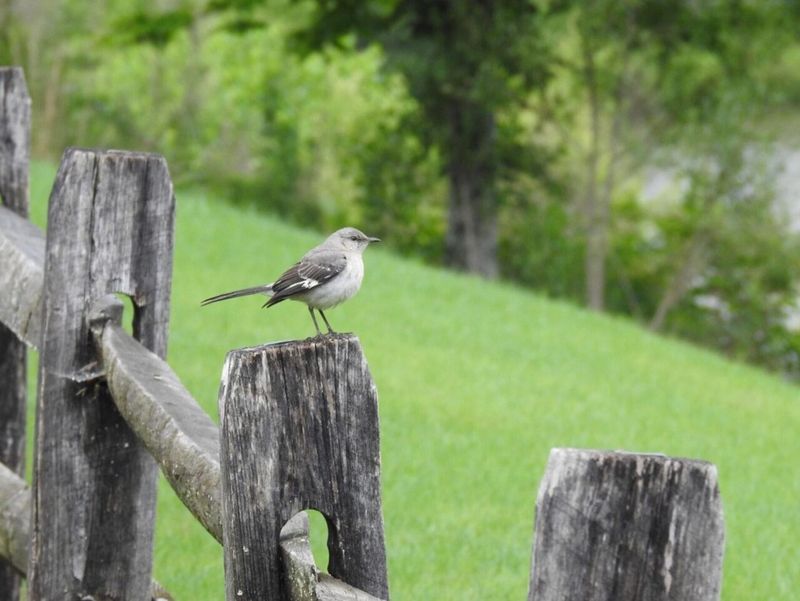
You step onto the back patio before the sun clears the tree line, coffee in hand, and there it is again, the same bird, same branch, pouring out a wall of sound like it owns the whole block.
If that scene plays out in your Florida yard most mornings, you have probably started wondering what the bird is trying to say.
The answer is more interesting than a simple message, and understanding it can help you make your yard genuinely better for wildlife.
This article walks through what that repeated perch most likely means, what your yard may already be offering, and how to support the bird without wasting water or disturbing a nest.
First Confirm The Bird Before Reading Its Behavior
Before drawing any conclusions about what a bird is doing, make sure you know which bird you are watching.
Repeated perching and morning singing do not identify a species on their own, and Florida yards host a surprising number of gray or streaky songbirds that could be confused at a glance.
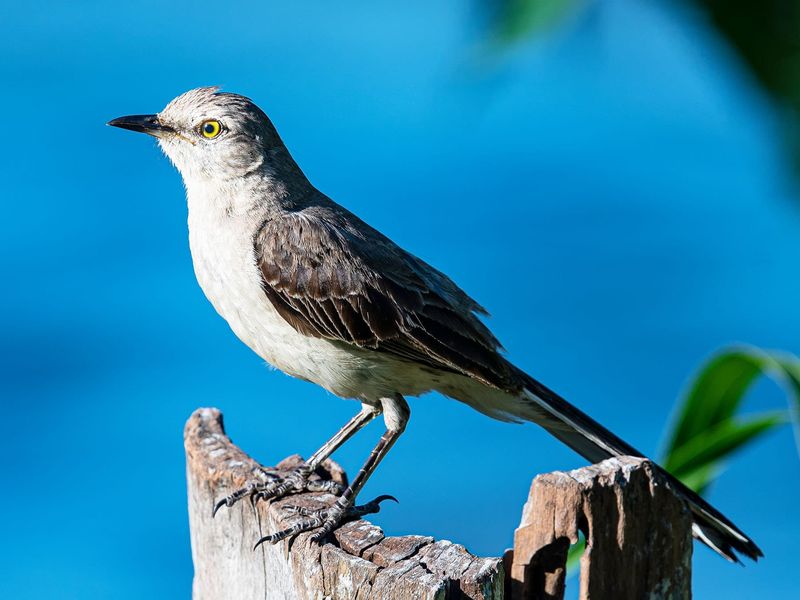
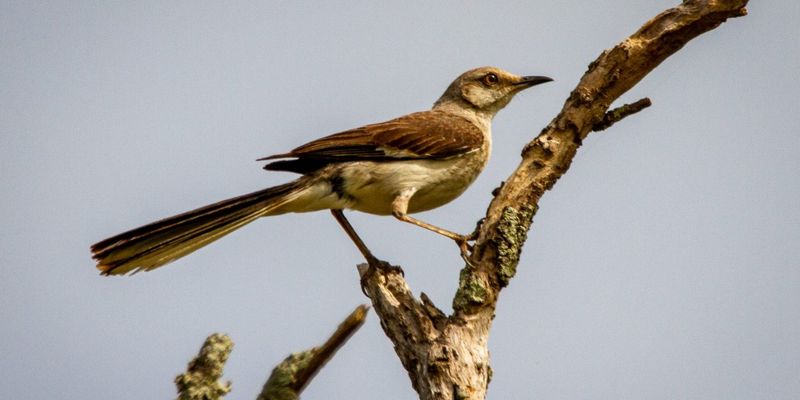
Spend a morning with binoculars and look for the Northern Mockingbird’s signature field marks: a medium-sized gray bird with whitish underparts, a long tail it often flicks upward, and bold white wing patches that flash when it flies.
Cornell Lab of Ornithology’s Northern Mockingbird overview describes the species as a slender, long-tailed bird commonly seen on utility lines, tall shrubs, and open lawns across suburban areas.
The vocal behavior is equally distinctive.
Northern Mockingbirds cycle through long strings of borrowed phrases, repeating each one several times before switching to the next.
If the bird at your perch does that, species identification becomes much more confident.
The Audubon Field Guide entry for the Northern Mockingbird notes the species’ habit of mimicking other birds and environmental sounds in rapid, repeating sequences.
Once identification is reasonably established, the repeated perch is consistent with a familiar song post or lookout within a defended territory.
A University of Florida Ordway Lab project on female mockingbird site fidelity documented that females returned to familiar breeding territories across seasons, which supports the idea that individual birds develop strong attachments to specific spaces.
That research does not prove that every mockingbird returns to one exact perch, but it does suggest that repeated use of a yard reflects genuine familiarity rather than random wandering.
Think of the perch as a clue about how the bird uses your space, not a precise message directed at you.
One Perch Can Serve Several Jobs
A single perch location can do a lot of work for a mockingbird at once, and that is probably why the bird keeps coming back.
Height and sightlines matter far more than the specific plant or structure underneath the bird.
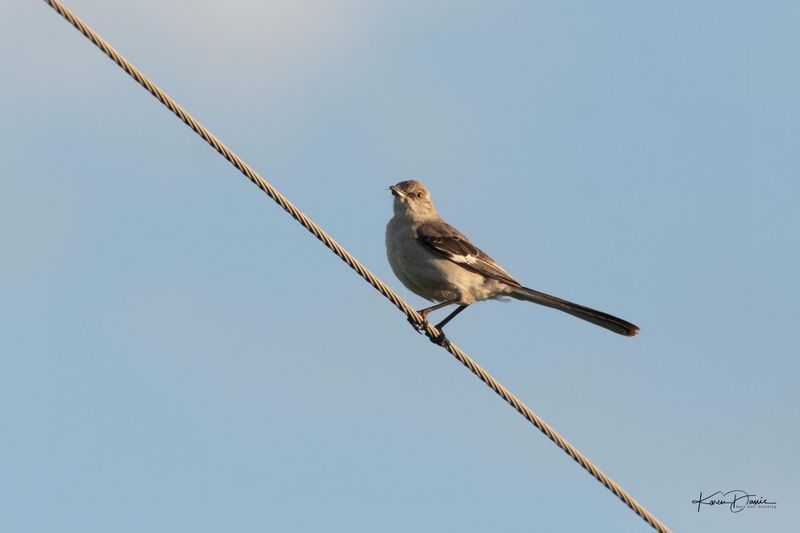
A utility line, a dead branch, a fence post, a roof peak, or a tall shrub top all offer the same basic advantages: a clear view in multiple directions, an unobstructed path for sound to travel, and a quick launch point over open ground below.
The Audubon Field Guide specifically describes mockingbirds watching from a low perch and dropping to the ground to capture food, which means your perch may also function as a hunting platform positioned above a patch of lawn or bare soil where insects are active.
That drop-and-grab foraging style explains why a bird might return to the same elevated spot day after day without the structure itself being the point.
Morning song adds another layer.
Cornell reports that mockingbirds sing frequently from roughly February through August and again from September into early November, though they can sing outside those windows and occasionally at night.
The song can serve territorial defense, mate attraction, or both, and the function shifts with the season and the bird’s pair status.
Cornell Lab’s Bird Academy piece on the mockingbird’s repertoire makes clear that a singing bird is not automatically a male seeking a mate.
Females also sing, particularly during parts of the breeding season and in fall, so song alone does not tell you the sex of the bird.
The perch, the song, and the open ground below are most likely working together as a system rather than pointing to one single purpose.
Look For A Habitat Mix, Not Just Berries
Many Florida homeowners assume that a mockingbird keeps returning because the yard is loaded with berries, and berries may genuinely be part of the picture.
But the full story is more layered than that.
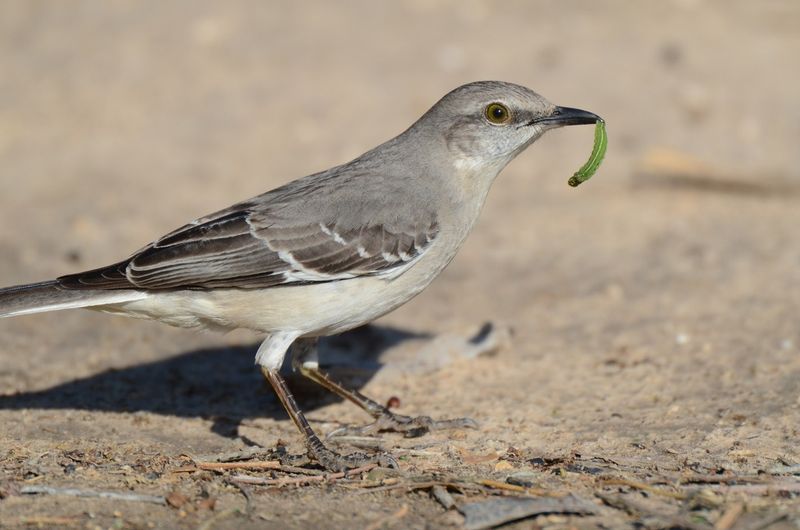
Cornell’s Northern Mockingbird life history page explains that the species eats insects heavily during the breeding season and shifts toward fruit in fall and winter.
A yard with healthy insect life in spring and summer may actually be more valuable during those months than one stocked with berries but sprayed regularly with pesticides.
The habitat arrangement matters as much as any single plant.
Mockingbirds use suburban yards, hedges, forest edges, thickets, cultivated landscapes, and grassy areas, but their preferred setup is not a solid wall of dense vegetation.
They need shrubs and trees nearby for cover and potential nesting, then open lawn or bare ground within easy reach for hunting insects on foot.
If your yard offers a visible perch above a patch of open grass with protective shrubs nearby, that combination alone can explain the bird’s repeated visits without invoking berries at all.
Stand near the perch and look outward the way the bird does.
Is there open feeding ground below or in front of it?
Are there fruiting plants within a short flight?
Is there dense cover within 10 to 20 feet that could shelter a nest?
UF/IFAS Gardening Solutions’ bird-friendly plants guide frames habitat as a system of layered resources rather than a checklist of individual plants, which is the right way to read what your yard is quietly offering.
The bird’s repeated presence is good evidence that several of those resources are already in place.
Choose Simpson’s Stopper For Cover And Seasonal Fruit
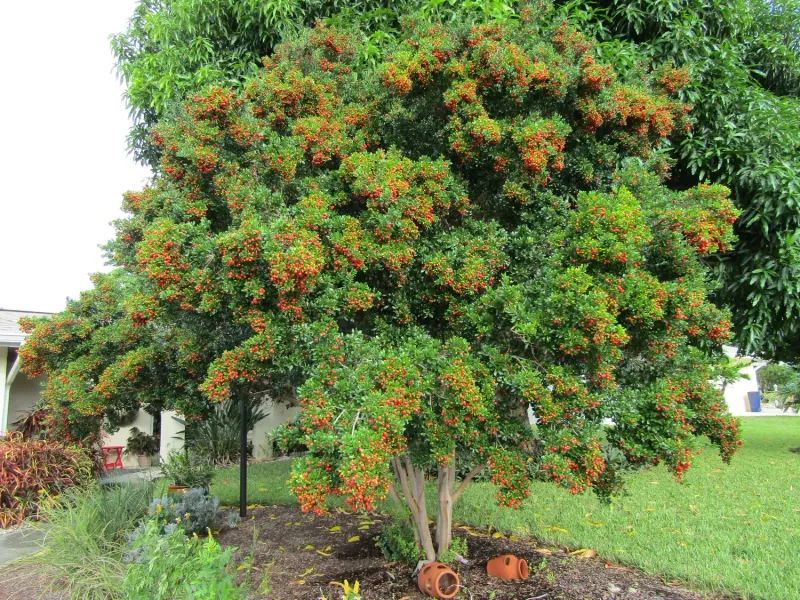
If you want to add a native plant that can support the habitat mix your yard may already be building, Simpson’s stopper, Myrcianthes fragrans, is one of the stronger Florida-specific options.
UF/IFAS Gardening Solutions’ Simpson’s stopper page notes that mockingbirds may eat its small orange to red berries and that its dense canopy provides protective cover.
Those two qualities together, fruit and shelter, address two of the habitat layers the bird is most likely using.
The plant handles Florida conditions well across a wide range.
It grows in full sun to partial shade, tolerates some poor drainage, and becomes drought tolerant after establishment.
For a hedge effect, space plants 3 to 5 feet apart.
UF/IFAS rates it as suitable for USDA Zones 8b through 11, which covers most of the Florida peninsula and the Keys.
Its tolerance of some salt and alkaline conditions makes it a more reliable coastal choice than American beautyberry, which is covered in the next section.
A few practical notes before you plant.
Match the shrub to your county, your soil drainage, your available space, and your sun exposure before buying.
The UF/IFAS bird-friendly plants guide presents Simpson’s stopper as one component of a broader habitat system, not a guaranteed mockingbird attractant.
Adding it to an otherwise bare or heavily manicured yard will not automatically produce a resident bird.
Keep some open ground nearby and maintain a clear sightline from an elevated perch point, because closing off every open space with dense planting removes the foraging access the bird actually needs.
Use Beautyberry Where Salt Exposure Is Low
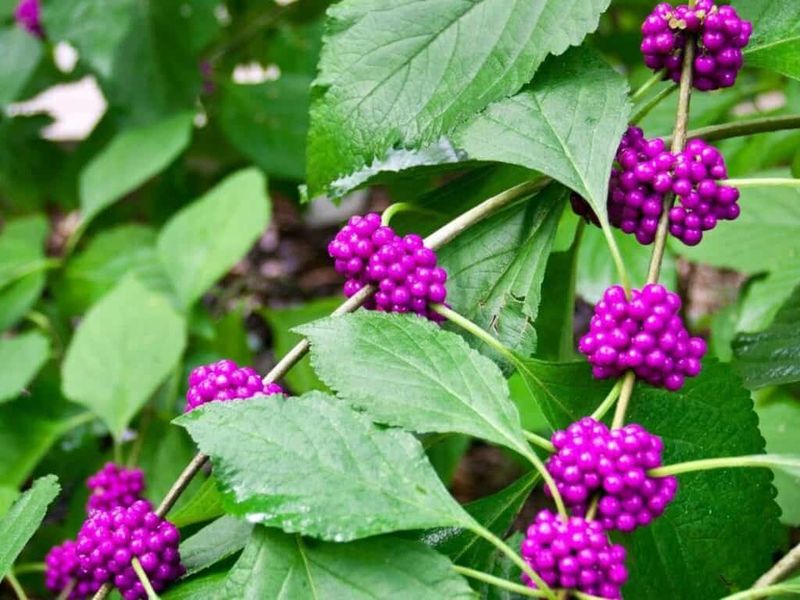
American beautyberry, Callicarpa americana, earns its place in Florida wildlife gardens because of one hard-to-miss feature: clusters of vivid purple berries that ripen in late summer and persist into fall, right when mockingbirds are shifting toward fruit in their diet.
The shrub grows 3 to 8 feet tall and spreads 4 to 8 feet wide, so it provides real seasonal cover along with the fruit.
It also tolerates poor, sandy soil once established, which suits a large portion of Florida’s inland landscape.
The salt tolerance question is where beautyberry needs a clear disclaimer.
UF/IFAS Gardening Solutions’ beautyberry page states directly that the plant is not salt tolerant.
That makes it a poor fit for exposed sites along the Gulf Coast, the Atlantic Coast, or the Keys where salt spray reaches the foliage regularly.
For those locations, Simpson’s stopper is the more resilient option.
Beautyberry works well in inland yards, protected suburban lots, and shaded edges away from coastal exposure.
Neither plant is a guarantee.
UF/IFAS consistently frames bird-friendly plants as one layer of a habitat system, and visitation depends on surrounding cover, open ground, season, local bird populations, and food availability elsewhere in the neighborhood.
Beautyberry and Simpson’s stopper each contribute something real when planted in the right site, but neither one works as a standalone solution.
Think of them as good supporting cast members in a yard that is already doing several things right.
Build The Yard In Layers And Water With Care
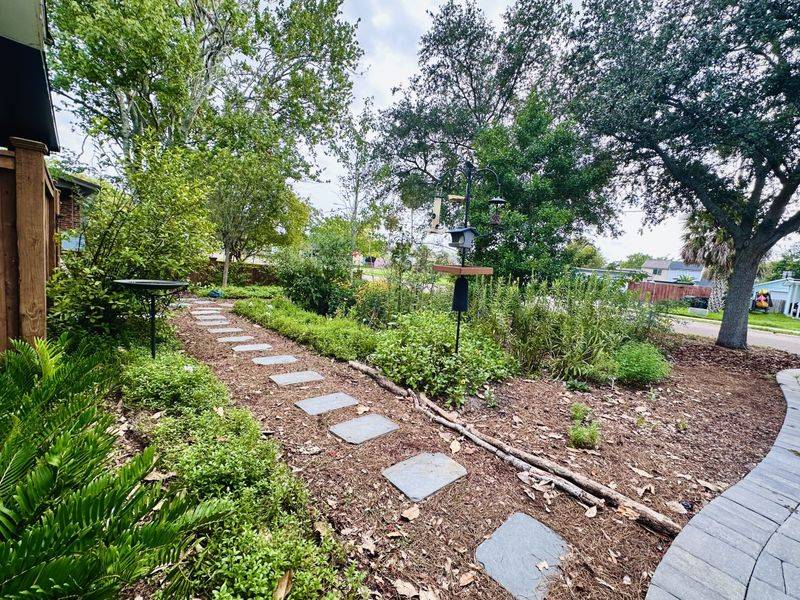
Turning habitat knowledge into actual yard work starts with keeping what is already working.
Retain any open grassy or bare-ground patches near the perch, because that feeding space is part of what makes the location useful.
Add native shrubs and fruiting plants nearby rather than replacing open ground with dense planting.
Keep at least one clear sightline from an elevated point, whether that is a dead branch, a fence top, or a shrub crown that rises above the surrounding vegetation.
New shrubs need direct watering at the root ball during establishment.
UF/IFAS establishment guidance for typical 3-gallon shrubs recommends about 1 gallon every 8 days in northern Florida and every 4 days south of Orlando.
Skip irrigation any day that received at least 1/4 inch of rain in the previous 24 hours.
These are starting figures for the establishment period, not permanent irrigation rules.
Adjust for dry spells, intense heat, poor drainage, sandy soil that drains fast, and any visible signs of stress such as wilting or leaf drop.
Timing your planting near the start of Florida’s rainy season, roughly June through September, can reduce establishment stress by letting natural rainfall carry some of the watering load.
Even then, monitor new plants during dry gaps and heat waves.
Microirrigation, which delivers water near the root ball rather than spraying the whole bed, applies water more efficiently and reduces waste.
North Florida gardeners also need to account for occasional hard freezes that can stress or kill plants rated for Zone 9 or warmer.
South Florida and the Keys bring year-round warmth but shallow limestone soils and intense sun that require their own adjustments.
Match your plant choices and care schedule to your actual county and site conditions rather than a one-size-fits-all Florida rule.
Protect The Nest And The Food Web
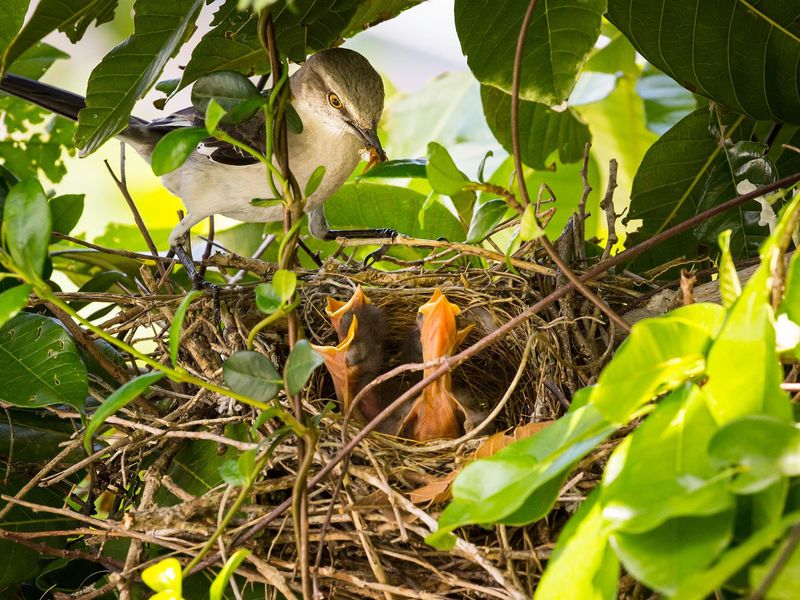
A mockingbird that repeatedly defends a particular shrub may be doing more than singing.
Cornell’s life history page notes that mockingbirds commonly nest in shrubs and trees, often 3 to 10 feet above the ground, though nests can occur higher.
Before you prune any shrub the bird keeps circling or diving at, inspect it from a distance with binoculars.
An active nest containing eggs or dependent young should not be pruned, removed, or handled.
Fish and Wildlife Service’s guidance on bird nests states that most migratory bird nests receive legal protection, and the Migratory Bird Treaty Act makes it a federal offense to destroy an active nest of a protected species.
Northern Mockingbirds are covered.
If you have a pruning job that cannot wait, confirm the nest is empty before any work begins and contact your local wildlife agency if you are unsure.
Cats present a serious risk that is easy to underestimate.
A University of Florida study recorded predator attacks at mockingbird nests in the Gainesville area and found that cats were responsible for more than 70 percent of recorded attacks in that urban study.
That figure comes from one Gainesville study and should not be treated as a statewide rate for all bird nests, but the pattern it reveals is worth taking seriously.
Keeping cats indoors, especially at night, is one of the most direct things a Florida homeowner can do for nesting birds.
The food web matters too.
Insects are a major part of the mockingbird’s diet during the breeding season, so broad pesticide applications can remove food and expose birds to chemical risk.
Use targeted, least-toxic treatments only when a genuine pest problem requires it.
For water, Ask Extension’s birdbath guidance recommends changing the water every 1 to 2 days and cleaning the basin regularly.
A birdbath in Florida heat is not a set-and-forget addition, and Audubon’s home bird habitat guidance reinforces that clean, fresh water is one of the most consistently useful things you can provide.
Read The Perch As A Clue, Not A Guarantee
The most useful thing you can do with the information in this article is watch the bird across different seasons rather than drawing a firm conclusion from one week of morning visits.
Pay attention to whether the perch changes as the season shifts, whether the bird spends more time on the ground in spring and summer hunting insects, and whether it moves toward fruiting shrubs more often in fall and winter.
Cornell’s life history data supports that seasonal shift in diet, and watching it play out in your own yard is genuinely more informative than any single morning observation.
On the habitat side, preserve existing fruiting shrubs before adding new ones, keep some open ground for foraging, maintain a clean water source with water changed every 1 to 2 days, and hold off on pesticide applications unless a real pest problem makes them necessary.
Audubon’s home habitat guidance and UF/IFAS bird-friendly plant recommendations both treat these steps as a system rather than individual fixes, which matches what the research actually supports.
Adapt everything to your corner of Florida.
North Florida winters, Central Florida dry spells, South Florida limestone, Gulf Coast salt spray, and Keys heat all call for different plant choices and care schedules.
The repeated song from that one perch is good evidence that the bird finds your space workable, and a yard that keeps earning that kind of daily attention is already doing something right.