
You Call It A Junk Thorn Tree And Cut It Down, But Black Locust Posts Outlast Two Fence Holes
Follow us on Google
Most people who have a black locust tree on their property either love it or hate it, and the ones who hate it usually win.
They grab a chainsaw, drop the trunk, and figure the problem is solved.
But before you write off that thorny, suckering tree as yard trash, it helps to know what you might be cutting down, because mature black locust heartwood is one of the most rot-resistant native woods in the eastern United States, and that has real value for anyone building a fence.
The Fence-Post Claim Needs A Better Measure
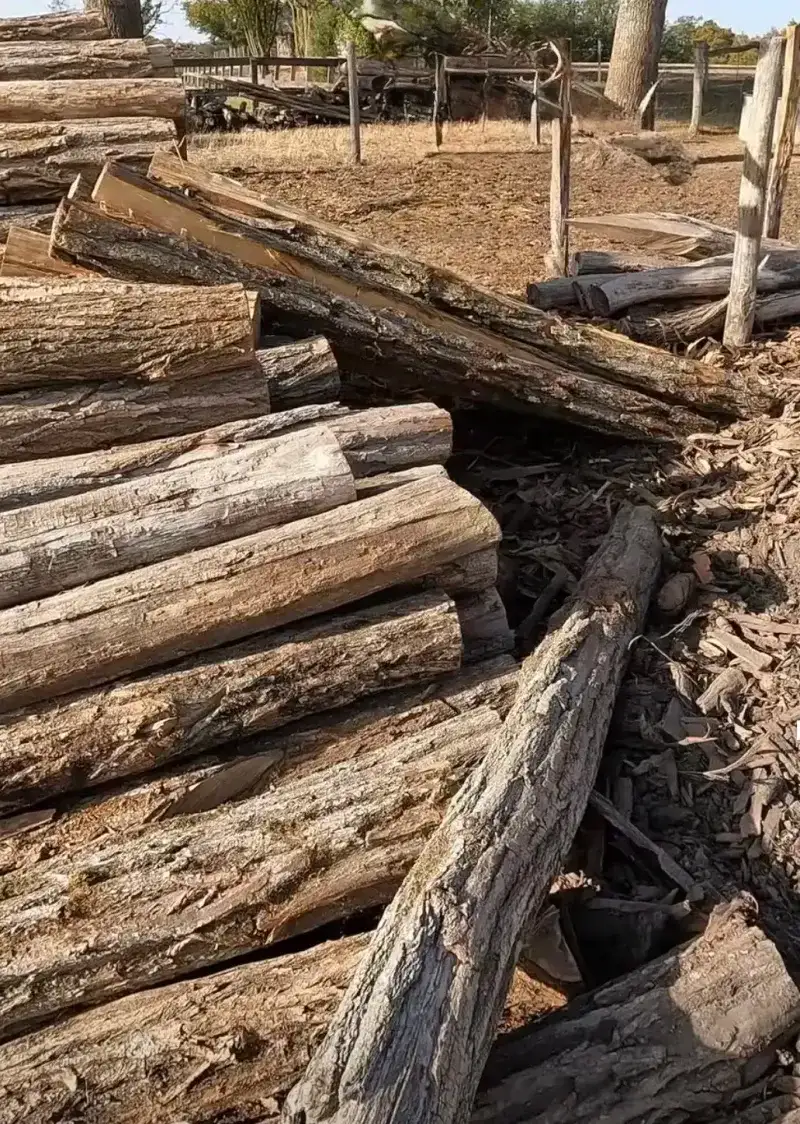
Black locust, Robinia pseudoacacia, has been used for fence posts, mine timbers, and railroad ties across the eastern United States for generations, and the reputation is mostly earned.
What gets murky is the comparison behind a claim like “outlasts two fence holes.” A fence hole is not a unit of time, and a post’s lifespan depends on so many variables that no single ratio holds up everywhere.
The honest version of the claim is still impressive.
University of Georgia Cooperative Extension fencing guidance puts untreated black locust posts at 20 to 25 years of expected service, while the USDA NRCS plant guide estimates 30 to 50 years or more under suitable conditions.
That range genuinely outperforms many untreated softwood alternatives, but it is not a guaranteed century of service for every post cut from every tree.
One confusion worth clearing up immediately: black locust is not honey locust.
Honey locust, Gleditsia triacanthos, is a different tree with different wood, different thorns, and different landscape behavior.
The fence-post durability discussed here belongs to Robinia pseudoacacia only.
Geography matters too.
The USDA NRCS plant guide for black locust describes its native range as portions of the eastern and south-central United States, including areas from Pennsylvania and southern Indiana south toward Georgia and Louisiana, with Appalachian and Ozark populations as well.
It has been planted far beyond that range and has naturalized in many other states, so calling it simply a native tree nationwide is not accurate.
The practical question for any homeowner is whether a specific stem on a specific site is worth keeping or using, and that requires a closer look at the wood itself.
Heartwood Makes The Post
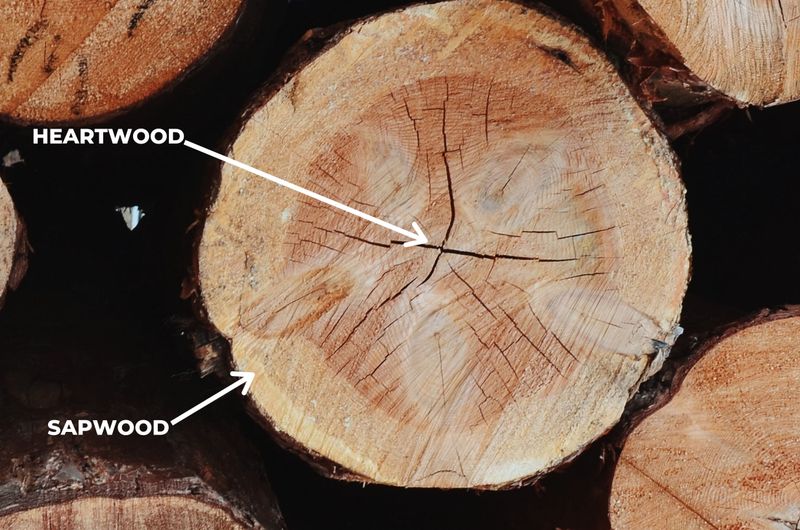
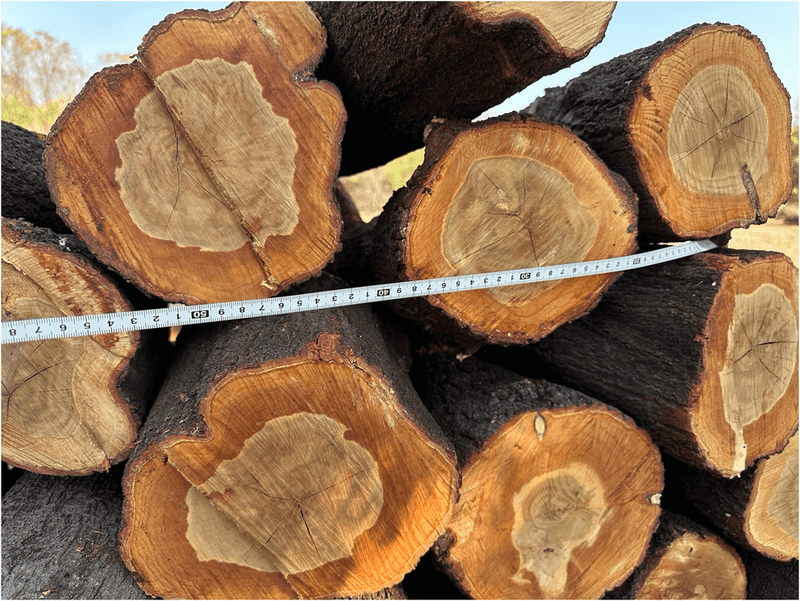
Cut a mature black locust log in half and you will see two distinct zones.
The outer ring is lighter in color, softer, and called sapwood.
The dark, golden-brown center is the heartwood, and that is the part that earns the reputation.
USDA Forest Service research on hardwood fence posts confirms that only the heartwood in naturally durable species like black locust provides adequate decay resistance for ground contact.
Purdue Extension’s black locust lumber profile adds a telling detail: in a 25-year post installation study, sapwood at the ground line had deteriorated while the heartwood remained sound.
That distinction matters enormously when you are selecting a stem to cut.
The service-life ranges reported by different sources reflect real-world variation, not disagreement.
University of Georgia Extension’s 20-to-25-year figure and the USDA NRCS estimate of 30 to 50 years or more under suitable conditions are both documented ranges, not competing claims.
A post with a high proportion of heartwood, set in well-drained soil, and protected from mechanical damage at the ground line will likely outperform a post with a thin heartwood core set in wet clay.
Several factors pull the number in either direction.
Diameter is one of the most important, because a small-diameter stem from a young, fast-grown tree may carry very little heartwood relative to its overall size.
Soil drainage, moisture cycling, how the post is installed, and whether it takes repeated impact from livestock or equipment all change the outcome.
A post that sits in standing water after every rain is fighting a losing battle no matter what species it came from.
Selecting the right stem and placing it in the right spot is where the durability story actually begins.
Select A Usable Stem
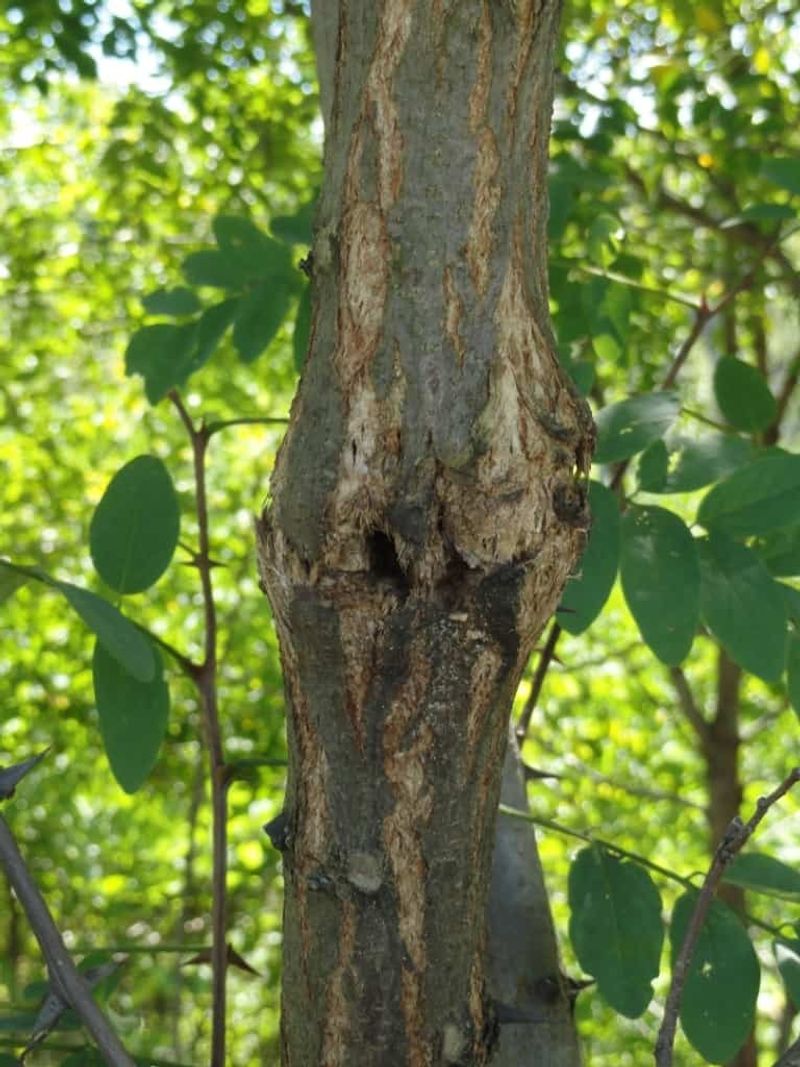
Not every black locust on your property is post material.
Young saplings, thin branches, and fast-grown stems from crowded spots can look like usable wood and disappoint you two years after installation.
Selecting a genuinely useful stem takes about five minutes of honest assessment before the chainsaw comes out.
Look for a straight, sound trunk with a diameter large enough to carry a meaningful heartwood core.
Purdue Extension’s hardwood lumber profile for black locust notes that the wood is extremely dense and can be difficult to fasten with screws without pilot holes, which is actually a sign of the density that makes it durable.
If a stem splits cleanly and easily when you work it, check whether you are cutting mostly sapwood.
Avoid any stem that shows signs of locust borer damage, which often appears as small holes, sawdust-like frass, or soft spots beneath the bark.
Heart rot fungi can hollow a trunk that looks fine from the outside, so a tap test and a close look at any exposed wood at the base can save you from installing a compromised post.
The USDA NRCS guide notes that post-sized trees on suitable sites may take 10 to 20 years of growth to reach usable dimensions, which explains why production planting uses tight spacing of roughly 5 to 7 feet apart to push height quickly.
Residential placement is a different calculation entirely.
If you already have a mature tree, evaluate what you have before assuming every stem off it will perform like a commercial post.
A well-chosen piece of mature heartwood is genuinely worth the effort, a thin branch cut in optimism is not.
Nitrogen Fixation Is Not Garden Fertilizer
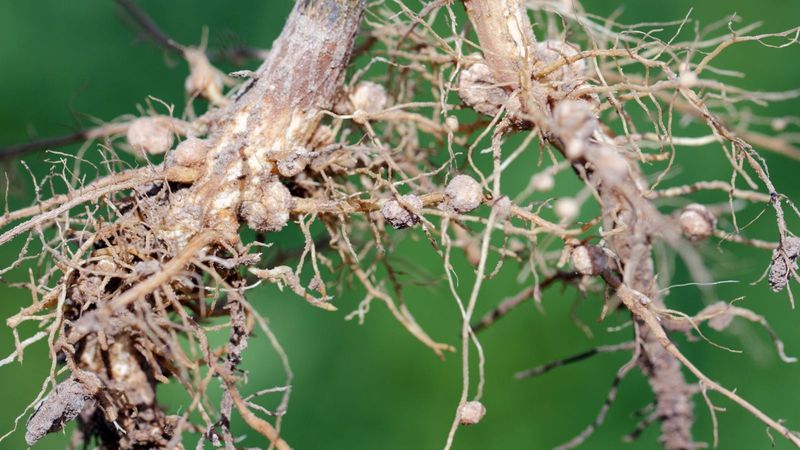
Black locust is a legume, which means bacteria living on its roots can pull nitrogen from the air and convert it into a form the tree can use.
That sounds like a gift for the vegetable bed next door, but the process is more complicated than that, and the practical payoff for your garden soil is much less direct than the shorthand implies.
The USDA NRCS plant guide for black locust reports annual fixation estimates ranging from 26 pounds of nitrogen per acre in a mixed hardwood forest to 101 pounds per acre in an urban forest study.
That range tells you something important: the result depends heavily on the tree, the microbial community, the soil, and how much plant material is left to decompose on site.
It does not translate to a reliable fertilizer delivery system for a raised bed 20 feet away.
Nitrogen fixed in the tree becomes available to surrounding soil mainly through leaf litter, root turnover, and decomposing plant material over time.
If you are raking up leaves and hauling them away, much of that cycle is interrupted.
Dense black locust stands can actually shift soil conditions in ways that favor the locust and disadvantage native plant communities, which is part of why ecologists treat its nitrogen-fixing ability as a mixed attribute in regions where it spreads aggressively.
The practical takeaway is to treat nitrogen fixation as a slow, site-specific background process rather than a reason to skip soil testing or stop adding compost.
If you want to improve fertility for vegetables, a soil test and targeted amendments will get you there faster and more reliably than planting a tree and waiting.
Flowers Can Support A Nectar Flow
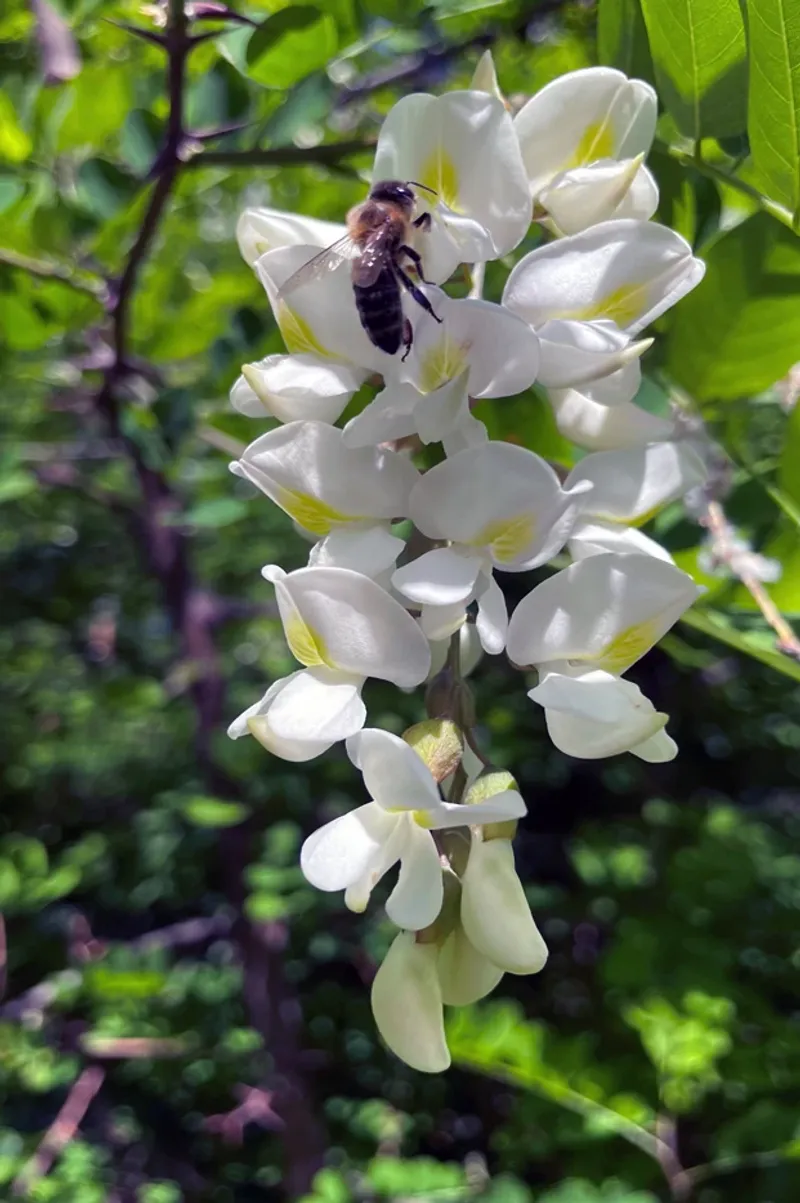
For about two weeks in late spring, a mature black locust tree becomes something remarkable.
The white, fragrant flower clusters hang in dense racemes and produce nectar in quantities that beekeepers in parts of the Mid-Atlantic and eastern United States genuinely plan around.
Penn State Extension’s beekeeping basics guide classifies black locust as a major nectar source but only a minor pollen source.
That distinction shapes how it fits into a pollinator plan.
Honey bees will work the flowers hard during a good flow, and the honey produced from black locust nectar has a mild, distinctive flavor prized in parts of Europe and increasingly recognized by US beekeepers.
But pollen from black locust alone will not sustain a colony through the season.
Whether a bloom near you actually produces a harvestable nectar flow depends on several conditions lining up at once.
Weather during the roughly two-week bloom window matters enormously, because a cold snap or rainy stretch can shut down nectar production even from a healthy tree.
Colony strength, the density of blooming trees within foraging range, and what else is flowering nearby all shape the outcome.
Frame black locust flowers as one valuable forage source within a longer season, not a complete apiary strategy on their own.
If you keep bees in a region where the tree is appropriate and legal to grow, a few mature trees within a mile or two of your hives can contribute meaningfully to an early summer flow.
That is a real benefit, just not a guaranteed honey harvest from a single backyard specimen.
A Valuable Tree Can Be A Poor Yard Tree
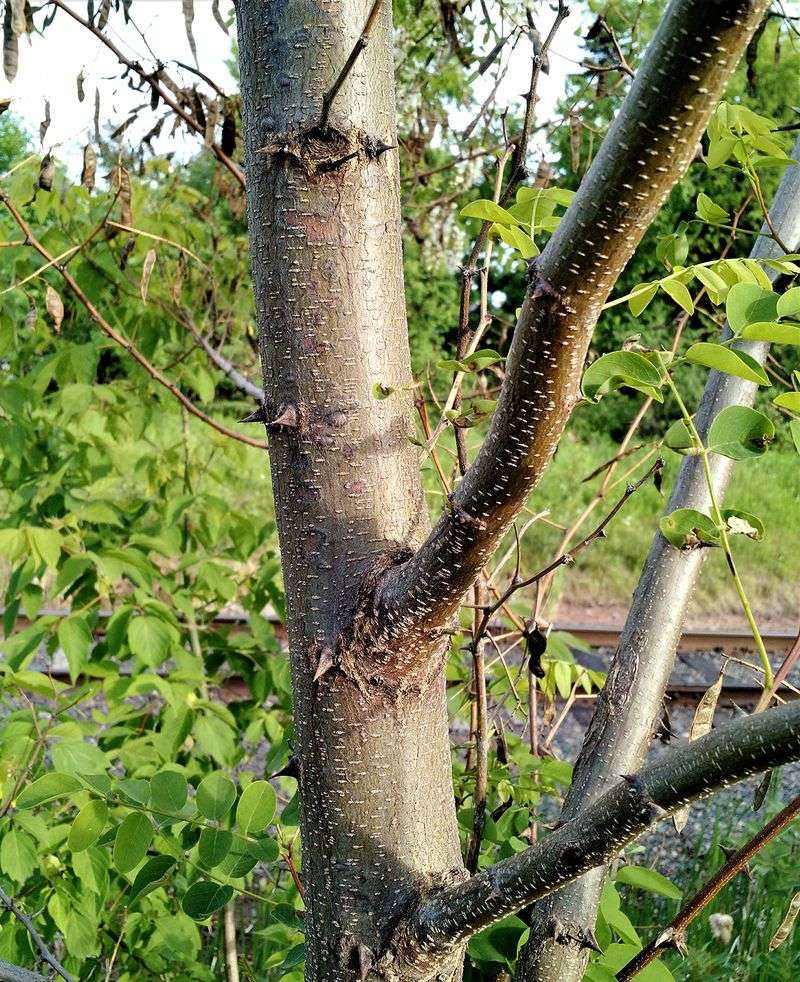
A tree that makes excellent fence posts is not automatically a good neighbor to your porch, your kids’ play area, or your vegetable garden.
Black locust has several habits that make placement matter as much as species selection.
Young shoots carry paired thorns that can reach about 1 to 1.25 inches long.
Those thorns are sharp enough to puncture skin and cause real discomfort, and they show up on root suckers as well as on the main tree, which means they can appear in unexpected spots around the yard.
Branches are also brittle, and a storm that would leave most trees intact can send large limbs down without warning.
Keeping a tall black locust over a porch, a play set, or a parked vehicle introduces real risk.
The USDA NRCS plant guide documents extensive root spread, vigorous suckering, and the possibility of root sprouts penetrating patios and crowding garden beds.
Roots can reach well beyond the canopy drip line, which makes placement near septic systems, sidewalks, and small raised beds a problem that gets worse over time rather than better.
Toxicity is a separate concern that deserves direct attention.
Cornell University’s poisonous plants database lists black locust bark, leaves, and seeds as poisonous, with horses, cattle, sheep, goats, poultry, and humans among the species affected.
Do not feed branches, pods, leaves, or trimmings to livestock, and be particularly cautious around horses, which are especially sensitive.
University of Minnesota Extension also notes that locust borer and heart rot can weaken trunks and increase breakage risk, especially in stressed trees.
A tree that is sound enough for posts after careful selection may still be unsafe to keep directly above places where people gather regularly.
Check Regional Rules And Site Conditions
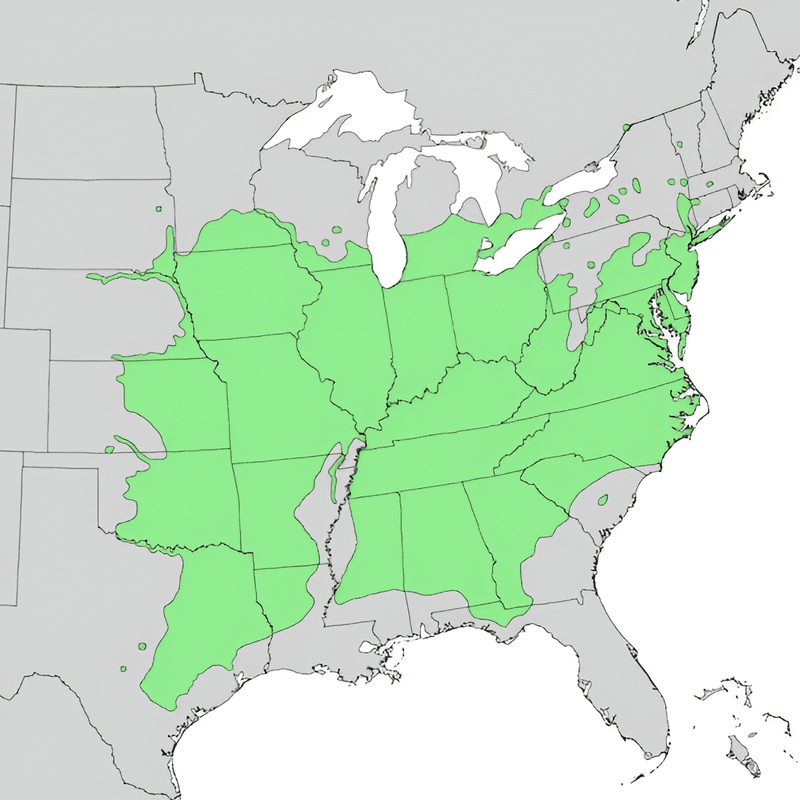
Where you live changes almost everything about whether planting or keeping a black locust makes sense.
The tree’s native range covers parts of the eastern and south-central United States, but it has been planted and has naturalized far beyond those boundaries, and in some regions it has become a genuine ecological problem.
The USDA NRCS plant guide describes black locust as capable of forming dense stands that crowd native vegetation and alter soil conditions.
That tendency, combined with its ability to resprout aggressively after disturbance, has led several states to list it as noxious, regulated, or invasive.
Check your state’s agriculture or natural-resources agency before planting, moving, propagating, or distributing the tree.
Not every state regulates it, but the ones that do are serious about it, and the list can change.
The National Invasive Species Information Center’s state lists are a practical starting point for checking your state’s current classification.
Your local Cooperative Extension office can give you the most current, site-specific guidance.
On the site side, Purdue Extension notes that black locust prefers full sun and tolerates a wide range of soils but performs best with good drainage.
The USDA reports a minimum rooting depth of about 36 inches for establishment and a winter hardiness threshold near -37 degrees Fahrenheit, though that cold tolerance figure only tells you about winter survival, not about summer heat, drought tolerance, or local pest pressure.
Growth rate, ultimate height of 40 to 60 feet or more, and root spread all need to be weighed against the specific site before you put a seedling in the ground.
Removal Requires A Management Plan
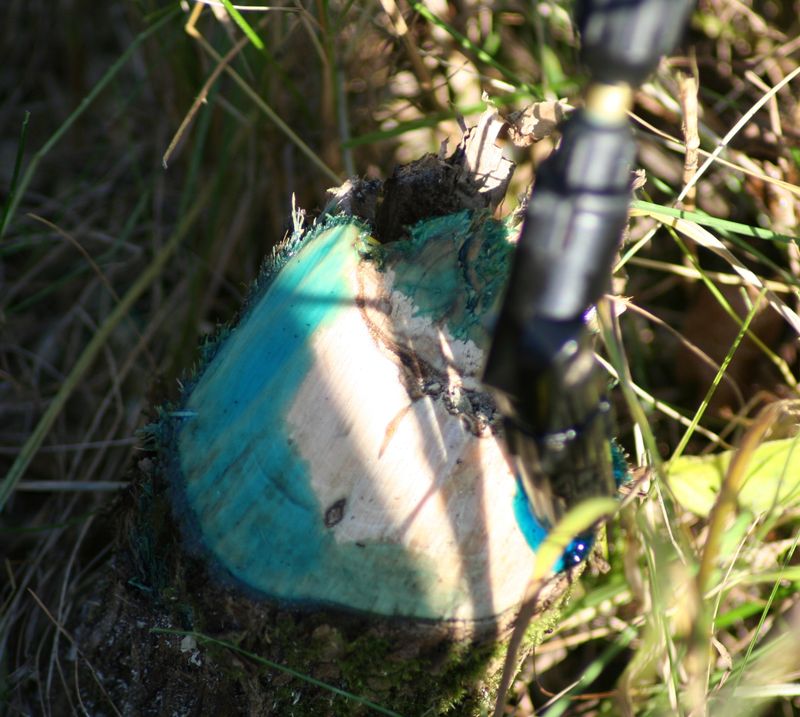
Cutting down a black locust and calling it done is one of the more common mistakes homeowners make with this tree.
The stump and the root system beneath it are still very much alive, and they tend to respond to cutting by sending up a flush of new sprouts that can be thornier and more numerous than the original growth.
The Connecticut Invasive Plant Working Group’s black locust profile explains that cutting or burning can actually increase sprout production rather than eliminate it.
That is the opposite of what most people expect.
Repeated mowing alone may keep sprouts short but will rarely exhaust the root system, which can be extensive and persistent.
Small seedlings are a different situation.
If you can pull the entire root system out of the ground by hand, early removal before the root deepens is the most reliable approach.
The window for that is narrow, usually the first season of growth, and it requires getting the whole root, not just the stem.
Larger established trees or patches require a more deliberate plan.
Penn State Extension’s cut-stump herbicide guidance describes a method where herbicide is applied to the freshly cut surface immediately after felling, which can reduce resprouting when done correctly by a trained adult following the product label.
Iowa State University Extension’s guide on managing weedy woody plants covers follow-up treatment strategies for persistent resprouting.
Do not apply herbicide casually or at rates you choose yourself.
Label directions exist for safety and effectiveness, and the right product and timing vary by site, season, and what is growing nearby.
Your local Extension office or weed-control official can help you build a plan that fits your specific situation without damaging nearby plants or waterways.
Make The Keep-Or-Remove Decision
At the end of all this, you have a practical decision to make, and the evidence points toward three defensible choices depending on what you find when you look closely at your tree and your site.
Start by confirming the species.
Make sure you have Robinia pseudoacacia and not honey locust or another lookalike.
Then look at any stems you might use as posts: are they straight, sound, sufficiently large, and likely to have a meaningful heartwood core?
USDA Forest Service fence post research is clear that only heartwood-rich material from naturally durable species justifies the performance reputation.
Next, assess distance.
Is the tree far enough from patios, play areas, sidewalks, septic lines, livestock zones, and garden beds that its thorns, roots, and suckers are manageable?
Check your state’s current rules on planting or moving the tree before you make any decision that involves propagation.
The USDA plant guide is a solid reference for both the ecological concerns and the site requirements.
Treat nitrogen fixation and spring flowers as secondary benefits rather than the main reason to keep or plant this tree.
They are real, but they are conditional and site-specific, not guaranteed returns on investment.
If the tree is sound, well-placed, and legal to keep, retain it and harvest carefully selected wood when the opportunity arises.
If the site is wrong or the wood is not usable, choose another post material and skip the headache.
And if you have an established patch you need to remove, get local help before you cut, because what you do next matters as much as the cut itself.
A tree this persistent deserves a plan, not just a chainsaw.