
Grow These 8 Pennsylvania Natives Instead Of Astilbe In Your Shady Beds
Follow us on Google
You step onto the back porch on a mild May morning, coffee steaming, and notice your shady beds just look tired.
That astilbe you babied last year faded fast once the humid Pennsylvania summer rolled in, and its plumes went crispy by August.
Here is the good news.
You can trade those finicky performers for native plants that actually belong in our woods, from the rocky northern tier to the heavy clay of the southeast.
These eight will love your dim corners, and butterflies, native bees, and hummingbirds will show up to say thanks.
1. Let Wild Bleeding Heart Dance In Your Dappled Light
Picture a plant that keeps flowering long after the showy garden bleeding hearts have collapsed into a yellow mess.
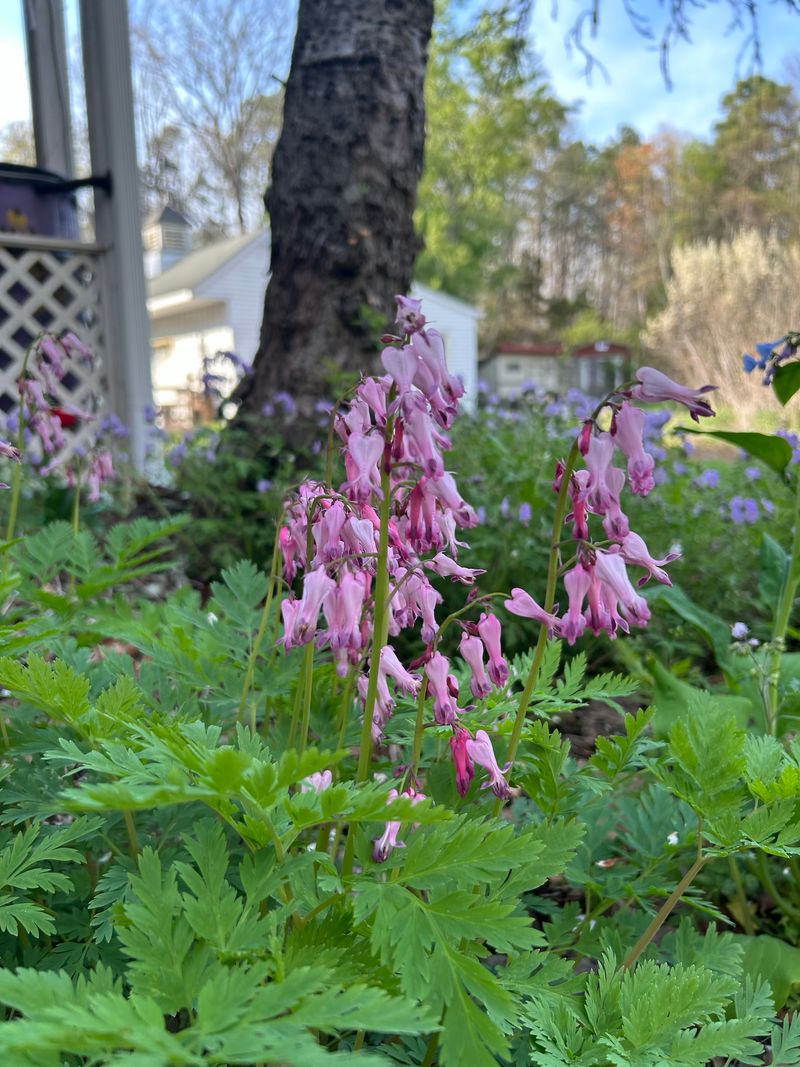
Wild Bleeding Heart (Dicentra eximia) is that quiet overachiever, and it belongs right here in Pennsylvania woodlands.
The foliage is delicate and fern-like, a soft grayish-green mound that stays tidy at 9 to 18 inches tall and up to 2 feet wide.
Heart-shaped flowers, usually pink to purplish-red, dangle above the leaves from late spring into early summer.
Here is where it gets tricky.
Garden centers love to sell fancy cultivars, so finding the true native takes a little hunting, and it is genuinely worth it since the wild species is considered endangered in Pennsylvania.
Give it filtered shade or part sun with rich, loamy soil that stays consistently moist.
Space plants about 15 inches apart, and in cooler areas it often reblooms sporadically all season.
Bumblebees work those little hearts like tiny locksmiths, and you get color when most shade plants have already checked out.
2. Blanket Your Garden Floor With Woodland Phlox
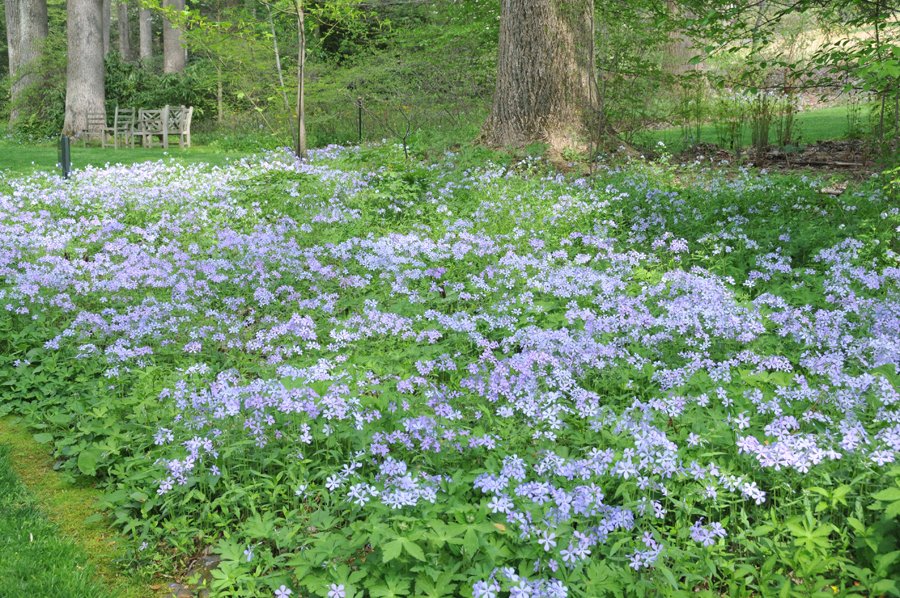
Blue is hard to find in a shade garden, and Woodland Phlox (Phlox divaricata) hands it to you by the armful.
It carpets the ground with fragrant color and fills bare spots without any fuss.
Plants stay low, roughly 6 to 18 inches tall, spreading about 10 to 12 inches wide into soft colonies.
From late April through May, clusters of blue or violet flowers with five notched petals light up the woodland floor.
Many southeastern Pennsylvania gardeners treat this one as a spring standout.
It likes part to full shade and humus-rich, moist, well-drained soil, and it adapts happily to the dappled light under deciduous trees.
The sweet scent pulls in early pollinators, including tiger swallowtail butterflies and hummingbirds hunting for nectar.
The foliage is semi-evergreen too, often blushing a subtle burgundy through winter so the bed does not go bare.
Plant them about a foot apart and let them wander.
Over a couple of seasons they knit together, and that empty patch under your maple finally looks intentional.
3. Watch Jacob’s Ladder Climb In Gentle Shade
The leaves are the first thing that stop you.
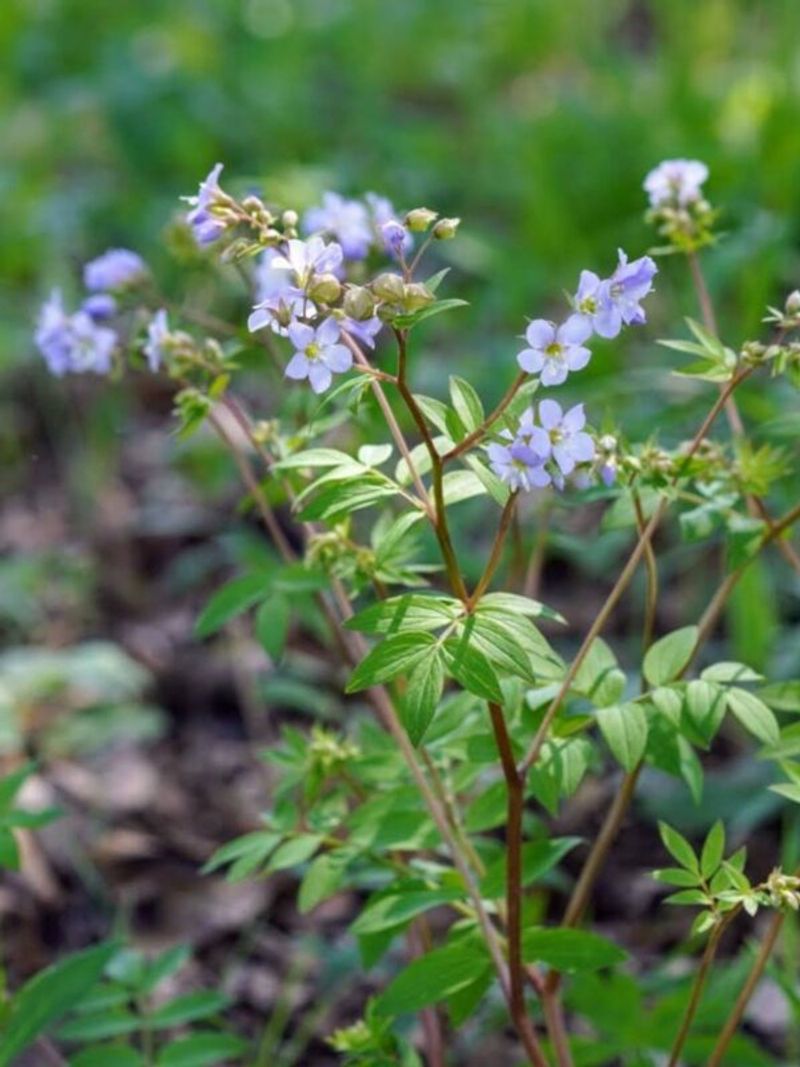
Jacob’s Ladder (Polemonium reptans) arranges its leaflets in neat rungs along each stem, which is exactly how it earned the name.
Expect a modest plant, around 8 to 18 inches tall and 1 to 1.5 feet wide.
From April to June, loose clusters of bell-shaped flowers in light blue to purple-violet open and hold for about three weeks, each bloom near two-thirds of an inch long.
It wants dappled to full shade and rich, moist, well-drained soil, the kind you find along stream banks in central Pennsylvania.
And here is a relief for a lot of yards, it genuinely tolerates clay.
Early pollinators lean on this plant hard, feeding native bees, bumblebees, and butterflies when very little else is blooming.
Deer tend to walk right past it, which spares you the springtime heartbreak of a chewed-off bed.
Tuck a few near a shaded path where you will actually see those blue bells up close.
4. Experience The Arching Elegance Of False Solomon’s Seal
Some plants earn their spot with a single trick.
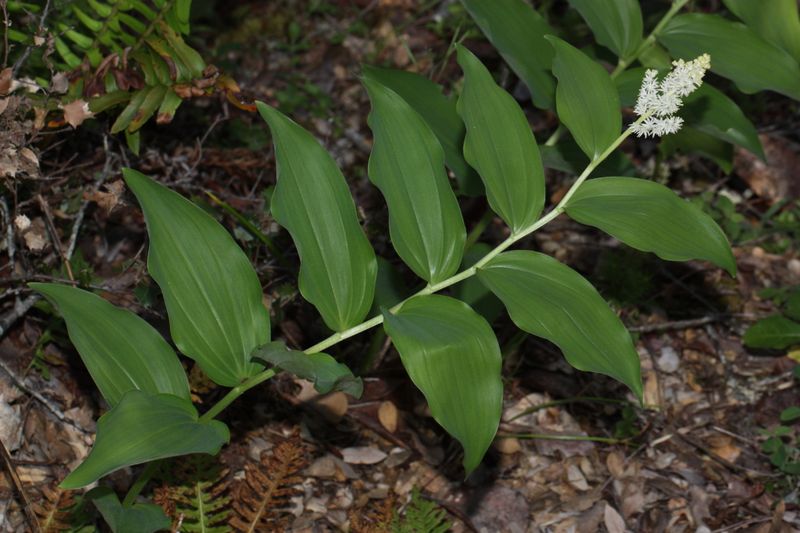
False Solomon’s Seal (Maianthemum racemosum) earns it with three, spread across three seasons.
Unlike true Solomon’s seal, which hangs little bells along the stem, this native throws feathery creamy-white plumes right at the tips of arching stems.
They appear from April to June, sometimes reaching 4 feet tall with a 1 to 2 foot spread, and the small fragrant flowers pull in native bees, flies, and beetles.
But the show keeps going.
By late summer and fall, those plumes ripen into ruby-red berries that often hang on into autumn, and the oval leaves, up to 4 inches long, turn a warm yellow.
It prefers part to full shade with rich, moist, humusy, well-drained soil, the sort common in Pennsylvania’s fertile limestone valleys.
Space plants 18 to 24 inches apart so the stems can arch into a flowing, natural drift.
Plant it once and you get spring bloom, summer berries, and fall color from the same clump.
That is a lot of payoff for one hole in the ground.
5. Anchor Your Shade With Evergreen Christmas Fern
You are walking the yard in December, everything gray and stripped down, and there it is.
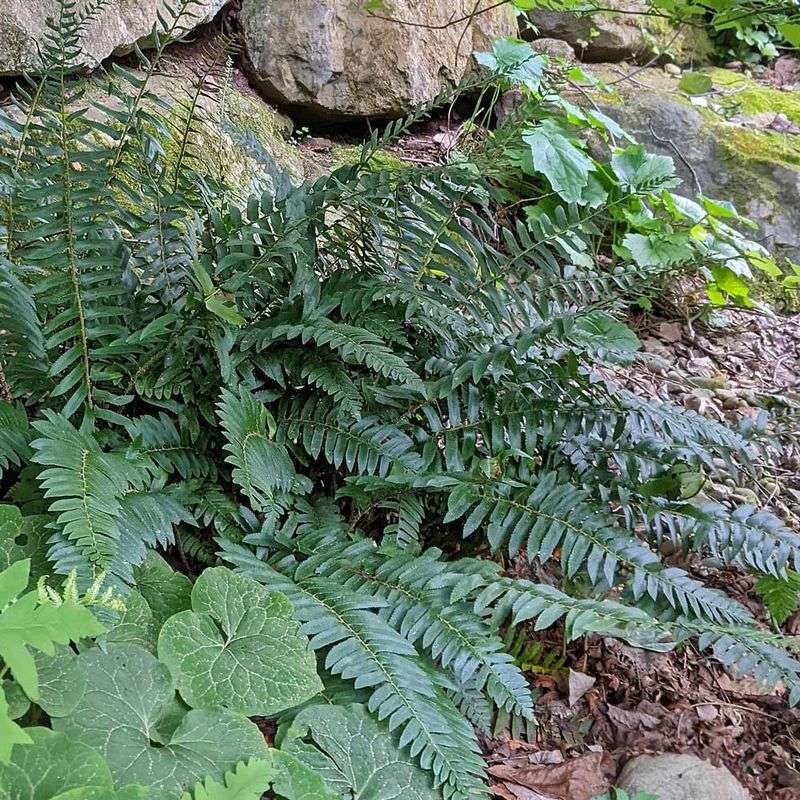
The deep green fronds of Christmas Fern (Polystichum acrostichoides) standing bright against the snow, holding their color while everything else quit.
This evergreen fern is a true workhorse for Pennsylvania shade.
It grows in tidy, arching clumps, usually 1 to 2 feet tall and about as wide, keeping that glossy dark green through the coldest stretch of winter.
It is remarkably easygoing, taking part to full shade and soils from well-drained to moist, including the rocky ground so many of us fight.
Once established, it even shrugs off some dry shade under mature trees, which is genuinely rare.
Set plants about 12 inches apart to build a groundcover.
Deer leave it alone, a big win from the Poconos to the Laurel Highlands, and its roots grip slopes to slow erosion.
So it looks good, feeds nothing to the deer, and quietly holds your hillside together.
Not bad for a plant that asks for almost nothing.
6. Create A Green Carpet With Wild Ginger
Not every hero needs flashy flowers.
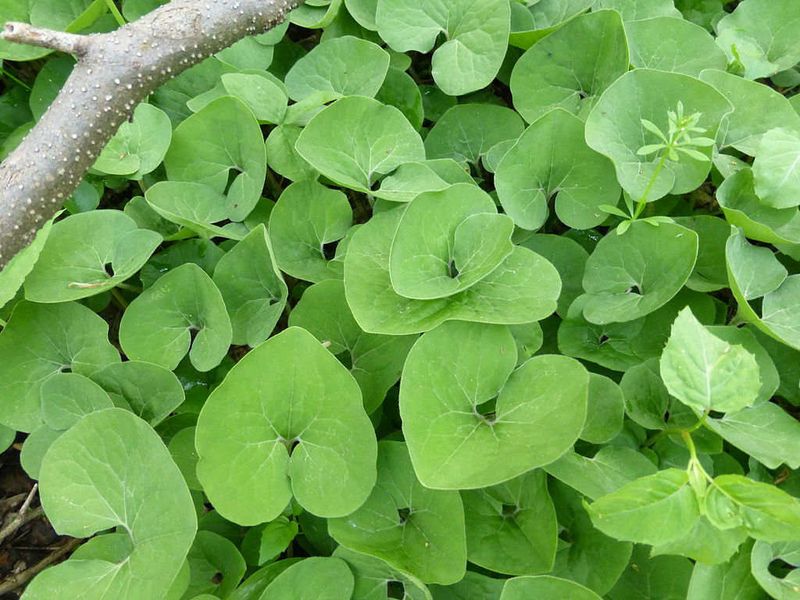
Wild Ginger (Asarum canadense) skips the show entirely and wins you over with leaves, big velvety heart-shaped ones that turn shady ground into a lush green carpet.
It stays low, just 4 to 12 inches tall, but spreads 1 to 2 feet wide by underground rhizomes, which makes it a natural for filling in and settling down.
Get down on your knees and you will find its secret.
Hidden reddish-brown, bell-shaped flowers sit right at ground level in early spring, pollinated by small flies crawling through the leaf litter.
It is an oddball adaptation, and honestly kind of charming.
Wild Ginger likes full to partial shade and rich, moist, humusy soil, the sort tucked into Allegheny Plateau woodlands.
It handles clay too, which many Pennsylvania homeowners are stuck with.
Space plants 12 to 18 inches apart and expect solid cover in two to three years.
Deer generally ignore it, so this is about as low-stress as groundcover gets.
7. Bring Frothy Blooms With Foamflower
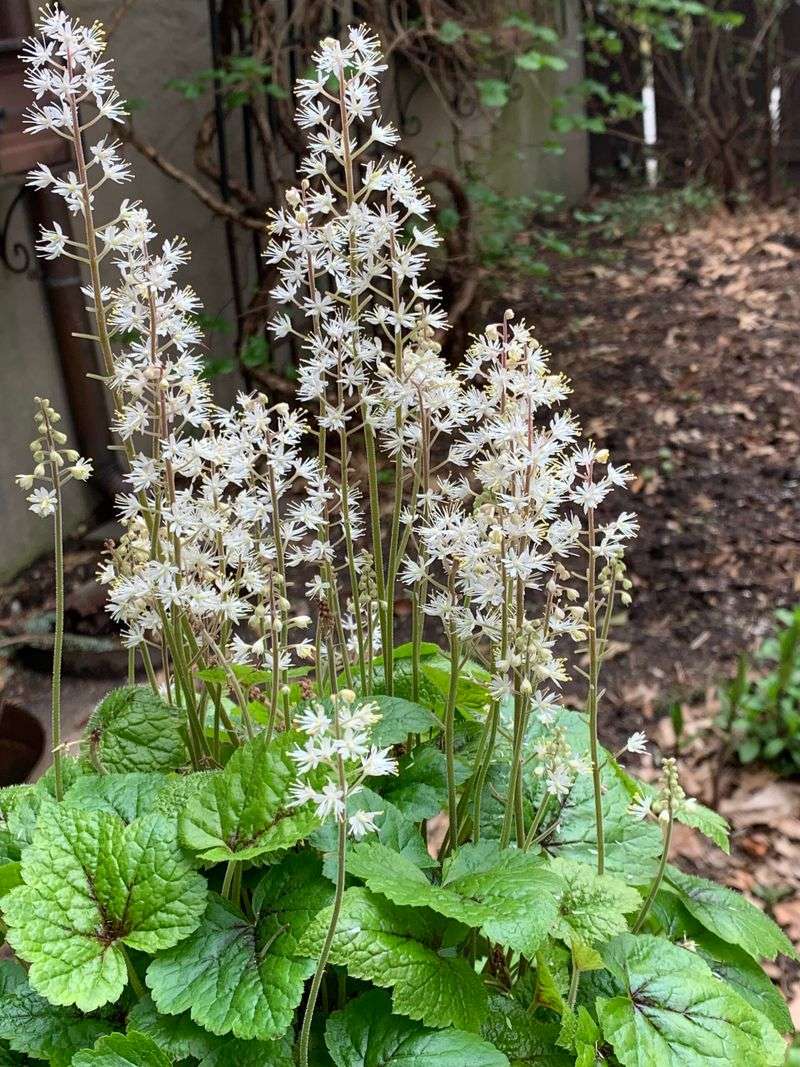
If it was the airy plumes you liked about astilbe, Foamflower (Tiarella cordifolia) gives you that same froth and actually wants to live here.
The name fits perfectly.
Delicate spikes of tiny star-shaped white, sometimes pinkish, flowers rise above the leaves from April to June, reaching up to 18 inches tall for a soft vertical accent.
Below them sits a dense mound of heart-shaped to maple-like foliage, roughly 6 to 12 inches high and 1 to 2 feet wide.
It is semi-evergreen to evergreen, and the lobed leaves often warm into bronze or reddish tones by fall and winter.
So the interest stretches well past bloom time.
Foamflower shines in part to full shade with rich, moist, well-drained, humusy soil, an easy match for woodland gardens across the central valleys.
It spreads by runners into gentle colonies without turning into a bully.
Space plants about a foot apart for a quick fill, and rest easy knowing it is largely deer resistant.
You get the frothy look you wanted, minus the midsummer meltdown.
8. Appreciate The Subtle Charm Of American Alumroot
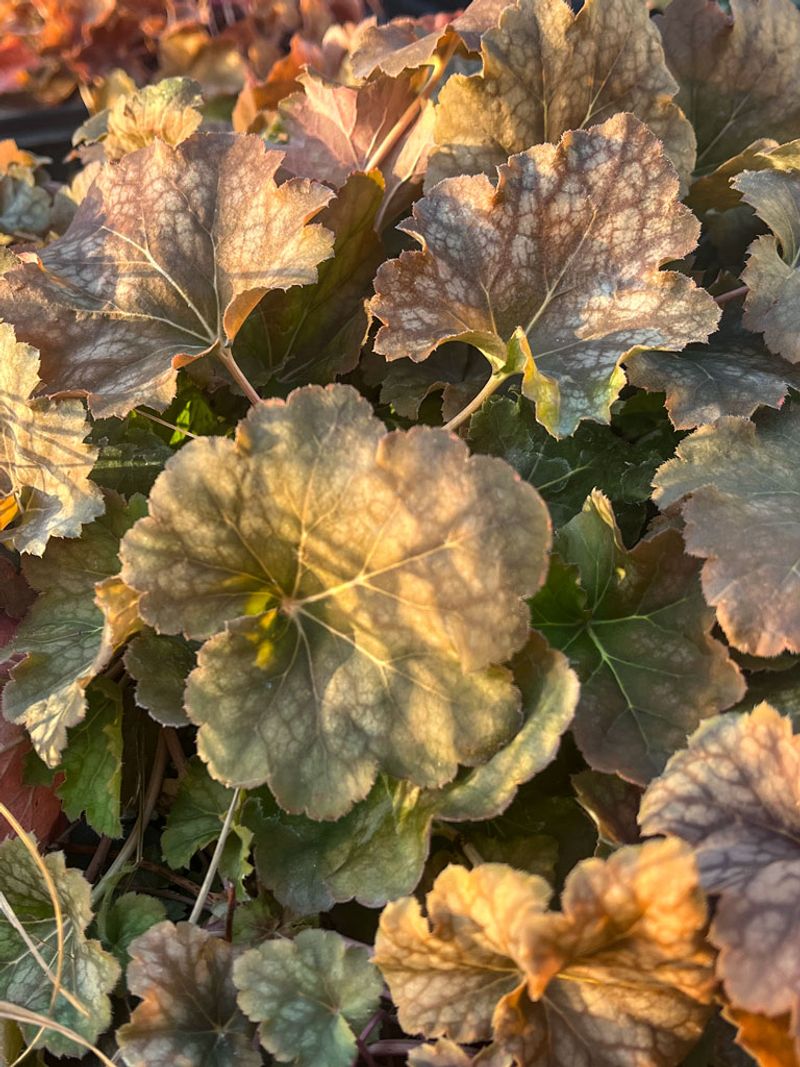
Quiet elegance can outlast a loud bloom, and American Alumroot (Heuchera americana) proves it every season.
You might know it as coral bells, and the native species leans on foliage more than flowers.
The leaves form a tidy mound, generally 6 to 12 inches tall, often marbled or veined in purple, bronze, or cream.
That color carries year-round interest in milder parts of Pennsylvania like the Delaware Valley.
In spring, airy panicles of tiny greenish or creamy bell-shaped flowers, tinged pink, float above the leaves on slender stalks 1 to 2 feet high.
They are subtle, not showy, and they add a fine, lacy texture where bolder plants would feel heavy.
It prefers part to full shade and moist, rich, well-drained, acidic soil, the kind found in rocky forests and outcrops.
The leaves are high in tannins, so deer find them unappetizing and generally pass them by.
Divide established clumps every three to four years in spring or fall to keep them vigorous.
Plant these natives and your shady beds will actually flourish, feeding local pollinators while finally looking like they belong.