
Beautiful Florida Native Plants That Thrive Where Hydrangeas Always Struggle
Follow us on Google
You step onto the patio after breakfast and the air already feels heavy, like a wet towel draped over the yard.
You glance at that hydrangea you planted with so much hope, and its leaves are already drooping even though you watered it yesterday.
Sound familiar?
For a lot of us in Florida, those big dreamy blooms turn into a wilting, frustrating mess because our sun, sandy soil, and sudden downpours are not what those plants expect.
The good news is you can have a lush, colorful yard that shrugs off the heat.
The secret is leaning on Florida native plants, the quiet heroes that were built for exactly this weather.
1. Firebush Truly Brings The Heat And The Hummingbirds
The constant battle with wilting leaves on a non-native plant can genuinely wear you out.
You keep pouring on water, hoping for a miracle, but Florida sunshine and fast-draining soil often team up against you.
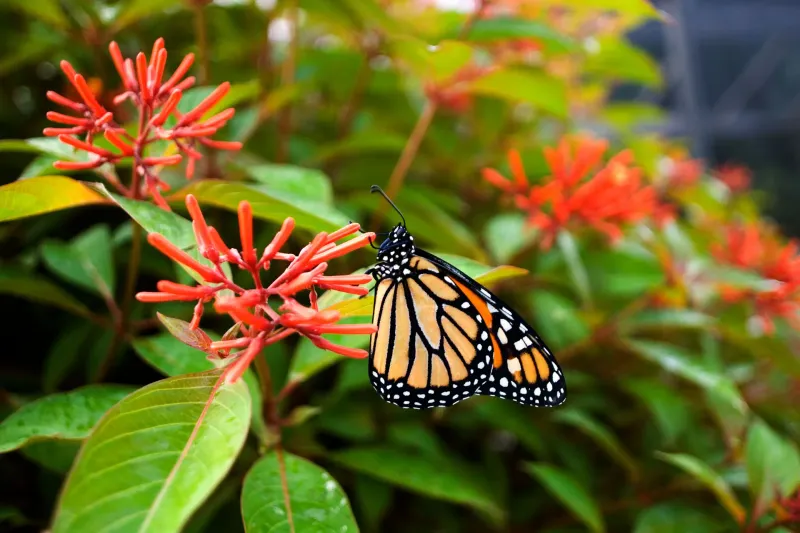
Firebush, or Hamelia patens, laughs in the face of our long humid summers.
Its leaves stay fresh and green while tubular flowers blaze in fiery red and orange, and it blooms nearly year-round from the Keys up through the Gulf Coast.
Hummingbirds, zebra longwings, and gulf fritillaries treat it like a favorite diner.
It can produce far more nectar than common lantana, making it a real refueling station for pollinators.
Give it at least 6 hours of direct sun each day, or you will get leggy growth and fewer blooms.
It is not fussy about soil and handles sandy or limestone-based ground as long as drainage is good.
Water it regularly for the first few months while roots establish.
After that it is genuinely drought tolerant, which is kind to your water bill.
It can reach 8 to 12 feet, but you can trim it to a tidy 5 to 8 feet.
In the Panhandle, a hard freeze below 28 degrees may knock it back.
Do not worry, it is root-hardy and bounces back in spring.
2. American Beautyberry Brings Astonishing Fall Color
Look at your landscape in late summer and it can feel a little tired, all greens and no surprises.
Many Florida gardeners hit that slump when a non-native refuses to bloom against the rising humidity.
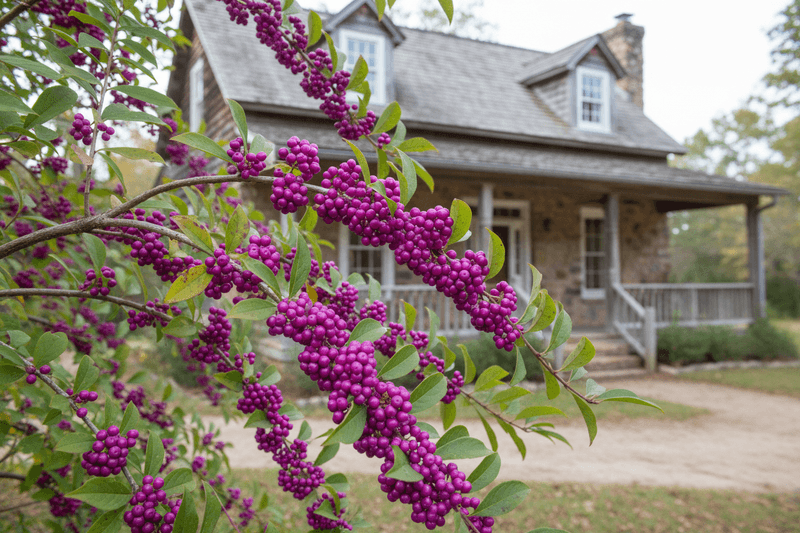
American beautyberry, Callicarpa americana, steps in with a showstopper.
Bright metallic-purple berries wrap tightly around the arching branches from late summer into winter, long after the leaves have dropped.
The pale lavender-pink flowers in spring are pretty, but the fruit is the real event.
Bluebirds, cardinals, and mockingbirds crowd in to fuel up for cooler months.
It thrives all across Florida, roughly USDA Zones 7 through 11.
Full sun gives you the most berries, but it will grow in partial shade too, and it shrugs off our sandy or loamy soil.
Once established it is moderately drought tolerant, though it prefers not to bake bone-dry.
Expect 3 to 8 feet tall and 4 to 8 feet wide, a graceful sprawling shape.
A light prune in late winter encourages denser growth and even more berries next season.
The berries are technically edible but tart and mealy fresh, so leave them for the birds, or turn them into jelly.
3. Muhly Grass Offers Waves Of Pink In The Fall
Sometimes you want a plant that adds motion and elegance without demanding attention, especially after a punishing summer.
Many ornamental grasses from other regions collapse into fungal messes under our humidity and downpours.
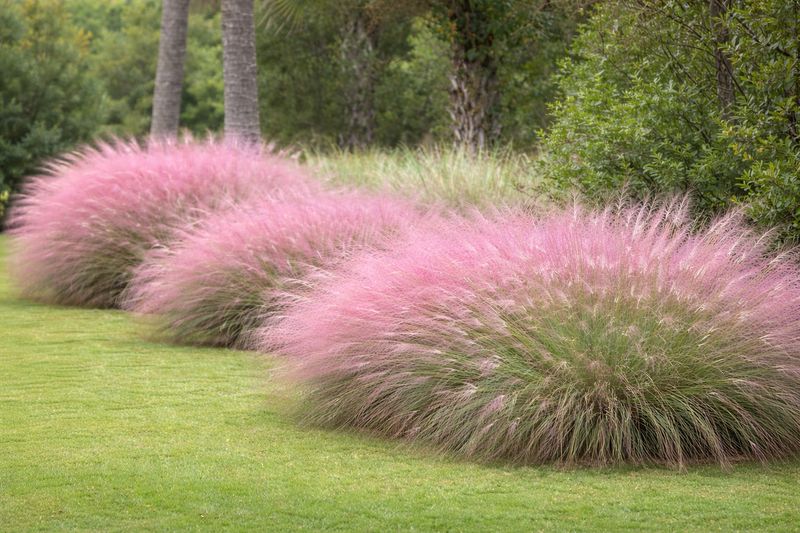
Muhly grass, Muhlenbergia capillaris, does the opposite.
In fall it throws up airy pink-to-purple plumes that float above the foliage like cotton candy clouds, rippling in the breeze.
Planted in a mass, it turns an ordinary yard into sweeping drifts of color.
It also gives shelter to small wildlife and a little nectar to pollinators.
It performs all across Florida, roughly Zones 7 through 11, and it genuinely wants full sun for the brightest blooms.
Sandy, rocky, even poorly draining soil suits it fine, and its salt tolerance makes it a smart coastal pick.
Once established it handles long dry spells, needing only about 1 inch of extra water during severe drought.
For new plantings, water weekly for the first two to three months.
Clumps reach 3 to 4 feet, with plumes up to 5 feet.
Space them 24 to 36 inches apart for good airflow, then simply cut it back to the ground in late winter.
That is nearly all it asks.
4. Coontie Is The Ancient Survivor For Shady Spots
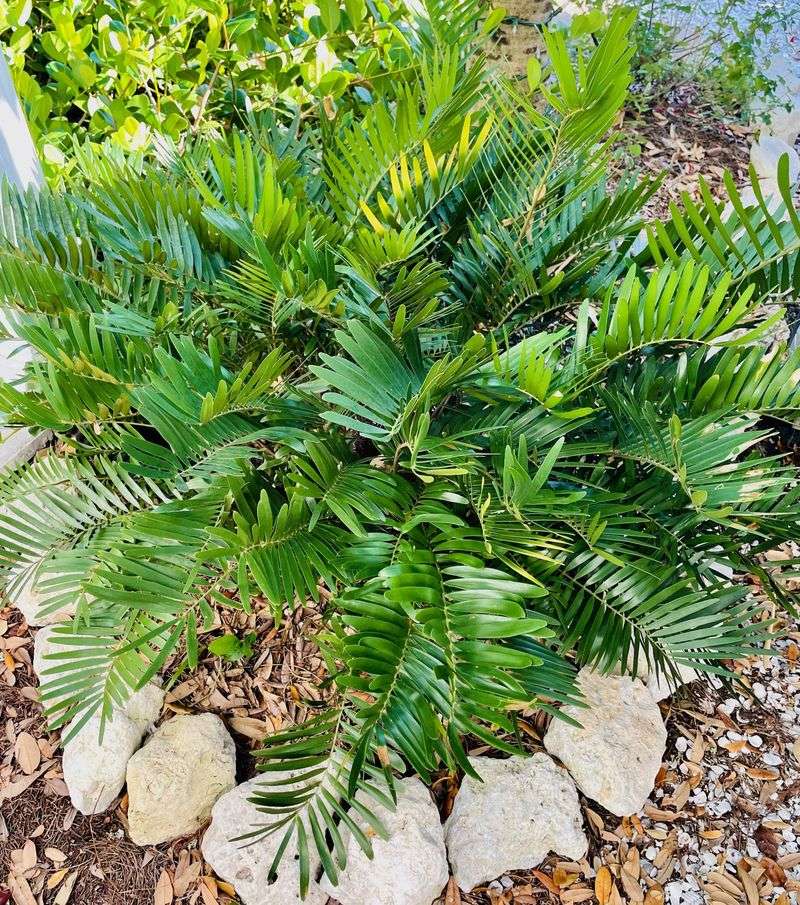
Building a lush garden in the dappled light under mature trees is one of Florida’s trickiest jobs.
Plenty of cool-climate shade lovers rot out in a downpour or shrivel in a dry week.
Meet the coontie, Zamia integrifolia, Florida’s only native cycad and a genuine living fossil older than most flowering plants.
Its stiff, feather-like dark green fronds look like a small palm crossed with a fern.
It brings a quiet sense of permanence to shaded nooks where nothing else cooperates.
It is also the only host plant for the striking Atala butterfly, so you are feeding a comeback story.
Coontie takes full sun but grows lush and larger in partial to deep shade.
It is easy about soil, from acidic sand to alkaline ground, and it usually settles at about 3 feet tall and up to 5 feet wide.
Keep the top of its underground stem, what growers call the caudex, slightly above the soil line.
Water regularly until established, then let the soil dry between drinks, because constant wet feet invite rot.
It is hardy roughly Zones 8b to 11 and shrugs off brief cold snaps down toward 20 to 30 degrees.
Salt tolerant too, it barely needs pruning.
5. Simpson’s Stopper Adds Fragrance And Fruit Year Round
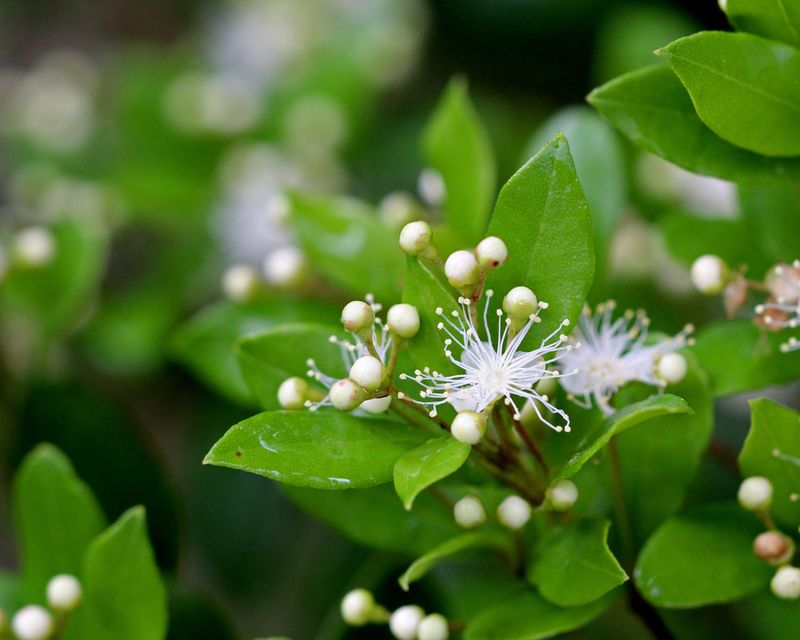
Picture a spot near your patio where you want an evergreen that does more than sit there green.
Many gardeners chase fragrance and year-round interest, then watch a delicate non-native fold under our sun or a cold snap.
Simpson’s stopper, Myrcianthes fragrans, quietly delivers on all of it.
Its dense deep-green leaves smell of spicy nutmeg when crushed, a small pleasure every time you brush past.
Spring brings showy white flowers that pull in butterflies and bees.
Orange to red berries follow in late summer, and mockingbirds, our state bird, line up for them.
It works in full sun to partial shade.
Sun makes it denser, shade opens it up and shows off its smooth, peeling bark.
Sandy soil, alkaline soil in South Florida and the Keys, even poorly drained pockets, it handles them.
Once established it barely needs watering.
For young plants, water twice a week the first season, soaking to about 8 inches deep.
It is hardy roughly Zones 8b to 11 and takes brief chills down to 25 degrees.
Growing about 1 foot a year, it is slow enough that shaping is easy.
Space plants 3 to 5 feet apart for a fragrant, salt-tolerant hedge.
6. Blanket Flower Blooms Nonstop Through Brutal Heat
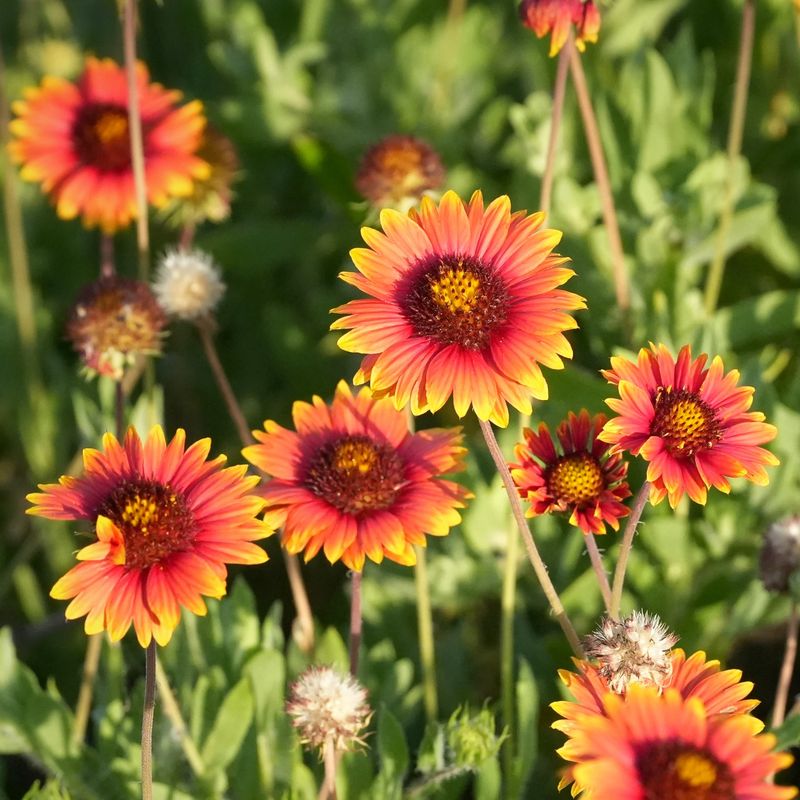
Some plants sulk the second the thermometer climbs.
Blanket flower does the opposite, throwing color exactly when your yard needs it most.
Blanket flower, Gaillardia pulchella, is a scrappy native that covers itself in red and yellow daisy-like blooms almost nonstop through the hottest months.
You will spot it thriving right along the dunes where salt spray kills off softer plants.
It genuinely loves abuse.
Full sun, sandy soil, and neglect suit it better than pampering, and it self-seeds so it keeps coming back on its own.
Bees and small butterflies work the blooms all day, which makes it a low-effort pollinator patch.
It stays low, around 1 to 2 feet tall, so it fits front borders and coastal beds from the Panhandle to South Florida.
Give it well-drained ground and go easy on water once it is settled.
Overwatering and rich soil actually make it flop and fade faster, so let it stay a little hungry.
Space plants about 12 to 18 inches apart and pinch off spent blooms if you want it even tidier.
In its short-lived way, it just keeps refilling the gaps, a cheerful survivor that asks for almost nothing.
7. Saw Palmetto Anchors The Yard Through Any Storm
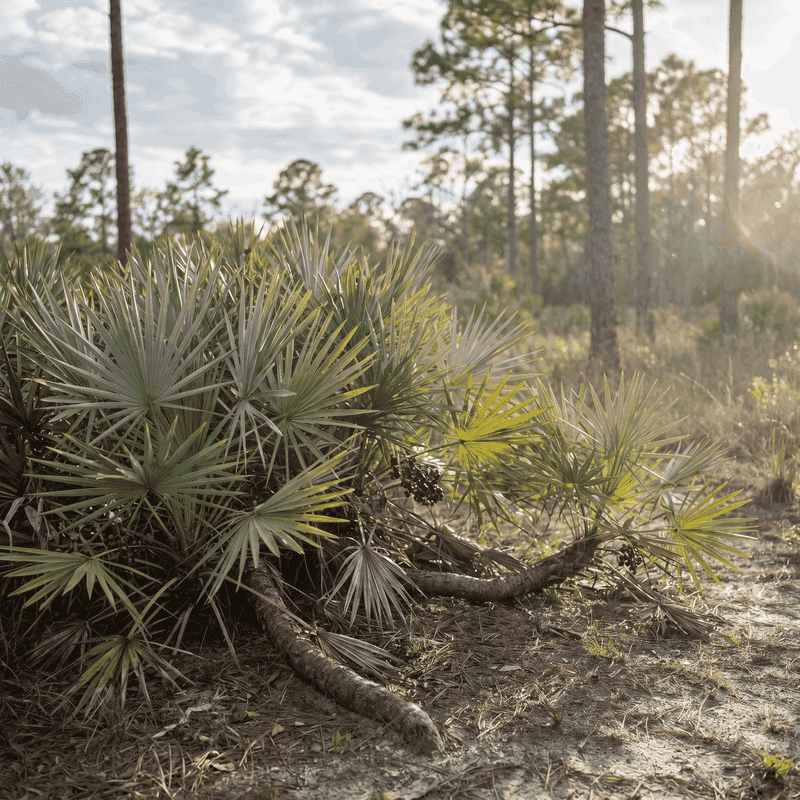
Hurricane season runs June through November, and it makes you look hard at what can actually take a beating.
Saw palmetto has been passing that test for thousands of years.
Saw palmetto, Serenoa repens, is a tough native fan palm that forms dense, low clumps of silvery-green fronds.
Its trailing underground stems knit the soil together, which is why it holds ground during downpours and high wind.
Wildlife leans on it hard.
Its spring flowers feed bees heavily, and the berries feed birds and mammals, so a clump becomes a quiet little ecosystem in your yard.
It grows across Florida in full sun to partial shade and could not care less about poor sandy soil.
Once established it is deeply drought tolerant and rarely bothered by pests.
Give it room, because a clump slowly spreads and can reach 5 to 10 feet wide over many years.
Space plants at least 4 to 6 feet apart and plan for the long haul, since it is genuinely slow growing.
Water new plants until roots take hold, then step back and let it be.
It is salt tolerant and fire-adapted, a set-it-and-forget-it anchor for coastal and inland yards alike.
8. Native Milkweed Turns Your Yard Into A Monarch Stop
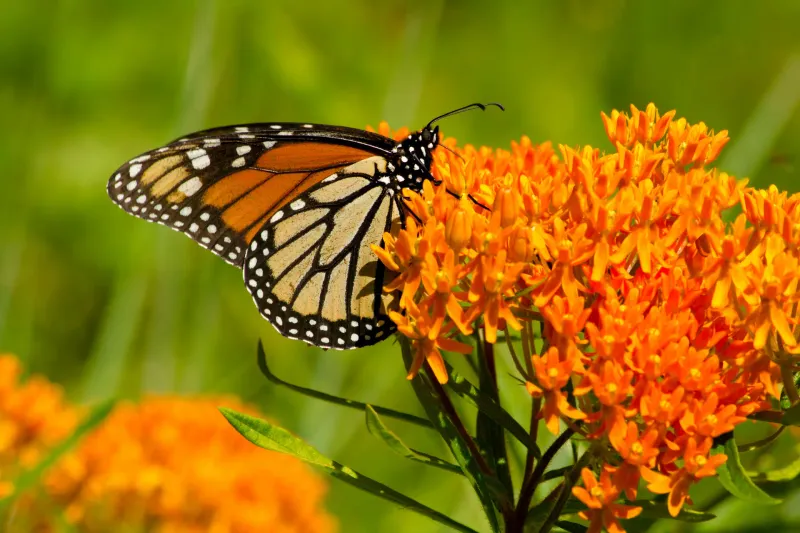
Every fall the monarch migration rolls through Florida, and your yard can be a rest stop instead of a flyover.
The trick is planting the milkweed they actually need.
Reach for a native like butterfly milkweed, Asclepias tuberosa, or another regional native species rather than the common tropical kind.
UF/IFAS Extension recommends native milkweeds because tropical milkweed left standing all winter can spread a parasite that harms monarchs.
Milkweed is the only plant monarch caterpillars can eat, so it is the whole reason the butterflies stop.
Watching those striped caterpillars strip a stem, then reappear as monarchs, is a genuinely proud backyard moment.
Native milkweeds want full sun and well-drained sandy soil, which most of Florida already has.
Butterfly milkweed stays compact, roughly 1 to 2 feet tall, and its orange blooms pull in more than just monarchs.
Water young plants regularly, then ease off, since these natives dislike soggy roots.
Space them about 12 to 18 inches apart and expect them to look chewed.
That is the point.
If you grow tropical milkweed anyway, cut it back to about 6 inches in fall to protect the migration.
One small snip, one big favor.
9. Sabal Palm Is The State Tree For Good Reason
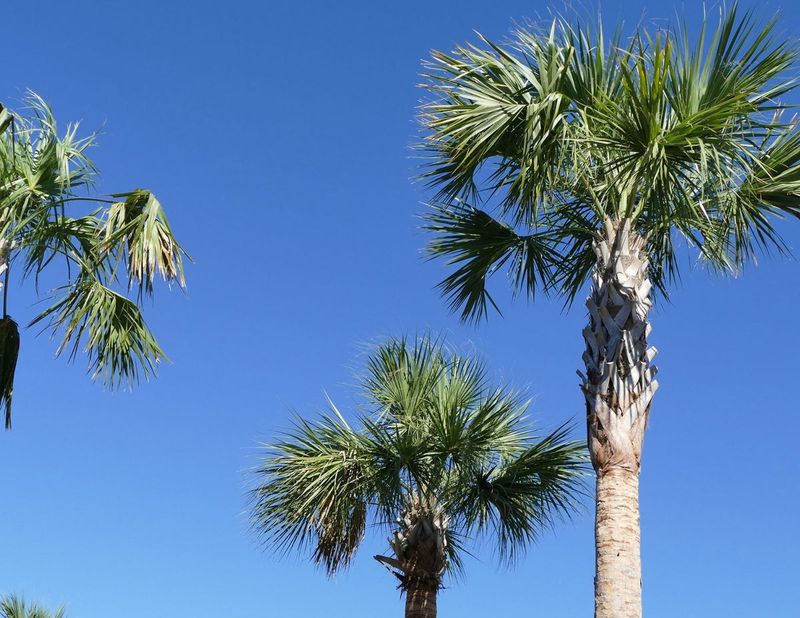
Drive any Florida road and one silhouette repeats against the sky.
The sabal palm earned that everywhere-you-look status honestly.
Sabal palm, Sabal palmetto, is Florida’s state tree and one of the toughest verticals you can plant.
It stands through hurricanes, salt spray, drought, and flooding, bending its fan-shaped fronds instead of snapping.
Where a struggling hydrangea gives you frustration, this palm gives you structure and shade with almost no complaints.
Its summer flowers feed bees and its fruit feeds birds and wildlife.
It grows statewide, roughly Zones 8b to 11, in full sun to partial shade and in nearly any soil, from deep sand to the shallow limestone of the Keys.
Established trees are strongly drought and salt tolerant.
Newly planted palms establish best in the warm season, so plant from late spring through summer and water deeply while roots settle in over the first several months.
A mature sabal can reach 40 to 50 feet tall.
Skip the heavy pruning.
Removing green fronds actually weakens the palm and invites stress, so only trim brown, fully dead fronds.
Leave it alone and it will quietly outlast almost everything else in the yard, a calm native giving your Florida landscape a backbone.