
Wood Ash From Your Fire Pit Feeds The Garden Like Free Fertilizer If You Use It Right
Follow us on Google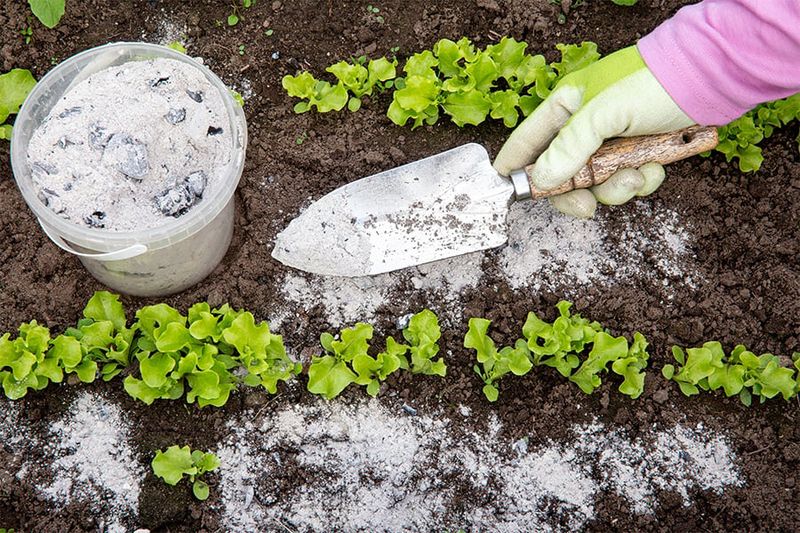
After a good fire-pit evening, most homeowners sweep the cold ash into a bag and toss it without a second thought. That gray powder is actually worth a closer look before it hits the trash.
Clean ash from natural wood can help certain garden soils by acting like a fast-working liming material with modest mineral value, but only when your soil genuinely needs what ash supplies. Get that part right and you may spend less on lime or potassium this season.
Start With Safe, Known Wood
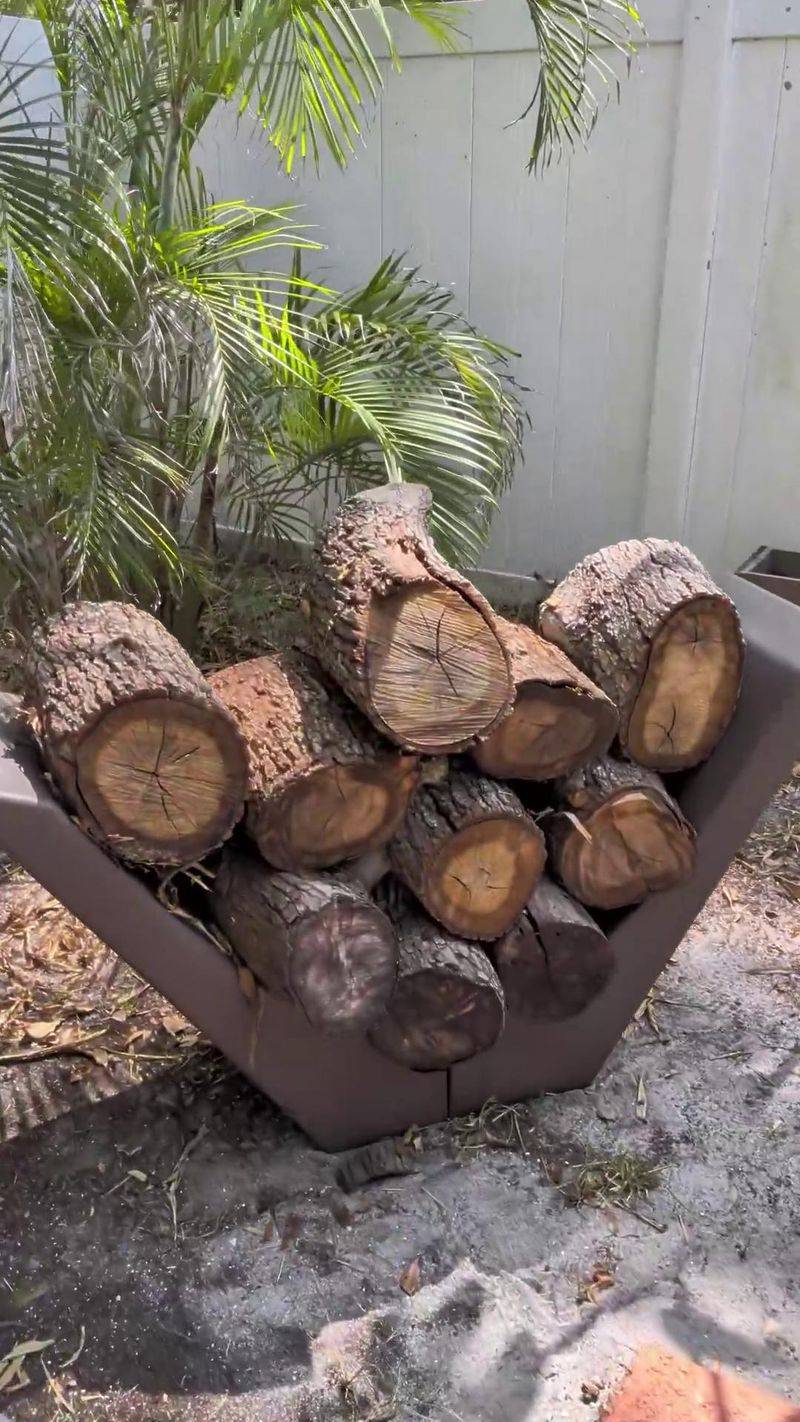
The most important question about fire-pit ash has nothing to do with your garden. It starts with what you burned.
Ash from clean, untreated natural wood is a different material entirely from ash that came from plywood, painted boards, pressure-treated lumber, plastics, garbage, coal, or anything you cannot positively identify.
Pressure-treated wood is a serious concern. EPA guidance on chromated arsenicals makes clear that burning CCA-treated wood concentrates arsenic, chromium, and copper in the ash at levels that can be hazardous.
Those contaminants do not disappear when the fire goes out. If the fuel source is uncertain, keep that ash out of your soil and dispose of it with your regular trash rather than spreading it on beds you plan to eat from.
Ordinary charcoal briquettes also belong in the discard pile. Briquettes can contain binders, additives, or lighter-fluid residues, so their ash is not the same clean mineral material that comes from a natural log fire.
Once you have confirmed the ash came from known, clean wood, the next task is handling it safely before it ever reaches the garden. Ash that looks cold may still hide live embers inside.
The U.S. Fire Administration recommends storing ash in a tightly covered metal container kept outdoors, at least 10 feet from your home and any other buildings or combustible materials.
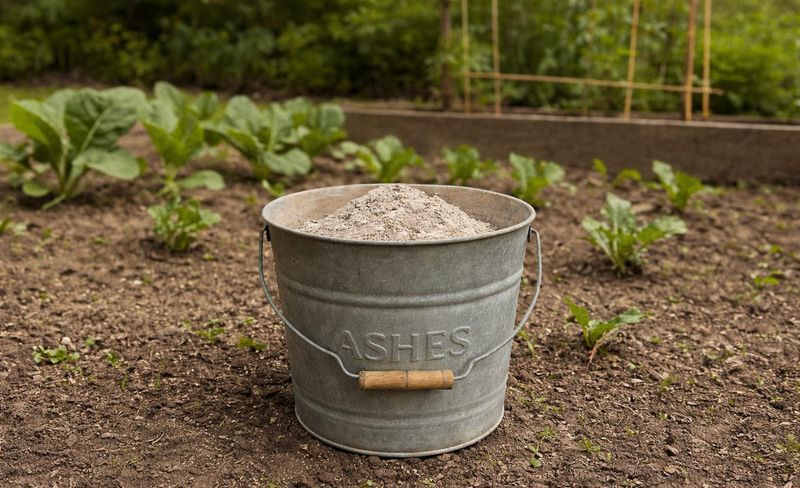
A metal trash can with a snug lid works well. Let the ash sit there for several days before moving it anywhere near the garden.
Ash Acts More Like Lime Than Fertilizer
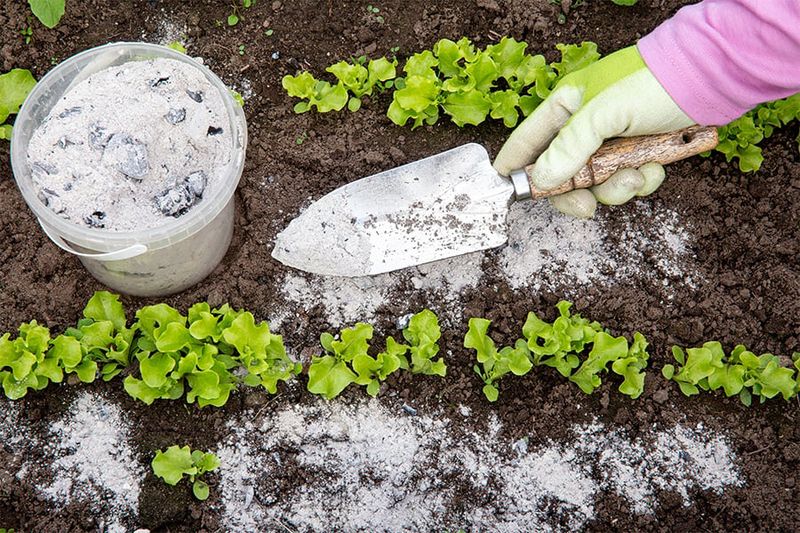
Many gardeners picture fertilizer as something that feeds hungry plants directly, the way a meal feeds a person. Wood ash works more like an antacid for soil.
Burning wood concentrates alkaline mineral compounds, and the result is a powder that raises soil pH while delivering a modest supply of calcium, potassium, phosphorus, magnesium, and sulfur.
University of Georgia Extension characterizes average wood ash at roughly 0-1-3 in nitrogen-phosphorus-potassium terms, and that low first number is the critical detail. Ash contains very little nitrogen.
It cannot replace a complete fertilizer program or your normal nitrogen applications. Treating it as a full plant food will leave nitrogen-hungry crops short all season.
The nutrient content also shifts depending on what you burned. Oregon State Extension notes that hardwood ash generally contains more nutrients than softwood ash, and rain can leach soluble potassium and phosphorus out of ash that sits exposed before you use it.
So avoid storing ash uncovered outdoors where rain can wash through it.
The realistic savings come from a narrower opportunity than the phrase “free fertilizer” suggests. Wisconsin Extension estimates that roughly four cups of wood ash can substitute for about one pound of agricultural lime, though ash has variable and generally lower acid-neutralizing capacity than commercial lime, so the comparison is never exact.
When a soil test shows your ground is acidic and short on potassium, ash can reduce what you spend on those inputs. When the soil does not need liming or already has adequate potassium, adding ash creates problems rather than solving them.
Let the Soil Test Decide
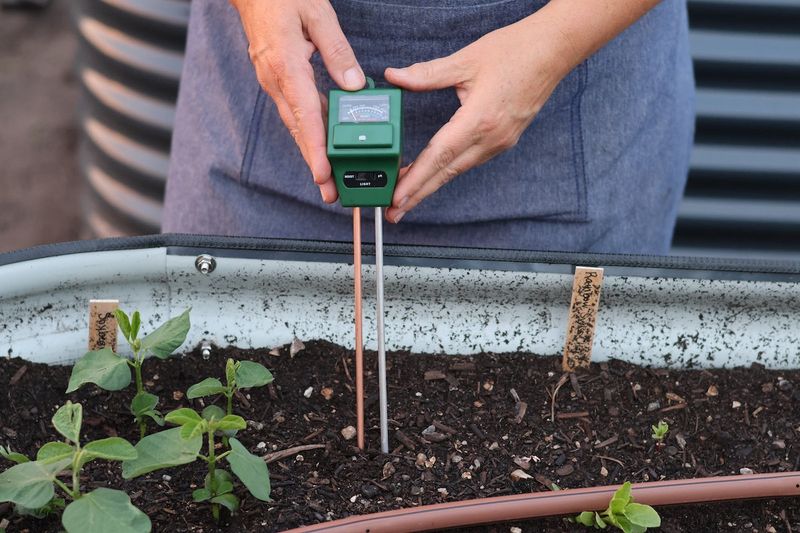
Skipping the soil test and spreading ash anyway is a little like taking a prescription without knowing the diagnosis. The ash might help, it might do nothing useful, or it might push your soil chemistry somewhere that makes nutrients harder for plants to reach.
University of Minnesota Extension recommends testing garden soil every three to five years and whenever you make a significant change in how you manage a bed. A basic test should cover pH, phosphorus, and potassium.
If your property has a history of heavy organic applications or you are working near an old burn pile, asking the lab to check soluble salts or trace metals is worth the small extra cost.
Ash makes the most sense when the test shows acidic soil that needs liming or soil that is genuinely low in potassium. At that point, ash may let you buy less lime or skip a potassium amendment entirely for one season.
When the test shows soil already near neutral or above, adding ash pushes pH higher and can lock up nutrients like phosphorus, iron, and manganese that plants need.
Different Extension programs draw the line at slightly different points. Pennsylvania State Extension cautions against ash use when soil pH reaches 6.8 or higher.
Oregon State sets the threshold at 7.0. Neither number is a universal rule.
Follow the recommendation that comes with your actual soil test, and factor in what you plan to grow, because different crops have different pH preferences. The soil test report, not a general guideline, is the right starting point for any decision about ash.
Measure and Apply Ash Before Planting
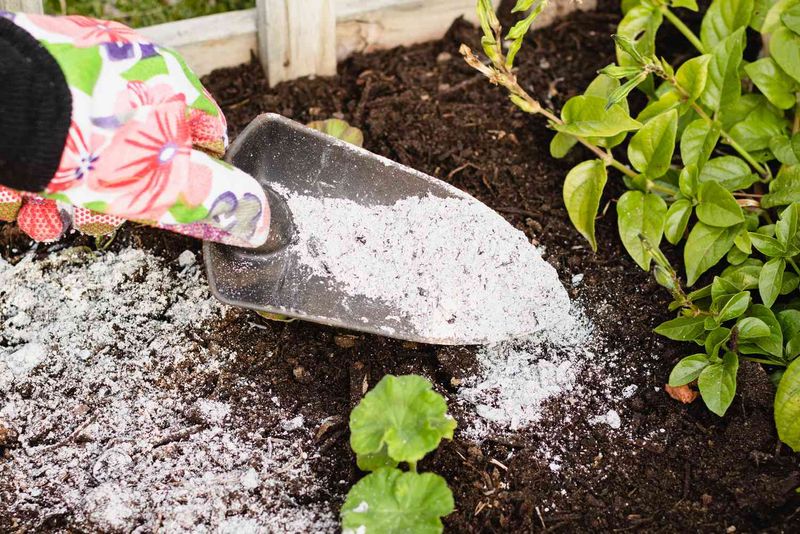
A five-gallon metal pail holds roughly 15 to 20 pounds of wood ash, and that amount spread over 1,000 square feet is the conservative general ceiling that several Extension programs suggest for a home garden in a single year. Treat that figure as a maximum, not a target.
If your soil test calls for less correction than that ceiling implies, use only what the recommendation supports.
Rates and timing vary by region and source, so local guidance takes priority. New Hampshire Extension recommends mixing ash into the top 2 to 4 inches of soil rather than leaving it on the surface, where it can crust or blow.
Oregon State suggests applying ash about two weeks before planting to let it begin working into the soil before seeds or transplants arrive. Wisconsin Extension describes winter application followed by incorporation in early spring as another workable approach in colder climates.
Both timings share the same goal: get the ash blended into the soil profile before plants are in the ground.
Before you spread a single shovelful, put on gloves, long sleeves, eye protection, and a dust mask. Fine ash is alkaline and irritating to skin, eyes, and lungs, especially on a breezy day.
Choose a calm, humid morning when the soil is moist so the powder settles rather than drifting. Sift out any large charcoal chunks or visible embers before you start.
Spread the ash as thinly and evenly as you can across the bed. Never pile it around plant stems or in rings near transplants.
Concentrated ash delivers a dose of soluble salts and alkalinity right where the roots are most vulnerable. New Hampshire Extension also advises keeping ash away from germinating seeds, which are especially sensitive to salt and pH spikes.
Rake it in, water lightly, and let the soil do the rest before planting day arrives.
Use Extra Caution Around Sensitive Crops
Ash works fast. Unlike ground limestone, which can take six months or longer to shift soil pH, ash is highly soluble and can change soil chemistry within weeks.
That speed is helpful when your soil is genuinely acidic and needs correction. It becomes a problem when the plants you are growing prefer acid conditions or when your soil is already close to neutral.
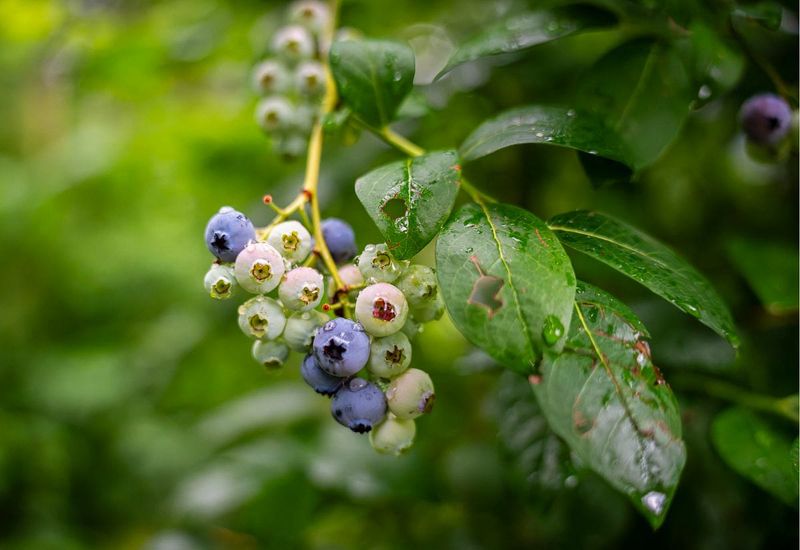
Blueberries are the clearest example to keep in mind. University of Minnesota Extension lists blueberry’s preferred soil pH at roughly 4.2 to 5.2, a range far below what ash-amended soil will hold.
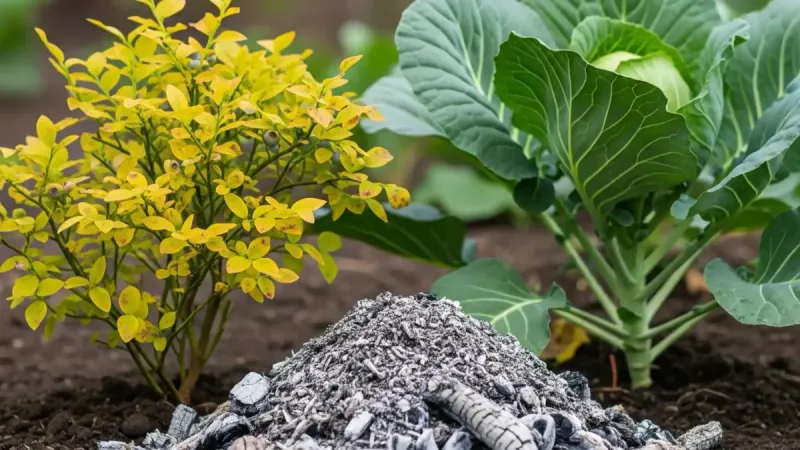
Azaleas, rhododendrons, hollies, and other plants adapted to naturally acidic soils face the same conflict. Adding ash around these plants is usually a mistake unless a qualified soil recommendation from your local Extension service specifically supports it for your conditions.
Even a modest pH increase can make iron and manganese unavailable to acid-loving plants, causing yellowing leaves and slow decline.
Potatoes deserve their own paragraph. Maine Extension notes that potatoes commonly perform well at pH 5.3 to 6.0, and that raising pH above that range can increase the risk of common scab, a rough-skinned disease that affects tuber quality.
Ash does not automatically harm every potato planting, but if your soil is already in that comfortable range, adding ash without a test could push pH higher and invite scab problems you did not have before.
New Hampshire Extension and Wisconsin Extension both caution against excess alkalinity, soluble salt buildup, and nutrient lockout from repeated ash applications. Most common vegetables prefer a pH somewhere between 5.5 and 7.0, but that wide range still has a ceiling.
When in doubt, let the soil test guide you rather than assuming every vegetable bed will welcome ash.
Separate Ash From Fertilizer and Limit Compost Use
Mixing wood ash directly with nitrogen fertilizers is one of those combinations that seems harmless but causes a real problem. High-pH ash can react with ammonium-based fertilizers, including urea, ammonium sulfate, and ammonium nitrate.
New Hampshire Extension warns that this contact can produce ammonia gas, which means you lose nitrogen to the air rather than delivering it to the soil. Apply your nitrogen fertilizer separately, follow the product directions, and base the rate on what your soil test recommends.
Ash and nitrogen fertilizer belong in the same garden but not in the same bucket at the same time.
Compost is a more nuanced situation. Small amounts of ash in a compost pile are not automatically harmful, but too much ash raises the pile’s alkalinity and can contribute to nitrogen loss from the compost itself.
University of Minnesota Extension notes that wood ash raises compost alkalinity and may result in nitrogen loss from the pile. Oregon State guidance suggests limiting ash to no more than one-half cup per five-gallon bucket of compost material.
Think of that as a ceiling for occasional use, not a routine recipe.
Charcoal briquette ash is a separate category and belongs out of the garden entirely. Oregon State notes that briquettes can contain binders, additives, or lighter-fluid residues that make their ash unsuitable for soil or compost.
Hardwood lump charcoal ash is a narrower edge case that some sources treat more charitably, but ordinary briquette ash from a backyard grill is not the same clean mineral material as wood-fire ash.
Biochar is also a different material. Partly burned wood chunks, true biochar, and sifted mineral ash each behave differently in soil.
Oregon State Extension distinguishes these materials clearly. Wood ash is highly alkaline and soluble, while biochar is carbon-rich with different amendment properties.
Do not use the terms interchangeably or assume one can substitute for the other in a soil program.
Use Ash Only When It Solves a Soil Problem
The honest version of the fire-pit ash story is more useful than the headline version. University of California guidance and University of Georgia Extension both describe ash as a soil amendment with modest mineral value, not a complete plant food.
The realistic savings come from a specific situation: your soil test shows acidic soil that needs liming or a genuine potassium deficit, and your ash came from clean, known wood. In that case, ash may let you buy less lime or skip a potassium input for one season.
That is a real benefit, and it is worth having.
Hardwood and softwood ash are not identical in nutrient content, and rain can leach soluble potassium and phosphorus from ash stored or spread without cover. Oregon State Extension notes these differences and recommends using ash promptly rather than letting it sit exposed to weather.
More ash does not produce more blooms, bigger harvests, or stronger plants. Excess pH, potassium, or soluble salts can cause nutrient imbalance, reduce uptake, and injure roots or seedlings, as Wisconsin Extension cautions.
Ash is also not a dependable slug barrier. Research published in Applied Sciences found some wood ashes can deter slugs under dry conditions, but the barrier fails when wet and repeated use can alter soil pH and raise salt exposure.
Extension specialists describe ash as generally unreliable for slug control in real garden conditions.
The short decision sequence is straightforward: confirm the fuel, run the soil test, measure conservatively based on the result, apply before planting, and skip ash entirely when the crop or current pH makes it a poor fit. A bag of lime costs a few dollars and delivers a predictable result, so ash earns its place only when the conditions are right.
When they are, it is a genuinely useful byproduct that most homeowners would otherwise throw away.