
Eleven Things Your Birds Do At The Feeder That Say Your Yard Is Already A Real Sanctuary
Follow us on Google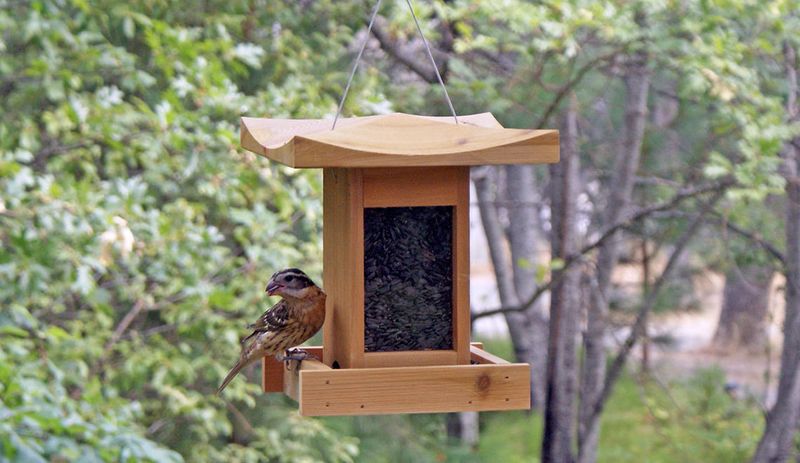
Early on a cool morning, your coffee steams on the porch rail while a chickadee drops onto the feeder like it owns the place. It does not circle.
It does not hesitate. That small moment tells you something bigger than breakfast.
Birds do not fake comfort. When they relax around your yard, they are voting with their wings.
You have built something safe, and they know it.
Here are eleven feeder behaviors that quietly prove your backyard has already become a sanctuary. Watch for them, and you will never see your morning coffee the same way again.
1. Birds Arrive Without Hesitation
A house finch drops straight onto the perch, no scouting loop, no long stare from the fence. That confidence is a compliment you earned.
Nervous birds treat a new yard like a stranger’s porch. They land far off, scan for 30 seconds or more, and inch closer only when nothing moves.
Birds that trust your space skip all that. They already know where the food sits, where cover waits, and where danger almost never shows up.
That mental map takes weeks of safe visits to build. Every calm morning teaches them your yard is predictable.
So when a bird arrives like it has an appointment, that is the payoff of steady feeding and quiet cover nearby.
You cannot rush it. But you can help.
Keep the feeder in the same spot, refill on a rough schedule, and leave a shrub or small tree within about 10 feet for a quick escape. The Cornell Lab of Ornithology notes birds return fastest to feeders they can reach safely from cover.
Confidence follows consistency, and your regulars are proof it worked.
2. Birds Feed Quickly and Calmly
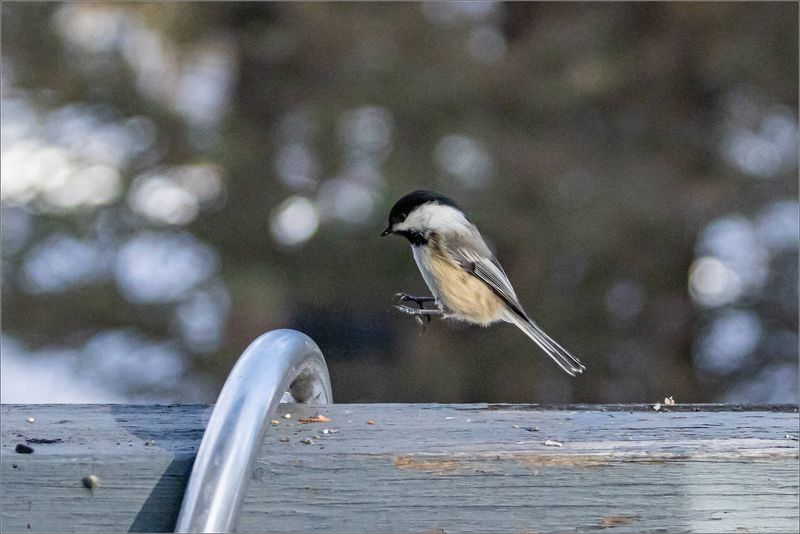
Grab and go is fear. A bird that snatches one seed and bolts is telling you it does not feel safe hanging around.
Now picture the opposite. A goldfinch settles in, works through several seeds, shifts its feet, pauses to glance around without panic.
That slow rhythm is trust you can watch in real time.
Calm feeding also spreads. When several birds eat in close succession without scattering, they are reading the space as low-risk.
One relaxed bird tells the next that the coast is clear, like neighbors leaving porch lights off because the street feels safe.
You can nudge this along. Place feeders where sudden movement from doors or driveways will not startle them, roughly 10 to 15 feet from high-traffic paths.
Keep cats indoors, since free-roaming cats kill an estimated 2.4 billion birds a year in the US according to the American Bird Conservancy. Fewer surprises mean slower, steadier meals.
And a bird that lingers over lunch has clearly decided your yard is home turf.
3. Birds Linger Beyond Eating
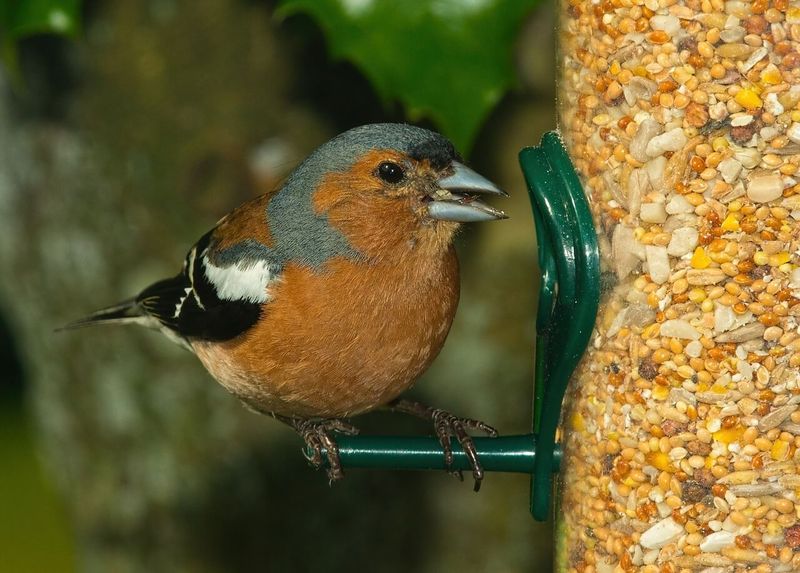
Most yards are a drive-through. Birds eat, they leave, they never look back.
Yours might be different.
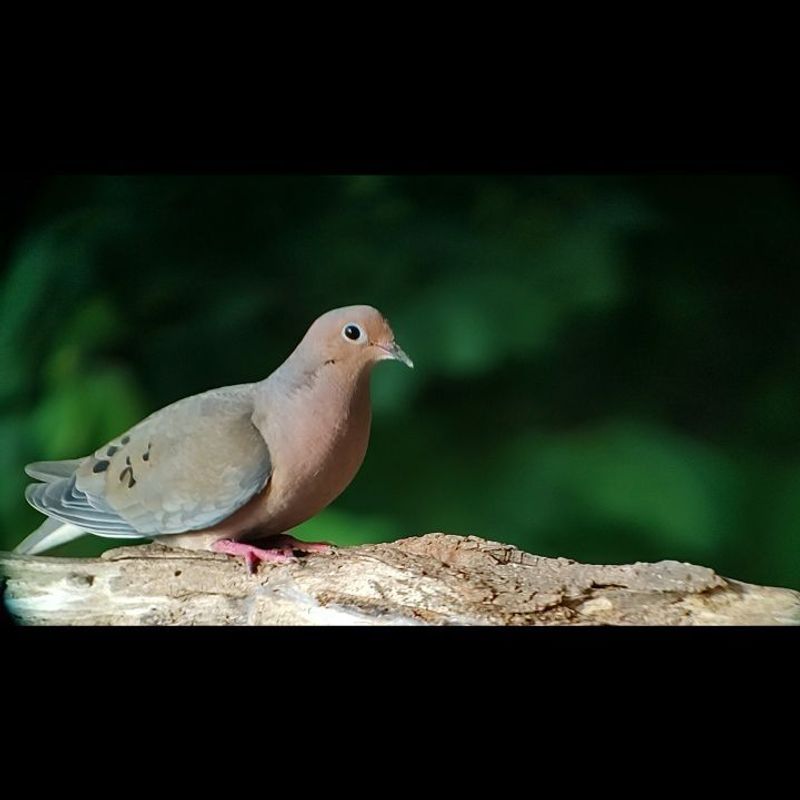
When a cardinal finishes at the feeder and then just sits on a branch, preening or sunning, that is a genuine sign of comfort. So is a robin bathing slowly or a sparrow poking through the grass with no rush in its step.
There is a real difference between alert and afraid. Wild birds always stay watchful, that is survival.
But a fearful bird cannot stay. A trusting bird can perch, relax, and keep one eye open at the same time.
Lingering means your yard offers more than one thing at once. Food, water, cover, and quiet all stacked together.
To encourage it, add a shallow birdbath and a few resting perches at different heights, from a low shrub to a taller tree limb. Even a dead branch left standing gives birds a place to pause.
When they treat your yard as a spot to rest and not just refuel, you have crossed from feeding station to habitat.
4. Birds Repeatedly Use the Same Perches
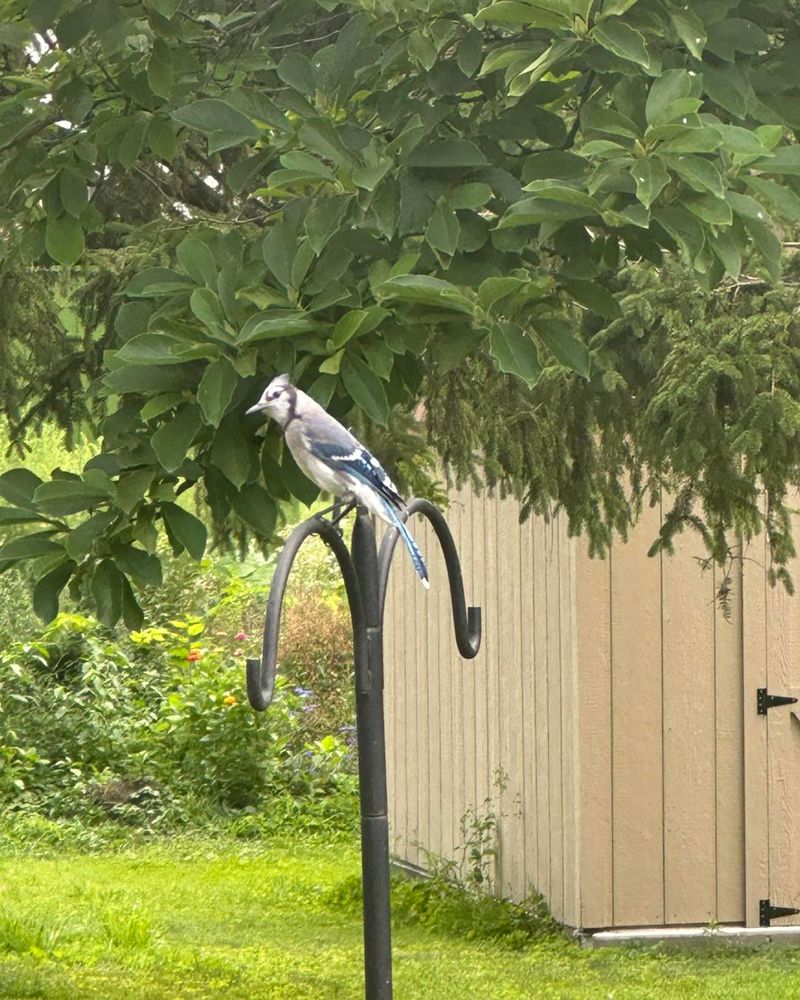
Notice how the same nuthatch keeps landing on that one fence rail before hopping to the feeder. That is not random.
Birds are creatures of habit, and their favorite perches are working spots.
These repeat perches are observation posts. A bird pauses there to check for hawks, judge the feeder traffic, and plan its escape route before committing to a meal.
The perch earns its status by offering good sightlines and a fast exit.
When a bird uses the same rail, branch, or feeder arm again and again, that spot has become part of its mental map of your yard. It has decided that corner is reliable, like you always parking in the same shady spot.
You can support these routines by leaving natural staging perches within about 5 to 10 feet of the feeder. A shrub, a small tree, even a sturdy stake works.
Avoid trimming away every branch near the feeder, since bare feeders with no nearby landing spots feel exposed. The more your birds settle into their habits, the more your yard reads as familiar and safe.
5. Parent Birds Bring Fledglings to the Feeder
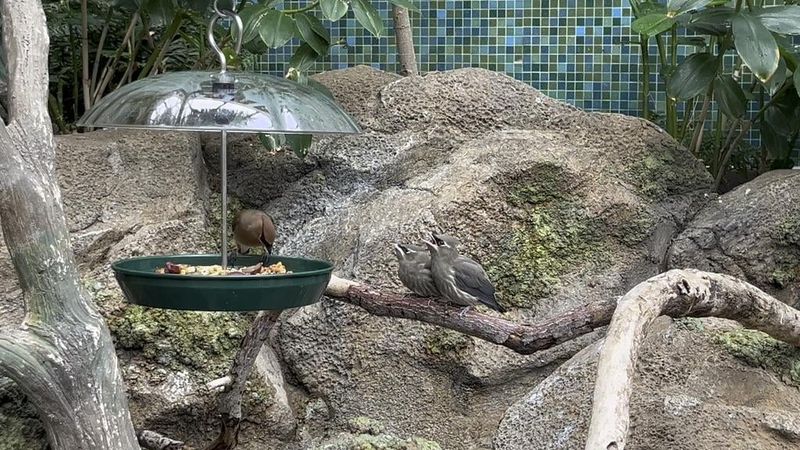
One June morning you spot a scruffy young cardinal fluttering its wings and calling nonstop while an adult stuffs a seed in its mouth. Congratulations, birds nested near your yard and raised their family here.
Fledglings are roughly adult-sized but easy to spot. They wear duller feathers, have shorter tails still growing in, and beg loudly with quivering wings.
The parents are running a classroom, teaching the youngsters where the reliable food is.
Bringing vulnerable young to your feeder is a high trust move. Parents will not lead helpless offspring into a place they consider risky.
That choice says your yard passed the safety test for the most important audience they have.
You will usually see this from mid-spring through much of summer, depending on your region and the species. To help nesting birds nearby, keep offering food during breeding season, provide clean water, and hold off on heavy pruning while nests may be active.
Skip pesticides too, since many parents feed insects to their chicks. When your feeder becomes a family training ground, your sanctuary is genuinely doing its job.
6. Birds are Caching Food
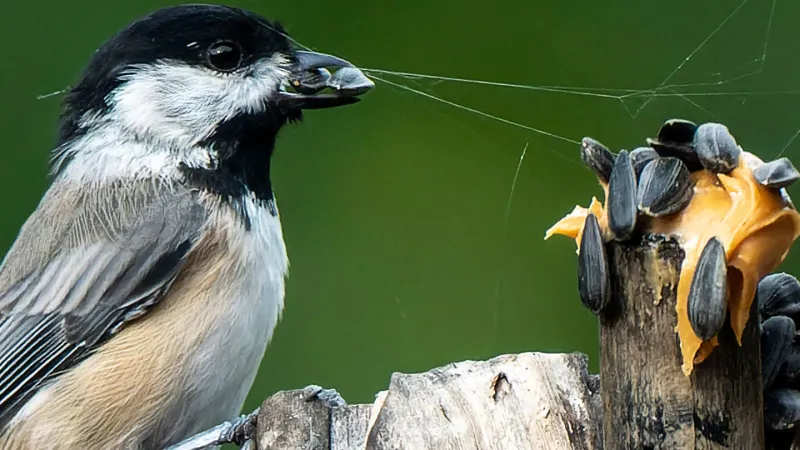
Watch a chickadee grab a seed and dash off, then come right back and do it again. It is not eating all those.
It is stashing them.
Caching means hiding food for later, and it is a vote of long-term confidence in your yard. A bird only bothers to store food where it expects the supply to keep coming.
Your feeder just got promoted to pantry.
Chickadees, nuthatches, titmice, and jays are the classic hoarders, especially in fall and winter. Chickadees typically tuck black oil sunflower seeds into hiding spots within about 100 feet of the feeder.
Nuthatches favor hulled sunflower seeds and often cache them around 45 feet away. These hidden stores can mean survival when snow buries natural food.
You can feed this instinct by offering black oil sunflower and hulled sunflower seeds, both packed with fat and easy to carry. Keep bark-covered trees and shrubs nearby, since those crevices make ideal hiding spots.
When birds start banking your seeds for a hard week ahead, they have named your yard a dependable resource.
7. Birds are Dust Bathing or Water Bathing Nearby
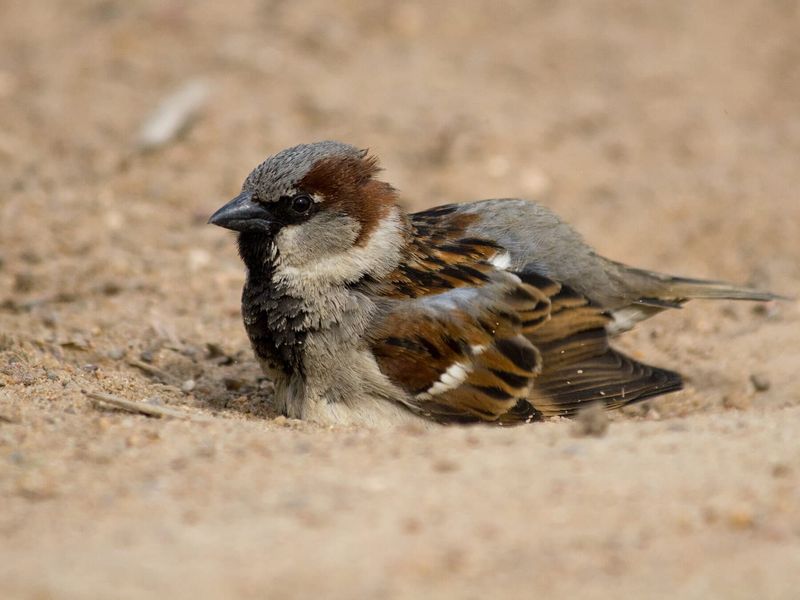
A bird mid-bath is a bird with its guard down. Wet feathers slow a getaway, so birds only bathe where they feel truly safe.
That makes frequent bathing one of the strongest trust signals you will see. Water baths keep feathers healthy, help with insulation and waterproofing, and cool birds off in heat.
Offer a wide, shallow basin about 1 to 2 inches deep, keep it clean, and set it near cover.
Dust bathing is the dry version. Sparrows, robins, towhees, and quail roll in loose soil or sand to soak up excess feather oil and knock loose parasites like mites and lice.
A good dust spot is a warm, part-shaded patch of mixed sand and topsoil.
Both behaviors mean birds are doing their private grooming right in front of you, comfortable enough to be briefly clumsy. Refresh the birdbath every day or two to avoid mosquitoes, and place it within a few feet of a shrub for quick cover.
When your yard becomes their spa, you have built something they trust with their whole day.
8. Multiple Bird Species Feed Together
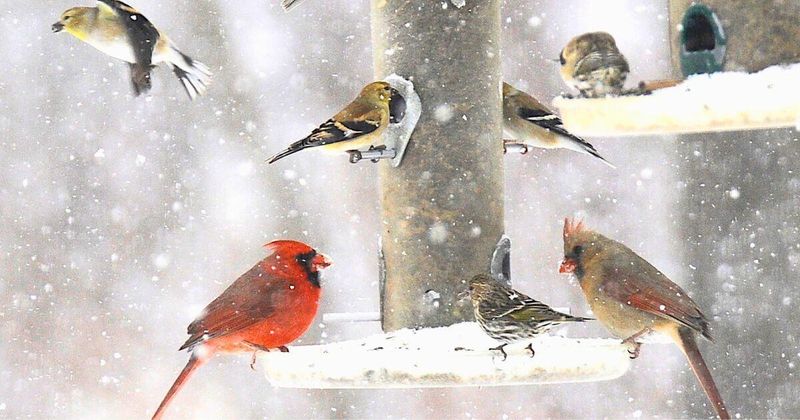
Some winter mornings the feeder looks like a small town meeting. A chickadee, a downy woodpecker, a kinglet, and a nuthatch all working the same tree without much squabbling.
That mix is called a mixed-species feeding flock, and it forms most often in winter. Different birds team up loosely because more eyes and ears spot predators faster.
Safety in numbers, spread across several species.
They even help each other eat. A woodpecker hammering bark can stir up insects that a chickadee then grabs.
One bird’s search becomes another bird’s dinner, like neighbors sharing a good tip over the fence.
Seeing several species share your space peacefully points to a rich, varied habitat with enough food and cover to go around. You can invite this variety by offering a few food types, such as sunflower seed, suet, and nyjer, and by planting layers of trees and shrubs at different heights.
More diversity in your yard means more diversity at the feeder. A busy, mixed crowd tells you the whole system is thriving.
9. Birds Are Singing and Vocalizing Actively Near the Feeder
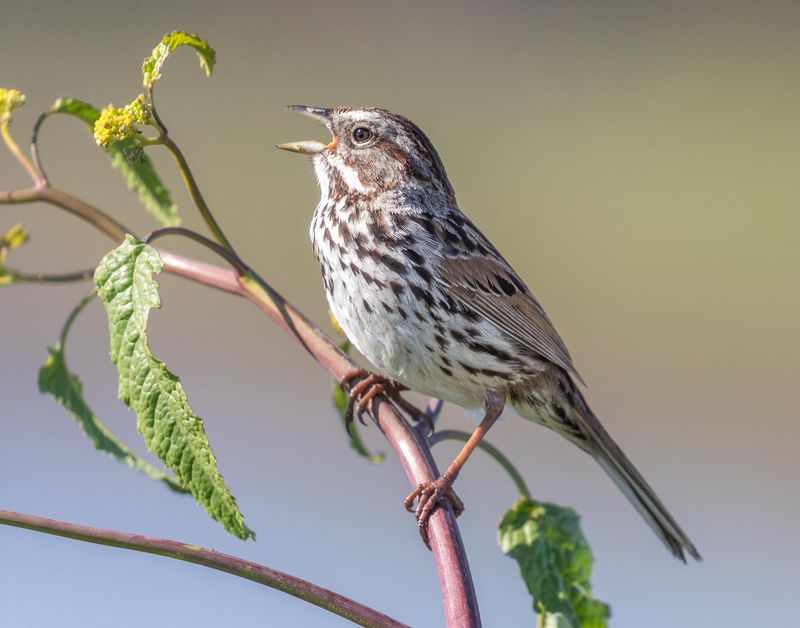
Song near the feeder is not just pretty background noise. It is a status report on your whole yard.
Birds sing to defend territory, attract mates, and announce they are around. Steady daytime song points to healthier plants, available food, and less stress on the local wildlife.
A quiet yard can mean a hungry or nervous one.
Some calls are practical. Birds will vocalize to tip off others that a good food source is open for business, a bit like ringing a dinner bell for the neighborhood.
There is even a trust angle to distance. A bird that sings comfortably from a close perch, rather than keeping you at arm’s length, has decided you are part of the safe scenery.
It is not fleeing your presence, it is performing near it.
To keep the music coming, protect nesting cover, avoid broad pesticide use that wipes out insect food, and offer water alongside seed. Plant a few native flowering shrubs suited to your region to support the bugs songbirds feed their young.
When your mornings fill with song right off the feeder, your yard is broadcasting good health.
10. Birds Use Different Levels of Vegetation for Cover and Foraging
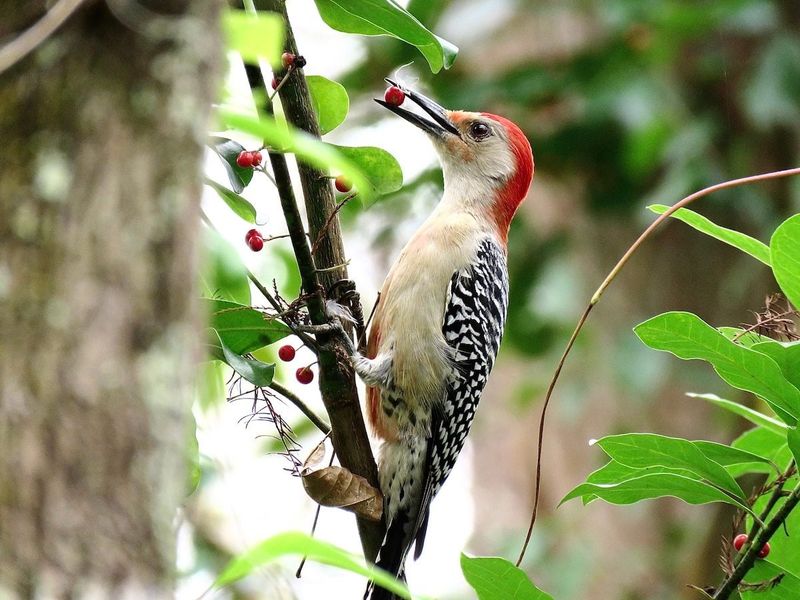
Here is a myth worth busting. A great bird yard is not just a full feeder.
It is a place birds explore top to bottom.
When birds work the treetops, dip into shrubs, then poke through the leaf litter and garden beds, they are treating your yard as a complete habitat, not a snack stop. They are finding natural food beyond the seed you put out.
Cover drives this. Birds feed near protection because it lowers their risk and saves energy on escape.
Research on feeder placement found seed consumption nearly doubled at feeders right against cover compared to those about 7.5 meters, or roughly 25 feet, out in the open. Trees and shrubs act as safe stepping stones between feeders.
Layers matter through the seasons too. Evergreen foliage gives crucial shelter in winter wind and cold.
To build this, plant in tiers. Tall trees, mid-height shrubs, and low ground cover suited to your area, ideally within about 10 feet of the feeder.
When birds use every level of your yard, you have made a full home, not a vending machine.
11. Birds Show Regular and Consistent Visits Across Seasons
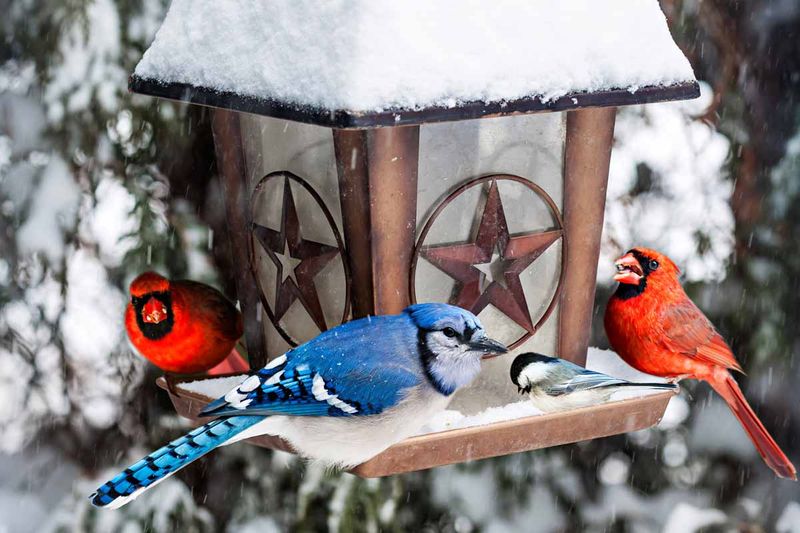
By now you can almost set your watch by them. The same faces show up at the same hours, and they keep returning as the seasons turn.
That rhythm is the quiet proof of everything else on this list.
Birds have sharp memories for food. They learn where your feeder sits, roughly when it gets refilled, and whether the trip is worth repeating.
Reliable spots earn loyal customers, season after season.
New arrivals often start cautious, then relax fast by copying the established regulars. Watching the confident locals feed teaches a newcomer that your yard is safe.
Trust spreads like word of mouth down a good street.
Consistent visits across spring nesting, summer families, fall caching, and winter survival mean your yard is a dependable thread in their year. You can keep it that way with steady refills, fresh water even in cold snaps, and cover that holds up through winter.
If uncertain about winter feeding in your region, your state Cooperative Extension office can point you to local guidance.
When birds fold your yard into their yearly routine, the verdict is already in. You did not just hang a feeder.
You built a sanctuary, and they keep coming back to prove it.