
Native North Carolina Ground Covers That Hold Slopes Better Than Vinca Without Spreading Everywhere
Follow us on Google
You drag your patio chair into the shade of the old oak, the humid North Carolina air still thick even as the sun dips low, and you sigh at that stubborn slope. You know the one.
For years you have been fighting the creep of vinca, keeping it from strangling your azaleas and jumping into your beds. It promises quick cover, but it is a real headache that steals your evenings.
What if you could swap that aggressive invader for a quiet team of native heroes that hold your topsoil without a constant fight? Here are nine hardworking Tar Heel natives that stabilize slopes, add charm, and stay right where you put them.
1. Creeping Phlox Brings A Carpet Of Color To Sunny Slopes
Many Piedmont gardeners carry a grudge from a past groundcover that covered fast, then decided to conquer the whole yard. You want that sun-baked slope held together, but you do not want another turf war on your hands.
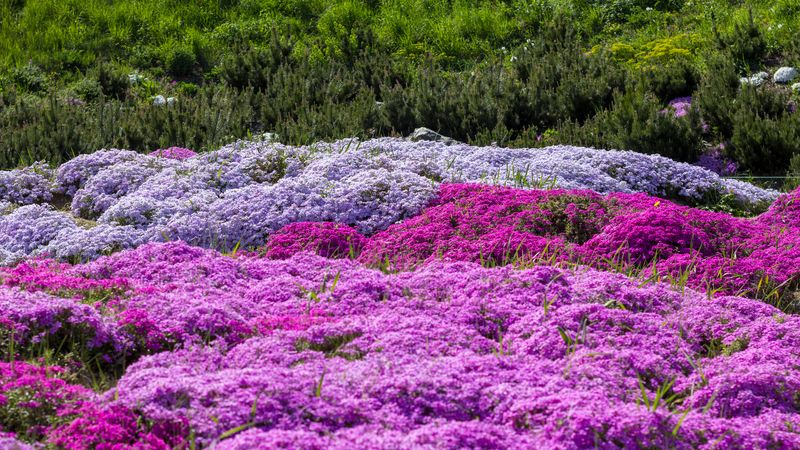
Creeping phlox (Phlox stolonifera) turns that worry into a sigh of relief. It sends out runners, what gardeners call stolons, that travel along the soil and root as they go.
The result is a dense mat of semi-evergreen leaves that keeps rain from carrying your red clay downhill. From late March through May in central North Carolina, that mat erupts in star-shaped flowers of lavender, blue, pink, and white.
To put this quiet hero to work, pick a spot with at least six hours of sun, though it forgives some afternoon shade during our muggy stretches. Plant plugs 10 to 12 inches apart so they can knit together.
It likes moist, well-drained soil but turns fairly drought tolerant once settled in.
Water regularly that first year, especially during dry spells, and after that it asks for far less than a thirsty lawn. The payoff is a slope transformed and no runaway plant to chase.
Genuinely, it is one of the easiest wins for full sun.
2. Foamflower Offers Delicate Beauty To Shaded Woodland Banks
Picture a quiet, shady corner of your mountain or upper Piedmont garden, under some oaks or a dogwood, where the soil stays cool and a little damp. Finding a groundcover for that spot can feel like a riddle.
Sun-lovers sulk there, and you do not want anything that will bully your ferns.
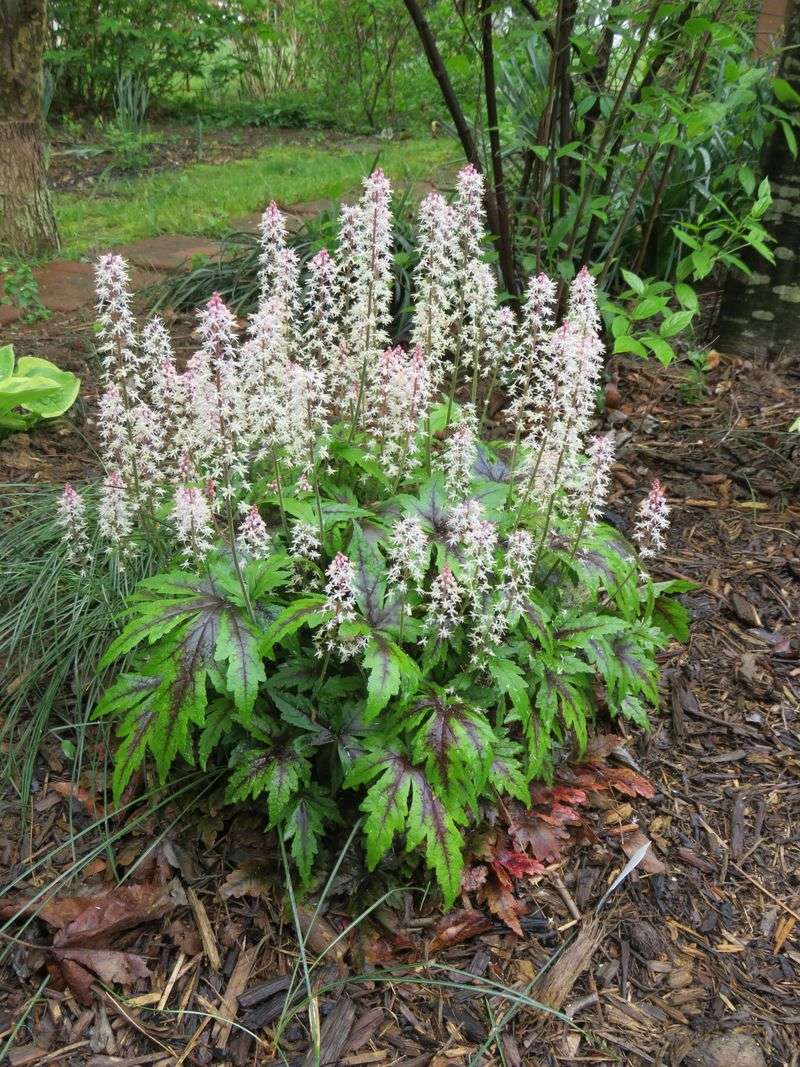
Foamflower (Tiarella cordifolia) steps in as a true woodland gem. It forms soft clumps of heart-shaped leaves, often marked with deep burgundy in cooler weather.
In much of North Carolina the foliage stays semi-evergreen, so you get texture nearly year-round. Come spring, airy spikes of white to pale pink flowers rise up and give the plant its foamy name.
Plant it in dappled to full shade with consistently moist, humus-rich soil, the kind found in rich forest coves. It does not shrug off drought, so water during dry stretches, especially in the sandy Coastal Plain where soil dries fast.
Space plants about 12 inches apart and let them fill in. Some cultivars run by stolons, others stay clumped, so check yours.
It spreads gently, never pushy, and you will feel a small satisfaction watching those blooms return each spring.
3. Canadian Wild Ginger Spreads Slowly For A Lush Shady Carpet
You know the culinary ginger, but North Carolina grows its own native cousin, and it is a fine answer for those stubbornly shady, moist patches where almost nothing looks happy. The trouble in those spots is finding a plant that covers ground without demanding constant fussing or running wild.
Canadian wild ginger (Asarum canadense) answers quietly. It is no aggressive colonizer.
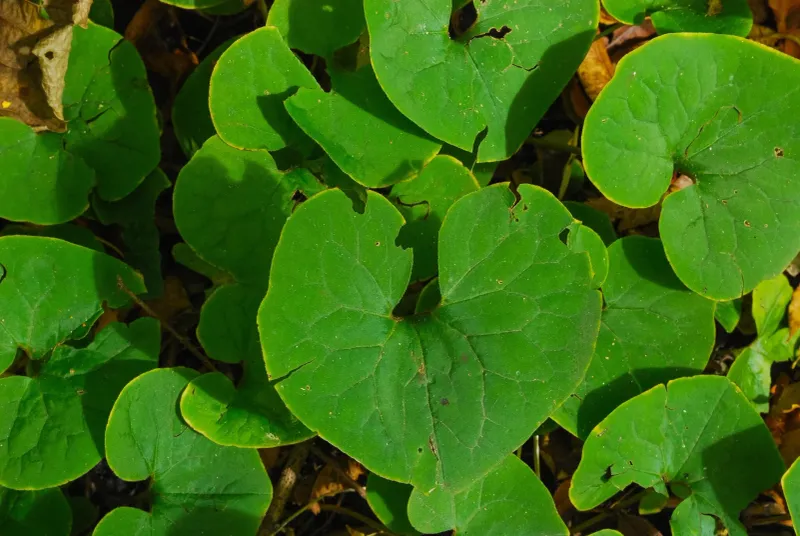
Instead it creeps politely by underground stems, what botanists call rhizomes. The leaves are broad, velvety, and heart-shaped, forming a low mat 6 to 12 inches high.
It drops its foliage in winter, then returns reliably each spring.
Peek beneath the leaves in April or May and you might spot odd bell-shaped, brownish-purple flowers tucked at the base. Those unusual blooms draw tiny native pollinators, so the plant earns its keep beyond good looks.
It thrives in the rich, moist soil of Piedmont and mountain deciduous forests and prefers light to deep shade. Keep it damp during hot summer stretches, though it tolerates short dry spells once rooted.
Space plants about 18 inches apart and let them ease outward. The reward is a calm green backdrop that supports the small, unseen life of your backyard.
4. Allegheny Spurge Is An Evergreen Solution For Difficult Shade
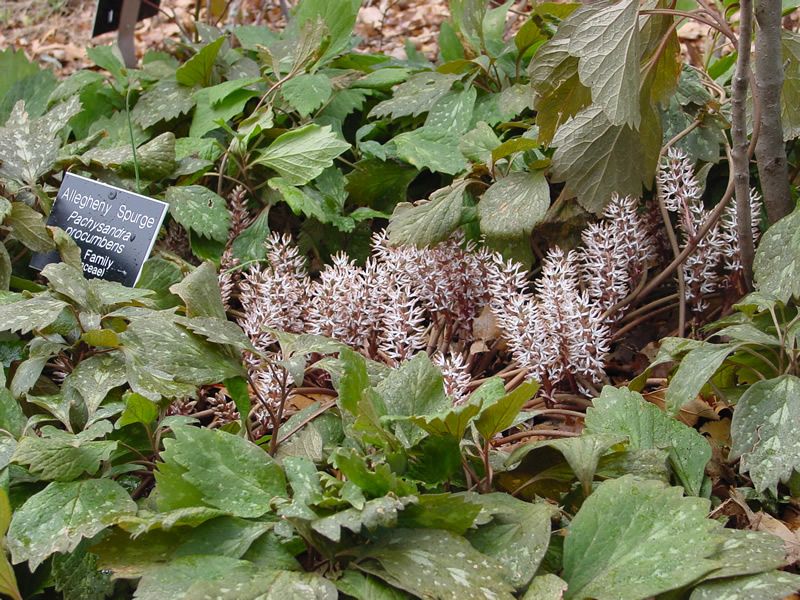
An evergreen groundcover that handles deep shade, holds a slope, and never becomes a menace can feel like chasing a unicorn. Too many popular picks, like Japanese pachysandra or English ivy, are non-native and aggressively invasive.
They cause more grief than they cure.
Allegheny spurge (Pachysandra procumbens) delivers the evergreen cover without the domineering streak. It forms a dense, low mat 6 to 10 inches tall, with bluish-green scalloped leaves that pick up silver mottling in cool weather.
That gives you winter interest when the rest of the bed sleeps. In early spring, short fragrant spikes of white to pinkish flowers appear before the new leaves push out.
It spreads slowly by rhizomes, knitting shady banks together. Give it moist, humus-rich acidic soil with good drainage in part to full shade.
Once established it becomes surprisingly drought tolerant, a real gift under mature trees. Space plants 6 to 12 inches apart, and enjoy that it is also deer resistant.
Here is where it gets tricky. This native is rare in parts of the Piedmont and listed as endangered in at least one North Carolina county, so buy from reputable native nurseries only.
Sourced right, it serves your slope and your conscience.
5. Green-and-Gold Brings Sunny Blooms To Shady Areas
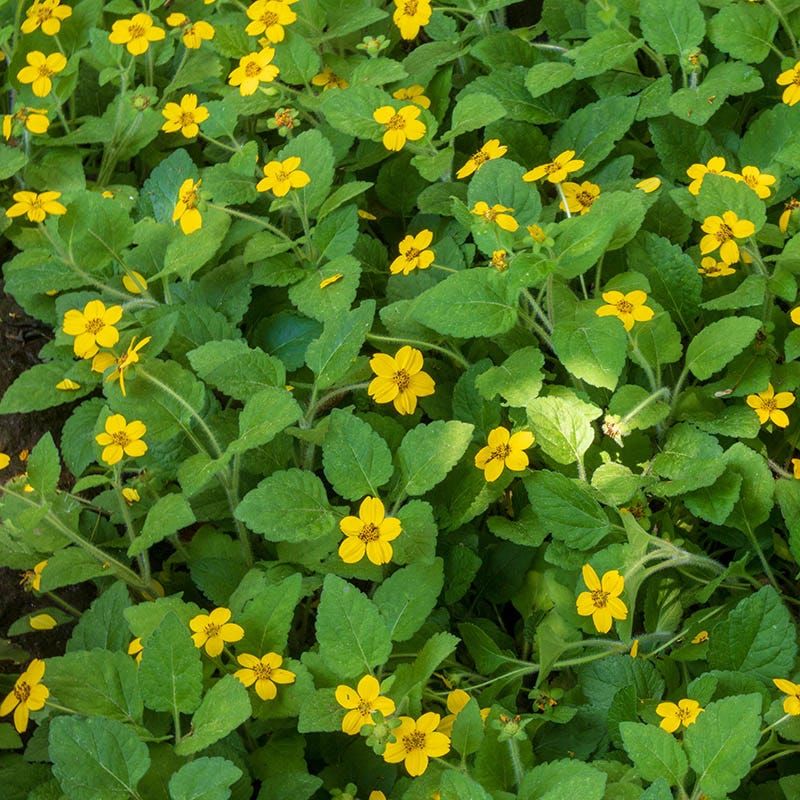
Imagine a little burst of sunshine peeking through the canopy of your Sandhills or Coastal Plain yard, brightening a shady bed with cheerful yellow. Most shade groundcovers give you leaves and nothing else.
Green-and-gold (Chrysogonum virginianum) breaks that rule with a long parade of golden blooms.
It forms an easy-to-manage mat only 1 to 2 inches tall, spreading up to 18 inches wide or more. The yellow, daisy-like flowers, each with five rounded petals, open in March in central North Carolina and can carry through June, sometimes sputtering on into fall.
There are two forms worth knowing. The straight species tends to clump, while Chrysogonum repens, sometimes called Carolina green-and-gold, runs by above-ground stolons into a fuller colony.
Both hold soil well, their fibrous roots stitching the ground together.
It genuinely wants well-drained soil, since wet feet are its undoing. It can take full sun, but the flowers bleach, so partial shade with a few hours of morning sun suits it best.
Space plants 12 to 18 inches apart and let them fill. Once settled, it becomes a low-fuss, weed-smothering carpet that invites early pollinators to the party.
6. Partridgeberry Offers Tiny Berries And Evergreen Appeal
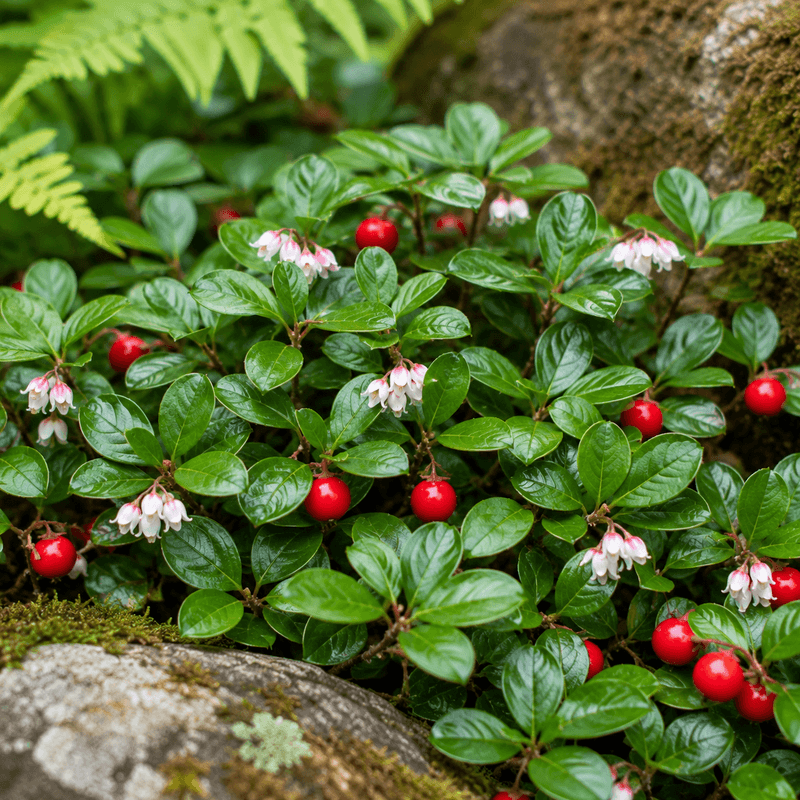
Sometimes the smallest plant makes the biggest difference, especially for a sensitive spot like a gentle slope near a Coastal Plain stream bank or a mossy patch in the mountains. Folks often skip tiny groundcovers, worried they will lose to weeds or fail to hold soil.
Partridgeberry (Mitchella repens) quietly proves them wrong. It is a trailing, woody vine that hugs the ground at just 2 to 3 inches tall.
The leaves are small, rounded, and glossy green with a pale white vein down the center, staying evergreen straight through winter.
From late spring into midsummer, tiny fragrant white or pinkish flowers appear in fused pairs. Those blooms ripen into bright scarlet berries in late summer and fall that often cling on all winter.
Birds and small mammals feed on them, so your slope becomes a quiet pantry.
It favors part to full shade and moist, humus-rich, acidic soil with good drainage, mimicking the rich forests and stream banks where it grows wild across North Carolina. It can be slow to settle and dislikes disturbance, but once rooted it forms a lovely carpet.
Plant plugs or cuttings about 12 inches apart. The result is a genuinely singular groundcover that never threatens to take over.
7. Heuchera Delivers Year-Round Texture For Tricky Spots
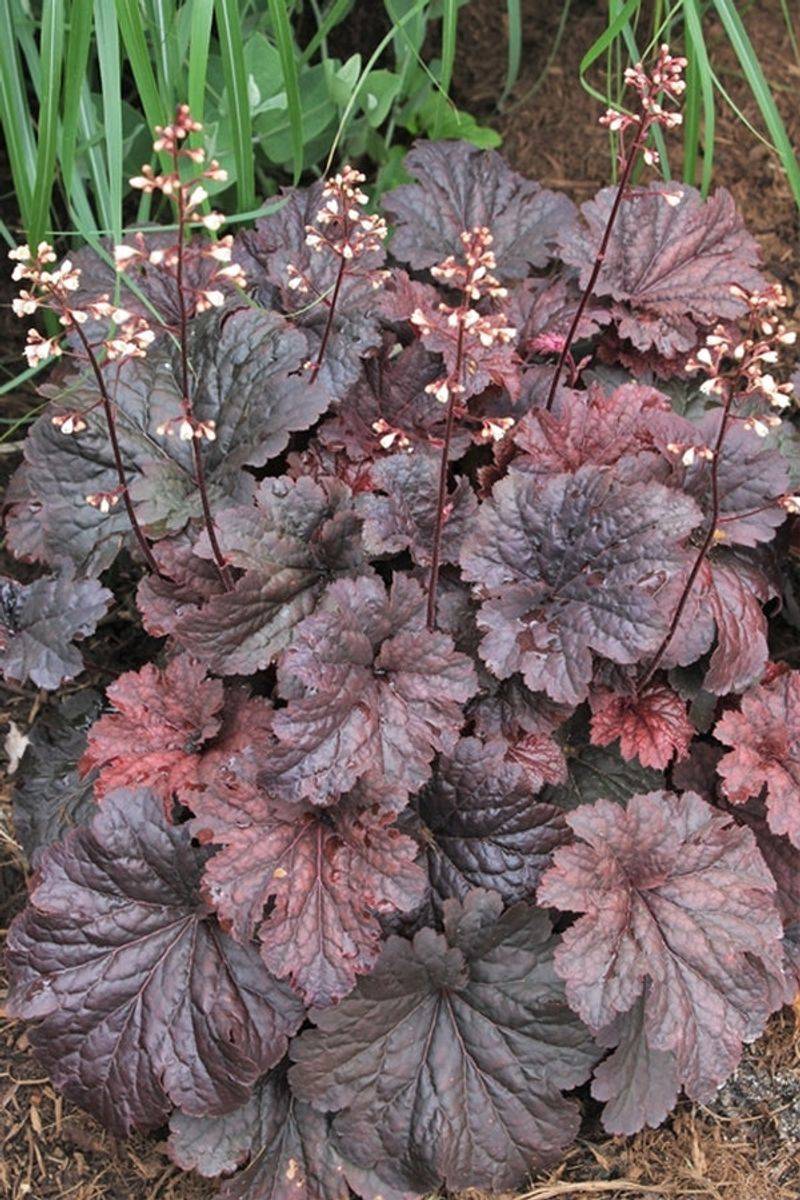
You have a slope that catches some sun but needs relief from brutal afternoon heat, especially in the Piedmont’s red clay. You want more than plain green leaves, yet you still need roots that fight erosion.
Usually that means picking beauty or muscle, not both.
Heuchera, known as alumroot or coral bells (Heuchera americana), gives you both. It is grown mostly for foliage that runs from deep green to rich burgundy, often ruffled and patterned.
The leaves form tidy mounds 12 to 18 inches tall and wide that stay handsome year-round across much of North Carolina.
Its main job is texture, but slender spikes of airy bell-shaped flowers in white, pink, or green rise in spring and early summer. Those blooms pull in butterflies and hummingbirds, and the fibrous roots bind soil when you plant a mass of them.
Set heuchera in part shade or filtered sun, since afternoon relief prevents leaf scorch. It adapts to drought and rocky ground once established, though it prefers moist, well-drained, humus-rich soil.
Space plants 15 to 18 inches apart. Hardy in zones 4 to 9, it fits the whole state, from the mountains at 6a to the coast at 8b.
Quiet competence with a wardrobe change, that is heuchera.
8. Golden Ragwort Fills Damp Slopes Fast And Fights Weeds
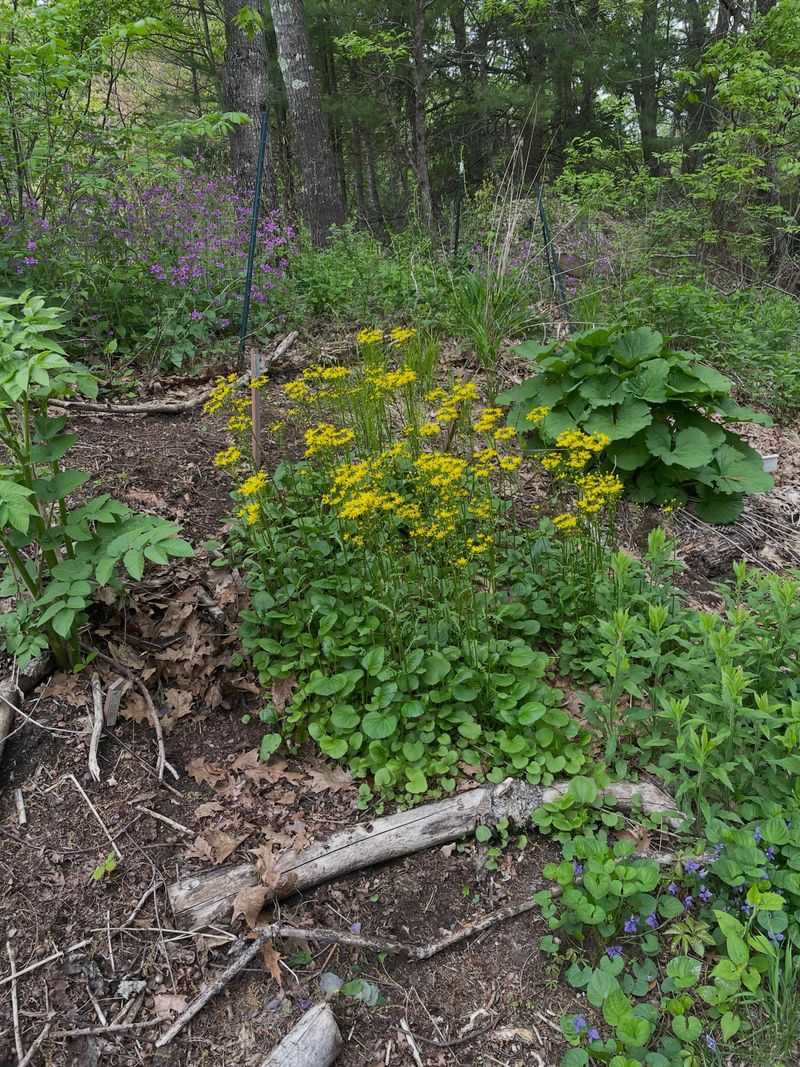
Some slopes stay damp no matter what you plant, holding water after every afternoon storm rolls through. Those wet, part-shade banks defeat a lot of tidy groundcovers.
Golden ragwort (Packera aurea) actually loves them.
It keeps a low rosette of rounded, dark green basal leaves that stay evergreen through most North Carolina winters, so the soil is never left bare. In April and May it throws up 1 to 2 foot stems topped with clusters of bright yellow, daisy-like flowers that light up a shady bank.
What makes it a real workhorse is how it fills in. It spreads by both rhizomes and self-seeding to cover ground quickly, which crowds out weeds before they get a foothold.
That vigor stays polite in the right spot, though in rich moist soil it can wander, so give it a boundary you can mow or edge.
Plant it in part shade to full shade with consistently moist soil, spacing plugs about 12 to 18 inches apart. Those spring blooms feed early native bees when little else is open, according to guidance echoed by NC State Extension on native pollinator plants.
For that soggy problem slope, it may be the quiet hero you have been missing.
9. Woodland Stonecrop Grips Dry Rocky Banks Others Refuse
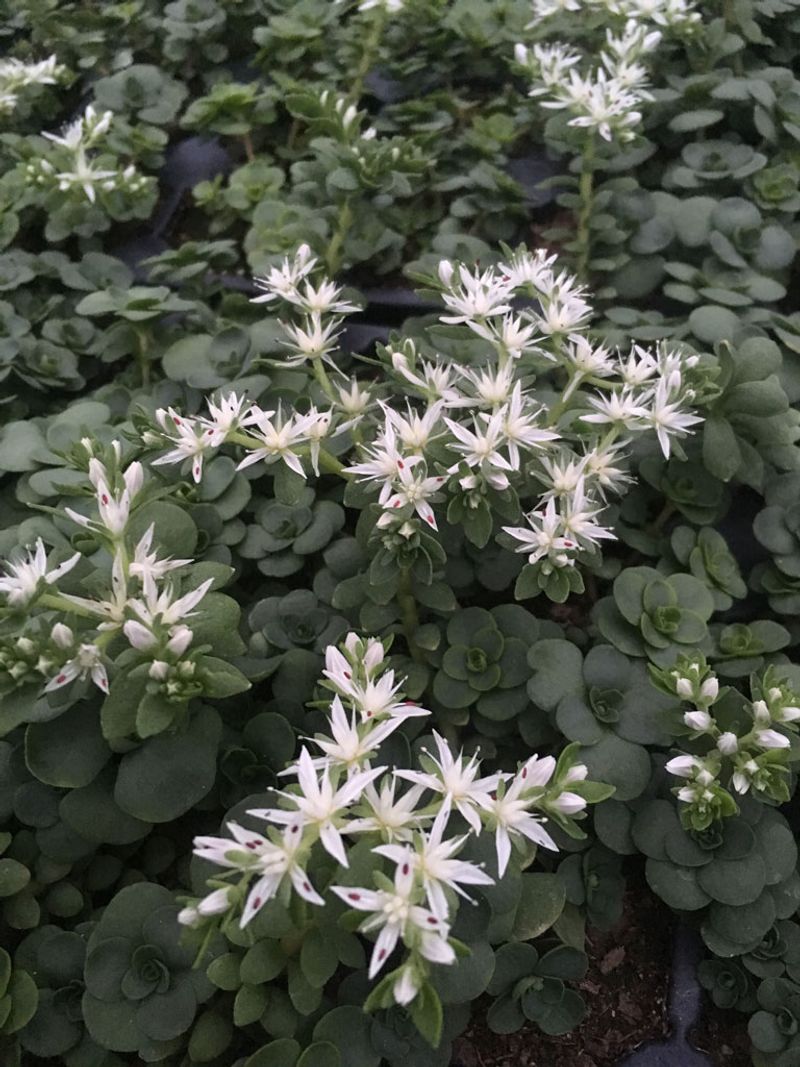
The last tough case is the dry, rocky bank that bakes half the day and drains before you finish watering. Most plants sulk and die there.
Woodland stonecrop (Sedum ternatum) treats it like home.
A native succulent, it stores water in fleshy little leaves arranged in whorls of three, so it shrugs off the lean, gritty soil that stumps other covers. It stays low, around 3 to 6 inches tall, and creeps outward into a soft green mat that clings to slopes and settles between rocks.
In April and May it opens small white star-shaped flowers that hover over the foliage and draw early pollinators. Unlike some non-native sedums sold as filler, this one belongs here and plays fair with your other natives.
Give it part shade to dappled light and sharp drainage, spacing plugs about 8 to 12 inches apart so they can knit together. Once rooted it needs almost no watering, which helps that summer water bill during a muggy North Carolina July.
It is not a magic fix for every bank, but for the dry rocky spot that has beaten you before, it is one honest layer of a broader plan. You end up with a living, low-care carpet and a slope that finally holds.
That is a good feeling to earn.