
Why Pennsylvania Gardeners Are Ripping Out Boxwood And The Tougher Shrubs They Plant Instead
Follow us on Google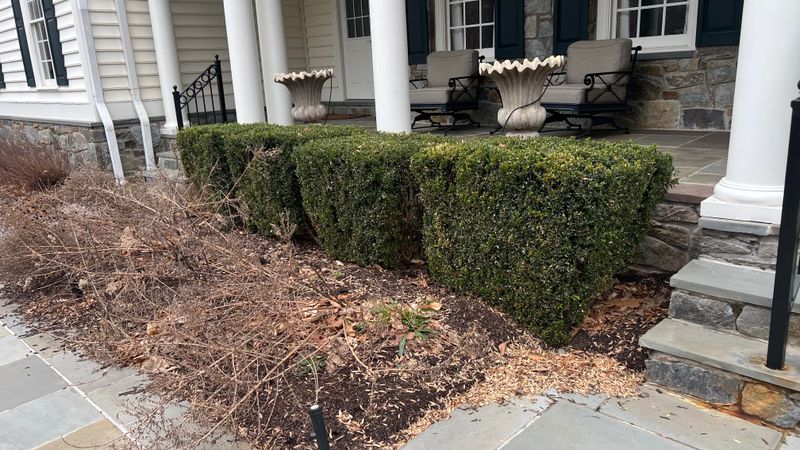
You step into the yard on a crisp autumn morning, hoping to see those neat green boxwoods, and instead you find bare branches and leaves dotted with ugly brown spots.
It is a quiet gut-punch after years of clipping and shaping.
All across Pennsylvania, homeowners are pulling out these old favorites and reaching for something tougher.
The good news is that a whole lineup of resilient, beautiful shrubs is ready to step in, and they ask for far less worry in return.
1. A Hidden Fungal Foe Is Spreading Through Boxwoods
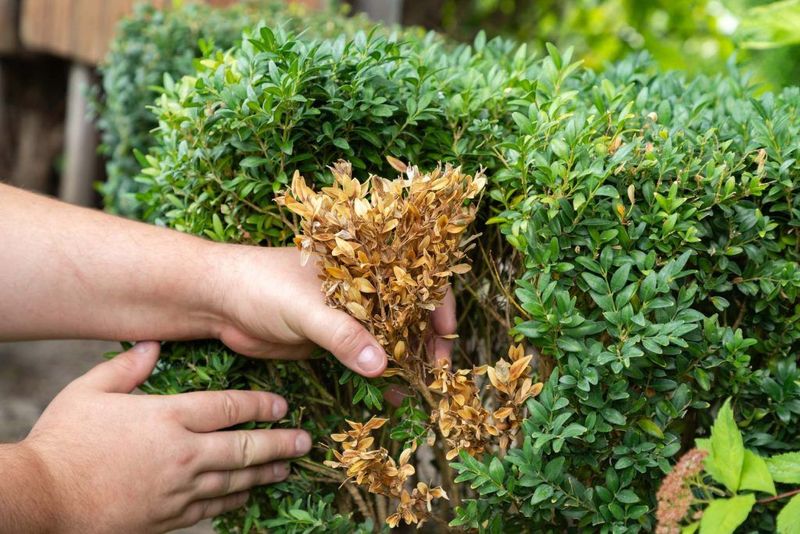
Many southeastern Pennsylvania gardeners are watching meticulously shaped boxwoods (genus Buxus) turn skeletal, and the culprit works in silence.
Boxwood blight, caused by the fungus Calonectria pseudonaviculata, has been a serious concern since it was first detected in Pennsylvania in 2012.
This is not a cosmetic hiccup.
It causes dark reddish-brown leaf spots, black streaking on stems, and can strip a shrub bare in a matter of weeks, especially after a humid stretch.
Imagine years of nurturing gone from green to brown before the next mowing.
The fungus loves warm, moist air, thriving around 77 degrees Fahrenheit, with infections often peaking from July through October when temperatures hold between 64 and 77 degrees.
The spores are sticky and hitch rides on splashing water, wind, tools, clothing, even the paws of a curious dog.
Here is where it gets tricky.
Once blight takes hold, there is no cure, so you are stuck removing and destroying infected plants to stop it from marching down the whole hedge.
What is left behind is an unsightly gap in a landscape you spent seasons planning.
Watching a pristine hedge vanish genuinely stings.
2. Tiny Invaders Are Maiming Leaves Across The State
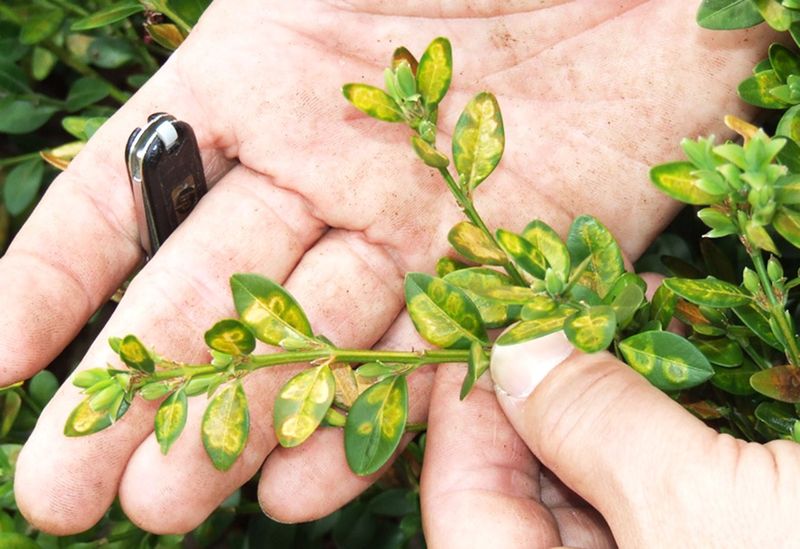
Beyond the silent creep of blight, smaller antagonists are chewing away at Pennsylvania boxwoods with real persistence.
The boxwood leafminer (Monarthropalpus flavus) is considered the most serious insect pest these shrubs face.
Tiny orange-red flies lay eggs inside new spring leaves.
The larvae, little maggots, spend the summer feeding between the upper and lower leaf surfaces, creating blisters and turning leaves yellow before they drop early.
You might notice your once-dense shrub looking sparse and ragged, the work of hidden tunnels.
One generation shows up each year throughout Pennsylvania.
Another unwelcome guest, the boxwood psyllid (Psylla buxi), is common across eastern Pennsylvania, including the Delaware Valley.
These small, cicada-like insects pierce buds and leaves and suck out plant juices, leaving a tell-tale cupping of the foliage.
Psyllids usually do not kill a plant outright, but a heavy infestation weakens it and stunts growth, wrecking that tidy shape you wanted.
The damage tends to show most as summer wears on.
Managing it means vigilance, sometimes carefully timed insecticide, sometimes pruning out affected new growth before the nymphs emerge in spring.
It is genuinely enough to make a gardener feel like a full-time detective.
3. Winters Are Taking A Heavy Toll On Broadleaf Evergreens
Forget pests and disease for a moment.
Pennsylvania’s climate alone can be brutal on boxwoods, with zones running from 5b in the colder northern tier and higher elevations like the Allegheny Plateau to 8a in the warmest southeastern pockets.
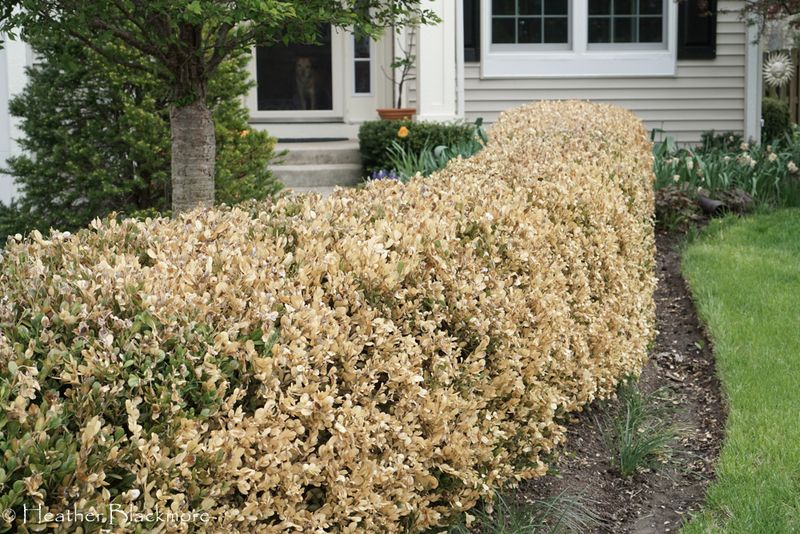
Many boxwoods suffer from what gardeners call winter desiccation.
Harsh winter wind dries out the evergreen leaves faster than the roots can pull moisture from frozen soil.
Leaves turn brown, scorch, and drop, leaving whole sections looking dead.
It is a disheartening sight on a grey January morning, healthy one week, crisp and lifeless the next.
Recent years have piled on a one-two punch, prolonged summer drought followed by hard winters, and that leaves plants badly weakened.
Boxwoods have shallow roots, so they are especially vulnerable to these moisture swings.
Rapid freeze-and-thaw cycles, common in the central valleys and the Poconos, can split bark and damage tissue.
All that stress opens the door to root rot, especially in the clay-heavy soils common across central and western Pennsylvania, or around Philadelphia where drainage runs poor.
Homeowners are realizing that leaning on boxwoods here often means a losing fight against the weather.
A backyard cookout feels less relaxing when half the hedge looks ragged.
4. Inkberry Holly Steps Up As A Near-Perfect Native Lookalike
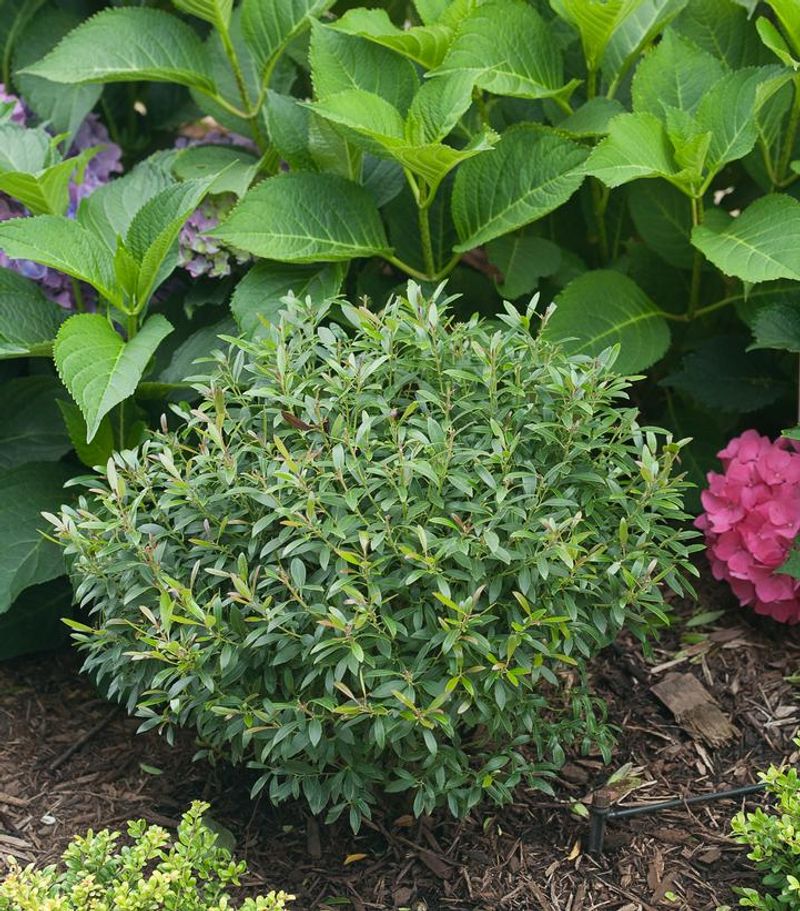
Ready to walk away from the boxwood battle?
Inkberry holly (Ilex glabra) genuinely stands out as a top contender for Pennsylvania yards.
This native evergreen offers the same fine-textured look, with small, glossy green leaves that carry year-round interest.
Unlike traditional hollies, inkberry leaves are soft, not spiny.
It is also a deer-resistant choice, a major bonus in the many parts of Pennsylvania where deer browsing is a constant headache.
Picture a neat, dark green hedge framing your patio, a spot where you relax without checking for chewed foliage every morning.
Inkberry is native to the Northeastern United States and thrives here in USDA zones 5 through 9.
It prefers acidic soil and steady moisture in full sun, though it tolerates part shade just fine.
Modern cultivars like Gem Box and Strongbox were bred to mimic the dense, rounded habit of boxwood, so they slide right into formal hedges or foundation plantings.
They even grow a touch faster, which means that established look arrives sooner.
It needs consistent water in the first year, but after that inkberry proves a resilient, low-maintenance stand-in that actually brings a gardener some relief.
5. Japanese Holly Delivers The Classic Shape With Fewer Headaches
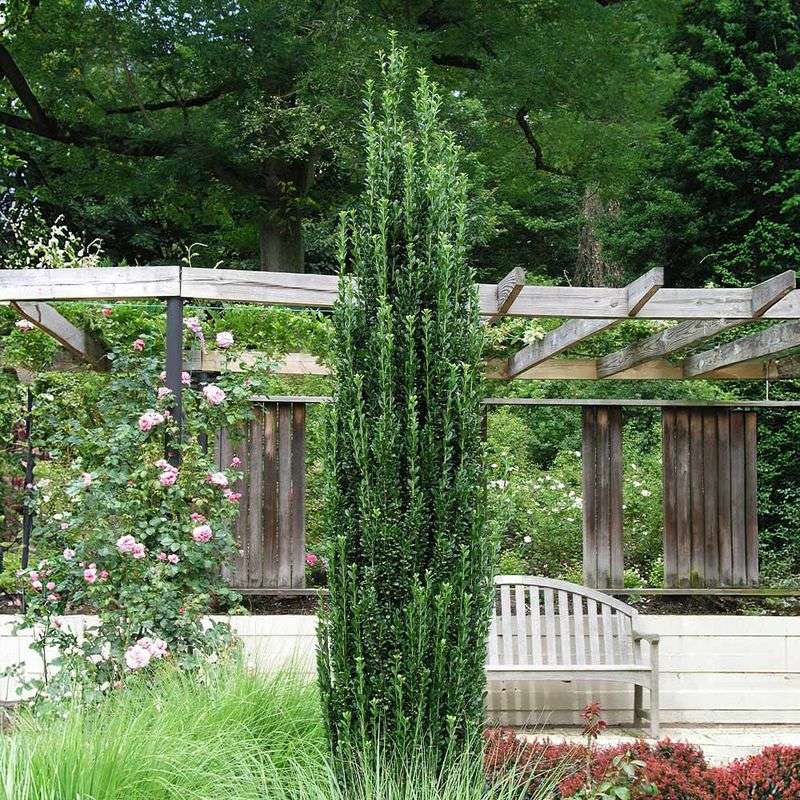
Fans of that classic clipped boxwood form have another strong option in Japanese holly (Ilex crenata).
Its small, rounded, glossy green leaves look remarkably like boxwood foliage, close enough that a passerby would not blink.
Like inkberry, Japanese holly is deer resistant, a practical trait for landscapes in the Laurel Highlands or the Susquehanna Valley where deer visit often.
You can shear it into crisp formal hedges or clean geometric shapes and hold onto that traditional look you love.
It is hardy in USDA zones 5 through 9, which covers most of Pennsylvania.
Plenty of cultivars exist, from mounded forms to columnar types like Sky Pencil, which can reach up to 10 feet tall while staying only 3 feet wide, perfect for tight spaces or a vertical accent.
It prefers well-drained soil but is generally adaptable, and it dodges the severe diseases that plague boxwood.
Choosing Japanese holly lets you enjoy that structured, formal beauty without the constant patrol for blight or leafminers.
It is a simple swap that can genuinely cut your gardening workload, freeing you to enjoy those first warm porch evenings instead of dreading the next problem.
6. Tougher Natives Offer Diverse Form And Ecological Benefits
Some Pennsylvania gardeners are skipping the boxwood lookalikes entirely and reaching for native shrubs built for local conditions.
Consider the toughness of native viburnums, such as nannyberry (Viburnum lentago) or northern arrowwood (Viburnum recognitum).
These deciduous shrubs put out white spring flowers, then berries that feed birds and wildlife, turning into busy stops for migrating birds along the Lake Erie region or in the central valleys.
Nannyberry is especially adaptable, growing in sun or shade and shrugging off both dry and wet soils.
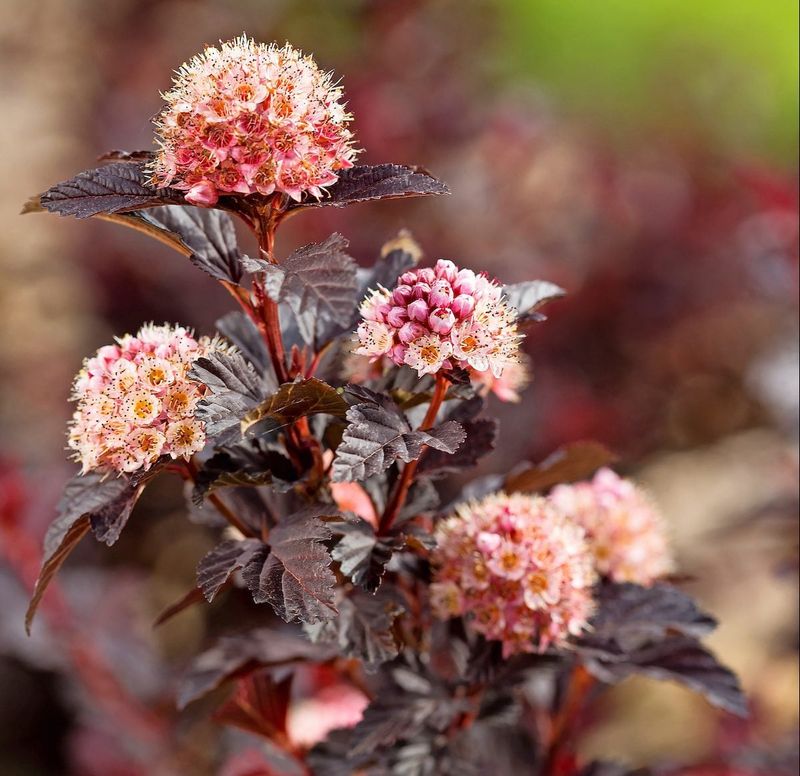
For a four-season show, ninebark (Physocarpus opulifolius) is a tough native worth planting.
Its peeling bark gives winter interest, pink or white flowers bloom in spring, and attractive seed heads follow.
Many cultivars carry striking purple or coppery leaves.
Virginia sweetspire (Itea virginica) offers long, fragrant white flower spikes in early summer, and its leaves blaze red, orange, and burgundy in fall.
It is remarkably adaptable, tolerating drought and occasional flooding, and it performs in sun or part shade.
These natives do not just survive, they thrive, quiet heroes that support local pollinators and birds while asking for very little.
Fall cleanup starts to feel like a celebration instead of a chore.
7. Arborvitae Varieties Provide Hardy Evergreen Structure
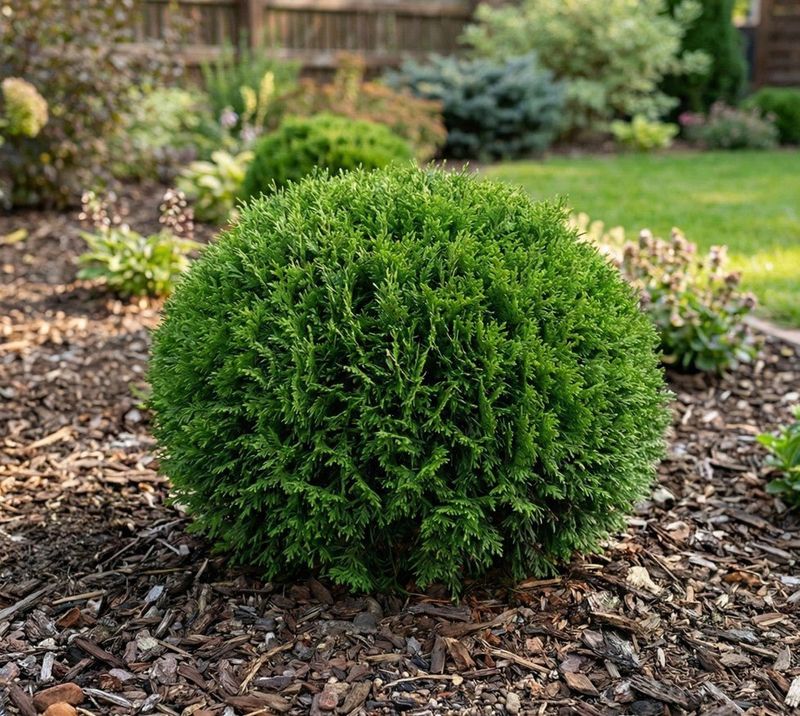
Love the dense evergreen screen that boxwoods gave you?
Certain arborvitae (Thuja occidentalis) varieties offer a robust, often faster-growing alternative that handles Pennsylvania’s climate with grace.
This native conifer comes in many forms, including globe-shaped cultivars that echo the mounded boxwood look.
Dwarf varieties like Tiny Tot stay compact, reaching only 1 to 2 feet tall and wide, ideal for small hedges or accents.
Slightly larger options such as Hetz Midget and Little Giant grow to about 4 feet tall and wide, giving you real structure.
Arborvitae tolerates rough weather, which makes it reliable for colder, higher elevations and even areas that catch lake-effect snow near Erie.
Once established it is low-maintenance and needs little pruning to hold its shape, though some types grow quite large if you leave them alone.
For a different texture, the Tortuga juniper (Juniperus communis) is another compact evergreen with interesting bronze winter color.
Choosing arborvitae means you are genuinely investing in an evergreen that stands up to winter’s bite and summer’s humidity, a sturdy green backdrop for backyard cookouts for years to come.
8. Mountain Laurel Offers Beauty And Deer Resistance
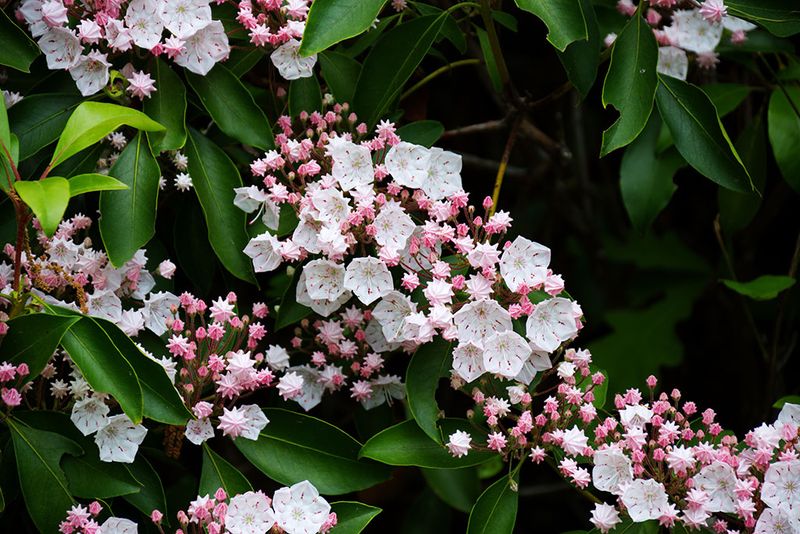
The state flower deserves a spot in this conversation.
Mountain laurel (Kalmia latifolia) is an evergreen shrub many Pennsylvania gardeners are turning to for real beauty and genuine resilience.
Celebrated for showy clusters of pink, white, or red flowers that open in late spring and early summer, it puts on a breathtaking display.
Those intricate blooms draw in beneficial pollinators while keeping unwanted guests at a distance.
Mountain laurel is deer resistant because its waxy leaves contain glycosides, a substance that tastes unpleasant to deer and can even give them a mild reaction.
It adapts across Pennsylvania, from the rocky, acidic soils of the northern tier to the more fertile limestone valleys.
It thrives in partial shade but can take full sun in cooler climates, and it prefers moist, well-drained soil.
The shrub reaches a moderate size, typically 5 to 15 feet tall and wide, which suits foundation plantings, woodland borders, or a standout specimen.
By planting mountain laurel, you are choosing a beautiful, low-maintenance shrub and embracing a piece of Pennsylvania’s natural heritage, a quiet hero that stands strong against the challenges that broke your boxwoods.
9. What Else Actually Helps Keep Shrubs Healthy
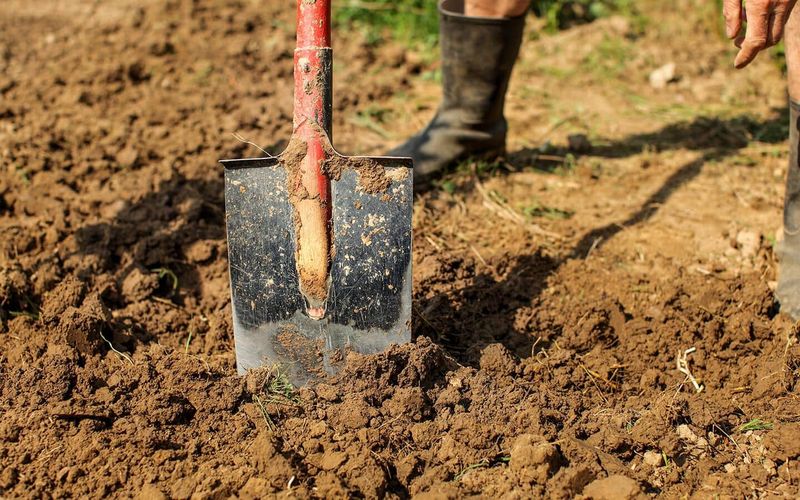
Even the toughest plants do better when you cover the basics, so a few smart habits remain your strongest defense.
Improving soil drainage matters most, especially for shrubs prone to root trouble.
If your soil is heavy clay, work in organic matter or plant in raised beds so water does not sit around the roots.
Watering deserves attention too.
Aim for deep, infrequent watering during dry spells, letting the top few inches of soil dry out between soakings.
Overwatering can be just as harmful as neglect.
Whenever you prune, sanitize your tools, especially after working on anything diseased.
A quick wipe with rubbing alcohol or a bleach-and-water mix, one part bleach to nine parts water, can stop fungal spores from spreading.
For new plantings, pick resistant cultivars when you can, and inspect every shrub carefully before it comes home.
Giving plants adequate spacing improves air circulation, which lowers the humidity around foliage and makes it less welcoming to fungal disease.
Penn State Extension backs these steady, preventive practices over chasing problems after they start.
Pair smart plant choices with this kind of care and you build a resilient landscape, one where you feel capable and a little proud of every green corner, your Pennsylvania backyard turned into a genuinely relaxing retreat.