
Why Carolina Wrens Keep Poking Through Your North Carolina Porch Planters All Day
Follow us on Google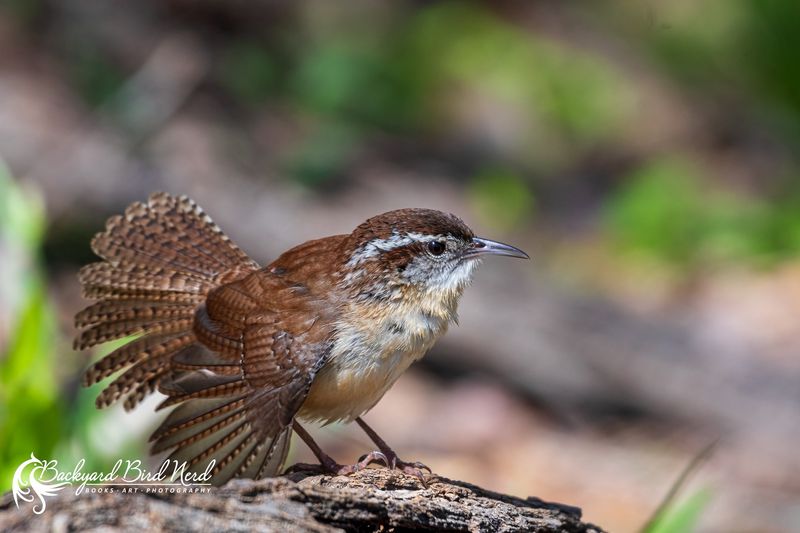
You set your coffee down on the porch rail and notice the same small, rust-colored bird working its way through your fern basket again, bill jabbing into the potting mix like it lost something in there.
That is a Carolina Wren, and it is not confused or randomly restless.
It has found something worth coming back for, and figuring out what that is can tell you a lot about what is actually living in and around your planter.
The Wren Is Hunting, Not Attacking
Most people who spot a Carolina Wren working through a planter assume the bird is after seeds or just being nosy.
What it is actually doing is hunting, and it is very good at it.
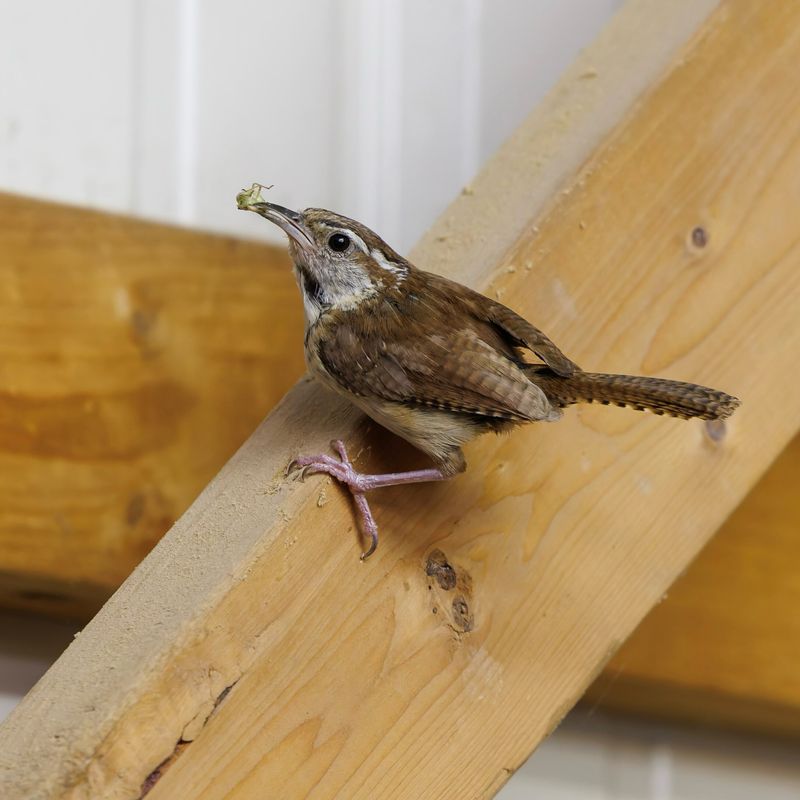
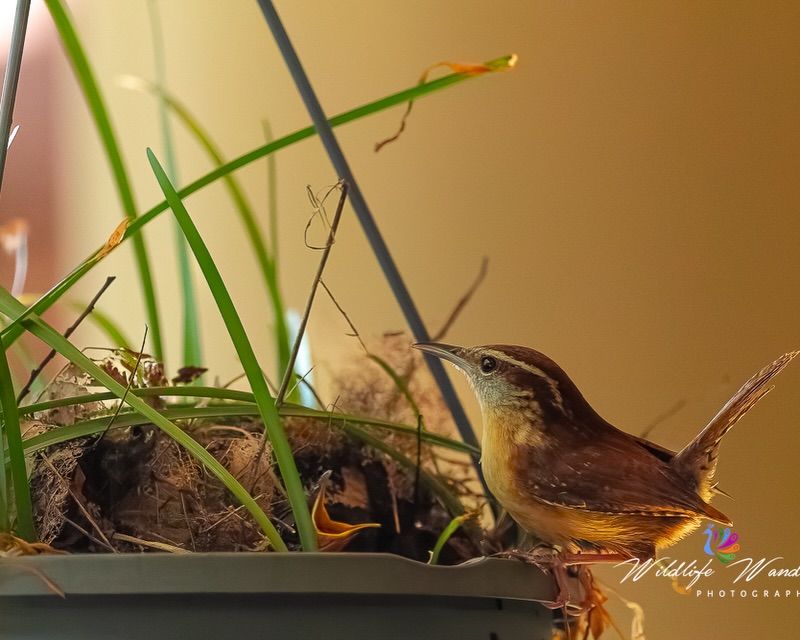
Carolina Wrens are built for exactly this kind of work: a curved, pointed bill for probing into tight spaces, short legs for hopping close to the ground, and a restless energy that keeps them moving from stem to stem without pause.
According to Cornell Lab of Ornithology’s Carolina Wren life history, the species forages in low vegetation, leaf litter, tangled stems, bark crevices, and decaying plant material.
Its documented prey list is long and genuinely varied: caterpillars, beetles, leafhoppers, grasshoppers, crickets, cockroaches, spiders, millipedes, and snails all show up in what researchers have found these birds eating.
The Audubon field guide entry for the Carolina Wren reinforces that picture, describing a bird that scours every layer of low habitat with focused intensity.
Watch the movement for a moment and you will see the pattern.
Quick hop, bill jab, quick hop, bill jab.
The bird is not chewing leaves or pulling at roots.
It is checking every crevice, every rolled leaf edge, every gap between stem and soil where a small invertebrate might be hiding.
That behavior alone cannot tell you which creature the wren found.
It could be a caterpillar, a spider, a cricket sheltering in the drainage hole, or something else entirely.
What it does tell you is that something in or around that pot caught the bird’s attention, and that is worth knowing.
Why A Porch Planter Draws The Search
A porch planter is not just a pot of dirt with a plant in it.
From a foraging bird’s point of view, it is a compact bundle of everything worth investigating: dense foliage that shelters insects, moist potting mix that supports small larvae, leaf litter accumulating at the soil surface, and nearby porch edges, cracks, and mulch that offer even more hiding places.
As NC State Extension’s guide to plants grown in containers notes, moist potting mix can support fungus gnat larvae, and pots that stay consistently overwatered can attract shore flies as well.
Both of those insects are small enough to be easy prey, and both are common in containers that get watered frequently during North Carolina’s warm, humid summers.
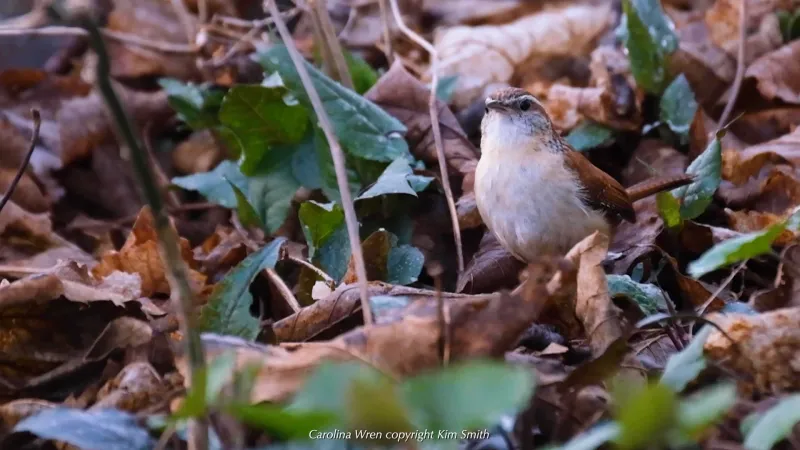
The Cornell Lab’s Carolina Wren life history confirms that the species actively searches leaf litter and decaying plant material, which means even a small mat of dead leaves sitting on the soil surface of your planter qualifies as prime habitat.
The planter is not producing insects on its own.
It is simply gathering the right conditions into one accessible spot.
Think of it as a rest stop on the bird’s regular route through your yard.
Dense foliage creates shaded hiding places for small invertebrates.
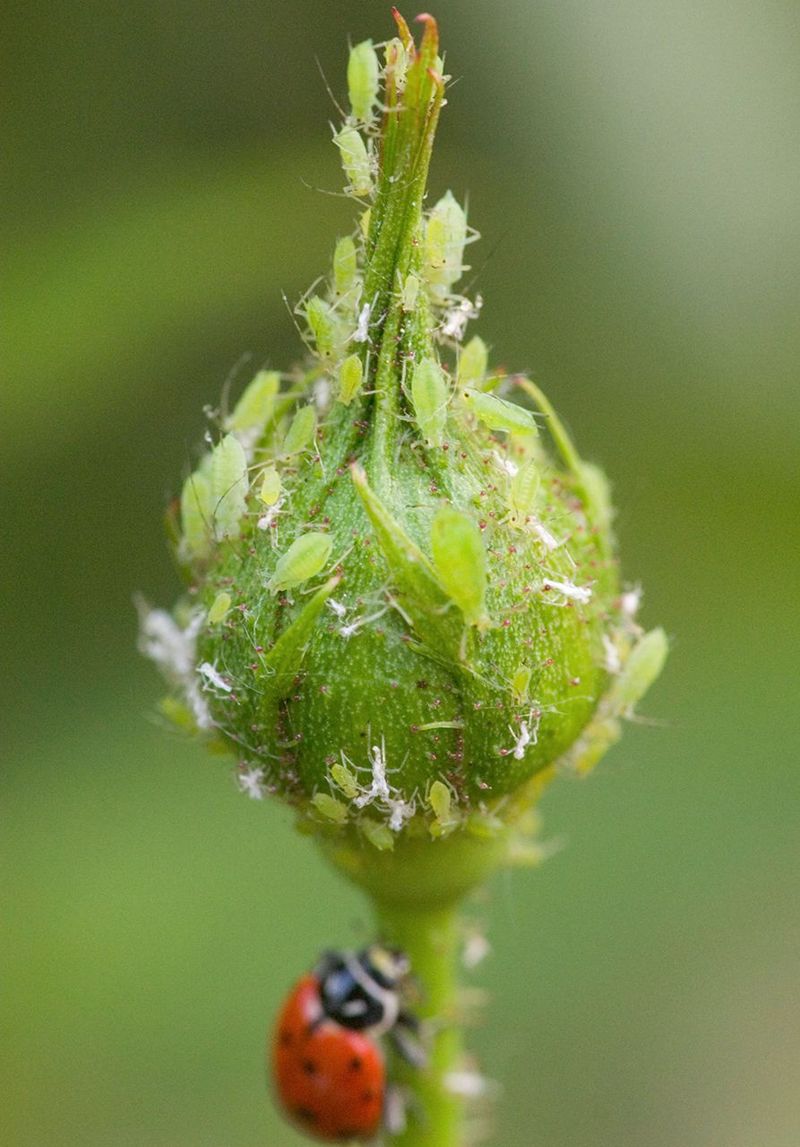
Tender new growth attracts aphids and mites.
Flower buds can shelter small caterpillars.
The soil surface and the gap between pot and saucer add more.
When you add porch edges, cracks in the decking, and nearby mulch or shrubs to that picture, a single planter becomes a surprisingly rich foraging station within just a few square feet.
Repeated Visits Suggest Opportunity, Not A Diagnosis
Seeing the same wren return to your planter three or four times in a morning is easy to read as a sign that something is seriously wrong in the pot.
Here is where it gets tricky: the bird coming back does not tell you which pest is present, how many there are, or whether the planter even has a pest problem at all.
Carolina Wrens may forage alone, in pairs, or in family groups after young leave the nest, according to Cornell Lab’s life history account.
The Audubon field guide describes the species as strongly territorial, with a local pair often working the same patch of yard day after day.
Repeated visits can reflect a dependable food patch, a sheltered route between two parts of the yard, a local territory boundary, or a nest somewhere nearby.
Any one of those explanations fits the same observation.
It also helps to expand your view beyond the pot itself.
A wren that keeps returning may be probing the surrounding patio cracks, the mulch bed beside the steps, the porch soffit, the soil under a nearby shrub, or the leaf litter at the base of your fence.
The planter may be just one stop on a longer circuit.
And the bird’s diet, broad as it is, does not make it a targeted pest-control service.
Research on brown marmorated stink bugs in southeastern orchard systems found low incidence of avian predation on that pest, illustrating how easy it is to overestimate what birds actually eliminate from a given location.
A wren may consume some caterpillars or beetles that you would rather not have in your pot, but it can also eat spiders, millipedes, and other organisms that are neutral or genuinely useful to a healthy yard.
Its presence is one layer of natural pressure, not a guarantee.
Inspect The Pot Before You Treat
A wren keeps returning to your planter.
Good.
Use that as a prompt to actually look at the plant, because the bird just told you that something in or around that container is worth a closer look.
Start at the top and work your way down.
Check the undersides of leaves first.
Aphids cluster there in soft, crowded groups and leave behind a sticky residue called honeydew that may also attract ants.
Look at tender growing tips, where new soft tissue draws mites and small caterpillars.
Inspect flower buds and stems for webbing, which signals spider mites, or for the small bumps of scale insects.
Then look at the potting mix surface for tiny flies hovering just above the soil, which are likely fungus gnats, or for shore flies resting on the container rim.
A visible caterpillar or chewed leaf edge is the most straightforward sign of all.
As NC State Extension’s container plant guidance recommends, frequent scouting and immediate action when pests are found will protect a plant far better than waiting until it declines.
The bird’s activity is not a diagnosis, but your own eyes can be.
For a mild aphid problem on a plant that can handle it, a strong stream of water aimed directly at the insects, including on leaf undersides, is genuinely effective outdoors.
NC State Extension notes that insecticides are rarely warranted for aphids, especially when the infestation is light.
Finding the pest first, rather than treating because a bird showed up, keeps you from applying anything you do not actually need.
Manage Moisture For The Plant
Once a wren keeps returning to a planter, some North Carolina homeowners get the idea that keeping the pot wet will bring the bird back more often.
That logic runs in the wrong direction, and it can genuinely hurt the plant.
Excess moisture in a container creates a cascade of problems.
It can damage or rot roots, encourage fungus gnats to breed in the soggy top layer of potting mix, invite shore flies that thrive on wet organic matter, and promote the kind of disease pressure that weakens plants fast in the Piedmont’s humid summers.
Standing water left in a saucer after watering is also a mosquito-breeding site, and NC State Extension specifically flags saucer water as a root-problem and mosquito-habitat risk.
The correct watering approach is straightforward.
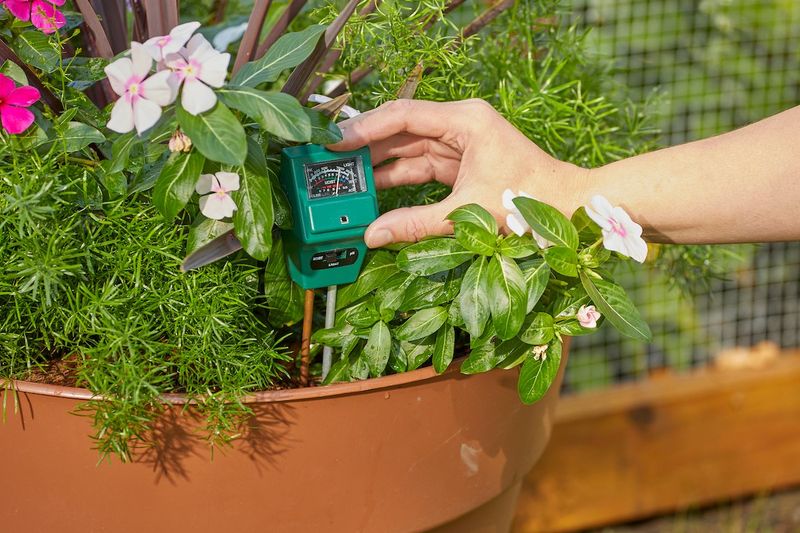
Water the container thoroughly when the top 2 to 3 inches of potting mix feel dry to the touch.
Water until it drains freely from the bottom, then empty the saucer within a few hours.
Do not let the pot sit in collected water overnight.
For a container already dealing with fungus gnats, let the potting mix dry out between waterings as much as the plant can tolerate.
Avoid adding compost to the top of an affected container, since fresh organic material gives gnat larvae more to feed on.
Sticky yellow traps placed near the pot surface catch adult flies and help you gauge whether the population is shrinking.
Managing moisture for the plant’s health, not for the bird’s convenience, is the practical move here.
Support A Living Yard Without Creating A Pest Outbreak
Moving from one planter to the broader yard opens up more useful options.
A yard with more plant variety generally supports more insects across more of the season, which is what actually draws wrens and other insect-eating birds to a property in the first place.
NC State Extension’s guidance on managing backyards for birds explains that diverse plantings create more foliage and a wider range of invertebrates, while dense shrubs, brushy edges, leaf litter, and safe woody cover provide both food and shelter for resident birds.
None of that means neglecting your plants or letting things go wild.
It means thinking about the yard as a system, where a little structure and variety does more for desirable wildlife than a perfectly manicured space with nothing for small creatures to eat or hide in.
A birdbath is optional.
Carolina Wrens do not need one to keep foraging in your yard, and adding one does not guarantee more visits.
If you want to provide one, keep it shallow, about 2 to 3 inches deep, with a rough surface so birds can grip it.
Change the water every 2 to 3 days to prevent mosquito larvae from developing, and clean the basin weekly.
NC State Extension recommends periodic sanitizing with a 1-to-10 bleach-to-water solution, followed by emptying and thorough rinsing before refilling.
Feeders are equally optional.
Cornell Lab’s Carolina Wren overview notes the species may take suet or peanuts, especially in colder weather, but their normal diet is primarily animal matter.
If you use a feeder, clean it at least every 2 to 3 weeks, remove spoiled food promptly, and keep the area beneath it tidy to avoid attracting rodents.
Poking Is Different From Nest Building
Foraging and nest building can look similar at a glance, especially if you are watching through a screen door.
Knowing the difference matters, because the two situations call for very different responses from you.
A wren that is foraging moves with a kind of restless efficiency.
It hops, probes, checks, and moves on.
It may return to the same planter several times, but each visit looks like an active search, not a focused construction project.
According to Cornell Lab’s Carolina Wren life history, the species forages in low vegetation and on the ground, covering a lot of ground in short bursts.
Nest building looks different.
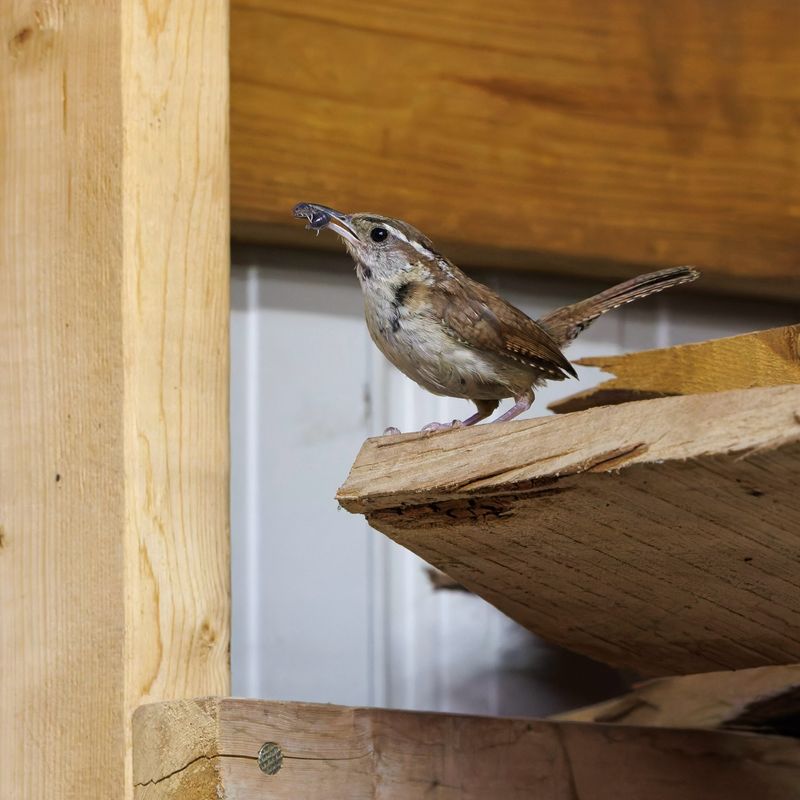
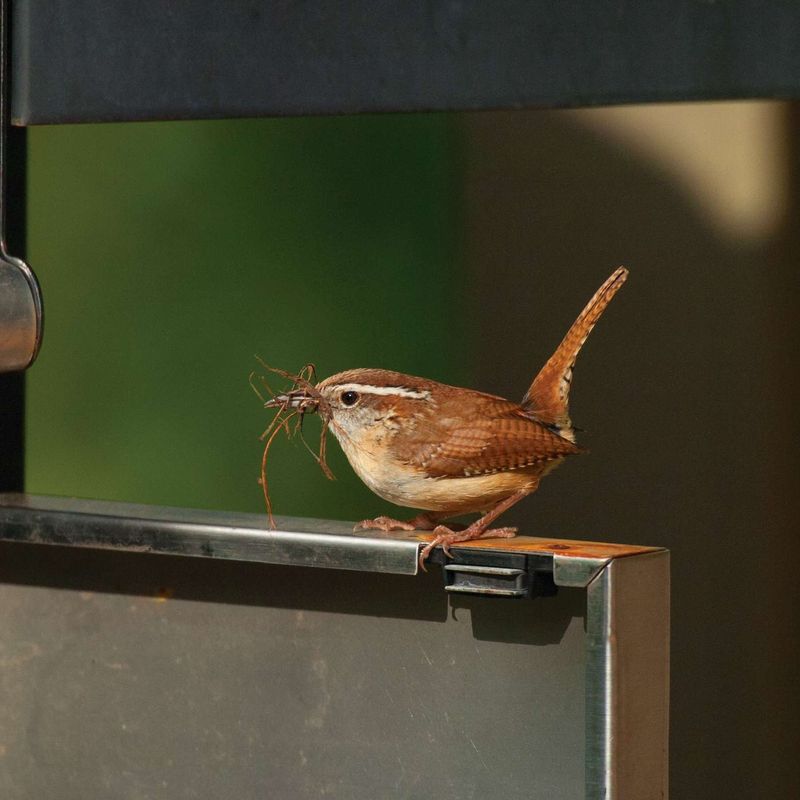
The bird repeatedly carries material, leaves, grass, moss, feathers, strips of bark, or bits of string, toward a specific sheltered spot and does not leave with it.
The Cornell Lab page on top signs that birds are nesting near you describes this kind of repeated, purposeful material-carrying as one of the clearest signals that a nest is being built.
Carolina Wrens are well known for choosing unusual cavities: flowerpots, hanging baskets, mailboxes, open garages, old boots left on a shelf, and similar artificial spaces all show up in documented nesting records.
If you find eggs or chicks in a planter, stop moving the container.
Stop trying to take the nest apart.
The U.S.
Cornell Lab’s guidance on what to do when a bird is nesting near your house recommends minimizing disturbance and postponing nearby work when possible.
The exact legal obligations can depend on the species, whether the nest is active, and applicable federal, state, or local rules.
For a genuine health or safety conflict, contact the U.S.
Fish and Wildlife Service or a permitted wildlife professional rather than handling it yourself.
Let The Wren Be One Useful Layer
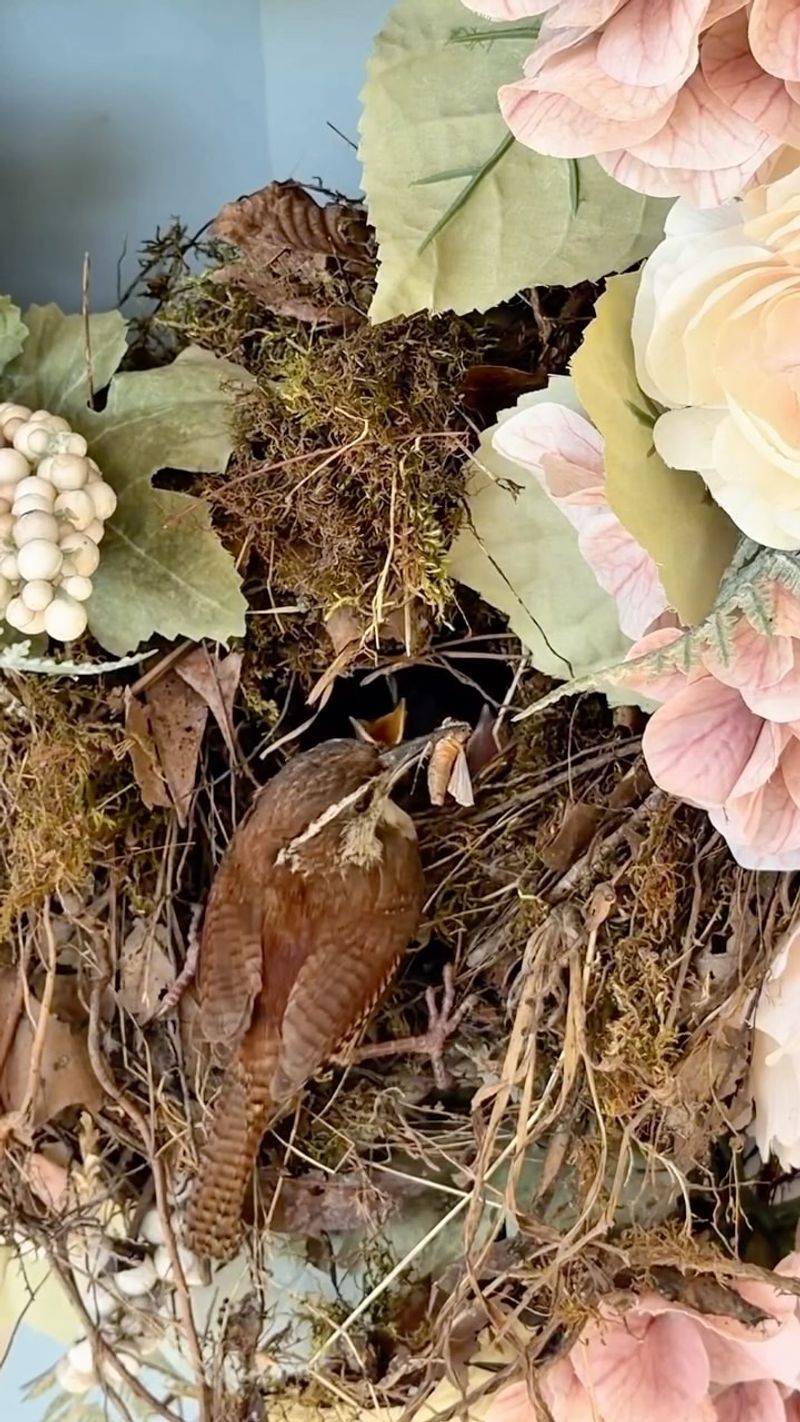
A practical response to a wren that keeps poking through your planter comes down to four steps: watch the bird, inspect the planter and its surroundings, correct any confirmed moisture problem or pest you actually find, and leave an active nest completely alone if one turns up.
The wren may eat some caterpillars, beetles, or other invertebrates you would rather not have in the pot.
It may also eat spiders and other organisms that are neutral or genuinely useful.
Cornell Lab’s Carolina Wren life history documents a broad, opportunistic diet, not a targeted one.
That makes the bird one layer of natural pest pressure in your yard, not a replacement for actually checking the plant.
Do not spray simply because the wren appeared.
Any pesticide decision should be based on finding a confirmed pest at a level that warrants treatment, not on bird activity.
EPA guidance on reducing pesticide impacts on wildlife advises using pesticides only when necessary, treating only the specific area that needs it, and following the product label carefully.
The EPA’s ecological risk assessment factsheet for pesticides notes that birds can be exposed through treated insects, residues on vegetation, drift, runoff, and contaminated water, which means a spray decision affects more than just the target pest.
A busy wren working your planter on a Tuesday morning in the Piedmont is telling you that the pot, the porch, or the surrounding yard holds something accessible and worth coming back for.
That is not a sign the planter is failing.
It is a sign the yard is alive.