
Gardeners Do Not Have Green Thumbs, They Have Dirty Hands And A Quieter Kind Of Peace
Follow us on Google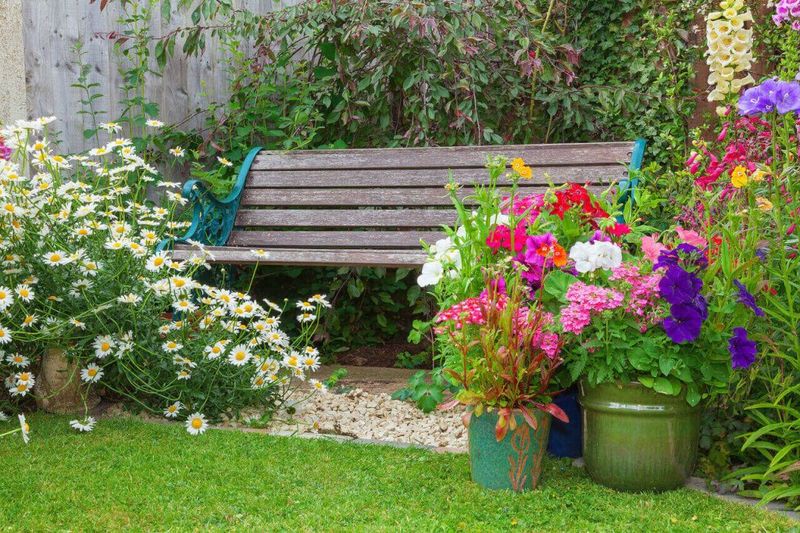
Most people who garden regularly will tell you it has something to do with how they feel afterward, not just what they grew.
There is something about stepping outside, pulling a weed, or pinching back a stem that seems to dial down the noise of a hard day.
Whether that is science, habit, or just a good excuse to put down the phone is worth looking at honestly.
This article explores what the research actually says, what it does not say, and how to try a short garden break without turning it into another item on your to-do list.
The Evidence Supports A Possibility, Not A Ranking
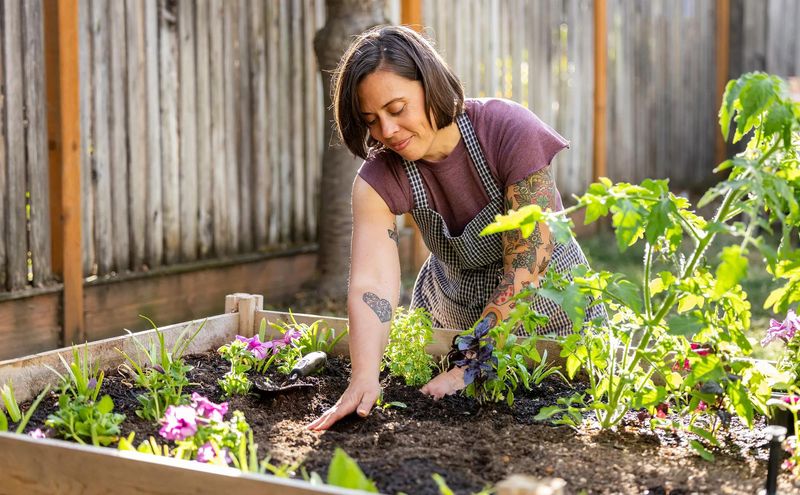
After a long day, a lot of people find themselves standing at the back door, looking out at the garden and feeling pulled toward it.
That pull is real, and it is worth taking seriously.
But the research behind it is more cautious than the popular version of the story.
Systematic reviews and meta-analyses do report that gardening or horticultural interventions may improve wellbeing, reduce perceived stress, and ease depressive symptoms in some people.
A 2023 systematic review of 24 group-based gardening studies found possible improvements in wellbeing and depression, while also flagging heterogeneity, small samples, unclear risk of bias, and mixed results across outcomes.
A 2022 meta-analysis of 18 randomized controlled trials found a medium overall effect for structured horticultural therapy programs, which commonly ran for at least eight sessions and included a mix of indoor and outdoor plant activities.
Those findings matter, but they come with a significant catch.
Most of the studies examine structured group programs or horticultural therapy delivered by trained practitioners, not a homeowner digging alone on a Tuesday evening after a frustrating workday.
The leap from a clinical group program to a solo backyard session is real, and the research does not bridge it cleanly.
No reliable evidence establishes that gardening resets a hard day faster than walking, resting, listening to music, social contact, breathing exercises, or any other break.
A systematic review of nature-based outdoor activities found that effective programs often lasted 8 to 12 weeks with repeated sessions, which is a very different picture from a single afternoon in the yard.
Related research on green space and mental health supports the general idea that time in natural settings may help, without ranking garden work above other options.
The honest, useful claim is this: gardening may offer one short-term reset among several that work for some people some of the time.
That is a quieter promise than the title suggests, and it is the one this article will keep.
What A Garden May Ask Of Your Attention
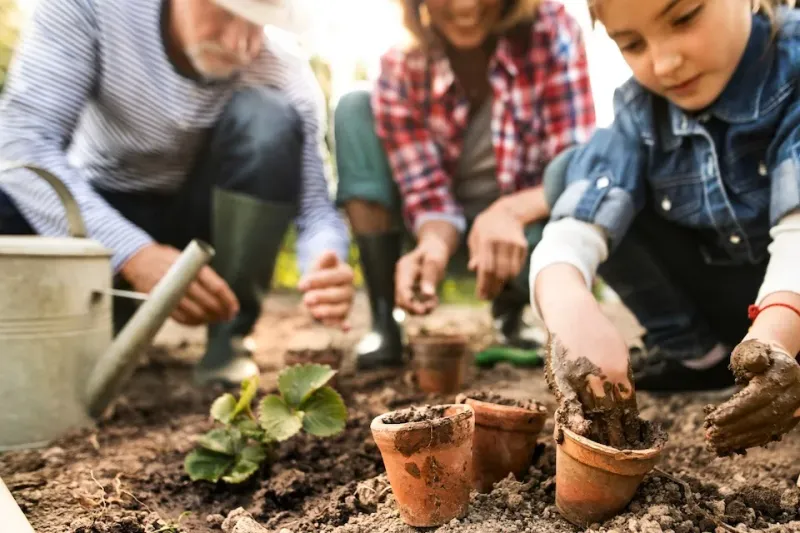
Stepping into a garden after a hard day does not feel like stepping into a laboratory, but a few things tend to happen at once, and researchers have begun to ask why that combination might matter.
Outdoor settings offer changing sensory input: the sound of wind in leaves, the smell of soil after watering, the weight of a tomato ready to pick.
A garden also offers contact with living things that respond slowly and visibly to care, which is a very different feedback loop from a work inbox or a news feed.
Some people find that a task with a clear beginning and a clear end, like harvesting a handful of herbs or deadheading a row of flowers, may give attention something concrete to focus on rather than the mental replay of whatever went wrong earlier.
A systematic review of nature exposure and cognitive outcomes found low-to-moderate improvements in working memory and cognitive flexibility after time in natural environments.
Attention-restoration theory suggests that natural settings may engage what researchers call involuntary attention, the kind that does not require effort, while reducing demands on directed attention, the kind that gets depleted by sustained focus on difficult problems.
That is a plausible explanation for why a garden can feel mentally quieter, but it is a hypothesis drawn from nature-exposure studies, not a settled biological fact about backyard soil or plant contact specifically.
The same 2023 review of group gardening interventions did not isolate which part of the experience drove improvements.
Was it the outdoor air, the physical movement, the visible progress, the social contact, the time away from screens, or the sense of accomplishment?
The honest answer is that researchers do not know, and the mix probably differs from person to person.
So treat these features, the sensory shift, the focused task, the contact with growing things, as plausible parts of a combined experience rather than proven mechanisms.
The garden may be offering your attention a softer job for a while, and that may be enough.
Try One Contained Task
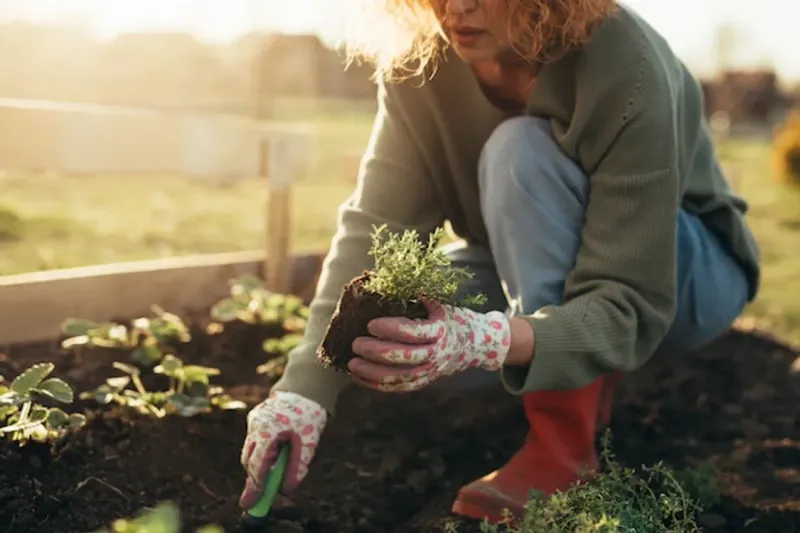
One reason people avoid the garden after a hard day is that it looks like more work.
The beds need weeding, the tomatoes need staking, and the whole thing can feel like swapping one obligation for another.
A different approach is to pick one task that can often fit into roughly 10 to 20 minutes and nothing more.
Watering containers, harvesting a few herbs, deadheading spent flowers, transplanting one small plant, pulling weeds from a single square foot, or turning a small amount of compost are all reasonable candidates.
The goal is not productivity.
The goal is a contained experience with a clear stopping point, which some people find easier to begin precisely because they can see the end from the start.
That timeframe is not a scientifically proven therapeutic dose.
The nature-based outdoor activity review found that effective programs typically ran 8 to 12 weeks, with individual sessions ranging from 20 to 90 minutes.
The horticultural therapy meta-analysis drew on structured, repeated interventions, not a single informal session.
So a 10-to-20-minute garden break is a low-pressure starting point, not a clinically validated prescription.
And the task does not have to involve digging at all.
Sitting on a garden bench and watching bees work the flowers counts.
A slow walk between raised beds counts.
The research does not establish that hands in soil produce better results than eyes on plants or feet on grass, so let the choice match your energy rather than some imagined standard of what a real gardener does.
If you finish the task and feel like doing a second one, that is fine.
If you do not, that is fine too.
The experiment is whether a short, self-chosen pause in a green space changes how the rest of the evening feels for you personally, and only you can run that test.
Movement Helps Only When The Task Fits
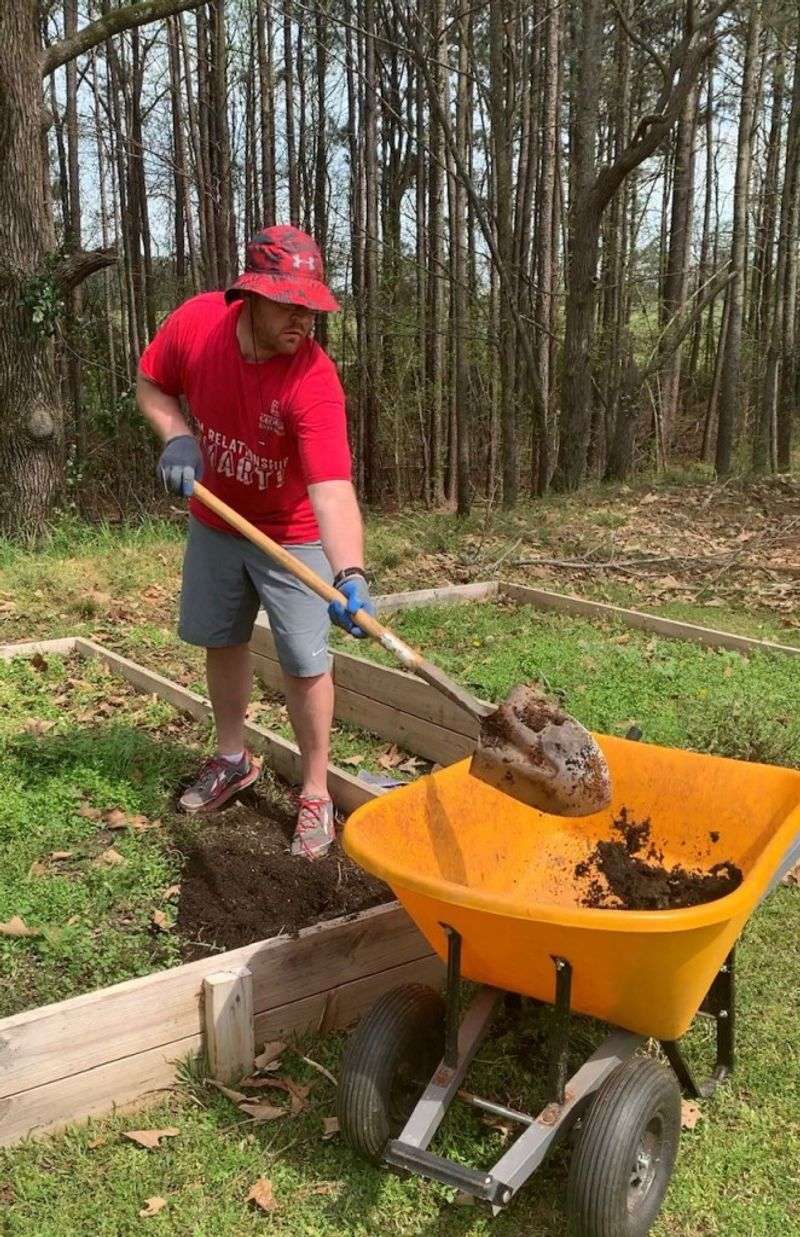
Gardening gets described as gentle exercise so often that the description starts to feel like a rule.
It is not.
The physical demand of a garden session depends heavily on what you are doing, what tools you are using, how hot it is, and what your body can handle that day.
Watering containers, walking between beds, or guiding a lightweight hoe through loose soil may involve light to moderate movement.
Digging a new bed, hauling bags of compost, pushing a loaded cart, or spending an hour on your knees pulling grass from a packed clay border can be genuinely strenuous.
NIOSH guidance on heat illness in landscaping work and Oregon State Extension resources on garden safety both note that repetitive bending, lifting, and heat exposure create real injury and illness risk, even for experienced outdoor workers.
Some observational studies do find associations between gardening and better physical or cardiovascular health outcomes.
Recent research on gardening and physical health and related population-level findings suggest links worth noting.
But observational associations do not prove that gardening caused those outcomes, and a 15-minute weeding session is not a substitute for a complete exercise program.
Movement may give your attention something concrete to focus on during a garden break, but that is a plausible feature of the experience, not an established mechanism.
The practical point is simpler: choose a task whose physical demands match your energy and your body.
Use long-handled tools to reduce bending.
Avoid heavy lifting alone.
Stop before the session tips from restorative into exhausting, because a break that leaves you sore or depleted is not the kind of reset the garden is being asked to provide.
A Garden Can Calm One Person And Burden Another
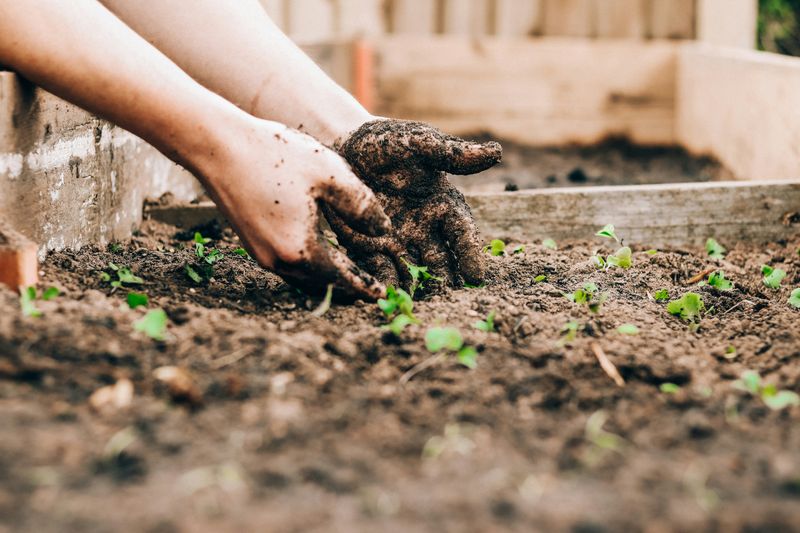
Framing gardening as a universal stress remedy skips over a lot of real situations.
A garden that is struggling, overgrown, or full of failures does not feel like a retreat.
It feels like evidence of another thing you have not kept up with.
Harsh heat, a tick-heavy yard, allergies to pollen or mold, raised beds that are too high or too low for a sore back, limited mobility, or simply a maintenance list that has gotten out of hand can all make a garden session feel burdensome rather than calming.
Some people find digging physically uncomfortable, especially after a long day on their feet.
Others may feel more anxious watching plants fail than they would watching television.
The 2023 systematic review and the 2022 horticultural therapy meta-analysis both report mixed results and note that not all participants experienced benefits.
The research does not show that gardening works for everyone, and it would be misleading to present it that way.
On days when digging sounds like more work, harvesting a ripe pepper, sitting in a chair between the beds, or watering one pot on the porch may be a better fit.
Lower-effort options still involve outdoor time and contact with plants, which are the features most commonly associated with possible benefit.
One distinction worth keeping clear: a short garden break may help some people regulate the stress of an ordinary difficult day.
That is a different thing entirely from treating depression, anxiety disorders, trauma, burnout, or thoughts of self-harm.
Gardening can be one layer of self-care in a life that includes other support.
For persistent or severe symptoms, the appropriate resource is a qualified mental health professional, not a trowel.
Protect Your Hands From Problem Soil
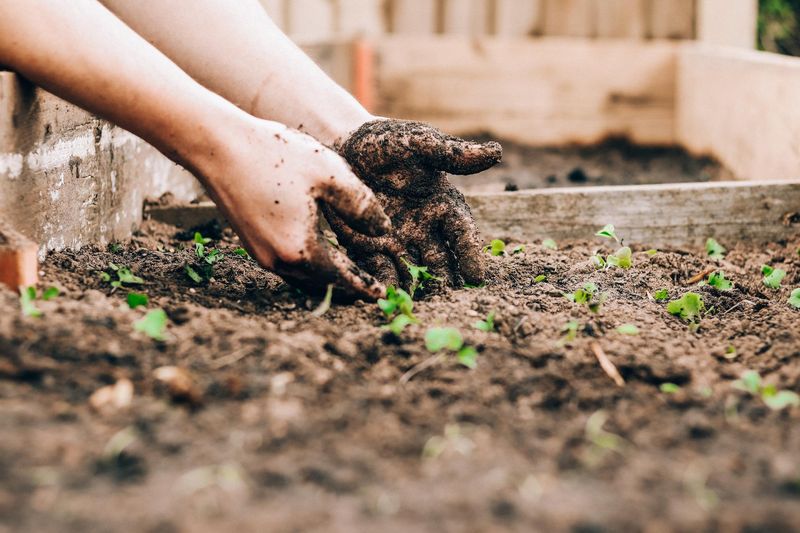
The image of dirty hands as a sign of honest, healthy work is a good one, but soil is not the same in every yard, and some of it carries risks worth knowing about before you dig in.
Soil near older homes, buildings, roads, driveways, industrial sites, and former contaminated properties may contain lead or other pollutants.
Lead got into soil near older structures through decades of leaded paint chips and dust, and near roads and driveways through decades of leaded gasoline exhaust.
EPA guidance on lead in soil explains that exposure can happen through hand-to-mouth contact, swallowing dust, inhaling disturbed soil particles, eating contaminated produce, and tracking soil indoors on shoes and clothing.
Children are especially vulnerable.
Washing hands thoroughly before eating or touching your face after any garden session is a reasonable baseline habit for everyone.
In yards where contamination is plausible, such as homes built before 1978 or properties near busy roads or former industrial use, soil testing before growing food is a prudent step.
EPA’s family lead protection guidance recommends keeping children from playing in bare soil in higher-risk areas, using doormats and removing shoes at the door, and wet-mopping rather than dry-sweeping to reduce dust.
For food gardens in areas with higher lead levels, EPA brownfields and urban agriculture guidance recommends raised beds or containers filled with clean soil, and keeping food gardens at least 10 feet from buildings, roads, and driveways where lead levels tend to be higher.
These are targeted precautions for specific risk situations.
Ordinary backyard soil in areas without a contamination history is not generally dangerous, and none of this should discourage gardening.
It should just encourage a quick wash and, in some yards, a soil test before the first harvest.
Keep Heat And Ticks From Changing The Story
A 20-minute garden break on a cool spring evening and a 20-minute session during a July afternoon in Georgia are not the same experience.
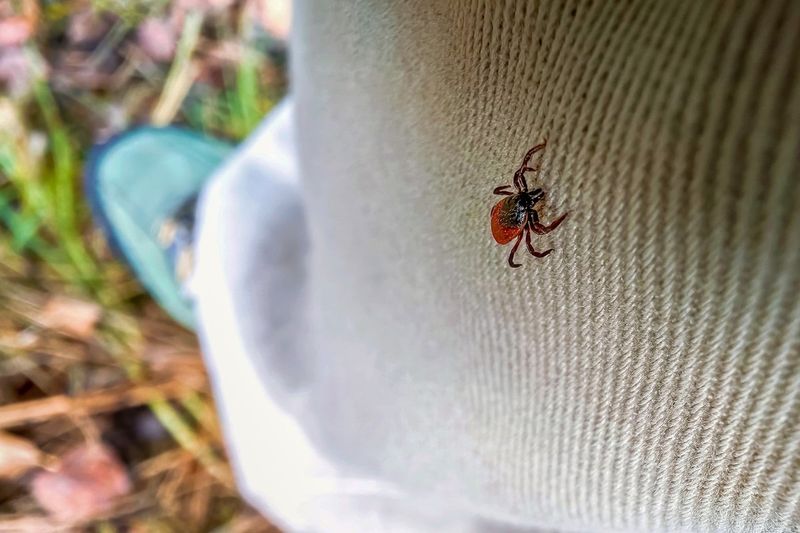
Heat turns a restorative activity into a health risk faster than most people expect, and ticks are a year-round consideration across much of the country.
During hot weather, plan garden work for early morning or late evening when temperatures are lower.
Drink water before you feel thirsty, because thirst is a delayed signal.
Wear a brimmed hat and light, loose clothing, apply sunscreen as directed, and take breaks in shade or air conditioning.
NIOSH heat-stress guidance recommends about 8 ounces of water every 15 to 20 minutes during moderate outdoor activity in the heat, though individual needs vary by body size, humidity, and exertion level.
CDC information on heat and outdoor workers notes that faintness, weakness, nausea, unusual dizziness, and heavy sweating that suddenly stops are warning signs to take seriously.
Move to a cool place and rest.
CDC heat illness guidance identifies confusion, loss of consciousness, seizures, or a very high body temperature as emergency signs requiring a call to 911, not a glass of water and a lie-down.
Tick precautions matter even for a short session.
CDC tick prevention guidance recommends EPA-registered repellents containing DEET, picaridin, IR3535, oil of lemon eucalyptus, para-menthane-diol, or 2-undecanone.
After coming inside, check your body and clothing carefully, shower within two hours when possible, and tumble-dry dry clothing on high heat for at least 10 minutes to kill any ticks that rode in on fabric.
A short garden session can be a genuinely good break.
Whether it is depends on conditions, task selection, and taking these precautions seriously rather than treating them as fine print.
Let The Garden Be An Invitation, Not A Promise
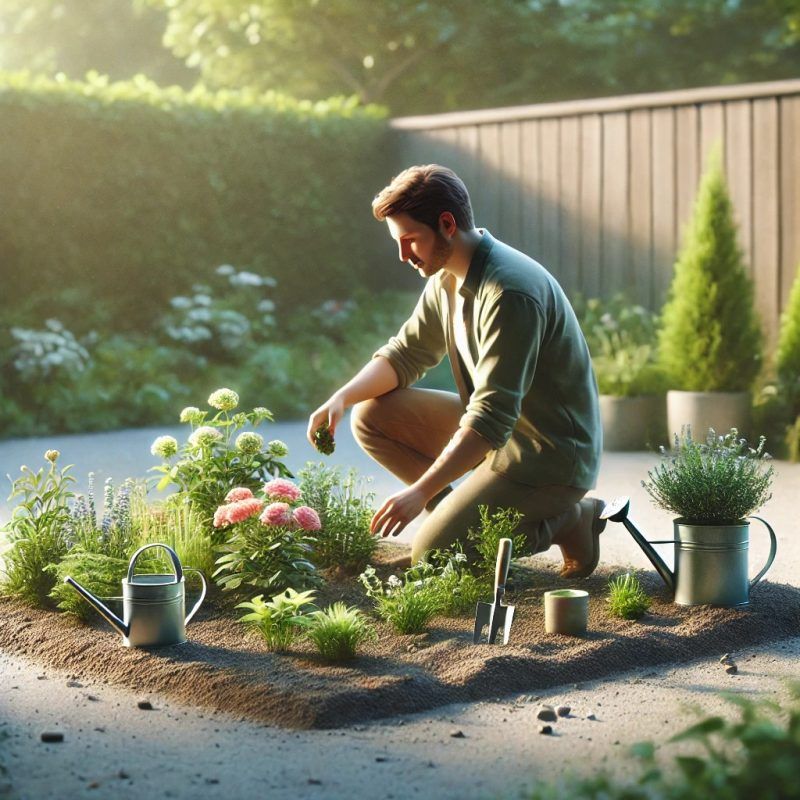
On the next hard day, the garden does not owe you a transformation.
That is actually good news, because it means you can approach it without pressure.
What the research suggests, cautiously and with real limits, is that spending time in a natural setting may support working memory and cognitive flexibility, and that gardening or horticultural activities may be associated with modest improvements in mood and perceived stress for some people in some contexts.
The nature-exposure and cognition review and the 2023 gardening and wellbeing review both support the general possibility without confirming a mechanism, a minimum dose, or a ranking above other breaks.
The possible combination of outdoor air, sensory change, a task with a visible result, and appropriately chosen movement may give your attention a softer place to land for a while.
But the research cannot tell you which of those ingredients matters most for you, or whether any of them will work on a particular evening.
That is something only a personal experiment can begin to answer.
So the invitation is simple.
Choose something plant-centered that fits your energy: watering, harvesting, pruning, walking the beds, or just sitting outside with a cup of something warm.
Keep it short enough that it does not become a chore.
Notice how you feel before and after, without turning that observation into a rule for everyone or a speed claim for every hard day.
The quieter kind of peace the title describes is a felt experience, not a measured outcome.
Some people find it in a garden, some find it elsewhere, and both are fine.
The garden is one door, left open.