
12 White Perennials That Stay Fresh Looking In Georgia Summer Gardens
Follow us on Google
Georgia summers can make many flowers look tired by July, but the right white perennials keep a garden feeling bright, clean, and surprisingly crisp. I love how white blooms lighten heavy heat, soften bold foliage, and still read beautifully at dusk after a long humid day.
The key is choosing plants that can handle sun, humidity, and warm nights without turning into a wilted mess. These thirteen options earn their space by staying attractive when summer really starts pressing down.
Shasta Daisy ‘Becky’
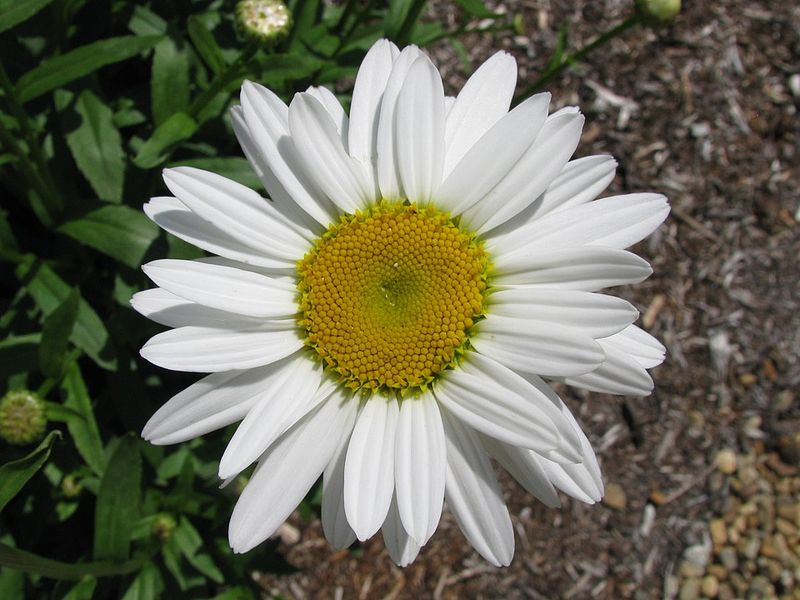
Few white flowers look as cheerful in July as this sturdy Shasta daisy, especially when Georgia heat starts flattening fussier plants. ‘Becky’ stands taller and holds itself together better than many older selections, so you get clear white petals instead of a floppy, weathered look. That dependable posture makes a border seem tidier even when the forecast turns sticky.
Give it full sun, average soil, and enough spacing for airflow, because crowded plants can lose that fresh appearance fast. I like pairing it with blue salvia, ornamental grasses, or dark-leaved shrubs so the blooms read crisp from across the yard.
Deadheading every few days keeps the display moving and prevents the plant from looking spent too early.
Drainage matters more than pampering, so skip soggy spots and avoid overwatering once it settles in. A layer of mulch helps keep roots cooler while reducing splashback that can spot foliage during summer storms.
If your garden needs a white perennial that looks clean, classic, and unbothered through long Southern days, this one usually earns its keep without much drama.
White Coneflower ‘White Swan’
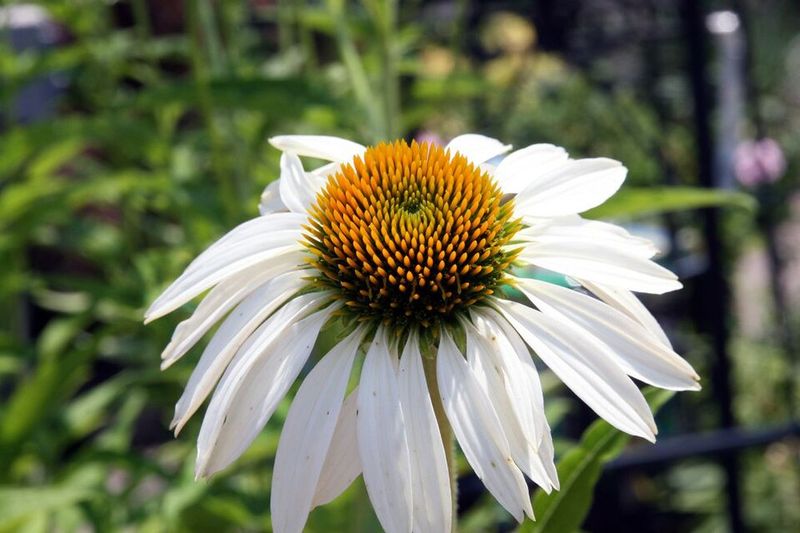
When the air feels heavy and the soil dries quickly between thunderstorms, white coneflower keeps showing up looking composed. ‘White Swan’ has broad white petals around a warm central cone, giving you brightness without that washed-out look some pale flowers get in blazing sun. The plant also brings a relaxed, natural shape that fits cottage beds and pollinator gardens equally well.
Full sun is best, though a little afternoon shade in southern Georgia can help flowers stay cleaner longer. I have found that leaner soil often gives sturdier stems than overly rich beds, which can push soft growth in summer.
Leave enough room between clumps and resist constant watering, because established coneflowers handle dry spells better than soggy roots.
Seed heads extend the season and invite birds, so you do not need to deadhead every bloom unless you want a neater look. Pair it with Russian sage, black-eyed Susans, or deep green shrubs to make the white petals stand out.
For a perennial that feels easy, resilient, and still polished through Georgia heat, this one deserves serious consideration.
Garden Phlox ‘David’
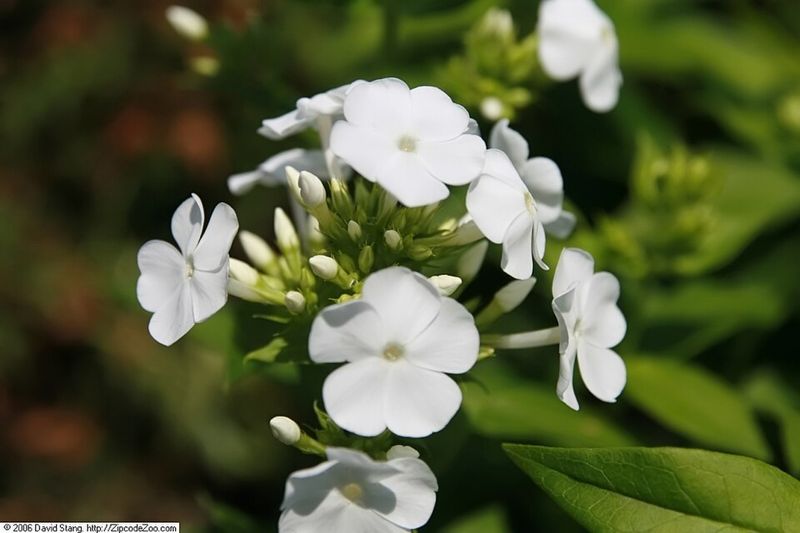
Fragrance matters more in summer than people sometimes realize, and this white garden phlox adds it without sacrificing presence. ‘David’ is known for strong mildew resistance, which is a big reason it stays fresher looking in Georgia than many older phlox varieties. Those tall white flower heads also bring welcome vertical lift when lower plants start blending together visually.
Choose a spot with morning sun, decent air circulation, and soil that stays evenly moist but never swampy. I would not crowd it near dense shrubs or fences, because still humid air invites the kind of foliar issues that make phlox look rough by August.
A deep weekly watering at the base helps much more than frequent shallow sprinkles from overhead.
Its clean white flowers look especially sharp beside purple verbena, blue salvia, or chartreuse foliage. Remove spent clusters to encourage more bloom and keep the plant from slipping into a tired late-summer phase.
If your garden needs a classic perennial that can handle Southern humidity with more grace than expected, ‘David’ remains one of the smartest white choices available.
Gaura ‘Whirling Butterflies’
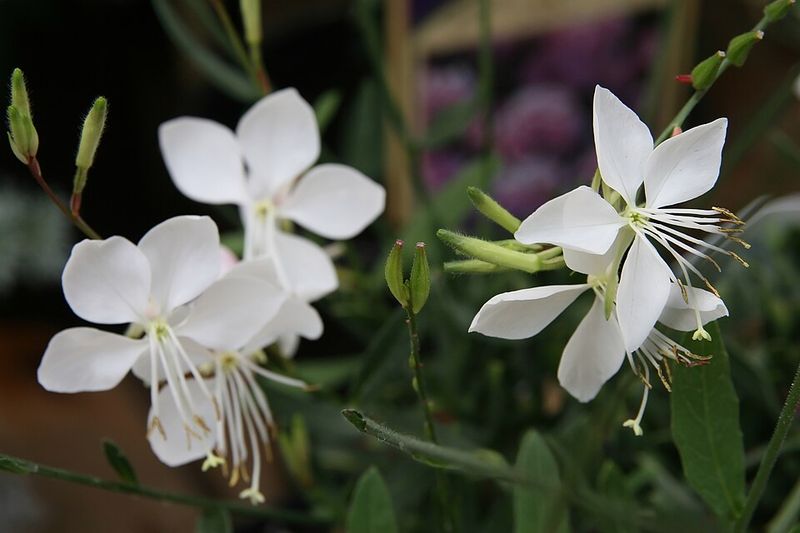
Airy flowers can be surprisingly useful in a hot Georgia garden because they visually cool everything around them. ‘Whirling Butterflies’ gaura sends up wiry stems lined with white blooms that seem to float above the border, so the planting never feels heavy or stale. Even on oppressive days, that movement keeps the bed looking lively instead of tired.
This perennial wants excellent drainage and plenty of sun, and it really does not appreciate rich, wet soil. I think of it as a plant that performs better with restraint than attention, since overwatering or overfeeding often shortens its life and makes growth floppy.
Once established, it handles heat beautifully and bridges gaps between stronger bloom cycles of neighboring plants.
Use it near walkways, mailbox beds, or mixed borders where its fluttering habit can soften more rigid shapes. A quick midsummer trim can refresh the plant if stems start stretching, and new growth usually rebounds fast.
For gardeners who want white flowers without a stiff formal look, gaura brings a light, graceful quality that stays appealing through much of summer.
Daylily ‘Joan Senior’
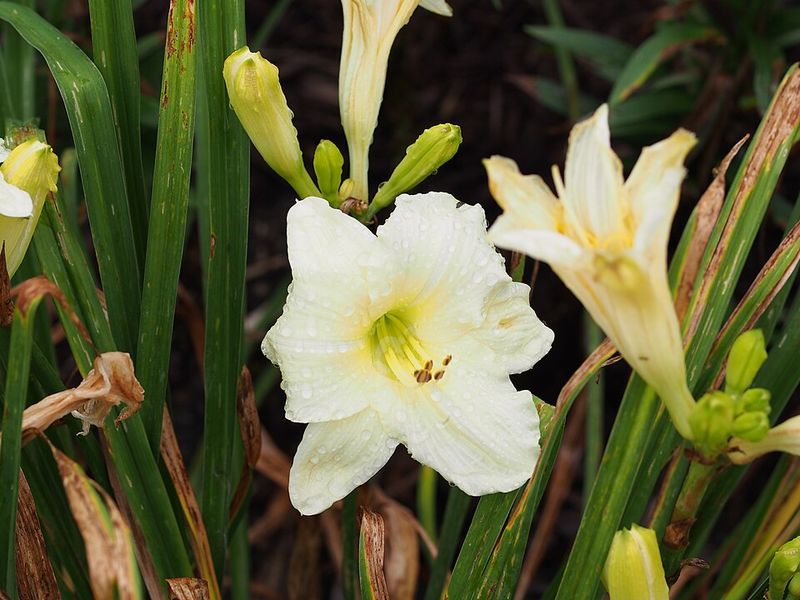
Some white flowers struggle to look clean in punishing sun, but this daylily keeps a polished presence through the hardest part of summer. ‘Joan Senior’ opens pale creamy white with gentle ruffling, and the blooms read bright without appearing harsh against the landscape. Because the strappy foliage stays attractive for months, the plant contributes even between bloom flushes.
Plant it in full sun to light afternoon shade, especially if your site gets reflected heat from pavement or brick. I like working compost into the bed before planting, then relying on a deep soak during dry spells rather than daily watering.
Removing spent flower stalks after blooming instantly sharpens its appearance and keeps the clump from looking messy.
This variety fits well near patios, mailbox beds, and foundation plantings where reliable performance matters. Pair it with purple coneflowers, dwarf grasses, or dark mulch to highlight the flower color and make the whole area feel cooler.
If you want a perennial that looks organized, handles Georgia conditions, and does not ask for constant fussing, this daylily is easy to appreciate.
Rain Lily
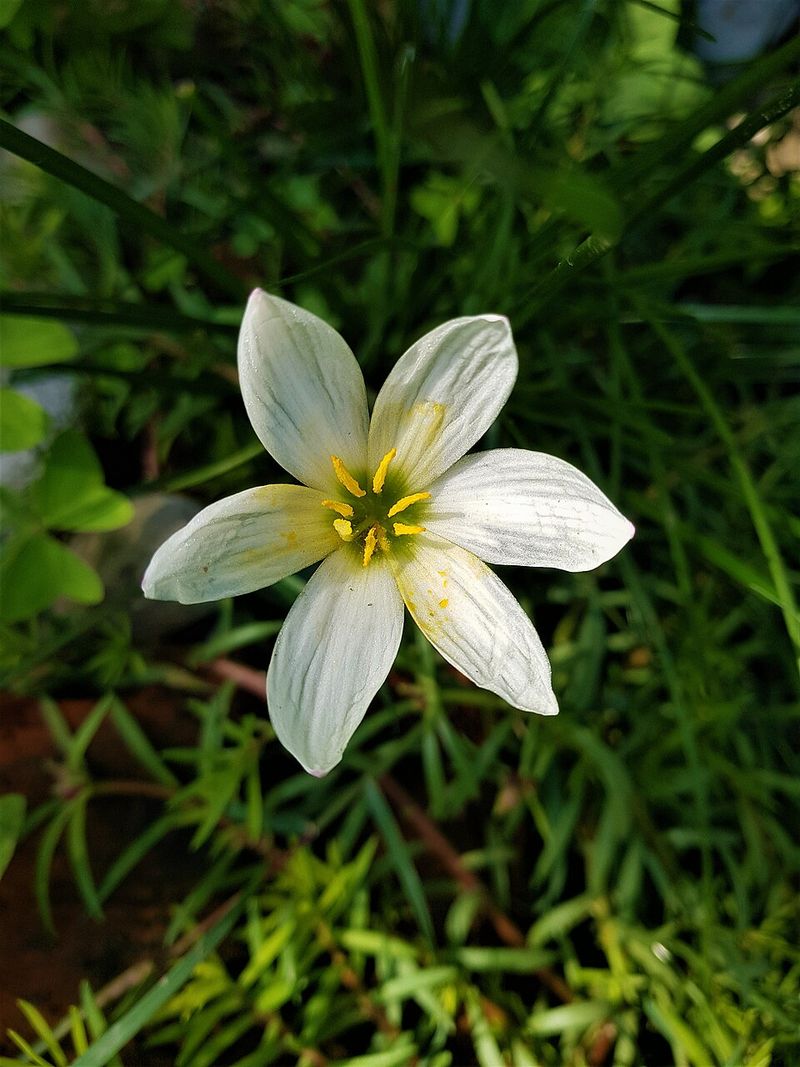
After a steamy summer storm, few garden moments feel as satisfying as seeing white rain lilies suddenly appear. ‘Grandiflora Alba’ sends up clean, starry blooms above fine grassy leaves, creating a fresh look exactly when many beds seem dulled by heat. That surprise flowering habit gives the garden an energy boost without demanding much space.
These bulbs thrive in sun or light shade and are especially useful in spots with decent drainage and occasional summer moisture. I like tucking them along path edges, in rock gardens, or around larger perennials where their flowers can pop up like little signals after rain.
Because the foliage stays unobtrusive, they never make a border feel crowded or overworked.
Once settled in, they naturalize nicely and can handle Georgia conditions with very little intervention. A modest layer of mulch helps preserve soil moisture while still allowing the bulbs to rest comfortably between bloom cycles.
If your garden needs white flowers that feel effortless, seasonal, and a little bit delightful, rain lilies bring exactly that kind of quiet charm through the warm months.
Yarrow
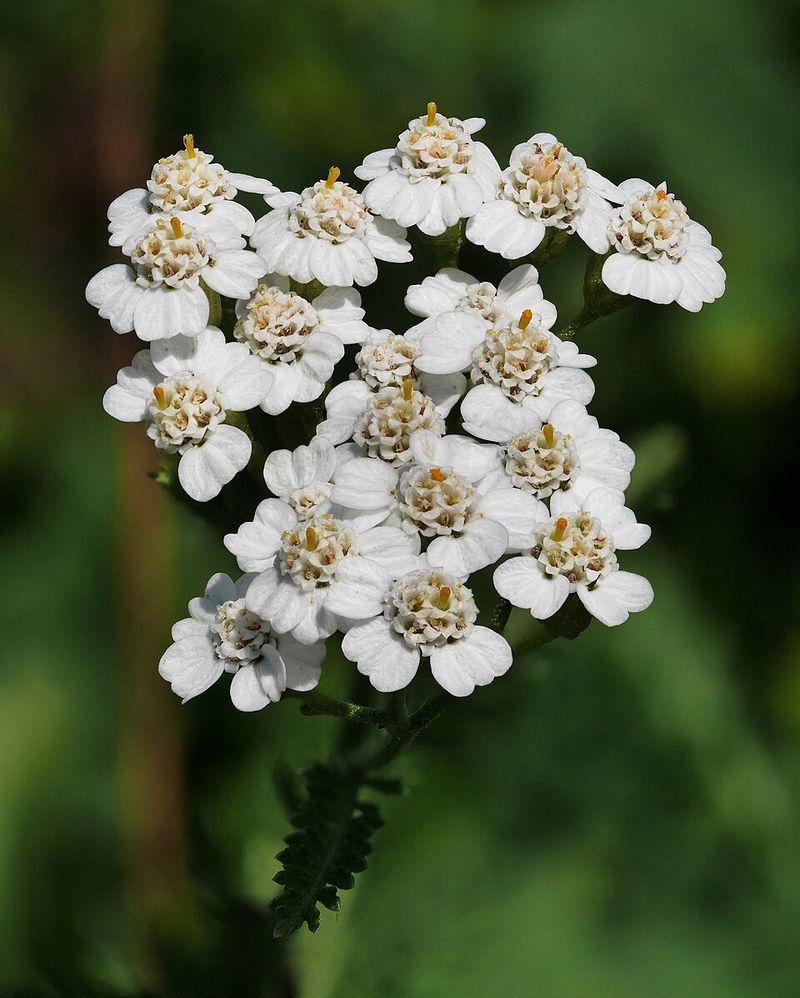
Heat and dry spells can make some white flowers collapse quickly, yet yarrow often looks cleaner as summer gets tougher. ‘Peter Cottontail’ offers dense white clusters on compact plants, and the ferny foliage adds texture that stays useful even when neighboring bloomers pause. That combination makes a planting feel intentional instead of patchy during long warm stretches.
Full sun and sharp drainage are essential, especially in Georgia where humidity can expose any weakness in poorly placed plants. I would avoid heavy clay that stays wet, but raised beds or amended slopes can suit it very well.
Too much fertilizer leads to soft growth, so it is better to let this perennial live a slightly lean life.
Cutting spent stems can trigger another flush while keeping the mound from looking browned out around the edges. The white flower heads also mix beautifully with lavender, coreopsis, and silver foliage for a fresh, uncluttered palette.
If you want a perennial that handles bright sun, does not complain about drier conditions, and still looks crisp, yarrow is a practical addition with real staying power.
Hardy Hibiscus
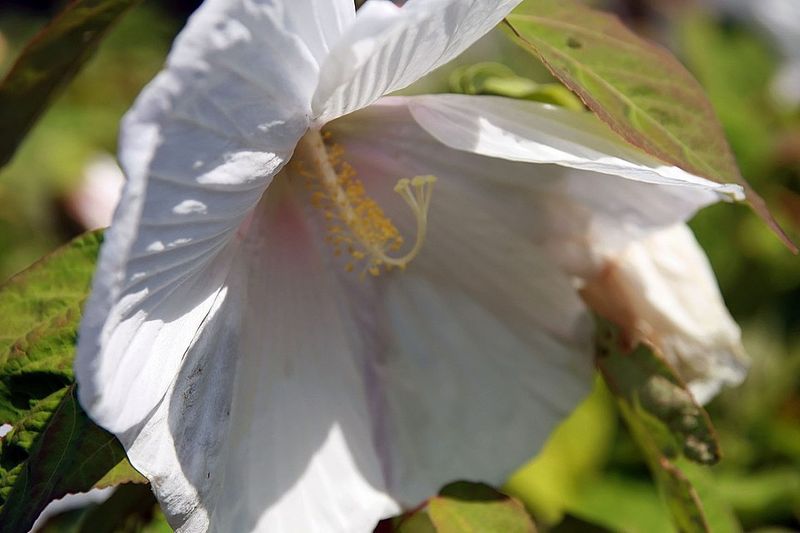
Big flowers can absolutely work in a Southern garden when the plant behind them is built for heat. Hardy hibiscus gives you dinner-plate-size white blooms that feel tropical, but the plant itself is a reliable perennial rather than a delicate diva.
In Georgia summer beds, that bold scale brightens the landscape and keeps borders from fading into a sea of medium green.
It performs best in full sun with fertile soil and regular moisture, so this is not the choice for a dry neglected corner. I think it shines near downspouts, rain gardens, or irrigated beds where roots can stay consistently hydrated without becoming stagnant.
Give it space, because once it wakes up in late spring, it grows with real ambition.
The dark eye at the center of many white forms adds contrast that helps blooms look sharp instead of flat. Surround it with lower plants that will not hide the stems, and mulch generously to moderate soil temperature during brutal afternoons.
For gardeners who want white flowers with serious presence and a long midsummer show, hardy hibiscus brings drama while still handling Georgia conditions beautifully.
Obedient Plant
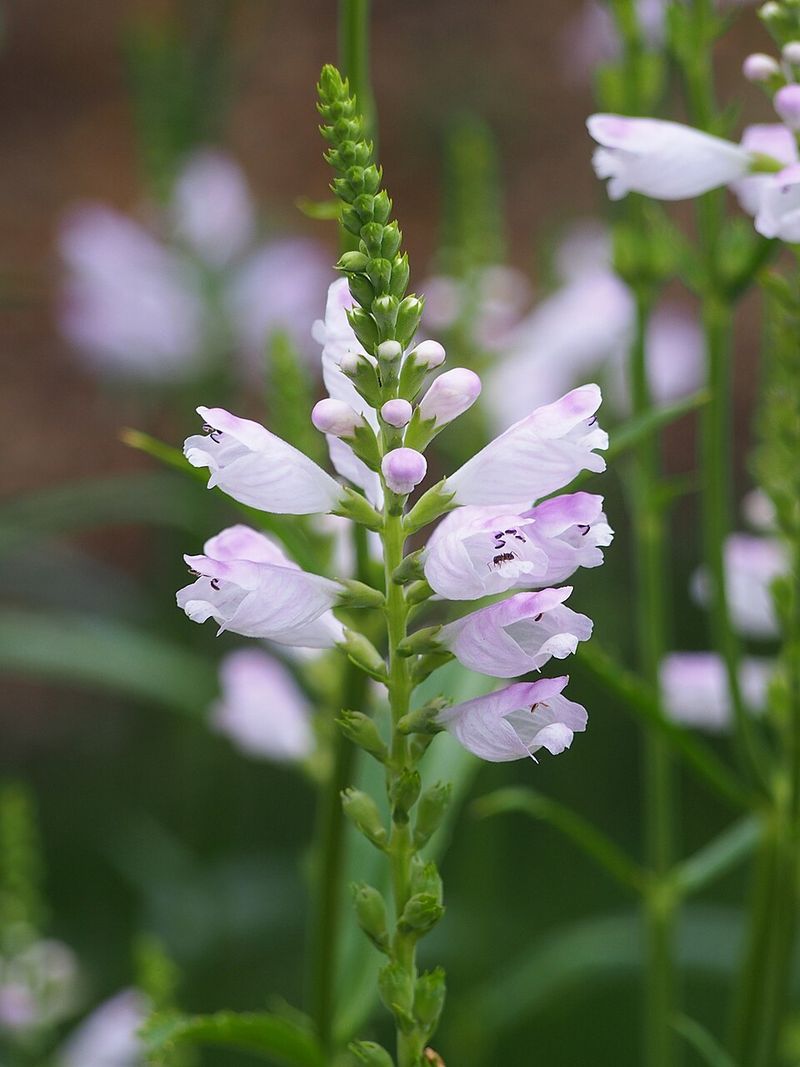
Vertical white flowers can keep a border looking structured when summer growth starts leaning in every direction. ‘Miss Manners’ is a much better behaved obedient plant than older aggressive forms, offering tidy upright spikes without trying to run through the whole bed. That controlled habit matters in Georgia gardens where vigorous growth can quickly become more work than beauty.
Give it sun to light shade and soil that holds some moisture, especially during long hot periods. I like using it in mixed borders where its crisp white spikes can break up mounded forms and echo nearby shrubs or fences.
A little pinching early in the season can encourage branching and keep the plant sturdy without making it look forced.
Pollinators appreciate the tubular blooms, and you will appreciate how clean the flowers read against deeper summer greens. Remove finished spikes if you want the clump to stay especially neat, though the plant often maintains a respectable appearance on its own.
If your garden needs white bloom with height, order, and solid heat tolerance, this improved obedient plant is worth a very close look.
Salvia ‘Snow Hill’
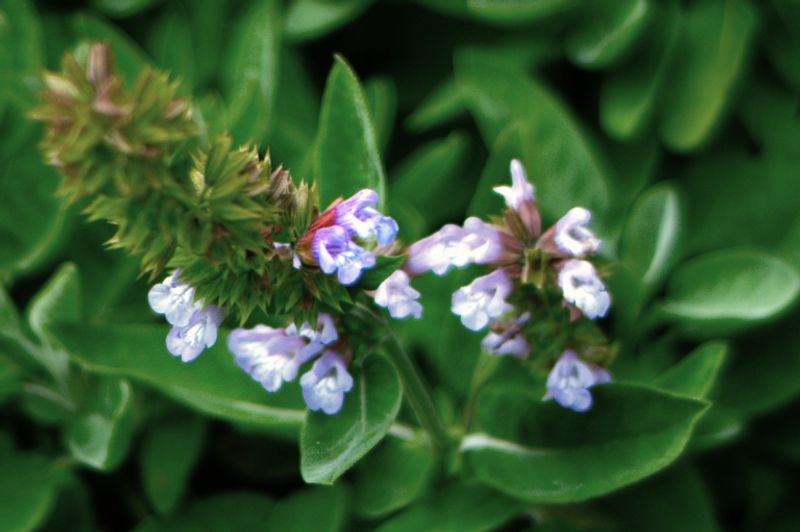
Clean white flower spikes bring a cooling effect to sunny beds, and this salvia does that with a tidy, herbal look. ‘Snow Hill’ sends up bright blooms above aromatic foliage, giving you structure and contrast when broader flowers begin to blur together in the heat. The neat growth also makes it easy to weave into smaller gardens that cannot absorb bulky perennials.
Drainage is the big factor here, because salvias resent heavy wet soil more than they resent summer heat. I would site it in full sun with good airflow and cut it back lightly after the first flush to keep the plant compact and blooming.
In areas with especially sticky humidity, avoid overcrowding and skip overhead watering whenever possible.
Its white spikes look especially striking beside roses, catmint, or dark-leaved coleus in mixed beds and containers. Pollinators visit constantly, which adds motion without any extra maintenance from you.
For a gardener who wants a white perennial that looks orderly, smells pleasant when brushed, and can still carry its weight through much of a Georgia summer, this salvia offers a smart balance of style and resilience.
Agapanthus ‘Ever White’
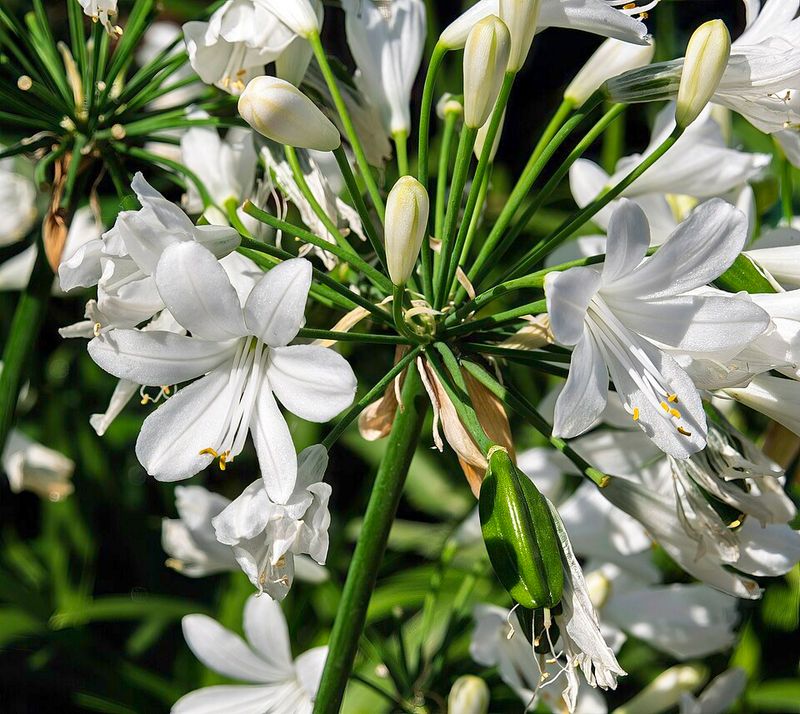
Strappy foliage and round flower heads give white agapanthus an elegant look that feels polished even on the hottest days. ‘Ever White’ produces bright umbels above clean green leaves, and that upright form helps borders feel organized rather than overgrown. In coastal and lower South gardens especially, it can hold its appearance surprisingly well through extended heat.
Plant it in full sun to light shade with excellent drainage, and do not bury the crown too deeply. I like using agapanthus near walks, patios, and front entries because the foliage stays attractive and the bloom shape reads clearly from a distance.
Once established, it appreciates regular water during peak heat but dislikes sitting in saturated soil.
Container growing is also a strong option if your native soil stays too heavy, since crowded roots often encourage flowering. A simple cleanup of spent stems is usually all it takes to keep the clump looking fresh and intentional.
If you want a white perennial with a refined feel, dependable summer bloom, and foliage that does not collapse at the first wave of humidity, agapanthus deserves a place on your shortlist.
Turtlehead
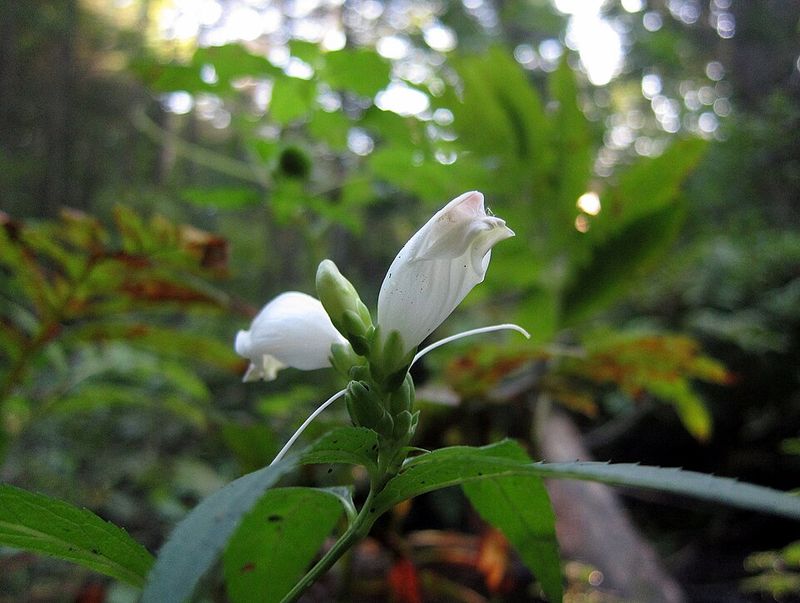
Not every Georgia garden is a blazing hot border, and shady moist areas need white perennials that stay handsome too. ‘Alba’ turtlehead brings upright stems, deep green foliage, and unusual hooded white blooms that appear fresh just as many early flowers have faded away. That late-summer timing is especially helpful in woodland edges and rainier low spots.
Give it part sun or bright shade with soil that stays evenly moist, because drought quickly takes the polish off this plant. I think it works best where morning sun reaches the foliage, helping plants stay dense while avoiding the harshest afternoon heat.
A generous mulch layer and steady watering during dry spells will keep leaves fuller and cleaner.
Its flowers pair well with ferns, hostas, and dark heuchera, creating a cool palette that feels restful during the hottest months. The sturdy stems rarely need staking, which is another reason the plant keeps a composed look longer than many shade bloomers.
For that difficult spot where moisture lingers and sunlight is limited, white turtlehead offers a reliable, surprisingly refined answer.