
10 Burgundy Perennials Making Ohio Flower Beds Look More Dramatic
Follow us on Google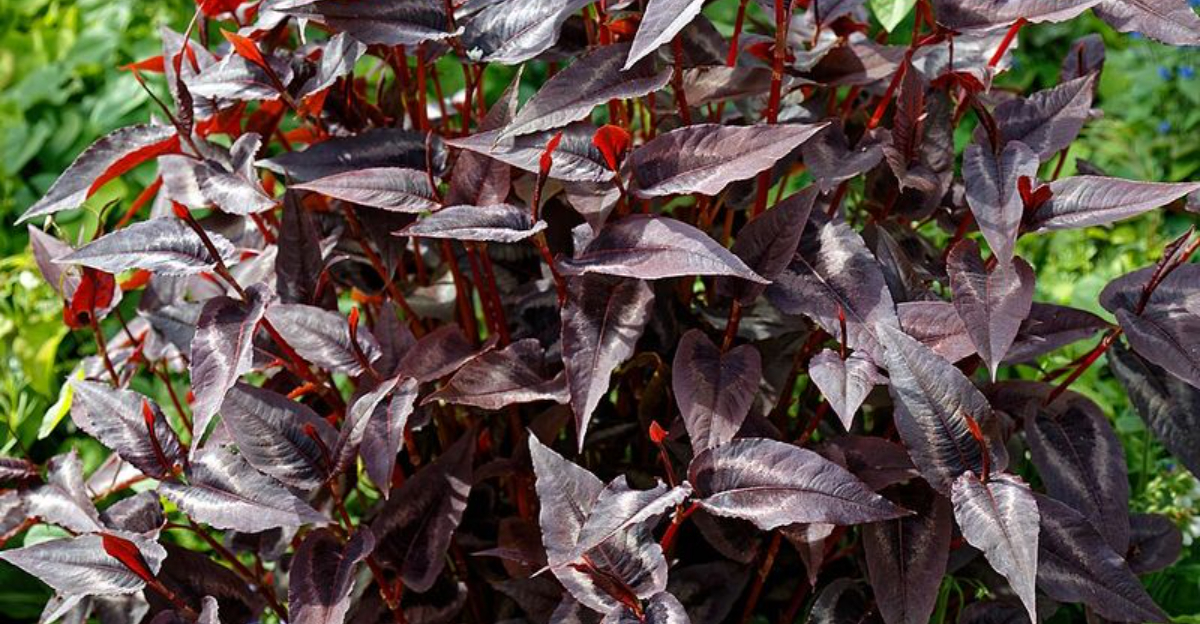
A deep burgundy flower or leaf can make an ordinary Ohio bed look intentional, layered, and far more memorable from spring through frost. These perennials do more than add dark color – they create contrast against green shrubs, silver foliage, and the bright blooms many Midwestern gardeners already grow.
If your borders feel flat or a little too sweet, these richer shades bring balance and mood without making the space feel heavy. Here are standout choices that handle Ohio conditions while giving your garden a sharper, more dramatic edge.
Heuchera ‘Forever Purple’
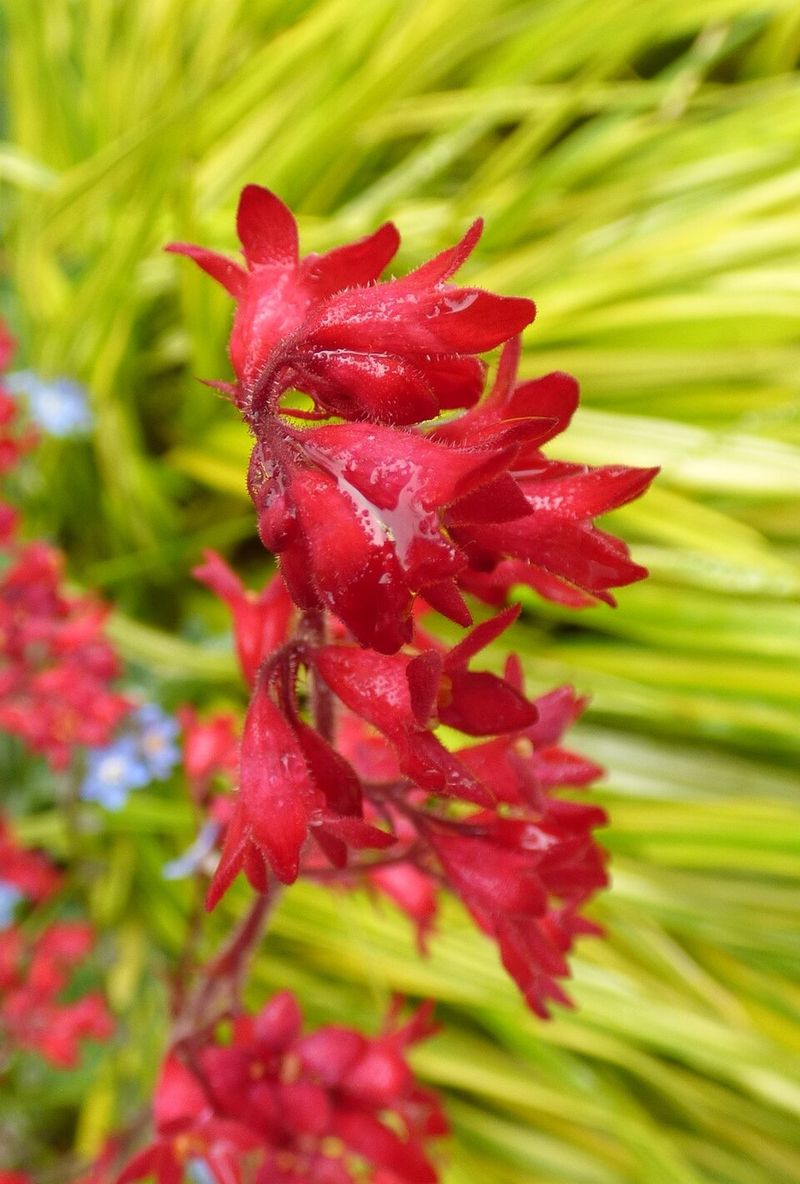
Dark foliage does a lot of heavy lifting in a flower bed, and this heuchera proves it fast. The glossy, purple-burgundy leaves keep their color through much of the season, so you are not waiting around for a brief bloom window.
In Ohio, that kind of steady performance matters when spring bulbs fade and midsummer heat starts flattening softer colors.
Morning sun with afternoon shade usually gives the best leaf color and the least stress. Soil that drains well is important, especially through wet winters, because soggy crowns can cause trouble faster than cold ever will.
A light mulch layer helps, but keep it pulled back from the center so the plant does not stay too damp.
Near silver brunnera, caramel sedges, or lime sweet potato vine, the foliage looks especially dramatic. Creamy flower spikes add a little lift, though the real value stays in the leaves.
Tuck several along a path or at the front of a border, and you get a bold ribbon of color that makes neighboring flowers look brighter and more polished all season.
Sedum
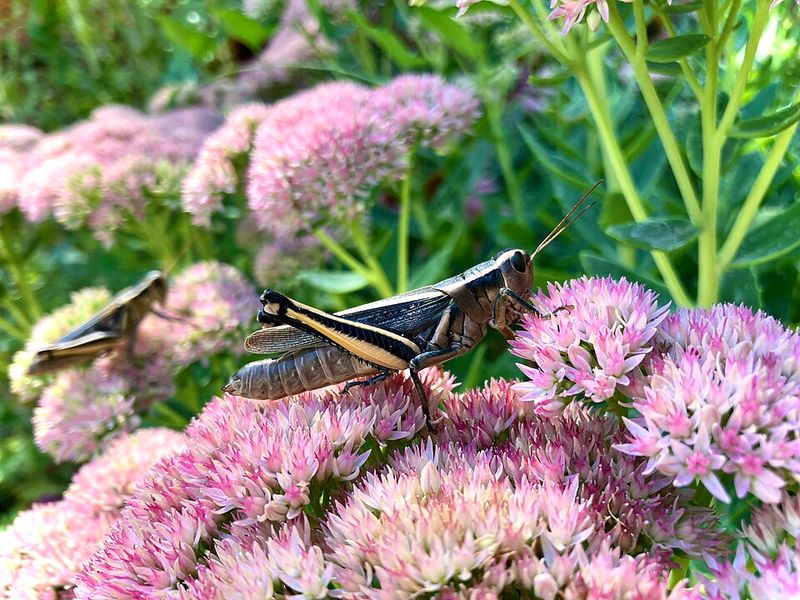
Sunny Ohio beds often need a plant that can take heat, stay handsome, and still contribute real color. This sedum answers that call with burgundy leaves that deepen as the season moves along, then follows up with rosy flower clusters that pollinators notice right away.
You get structure, long interest, and a darker tone that keeps bright summer borders from looking washed out.
Full sun is where the foliage tones up best, and lean soil actually helps it hold a tighter shape. Rich, heavily watered ground can make stems flop, so resist the urge to pamper it like a thirsty annual.
Once rooted in, it handles dry spells well, which is useful during those Ohio stretches when rain disappears for two weeks.
Plant it beside pale pink echinacea, blue fescue, or golden rudbeckia for a smart color contrast. The fleshy leaves also add a different texture, which keeps mixed borders from blending into one soft mass.
By late summer, when many beds start looking tired, this one still appears deliberate and sturdy, giving your garden a darker, more grounded look without creating extra maintenance.
Penstemon digitalis ‘Dark Towers’
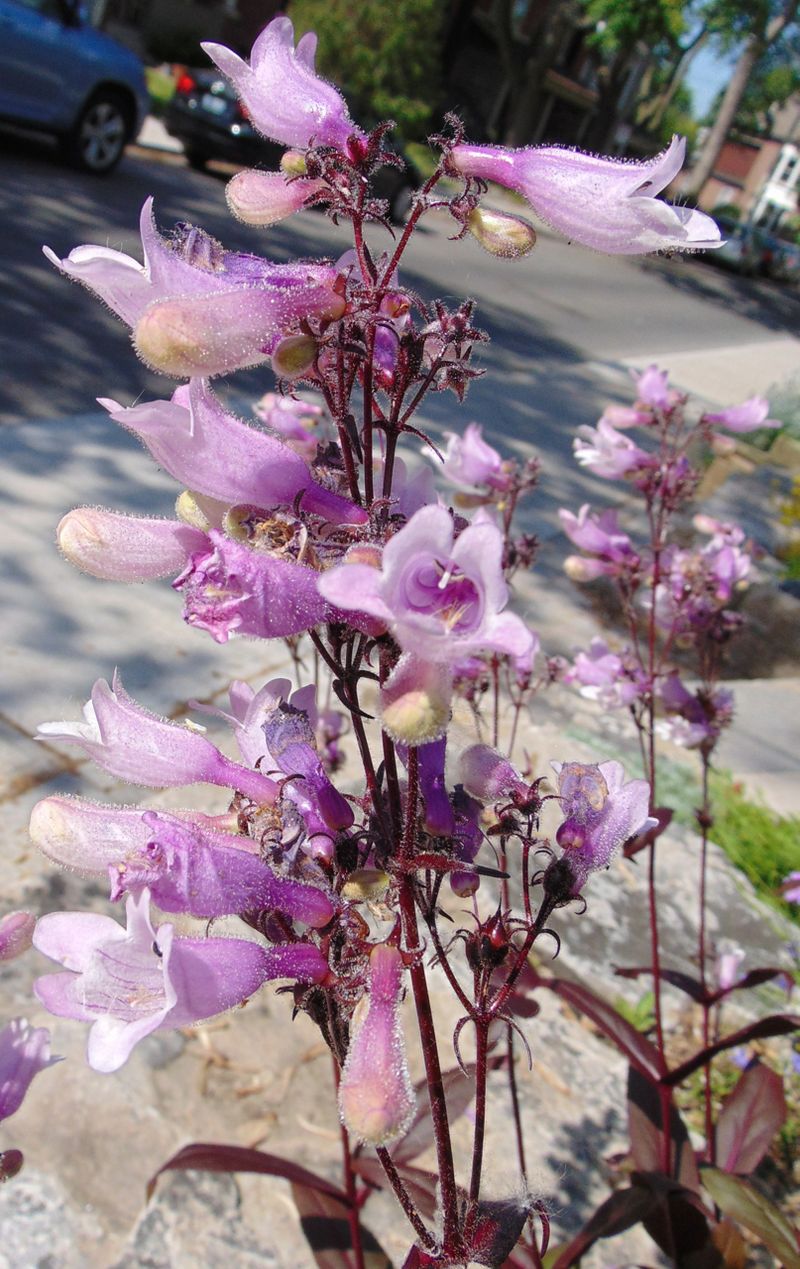
Vertical interest can change the whole feel of a border, and this penstemon does it with style. Burgundy-tinted foliage and dark stems create a strong backdrop for soft pink flowers, giving you that dramatic contrast without making the bed feel gloomy.
In Ohio gardens, it bridges the gap between spring freshness and the fuller look of early summer.
Good drainage is the main requirement, especially in winter, when heavy soil can shorten its lifespan. Full sun keeps growth sturdy, though a little afternoon relief is welcome in especially hot western exposures.
Deadheading can extend the tidy look, but even after bloom, the dark stems still help carry the design.
Use it in the middle of a border where the upright habit can rise through lower mounding plants. Around pale coreopsis, nepeta, or white shasta daisies, the darker foliage reads almost like a neutral and makes everything nearby pop.
Hummingbirds appreciate the flowers, and you get a perennial that looks intentional from several feet away, which is exactly what dramatic planting should do in an Ohio yard.
Astilbe ‘Dark Side of the Moon’
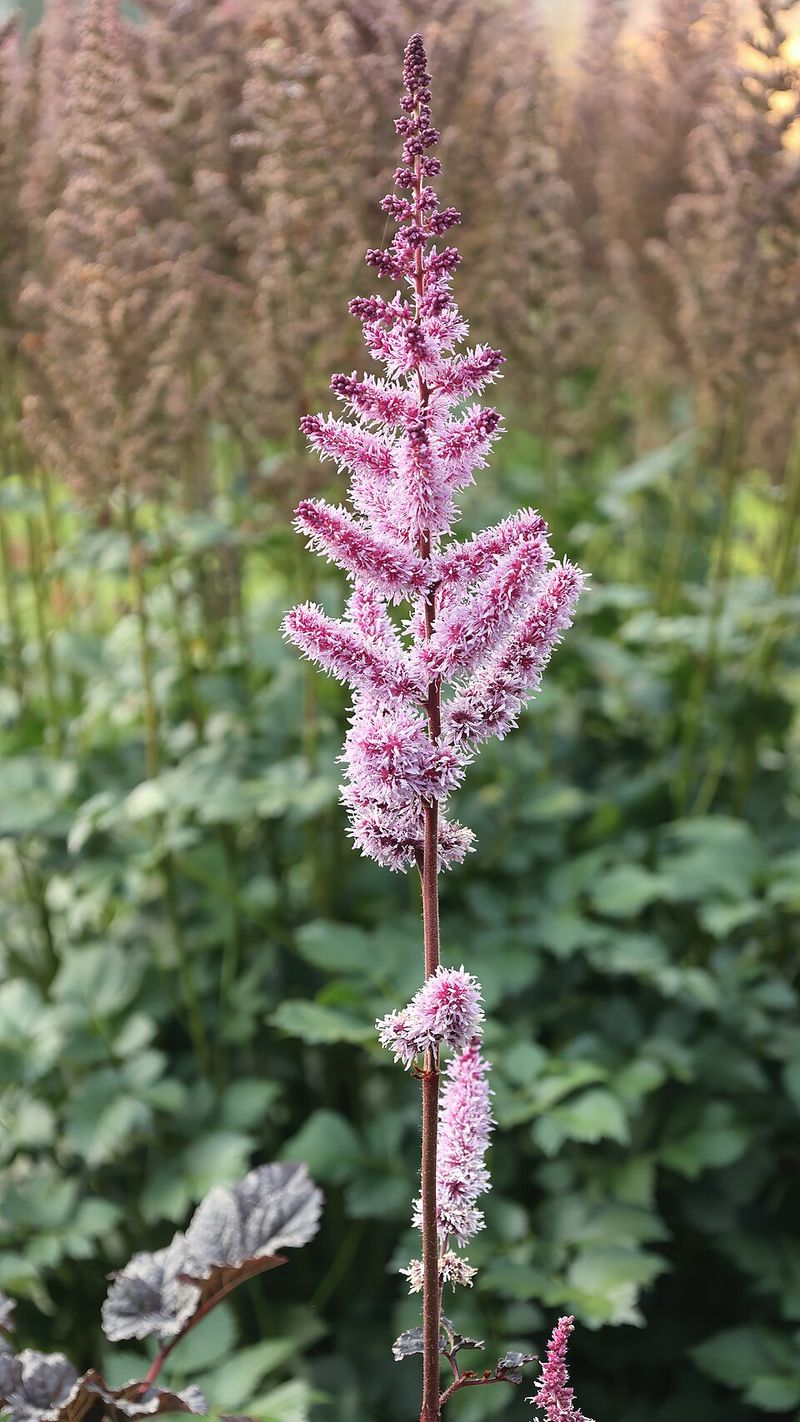
Shade gardens can lean too green unless you deliberately work in stronger foliage color. This astilbe brings chocolate-burgundy leaves and smoky purple flower plumes, so a darker palette shows up even in softer light.
For Ohio gardeners with damp, partly shaded beds, that combination can make a woodland border look far more layered and expensive.
Consistent moisture is the key to success, especially during hot spells in July and August. Unlike some perennials that forgive drying out, astilbe lets you know quickly when it is unhappy, so adding compost and mulch pays off.
Morning sun is fine, but harsh afternoon exposure can scorch leaves and shorten the bloom show.
Pair it with blue hostas, Japanese painted fern, or chartreuse creeping jenny for a high-contrast planting that still feels calm. The plumes also bring height without becoming stiff or awkward, which helps smaller shade beds feel more dimensional.
If your Ohio foundation bed gets filtered light and reliable water, this plant adds moody color where standard green fillers simply disappear into the background.
Hibiscus
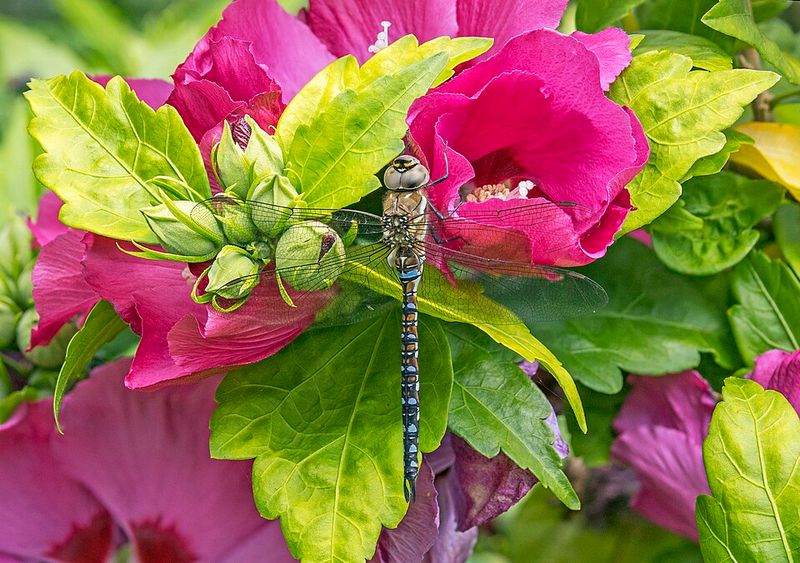
Late summer is when many Ohio flower beds need a second wind, and this hardy hibiscus delivers it loudly. The foliage starts out deep burgundy, almost black in some light, then giant red flowers arrive and create an unforgettable contrast.
Few perennials make a stronger statement from the street, especially when planted where afternoon sun catches those dark leaves.
Patience matters in spring because it wakes up later than many gardeners expect. Warm soil and full sun help it get moving, and once growth starts, regular moisture keeps the large leaves and blooms looking fresh.
Because the stems can reach shrub-like size, give it room and avoid squeezing it between smaller plants that will vanish by August.
Place it near ornamental grasses, pale daylilies, or silver artemisia for a border that looks dramatic without becoming chaotic. A deep mulch ring also helps conserve moisture and keeps roots more even during Ohio heat waves.
If you want one plant that makes neighbors pause and ask what it is, this choice gives you that reaction while still behaving like a dependable cold-hardy perennial.
Ajuga reptans ‘Black Scallop’
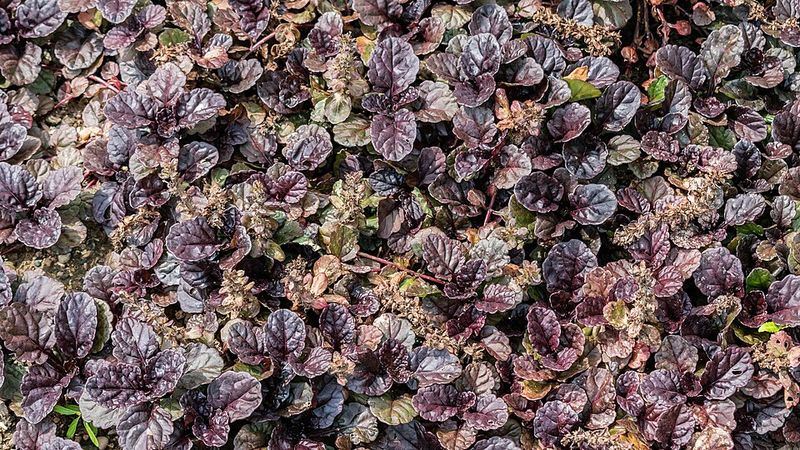
Groundcovers do not have to fade into the background, and this ajuga is proof. Its glossy burgundy-black leaves hug the soil closely, creating a dark carpet that makes nearby blooms look brighter and more defined.
In Ohio beds where spring can feel muddy and visually messy, that clean, low color anchor is especially useful.
Part shade tends to keep the foliage richest, though it can manage more sun if the soil does not dry hard. Moist but well-drained ground works best, and a little airflow helps reduce disease in humid stretches.
Because it spreads by runners, it is smart to place it where a slow colony is welcome rather than right beside delicate, tiny alpines.
Blue flower spikes in spring are a nice bonus, but the leaf color is the reason to grow it. Thread it along a walkway, under shrubs, or around the base of taller perennials that can look bare at the bottom.
Against pale tulips, white narcissus, or chartreuse hostas, the planting instantly looks more intentional, giving even a modest Ohio front bed stronger contrast and a more finished appearance.
Lobelia cardinalis
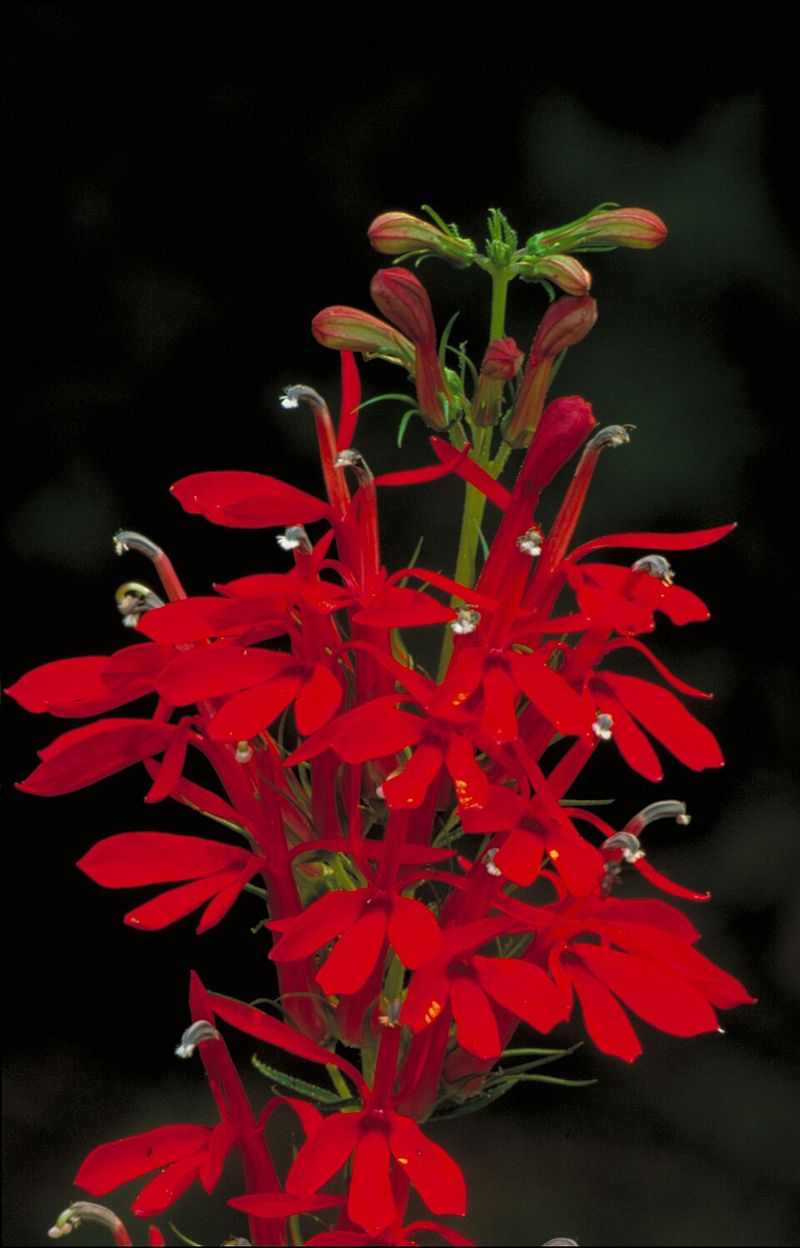
Bright red blooms can look even richer when darker foliage supports them, and cardinal flower understands that balance beautifully. Many forms show burgundy tones in stems and leaves, which gives the plant a deeper, more dramatic presence than standard red perennials.
For Ohio gardeners with damp soil, it is one of the best ways to bring strong color into late summer without relying on annuals.
Moisture is not optional here, so think rain gardens, pond edges, or beds that never bake dry. Morning sun and afternoon shade work well, though it can take more light when soil stays evenly damp.
Mulch helps preserve moisture, and resisting overhead watering late in the day can reduce stress during humid weather.
Hummingbirds are quick to find the flower spikes, which adds movement as well as color. Pair it with dark-leaved heuchera, blue iris, or golden carex for a planting that feels lively but still controlled.
If you have a low area in the yard that stays wetter than the rest, this perennial turns that challenge into a design advantage, adding height, saturated color, and a little wild beauty that still fits a polished Ohio flower bed.
Dahlia ‘Bishop of Llandaff’
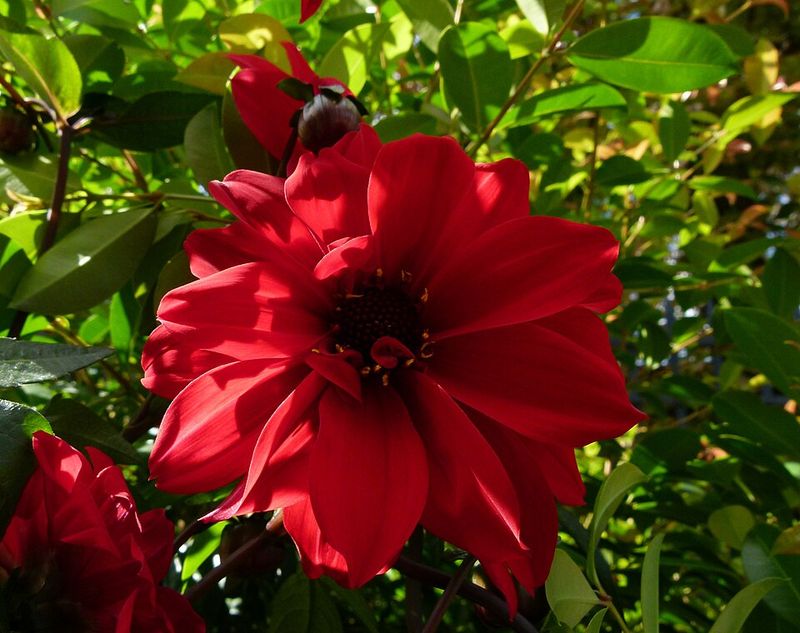
Not every Ohio gardener treats dahlia as a true perennial, but this variety earns a spot in dramatic borders anyway. The almost black burgundy foliage sets off the scarlet flowers so clearly that even one plant can change the rhythm of a bed.
In warmer pockets or with tubers lifted for winter, it becomes a repeat favorite for gardeners who want darker contrast without giving up bold bloom color.
Full sun and fertile, well-drained soil produce the strongest performance. Pinching young stems encourages bushier growth, and staking early prevents the plant from looking awkward after summer storms.
Because Ohio winters are usually too cold for reliable in-ground survival, most gardeners dig tubers after frost, let them dry, and store them somewhere cool but not freezing.
That extra effort pays back when the flowers start and keep coming. Try it with pale zinnias, soft pink phlox, or smoky ornamental grasses so the dark leaves do not get visually lost.
Near patios or entry beds, the color combination feels especially rich in evening light, and you get a planting that looks more curated than common bedding schemes built around standard green foliage.
Persicaria microcephala ‘Red Dragon’
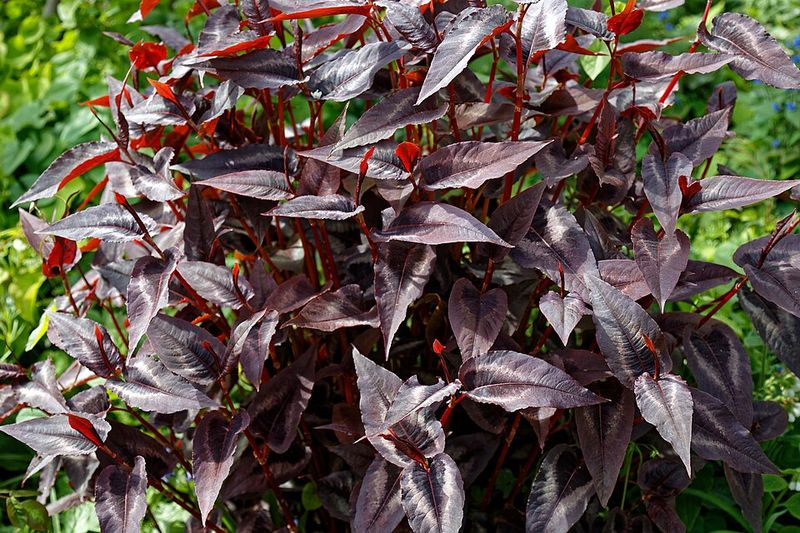
Patterned foliage can bring just as much drama as flowers, and this persicaria proves it quickly. The leaves combine burgundy, plum, and silvery markings in a way that reads rich rather than busy, especially when planted in groups.
For Ohio gardeners wanting something less expected than plain dark leaves, it adds movement and visual texture from the moment it fills out.
Part sun usually keeps the color vivid without pushing the plant into stress, though it can adapt to brighter spots with enough moisture. Fertile, well-drained soil helps it bulk up fast, and cutting it back lightly during the season can keep the shape fresh.
In colder parts of Ohio, winter protection with mulch may improve survival, especially during freeze-thaw cycles.
Small white flowers hover above the foliage, but they are secondary to the leaf display. Use it to soften the edge of a path, spill around roses, or link brighter perennials that need a darker visual pause between them.
Around chartreuse hostas, orange geum, or pale hydrangeas, the coloration looks especially sophisticated, giving your bed a layered, designer feel instead of the usual mix of green mounds and disconnected bloom color.
Ligularia dentata
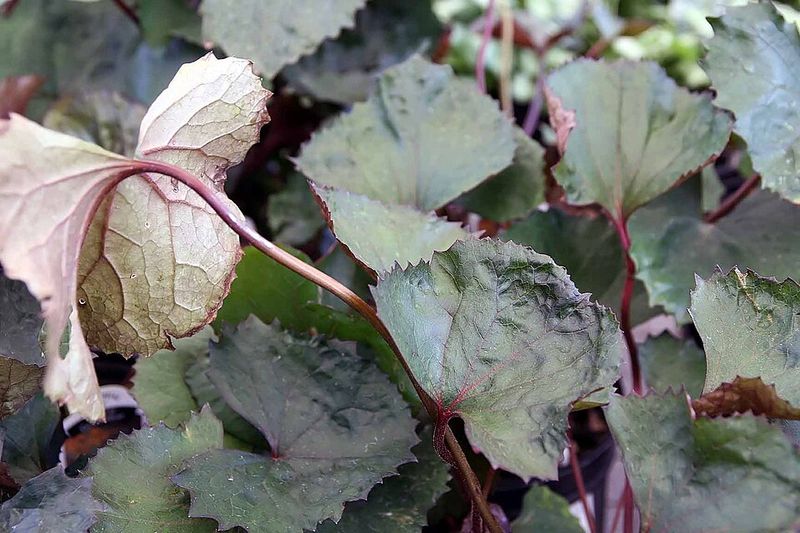
If you want something that reads bold from across the yard, this ligularia earns the space. The big, rounded leaves come in with a rich burgundy cast, especially in spring, and they hold enough depth to anchor brighter neighbors without looking flat.
In an Ohio flower bed, that moody foliage feels especially useful when summer color starts getting busy.
It also brings tall golden flowers later on, which gives you contrast without losing the dramatic effect. Give it consistent moisture and a spot with afternoon shade, and you will usually get the best leaf color with less stress.
Near a downspout, pond edge, or richer border, it can look downright luxurious.