
White Oak in North Carolina Yards: What This Native Tree Feeds, and What Flower Beds Do Instead
Follow us on Google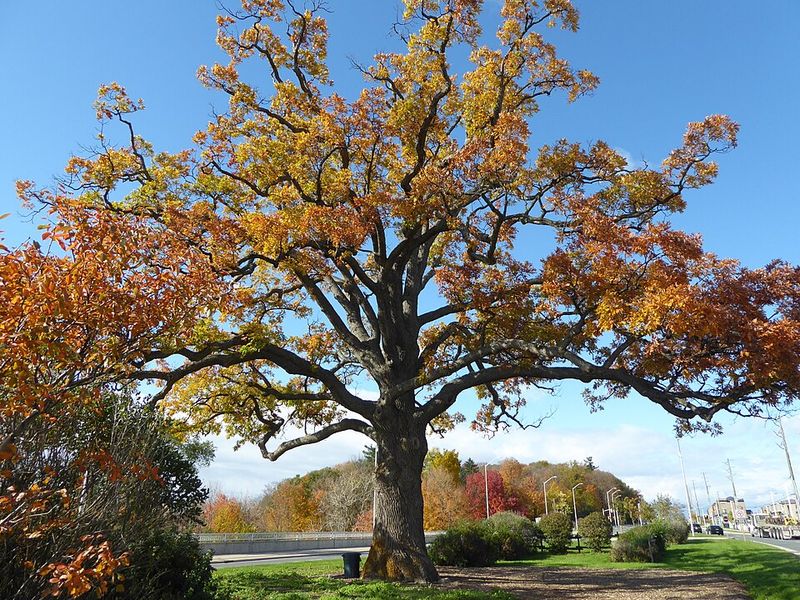
You are standing under a big oak in April, and the new leaves are full of tiny movement. Caterpillars chew, and warblers flit through the branches hunting them.
A native tree like white oak does a job in North Carolina yards that a flower bed simply does not, and the reverse is true too. Here is how the two fit together, and whether a large, slow oak suits your property.
White Oak Has a Food-Web Role, Not a Proven Flower-Bed Advantage
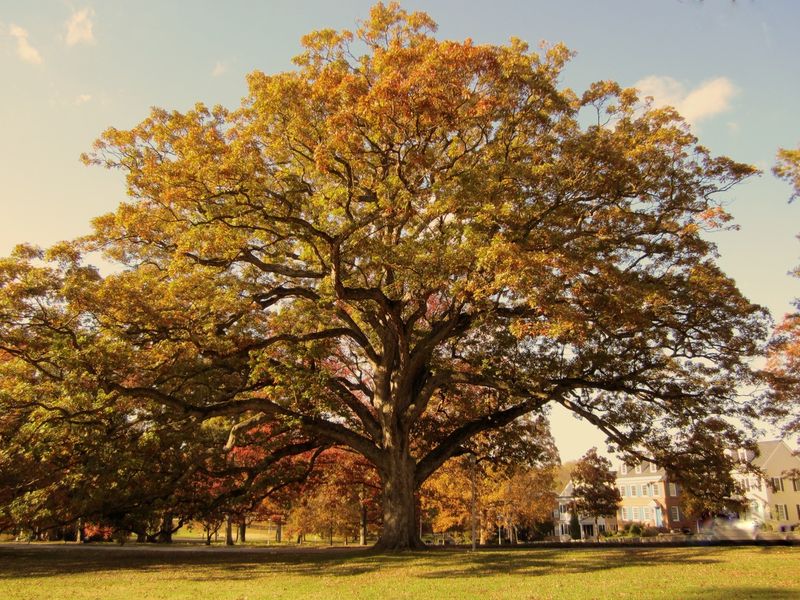
Picture a mature white oak at the edge of a Piedmont lawn in spring, with a flower bed glowing in its shade. Which one feeds more wildlife?
Nobody has measured that, so no honest answer exists.
What we do know is that white oak (Quercus alba) is native across North Carolina, from the Coastal Plain through the Piedmont to the mountains, according to the NC State Extension Plant Toolbox. It is a homegrown member of our forests, not a visitor from somewhere else.
Native oaks matter because wildlife here has had thousands of years to build relationships with them. Insects feed on the leaves, birds feed on the insects, and later in the year acorns become food as well.
That is a chain, and the oak is one strong link in it.
A flower bed plays a different part. Its blooms offer nectar and pollen to adult bees, butterflies, and other pollinators.
An oak does not replace that, and a bed does not replace an oak.
So the better question is not which one wins. It is which jobs your yard needs done, and how much room you have to do them.
The rest of this article walks through those jobs one at a time, starting with the caterpillars.
One more thing before moving on. No headline can tell you how many birds or butterflies a single tree will draw to your yard, and neither can we.
What we can do is show you what the research says an oak is good for, so you can decide with clear eyes.
Oaks Support a Remarkable Caterpillar Community
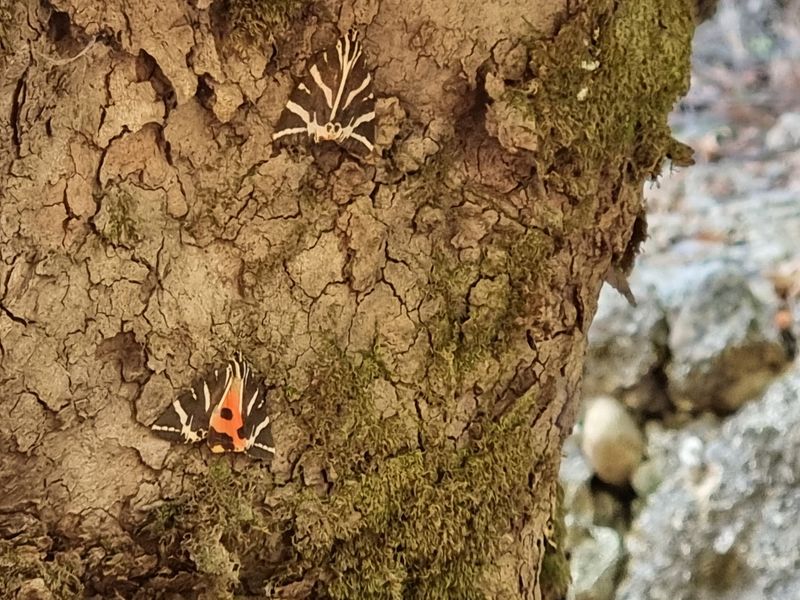
Most of us wince at a chewed leaf. On an oak, that chewing is the whole point.
Many butterfly and moth species lay eggs on oaks, and their caterpillars grow up eating the leaves.
A well-known mid-Atlantic study by Tallamy and Shropshire, which ranked plant genera by published caterpillar host records, put oaks in first place. It recorded 534 butterfly and moth species using the oak genus as hosts.
Read that number carefully. It is a regional count across all oaks in the mid-Atlantic, not a count for one white oak and not a promise for your backyard.
Your tree will host only some of those species, and which ones depends on where you live.
A later study backs up the bigger picture. Researchers pulled published host records from 83 counties in 25 states and found in a 2020 Nature Communications paper that a small number of plant genera support a large share of local butterfly and moth species.
Oaks are among the plants that do heavy lifting.
That paper does not give an exact species count for a North Carolina county, so treat it as a pattern rather than a local tally.
Why should you care about caterpillars? They are a soft, protein-rich food source for other animals.
When you plant a caterpillar host, you are stocking a pantry that other wildlife can raid.
Some chewed leaves come with the deal. Healthy trees generally handle ordinary leaf munching, though white oak can have insect and disease problems, so keep an eye on it.
Birds Forage in Oaks, While Flower Beds Serve Other Needs
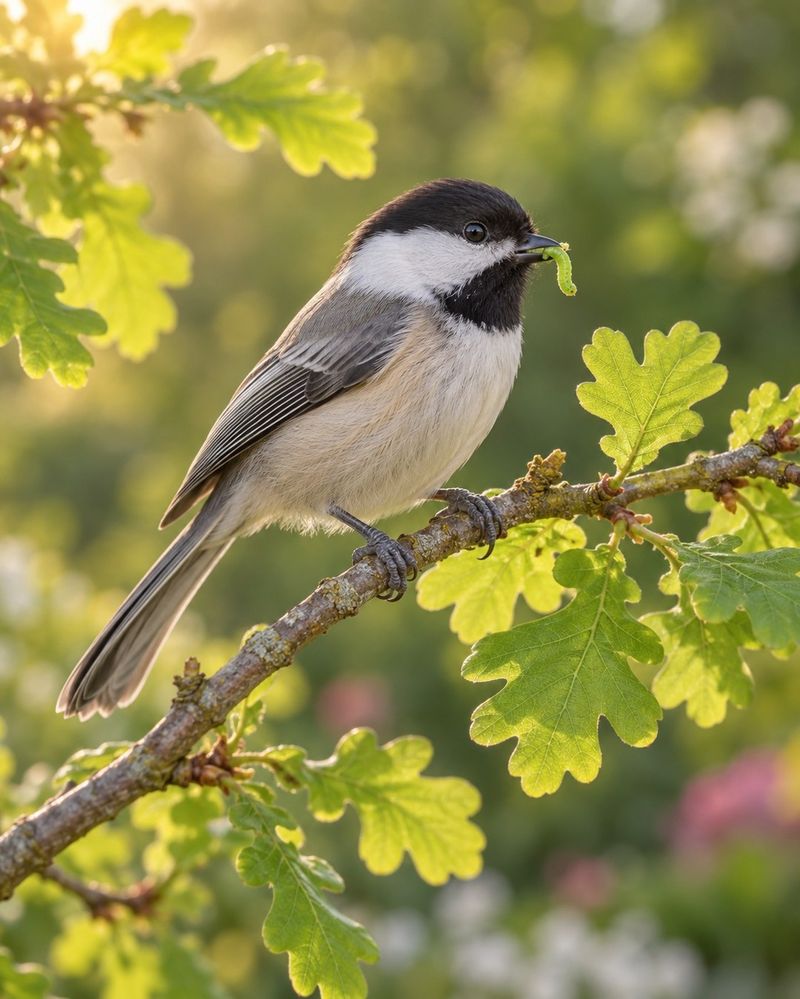
Early spring mornings in North Carolina bring a quiet parade of songbirds, including migrants passing through. They are hungry, and they are hunting.
According to NC State Extension guidance on backyard bird habitat, spring birds look for caterpillars and other invertebrates on new growth. The same source names large oaks as favored foraging sites.
It also says insects and spiders supply important nutrients for growing songbirds.
So an oak works like a spring diner for birds. The leaves open, the insects arrive, and the birds follow.
Your job is simply to provide the tree and keep pesticides out of the picture where you can.
Now the flower bed. Blooms mostly serve adult pollinators, which drink nectar and gather pollen.
NC State Extension also recommends landscaping with native plants so wildlife has food and cover through the seasons.
Here is where the two plantings split. An oak will not give a hungry bumble bee a late summer meal the way goldenrod or Joe Pye weed can.
And a patch of coneflowers will not hold the tall canopy of caterpillars that foraging birds seek in April.
Neither one is the cure-all. Together they cover more of the year, and more of the food web, than either does alone.
If you can only plant one thing this season, match it to the need you most want to meet and your available space.
A Large, Slow-Growing Tree May Not Fit Every Yard
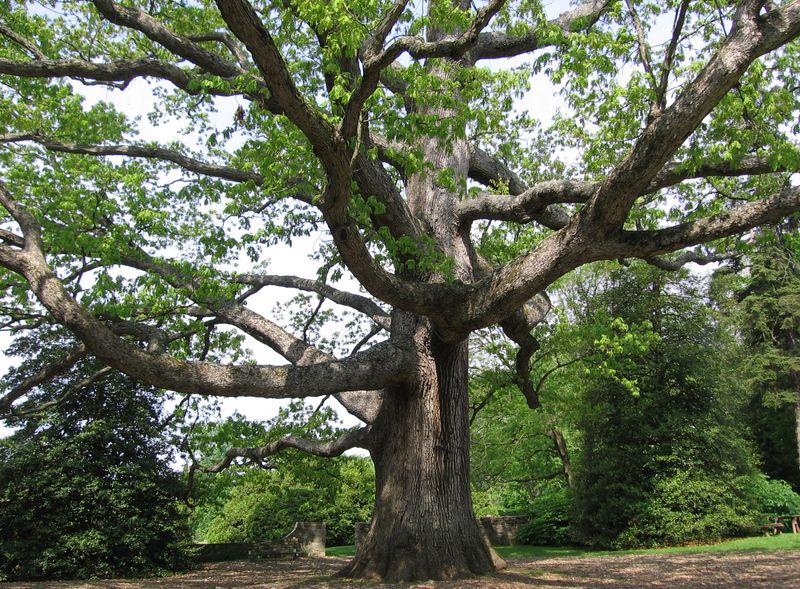
Before you fall in love with an oak, do some math with a tape measure. NC State lists white oak at 50 to 135 feet tall and 50 to 80 feet wide at maturity, according to the Plant Toolbox entry for Quercus alba.
That is a lot of tree. Fifty feet of spread is wider than many suburban lots are deep.
A skinny planting strip, a spot close to the driveway, or a corner hugging the house is not a good home for one.
The tree also grows slowly. You are planting for the long haul, and you may enjoy shade and acorns more than your children do.
For some people that is the best part, and for others it is a dealbreaker.
These are practical points worth weighing when you choose a tree. They are not proof of why people plant what they plant, only things to consider in your own yard.
Walk the space and look up. Check for power lines, roofs, sewer lines, and the neighbor’s fence.
Then imagine the canopy reaching out wide in thirty or forty years.
If the numbers do not work, you have options. White oak is one native oak among several, and a smaller yard may suit a different species or a smaller native tree.
Your county Extension office can help you narrow the choices.
Also remember that white oak leaves and seeds have low-severity poisonous qualities, with a flagged risk to horses. If you keep horses, that is worth a conversation with your Extension agent before planting near a paddock.
Check the Site Before You Plant
Good news first. White oak is flexible.
It grows in full sun to partial shade and prefers moist, well-drained soil, though NC State says it adapts to other soil types and tolerates drought once established. You can read those details in the Plant Toolbox listing.
Now the catch. White oak has a deep taproot, which makes it hard to transplant.
Pick the spot carefully, because you will not get a second chance.
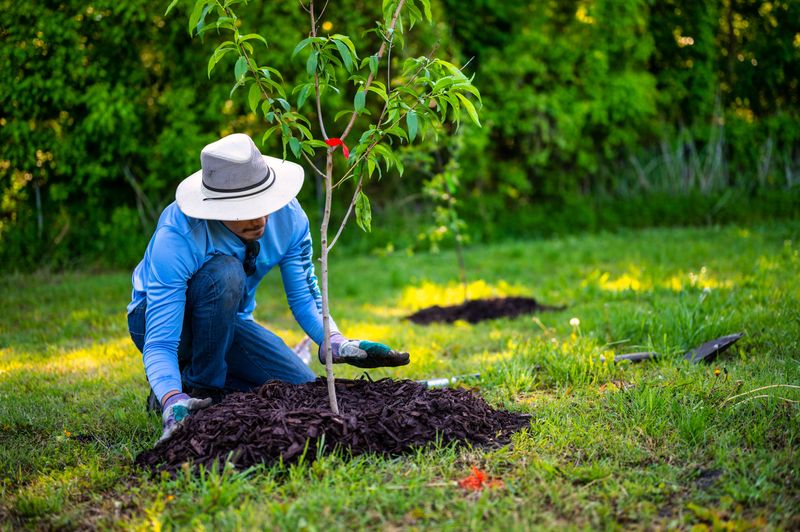
When you are ready, dig a hole as deep as the root ball and two to three times wider. Spread 2 to 3 inches of mulch, and keep it at least 6 inches from the trunk so the bark can breathe.
Watering comes next. NC State Extension’s woody ornamentals guidance gives a general starting point for 1- to 3-gallon plants: 3 to 5 gallons twice a week when it has not rained, for about three to four weeks.
Treat that as a starting point, not a rule. Your tree may be a different size, and North Carolina weather swings from muggy storms to dry spells.
Stick a finger a few inches into the soil. If it is damp, wait.
Red clay in the Piedmont holds water longer, while sandy Coastal Plain soil drains fast. Adjust to what your soil is telling you.
No tree is care-free. Expect to watch it, especially in the first few seasons, and keep an eye out for pest or disease trouble as it grows.
Build a Varied Landscape for Wildlife
Wildlife does not eat the same thing all year. Birds want caterpillars in spring, pollinators want nectar from spring to frost, and many animals look for seeds and fruit as the weather cools.
That is why NC State Extension encourages a variety of food-producing plants in its backyard habitat guidance. Needs change by season, and no single plant covers them all.
So think in layers. A white oak, if you have room, becomes your tall caterpillar host and spring bird stop.
Beneath and beside it, native shrubs and perennials can add flowers, berries, and cover. NC State’s native plant landscaping advice is a good place to find ideas.
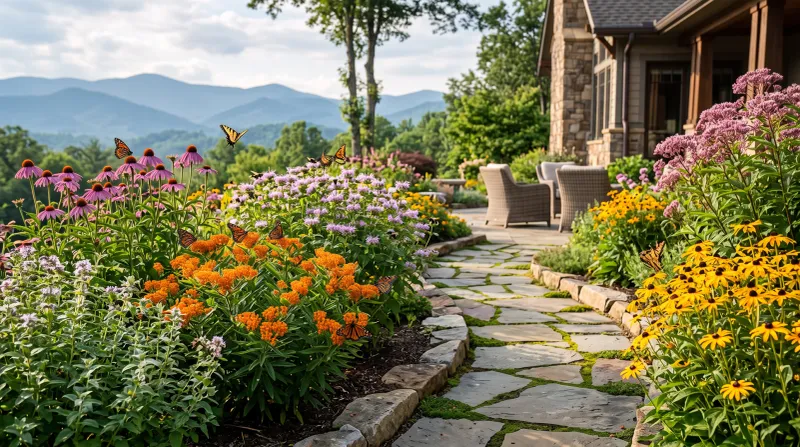
Flowers like milkweed, Joe Pye weed, and goldenrod can fill in the late summer and fall gap, which helps pollinators including fall monarchs passing through.
No yard needs all of this. A small lot might hold a handful of native perennials and a shrub or two.
A larger one might carry an oak and a whole meadow edge.
Start with the space you really have, then choose plants that fit it and the wildlife you hope to help. Results will vary, and that is fine.
The tree and the flower bed were never in a race. They are just different hands passing food along the same table.
