
When Watering Rosemary Indoors in Winter Does More Harm Than Good
Follow us on Google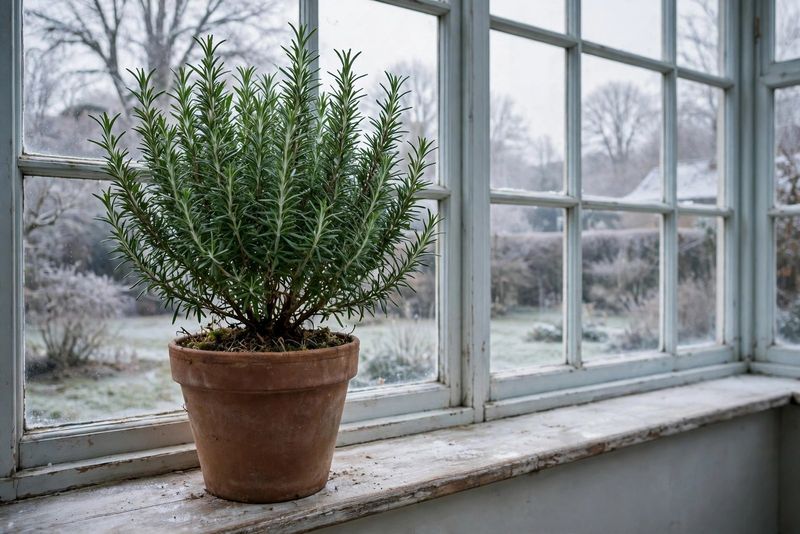
Brown tips on a windowsill rosemary can look like a cry for water. So you give it a drink, and then another a few days later.
But that kind, steady care can sometimes keep the pot wetter than the roots can handle, and brown needles can have other causes too. Here is how to check before you pour.
How Caring Too Often Can Keep Rosemary Too Wet
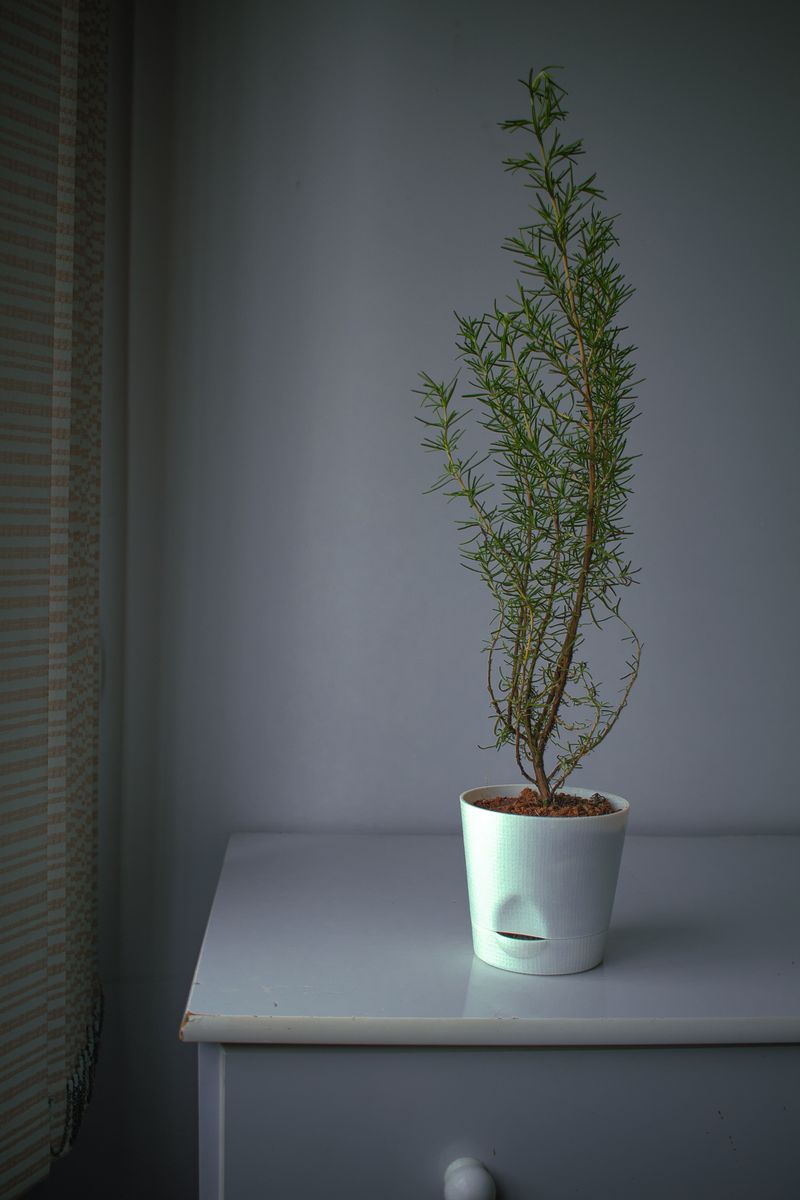
Picture a gray January morning in a Midwest kitchen. The rosemary on the sill has crisp, tan tips, and a watering can is already in your hand.
Rosemary (Salvia rosmarinus) does not die indoors every winter for one single reason. Plenty of things can go wrong in a warm house with short days.
But watering on a fixed schedule, or every time the foliage looks brown, can leave the potting mix soggy and the roots in trouble.
Here is why winter raises the stakes. Days are short, light is weak, and the plant uses less water than it did in summer.
A pot that stayed comfortably damp-then-dry in July can stay wet for much longer in January.
Rosemary is a Mediterranean shrub, and it likes its roots to breathe. Illinois Extension points out that indoor rosemary can get brown tips and dieback in dry indoor conditions, yet adding more water can lead to root rot.
That is the tricky part, because the symptom looks the same from the outside.
Winter care also gets harder for another reason. University of New Hampshire Extension advises waiting until the potting soil is very dry before watering thoroughly in winter.
So the starting point is simple. Before you water, push a finger into the mix and look at the drainage hole.
Let the soil, not the calendar or the color of the needles, tell you what to do next.
This will not rescue every plant. But it gives you a fair read on what is happening in the pot, and that is a kind of care your rosemary can actually use.
Why Wet Roots Can Look Like Thirst
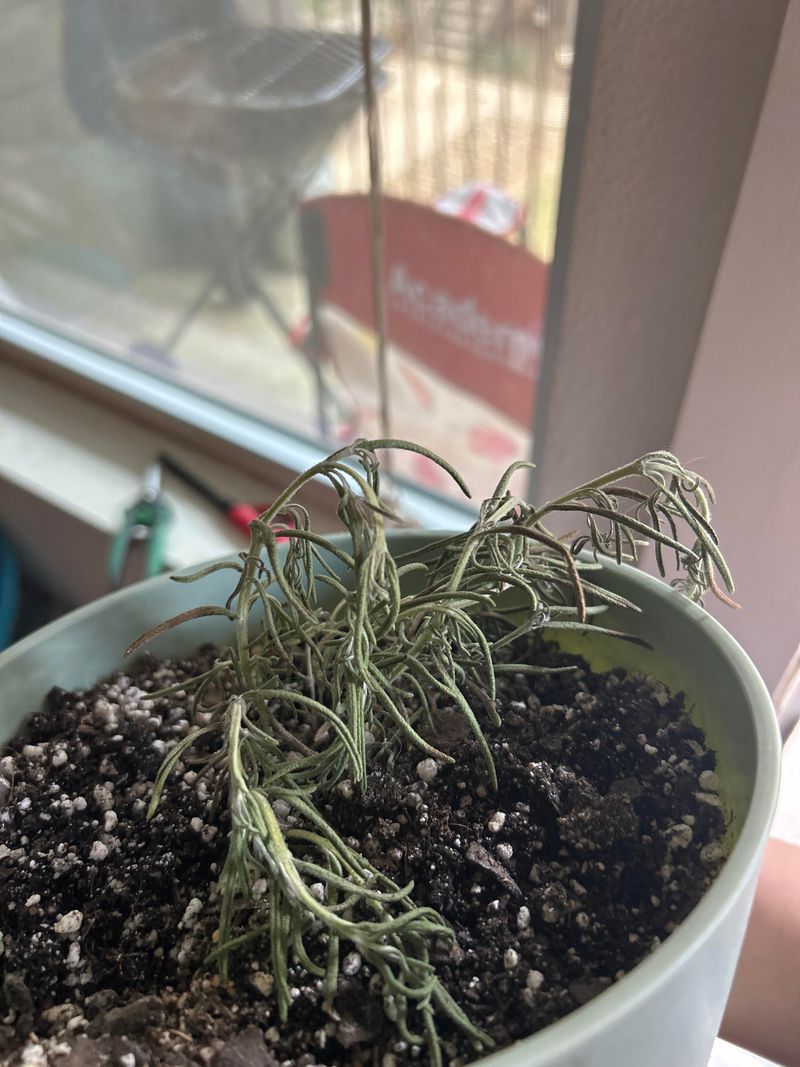
Here is a twist that surprises many gardeners. A rosemary can droop and brown while its soil is sitting wet.
Roots are like the straws of a plant. When they are damaged by too much moisture, they cannot pull water up well.
University of Maryland Extension notes that root rot can cause wilting even when the potting mix is wet, because the damaged roots cannot move water effectively.
So the plant looks thirsty, and you water it. That adds more moisture to roots already struggling for air.
Now flip the picture. Dry indoor air can also scorch rosemary.
Heating systems pull moisture out of the room, and Illinois Extension notes that dry indoor conditions can cause brown tips and dieback.
A plant sitting in truly dry mix may simply need a drink. So brown needles alone cannot tell you whether the problem is too much water, too little, or something else entirely.
Think of the symptoms as a smoke alarm. It tells you to look around, but it does not tell you which room is on fire.
That means the next step is a check, not a guess. Look at the mix, the pot, the light, and the air around the plant before you decide.
Check The Mix Before You Decide To Water
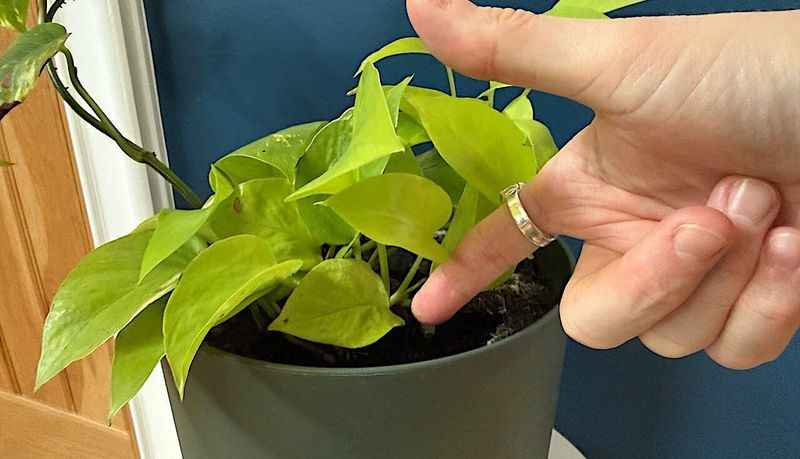
Most gardeners get the answer in under a minute. You just have to check in the right place.
Slide a finger into the potting mix a couple of inches deep. Notice whether it feels dry, cool and damp, or wet.
That tells you far more than the needles do.
Foliage cannot separate an underwatered plant from an overwatered one. Both can brown, droop, and drop needles, which is why Clemson Cooperative Extension treats watering as something to judge by conditions rather than by a set routine.
Those conditions change from house to house. A small clay pot dries faster than a large glazed one.
A fast-draining mix dries faster than a dense one. A sunny, warm room pulls moisture faster than a dim, cool one, and dry air adds to the loss.
Once you have checked the mix a few times, try lifting the pot. A freshly watered pot feels heavy, and a dry one feels much lighter.
Weight is a handy second check, but it takes practice, so use it alongside the finger test.
Avoid turning any single test into a rule for every pot. A fixed number of days or one exact depth will not fit every windowsill.
As University of Maryland Extension explains, indoor moisture loss shifts with the season and the room. Your plant gets a better answer when you ask the soil first.
Water Thoroughly, Then Let Conditions Guide The Next Check

A calendar reminder on your phone feels responsible. But your rosemary does not read calendars.
Rosemary should dry somewhat between waterings. Penn State Extension advises letting the mix dry out slightly, while the New Hampshire advice for winter is to wait until it is very dry.
Those are different levels, so treat them as guidance and read your own plant and conditions.
Do not leave it bone-dry for weeks, though. A plant in truly dry mix needs water, and very dry mix may need to be rewetted gradually.
When it is time, water thoroughly. Pour until water runs out of the drainage holes, then let it finish dripping.
Empty the saucer so the pot never sits in a puddle.
The pot itself matters just as much. Choose a container with drainage holes and a well-draining potting mix, as Penn State recommends.
UNH Extension also notes that an oversized container can stay wet too long.
A big pot holds a lot of soil with few roots to drink it. It is like giving a small plant a huge, soggy sponge.
After a deep drink, wait and check again. Maryland Extension reminds growers that winter conditions change how fast pots dry, so let the room guide your next check.
Winter Light And Placement Affect Moisture Needs
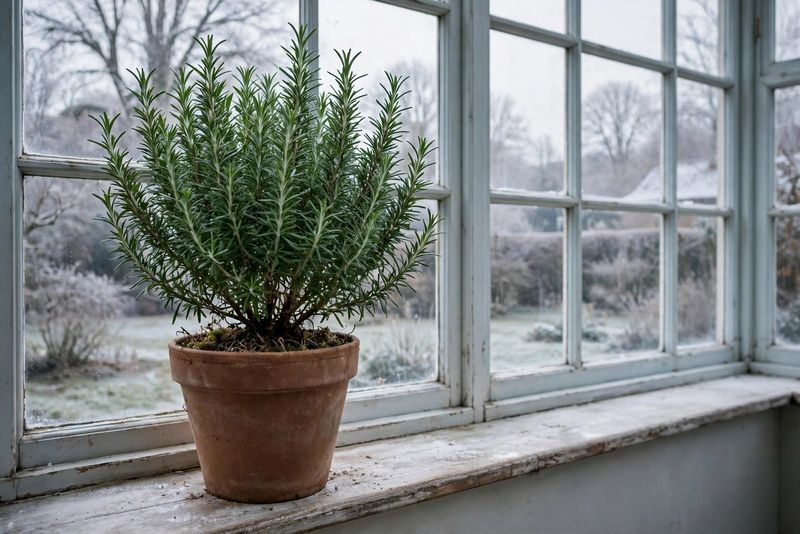
Out the window, snow is falling at 2 in the afternoon, and the sky looks the color of dishwater. Your rosemary is quietly working with far less light than it had in August.
Less light means slower growth and less water use. That is one big reason a winter pot stays wet so long.
Rosemary loves sun. Penn State Extension recommends about 6 hours of direct sunlight for herbs that need high light, including rosemary.
A south-facing window can help, but it does not guarantee success, since winter sun is weak and every home is different.
If your windows fall short, a grow light is an option. Iowa State Extension says supplemental lights can help in winter, placed about 6 to 12 inches from the foliage for 12 to 16 hours daily.
Not every lamp gives equal light, so watch how your plant responds.
Temperature plays a part too. UNH Extension reports that 45 to 55 degrees F can improve rosemary survival over winter where you have a room that cool.
Many homes do not, and that is fine.
The takeaway is that placement changes how thirsty the plant is. If you move it, add a light, or cool the room, check the mix again and adjust.
The pot will tell you more than the calendar ever could.
Inspect Roots And Foliage If The Plant Keeps Declining
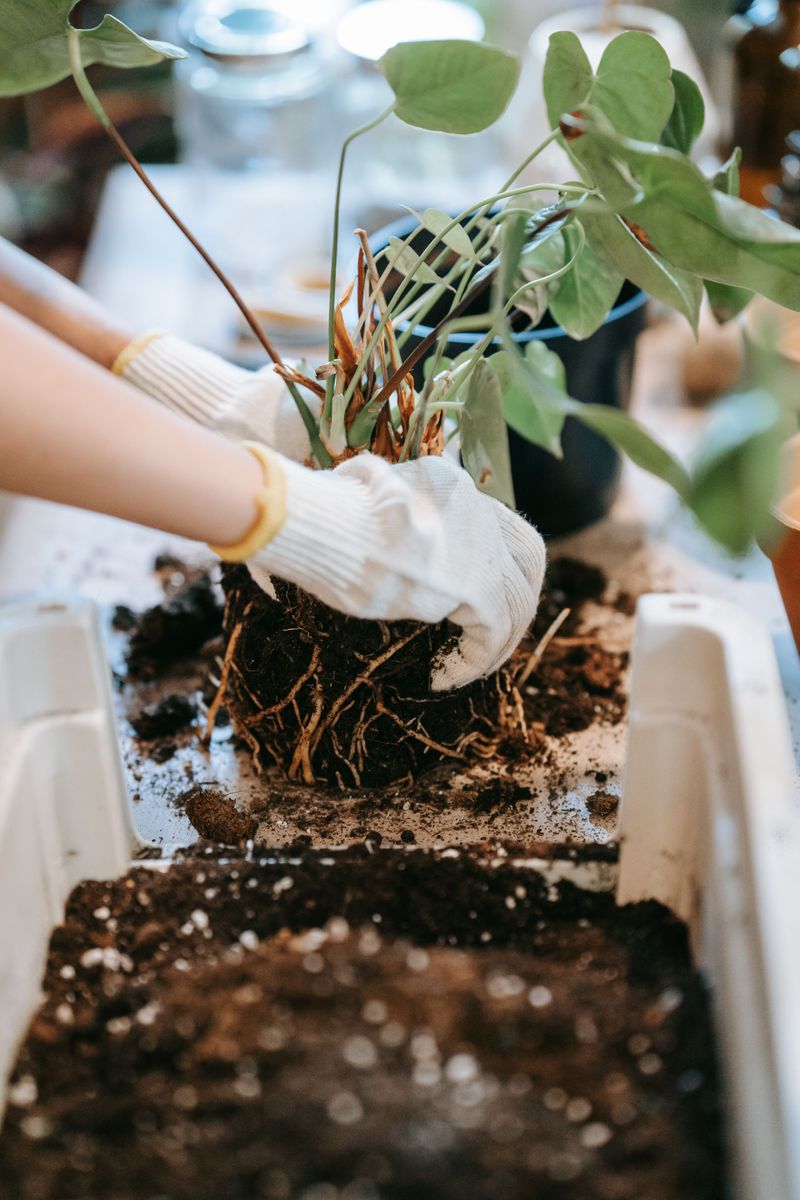
Sometimes you do everything right and the plant still slides downhill. That is the moment to look closer.
Gently slide the rosemary out of its pot. Healthy roots are generally light-colored and firm.
Dark, soft, or mushy roots point toward possible damage or rot, as the University of Maryland Extension diagnostic guidance describes.
Smell and feel help too. Roots that look healthy should not feel slimy.
Next, check the foliage. Hold a stem near a light and look closely.
Fine stippling, which means tiny pale dots on the needles, or visible webbing can be signs of spider mites. Those pests thrive in dry indoor air.
Treat that as a clue, not proof. Other problems can leave marks that look similar, so look for the mites themselves or more webbing before you decide.
Penn State Extension lists low light and watering difficulty as obstacles to growing rosemary indoors. That is useful to remember when a plant does not bounce back.
Be honest about recovery. Brown needles will not turn green again, and roots that are badly rotted may not come back.
But if some stems stay firm and green, new growth is possible with careful checks.
Rosemary can be stubborn, and winter indoors is a hard season for it. Even good care cannot promise a save.
Supportive Care Helps, But Does Not Guarantee Recovery
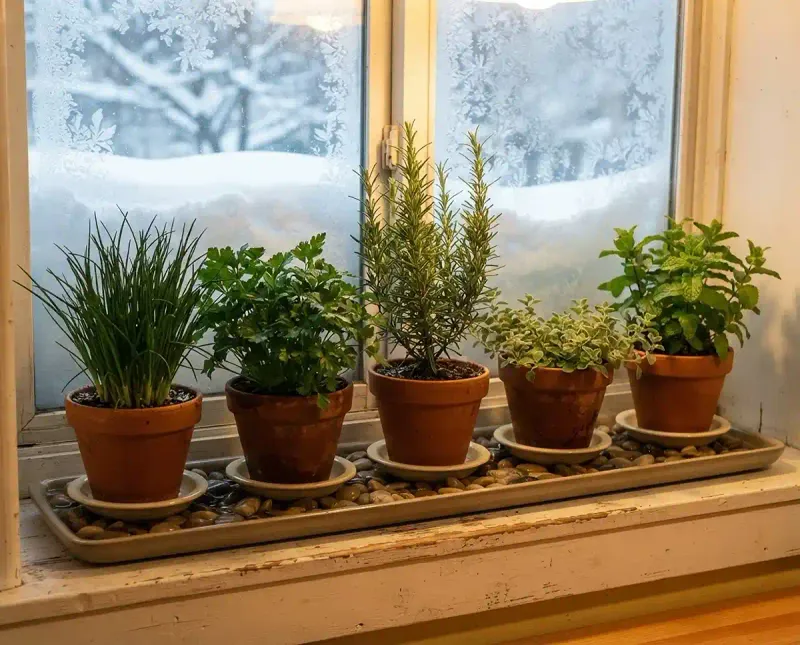
Once the roots and watering are sorted out, a few extras can give your rosemary a better shot. None of them replaces good root-zone care.
Start with bright conditions. Rosemary is happiest with plenty of light, and Illinois Extension recommends a cool, sunny location.
Where indoor air is dry, a pebble tray can raise humidity around the leaves. Fill a saucer with pebbles, add water, and set the pot on top so the bottom stays above the waterline.
Never let the pot sit in the water.
Think of the tray as a light mist in the air, not a drink for the roots. It will not fix root rot, low light, or a failing root system.
It is one small layer of support.
Winter rosemary indoors is a challenge even for experienced growers. Penn State Extension notes that low light and watering difficulty make it tough, and hardiness varies by location.
Rosemary is not reliably hardy in zone 6 or colder, which is why many northern gardeners bring it inside.
So aim for steady, thoughtful care rather than perfection. Check the mix, give it light, watch the roots, and adjust as the season changes.
Some plants make it through, and some do not. The ones that do usually had someone paying attention.
