
These Pennsylvania Native Plants Bring In The Praying Mantises That Hunt Spotted Lanternflies
Follow us on Google
You step into the yard on a sticky August evening, and there it is, a green praying mantis perched on a goldenrod stem with a spotted lanternfly locked in its front legs. Across Pennsylvania, gardeners keep catching this exact scene, and it is not luck.
The right native plants pull in the insects mantises love to eat, and they give those patient hunters a place to sit, wait, and strike. Here are eight Pennsylvania natives that can turn your backyard into mantis country, plus how to plant them so the hunters actually stay.
1. Praying Mantises Really Do Eat Spotted Lanternflies
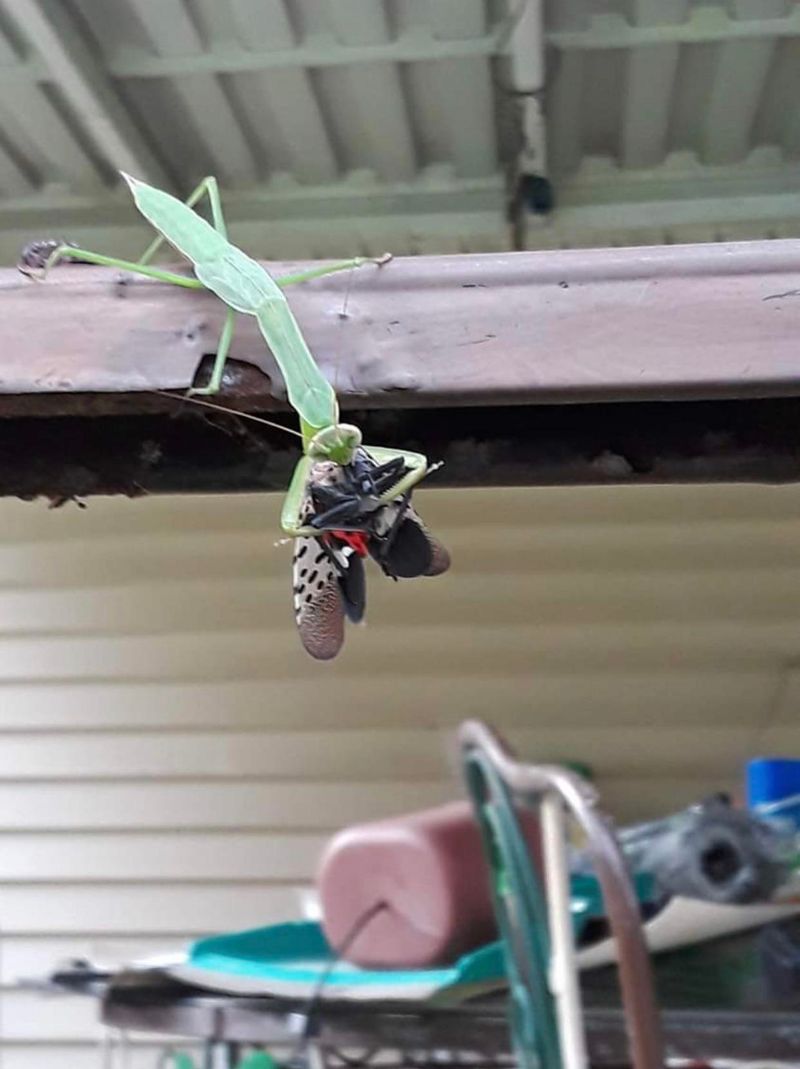
Plenty of people assume the mantis photos on Facebook are flukes. They are not.
Penn State researchers gathered hundreds of citizen reports, and praying mantises showed up again and again as lanternfly predators, alongside spiders and wheel bugs.
Here is where it gets tricky. Mantises are generalists, which means they eat almost anything they can grab, including the occasional bee or butterfly.
So a mantis is a helpful neighbor, not a hired exterminator.
Spotted lanternflies first turned up in Berks County in 2014 and have since spread across most of the state. No single predator will erase them.
But every lanternfly a mantis eats is one less laying eggs on your maple before the October cold snap.
Your job is simple. Build a garden full of mixed insect life and tall, sturdy stems, then let the mantises do what they were built for.
Think of it as one layer, stacked with scraping egg masses from fall through spring and squishing adults on sight.
And honestly, there is something satisfying about watching nature take your side for once.
2. Joe Pye Weed Builds A Tall Mantis Lookout Tower
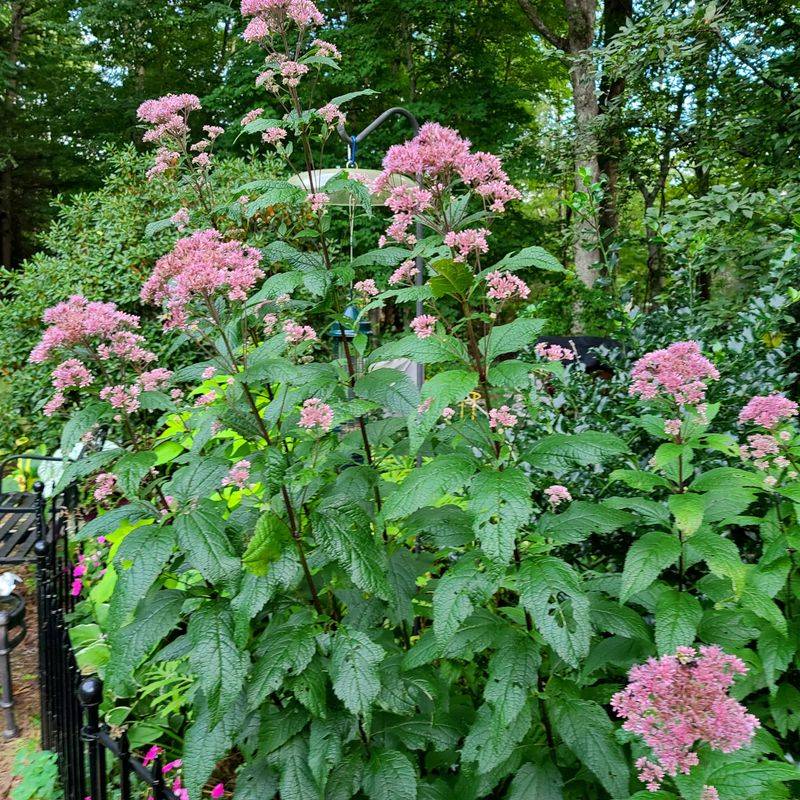
Picture a plant taller than your fence, crowned with dusty pink domes and buzzing like a party you were not invited to. That is Joe Pye weed (Eutrochium purpureum and its cousins), and it can reach 8 to 10 feet by late summer.
Every monarch, swallowtail, native bee, and wasp in the neighborhood seems to find it. For a mantis, that is a restaurant with a balcony seat.
The thick stems hold an ambush hunter steady while dinner flies in.
Joe Pye weed genuinely likes wet feet. If your central valley yard holds water after a thunderstorm, or your clay stays soggy into June, this plant treats that as a gift.
Give it full sun to part shade and space plants about 3 feet apart.
Small yard? Look for compact selections that top out around 4 to 5 feet.
Plant in spring after your last frost, usually early May in most of the state, and water deeply once a week the first summer.
Leave the stalks standing through winter. Mantis egg cases and other good bugs often ride out the snow right there, waiting for spring.
3. Goldenrod Keeps The Hunt Going Until Hard Frost
Myth first. Goldenrod does not cause your fall sneezing, ragweed does.
Goldenrod pollen is heavy and sticky, made for insects, not wind.
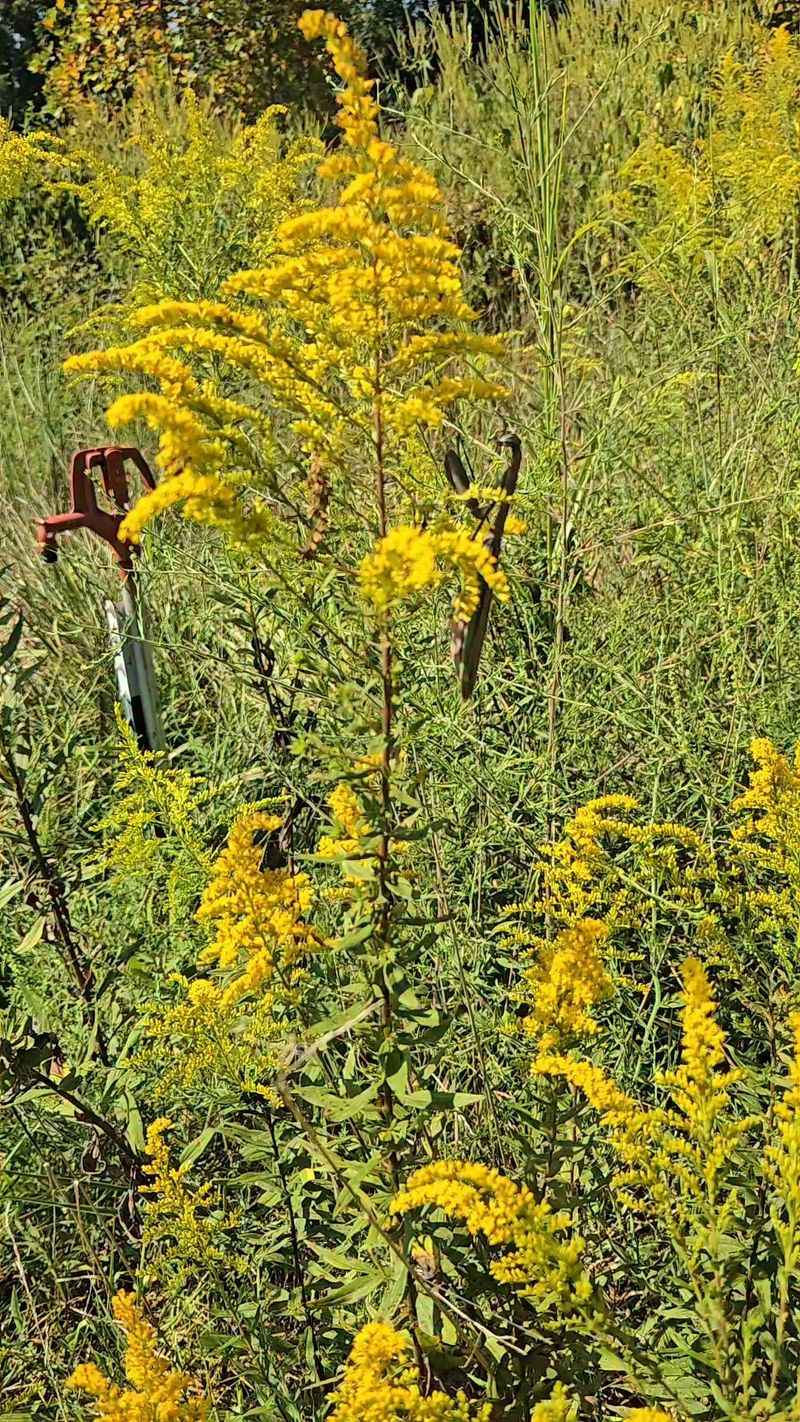
And insects truly flock to it. From August into November, goldenrod (Solidago species) feeds bumblebees, soldier beetles, hoverflies, and wasps when most flowers have quit.
That crowd draws hungry mantises, which are fattening up to lay eggs before the first frost.
Timing matters here. Adult lanternflies are at their busiest in September and October, the same weeks goldenrod peaks.
So your mantises are parked right where the action is.
Choose clump-forming types if you worry about spreading. Zigzag goldenrod (Solidago flexicaulis) handles dry shade, while rough goldenrod (Solidago rugosa) grows 3 to 4 feet in sun.
Space them 2 to 3 feet apart. They shrug off deer and drought, which helps in the rocky soils of the northern tier.
It is the last diner open before winter, and your mantises are regulars.
4. New England Aster Feeds Baby Mantises And Hides Eggs

Here is a surprising fact. Native asters support over 100 kinds of caterpillars in Pennsylvania, which makes them what ecologists call keystone plants, the ones a whole food web leans on.
New England aster (Symphyotrichum novae-angliae) is the showstopper, with purple daisies on stems 4 to 6 feet tall from late August into October. Those caterpillars and late bees become meals for mantises of every size.
The real secret is what happens after bloom. Female mantises glue their foamy egg cases, called oothecae, to sturdy stems in fall.
Cut your asters to the ground in October and you may toss next year’s hunters in the yard waste bin.
So wait. Trim old stalks in late spring, once daytime temperatures hold above 50 degrees and the eggs have hatched.
Asters like full sun and average to moist soil, which suits Susquehanna Valley yards nicely.
A messy fall bed is not lazy gardening. It is a nursery.
5. Bee Balm Turns Midsummer Into A Hunting Season

Late July, a porch evening, and the bee balm bed is practically humming. Hummingbirds zip in, clearwing moths hover, and somewhere in the leaves a half-grown mantis is watching all of it.
Bee balm (Monarda fistulosa and Monarda didyma) blooms roughly June through August, bridging the gap before goldenrod and asters. That matters, because mantises hatch in late spring and need steady meals all summer to grow big enough to tackle a lanternfly.
Its minty leaves may also confuse some pests looking for nearby plants, though that is a modest bonus, not a shield. Plants grow about 2.5 to 4.5 feet tall in full to part sun.
The catch is powdery mildew in humid weather. Space plants 18 to 24 inches apart for airflow and water at the base, about an inch a week.
In the damp clay near Lake Erie, wild bergamot tends to resist mildew better than scarlet types.
Small mantises become big ones on this buffet.
6. Black-Eyed Susan Brings In The Small Prey Nymphs Need

Black-eyed Susan (Rudbeckia hirta) looks too cheerful to be part of a predator plan. But its open, flat flowers are basically landing pads for little insects.
Small native bees, hoverflies, and tiny wasps visit from July into October. That is exactly the prey size a young mantis nymph can handle.
A newly hatched mantis is barely half an inch long, so it needs bite-sized meals before it graduates to lanternflies.
This plant is actually one of the toughest on the list. It tolerates clay, gravel, acidic or alkaline soil, and the dry August stretches that hit southeastern Pennsylvania between downpours.
Plant in full sun, about 12 to 18 inches apart, in groups gardeners call drifts, which pull in even more insects.
Let the seed heads stand into winter. Goldfinches will thank you, and the stiff stems stay useful as perches.
Sometimes the easiest plant does the quietest, most important work.
7. Native Milkweeds Weave A Busy Web Of Prey

You probably think of milkweed as monarch food, and it is. But the flowers feed far more than monarchs, which is why mantises keep showing up nearby.
Common milkweed (Asclepias syriaca), swamp milkweed (Asclepias incarnata), and butterfly weed (Asclepias tuberosa) all grow wild in Pennsylvania. From June through July they pull in bees, moths, beetles, and butterflies.
Scientists call this conservation biological control, which simply means feeding good bugs so they stick around and eat bad ones.
Match the type to your ground. Common milkweed grows up to 6 feet in full sun and spreads, so give it a corner in western Pennsylvania shale or clay.
Swamp milkweed loves wet spots. Butterfly weed stays 1 to 2 feet tall and thrives in dry, sunny soil, though it hates being moved once planted.
You also help monarchs fuel up before their fall trip south in September. That is two good deeds from one plant.
8. Layered Plantings And Fewer Sprays Keep Mantises Home

Blunt truth. Buying mantis egg cases online rarely fixes anything, and the common Chinese mantis sold in kits is not even native.
Habitat beats shipping every time.
Think in layers. Put tall plants like Joe Pye weed in back, mid-height asters and goldenrod in the middle, and black-eyed Susan or butterfly weed up front.
Tuck in switchgrass (Panicum virgatum) for winter structure. Aim for bloom from June to November so the menu never empties.
Then ease off the sprays. Broad insecticides kill mantises right along with lanternflies, and they wipe out the prey too.
Penn State Extension recommends targeted steps instead, like scraping egg masses and removing tree of heaven, the lanternfly’s favorite host.
Give it two seasons. Perennials often sleep the first year, creep the second, and leap the third.
Higher yards in the Poconos and Laurel Highlands may need a little extra patience.
One day you will spot a mantis eating a lanternfly on your own goldenrod. And you will know you set the table.
