
What The Lubber Grasshoppers Crawling Across Your Florida Yard Are Really Telling You
Follow us on Google
You walk out to check on your garden beds one morning and find a parade of large, boldly colored grasshoppers moving through the grass like they own the place.
For many Florida homeowners, that first sighting stops them cold.
These insects may be Eastern lubber grasshoppers, one of the most recognizable creatures in the Southeast, and understanding why they showed up can save you a lot of worry and wasted effort.
Their presence is not random, but it is also not a verdict on your gardening skills.
They May Be Eastern Lubbers—Check Before You Decide
Before reaching for anything, slow down and look at the insect carefully.
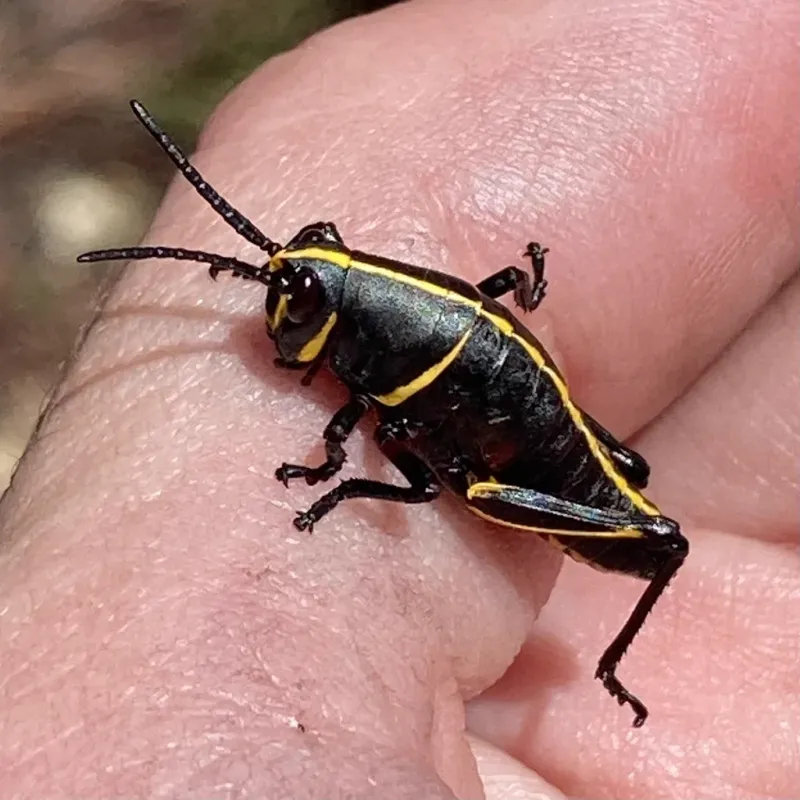
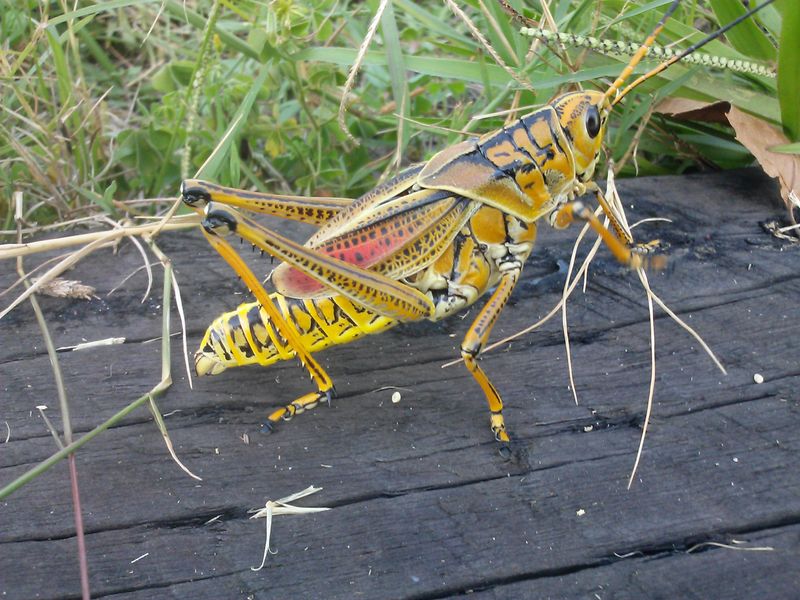
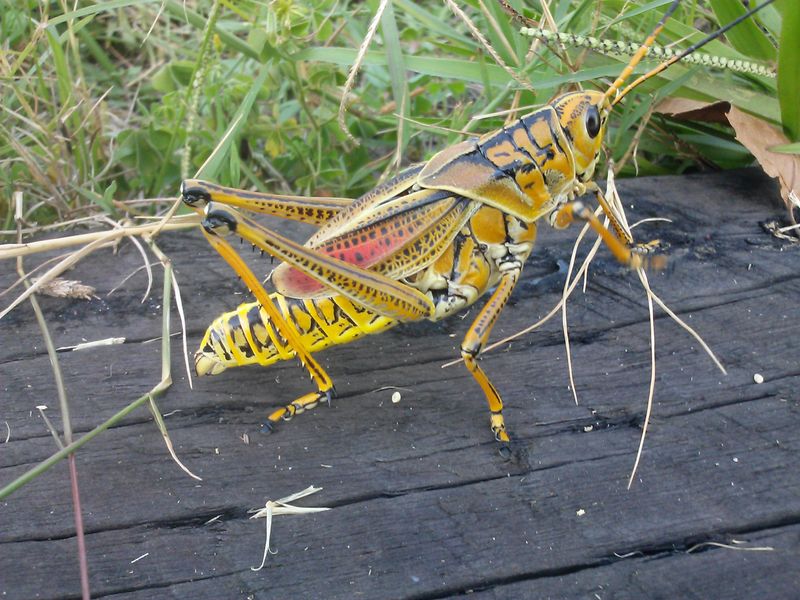
Large, colorful, and almost comically clumsy, the grasshopper crossing your yard may well be an Eastern lubber, known scientifically as Romalea microptera.
Adults can stretch to about 3 inches long and come in a range of colors: yellow or orange bodies marked with black, or nearly all-black forms with red or yellow trim.
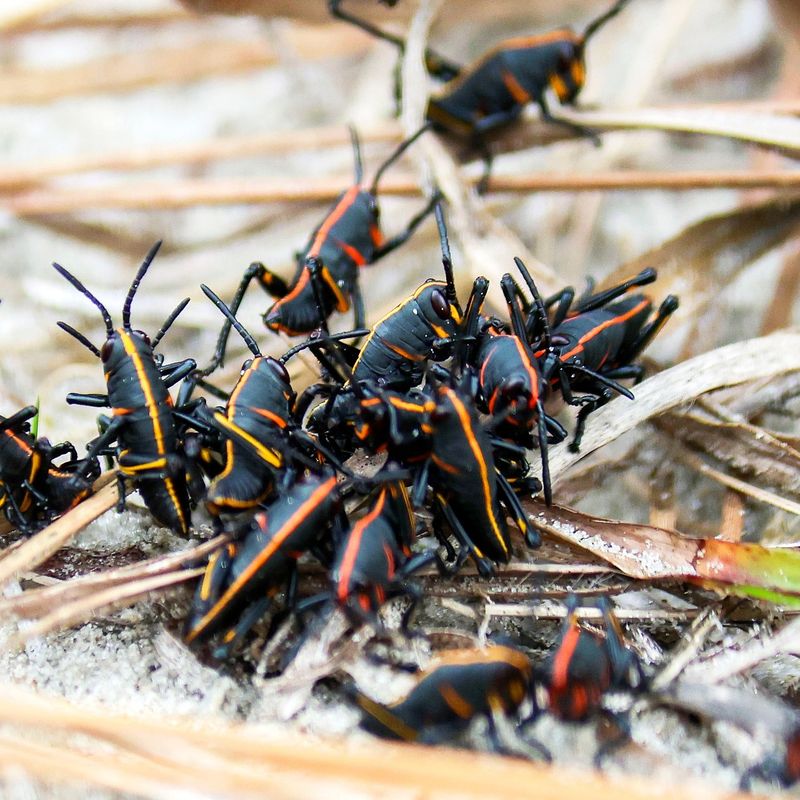
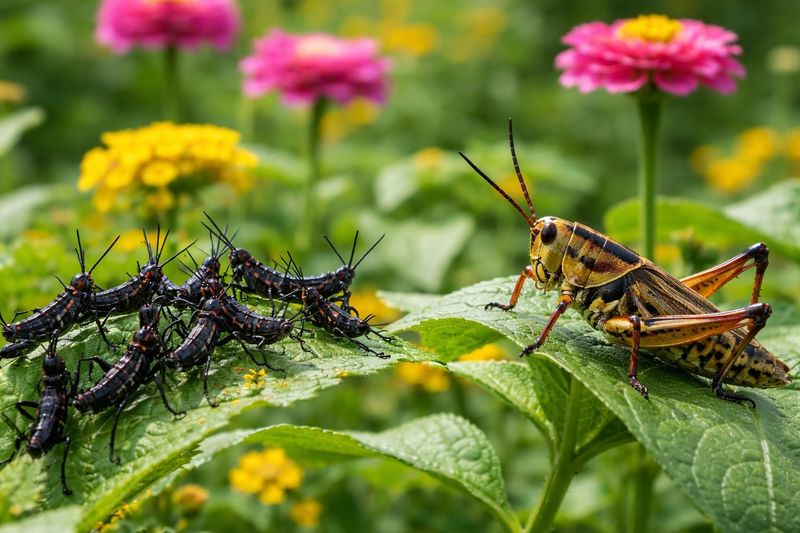
Young nymphs are typically black with bright yellow, orange, or red markings and travel in clusters that can genuinely startle a homeowner who was not expecting them.
Florida is home to more than one large grasshopper species, so identification matters before you treat anything as a lubber problem.
UF/IFAS guidance on common Florida grasshoppers points out that several species share the state, and applying lubber-specific advice to the wrong insect wastes time and may cause harm.
If you are uncertain, photograph the insect from the side and top, then compare it with images from a reliable Florida extension source before deciding on a response.
One thing worth knowing right away: flightless does not mean stuck in place.
Eastern lubbers have no functional wings for flight, but adults and nymphs can walk surprisingly long distances, crossing lawns, driveways, and garden borders without difficulty.
They may have marched in from a drainage ditch, a weedy lot, or a pond edge nearby.
Also, if you pick one up or handle it without protection, a disturbed lubber can hiss loudly and release a foul-smelling, irritating secretion from its body.
Gloves or a tool are a sensible choice for any hands-on encounter, followed by thorough hand-washing.
A Hatch Can Make The Yard Look Suddenly Overrun
One afternoon your yard looks normal.
The next morning, dozens of small black insects are moving through a single garden bed.
That is not an infestation spreading from some distant source overnight.
What you are most likely seeing is a hatch, and the lubber life cycle explains exactly why it feels so sudden.
Female lubbers deposit egg pods roughly 1.2 to 2 inches below the soil surface, often in soft ground near the edges of beds or in weedy patches.
Each pod holds about 30 to 50 eggs.
UF/IFAS Extension research on Eastern lubber grasshoppers notes that the egg stage lasts approximately 6 to 8 months, and the eggs need a cool period before they hatch as soil temperatures rise.
That built-in delay is why a cluster of nymphs seems to appear from nowhere at a particular moment in the season.
Young nymphs tend to stay near the hatch site at first, which is why you may find a tight group in one corner of the yard rather than insects scattered everywhere.
Over the following days and weeks, they begin to spread out into surrounding plants, lawn edges, and vegetable beds.
UF/IFAS Extension Hillsborough County notes that the nymph stage lasts roughly 2 to 3 months before adults develop.
Timing also varies across the state: UF/IFAS Gardening Solutions explains that lubbers may be present much of the year in South Florida, while North Florida tends to see more distinctly seasonal appearances.
The practical takeaway is to find that first cluster early, inspect nearby weeds and favored plants repeatedly, and act while the nymphs are still small and manageable.
The Real Signal Comes From Beyond The Fence
Here is where the report-card idea gets complicated.
Seeing a crowd of lubbers in your yard feels personal, like something you did or did not do caused them to show up.
Most of the time, the real story starts on the other side of your fence.
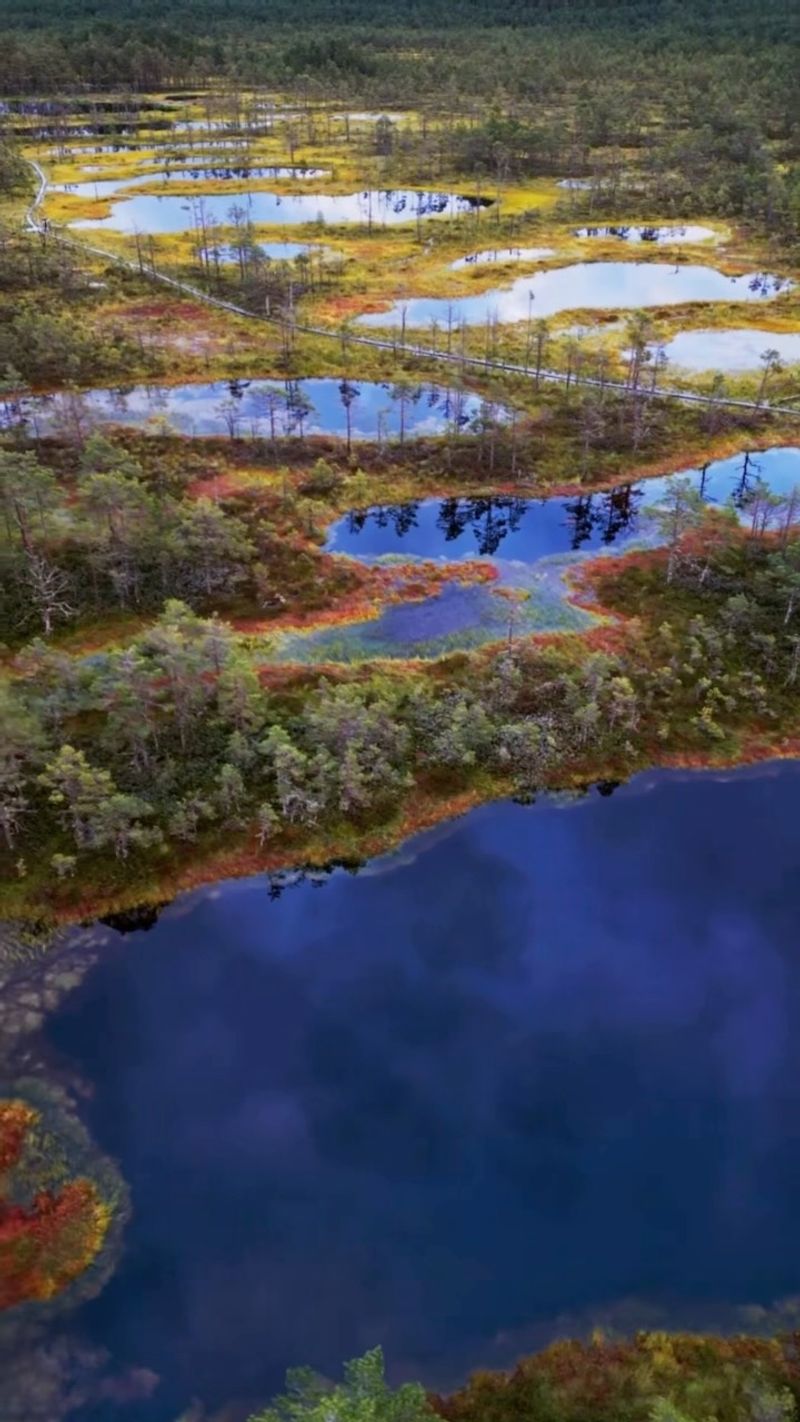
Eastern lubbers prefer to breed in low, moist areas: drainage ditches, pond edges, wet pastures, and the margins of wooded wetlands.
The Florida Department of Agriculture and Consumer Services notes that population explosions can reflect weather patterns and changes in parasitism by beneficial insects, not just conditions inside a single yard.
A wet spring, a retention pond two lots away, or an unmanaged right-of-way thick with broadleaf weeds can send lubbers walking into a tidy residential landscape with no invitation at all.
Research published in Environmental Entomology on Florida grasshopper habitat associations connects lubber presence with moist habitat types and specific plant communities, which reinforces the idea that surrounding land matters as much as what is inside your beds.
Moisture is a useful clue, not a diagnosis.
Your drip irrigation schedule is probably not the reason lubbers appeared; the retention pond at the end of the street or the wet ditch behind the neighborhood may be far more relevant.
Lubbers also do not reliably measure your soil fertility, maintenance habits, biodiversity, or overall garden health.
Their numbers tell you that nearby conditions suit them and that your plants are within walking distance.
That is genuinely useful information, but it is a starting point for scouting, not a judgment on how you garden.
Accessible Plants Turn A Clue Into Damage
Whether lubbers stay casual visitors or become a real problem depends largely on what you are growing.
Their menu is much longer than most homeowners expect, and that matters when you are deciding how worried to be.
UF/IFAS Featured Creatures documentation on Eastern lubber grasshoppers reports more than 100 host plants across 38 plant families, covering shrubs, herbs, broadleaf weeds, grasses, vegetables, citrus, and ornamentals.
Lubbers tend to favor broadleaf plants over grasses, which is why a St. Augustine lawn may look untouched while nearby garden beds take real damage.
Commonly affected plants include amaryllis (Hippeastrum spp.), crinum (Crinum spp.), narcissus (Narcissus spp.), Amazon lily (Eucharis amazonica), oleander (Nerium oleander), butterfly weed (Asclepias tuberosa), Mexican petunia (Ruellia simplex), and lantana (Lantana camara), as well as citrus and a range of vegetable crops.
Research on host plant selection by Romalea microptera documents that lubbers show stronger preferences for peas, lettuce, kale, beans, and cabbage compared to eggplant, tomato, pepper, celery, okra, fennel, and sweet corn.
That preference is real, but it is not a guarantee.
When lubber populations are high, less-favored crops can still sustain feeding damage, so do not assume your tomatoes are safe simply because they rank lower on the preference list.
No single replacement plant actually repels lubbers reliably.
Swapping one ornamental for another is one layer of management, not a solution on its own.
The plant mix in your yard shapes the risk, but the insect population and proximity to breeding habitat shape it just as much.
Measure The Damage Before You Treat
Not every lubber on your property needs a response.
A couple of large adults working through a mature firebush (Hamelia patens) may leave some ragged edges but will not kill the plant.
The calculation changes when you see a cluster of nymphs on a young citrus tree, a stand of crinum, or a row of seedling vegetables.
Walk the affected area and take stock of a few things: how many insects you actually count, whether the damage you see is fresh and expanding, how established the plants are, and whether the insect numbers appear to be growing day over day.
UF/IFAS research on lubber feeding notes that lubbers can strip plants completely but generally consume less total plant material than some smaller grasshopper species.
That context matters.
A few cosmetic holes on a mature ornamental are very different from defoliation spreading across young plants with shallow root systems.
The framework that actually helps here is integrated pest management, and its central tool is the action threshold.
UF/IFAS guidance on integrated pest management and action thresholds defines the threshold as the pest level at which damage becomes an unacceptable economic, nuisance, or health concern.
In plain terms: intervene when the damage genuinely bothers you or threatens a plant you care about, not simply because insects are present.
Eastern lubbers are native to Florida and the southeastern Coastal Plain, but native status does not make them harmless when populations are high and vulnerable plants are in reach.
Presence alone is not a reason to spray.
Expanding damage to plants you value is.
Scout And Remove Young Lubbers First
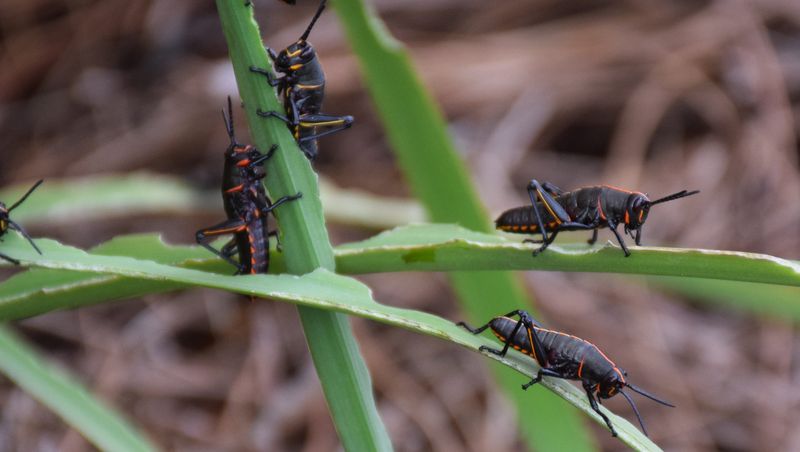
Young lubbers are genuinely easier to manage than adults, and the window for catching them while they are small closes faster than most people expect.
Nymphs in their first few instars are slower, softer, and more concentrated near the hatch site.
Once they develop into full adults over roughly 2 to 3 months, the job gets considerably harder.
The most reliable first step is repeated scouting.
Walk your yard every few days, paying close attention to the plants lubbers favor, the weedy edges of beds, and any low spots near moisture.
When you find nymphs, UF/IFAS Extension recommendations for lubber control suggest hand-picking them directly, shaking them from plants onto the ground and collecting them, or dislodging them with a firm stream of water from a garden hose.
Once removed, drop the insects into a container of water with a small amount of dish soap added, or seal them in a plastic bag before disposing of them.
Either method finishes the job without any chemical exposure to your plants, soil, or nearby pollinators.
Wear gloves or use a tool rather than bare hands.
A disturbed lubber can hiss, spread its wings, and release a foul-smelling secretion that irritates skin and eyes.
Wash your hands after any handling session regardless of whether you used gloves.
UF/IFAS Hillsborough County Extension reinforces that repeated removal during the nymph stage is where physical control pays off most.
Removing lubbers now reduces current feeding damage, though it does not promise anything about next season’s population, which will depend on conditions that extend well beyond your property line.
Manage Borders Without Blaming The Homeowner
Vegetation management along the borders of your yard is a practical control layer, not a confession that you let things go.
The goal is to reduce the shelter and movement corridors that lubbers use when they walk in from surrounding habitat.
Mowing the weedy margins of your property, especially along fence lines, drainage corridors, and any low, damp areas, can make lubbers more visible to natural predators and may slow their movement into beds.
Removing heavy weed growth near vulnerable plantings reduces the cover young nymphs use as they disperse from a hatch site.
UF/IFAS Featured Creatures guidance notes that these habitat adjustments are a useful population-management step, distinct from any judgment about garden tidiness.
A well-maintained yard can still receive lubbers from adjacent natural areas, and a rougher yard does not automatically produce them.
Before adjusting irrigation or drainage, look at the landscape around your property.
Check for damp low spots, pond margins within a few hundred feet, drainage swales, rights-of-way thick with broadleaf vegetation, or unmanaged lots nearby.
Research in Environmental Entomology on grasshopper habitat associations supports the idea that surrounding land use and moisture conditions shape local populations more than any single yard’s practices.
If those external areas are the source, trimming your own borders helps at the margin but will not eliminate the pressure entirely.
The integrated pest management approach still applies here: identify the insect, monitor where they are concentrating, assess whether damage justifies action, and then choose the least disruptive effective response.
UF/IFAS IPM guidance frames this sequence as the foundation of responsible pest response, not a last resort.
Use Chemicals Only As A Label-Guided Last Step
Physical removal handles most small lubber situations without any chemical exposure.
But if populations are large, damage is expanding to plants you genuinely care about, and repeated hand-picking has not kept pace, a labeled insecticide may be the right next step.
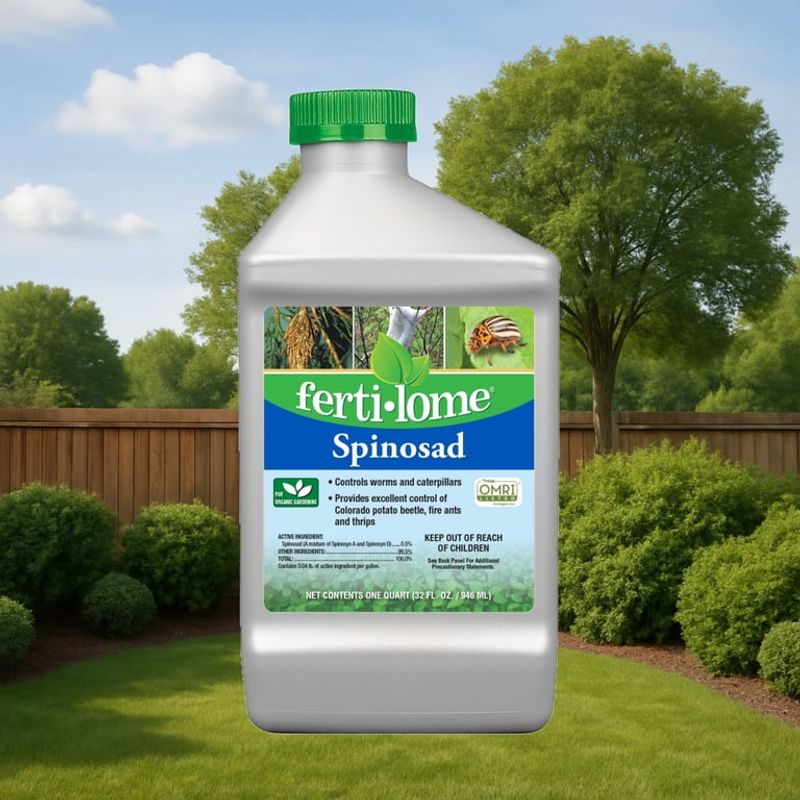
Several active ingredients can control lubbers when used according to their label, including carbaryl, bifenthrin, cyhalothrin, permethrin, esfenvalerate, and spinosad.
UF/IFAS research on Eastern lubber control notes that large adults are unusually difficult to kill with insecticides because of their body size and their ability to detoxify many plant-derived compounds.
Nymphs respond better, which is another reason early scouting and treatment matters.
The current product label controls every aspect of the application: site, pest, timing, rate, and safety requirements.
Household cleaners, homemade soap sprays, and any product not specifically labeled for the intended pest and location are not appropriate substitutes and may be illegal to use in that way.
Spinosad deserves special attention because it is derived from a naturally occurring soil bacterium and is sometimes treated as automatically safe.
UF/IFAS guidance on natural pest management products states clearly that wet spinosad spray is highly toxic to bees.
Apply it only when pollinators are not actively foraging, such as early morning, late evening, or at night.
Avoid spraying open blooms or blooming weeds, and keep applications away from ponds, streams, and drainage areas unless the label specifically permits it.
The EPA pollinator protection guidance reinforces that timing and site selection matter as much as product choice.
Natural enemies, including loggerhead shrikes, tachinid flies, certain wasps, spiders, frogs, and birds, do feed on lubbers, though adult defenses limit how much predation actually occurs.
These allies are worth protecting by avoiding broad-spectrum sprays when physical removal or a more targeted product will do.
Lubbers in your yard are asking you to look at the habitat around you and the plants within reach, not to render a verdict on yourself as a gardener.
Scout early, remove what you can, manage borders thoughtfully, and escalate only when the damage genuinely calls for it.