
What It Really Means When A Crow Keeps Landing In Your Pennsylvania Yard
Follow us on Google
You step out on a gray October morning and find the same large black bird standing in your grass, head tilted, watching you right back.
That’s not coincidence.
Pennsylvania crows are among the sharpest animals sharing our neighborhoods, and when one keeps showing up, it has almost certainly found something useful on your property.
Understanding what that something is can tell you a lot about your own yard, and help you decide what to do next.
The Crow Has Found a Reliable Stop
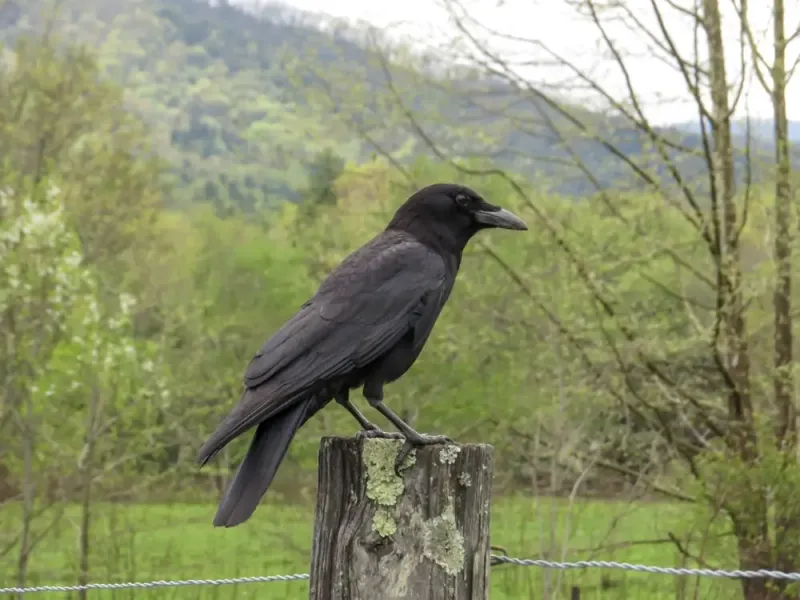
Most of the time, the bird watching you from the lawn is an American crow, Corvus brachyrhynchos, and Pennsylvania supports them year-round.
They are common in yards, parks, farmland edges, and roadsides across the state.
If you live in southeastern Pennsylvania or near the Susquehanna River, the visitor could be a fish crow, Corvus ossifragus, which looks nearly identical but is noticeably smaller and gives a nasal, two-note call rather than the classic caw.
Before assuming anything mystical, consider what the bird is actually doing.
A crow simply perching on a roof peak or fence post is resting or scanning.
One that probes the turf, picks at something near the compost bin, or carries an object away is actively working a food source.
Those behaviors create very different clues about what your yard is offering.
Cornell Lab of Ornithology research describes American crows as highly adaptable birds that use human-created habitats whenever food and perches are available.
The repeated landing is not a supernatural signal, a personal greeting, or proof the bird has claimed your yard as its territory.
The most straightforward explanation is that your property sits on a reliable stop in a wider daily route.
The Pennsylvania Game Commission notes that crows are opportunistic and will return to any location that consistently delivers what they need.
That is the frame worth keeping as you read the rest of this article.
Your Yard Is Offering Something Useful
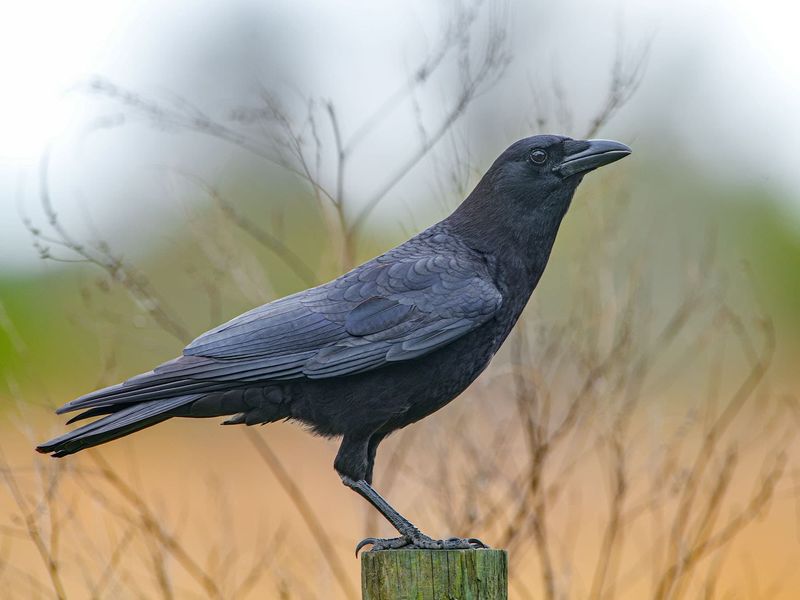
Crows are opportunistic omnivores, and your yard may be offering several different things at once.
Pennsylvania’s Game Commission lists grubs, worms, insects, grain, fruit, organic garbage, and carcasses as common crow foods.
Each of those represents a separate clue.
A crow near your feeder is after spilled seed.
One circling the compost bin has found food scraps.
One walking the lawn edge slowly is hunting earthworms or beetles working close to the surface.
Penn State Extension frames wildlife use of any property around four basics: food, water, cover, and space.
That framework applies directly here.
Open lawn gives the crow clear sightlines and easy foraging ground.
Mature trees or rooflines provide elevated perches for scanning.
A birdbath or low spot that holds rainwater offers a drink or a place to soften food.
Reduced foot traffic, a quiet dog, or a yard without a lot of sudden noise lowers the disturbance level enough to make the stop worth repeating.
Before you change a single thing, spend two or three mornings watching where the bird actually goes.
Cornell’s life history data shows crows eating an enormous range of foods, so the specific spot the bird visits most often is a genuine clue, not a random choice.
That observation will tell you far more than any general assumption about why crows appear in yards.
Look Below the Feeder Before Blaming the Lawn
Start your inspection at the easiest spot first: directly beneath the feeder.
Spilled sunflower seeds, cracked corn, or millet pile up fast, and a crow does not need to dig for any of it.
Check beside pet food dishes left outside, around the edges of trash and recycling containers, and near the compost pile.
Penn State Extension’s wildlife habitat guidance makes clear that accessible food is the single strongest draw for any opportunistic bird.
A normal landing on open grass does not diagnose lawn damage.
Pennsylvania Game Commission records confirm that crows eat a wide variety of foods, so the bird could be after an earthworm, a fallen walnut from a neighbor’s tree, a dead insect on the surface, or nothing more dramatic than a good perch with a wide view.
One ordinary visit is not enough information.
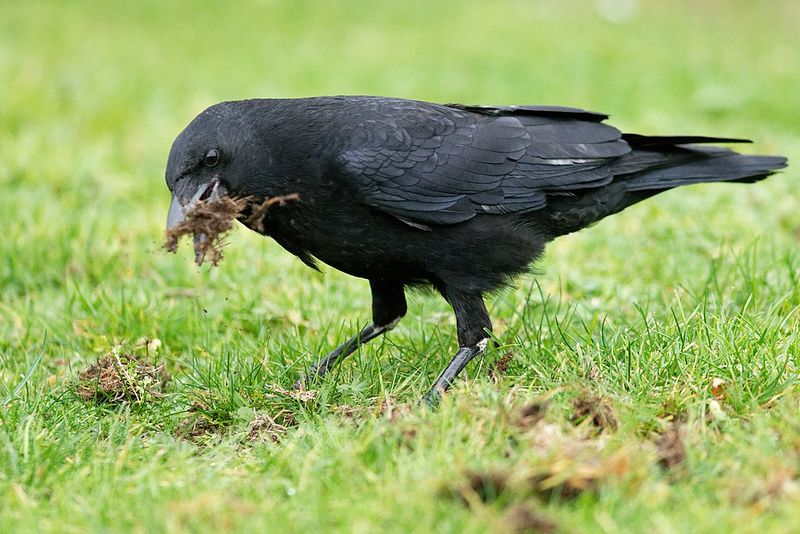
The situation changes if you watch the crow repeatedly jabbing its bill into the turf, pulling up small plugs of grass, or working the same patch of lawn across several visits.
That pattern is worth investigating.
Penn State Extension identifies white grubs as pale, C-shaped scarab-beetle larvae found in the soil below grass roots, and they are a genuine food source for crows.
Pull back a small section of turf in the area the bird visits most.
If you find larvae, you have a confirmed clue.
If you find nothing, the crow was after something else entirely, and your lawn is fine.
Repeated Visits Do Not Mean One Resident Bird
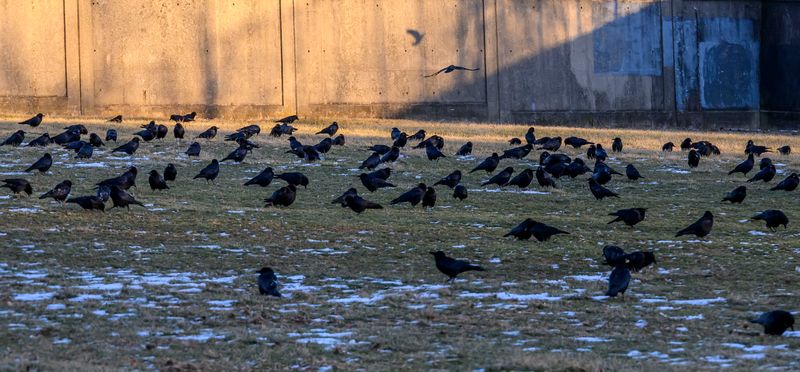
Seeing the same black bird every morning feels personal, but the crow you notice today may not be the same individual as yesterday.
American crows live in year-round family groups, and the bird landing in your yard could be a young helper accompanying its parents, a sentry watching while other family members feed nearby, or simply a bird pausing between two more productive stops.
Cornell Lab’s life history overview describes cooperative behavior, shared vigilance, and communal roosting as core features of crow social life.
Winter adds another layer.
The Pennsylvania Game Commission reports that winter flocks can travel up to 30 miles a day searching for food.
Your yard may be one stop among dozens on a route that covers a wide stretch of landscape.
The crow is not living in your yard; it is passing through a network of resources and yours happens to be on the path.
Here is where the research on crow intelligence gets genuinely interesting, but also commonly misread.
A 2012 PET imaging study showed that crows use face-related brain regions similar to those mammals use when processing threatening human faces.
Separately, University of Washington research documented that crows can remember and respond to threatening people for years.
That is real and remarkable.
What it does not show is that a crow visiting your yard has formed a personal friendship with you, decided you are trustworthy, or chosen your property because it likes you specifically.
A Crow Can Expose a Lawn Problem
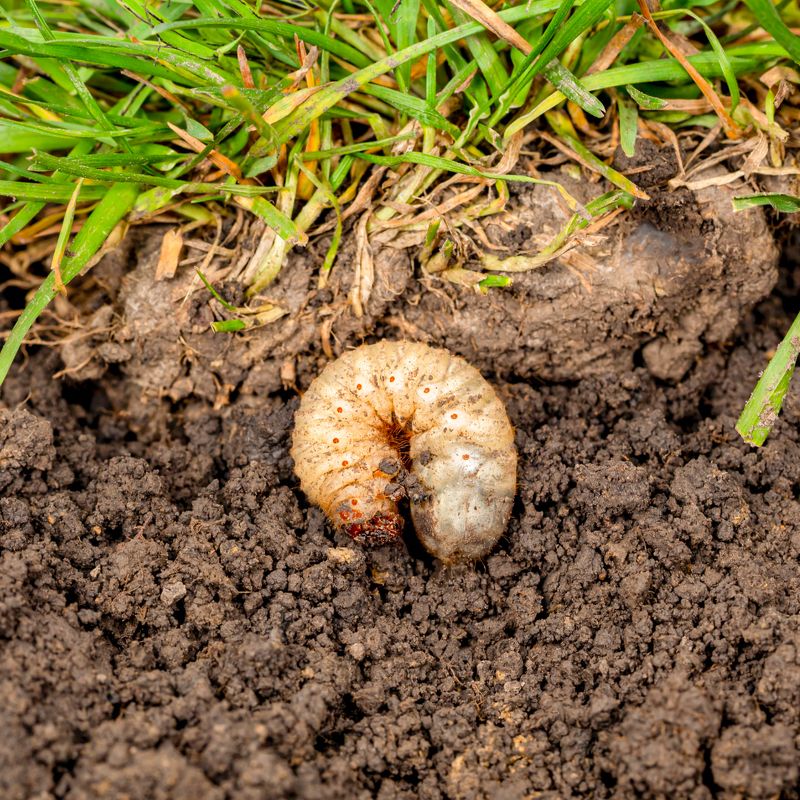
Repeated turf probing is the one crow behavior that actually earns a closer look at your lawn.
If the bird keeps returning to the same area and you can see pulled grass or small holes in the surface, the next step is a hands-on soil check, not a trip to the garden center.
Peel back a 1-square-foot section of sod in the affected area and look in the top 2 to 3 inches of soil.
Penn State Extension describes white grubs as pale, C-shaped larvae of scarab beetles, with Japanese beetle and northern masked chafer among the most common species in Pennsylvania lawns.
Finding a few grubs does not automatically mean you need to treat.
Penn State’s detailed turf guidance recommends identifying the grub species and assessing actual damage before choosing a product.
Treatment decisions depend on grub identity, the count per square foot, soil temperature, recent rainfall, your location in the state, and the specific product’s label instructions.
Timing matters more than most homeowners expect.
Some curative treatments work best when applied during August through mid-September in parts of Pennsylvania, when grubs are young and close to the surface.
Preventive products follow a different schedule and must go down earlier in the season.
Pennsylvania Game Commission notes that crows do consume harmful insects, but that does not make a visiting crow a reliable pest-monitoring service.
The inspection is yours to do, and the crow is only the first hint that something might be worth checking.
Remove the Attraction If You Want Fewer Visits
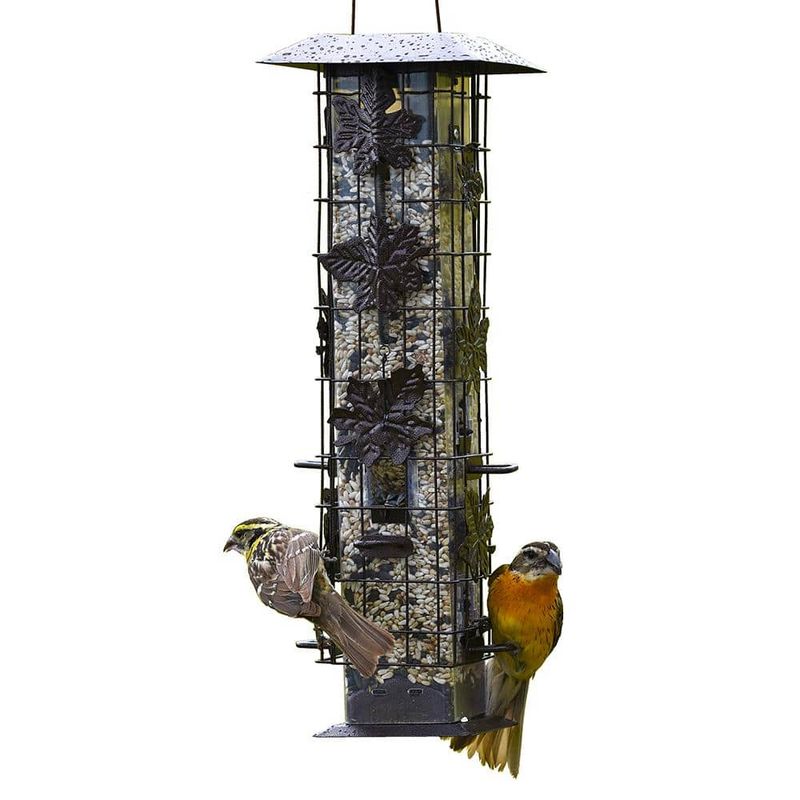
Reducing visits starts with the easiest food source, not with a deterrent device.
Clean up spilled birdseed beneath feeders after each fill.
Bring pet food dishes inside before dark.
Make sure garbage and recycling lids close and latch securely.
If you have a compost pile, cover food scraps with a layer of leaves or soil and consider a lidded bin.
Penn State Extension’s bird-control guidance consistently emphasizes that removing the attractant is the first and most effective step, well before any physical deterrent.
After you remove one attractant, give the situation three to five days before judging the result.
The crow may shift to another food source on your property, which tells you the inspection is not finished yet.
Covered tube feeders that limit access to the feeding ports can reduce ground spillage without eliminating the feeder entirely.
Address each resource one at a time rather than making every change at once, so you can actually see what was driving the visits.
Some homeowners consider deliberately feeding crows to encourage the visits.
USDA Wildlife Services warns that feeding wild birds and animals can increase crowding, disease transmission, habituation to people, aggression, and property conflicts over time.
The safer approach is to observe the crow as a wild animal passing through, not to create a food station.
Pennsylvania Game Commission’s nuisance wildlife resources can point you toward appropriate channels if the situation becomes a genuine conflict rather than an interesting yard visit.
Water Can Be the Quiet Reason
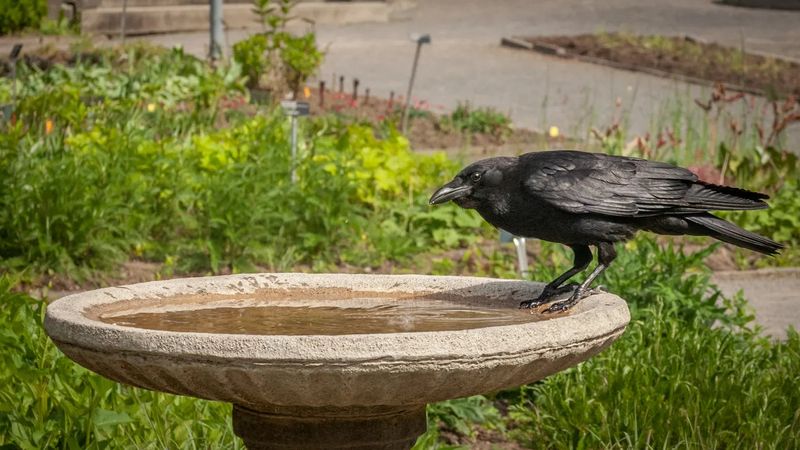
Food gets most of the attention, but a clean, accessible water source can be just as strong a return signal for crows.
Many Pennsylvania yards have birdbaths that sit too deep, go too long without a change, or sit directly under a feeder where droppings and hulls contaminate the water within hours.
Penn State Extension recommends keeping birdbath water no deeper than 2 to 3 inches, using a basin with a rough surface so birds can grip it, changing the water daily, and scrubbing the bath weekly to prevent algae and bacterial buildup.
Placement matters as much as maintenance.
The bath should sit roughly 10 to 15 feet from the nearest dense shrub or hiding cover so birds can see approaching predators before committing to a drink.
Positioning it away from feeders keeps the water cleaner and reduces the chance that one messy spot draws every opportunistic bird in the neighborhood at once.
CDC guidance on wildlife and healthy pets recommends cleaning and disinfecting feeders and birdbaths at least weekly, or more often when visibly contaminated.
Clean outdoors when possible to avoid bringing pathogens into the kitchen.
Use a solution of 1 part bleach to 9 parts water, let it sit for at least 10 minutes, then rinse thoroughly and allow the bath to dry before refilling.
Keep pets away from areas where sick or dead birds have been found, and wash your hands after handling bird food, feeders, or baths.
If a crow is moving water in your bath or dunking food into it, that behavior alone can foul the water within a single morning, making the daily change genuinely necessary rather than optional.
The Smartest Response Is Watching First
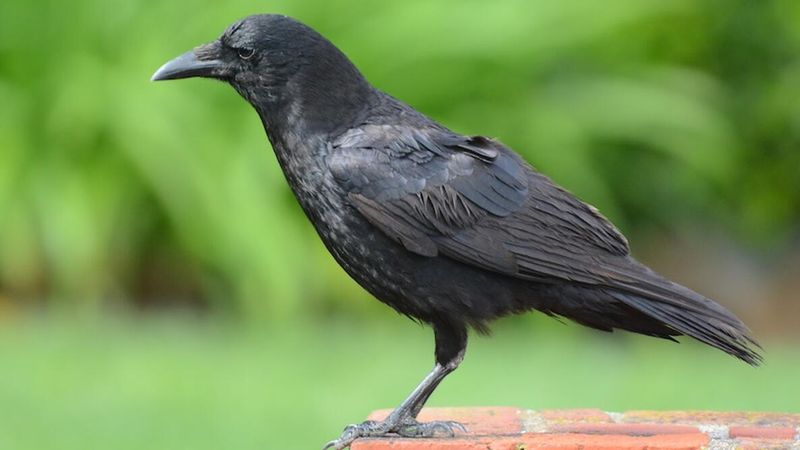
Before removing anything or buying a scare device, spend a few mornings simply noting what you see.
Write down where the crow lands first, what it inspects, whether it probes the turf or just stands and watches, and whether one bird arrives or several.
Note whether the visits change after you clean up a food source.
That record turns a vague impression into actual information about your property.
Crows are neither omens nor automatic pest controllers.
Cornell Lab’s research makes clear they are opportunistic omnivores that can consume insects and carrion but can also raid nests and eat eggs or nestlings of other birds.
Your yard may simply be one efficient stop among many on a route that covers a large slice of Pennsylvania’s working landscape, and the crow may move on naturally once a seasonal food source runs out.
If you want fewer visits, remove attractants in order, one at a time, and observe the result.
Audubon notes that distress calls and alarm devices exist as options, but Penn State Extension is straightforward that bird control usually requires a combination of methods, early action, and persistence.
No single device guarantees results.
Poison is unsafe for pets, non-target birds, and other wildlife, and should never be used.
If you believe the situation requires formal wildlife management, avoid guessing about regulations and check directly with the Pennsylvania Game Commission’s current seasons and bag limits or contact their nuisance wildlife resources for guidance specific to your situation.
The crow did not choose your yard to send a message.
It chose your yard because your yard made sense, and that is actually something worth knowing.