
What Keeps Bringing Red-Bellied Woodpeckers Back To The Same Florida Yard
Follow us on Google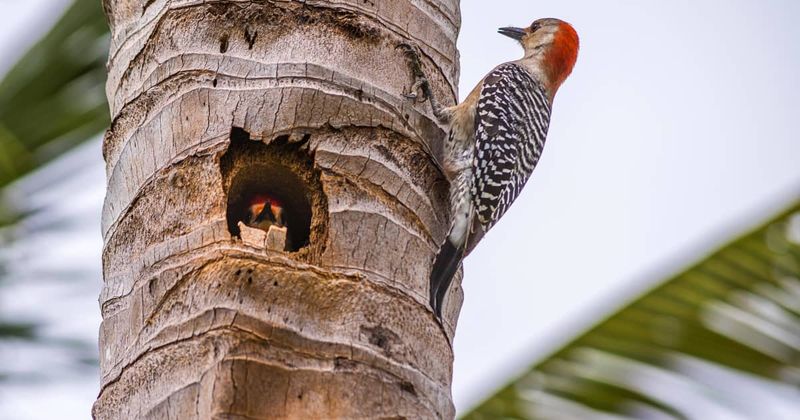
Step onto a Florida porch on a quiet weekday morning and you might catch a flash of red moving up a live oak trunk, pausing, then hammering into the bark with surprising force.
That bird has probably been here before.
Red-bellied Woodpeckers are year-round residents across most of Florida, and when one keeps showing up in the same yard, it is telling you something useful about the property you have built.
The Repeat Visitor Is a Habitat Clue
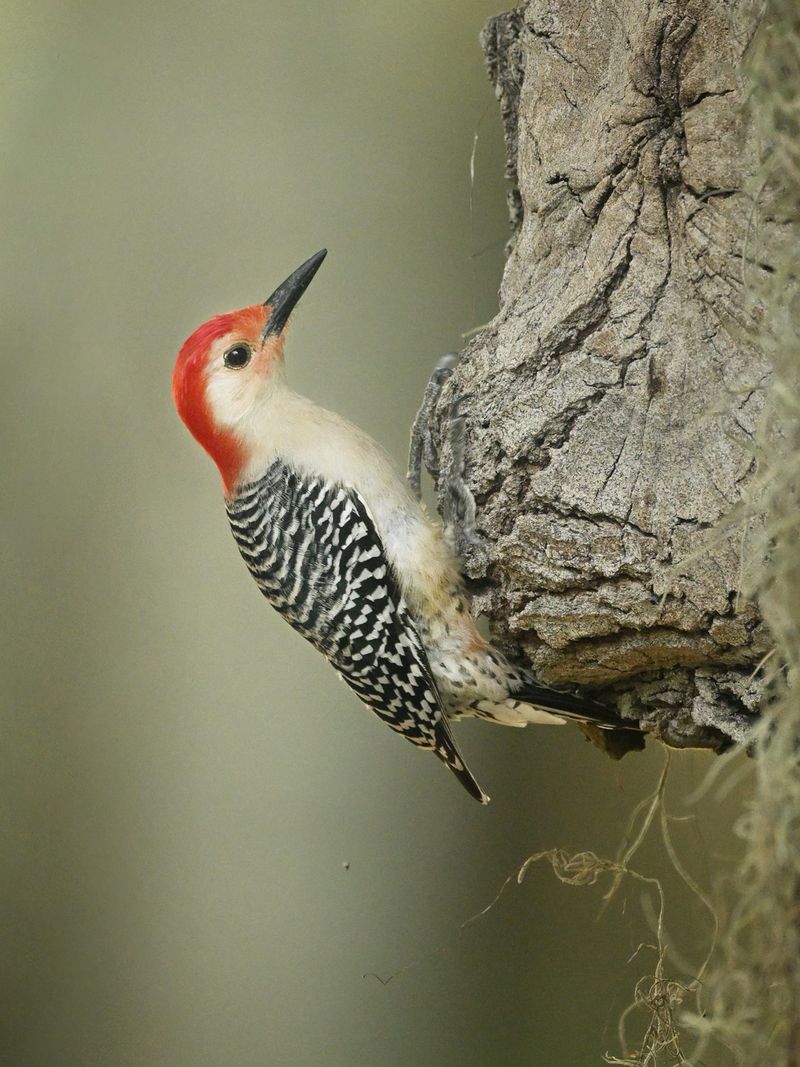
Spotting a red-bellied woodpecker on a trunk once is a pleasant surprise.
Seeing one there every few days is a different kind of message.
The yard is offering something the bird can count on, and that is a harder thing to build than most homeowners realize.
Here is where many people get it slightly wrong, though.
Regular visits do not prove that one specific bird has memorized your address.
Cornell Lab of Ornithology’s life history account confirms that red-bellied woodpeckers are generally resident birds, meaning they do not migrate far, and pairs can maintain territories in the same area for extended periods.
But without a leg band or some distinctive marking, you cannot confirm that the bird on your oak Tuesday is the same one that visited last Thursday.
What you can say with confidence is that your yard is repeatedly useful to the species.
Red-bellied woodpeckers are adaptable, common birds.
Florida Fish and Wildlife Conservation Commission lists them as common across forests, cypress swamps, pine flatwoods, oak hammocks, and suburban neighborhoods statewide.
They move through the landscape looking for resources, and a yard that reliably delivers food, cover, water, or nesting opportunity earns repeated stops.
Watch what the bird actually does when it arrives.
Is it working up and down a trunk, probing bark with its bill?
Hovering near a dead limb?
Stopping at a feeder for thirty seconds and leaving?
Each behavior points to a different resource.
Those clues, taken together, tell you far more about your yard than the simple fact of the visit itself.
What Is the Bird Actually Finding?
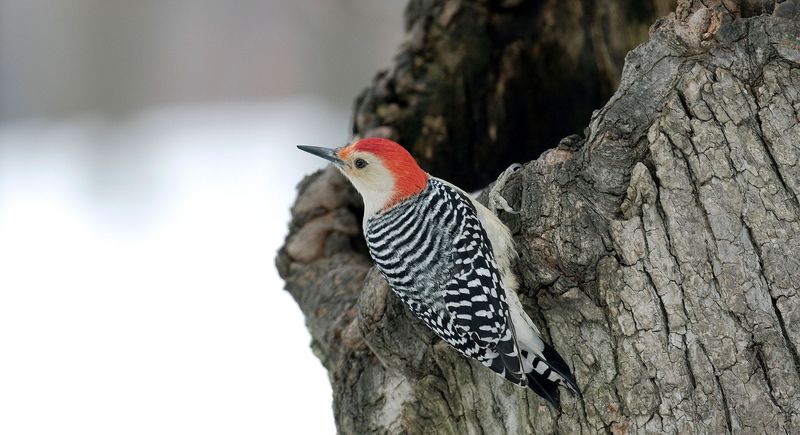
A red-bellied woodpecker is not a picky eater, and that broad appetite is exactly why the same yard can pull it back again and again for completely different reasons on different days.
The bird’s primary hunting method is working tree trunks and major limbs, pressing its bill into bark crevices to find insects, spiders, and other arthropods hiding underneath.
Cornell’s species overview and the Audubon field guide both document a diet that also includes acorns, nuts, pine cones, seeds, berries, grapes, hackberries, oranges, and mangoes.
In a Central Florida yard with a mature live oak, a few fruiting shrubs, and a suet cage near the back fence, the bird might be finding something different on every visit.
Many homeowners assume the woodpecker is signaling a pest crisis.
That assumption is too strong.
The bird drums on wood to communicate and establish territory, excavates cavities for nesting, and forages in decaying wood that may hold no active infestation at all.
A bird probing your oak does not diagnose termites or confirm a serious bug problem.
FWC’s profile notes that the species forages across living trees, dead wood, and even structures, which means the behavior alone cannot tell you what it found.
The quality of the evidence depends on the behavior you observe.
A bird that spends five minutes at a suet feeder and flies off tells you the yard has supplemental food.
A bird that spends thirty minutes methodically working trunk bark, then moves to a fruiting shrub, then checks a dead snag before leaving, tells you the yard has layered, natural resources.
Those two scenarios are genuinely different, and only one of them suggests a yard worth protecting.
A Layered Yard Gives the Bird Reasons to Stay
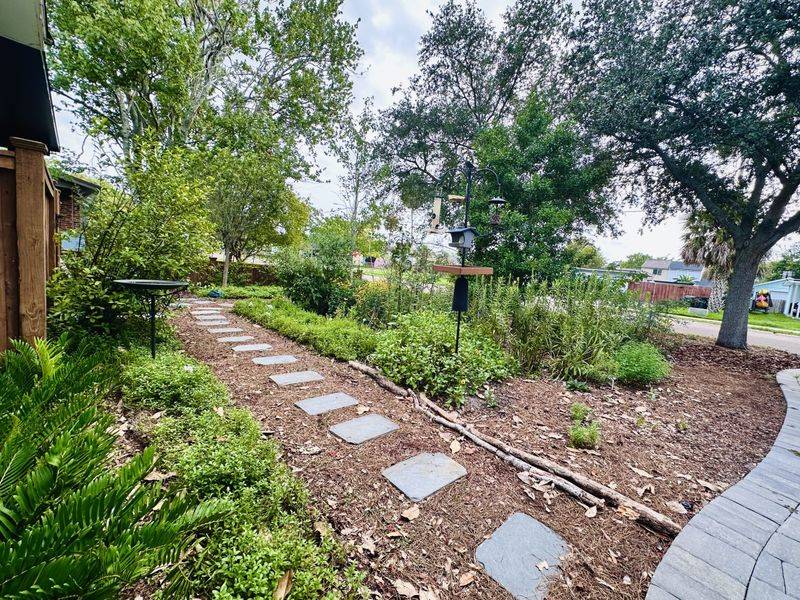
A bare lawn with a single suet feeder is a vending machine.
A yard with mature trees, fruiting shrubs, shaded cover, and a shallow water source is a neighborhood.
Red-bellied woodpeckers, like most wildlife, prefer the neighborhood.
UF/IFAS Extension’s backyard wildlife habitat guide frames the goal simply: provide food, water, shelter, and places to raise young.
When all four are present, a yard becomes genuinely useful to a wider range of species, not just woodpeckers.
A mature canopy provides foraging bark.
Shrubs and vines produce fruit and attract the insects that woodpeckers eat.
Dense cover offers a refuge from hawks and neighborhood cats.
Safe dead wood provides a potential nest site.
The Florida Fish and Wildlife Conservation Commission’s habitat guidance encourages homeowners to think in layers, from ground cover up through shrubs to the canopy, because each layer supports different parts of the food web.
A woodpecker visit is one encouraging sign, but it does not certify that every layer is working.
A yard can attract the species while still having invasive plants crowding out natives, too much lawn, or pesticide use that quietly reduces the insect base the bird depends on.
Conditions vary considerably across the state.
A wooded lot in North Florida near pine and oak habitat starts with structural advantages that a coastal South Florida yard on shallow limestone soil simply does not have.
A Gulf Coast property dealing with salt spray has different planting limits than an Atlantic Coast yard twenty miles inland.
Look honestly at what your yard already offers before deciding what to add, and match any new plantings to your actual region and soil.
Native Plants Build the Food Web
Planting for woodpeckers is not really about planting for woodpeckers.
The more honest framing is that you are building a food web, and the woodpecker is one of the animals that benefits from it.
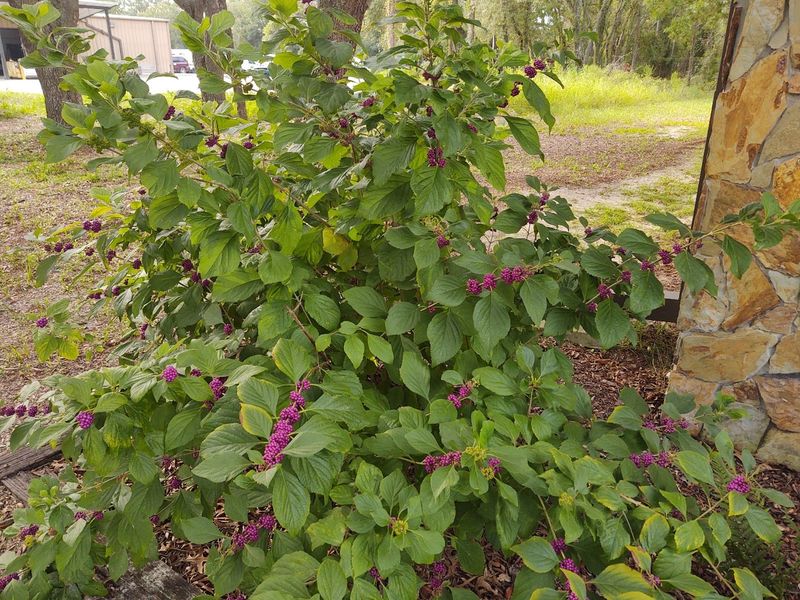
UF/IFAS’s bird-friendly plants resource lists several Florida natives worth considering: American beautyberry (Callicarpa americana), Simpson’s stopper (Myrcianthes fragrans), wild coffee (Psychotria nervosa), wax myrtle (Morella cerifera), blueberry, red mulberry, Chickasaw plum, native persimmon, seagrape, and sabal palm (Sabal palmetto).
Each of these can contribute berries, seeds, insects, or dense cover to the habitat package.
None of them is a proven species-specific lure for red-bellied woodpeckers, and no single plant guarantees the bird will appear.
What these plants do is support native insects, which support the birds that eat them.
American beautyberry, for example, produces fruit that many bird species take in fall and winter, and its leaves host insects through the growing season.
Wax myrtle tolerates wet feet and salt spray, making it practical for Gulf Coast and Atlantic Coast yards where other shrubs struggle.
Wild coffee works well in the shade of a larger canopy, which is exactly the kind of understory layer that adds structural complexity.
Matching the plant to the site matters more than picking from a list.
UF/IFAS Extension consistently recommends reducing lawn, increasing plant layers, and using native vegetation suited to your local soil, drainage, and light conditions.
A plant that thrives in North Florida’s sandy loam may struggle in the shallow, alkaline soil common in parts of South Florida and the Keys.
Start with what your region and yard can actually support, then add layers over time.
Dead Wood Can Become a Nesting Asset
Most homeowners see a dead limb and think removal.
A red-bellied woodpecker sees a dead limb and thinks opportunity, and sometimes the bird is right about which one of you is making the better call.
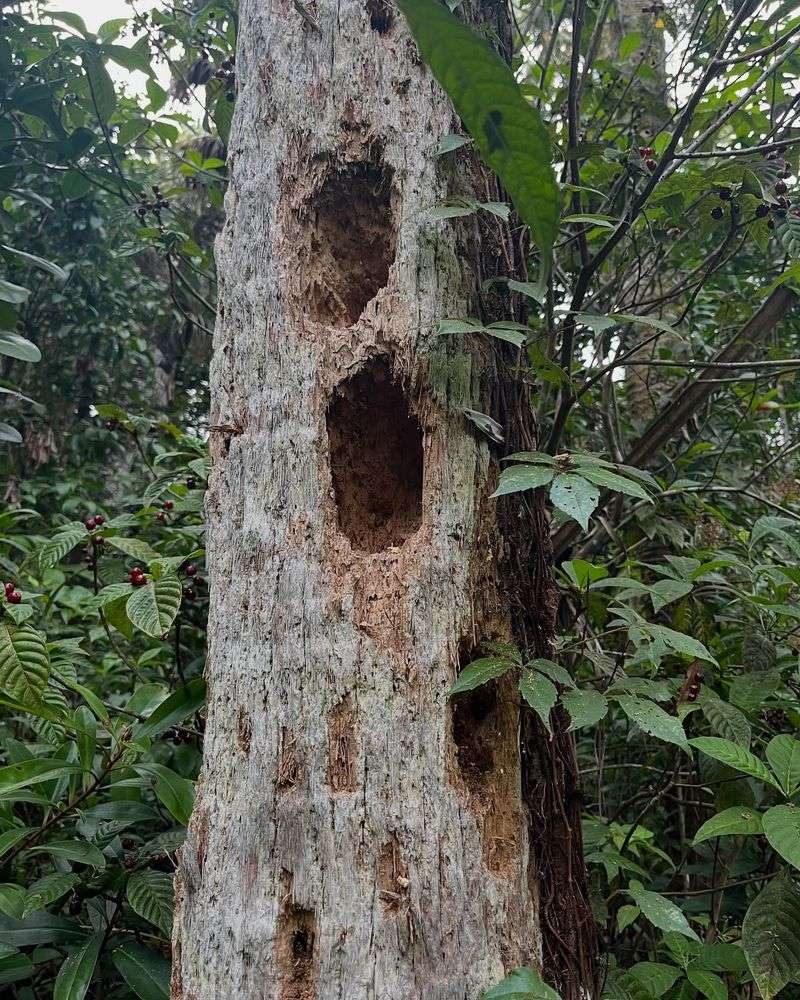
Red-bellied woodpeckers nest in dead trees, dead limbs on living trees, fence posts, and similar structures.
Cornell Lab’s life history account notes that a pair may return to the same nesting tree in successive years, though it typically excavates a fresh cavity each time rather than reusing the old one.
Cavities run roughly 22 to 32 centimeters deep, about 9 to 13 inches, and the birds do all of that work themselves.
A yard with suitable dead wood is offering something a feeder simply cannot replicate.
FWC identifies a shortage of suitable snags as a nesting limitation for the species, which means that a yard with even one safe dead limb or standing snag is providing something genuinely scarce in many suburban neighborhoods.
Safety is the non-negotiable condition.
A dead limb that cannot reach a house, play area, driveway, utility line, or neighboring property is a candidate for retention.
A dead tree or large limb that could fall on any of those targets is a hazard first and a habitat feature second.
Do not make that call with a chainsaw and good intentions.
UF/IFAS’s guidance on woodpecker poles and habitat wood recommends asking a qualified arborist about shortening a dangerous dead tree into a wildlife pole, or leaving a standing 10- to 15-foot trunk section when the whole tree cannot safely remain.
That kind of professional assessment protects both the habitat value and the people living near it.
Water and Cover Complete the Invitation
Some birds visit a yard for seeds.
Others come entirely for the water, and a few come for the cover.
A yard that only offers a feeder is quietly turning away the visitors who do not eat seeds.
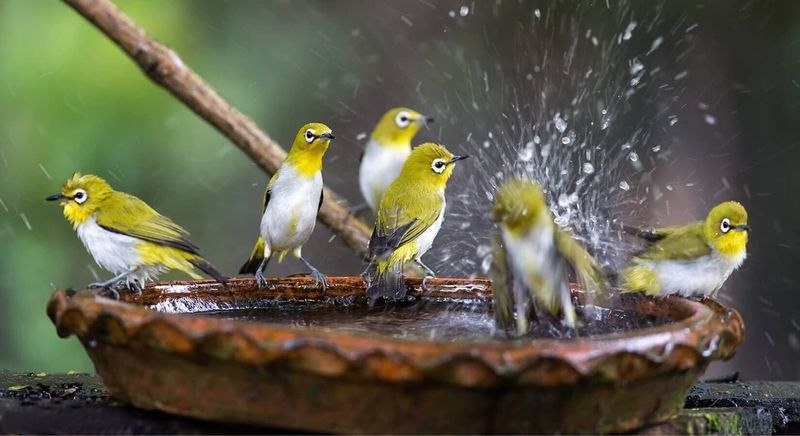
Cornell Lab’s guidance on attracting birds recommends a birdbath basin only 1 to 2 inches deep with a gradual slope so birds can wade in without dropping into water over their heads.
In Florida’s heat, stagnant water turns into a mosquito nursery within a few days, so replace the water frequently, ideally every day or two during summer, and scrub the basin regularly to prevent algae and bacterial buildup.
A bath that sits untended in August is not an asset.
Placement matters as much as the water itself.
Position the bath where birds have a clear sightline for approaching predators but can reach nearby shrubs or low branches within a few feet if they need to escape quickly.
That combination of open water and close cover is what makes the spot feel safe rather than exposed.
UF/IFAS Extension points out that cover serves multiple functions: it provides shelter from weather, refuge from predators, and staging areas where birds rest between foraging trips.
A yard with mature shrubs, a dense hedge line, or a cluster of native palms gives birds a reason to linger rather than grab a quick drink and leave.
For many Central Florida and Gulf Coast yards, that cover already exists.
The water is often the missing piece.
Feeders Help, but They Add Risk
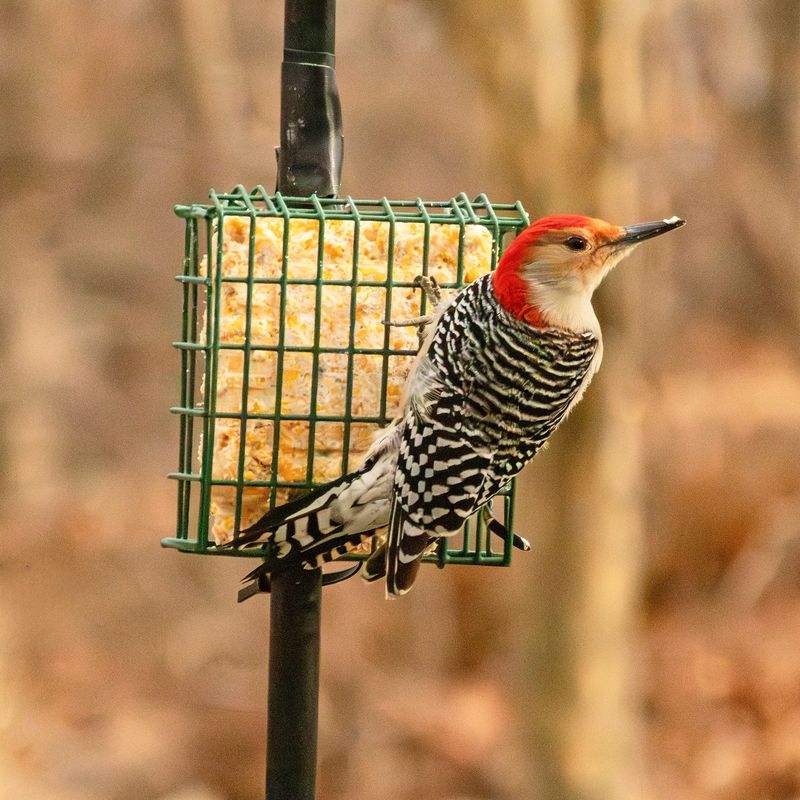
A suet feeder is probably the fastest way to get a red-bellied woodpecker’s attention.
It is also the part of the habitat setup that requires the most ongoing work to keep from causing harm.
Cornell’s species overview confirms that red-bellied woodpeckers will take suet, peanuts, and sunflower seeds at feeders.
Those foods can genuinely supplement a bird’s diet, especially during dry spells when insects and fruit are less available.
But a feeder does not create the mature-tree, dead-wood, insect, and cover network that makes a yard durably useful.
It is one layer, not the whole structure.
Florida’s heat and humidity make feeder hygiene more demanding than it is in cooler states.
Only put out as much food as birds will actually eat within a day or two, and protect suet and seed from rain, which accelerates mold.
Cornell’s feeder cleaning guidance recommends scrubbing seed feeders about every 2 weeks, more often during heavy use or wet weather.
The process is straightforward: scrub first to remove debris, then soak in a solution of no stronger than 1 part bleach to 9 parts water for about 10 minutes, rinse thoroughly, and let the feeder dry completely before refilling.
Placement involves two competing concerns.
Cornell’s feeder placement guidance suggests roughly 10 feet from shrubs or trees as a practical compromise between giving birds nearby cover and denying cats or hawks an easy ambush point.
Window collisions are a separate and serious risk.
Cornell’s window-collision guidance and the Bird Academy’s collision prevention resource both emphasize treating nearby glass with exterior markers, screens, or other visual breaks rather than relying on distance alone to protect birds from strikes.
The Visit Does Not Certify a Healthy Yard
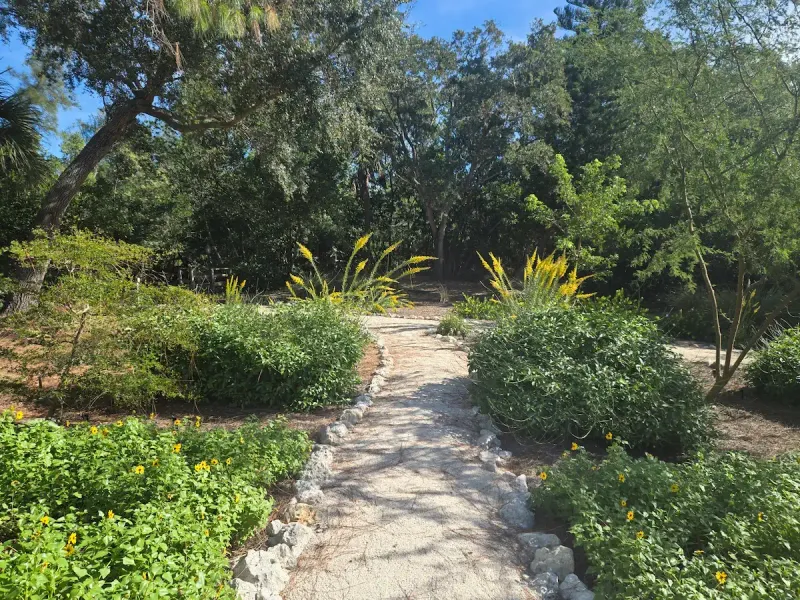
A woodpecker in the yard is genuinely good news.
But it is one data point, not a report card, and treating it as a full ecological assessment leads to some expensive misunderstandings.
UF/IFAS Extension’s wildlife habitat guide is direct about this: a yard can support birds while still having invasive plants crowding out natives, excessive lawn reducing insect habitat, pesticide use quietly thinning the food web, poor drainage, or trees with structural problems.
The woodpecker found something useful.
That does not mean everything else is working.
The pest-infestation reading is another common overreach.
Penn State Extension’s woodpecker resource and University of Minnesota Extension’s tree-damage diagnostic both note that woodpeckers drum for communication and excavate cavities as well as forage for food, so damage to siding or trim should prompt a building inspection rather than an assumption that the bird confirmed a termite problem.
The bird itself is not proof of an infestation.
If a woodpecker or any other bird at your feeder looks lethargic, stays unusually still when approached, appears puffed up, or shows crusty eyes or growths, take the feeders down temporarily.
Cornell’s cleaning guidance and Audubon’s disease-prevention advice both recommend removing feeders, cleaning them thoroughly, and clearing spilled seed from the ground when sick birds appear.
Concentrated feeding stations can spread disease fast when food becomes moldy or contaminated with droppings.
One more distinction worth making clearly: the red-bellied woodpecker is a common, adaptable species found statewide.
It is not the red-cockaded woodpecker, which is federally threatened and requires specialized mature pine habitat with very different conservation needs.
FWC’s red-cockaded woodpecker FAQ covers those requirements separately.
And if you ever find an active nest, eggs, or young birds of any covered species on your property, leave them alone.
The Migratory Bird Treaty Act and a 2025 U.S.
Fish and Wildlife Service nest memorandum both confirm that active nests and eggs of covered species receive federal protection.
Keep the Resource That Brought It
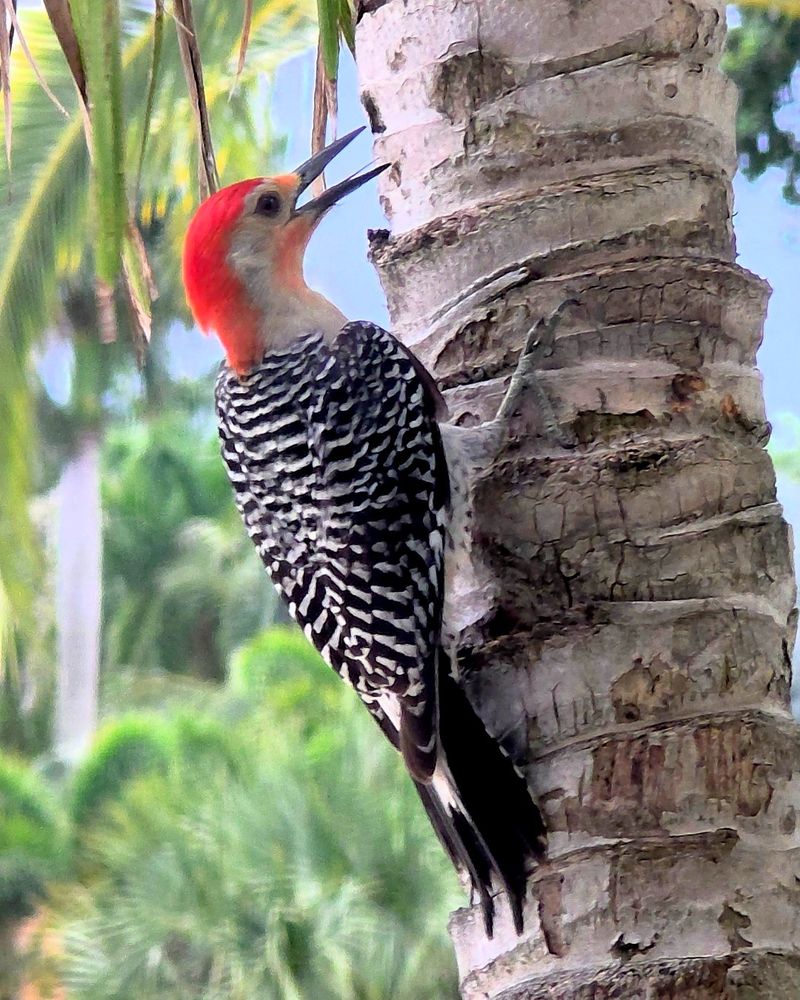
The most useful thing you can do after noticing regular woodpecker visits is to figure out what the bird is actually using, then protect that resource before anything else.
If the bird spends most of its time working a mature live oak or sabal palm, that tree is the anchor.
Keep it healthy, have a certified arborist evaluate any dead limbs for safety, and think twice before removing woody cover nearby.
If the bird is drawn to a dead snag or a rotting fence post, and that structure is not a fall hazard, leave it alone.
FWC notes that snag scarcity limits nesting for this species in many areas, so a safe piece of dead wood is worth more than it looks.
From there, add layers where your region and soil allow.
A few native fruiting shrubs suited to your part of Florida, a clean shallow birdbath replaced every couple of days during summer, and a responsibly maintained feeder as a supplement can all make the yard more reliably useful over time.
FWC’s habitat guidance and UF/IFAS Extension’s backyard wildlife tips both frame this as a cumulative process, not a single project.
A yard that a woodpecker uses repeatedly for foraging, nesting wood, water, and cover is connected to something larger than a feeder.
That connection took years to build, even if you did not plan it.
The bird noticed before you did.