
10 Climbing Plants That Cover A Bare Texas Fence Fast Without Taking Over
Follow us on Google
You step outside before breakfast and the patio already feels warm, that familiar Texas summer greeting.
Then you spot it, that long stretch of bare fence staring back like a blank wall, and you wish it looked greener and more alive.
You want that lush living screen fast, but the fear of a plant running wild and swallowing everything can stop you cold.
Good news, neighbor.
You can genuinely have quick privacy and pretty blooms without a botanical takeover, and here are ten climbers that stay right where you put them.
1. Crossvine Will Zoom Up Then Behave
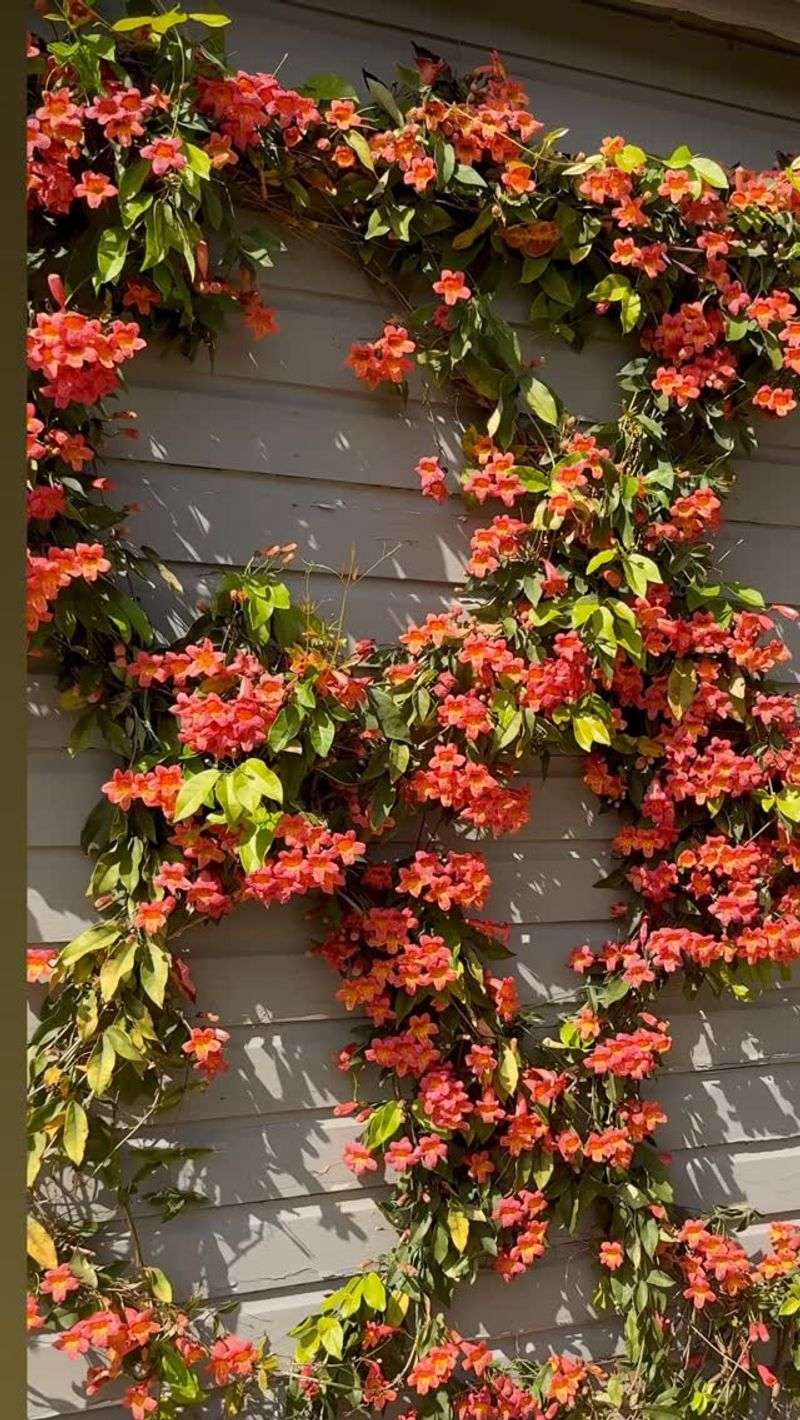
Plenty of folks pass crossvine (Bignonia capreolata) sprawling over an old arbor and assume it will swallow the yard.
It will not.
This Texas native climbs with tendrils tipped in tiny adhesive pads, so it grips a fence without prying boards apart like some clingers do.
Speed is the draw.
Once settled, crossvine can add up to 10 feet of new growth a year, turning a bare fence into a green wall in two or three seasons.
The cultivar Tangerine Beauty throws orange trumpet flowers that hummingbirds work over in spring.
Here is where it stays honest.
Crossvine is vigorous, but it does not run the neighborhood like its cousin the trumpet vine.
Give it well-drained soil and full sun for the heaviest bloom, though it tolerates part shade fine.
Once established, it shrugs off long dry stretches, a real hero across Central and West Texas summers that push past 100 degrees.
Prune it right after the spring flush to shape it and coax sporadic blooms later.
You get color and privacy without a fight.
2. Carolina Jessamine Lights Up Late Winter
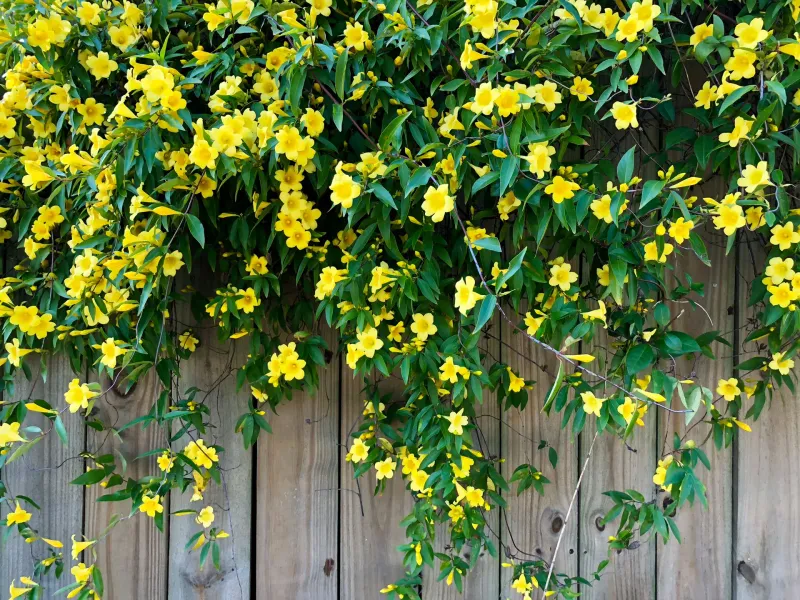
Step outside on a gray late-winter morning and yellow flowers are already glowing along the fence.
That is Carolina jessamine (Gelsemium sempervirens), an evergreen vine that carries color when almost nothing else does across East and Central Texas.
It grows fast and reaches 10 to 20 feet tall and 4 to 8 feet wide, twining its wiry reddish stems through chain-link or a trellis with no help from you.
The green stays all winter, so your privacy does not vanish in December.
Big payoff, little fuss.
It handles heat, needs low water once established, and even settles into the heavy blackland clay common around North and Central Texas.
Push farther west and you will want to add supplemental water during droughts.
The trick to keeping it tidy is a light prune after the main bloom, which triggers fresh flowers and stops it going ratty.
Every part is toxic if eaten, which actually makes it deer resistant, so those cheerful blooms stay yours.
3. Coral Honeysuckle Feeds Hummingbirds Politely
Spider mites and aggressive vines both have a trick, they show up where you least want them.
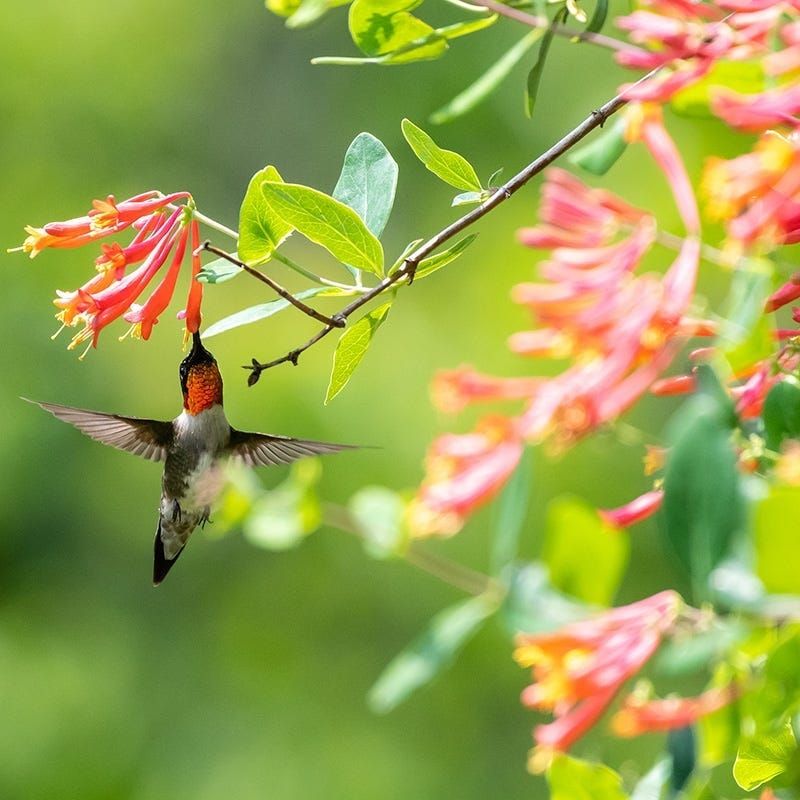
Coral honeysuckle (Lonicera sempervirens) does neither.
This native Texan grows fast, adding roughly 2 to 6 inches a month in its active season, yet it will not bully the rest of your beds.
Where the Asian honeysuckles smother whole hedgerows, this one tops out around 10 to 20 feet and stays put.
Coral-red trumpet flowers cover it from spring into summer, and hummingbirds treat your fence like a drive-through.
It is semi-evergreen and easygoing, taking full sun to part shade and most soils, though it truly shines in richer, well-drained ground.
Twine it through chain-link or up a sturdy trellis and you have instant vertical interest.
Prune in late winter, once the danger of a hard freeze has passed, to shape it and push more bloom.
Moderately drought tolerant once rooted in, it earns its spot in most Texas yards without asking for much back.
4. Lady Banks Rose Drapes Thornless Flowers
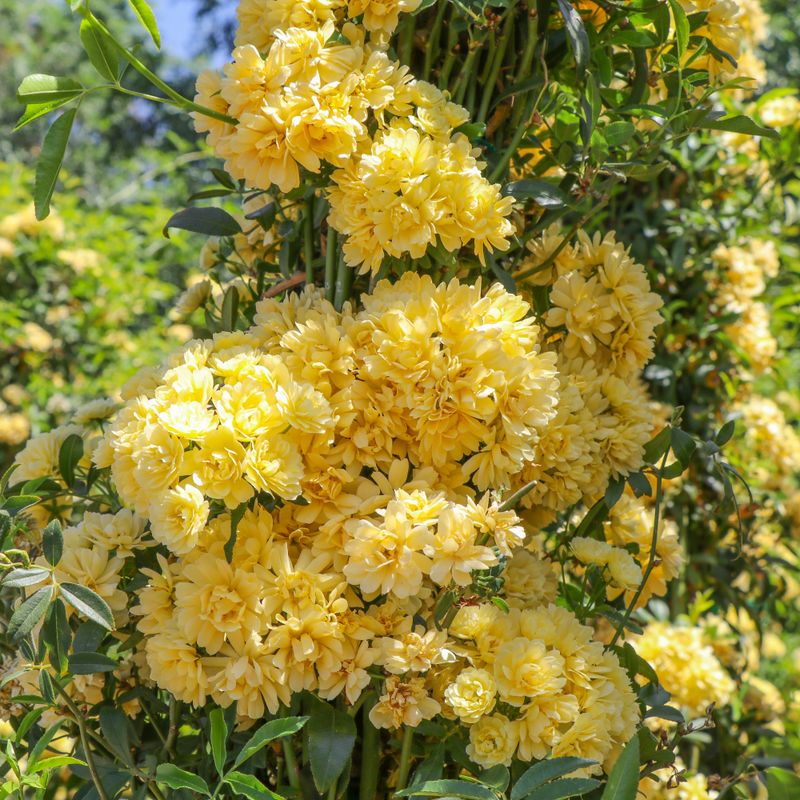
Picture a whole fence buried under a waterfall of soft yellow roses every spring, and not a single thorn to snag your sleeve.
That is Lady Banks Rose (Rosa banksiae), and the near-thornless part is genuinely the best surprise.
Speed is no joke here.
Once its roots settle, it can push 5 to 10 feet of new growth in one season and eventually reach 15 to 30 feet, so pick a fence or arbor that can carry real weight.
It is a tough Texas performer, loving full sun and shrugging off heat and drought with very little water.
It stays remarkably free of the diseases and pests that plague fussier roses, so you spend the time enjoying it.
Because it blooms on old wood, meaning last year’s stems, prune only right after the spring show or you will cut off next year’s flowers.
One plant can cover a long run of fence and hand you that dreamy cottage look almost by accident.
5. Passionflower Turns A Fence Into A Butterfly Stop
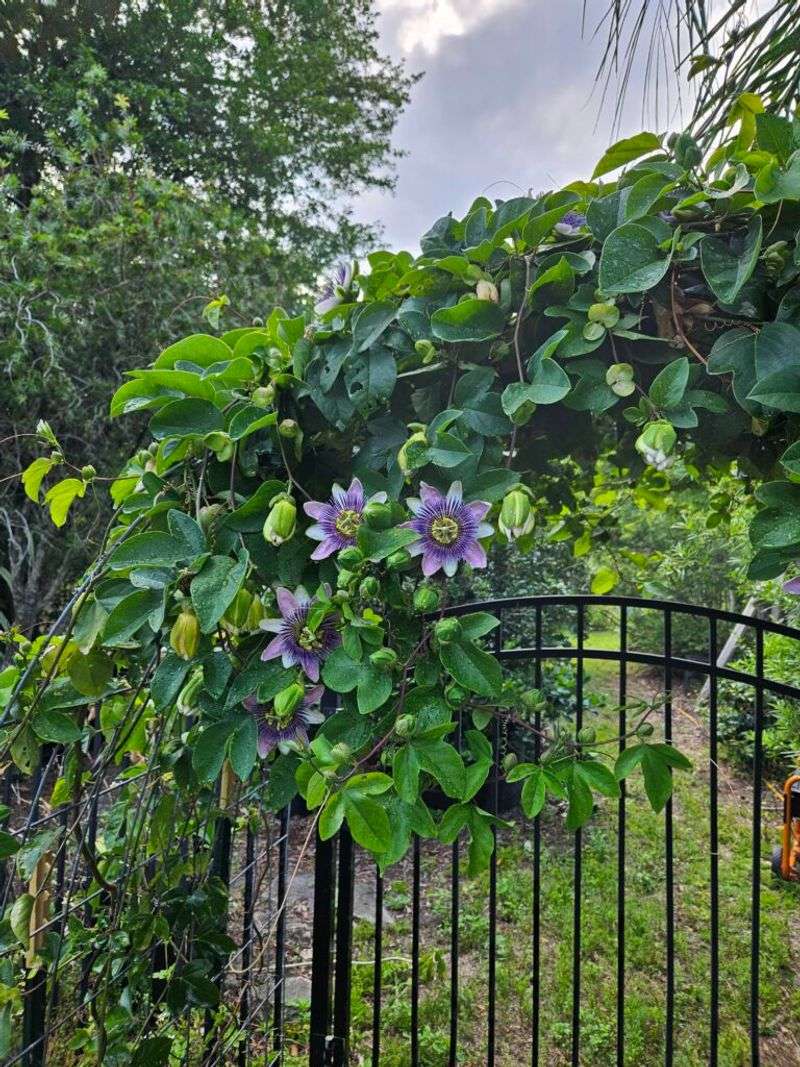
The first time a passionflower (Passiflora incarnata) opens on your fence, you stop walking.
The purple bloom looks almost invented, all fringe and geometry, like nothing else in the yard.
This native vine moves fast, sending out several inches a day and covering yards of fence in a single season.
In North Texas it dies to the ground over winter and returns faithfully from the roots each spring, giving you a fresh start instead of a woody mess.
It is also a host plant for the Gulf Fritillary and helps feed passing butterflies, so your fence pulls double duty.
Plant it in full sun to part shade, water low to medium, and it takes the heat once established.
Tendrils do the climbing, so a fence or trellis is a must.
The oval fruit, called maypops because they pop underfoot, ripens in late summer.
One early-spring cleanup of dead growth keeps it in bounds and it behaves better than its speed suggests.
6. Confederate Jasmine Perfumes The Whole Porch
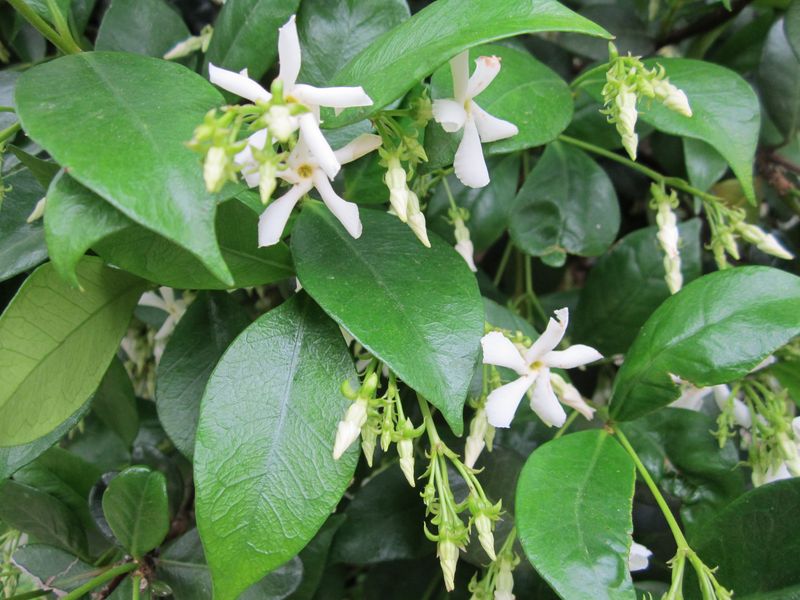
Sit on the porch on a late-spring evening in Central Texas and the air goes sweet all on its own.
That is Confederate jasmine (Trachelospermum jasminoides), and the scent carries across the whole yard.
Growth starts steady, often 3 to 6 feet the first year, then hits what gardeners call the leap phase, where it can stretch toward 25 to 30 feet.
Glossy dark green leaves stay on year-round, so you keep the privacy through winter, and the white star flowers do the perfuming.
It takes full sun to partial shade and adapts to a range of well-drained soils, acidic or alkaline.
Once established it is moderately drought tolerant and deer tend to leave it alone.
Regular pruning is the whole secret to keeping this twiner from overwhelming a fence.
When summer heat lands its growth naturally slows, a good moment to trim and encourage more bloom.
In cooler stretches of Texas, a protected spot and winter mulch help it survive a hard freeze near 20 degrees.
7. Mexican Flame Vine Sets The Fence On Fire
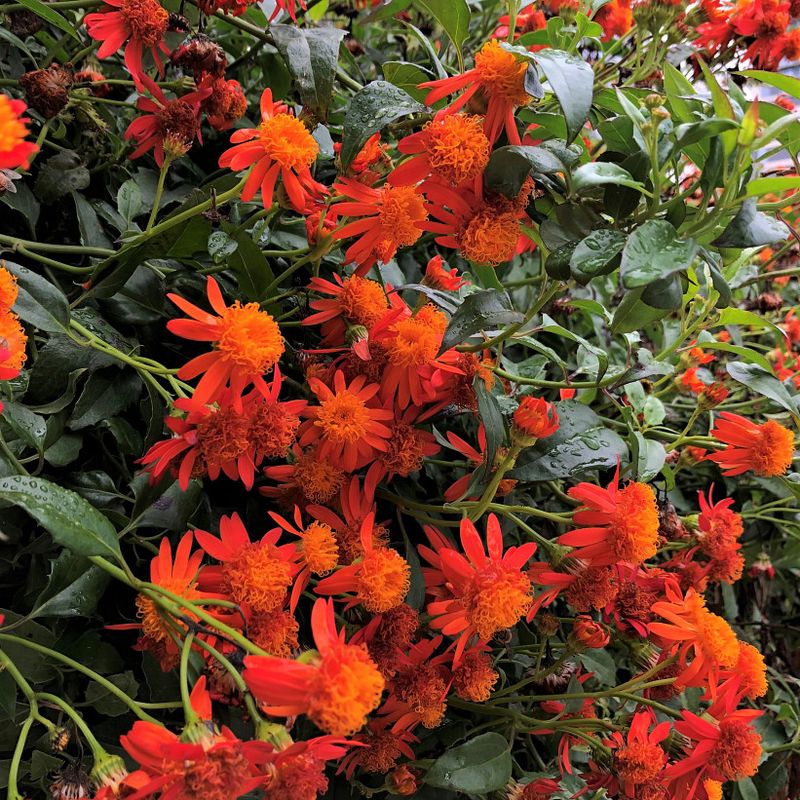
Orange this loud does not usually stay this well-mannered.
Mexican flame vine (Senecio confusus, sometimes sold as Pseudogynoxys chenopodioides) throws fiery orange-red daisy flowers that monarchs and hummingbirds treat like a landing pad.
It moves quick, reaching 10 to 15 feet tall and about 2 feet wide in one season, and it blooms from late spring clear through fall.
In the warmer end of Texas, Zone 9 and up, it stays evergreen.
Around Zone 8 it often runs as a fast annual, which is fine, since you get the same show in one summer.
Full sun brings the heaviest bloom, though a little afternoon shade helps in the worst triple-digit heat.
Water it regularly but ease off in heavy clay so the roots do not sit wet.
Here is where it gets tricky.
Stems can root where they touch moist soil, so it wanders if you let it.
Keep it on a trellis or fence and prune stems off the ground, and it stays a hero instead of a sprawl.
Time it right for the fall monarch migration.
8. Black-Eyed Susan Vine Is Sunshine You Can Undo
Some seasons you want cover without a lifelong commitment.
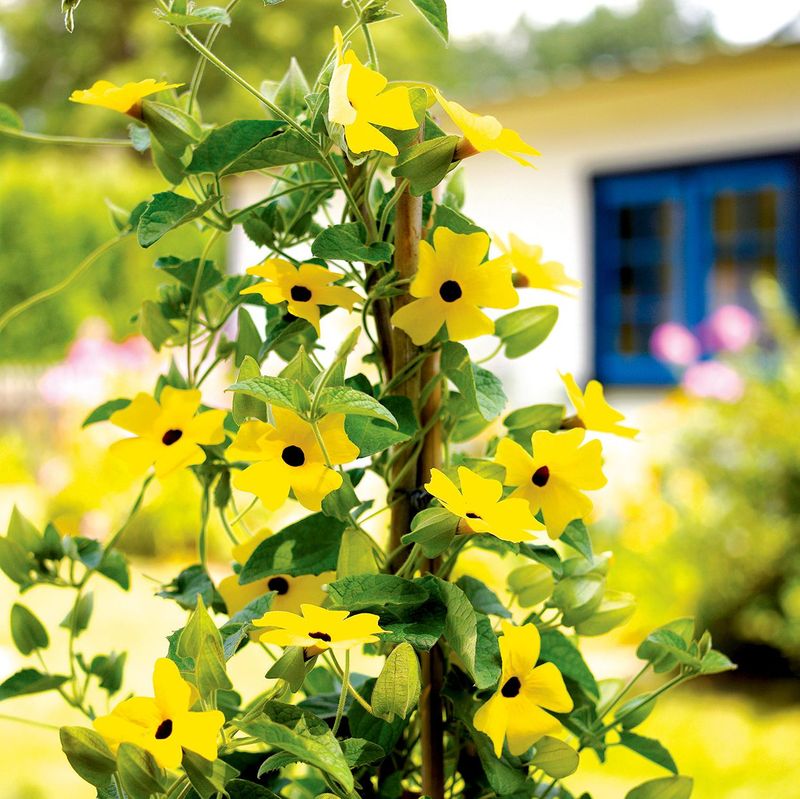
Black-eyed Susan vine (Thunbergia alata) is exactly that, a fast annual that hands you a fence full of bloom and then bows out when frost arrives.
Twining stems climb 8 to 10 feet in a single growing season, and the sunny yellow, orange, or white flowers, each with a dark eye in the center, keep coming from early summer until the first hard freeze.
It is a burst of cheer where a bare fence used to sulk.
Because it lives as an annual across most of Texas, you never worry about it taking over next year.
When the season ends, you simply pull it and start fresh.
Sow seeds straight into warm soil after all frost danger passes, usually once nights hold above 50 degrees, or start them indoors for an earlier show.
Give it full sun to part shade and above-average water through the brutal summer stretch, plus a trellis, wires, or chain-link, and it climbs quick.
Low risk, high payoff.
9. Hyacinth Bean Vine Covers Fast With Purple Pods
Want your neighbors leaning over the fence asking questions by August?
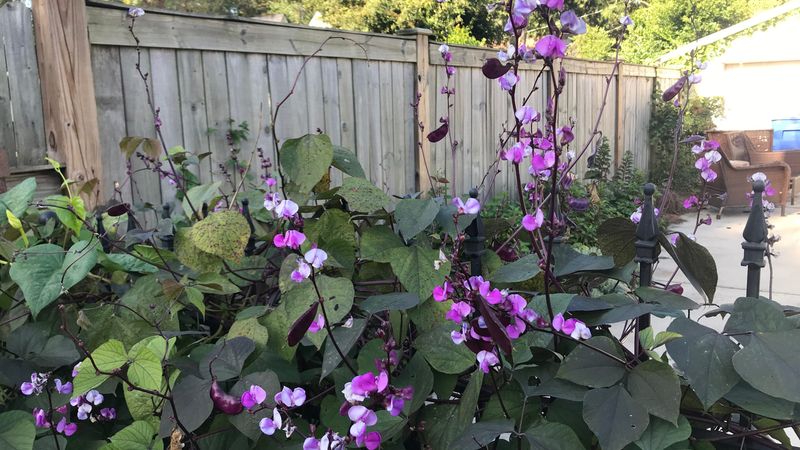
Hyacinth bean vine (Lablab purpureus) does that.
This warm-weather annual grows an almost startling 8 to 16 feet tall and wide in about five months from a single plant.
The heart-shaped leaves are handsome, but the show is the fragrant lavender-pink flowers that draw bees and butterflies, followed by glossy deep-purple pods that look almost painted.
It is genuinely one of the fastest ways to erase a bare fence in a single summer.
Sow seeds straight into warm ground in mid-spring, spacing them about a foot apart, a little closer if you want a dense screen quicker.
An overnight soak speeds germination.
It wants full sun, well-drained soil, and steady moisture during dry spells.
Here is the catch.
It grows so thick, so fast, that it can drag on a lighter fence.
Give it a sturdy support and prune to guide it, keeping the mass out of fence seams and off weaker panels.
Do that, and you get a wall of color that quits politely at frost.
10. Common White Jasmine Keeps Scenting Into Fall
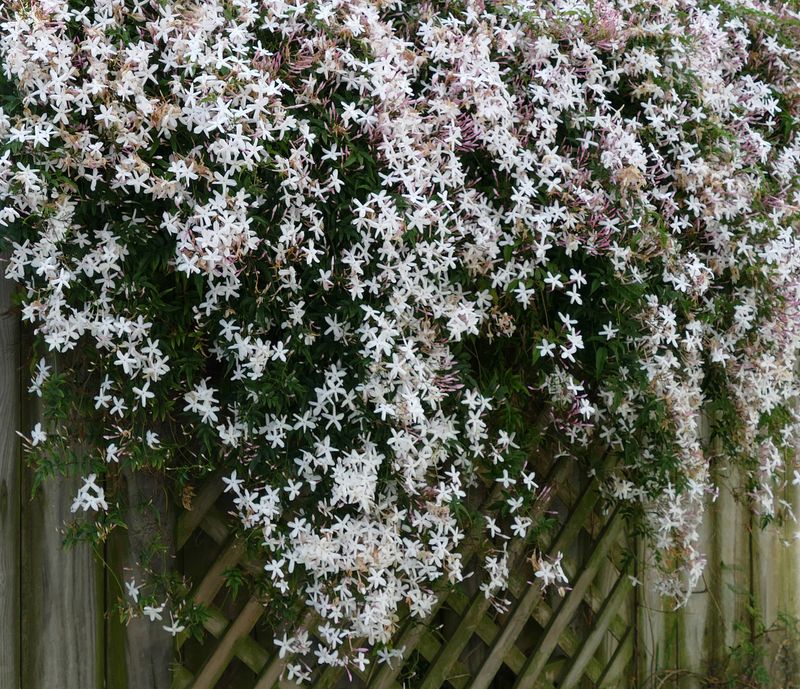
Everybody reaches for Confederate jasmine, so common white jasmine (Jasminum officinale) tends to get overlooked, which is a shame.
Its charm is the long bloom, fragrant white flowers running all summer and into fall, well past when other jasmines quit.
Growth is measured, roughly 1 to 2 feet a year, settling around 10 to 15 feet at maturity.
Left alone it forms a lanky, half-shrub tangle, but with support it becomes an elegant climber, so the fence itself does the training.
It likes full sun to partial shade and ordinary garden soil with moderate fertility and moisture.
Plant it near a patio or walkway where you actually catch that intense perfume and watch the hummingbirds and butterflies it pulls in.
To keep it from going leggy, pinch and shape it through the growing season instead of one big cut.
If you are covering a longer fence with several plants, set them at least 8 feet apart so each has room to bush out.
Texas A&M AgriLife Extension notes proper spacing keeps air moving and heads off disease, and it leaves you a calm, sweet-smelling stretch of fence to enjoy.