
What It Really Means When Sandhill Cranes Keep Coming Back To A Yard Like Yours
Follow us on Google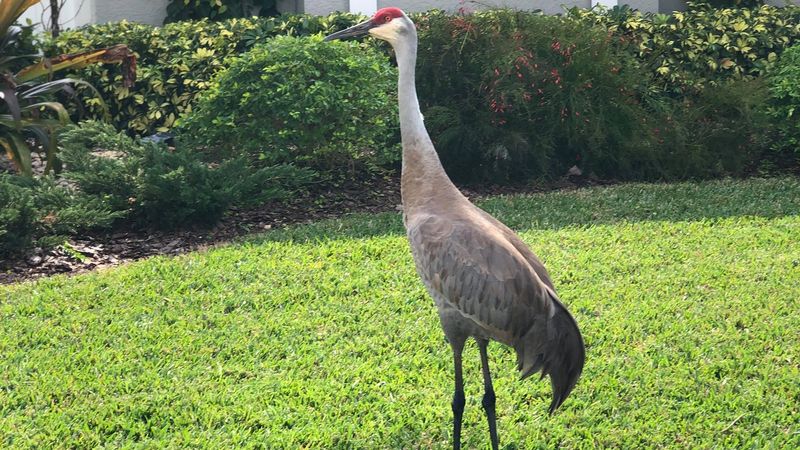
You glance out the back window one morning and there they are again, two tall gray birds moving slow and deliberate across the lawn like they own the place. Most neighbors have never seen a sandhill crane up close, and here you are on week three of repeat visits.
Understanding why these birds keep showing up can help you share the space comfortably, protect your pets, and know when to call for backup. The answer is more practical than magical, and it starts with what your yard quietly offers.
A Familiar Route May Bring Them Back
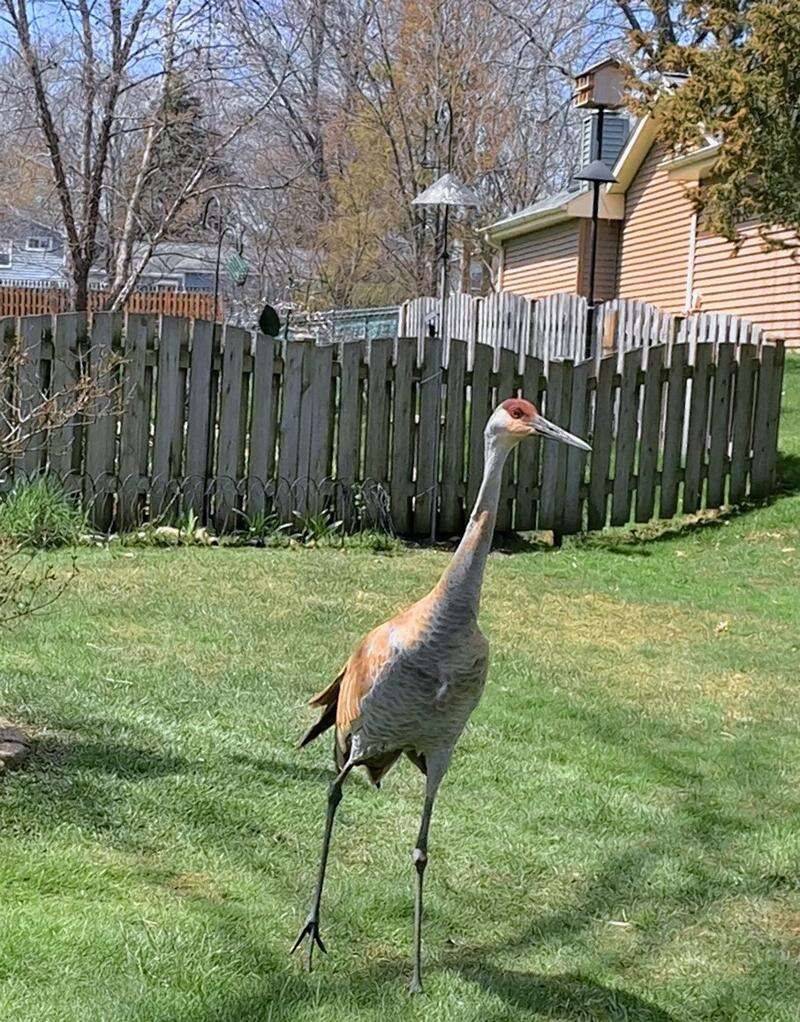
Sandhill cranes are creatures of habit in the best possible sense. When a spot delivers reliable food, a safe place to rest, and an easy path in and out, cranes tend to remember it.
Wildlife biologists call this philopatry, which simply means a tendency to return to familiar places when conditions there remain suitable. Think of it less like loyalty and more like a bird using a mental map of routes that have worked before.
That map is what may be bringing cranes back to your yard. USDA crane management guidance notes that sandhill cranes show high return rates to familiar areas, while also shifting locations when food or water conditions change.
So a repeat visit is not a guarantee they have claimed your property forever, but it does suggest your yard fits something on their regular circuit.
What that something is requires some honest uncertainty. Maybe there is a pond nearby, a patch of open ground with good foraging, or a quiet corridor between two larger habitats.
The visits alone cannot tell you whether the birds are nesting, injured, unusually tame, or delivering any kind of message. They are most likely just stopping somewhere that has worked for them before.
The Carolina Bird Club’s regional crane records confirm that sandhill cranes do appear in North Carolina yards, though they are not an everyday backyard species across the state. A recurring visit is worth paying attention to, but it is a clue about habitat and routes, not proof of territory or a special connection between bird and homeowner.
Open Grass Can Offer Food
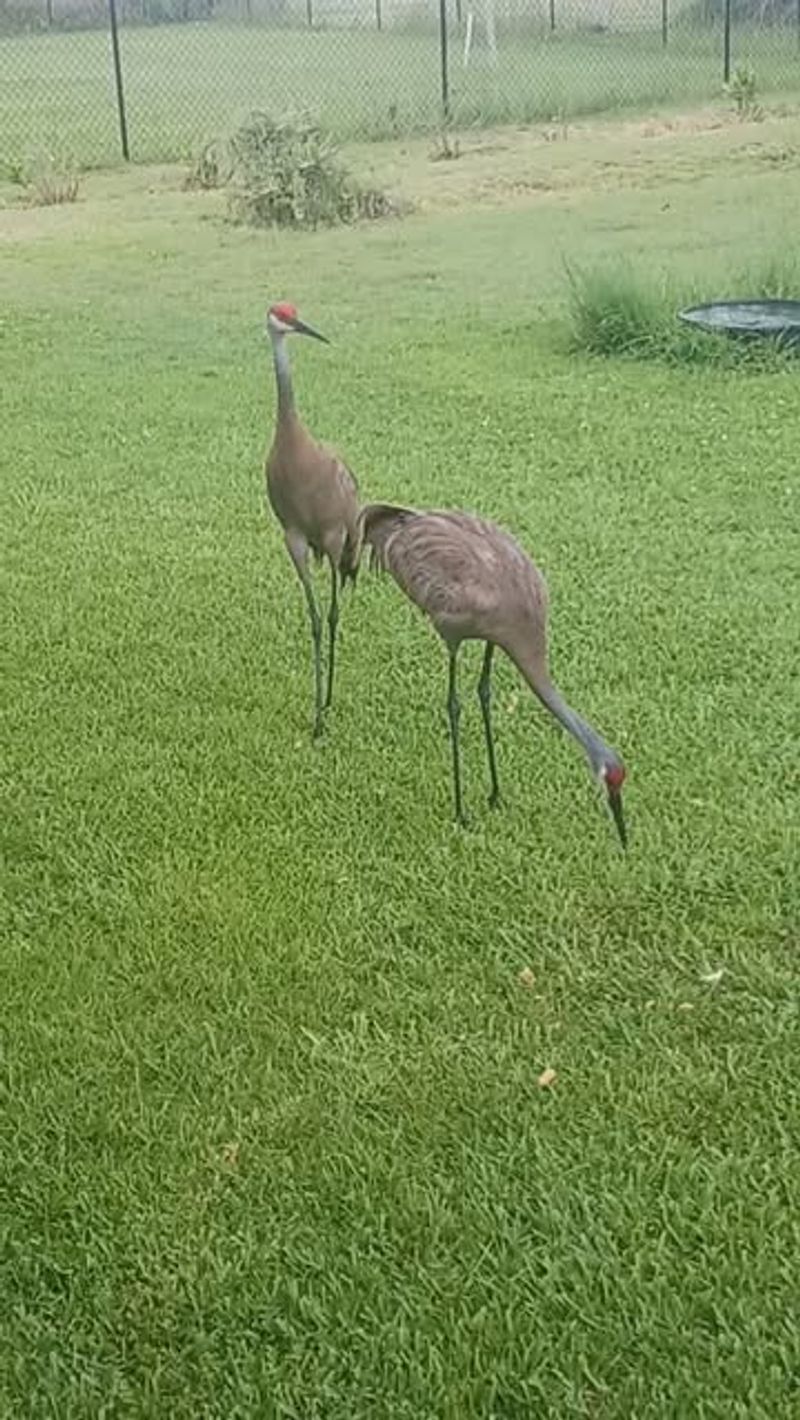
Your mowed lawn may look plain to you, but to a ground-feeding bird nearly four feet tall, it reads like an open buffet. Sandhill cranes are omnivores, and Cornell Lab of Ornithology’s life history records document a wide menu: insects, earthworms, seeds, grains, berries, tubers, frogs, snakes, and small mammals.
Short grass makes all of that easier to spot and reach.
The probing and digging you might notice in your lawn is almost certainly foraging behavior. Cranes push their bills into soft soil looking for mole crickets, grubs, and earthworms.
Florida Fish and Wildlife guidance on living with sandhill cranes specifically identifies mowed grass and lawn invertebrates as reasons cranes use suburban properties. That evidence comes from Florida’s resident crane population, so treat it as a plausible explanation for your North Carolina yard rather than a guaranteed diagnosis.
The digging can leave small divots or scraped patches, which is genuinely annoying if you take pride in your turf. But the birds are not waging a campaign against your lawn.
They are working the soil the same way they would work a pasture edge or a farm field.
Here is where accidental feeding becomes worth checking. Spilled birdseed beneath a feeder, fallen grain near a chicken coop, or cracked corn scattered for other wildlife can all function as a food source that draws cranes back.
Walk the yard and look for anything edible sitting on or near the ground. Removing those sources is the first practical step toward fewer visits, and it costs nothing.
Nearby Water Connects Yard And Habitat
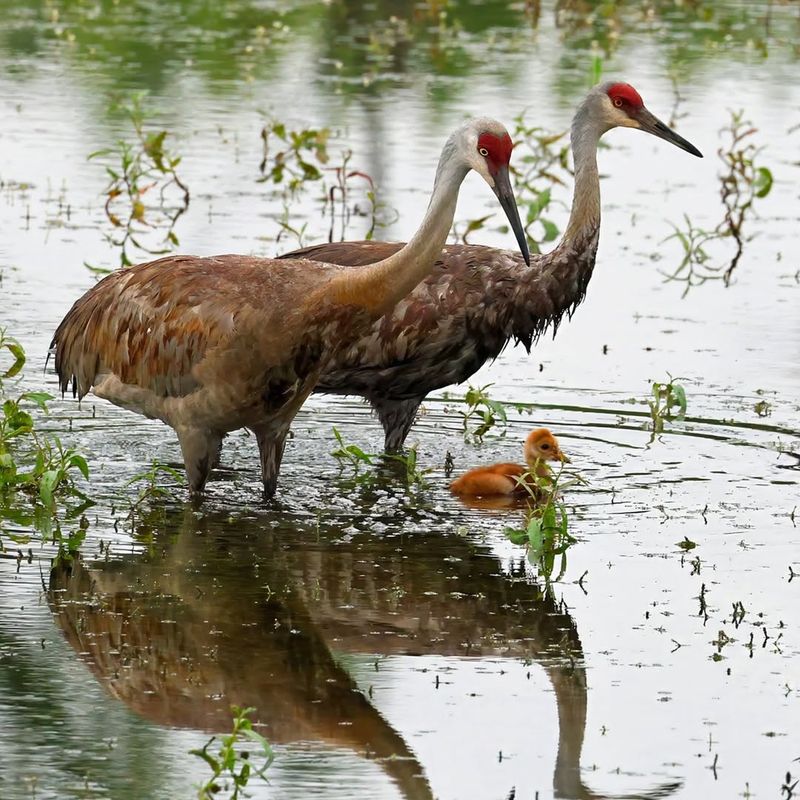
A pond on or near your property is one of the clearest reasons cranes might route through your yard regularly. Sandhill cranes roost in shallow wetlands, rivers, and marshy areas at night, using the water as protection from predators.
During the day they move out to upland areas to feed, covering ground that can include pasture edges, open meadows, agricultural fields, and yes, residential lawns.
That daily commute matters for understanding what you are seeing. A crane standing in your yard is not necessarily looking for a pond.
It may have already left the pond an hour ago and is now working the upland portion of its day. Cornell Lab’s sandhill crane life history confirms this pattern of wetland roosting combined with upland foraging, which explains why cranes appear in dry grassy areas far from visible water.
The range these birds cover can be surprisingly wide. USDA wildlife damage management data describes territorial cranes with home ranges of roughly 0.5 to 1.1 square miles, while nonterritorial birds can range across much larger areas, sometimes traveling several miles between roosting and feeding sites.
Your yard may simply be one stop among many along a route that connects a wetland roost to a farm field or open meadow.
So if you have a pond, a drainage swale, or even a low wet spot that holds water after rain, those features likely contribute to the appeal of your general neighborhood for cranes. The yard itself may just be a convenient link in a longer chain of habitat that suits their daily routine.
North Carolina Adds Important Context
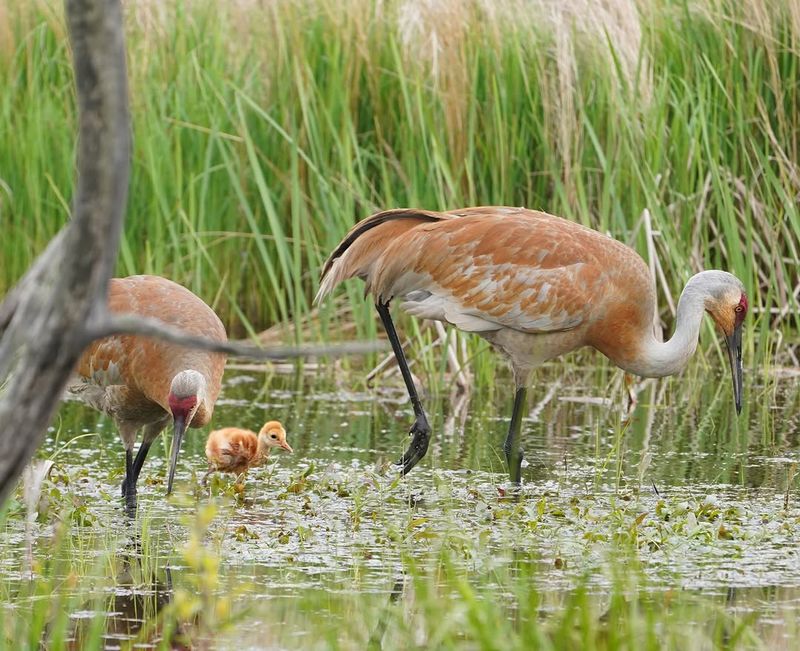
Sandhill cranes are not rare mysteries in North Carolina, but they are not common backyard regulars either. The Carolina Bird Club’s records for the Central Carolinas document increasing crane sightings over time, including a notable 2017 observation in a residential yard near Kannapolis.
That kind of record is genuinely useful context, but it does not mean cranes are turning up in every North Carolina suburb or that a statewide population boom is underway.
What it does suggest is that cranes move through this region, and some of those movements bring them into contact with yards, especially those near open land, farm fields, ponds, or corridors connecting larger habitats. The Piedmont’s mix of residential neighborhoods, agricultural edges, and scattered wetlands creates exactly the kind of patchwork landscape cranes can navigate.
For a homeowner seeing repeated visits, the most grounded explanation is local. Something about your immediate area fits into a crane’s routine, whether that is a nearby pond, a quiet pasture edge, a grain field within a mile or two, or simply open ground that is easy to walk and probe.
A single yard visit, or even several, does not establish that cranes are nesting on your property or that your neighborhood has become a crane hotspot. It means the birds are moving through a region that suits them, and your yard happens to sit along that path.
Identify The Birds Before Interpreting Them
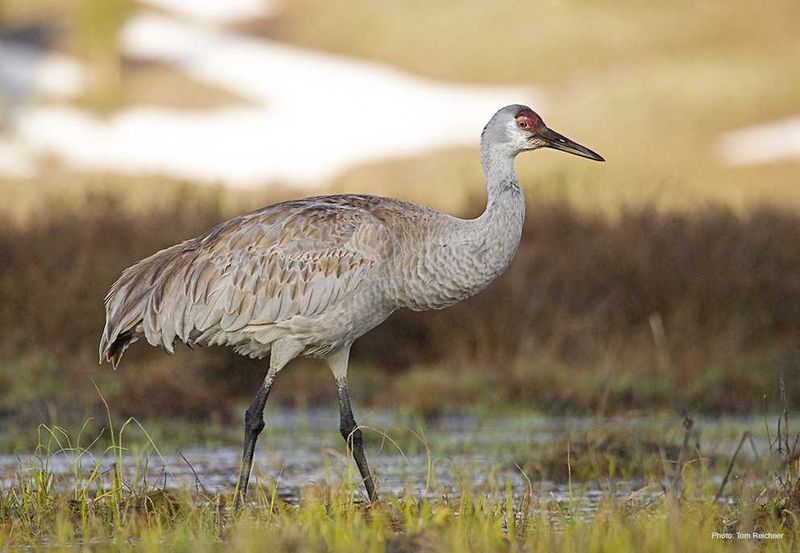
Before deciding what the visit means, it helps to confirm what you are actually looking at. Sandhill cranes are large birds, standing close to four feet tall with a wingspan around 78 inches.
Adults carry a distinctive red patch of bare skin on the forehead and crown, a gray body, black legs, and pale whitish cheeks. In flight, they stretch their necks out straight, which is one of the clearest ways to tell them apart from great blue herons, which fold their necks back into an S-curve when airborne.
Cornell Lab’s sandhill crane identification guide describes these field marks in detail and is worth bookmarking for a quick comparison. If you spot a smaller bird with rusty-brown coloring alongside the gray adults, that is likely a juvenile traveling with its parents.
A young bird does not mean nesting happened in your yard. Sandhill crane life history records confirm that adults form long-term pair bonds and travel with juveniles through much of the year, often visiting open fields and lawns well away from any nest site.
Here is where careful watching really matters. A white crane with black wing tips is not a sandhill crane.
That description fits a whooping crane, which is a genuinely uncommon bird with different conservation status and management considerations. A brief or distant look may not be enough to make a confident call either way.
If you think you might be seeing something other than a sandhill crane, contact the U.S. Fish and Wildlife Service or North Carolina Wildlife Resources Commission rather than trying to approach the bird for a closer look.
Getting the identification right first means everything that follows, including how you respond, is based on what is actually in your yard.
Calm Behavior Does Not Invite Feeding
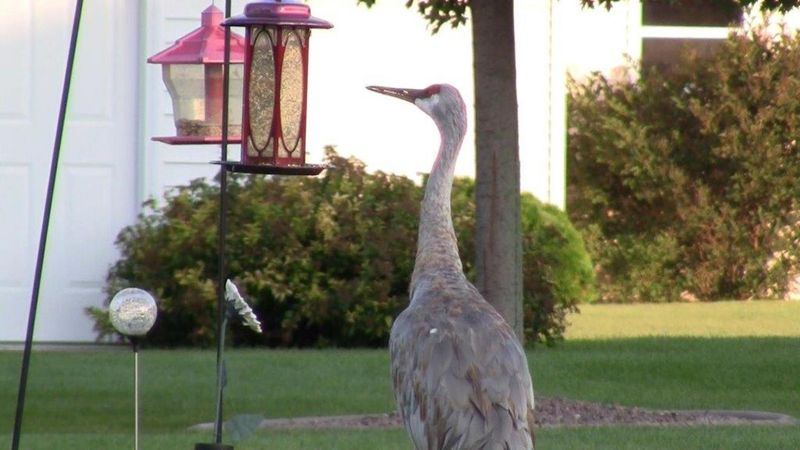
A crane that stands quietly in your yard, looks around without alarm, and goes about its business can feel almost friendly. Many people assume that kind of calm means the bird is tame, grateful, or has formed some kind of connection with the household.
The more accurate explanation is simpler: the bird has learned that people in this area are not an immediate threat, or it is focused enough on foraging that it is not paying much attention to you.
Deliberate feeding is what actually creates the clearest habituation risk. Florida Fish and Wildlife guidance on living with sandhill cranes explains that feeding cranes can reduce their natural wariness, encourage closer approaches to homes and roads, and create more opportunities for conflict with pets, vehicles, windows, power lines, and people.
The guidance does not claim that feeding guarantees any specific bad outcome, but the pattern is consistent enough to take seriously.
Putting out corn or other food because the birds seem to enjoy it is genuinely counterproductive. A crane that associates your yard with a reliable handout is more likely to return repeatedly, more likely to approach people confidently, and more likely to end up in a dangerous situation near a road or a dog.
Spilled birdseed beneath a hanging feeder counts as accidental feeding even if you never meant it that way. Cranes are ground feeders, and scattered seed sitting at ground level is easy pickings.
Cleaning up beneath feeders and switching to feeders that catch spillage are small adjustments that can make a real difference in whether cranes see your yard as a food stop worth revisiting.
Remove Attractants And Protect Pets
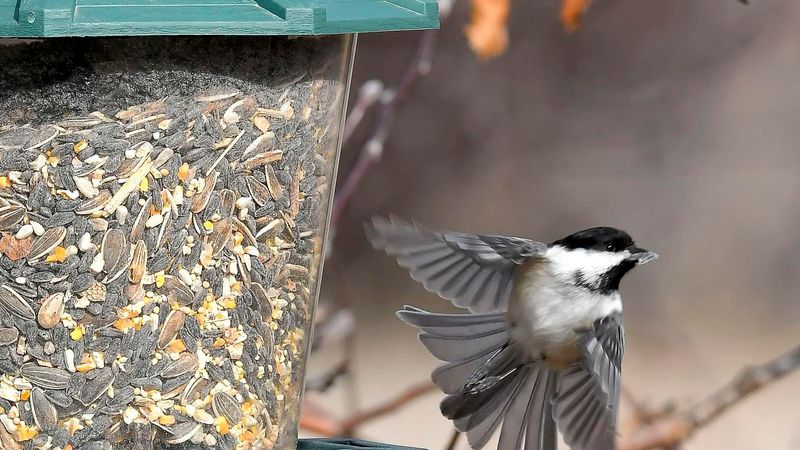
The most effective first step toward fewer crane visits is also the least dramatic: walk the yard and remove anything edible sitting at ground level. Spilled birdseed beneath feeders, unsecured pet food left outside, uncovered compost bins, fallen grain near a chicken run, or cracked corn scattered for squirrels can all quietly advertise your yard as a reliable food stop.
North Carolina Wildlife Resources Commission guidance recommends removing or securing food sources and reducing attractants as the starting point when wildlife conflicts develop on residential property.
Once the accidental food is gone, think about your pets. Dogs and cranes can coexist without incident, but the combination deserves some attention, especially if young cranes are present.
Juvenile birds are more vulnerable, and a dog that charges or chases can injure a bird or cause it to flee into traffic or a fence. Leashing or closely supervising dogs while cranes are in the yard is a straightforward precaution that protects both animals.
Cranes occasionally attack their own reflections in windows, glass doors, or shiny vehicle surfaces, apparently treating the image as a rival bird. If that is happening at your home, temporarily covering the reflective surface from the outside can interrupt the behavior.
Florida Fish and Wildlife guidance also describes mounting a temporary string barrier approximately 2.5 feet above ground around screens or areas the birds are damaging. That specific recommendation comes from Florida’s resident crane management experience, so treat it as a useful starting point rather than a guaranteed North Carolina standard.
None of these steps require chasing, startling, or confronting the birds. The goal is to make the yard quietly less rewarding, not to create a stressful situation for you or the cranes.
Removing attractants first gives you the clearest picture of whether the visits were food-driven or simply route-driven, and that distinction shapes what, if anything, you do next.
Give Them Space And Get Help When Needed
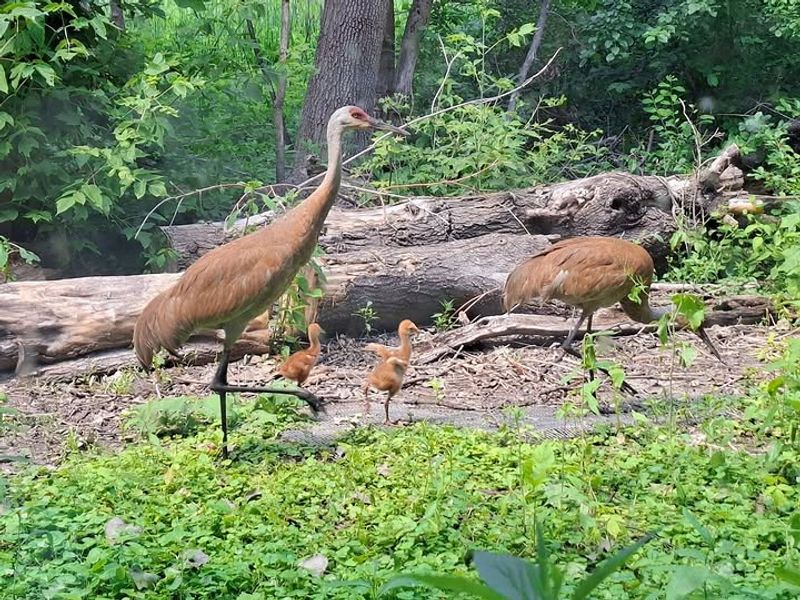
A crane standing motionless in your yard is not automatically in trouble. Birds rest, wait out disturbances, and simply pause during the day without being injured or sick.
North Carolina Wildlife Resources Commission guidance advises backing away and giving a stressed or still animal several hours to move on its own before concluding something is wrong. Crowding the bird, cornering it, or trying to shoo it will usually make things worse, causing the crane to panic and potentially injure itself trying to escape.
Chasing, throwing objects at, or using a dog to drive off a crane can injure or improperly disturb the bird. Conduct that results in prohibited harm to a protected migratory bird may violate federal law.
The Migratory Bird Treaty Act protects sandhill cranes from unauthorized capture, killing, possession, and handling, and that protection applies in residential settings just as much as anywhere else. Nonlethal deterrence, removing attractants, and consulting wildlife officials are the appropriate tools when visits become a persistent problem.
There are clear signs that a crane genuinely needs help: visible bleeding, an inability to stand, entrapment in fencing or netting, or failure to move at all after several hours of quiet observation. If you see any of those, do not attempt to handle the bird yourself.
Contact a licensed wildlife rehabilitator or reach out to the North Carolina Wildlife Resources Commission’s injured wildlife resources, which include a rehabilitator search tool and the Wildlife Helpline at 866-318-2401.
For persistent property or crop damage that goes beyond occasional visits, USDA crane management guidance notes that nonlethal management generally does not require a federal permit, while capture, possession, or lethal control typically does, subject to applicable state and local rules. A qualified wildlife control professional or North Carolina Wildlife staff can walk you through what is actually available for your situation.
Most of the time, the cranes move on when the season shifts or the food runs out, and the yard goes back to normal without any intervention at all.