
American Beautyberry: The North Carolina Native Shrub With Surprising Mosquito And Tick Research
Follow us on Google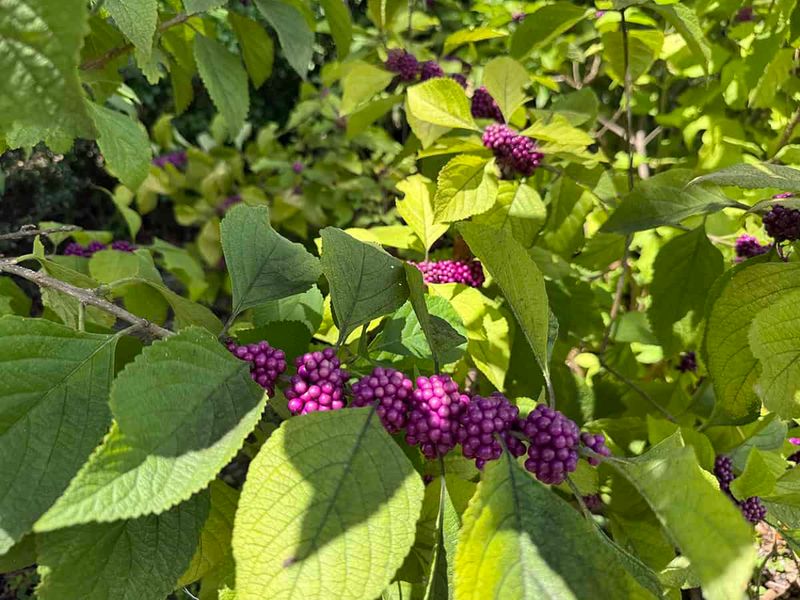
Most North Carolina homeowners have spent at least one summer evening swatting mosquitoes off the porch and wondering if there is a smarter way to handle it. American beautyberry, a native shrub that grows from the Coastal Plain all the way into the mountains, has been quietly attracting scientific attention for exactly that reason.
Researchers found that compounds in its leaves showed real repellent activity against certain mosquitoes and ticks in laboratory tests, and that is genuinely interesting. What the plant cannot do is form an invisible pest barrier around your patio, and understanding that difference is where the practical value actually begins.
Meet North Carolina’s American Beautyberry
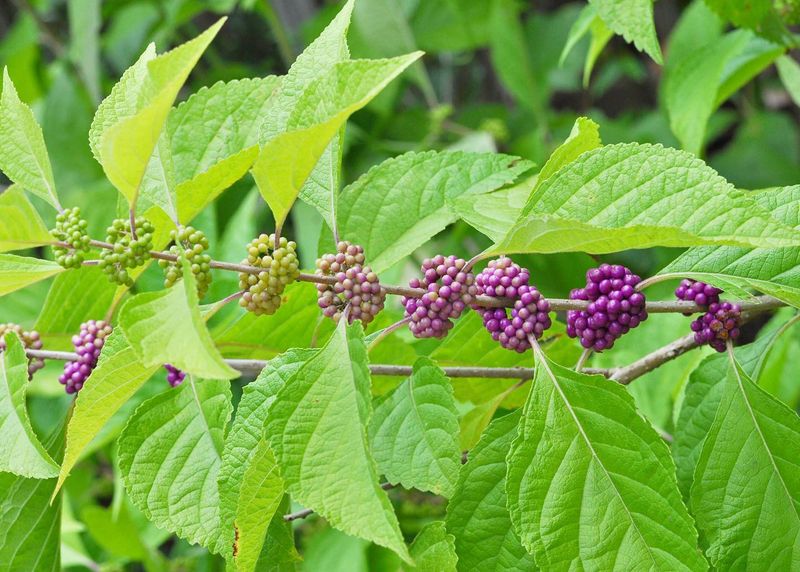
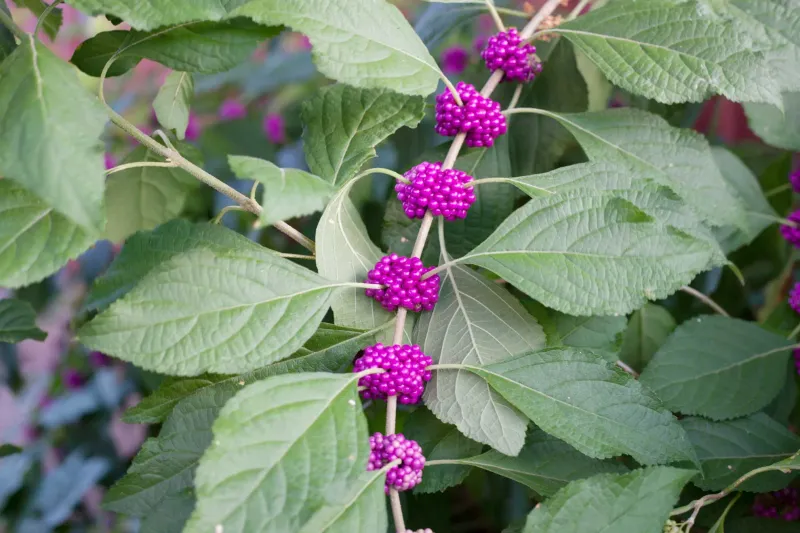
You have probably walked past one without knowing it. American beautyberry, Callicarpa americana, grows wild from the Coastal Plain through the Piedmont and up into the mountain foothills of North Carolina, tucked into forest edges and roadside thickets where it spends most of the year looking like an ordinary leafy shrub.
Come August, that changes fast. The branches load up with clusters of vivid purple or occasionally white berries so densely packed they look almost artificial, and those clusters hold on through October and sometimes into winter.
NC State Extension’s Plant Toolbox describes a deciduous shrub that typically reaches 3 to 8 feet tall and 3 to 6 feet wide, tolerating clay, loam, and sandy soils equally well, in full sun or partial shade.
In late spring and early summer, small pink flowers appear along the stems before the berries develop. Songbirds and small mammals treat the fruit like a fall buffet, so a beautyberry in a corner of the yard can pull in robins, catbirds, and mockingbirds right when the neighborhood feels quietest.
The corrected premise here matters. American beautyberry is a legitimate native landscape shrub with real wildlife value and a genuinely interesting research history involving its leaf chemistry.
It is not a documented barrier against scorpions or a broad porch-pest shield. Growing it for what it actually does, attractive seasonal interest plus wildlife habitat plus scientifically curious leaf compounds, gives North Carolina homeowners something worth planting on its own terms.
What Beautyberry Leaf Compounds Have Shown
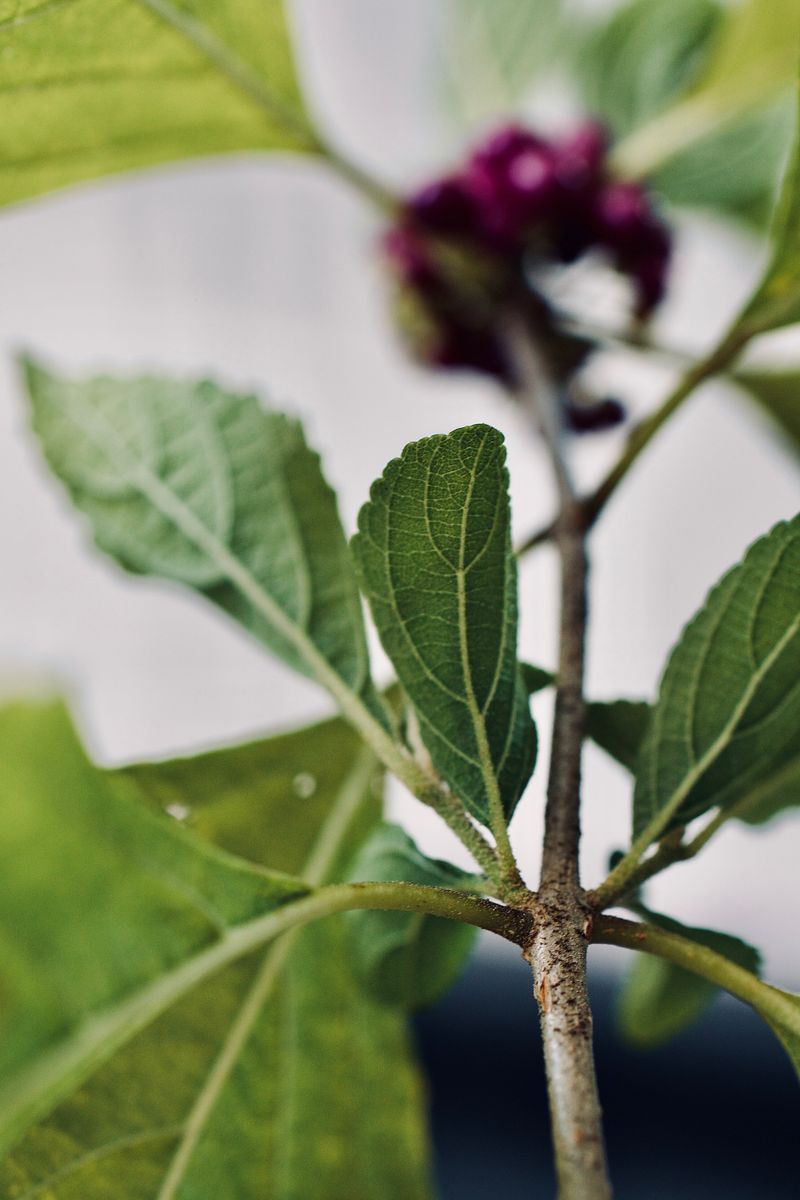
Here is where it gets genuinely interesting. The scientific curiosity around American beautyberry is not about the berries or the flowers.
It is about what is hiding in the leaves.
Researchers identified several terpenoid compounds in beautyberry foliage, including callicarpenal and intermedeol, that showed mosquito bite-deterrent activity in controlled laboratory assays. A 2005 study published in the Journal of Agricultural and Food Chemistry isolated these terpenoids from leaves of American beautyberry and tested them against mosquito species under carefully controlled conditions, finding measurable deterrent effects.
USDA Agricultural Research Service scientists later extended that work to ticks. Their research tested beautyberry-derived compounds against blacklegged tick nymphs and lone star tick nymphs, the same species that concern most Piedmont and Coastal Plain homeowners during warm months.
Under specific laboratory conditions, the beautyberry compounds performed comparably to DEET, with repellency lasting roughly 3 hours after application in that study.
That 3-hour window and the phrase “laboratory conditions” are doing a lot of work in that sentence. The tests involved extracted or isolated compounds applied to treated materials or tested in controlled assays, not a living shrub growing in red clay.
The findings represent a promising research lead for developing future repellent products, and scientists have taken them seriously enough to pursue synthesis of callicarpenal.
What the research does not show is that a beautyberry planted beside your back steps measurably reduces how many mosquitoes or ticks reach your skin. The leaf chemistry is real and worth knowing about.
The gap between extracted compound and living landscape plant is also real, and that gap matters for how you actually protect yourself outdoors.
Why A Planted Shrub Is Not A Repellent Product

A lot of gardening content skips this part, and that is where readers get misled. Knowing that beautyberry leaf extracts showed repellent activity in a lab is interesting.
Concluding that a beautyberry bush next to your porch chair will keep mosquitoes off your ankles is a different claim entirely, and it does not hold up.
NC State Extension’s mosquito guidance states plainly that claims about repellent plants placed around porches or decks lack scientifically based support for reducing mosquito activity in the landscape. That includes beautyberry, along with citronella, lavender, and the other plants that get promoted for this purpose every spring.
The beautyberry studies worked with extracted compounds, not volatile emissions from an intact shrub sitting in the ground. An undisturbed plant is not continuously releasing callicarpenal into the air around your patio furniture at concentrations that deter insects.
The research also does not establish effects on scorpions, stink bugs, Japanese beetles, ants, spiders, fleas, wasps, or biting flies. Those pests are separate problems with separate solutions.
One more thing to address directly: do not rub crushed beautyberry leaves on your skin as a homemade repellent. Plant chemistry, skin sensitivity, possible misidentification of the species, and the absence of any dosing guidance all make that a risky shortcut.
NC State’s insect repellent guidance recommends EPA-registered products, including DEET and picaridin, applied according to the label. Those products have been tested for safety and effectiveness in real-world conditions, which is exactly what homemade leaf preparations have not been.
Beautyberry earns its place in a North Carolina yard. It just earns it as a native shrub with wildlife value, not as a pest-control device.
Choose A Site That Works For The Whole Shrub
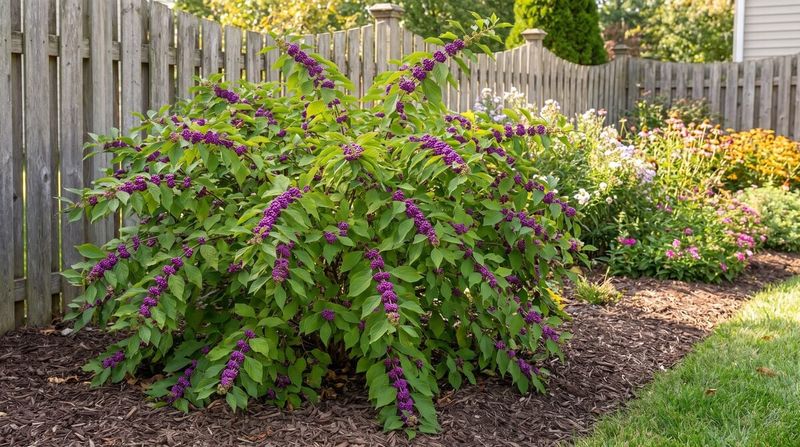
Placement decisions for beautyberry work best when they start with what the plant actually needs rather than where you hope it might deter something. Get those basics right and the shrub will reward you with a strong berry display and a genuinely low-maintenance growing season.
NC State’s Plant Toolbox lists beautyberry as adaptable to full sun or partial shade, but the flower and fruit display is noticeably stronger with at least 6 hours of direct sun. A spot along the yard’s edge or in a sunny corner away from the house tends to give it room to perform.
In shadier spots near the Piedmont tree line, the plant will grow but the berry clusters thin out.
Allow 3 to 6 feet of space for mature width. That sounds like a lot if you are used to smaller ornamentals, but beautyberry earns that footprint by late summer when the berry clusters arch out from every branch.
Crowding it against the foundation, crawl-space vents, or doorways makes future maintenance harder and limits your ability to inspect those areas easily. Keep it far enough back that you can walk between the shrub and the house without brushing against it.
Pruning is optional but useful if you want a tighter, fuller plant. Because beautyberry flowers and fruits on new growth produced each season, cutting it back hard in late winter to about 1 foot from the ground encourages a fresh flush of vigorous shoots.
Many Piedmont gardeners skip this step in years when the plant looks healthy and full, and the shrub does fine either way.
Plan for the full growing cycle: bare stems in winter, leafy green growth through summer, then that dramatic berry display in fall followed by some fruit drop. The berries are edible but have little flavor, and birds typically clean them up before any significant mess accumulates on the ground below.
Use Home Exclusion For Scorpions
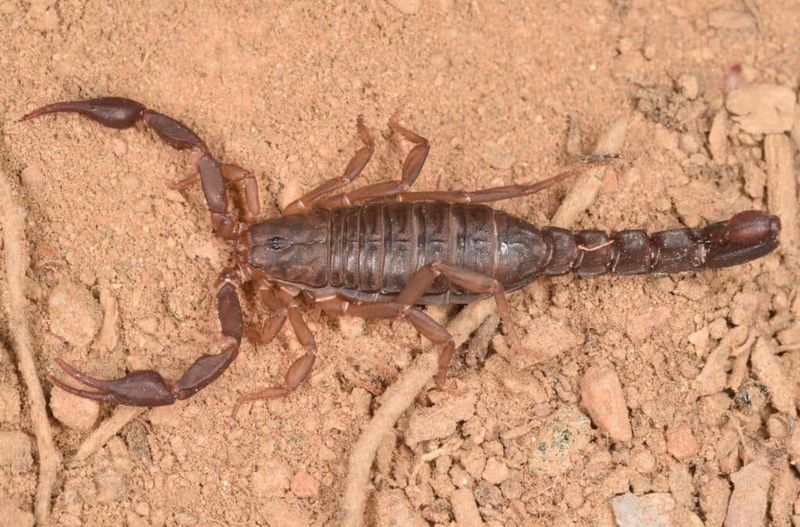
Scorpions come up in almost every conversation about porch pests in western North Carolina, and the title that brought you here probably promised that beautyberry could help with them. No cited evidence supports that claim, so setting it aside is the honest move.
What actually reduces scorpion encounters around the house is a different set of actions entirely.
NC State Extension’s scorpion guidance identifies the southern unstriped scorpion as the species most commonly found in North Carolina, primarily in the western part of the state. Unlike the desert-adapted scorpions many people picture, this species is commonly associated with moist areas where its prey, insects, spiders, and millipedes, is available.
Other scorpion species sometimes turn up in the Piedmont or Coastal Plain after arriving accidentally with transported materials such as firewood or landscape supplies.
Because scorpions follow their food supply and seek shelter in tight, protected spaces, the most effective response focuses on the home’s edges. Seal openings around plumbing penetrations, repair loose-fitting doors and windows, and caulk cracks in the foundation.
Move firewood, stacked lumber, and stored materials at least several feet away from the exterior walls. Clear debris piles from around the foundation perimeter so scorpions have fewer places to shelter close to entry points.
Check shoes left outside before putting them on, shake out gloves and work clothes stored in outbuildings, and wear gloves when handling firewood, rocks, mulch, or stacked debris. These habits cost nothing and directly address how scorpion encounters happen most often.
Keeping shrubs and vegetation trimmed back from the immediate foundation edge is sensible as an access and inspection measure, not because a gap between plant and foundation has been proven to stop scorpions. The combination of sealing, debris removal, and stored-material management is where the actual reduction in encounters comes from.
Reduce Mosquito And Tick Exposure Directly

Standing water is the single most controllable mosquito variable in any North Carolina yard, and most properties have more of it than the homeowner realizes. Saucers under potted plants, low spots in the lawn, clogged gutters, and forgotten buckets can all produce hundreds of mosquitoes in less than a week during a warm, humid July.
Empty anything that holds water at least once every 7 days. Clear gutters before the summer storm season ramps up so water moves through rather than pools.
Check downspout extensions, tarps, and low spots in the lawn after the afternoon storms that roll through the Piedmont from June onward. Repair any torn or ill-fitting window and door screens before mosquito pressure peaks.
North Carolina DHHS guidance recommends applying DEET or picaridin to exposed skin according to the product label when spending time outdoors during peak mosquito hours. For additional protection, 0.5% permethrin applied to clothing and gear according to its directions adds a meaningful layer, particularly for time spent in brushy or wooded areas.
These are not interchangeable products; follow each label’s specific instructions for concentration, reapplication timing, and which surfaces are appropriate.
Tick management calls for a slightly different set of habits. NC State Extension’s mosquito and tick guidance recommends keeping grass mowed short, reducing leaf litter and brush piles within about 9 feet of the house, and creating a clear buffer between lawn and wooded areas where ticks wait for a passing host.
After any time outdoors in tick habitat, check yourself, your children, and any pets thoroughly. Blacklegged ticks are small enough to hide in a hairline or behind a knee without being noticed.
Remove any attached tick promptly using fine-tipped tweezers, grasping it close to the skin and pulling steadily upward. None of these measures eliminate tick-borne disease risk entirely, but each one meaningfully reduces your exposure, which is the realistic and honest goal.
Make The Porch Less Attractive Without Sterilizing The Yard
Turning off a porch light is one of the lowest-effort improvements most homeowners overlook. Bright outdoor lights draw insects, and insects draw the things that eat them.
NC State Extension has noted that wasps are commonly attracted to porch lights, and the same principle applies to other predatory pests that follow insect activity. Switching decorative lights off when you are not actively using the porch, or replacing bright white bulbs with warm amber LEDs that attract fewer insects, reduces one reliable source of porch activity without any chemical input.
Keep the immediate area around the home’s foundation clear and easy to inspect. That means no stacked pots, no deep mulch directly against the siding, and no clutter that makes it hard to see what is living close to the house.
This is not about creating a sterile zone, it is about being able to notice a problem before it becomes a bigger one.
Further out in the yard, a more relaxed approach actually helps. Native shrubs, leaf litter in garden beds, and diverse plantings support the birds, bats, and beneficial insects that provide real ecological pest pressure over time.
American beautyberry fits naturally into that zone. NC State confirms that its berries support songbirds and small mammals through fall and into winter, which is genuine habitat value for a plant that also happens to have interesting leaf chemistry.
Before you buy a beautyberry at a nursery, confirm the botanical name on the tag: Callicarpa americana. Other beautyberry species and cultivars are sold under similar common names but may not share the same native status or research history.
And if anyone in the household eats an unidentified purple berry from the yard, contact Poison Help at 1-800-222-1222 right away rather than waiting to see what happens.
A yard that feels safer and more alive at the same time is not a contradiction. It is actually the most realistic outcome when the strategy is layered, honest, and built around what each piece genuinely does.