
The North Carolina Patio Plant That Pulls More Weight Than Most Mosquito Sprays At Dusk
Follow us on Google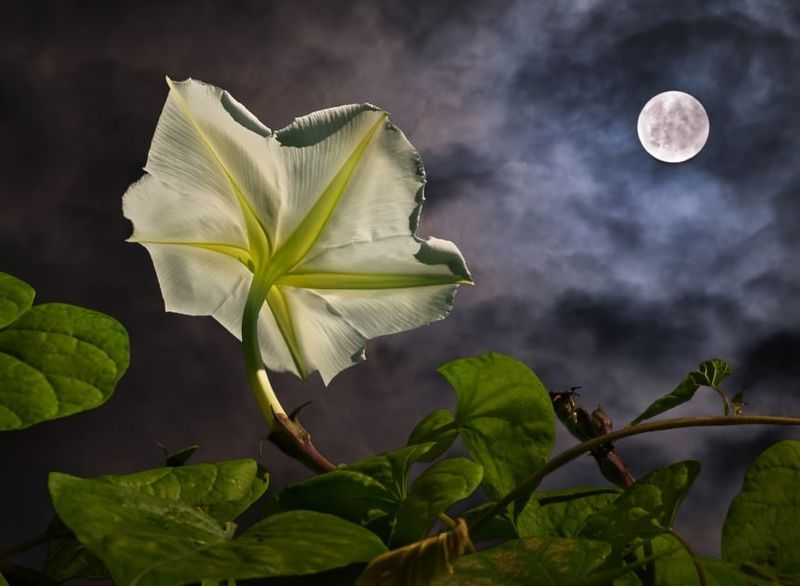
Around 8 p.m. on a muggy July evening in the Piedmont, something shifts on the patio.
The daylilies have folded up, the heat is finally easing, and then a single white flower the size of your palm unfurls right in front of you, filling the air with a scent you did not expect from a vine.
That flower belongs to moonflower, Ipomoea alba, and it is genuinely one of the most dramatic things a North Carolina gardener can grow in a container.
It will not solve your mosquito problem, but it will make the hour when mosquitoes show up feel a whole lot more worth defending.
Moonflower Changes The Dusk
Somewhere between the last of the afternoon light and the first firefly blink, a moonflower vine does something no other patio plant quite matches.
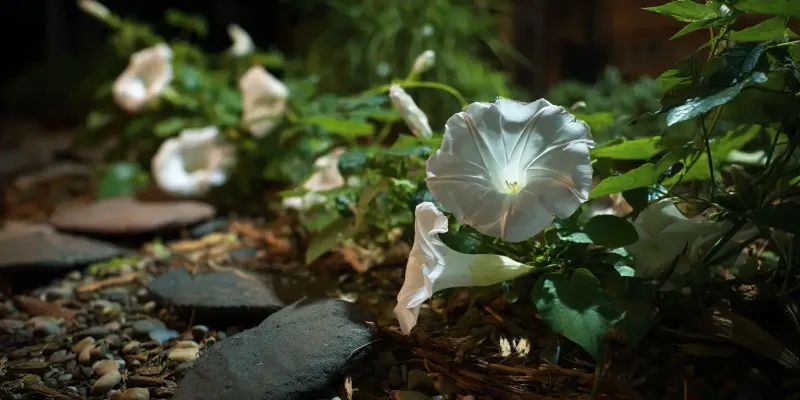
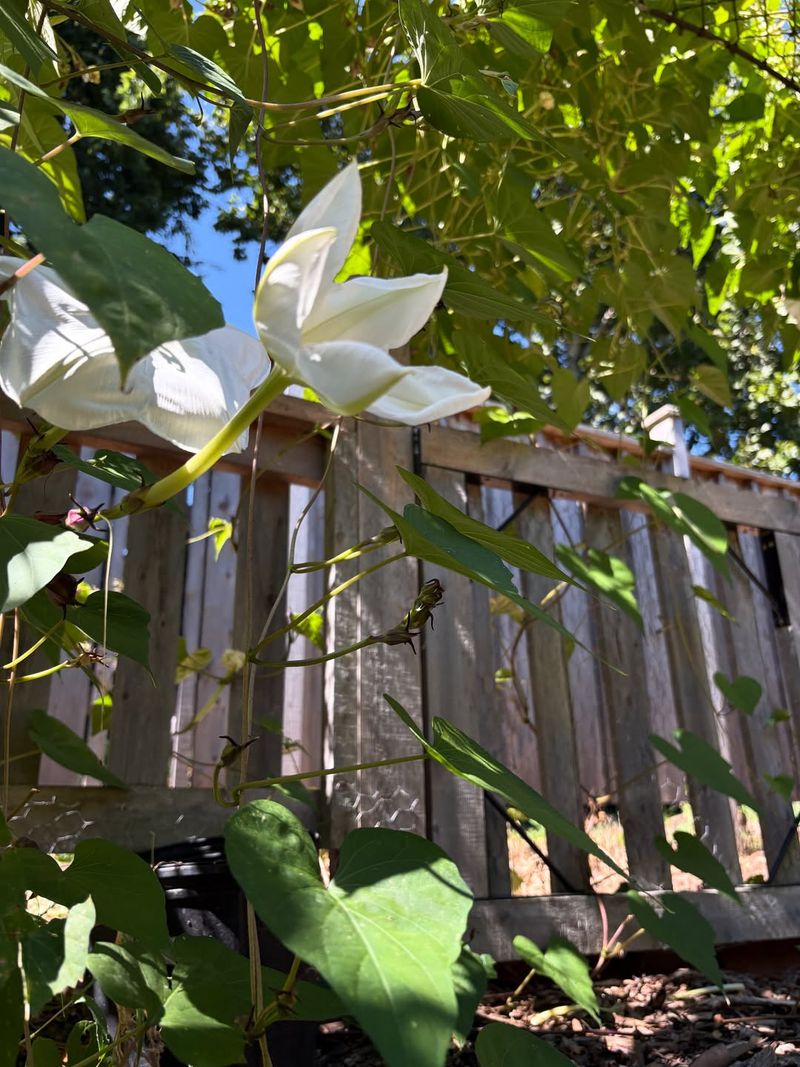
The flowers, each one a broad white trumpet roughly 3 to 6 inches across, begin to open.
You can actually watch it happen if you catch the right moment, the petals unwinding in a slow spiral like a time-lapse you did not have to set up.
The plant is moonflower, Ipomoea alba, and NC State Extension lists it as a tender perennial grown as a warm-season annual across North Carolina, well suited for patios, containers, trellises, and nighttime gardens.
Its blooms open in late afternoon or at night and close again around dawn, which means the entire show happens during the exact hours you are actually sitting outside in July and August.
The fragrance is real and noticeable, something between jasmine and a clean floral sweetness, strong enough to carry across a small seating area.
On a Coastal Plain porch or a Piedmont deck, that scent arrives at the same moment the heat finally breaks, and the combination feels almost planned.
Daytime flowers like zinnias and black-eyed Susans have already clocked out by then.
The visual payoff is also hard to argue with.
White blooms hold light in a way that colored flowers do not, so they stay visible and almost luminous well after the sun goes down.
Set against a dark fence or a wooden trellis, a moonflower in full bloom in mid-August looks like something you arranged on purpose, because you did.
The real promise here is atmosphere, a night-garden moment that no spray bottle was ever going to give you.
Night Pollinators Explain The Timing
Moonflower did not develop its evening bloom schedule by accident.
The flowers open at night because their primary visitors fly at night, and understanding that relationship makes the timing feel less mysterious and more like a clever biological arrangement you get to witness from your porch chair.
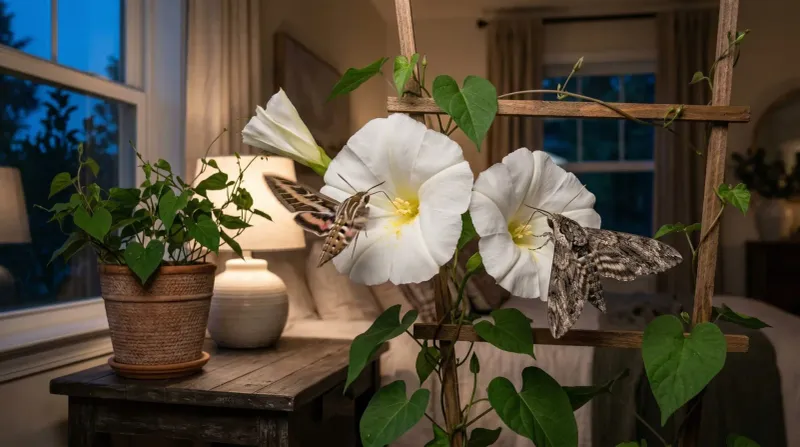
The main pollinators drawn to moonflower are hawk moths, sometimes called sphinx moths, large fast-moving insects that hover at flowers the way hummingbirds do during the day.
Some specialized native bees also visit the blooms.
The Pollinator Partnership’s 2024 guide documents moonflower among plants that support night-active pollinators, a category that most daytime gardens overlook entirely.
On a warm August night in the Sandhills or along the coast, a hawk moth working a moonflower bloom is a genuinely striking thing to see.
The flowers themselves are built for this relationship.
Each bloom is roughly 3 to 6 inches across, white enough to be visible in low light, and fragrant enough to broadcast its location across a dark yard.
Blooming runs from mid-summer into fall, which covers the stretch of evenings when North Carolina homeowners are most likely to be sitting outside past 8 p.m.
What the fragrance does not do is repel mosquitoes.
The scent is an attraction signal aimed at moths and certain bees, not a chemical barrier aimed at biting insects.
A moth visiting your moonflower is a genuine habitat benefit, and it is worth appreciating on its own terms.
But the wildlife value stops there: moth visitation does not translate into mosquito control, and the vine does not create any kind of protected zone around the seating area.
The evening atmosphere is real.
The mosquito-repellent story is not.
Do Not Count On The Plant For Mosquito Control

Here is where a lot of patio gardening advice goes sideways.
A fragrant flowering plant opens in the evening, the idea spreads that it must be keeping mosquitoes away, and suddenly a vine gets credit for something it has never actually done.
Moonflower is one of those plants that collects this kind of reputation, and the reputation is not earned.
No reliable evidence shows that a living moonflower plant repels mosquitoes, reduces bites on a patio, or outperforms any registered mosquito spray.
NC State Extension’s guide to insect-repellent products is direct about this: scientific studies have not supported outdoor mosquito-repellent claims for so-called repellent plants.
Growing one in a container does not establish a protection radius, does not lower the mosquito count in your yard, and does not replace anything you would otherwise do to protect your family.
The fragrance point is worth addressing specifically, because it comes up often.
Moonflower’s scent is an attraction cue for nighttime pollinators.
It was not shaped by evolution to bother mosquitoes, and there is no established mechanism by which smelling nice to a hawk moth also means repelling a biting fly.
A fragrant flower and a tested skin repellent are two completely different categories of thing.
Mosquito timing adds another layer of complexity.
NC State’s mosquito management guidance and local public health resources both note that mosquito activity in North Carolina varies by species.
The Asian tiger mosquito bites during daylight hours.
Assuming mosquitoes only show up at dusk is not safe guidance for anyone spending time in a North Carolina yard, and a plant that blooms at night offers exactly zero protection from a mosquito that bit you at 2 p.m. by the birdbath.
Give The Vigorous Vine A Real Support
Getting moonflower right on a patio comes down to two things: a big enough container and a strong enough support.
Skip either one and the vine will remind you of your mistake by August, when it is growing 6 inches a day and has nowhere to go.
Container size matters more than most people expect.
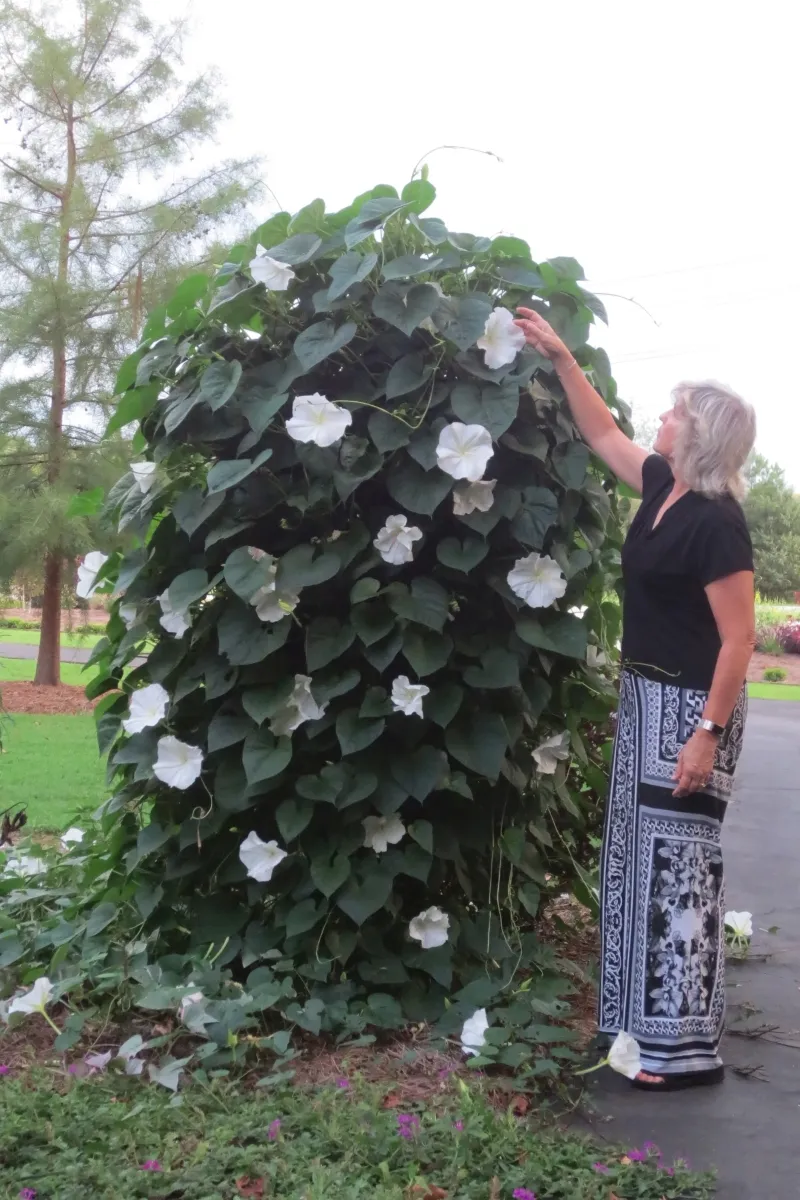
NC State Extension’s moonflower profile describes a plant that can reach about 15 feet tall and spread 3 to 6 feet wide in a single growing season.
That is a large vine by any measure.
A pot that is at least 15 to 20 gallons gives the root system room to support that kind of growth without the plant stressing out by mid-July.
Use well-drained potting mix rather than heavy garden soil, which compacts in containers and slows drainage.
Full sun is non-negotiable.
Moonflower wants at least 6 hours of direct sunlight per day, so a south- or west-facing patio wall is a better home than a shaded corner.
In the Piedmont and along the coast, afternoon sun exposure also means the plant is primed and ready when the blooms start opening around dusk.
The support structure needs to go in before the vine takes off, not after.
A trellis, arbor, fence panel, or sturdy wire frame anchored to the container or a nearby wall gives the vine something to grab from the start.
Once rapid summer growth begins, training the vine is much easier than chasing it.
A 6-foot trellis is a reasonable minimum; taller is better if the structure allows it.
Seed starting is straightforward but requires a little patience.
Sow seeds indoors about 4 to 6 weeks before the last spring frost in your area, which falls around mid-March to early April across most of North Carolina’s Piedmont and Coastal Plain.
Moonflower seeds have a hard coat that resists water, so soak them overnight in warm water or nick the seed coat gently with a nail file before planting.
That small step cuts germination time noticeably.
Direct sowing outside works once nighttime temperatures stay consistently above 60 degrees Fahrenheit, usually late April to early May in the Piedmont.
Moonflower is a warm-season annual in North Carolina, so do not count on it returning next spring from the roots.
Stop The Container From Making Mosquitoes
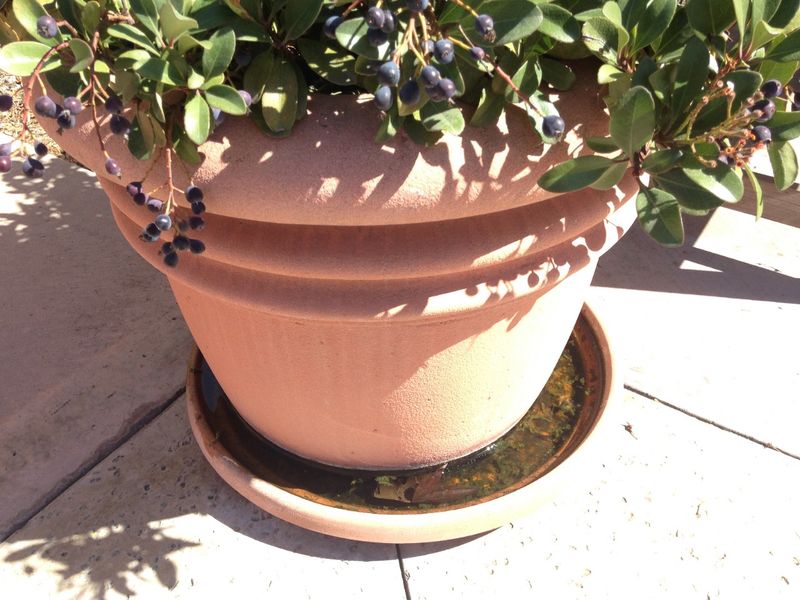
A moonflower container on your patio is a good thing.
A moonflower container with a water-filled saucer sitting underneath it is a mosquito nursery.
That is not a reason to skip the plant, but it is a reason to think through the setup before you haul a 20-gallon pot onto the deck.
The problem is simple: mosquitoes need standing water to lay eggs and complete their early life stages, and they do not need much of it.
CDC guidance on home mosquito control specifically lists flowerpot saucers among the containers that should be emptied and scrubbed weekly.
A saucer that collects a quarter inch of water after a summer rain can support a new generation of mosquitoes in about a week, which is a fast turnaround in a muggy North Carolina August.
The fix depends on your setup.
The cleanest option is to skip the saucer entirely and use a pot with drainage holes over a surface that lets water run off freely.
If a saucer is necessary to protect a wood deck, empty and scrub it after every rain and at least once a week during dry stretches.
Scrubbing matters because mosquito eggs can stick to the sides of containers and survive even after the water drains.
While you are at it, walk the rest of the patio and yard with fresh eyes.
Buckets left upside-down that catch water when flipped, kids’ toys, birdbaths that go more than a week without being refreshed, tarps with low spots, and clogged gutters overhead are all part of the same problem.
Removing standing water is the first and most effective mosquito-control action available to a homeowner, and it costs nothing except a few minutes of attention each week.
Protect People With Layers That Work

Once the container is set up and the saucers are managed, the next job is protecting the people sitting in the chairs.
A moonflower vine makes that hour more pleasant, but it does not make it safer from bites.
That part takes a few additional steps, and none of them are complicated.
Start with airflow.
NC State’s mosquito management guidance points out that mosquitoes are weak fliers and that moving air across a seating area can meaningfully reduce how many of them land on people.
A box fan or oscillating fan positioned to blow across the chairs rather than toward the plant is the key distinction.
The goal is to keep air moving over the people, not to ventilate the vine.
For direct bite protection, use an EPA-registered repellent.
CDC guidance on mosquito prevention identifies active ingredients with demonstrated effectiveness: DEET, picaridin, IR3535, oil of lemon eucalyptus in a registered formulation, PMD, and 2-undecanone.
The phrase “registered formulation” matters here.
A product containing oil of lemon eucalyptus that has gone through EPA registration is not the same thing as a bottle of pure, unformulated lemon eucalyptus essential oil.
CDC’s travel health reference is clear that it does not recommend pure, unformulated essential oils as repellents, because their effectiveness has not been evaluated the same way.
Follow the product label for minimum ages, how to apply, and when to reapply.
Labels are not suggestions; they govern legal use and are calibrated to actual safety data.
For standing water that genuinely cannot be dumped or covered, Bacillus thuringiensis israelensis, sold as Bti in mosquito dunks or bits, is a useful option.
CDC’s larvicide guidance explains that Bti targets mosquito larvae in water, not adult mosquitoes already flying around the patio.
It is a larval control tool, not a substitute for repellent or airflow.
Used in a rain barrel or a pond that cannot be emptied, it adds a meaningful layer to the plan without affecting the adults already looking for a meal.
Layering these steps, airflow, repellent on skin, water removal, and Bti where needed, gives a North Carolina patio a genuinely stronger defense than any single product or plant ever could.
Keep The Night Garden Safe And Honest
Before you order seeds, there is a naming problem worth knowing about. “Moonflower” is one of those common names that gets attached to more than one plant, and the distinction actually matters.
Ipomoea alba is the fragrant climbing vine covered in this article, appropriate for a nighttime patio garden and sold widely at North Carolina garden centers.
A different plant, Datura stramonium, is also sometimes called moonflower.
Datura is a different species entirely, with high-severity poisonous characteristics that make it a poor choice around children, pets, or livestock.
If you are buying seeds or transplants, confirm the botanical name is Ipomoea alba before you bring anything home.
Ipomoea alba itself has low-severity poison characteristics.
NC State’s plant profile notes that large amounts of the seeds can cause vomiting and hallucinations.
Keep seeds and all plant material away from young children, pets, and livestock.
Do not rub leaves, sap, or flowers on skin, and do not treat any part of the plant as a topical repellent.
No safe or effective skin application has been established by any cited authority.
The wildlife value of the vine is real but specific.
Moths visit the blooms, some specialized bees benefit from the nectar, and that is genuinely worth having in a North Carolina night garden.
Bats also fly at night, and NC State’s bat guide notes that North Carolina supports 17 bat species that consume many night-flying insects.
But a North Carolina homeowner mosquito guide cautions specifically that bats are not avid mosquito eaters.
A bat house near your patio may support broader biodiversity, but it will not reliably clear the air of mosquitoes.
If pesticide sprays come into your plan for adult mosquito control, read the label before you spray anything.
NC State Entomology’s guidance on home mosquito control warns that products marketed as natural can still contain pyrethroids or other compounds that harm bees, fish, and other beneficial insects.
Flowering plants, open water features, edible crops, wind direction, children, and pets all require attention before any spray goes on.
Timing a spray at dusk can reduce direct exposure to some daytime pollinators, but it does not eliminate environmental risk, and the label controls what is legal and what is safe.
Moonflower earns its spot on a North Carolina patio by doing what it actually does: turning an ordinary muggy evening into something worth staying outside for, and giving moths a reason to visit a yard that used to offer them nothing.
The mosquito plan lives alongside it, not inside it, and that honest pairing is what actually makes the patio more livable.