
What It Really Means When A Whip-Poor-Will Calls Near Your North Carolina Yard At Night
Follow us on Google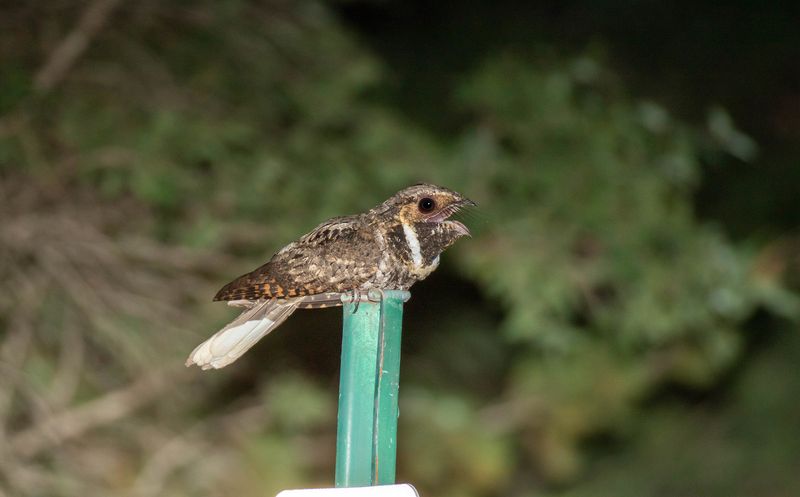
You’re sitting on the porch on a warm Carolina evening, and suddenly that strange, repeating call cuts through the dark, saying its own name over and over.
A lot of people hear it and wonder whether something is nesting under the deck or whether the yard has turned into a wildlife refuge overnight.
That sound is actually a clue worth reading, and it tells a more interesting story than most people expect.
Understanding what it means, and what it does not mean, can change the way you think about the landscape around your home.
The Caller Is Most Likely an Eastern Whip-poor-will
Picture this: the porch light is on, the tree frogs are going, and somewhere just past the edge of your yard, a bird starts calling its own name without stopping.
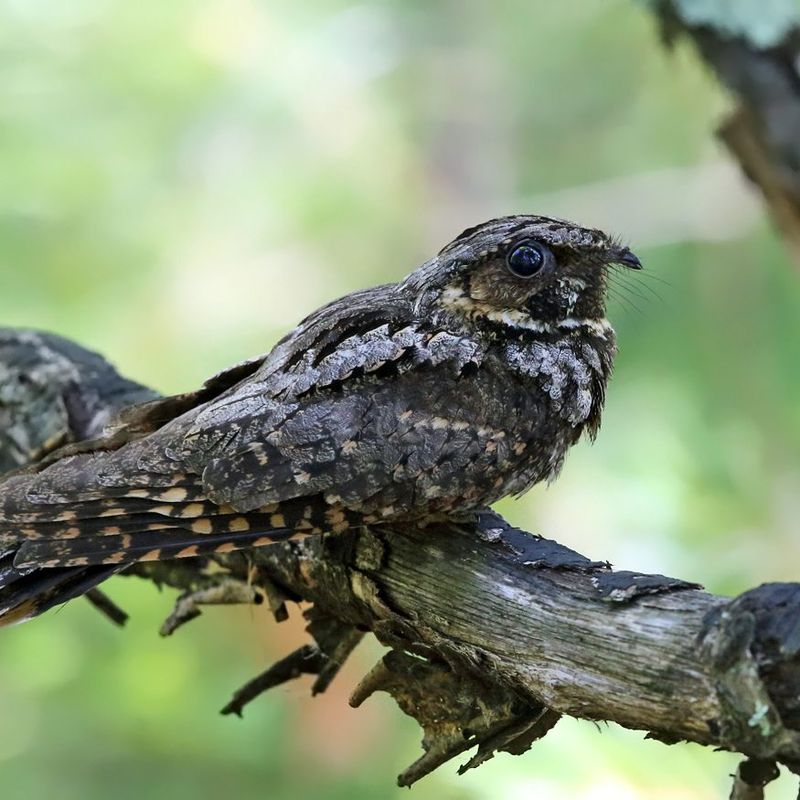
That repeating three-note phrase, clear and insistent, most likely belongs to an Eastern Whip-poor-will (Antrostomus vociferus).
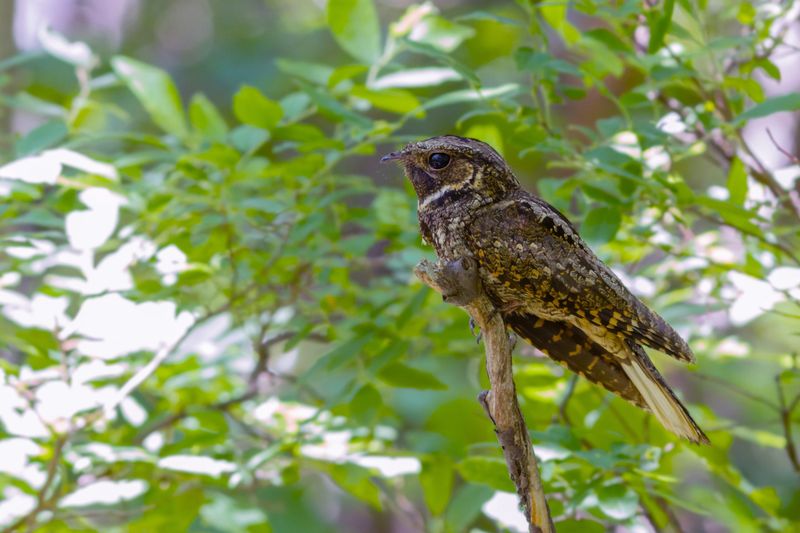
According to Cornell Lab’s identification guide for the Eastern Whip-poor-will, this species is active at night and is almost always heard rather than seen, because its gray-brown feathers match dead leaves and bark so precisely that the bird can sit still in plain sight and disappear.
The call you are hearing is not random noise or a distress signal.
It is a territorial breeding song, produced almost entirely by males during the spring and summer.
The male repeats the phrase rapidly, sometimes hundreds of times in a row, to hold territory and attract a mate.
Hearing it near the house means a bird is using suitable habitat close by, not that it has taken up residence in the flower bed or under the steps.
That distinction matters for everything that follows.
Cornell Lab’s overview of the species makes clear that Eastern Whip-poor-wills are nocturnal birds of open and lightly wooded landscapes, which means the call points outward toward a broader surrounding habitat, not inward to any single yard.
Knowing that keeps the rest of the story in the right perspective.
Its Song Points to a Habitat Mosaic
That call does not come from a bird that chose your azalea bed.
Eastern Whip-poor-wills need a specific combination of landscape features, and the presence of a caller nearby suggests that combination exists somewhere in the surrounding area.
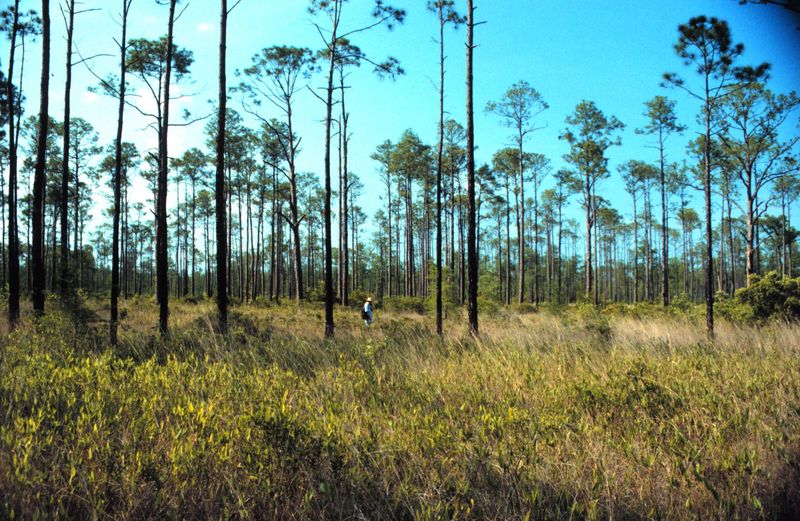
Cornell Lab’s life history account describes the species as favoring dry deciduous or mixed forest with little or no dense understory, usually positioned near open areas such as fields, clearings, or forest edges.
In North Carolina, that can mean loblolly pine stands in the Coastal Plain, pine-oak woods in the Sandhills, scrubby woodland edges along farm fields in the Piedmont, or open hardwood slopes in the foothills.
The USDA Forest Service species review confirms that the bird uses a wide range of semi-open forest types, including pine plantations and early-successional cutovers, as long as the ground layer stays relatively open and leaf litter remains available.
The insect community matters just as much as the trees.
Whip-poor-wills depend on a healthy supply of night-flying moths, beetles, and other insects, so a calling bird is also telling you that the surrounding landscape still supports enough insect life to make foraging worthwhile.
That is a meaningful signal in a time when aerial insectivores are under increasing pressure across the eastern United States.
None of this means your yard itself is certified wildlife habitat.
A USGS habitat-association study found that the species is associated with low-elevation forest conditions at a landscape scale, which is a reminder that the call is a clue about the broader mosaic, not a grade on your individual lot.
Season and Sound Both Matter in North Carolina
Timing changes everything when you are trying to make sense of a night call.
Cornell Lab’s range and migration maps show that Eastern Whip-poor-wills arrive on their North Carolina breeding grounds from late March through mid-May.
Once they are settled in, males call persistently on spring and summer evenings, especially around dusk, dawn, and during bright moonlit nights when they can hunt longer.
A call heard repeatedly through May, June, or July, always from roughly the same direction, carries real weight as a sign of nearby territorial or breeding activity.
A single call heard once in October, when birds are moving through on migration, is much harder to interpret and should not be treated as evidence of a resident bird.
Here is where it gets tricky.
Not every repeating night call in North Carolina belongs to an Eastern Whip-poor-will.
The Carolina Bird Club’s North Carolina species account notes that Chuck-will’s-widows also occur in the state and can confuse listeners who are not familiar with both species.
The Chuck-will’s-widow call has four syllables rather than three, and the rhythm and pitch differ once you know what to listen for.
The safest approach is to compare what you are hearing against reliable recordings.
The Audubon Field Guide entry includes audio that makes the distinction easier.
Free apps such as Merlin Bird ID also carry verified recordings and can help you match what comes out of the dark to a confirmed species, which matters before drawing any conclusions about what is happening in your yard.
The Bird May Be Farther Away Than It Sounds
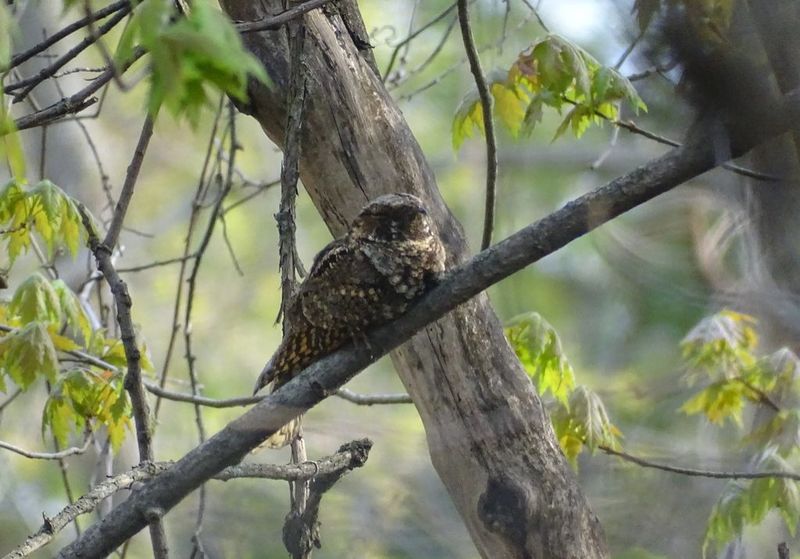
Sound carries at night, and a whip-poor-will calling from the edge of the back yard might actually be standing in the neighbor’s pine stand, the cutover two parcels down, or the field edge along the road.
The call feels close, but the bird almost certainly uses a territory much larger than any single residential lot.
The USDA Forest Service species review documents that Eastern Whip-poor-wills can range widely across their home territories, using patches of woodland, open areas, and edges in combination.
Research from eastern North Carolina, cited in the USGS habitat-association study, tracked home ranges spanning from 5.1 to 282.8 hectares, roughly 12.6 to 699.6 acres.
That range shows just how much ground one bird may cover between dusk and dawn.
A half-acre suburban lot, or even a two-acre rural property, represents a small fraction of that potential territory.
The caller may spend only a portion of the night near your yard before moving on to forage over fields, pine plantations, or neighboring woodland parcels.
That does not mean the yard is irrelevant.
It means the bird’s survival depends on a connected patchwork of habitats, and your property may be one useful piece of a much larger puzzle.
Read the call as evidence of nearby habitat quality, not as a property inspection.
The bird is telling you something about the surrounding landscape, and that is worth paying attention to, even if the nest, the foraging route, and most of the bird’s daily life happen well beyond your fence line.
It Hunts Insects, Not Your Mosquitoes
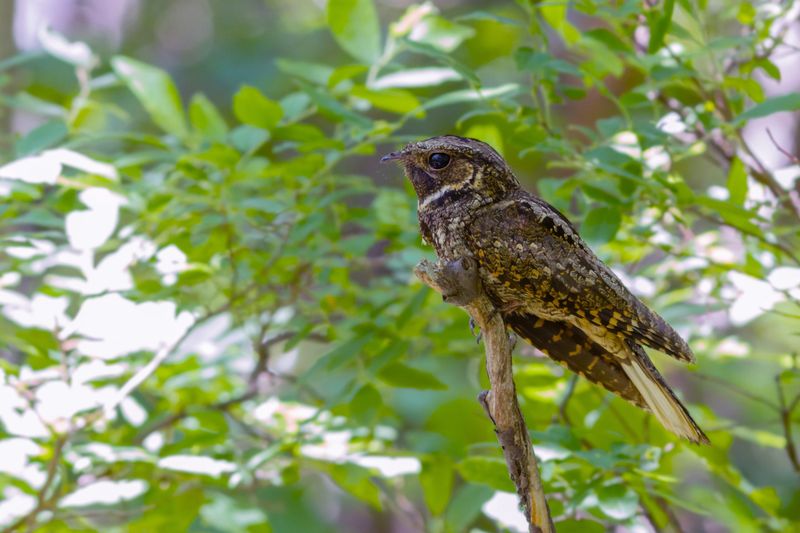
A lot of people hear that call and immediately think: fewer mosquitoes on the porch.
The feeling makes sense, but the reality is more complicated, and it is worth getting straight before expectations run too high.
Eastern Whip-poor-wills eat insects exclusively.
Cornell Lab’s life history account describes a diet that includes moths, beetles, grasshoppers, ants, wasps, and other flying or ground-dwelling prey.
The bird begins foraging roughly 30 minutes after sunset, often hunting in low passes less than 15 feet above the ground, and may continue through much of the night when moonlight is bright enough to see by.
Moths and large beetles make up a significant share of that diet.
Mosquitoes are tiny, low-calorie targets compared with a fat sphinx moth, and there is no evidence that a calling whip-poor-will will noticeably reduce the mosquito pressure on your back porch.
Thinking of the bird as a free pest-control service sets up a disappointment that is not fair to the bird or to your evening plans.
What the bird’s diet does tell you is that a healthy insect community, including the night-flying moths and beetles that thrive in lightly managed, lower-chemical landscapes, supports the bird’s presence in the area.
The Partners in Flight species account connects declining insect abundance to broader pressures on aerial insectivores like this one.
Keeping the local insect community intact is genuinely good for the bird, even if it does not translate into a mosquito-free cookout.
Support the Habitat Without Rebuilding the Whole Yard
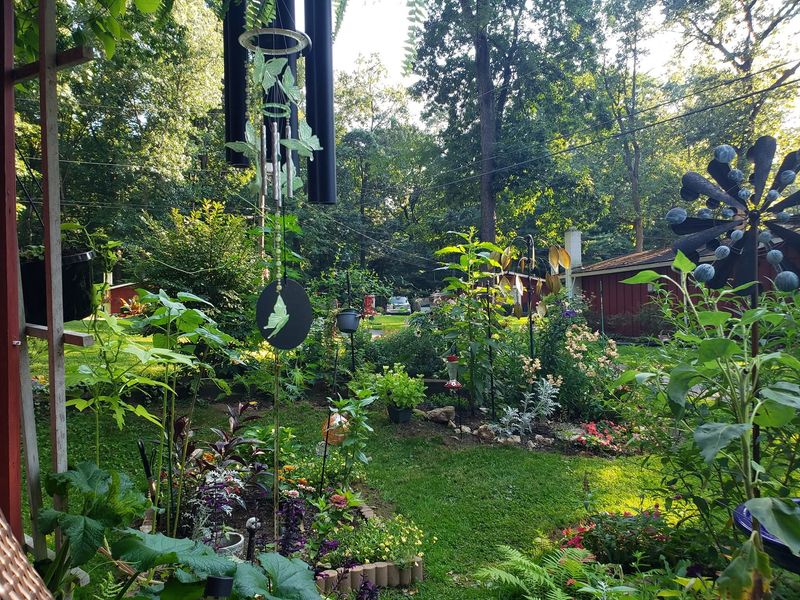
Good news: supporting the habitat around a calling whip-poor-will does not mean letting the yard go wild or giving up weekend cookouts.
A few proportionate steps, applied where they make sense, can genuinely help the broader landscape mosaic the bird depends on.
Start with what is already there.
NC State Extension’s low-cost habitat improvement guidance recommends preserving existing patches of open woodland, field edge, leaf litter, and natural ground cover rather than converting every rough corner into turf or dense ornamental planting.
If a scrubby edge along the back fence or a stand of pines along the property line is not causing a problem, leaving it alone may be the single most useful thing you do.
NC State Extension’s guide to managing backyards for birds frames habitat around food, water, cover, and living space together, not around planting one named species.
Outdoor lighting is worth reconsidering.
Research on artificial light and nightjar habitat shows that light spilling into woods and natural edges can affect nocturnal wildlife behavior.
Studies on artificial night lighting and moth activity and on street lighting and nocturnal insect abundance point in the same ecological direction.
Switching to shielded, lower-intensity fixtures, adding motion controls, and turning lights off when nobody needs them are sensible steps, not proven single-cause solutions, but the direction is right.
Pest management is the third lever.
NC State Extension’s biological pest control guidance and the North Carolina turf arthropod guide both support an integrated approach: identify the pest first, decide whether the damage actually justifies treatment, and choose the least disruptive method that works.
Routine broad-spectrum insecticide applications can reduce the insect community that whip-poor-wills and many other yard-friendly animals depend on.
Targeted treatment, applied only when needed, keeps that community more intact.
Protect Ground-Nesting Birds by Avoiding Unnecessary Disturbance
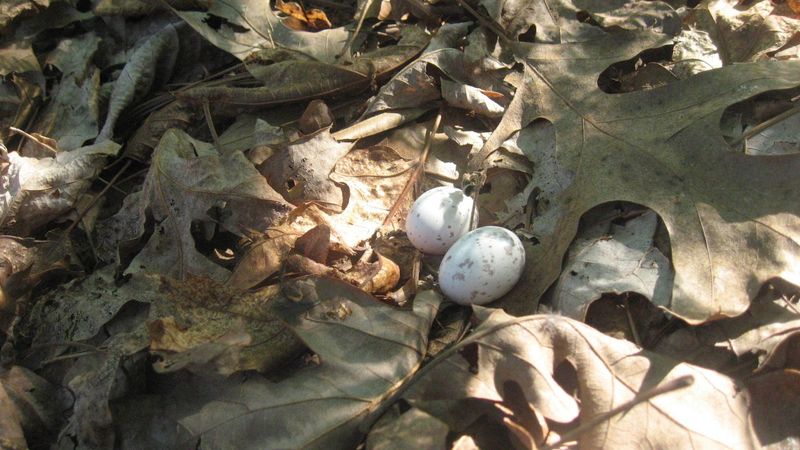
Eastern Whip-poor-wills do not build a nest in any conventional sense.
Cornell Lab’s life history account explains that females lay two eggs directly on leaf litter, relying entirely on camouflage for protection.
The eggs, the chicks, and the brooding adult are all so difficult to see that a person could walk within a foot of them and never know it.
Because of that, the right response is not to go looking.
Avoid raking, mowing, clearing, or burning natural ground areas during the breeding season, roughly April through August in North Carolina, in any spot where you have heard repeated calling.
If you have planned habitat work such as mowing a field edge, thinning a pine stand, or clearing brush in an area where a whip-poor-will has been calling, consult a qualified wildlife professional or land manager before starting.
That one conversation can prevent accidental harm that no amount of good intentions will undo afterward.
Fish and Wildlife Service guidance on bird nests makes clear that federal migratory-bird protections can apply to native birds, their eggs, chicks, and nests under the Migratory Bird Treaty Act.
If you find what appears to be an injured bird on the ground, do not attempt to move or handle it.
FWS guidance on living around birds directs people to contact a licensed wildlife rehabilitator or their state wildlife agency instead.
Normal yard routines on maintained lawn, patios, and garden beds do not require suspension.
The caution applies to natural ground areas in or near known habitat during the breeding season.
Keep your distance, maintain your regular outdoor life, and let the call remind you that the larger North Carolina landscape around your home still holds enough functioning habitat to support a bird that most people only ever hear.
That is actually worth something.