
The Underrated Texas Native That Keeps Blooming Straight Through Water Restrictions
Follow us on Google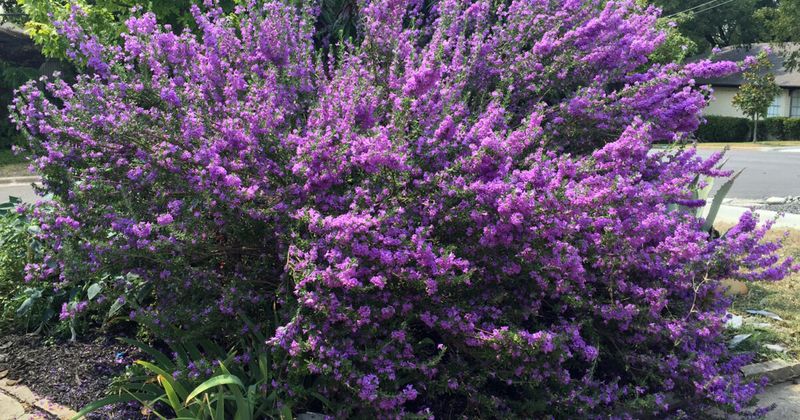
Most Texas summers hit a point where the lawn turns the color of straw and the garden looks like it gave up weeks ago.
But tucked along driveways and fence lines across Central and South Texas, one silver-leafed shrub just keeps putting out flowers while everything around it sulks.
Texas sage, Leucophyllum frutescens, has been doing this for decades without much fanfare, and it deserves a closer look.
The real story is a little more nuanced than nonstop blooms, and that is actually what makes it worth knowing.
Meet the Texas Shrub Behind the Better Claim
Somewhere between a rock garden and a fence line in the Texas Hill Country, you will find a shrub that looks like it belongs there, because it does.
Texas sage, known by several names including cenizo, Texas ranger, Texas silverleaf, and barometer bush, is a true Texas native.
Its botanical name is Leucophyllum frutescens, and Texas A&M Master Gardeners describe it as native to Texas and northern Mexico, where it grows naturally on rocky slopes, the Rio Grande Plain, the Chihuahuan Desert, and the Edwards Plateau.
Before you picture a kitchen herb, stop right there.
Ornamental Texas sage is not culinary sage and has no connection to the Salvia genus.
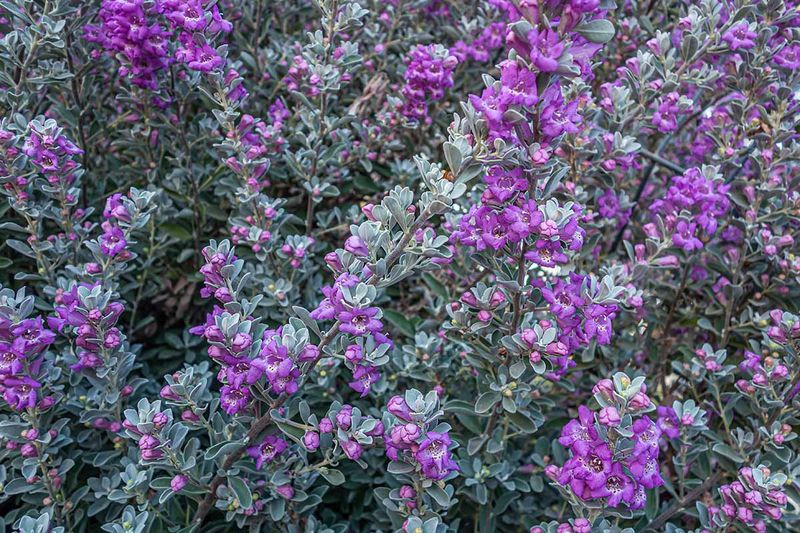
The leaves are small, gray-green to silvery, and covered in fine hairs that give the whole plant a soft, frosted look even in the middle of August.
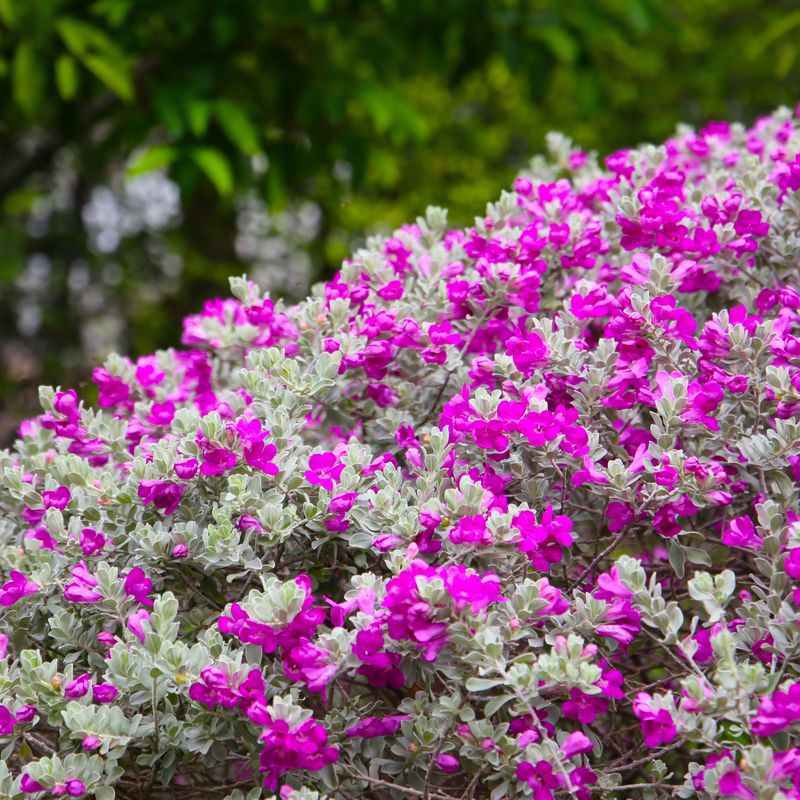
Flowers come in pink, purple, lavender, and occasionally white, and they sit against that silver foliage like confetti on a pewter tray.
For homeowners watching their St. Augustine go dormant under a Stage 2 watering restriction, the appeal is obvious.
Here is a shrub that can stay attractive, hold its color, and produce repeated flower flushes through the hottest part of the year while asking for very little supplemental water once it has settled in.
But the headline on this plant deserves a small correction up front.
Texas sage reblooms through hot months with low supplemental-water needs after establishment.
It does not flower without stopping, and it does not cancel out the need to follow local watering rules.
That honest version of the story is still a genuinely impressive one.
Its Flowers Arrive in Flushes
One thing that catches people off guard is how Texas sage blooms.
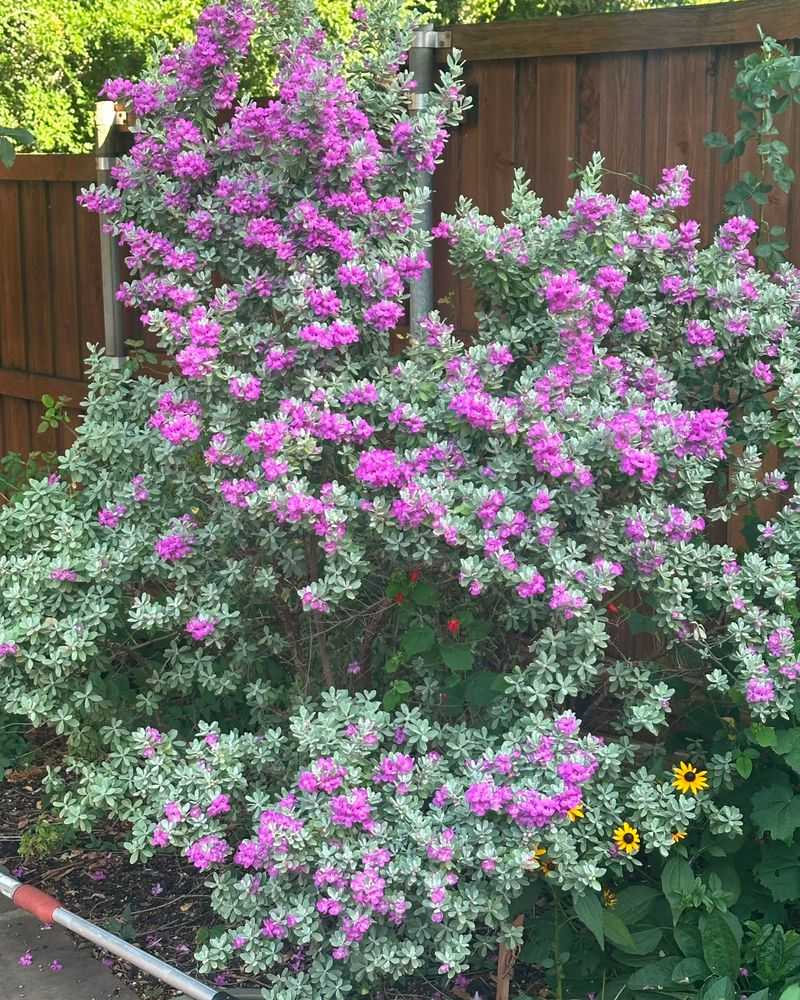
You can walk past the same plant for three weeks and see nothing but silver-green leaves.
Then, practically overnight, the whole shrub erupts in purple.
A few days later, the flowers are mostly gone.
Then it happens again, and again, across a long season.
Texas A&M AgriLife Extension describes a typical bloom period running from May through October, while North Carolina Extension’s Plant Toolbox notes that individual bloom batches may last only several days before fading.
That is the pattern to expect: periodic, vivid, short-lived flushes of color spread across roughly six months, not a solid wall of flowers from Memorial Day to Halloween.
The barometer-bush nickname comes from a widely shared observation.
Many gardeners across Texas have noticed that the shrub tends to bloom around rainfall, rising humidity, or shifting weather.
Henderson County Master Gardeners describe the pattern as associated with moisture changes rather than a precise forecasting system.
Think of it as a seasonal tendency, not a weather app.
The timing is variable, and you should not count on the plant to predict a storm or guarantee flowers every time the clouds roll in.
What you can count on is this: in a suitable site, Texas sage will produce repeated rounds of color through the summer and fall while needing far less supplemental water than almost anything else you could plant in its place.
That is the real promise, and it holds up.
Choose the Site Before You Choose the Shrub
Placement is where Texas sage either thrives or quietly fails, and most failures come down to two things: not enough sun and too much standing water.
North Carolina Extension defines full sun as at least 6 hours of direct sunlight daily, and Texas sage needs every bit of that.
A spot that gets morning shade from a live oak or an afternoon shadow from a fence is going to produce a leggier, less floriferous plant that struggles more than it should.
Soil drainage matters just as much.
Texas sage is built for rocky, alkaline, shallow, sandy, or calcareous ground, the kind of soil that most gardeners spend years trying to fix.
Austin’s watershed protection plant guide places drought-tolerant natives like this one in sunny, well-drained locations for good reason.
In North and Central Texas blackland clay, a low spot or compacted bed that holds water after a downpour is genuinely a poor match, even if the rest of the yard looks dry two days later.
If drainage is slow, plant the shrub slightly above grade or build a simple raised bed rather than digging a basin that traps water around the roots.
Regional fit also matters across a state this large.
Texas sage is most reliably suited to Central, South, and West Texas conditions.
Texas A&M AgriLife’s Gulf Coast guidance notes that high humidity, warm nighttime temperatures, salt exposure, and poor drainage make the Gulf Coast a trickier environment.
Wet East Texas sites face similar challenges.
For Panhandle gardeners, the plant is generally listed for USDA Zones 8a through 11b, which means the coldest Panhandle winters can push it past its limits.
One more number to keep in mind before you buy: mature Texas sage can reach 6 to 12 feet in both height and spread.
Give it room, or choose a documented compact cultivar and verify its actual mature dimensions before planting.
Water for Establishment, Then Watch the Soil
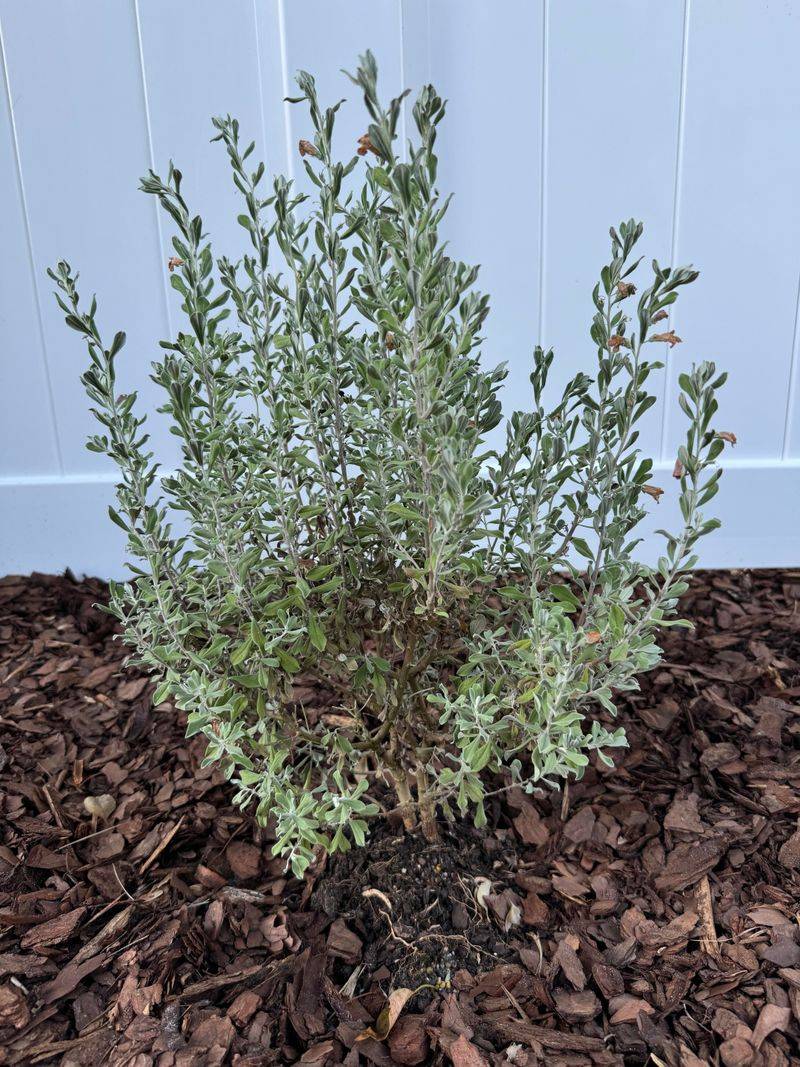
A lot of gardeners hear “drought tolerant” and immediately back off the hose, which is exactly the wrong move for a plant that was just pulled out of a nursery pot.
The first season is the one time Texas sage genuinely needs your attention, and getting it right sets up years of low-effort performance.
Water newly planted shrubs deeply and consistently while the root system develops.
Texas A&M Earth-Kind guidance recommends watering to a depth of 5 to 6 inches rather than sprinkling shallowly every day.
Shallow daily watering keeps roots near the surface and trains the plant to depend on you.
A deep, thorough soak followed by a period where the soil dries somewhat encourages roots to chase moisture downward, which is exactly how you build a plant that can handle a two-week dry stretch later on.
Once established, Texas sage usually needs little supplemental water.
But “usually” is doing real work in that sentence.
Young plants, shrubs growing near a reflective concrete driveway, and plants facing back-to-back weeks of triple-digit temperatures may still show stress and need a drink.
Texas Parks and Wildlife water-wise yard guidance is clear that even drought-tolerant plants can need supplemental water during prolonged extreme conditions.
Watch the foliage.
If leaves start to look dull or the plant drops more than usual, that is your signal.
Mulch helps bridge the gap.
Apply 2 to 3 inches of mulch across the root zone, but Texas A&M raised-bed guidance supports keeping mulch pulled back from direct contact with the trunk.
A constantly wet mulch layer pressed against the base in poorly drained soil creates more problems than it solves.
Water Restrictions Still Apply
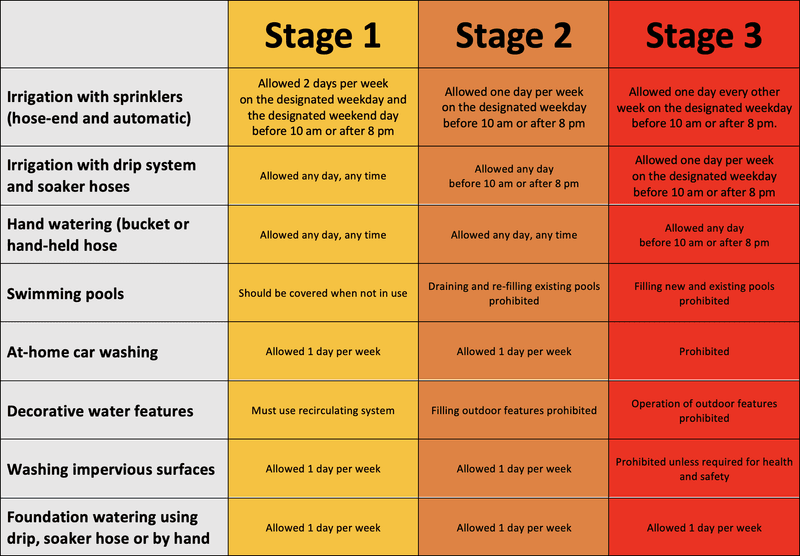
Drought tolerance is not a legal exemption.
That sounds obvious, but many homeowners assume that because a plant needs little water, the local rules about when and how they can water it do not apply.
They do.
The Texas Water Development Board explains that drought restrictions are managed locally by individual water suppliers, not set uniformly across the state.
Your city’s Stage 2 rules may be completely different from what a neighbor one town over is following.
Some communities allow hand-watering or drip irrigation on days when automatic sprinkler systems are prohibited.
Others restrict all outdoor watering to specific days or hours.
Texas municipal water conservation guidance outlines how differently local utilities can structure those schedules.
Before you water a newly planted Texas sage during a restriction period, check your utility’s current rules directly.
Look specifically at whether hand-watering of individual plants is permitted, whether soaker hoses or drip systems are treated differently from sprinklers, and what the approved days and times are.
Cities like Corpus Christi have shifted how they communicate water status updates, which means the rules can change faster than a printed schedule reflects.
The practical takeaway is straightforward.
Texas sage can genuinely reduce how often you need to run the hose compared to a thirsty lawn or annual bed.
But using little supplemental water and using no water at all are two different things, and your water supplier draws that line, not the plant.
Keep Wet Clay and Root Diseases in View
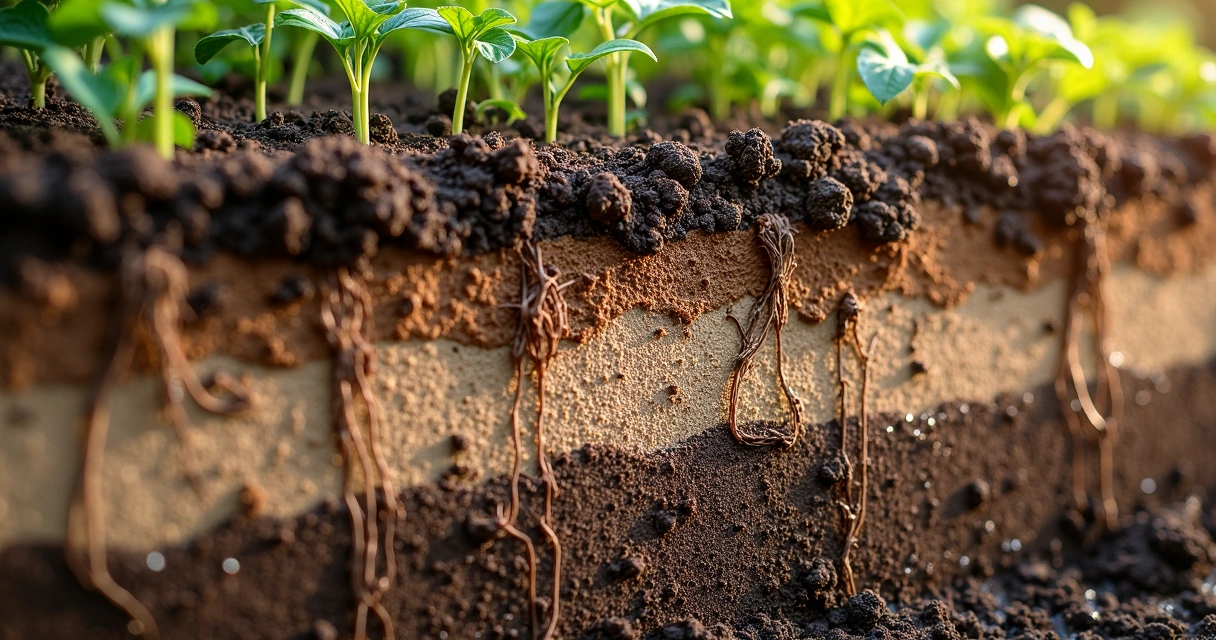
Clay soil in North and Central Texas is not the enemy by itself.
The problem is what happens to clay after a heavy summer downpour when the water has nowhere to go.
Roots sitting in saturated soil for even a few days face a very different environment than the dry, rocky ground Texas sage evolved in.
Prolonged saturation raises the risk of root diseases, and Texas A&M’s Plant Disease Handbook notes that stem and root rot problems are closely tied to poor drainage and compacted planting beds.
Adding bags of compost to a low spot does not fix a drainage problem.
It may actually hold more moisture in a spot that already holds too much.
The better move is to raise the planting area, improve how water sheds away from the bed, and choose a site that does not collect runoff from the driveway or downspouts.
Cotton root rot is a separate concern worth knowing about, especially in the calcareous clay loam soils of Central and parts of West Texas.
The disease can kill susceptible plants quickly, and chemical control options are limited.
Not every Texas sage will encounter it, and not every Texas yard has the conditions that favor it.
But if you are in a region with calcareous clay and you lose a plant suddenly in midsummer with no obvious explanation, it is worth knowing this disease exists.
The proportional takeaway: pick a site that drains, plant slightly high if you are uncertain, and do not try to fix bad drainage with amendments alone.
Prune Lightly and Wait After a Freeze
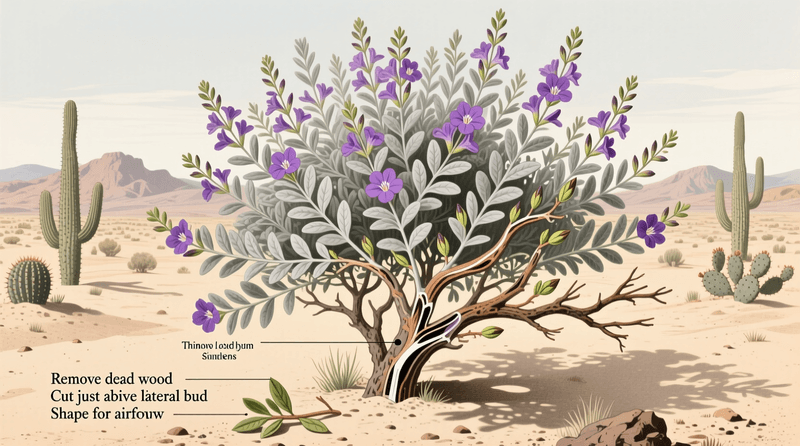
Texas sage has a natural rounded form that actually works in its favor, and the biggest pruning mistake most homeowners make is trying to turn it into something it is not.
Shearing it into a tight formal hedge every year removes the new wood where flowers form, which means you are trading blooms for a shape the plant will keep trying to grow out of anyway.
North Carolina Extension notes that Texas sage flowers on new growth, so light selective pruning to maintain its shape and remove crossing or awkward branches is compatible with good bloom production.
Heavy repeated shearing is not.
Texas A&M Earth-Kind pruning guidance supports selective cuts over mechanical shearing for shrubs that produce flowers on new wood.
And since mature plants can reach 6 to 12 feet across, giving the shrub space to grow naturally is a better long-term investment than fighting its size every season.
Freeze damage is a different situation and deserves its own approach.
After a hard freeze, it can be genuinely difficult to tell which wood is dead and which is just slow to wake up.
Texas A&M guidance on protecting landscapes from freezes supports waiting until additional freeze danger has passed and the line between living and dead wood becomes clearer before making major cuts.
Pruning too early can remove wood that would have recovered, or push out tender new growth before another cold snap arrives.
That waiting rule applies specifically to freeze damage.
Bexar County extension notes that hail or wind damage is a separate matter.
Broken or hazardous branches from a storm may need prompt attention for safety reasons, regardless of the season.
Use It as One Layer of a Water-Wise Yard
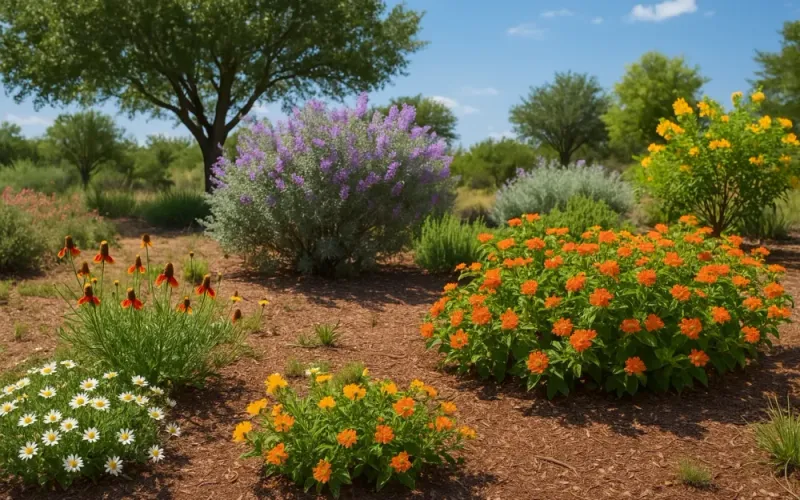
Texas sage can hold its foliage and push out flowers while the St. Augustine across the yard goes the color of old hay.
That contrast is real, and it is genuinely useful for homeowners trying to keep some color in the yard without running the irrigation system every other day.
But one shrub does not make a drought-proof landscape, and Texas Parks and Wildlife’s water-wise yard guidance is clear that a water-smart yard is built in layers, not anchored to a single plant.
Texas sage is not a lawn replacement.
Turf, vegetable beds, potted annuals, and young trees all have their own water needs that do not disappear because a nearby cenizo is handling the heat fine.
Use the shrub where it belongs: as a structural anchor in a sunny, well-drained border in Central, South, or West Texas, paired with other low-water companions like autumn sage, flame acanthus, or native grasses.
Texas A&M Earth-Kind planning guidance makes the point that even native plants can use substantial water when placed in the wrong site.
If you are thinking about a container, recalibrate your expectations.
Bexar County Earth-Kind container guidance notes that pots heat and dry far faster than open ground, have less soil volume to buffer temperature swings, and require both drainage holes and a fast-draining medium.
A drought-tolerant shrub in a small pot on a west-facing patio can still dry out and suffer within days during a July heat wave.
Check the soil, not the calendar.
North Carolina Extension’s profile flags high humidity and warm nighttime temperatures as genuine performance concerns, which is the honest reason to urge more caution or a local nursery conversation before planting along the Gulf Coast, in wet East Texas, or anywhere that sees regular standing water.
For the right site in the right part of Texas, though, this silver-leafed shrub is about as close to a reliable hot-summer partner as a homeowner is likely to find.