
What It Really Means When A Gopher Tortoise Turns Up At The Edge Of Your Yard
Follow us on Google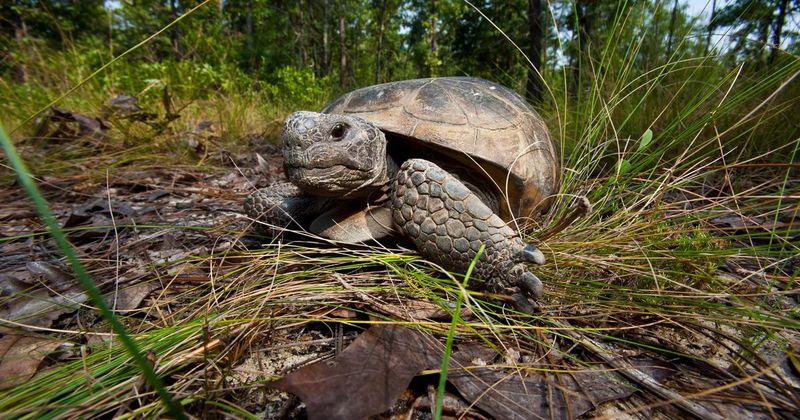
You’re pulling weeds at the edge of the lawn when something slow and prehistoric-looking stops you cold, a large, domed turtle sitting right where the grass meets the tree line.
Your first instinct is to wonder whether you just spotted a gopher tortoise, and your second is to wonder what on earth that means for your yard.
The honest answer is more interesting than you might expect, and it starts with a correction most people never hear.
Before anything else, you need to figure out what animal you are actually looking at.
A True Gopher Tortoise Would Be Unusual Here
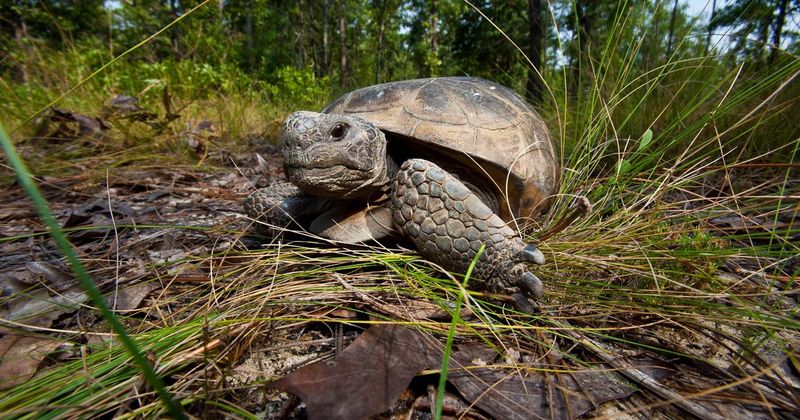
Spotting a large land turtle near your North Carolina yard is genuinely startling, but the first thing to understand is this: a real gopher tortoise (Gopherus polyphemus) turning up in North Carolina would be highly unusual.
According to the U.S.
Fish and Wildlife Service’s gopher tortoise project page, the species’ documented range runs from southern South Carolina south through Georgia and Florida, then west through Alabama, Mississippi, and eastern Louisiana.
The North Carolina Wildlife Action Plan is direct about it: gopher tortoises are absent from North Carolina.
That does not mean you imagined something.
It means the sighting requires verification before you draw any conclusions.
Three possible explanations are worth holding in mind, none of them ranked above the others without more information.
The animal could be a mistaken identification, an escaped or intentionally released nonnative tortoise, or a genuine gopher tortoise spotted close to the South Carolina border in a location described loosely as North Carolina.
Florida Fish and Wildlife notes that native and nonnative turtles are commonly confused with gopher tortoises, so the identification step matters more than most people realize.
Your first question is not how to manage habitat or what rules apply.
Your first question is what animal is actually sitting at the edge of your yard.
Use The Feet, Shell, And Burrow Together
A large brown shell does not tell you much on its own.
To get a real read on what you are looking at, you need to check three things together: the feet, the shell shape, and whether there is a burrow nearby.
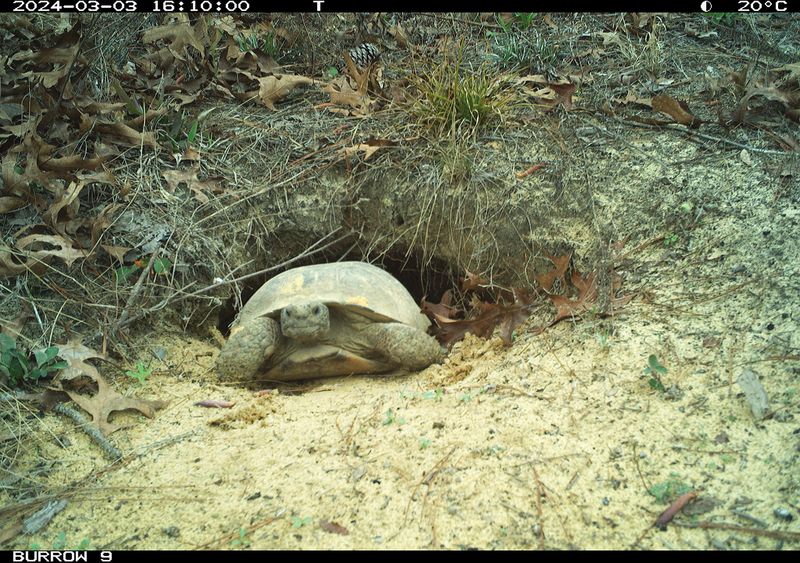
A gopher tortoise has front legs that look almost like small shovels, flattened and scaly, built for serious digging.
The shell is domed and ranges from brown to gray-black.
Fish and Wildlife Service species data puts the shell length at roughly 5.9 to 14.6 inches, so adults can be surprisingly large.
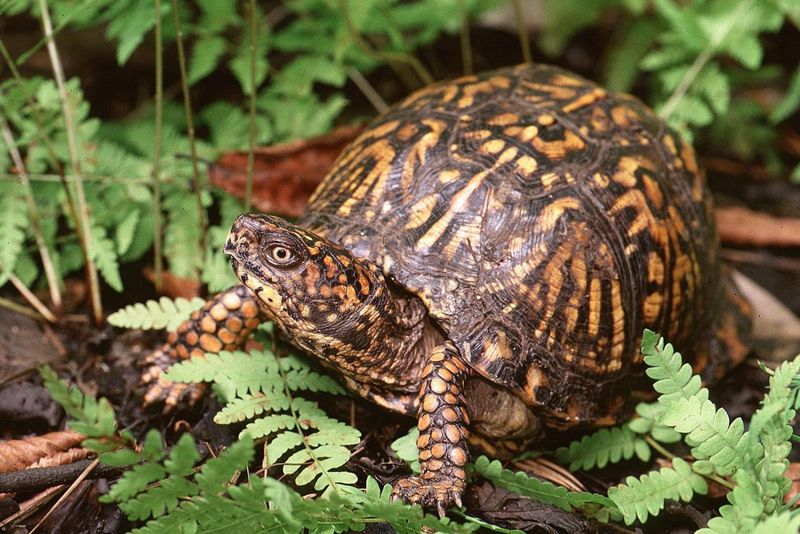
An eastern box turtle, which is genuinely native to North Carolina, also has a domed brown shell and can fool people from a few feet away.
The key difference shows up in the feet: box turtles have clawed, rounded toes, while a gopher tortoise has those distinctively flattened, elephant-like front limbs.
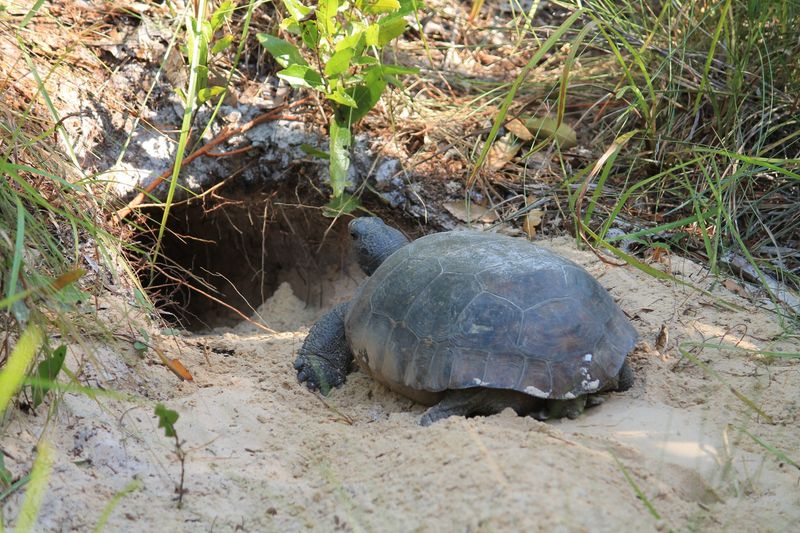
The burrow is actually the strongest clue of all.
Florida Fish and Wildlife’s burrow identification guidance describes the entrance as half-moon or flattened-bottom in shape, wider than it is tall, with entrance widths ranging from about 2.5 to 15 inches depending on the size of the animal.
A sandy apron of loose soil often fans out in front of an active entrance, and you may see tracks or disturbed ground nearby.
University of Florida IFAS Extension notes that active burrows often show fresh soil or claw marks near the opening.
If the turtle has rounded feet, a hinged bottom shell, and no burrow in sight, you are almost certainly looking at a box turtle.
Escaped pet tortoises, including sulcatas and red-footed tortoises, can also turn up in NC yards and are a genuinely common source of confusion.
Shell color or overall size alone cannot close the identification question.
A North Carolina Yard Does Not Prove Native Habitat
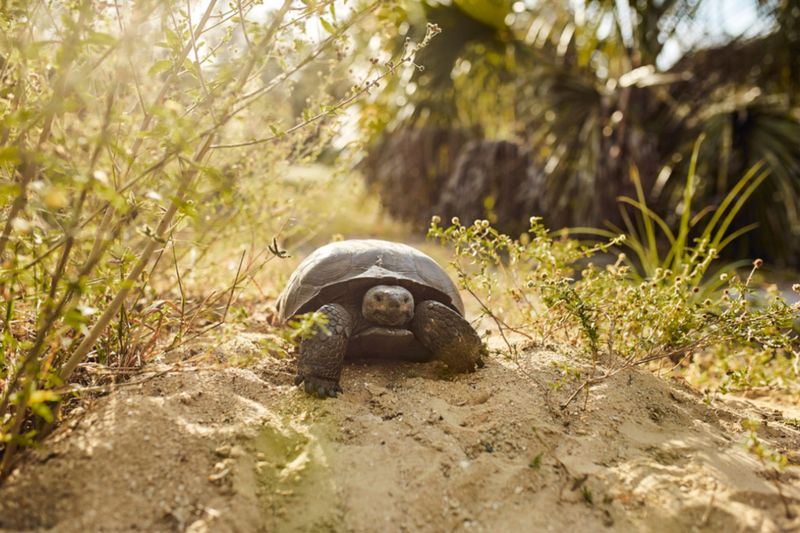
Even if the animal at your yard’s edge turns out to be a genuine gopher tortoise, that single visitor does not mean your property is now part of an established population or a functioning piece of native habitat.
Gopher tortoises in their native range live in open-canopy uplands with well-drained sandy soils and abundant low-growing grasses and forbs, conditions shaped over decades or centuries by longleaf pine systems, periodic fire, and specific soil types.
A U.S.
Fish and Wildlife Service FAQ on gopher tortoise range findings describes the kind of habitat these animals depend on in their native range.
Dense suburban shade, Piedmont red clay, mountain slopes, and ordinary irrigated lawns are a long way from those conditions.
A sunny patch of sandy soil at the edge of your Coastal Plain yard might look like a clue, but one animal in one spot cannot establish that a self-sustaining NC population exists.
The USDA Natural Resources Conservation Service’s gopher tortoise conservation work involves large-scale open upland management, canopy thinning, and prescribed fire across working agricultural and forest lands.
That context matters.
Do not dig, clear, burn, or redesign your yard based on an unverified sighting.
The right response at this stage is observation and documentation, not landscape renovation.
An Out-Of-Range Animal Needs Verification
Here is where it gets tricky.
Four very different animals could explain what you saw: a native eastern box turtle, an escaped or intentionally released nonnative pet tortoise, a genuine gopher tortoise near the South Carolina border, or a gopher tortoise from an imprecisely reported location.
Each of those possibilities leads to a different set of questions about identification, handling, and who to call.
Florida Fish and Wildlife’s tortoise identification resources make clear that misidentification is genuinely common even among people who think they know what they are looking at.
The NC Wildlife Action Plan’s documentation of the species as absent from the state reinforces why you cannot assume an identification from appearance alone.
Your job right now is to observe and document, nothing more.
Take clear photographs from a safe distance.
Note whether the animal has shovel-like front legs, a domed shell, or a burrow nearby.
Record the exact address or GPS coordinates and the date and time.
Write down what the surrounding area looks like: shade or open sun, soil type, lawn or natural edge.
North Carolina law generally restricts taking, possessing, transporting, or otherwise acquiring live wildlife unless specifically authorized, and additional provisions address nonnative and exotic wildlife.
The animal’s identity and legal classification matter for how those rules apply.
Do not attempt amateur relocation, rescue, release, or retention while that identity remains unresolved.
Wait for someone with authority to weigh in.
Know What North Carolina Law Does And Does Not Say
The legal picture is real, but it is easy to misread in both directions.
Some people assume no rules apply because gopher tortoises are not native here.
Others hear “protected species” and assume the full weight of federal endangered-species law applies to every turtle they see.
Neither assumption is quite right.
North Carolina statutes, including G.S. 113-291 and G.S. 113-291.3, generally restrict taking, possessing, transporting, or otherwise acquiring live wildlife unless specifically authorized.
The precise application depends on the animal’s legal classification and the circumstances.
That means picking up the turtle, putting it in your car, keeping it in your garage, or releasing it somewhere else could create legal problems under state law, depending on what the animal turns out to be.
That said, those regulated handling actions are separate from the general recommendation to minimize disturbance as a wildlife-protection precaution.
Accidentally startling a turtle while mowing is not the same as intentionally taking or transporting it.
The legal concern focuses on deliberate handling, movement, and possession.
On the federal side, the U.S.
Fish and Wildlife Service completed a gopher tortoise status review in 2022 and determined that the eastern population, covering the range from South Carolina through eastern Louisiana, does not currently warrant federal listing under the Endangered Species Act.
The western population, covering parts of western Alabama, Mississippi, and Louisiana, remains federally threatened.
Not every gopher tortoise carries the same federal protections, and the FWS gopher tortoise project outlines those distinctions.
South Carolina lists the species as state-endangered under its own authority, which applies in South Carolina, not North Carolina.
One more point worth making clearly: Florida guidance advises avoiding mowing, digging, or driving within 25 feet of a gopher tortoise burrow, and that specific distance appears in Florida residential gardening recommendations.
That 25-foot figure is not established as a North Carolina legal buffer.
The safest approach in North Carolina is to create a temporary no-disturbance area around the animal and any suspected burrow until wildlife officials can identify the animal and tell you what to do next.
Protect The Animal Without Handling It
The practical response plan is simpler than most people expect, and it does not require you to touch anything.
Start by photographing the animal from a comfortable distance, at least several feet away, without crowding it or blocking its path.
Get shots of the shell from above, the front legs if you can see them clearly, and any nearby ground disturbance that might suggest a burrow entrance.
Record the exact address or GPS coordinates, the date, the time, and a brief description of the surroundings: open sun or shade, soil type, lawn edge or natural vegetation, any nearby structures or roads.
That information will help wildlife officials make a faster, more accurate assessment.
Keep dogs on a leash and away from the animal.
Ask children to stay back and watch quietly from a distance.
Do not run lawn equipment, start any digging or excavation, or place food near the animal or any suspected burrow entrance.
The U.S.
Fish and Wildlife Service specifically advises people not to disturb a gopher tortoise or block its burrow entrance or exit.
Do not place anything in front of a suspected burrow opening, and do not attempt to fill, cap, or collapse it.
Do not pick the animal up, carry it to another part of the yard, put it in a box or vehicle, or release it somewhere else.
Those actions can harm the animal and may create legal complications under North Carolina wildlife statutes, depending on how the animal is classified.
To report the sighting and get guidance, contact the North Carolina Wildlife Resources Commission.
The Wildlife Interaction Helpline is 866-318-2401, and the wildlife permits contact number is 919-707-0061.
If the animal is in immediate danger on a roadway, do not enter traffic or attempt a risky rescue.
Call local animal control or law enforcement and let them coordinate with wildlife officials.
The correct response genuinely depends on what the animal turns out to be, and that is exactly why the agency call matters.
The Native-Range Stakes Still Matter
Even with all the uncertainty about what animal you actually saw, the ecological story behind gopher tortoises is worth understanding.
In the states where they actually live, these animals carry serious ecological weight.
The U.S.
Fish and Wildlife Service describes the gopher tortoise as a keystone species, and FWS reporting on gopher tortoise conservation efforts explains why: the burrows they dig become shelter for a wide range of other animals, from indigo snakes and gopher frogs to burrowing owls and small mammals.
Estimates of how many species use those burrows vary depending on the source and counting method, but figures commonly cited by federal sources fall in the range of roughly 300 to 360 associated species.
A 2009 FWS finding on the eastern gopher tortoise population highlighted that ecological interdependence as part of the case for closer monitoring of the species.
Remove the tortoise, and a web of other animals loses its most reliable shelter.
That context matters for how you treat an unverified NC visitor, but it does not change the basic conclusion.
A single yard sighting does not prove established habitat, and a suburban planting project cannot recreate the large, open, sandy upland systems that NRCS and conservation partners manage across working lands in the native range.
The right move is the same one this article has pointed toward from the start: protect the animal from disturbance, document what you see, and let the wildlife agencies with actual identification tools take it from there.
A turtle that stops you in your tracks deserves that much respect, whatever its name turns out to be.