
What an Eastern Kingsnake Along Your North Carolina Garden Edge Really Says About Copperheads
Follow us on Google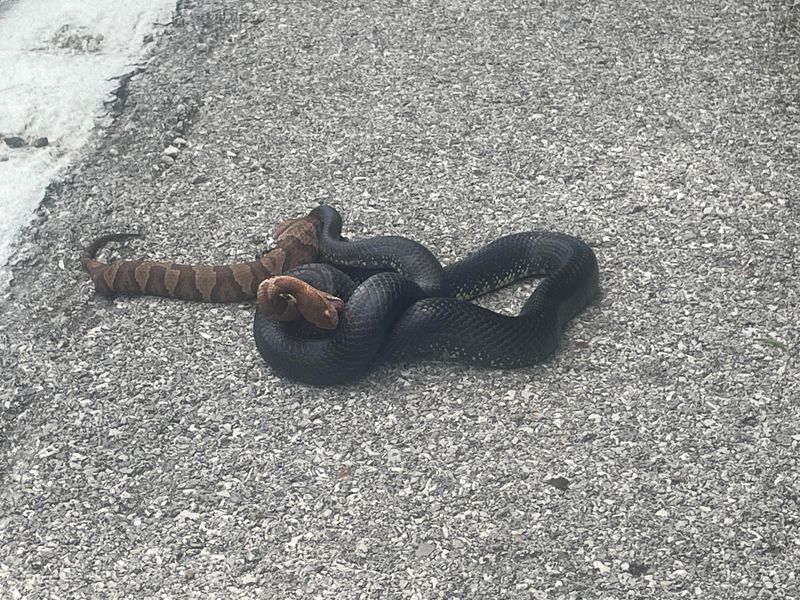
You spot a glossy black snake with pale chain-like bands sliding along the mulch at the edge of your North Carolina garden. Your neighbor says that’s great news because kingsnakes eat copperheads.
They do, but the sighting tells you less than you might think. Here is what it really says, and what to do next.
What a Kingsnake Sighting Tells You
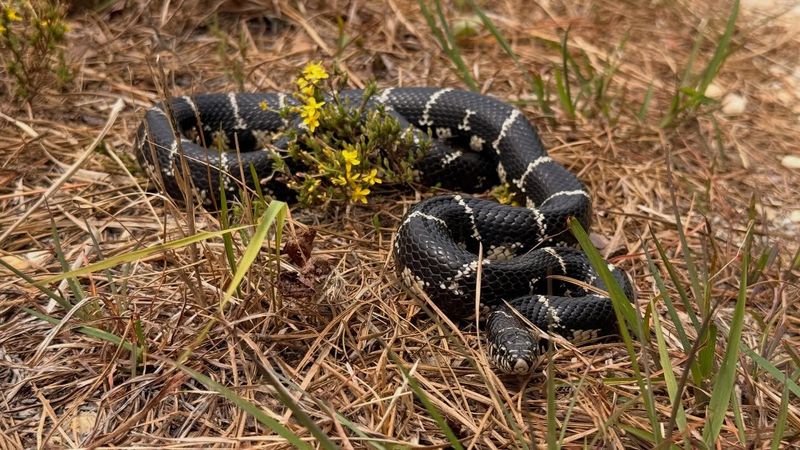
A dark snake with pale bands crosses the mulch by your tomatoes, and your stomach drops for a second. If it really is an eastern kingsnake, the news is calm.
You are looking at a nonvenomous native snake that is either living on your property or just passing through.
The North Carolina Wildlife Resources Commission describes the eastern kingsnake as a strong constrictor, which means it squeezes its prey rather than using venom. It turns up across much of the state.
The state reptile account shows it is especially well represented in the Piedmont and Coastal Plain, and it is missing from much of the higher mountains.
So a Raleigh or Wilmington yard has a fair chance of hosting one now and then. A Boone yard far up the ridge is much less likely to.
Here is the catch. Seeing one snake does not tell you how many snakes share your yard.
NC State Extension notes that snakes are hard to monitor and spend much of their time hidden. You saw one.
Others may be out of sight, or none at all.
Also, the word “if” matters here. Please do not step closer to check the bands or the belly.
Keep your distance, snap a photo with your phone zoom, and let the snake have the garden for a few minutes.
Copperheads Are One Part of Its Menu

Kingsnakes have a reputation, and it is earned. They can take on venomous snakes, including copperheads.
But the full menu is much bigger than that story suggests.
The state wildlife agency says the eastern kingsnake eats rodents, eggs, amphibians, and reptiles. It wraps its prey in coils and squeezes.
Snakes are a big part of its diet, and it may go after venomous or nonvenomous ones it can catch, according to the Reptiles of North Carolina account.
Copperheads do show up on the list of animals that eat them. A wildlife profile of the copperhead names eastern kingsnakes, black racers, and some mammals and birds as predators.
That supports one plain statement. A kingsnake can eat a copperhead.
It does not support the idea that a kingsnake will find one in your yard, or that it has been cleaning them out for you.
Think of it like a neighborhood cat that sometimes catches a mouse. The skill is real, but nobody counts on it to clear the garage.
A kingsnake in your yard might be hunting a mouse, an egg, a lizard, or just passing through on its way somewhere else.
What Regional Research Can—and Cannot—Show
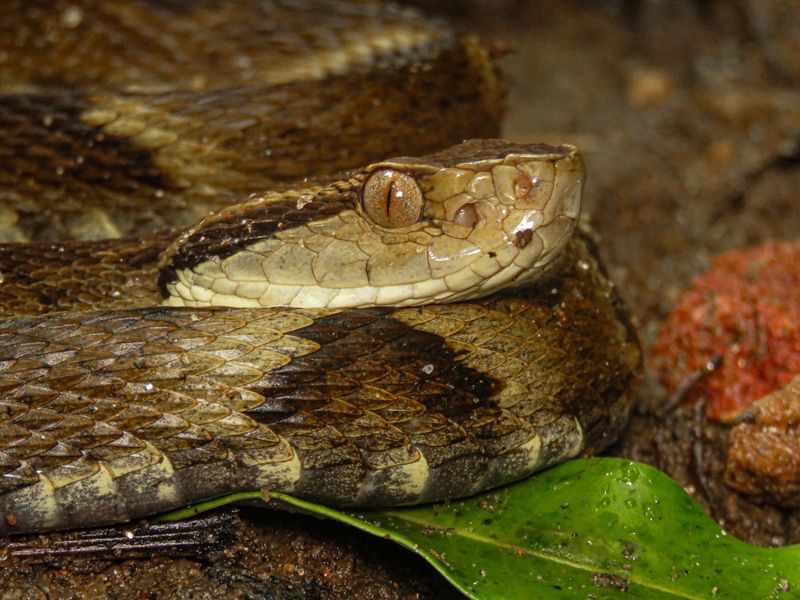
The idea behind the neighborly rumor comes from real science. In 2014, researchers published a study on snake-capture data from survey locations across the southeastern United States.
The title says it all: copperheads are common when kingsnakes are not.
According to the U.S. Forest Service record of the study, the team found a negative relationship between relative kingsnake and copperhead numbers.
Where kingsnakes were captured more often, copperheads tended to be captured less often. That held even after the researchers accounted for broad habitat preferences.
Here is where it gets tricky. The authors described this as a correlation.
That means two things moved in opposite directions across a big region. It does not prove one caused the other.
It also does not tell you what is happening in your yard. The data came from survey locations, not from individual backyards, and it cannot predict your own porch or flower bed.
The authors went a step further in the full paper. They questioned whether moving kingsnakes onto properties would reduce venomous snakes, and warned that relocation may raise the risk of death for the kingsnakes.
So no, do not go shopping for a kingsnake.
A Sighting Is Not a Safety Score
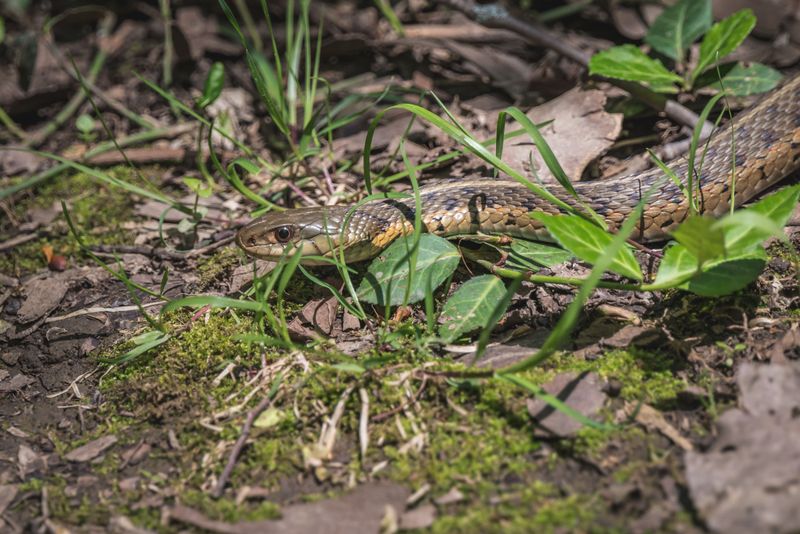
Some neighbors treat a kingsnake like a smoke detector for copperheads. Seeing one means you are safe, or seeing one means danger is near.
Neither idea holds up.
A single snake sighting is not a head count. Snakes hide well, so what you see is a small slice of what is there.
Nor does a kingsnake sighting forecast whether a copperhead will turn up next week.
The research gap matters here too. The regional study measured captures at survey locations.
It did not rate the safety of any single yard, and it did not tell homeowners how likely an encounter is after a kingsnake appears.
Still, a little everyday caution is sensible. NC State Extension says the copperhead is the most common venomous snake in North Carolina backyards.
That is a statewide fact, not a claim that one lives at your house.
So aim for the middle. Do not panic, and do not relax because a kingsnake stopped by.
Keep a habit of looking before you reach into the woodpile or the thick groundcover, and keep kids and pets away from any snake you cannot name.
The calm answer is a steady one. A kingsnake sighting means a kingsnake, nothing more.
Give a Seen Snake Room to Move
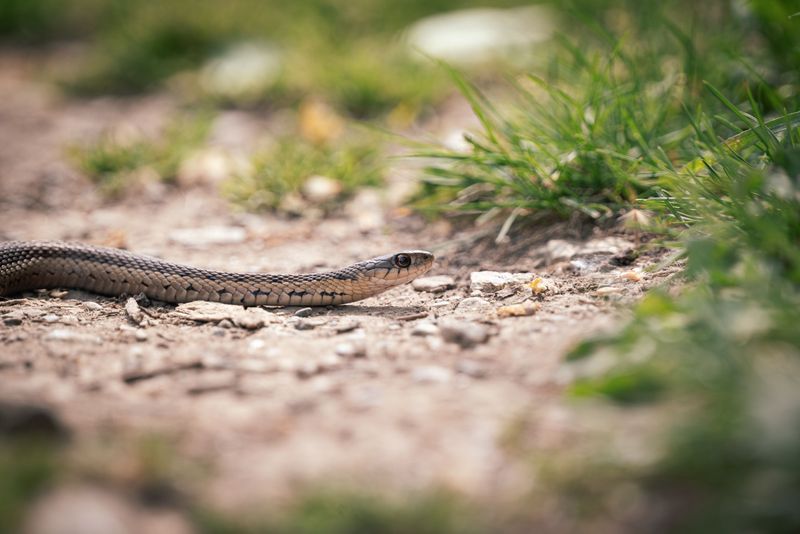
You see the snake. Now what?
The best move is the quiet one.
Keep every person and pet back, and leave the snake alone. Do not go closer to figure out the species.
A snake that feels no threat usually moves along on its own, as the state wildlife agency explains in its spring snake advice.
Do not pick it up, pin it, or try to kill it. That is how most bites happen, and it is not fair to a harmless native animal either.
If the snake sits somewhere it truly needs to leave, like the front steps, the agency says a gentle spray from a garden hose can encourage it to go. Stand well back when you do it.
Think of it as a nudge, not a chase.
Bites are rare, but a plan helps. If anyone is bitten, get emergency medical care promptly.
CDC guidance says not to capture the snake, cut the wound, suck out venom, or use a tourniquet.
Skip the photo of the snake for the doctor, too. Get help first.
Giving it space is the neighborly thing to do.
Make the House Edge Less Inviting
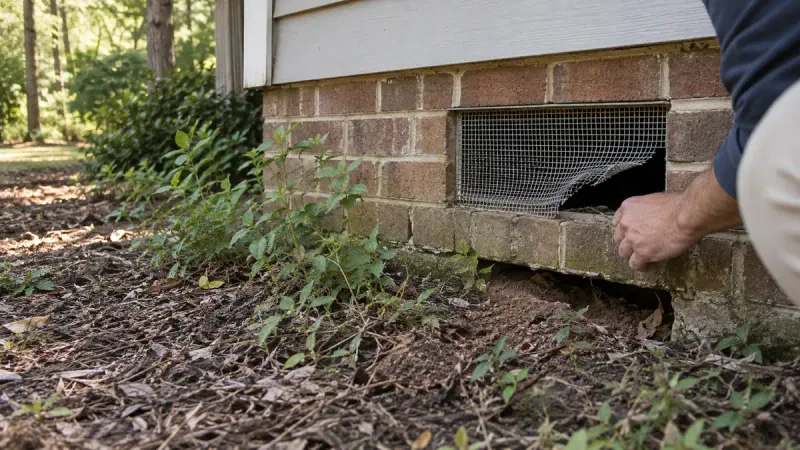
Picture the spot where the lawn meets the house. A pile of leaves, a stack of firewood on the ground, a gap by the crawlspace vent.
To a snake, that is a hotel.
You cannot make your yard snake-free, but you can cut down the places that invite one in. NC State Extension recommends reducing shelter and attractants.
Clear debris from areas you use often, store firewood away from the house and up off the ground, manage rodents, and seal gaps in the building.
The rodent part is easy to forget. Mice draw in the snakes that hunt them, so tightening up around bird feeders and trash cans helps too.
Skip the repellents on the store shelf. Extension says they have not been scientifically shown to work, and some may harm people or pets if misused.
For one small spot, like a play area or a patio, the Extension Gardener Handbook describes snake fencing. It uses quarter-inch mesh, 30 inches high, buried 6 inches deep and angled outward.
You also have to keep the vegetation outside it trimmed. It is not a whole-yard fix.
These steps can reduce encounters, and that is the honest goal. Neither a kingsnake nor a tidy yard guarantees safety, so keep your eyes open and your garden gloves on.
