
7 Florida Native Shrubs That Take Away The Hiding Spots Rats And Roaches Count On
Follow us on Google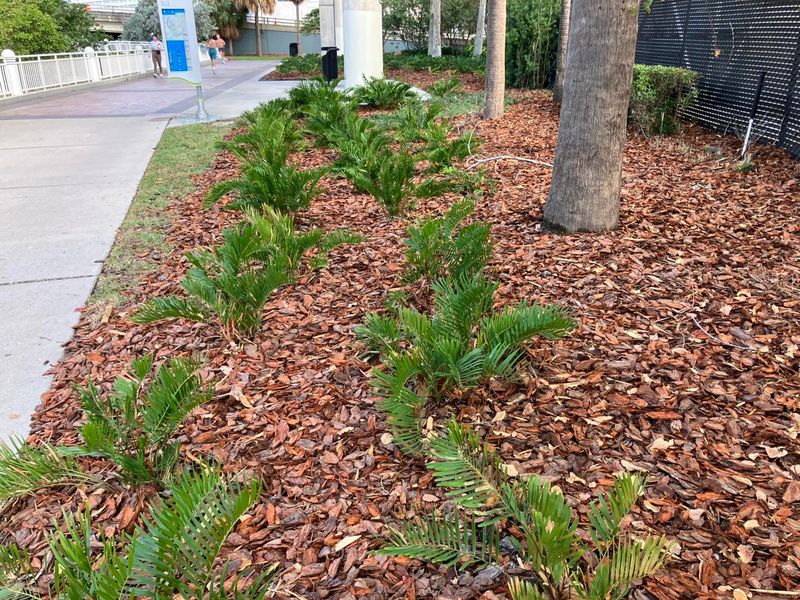
You step onto the patio after breakfast, coffee in hand, and something rustles under the hedge by the AC unit. It’s not a lizard this time.
Rats and roaches in Florida count on dense, damp, shadowy shrub bases to hide, and the right native shrubs, kept the right way, can take a lot of that cover away. Here are seven that work with you instead of against you.
1. American Beautyberry
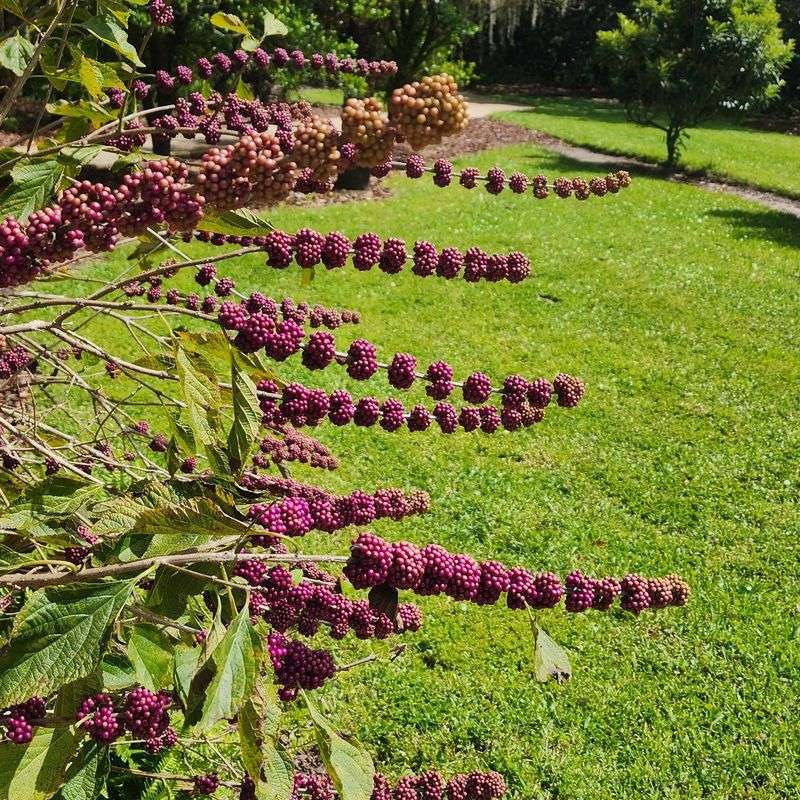
Fall in Central Florida brings a familiar sight, clusters of purple berries hugging the stems of American beautyberry (Callicarpa americana). What surprises people is how open this shrub stays underneath.
Its branches arch outward like a fountain instead of piling into a thick wall.
That shape matters more than you might think. Rats and roaches want dark, still, humid pockets at ground level, and beautyberry simply does not build them.
Its leaves also hold compounds called callicarpenal and intermedeol, which researchers have studied mainly as mosquito repellents.
Be honest with yourself about that last part. Those compounds are not proven to drive off rats, so treat them as a small bonus, not the main event.
The real work is the airflow.
Plant beautyberry 4 to 6 feet apart, since it grows about that tall and wide. In late winter, cut stems back to roughly 12 inches above the ground, and the fresh growth stays loose and airy all season.
Skip that cut for a few years and the base gets crowded.
Birds will strip the berries by early winter, so you get mockingbirds instead of rodents feasting on fallen fruit. That is a trade most homeowners happily take.
2. Coontie
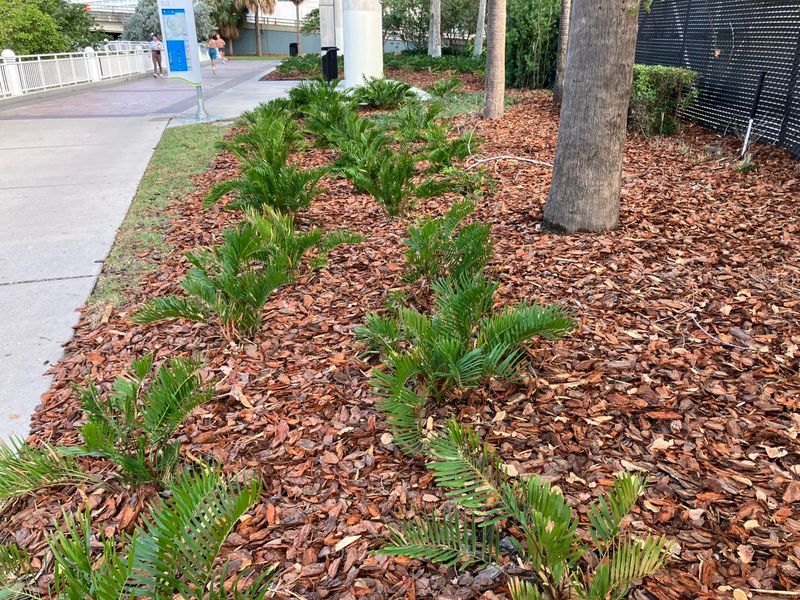
Here is a myth worth dropping. Low plants near the house are not automatically pest magnets, it depends entirely on what kind of low.
Coontie (Zamia integrifolia) is Florida’s only native cycad, a tough, ancient plant that looks like a small palm crossed with a fern. Its fronds are leathery and stiff, and they rise from a central crown instead of sprawling into a tangled mat.
Rodents looking for soft nesting material get very little from it.
Compare that to a thick bed of ground-hugging vines or overgrown liriope. Those create a continuous roof where a rat can travel unseen from the fence to your foundation.
Coontie forms separate mounds about 2 to 3 feet tall and wide, with visible gaps between them.
Space plants about 3 feet apart and keep those gaps. Coontie handles sun or shade and lives happily from North Florida to the Keys.
Good drainage is the one thing it insists on, so avoid low spots where water stands after summer storms.
One caution belongs here. Every part of coontie is toxic if eaten, so think about curious dogs.
And it hosts the atala butterfly in South Florida, a small blue-and-black wonder that once seemed nearly gone.
3. Simpson’s Stopper
A hedge is supposed to hide your yard from the street. The trouble is that a badly shaped hedge also hides everything that runs along your walls.
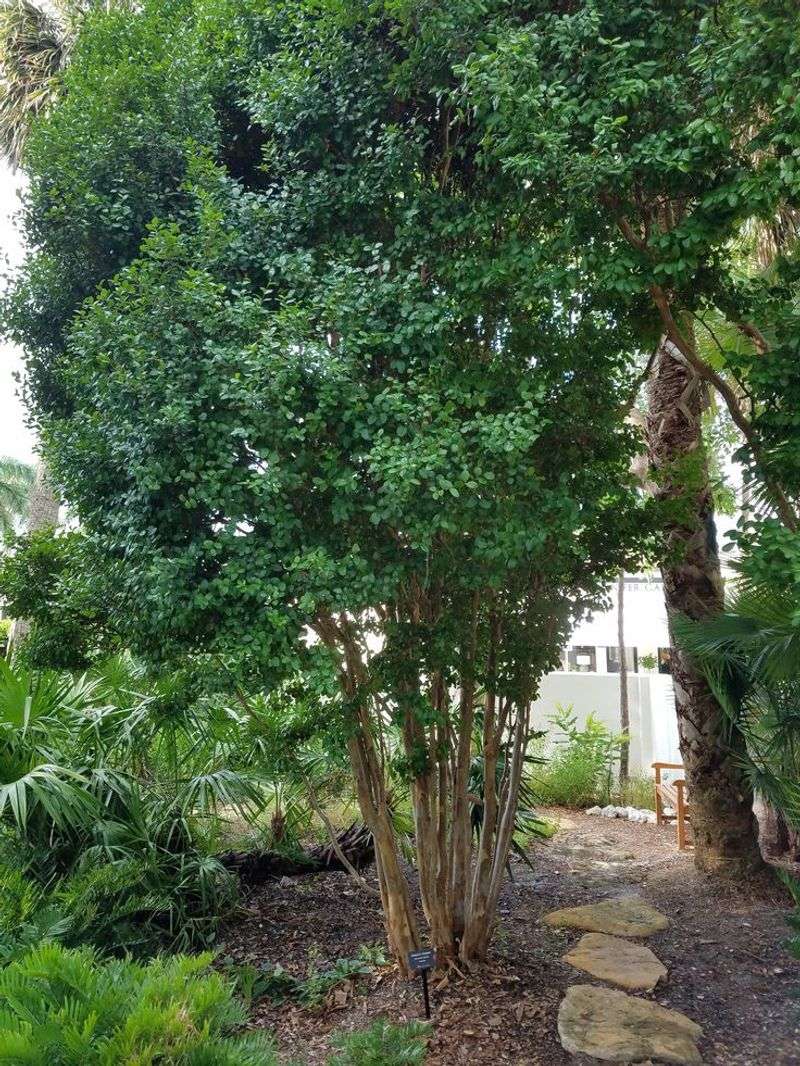
Simpson’s stopper (Myrcianthes fragrans) solves that with patience. It grows slowly, often about a foot a year, which means you stay ahead of it with a few easy trims.
Crush a leaf and you get a clean, spicy scent, though that fragrance is pleasant for you more than proven against pests.
The real trick is how you shape it. Prune so the hedge is wider at the top and narrower at the bottom, what landscapers call tapering.
Sunlight then reaches the lower branches, the soil dries after afternoon downpours, and that cool shadowy tunnel at the base disappears.
Space plants 3 to 5 feet apart and keep the hedge at least 2 to 3 feet off your exterior wall. That gap lets you see the ground, and roof rats lose an easy ladder to your eaves.
Stopper tolerates cold down to about 25 degrees and handles salt spray, so it fits from Central Florida to the Atlantic and Gulf beaches.
Then one morning you look under it and see bare mulch and daylight. That small view is the whole point.
4. Firebush
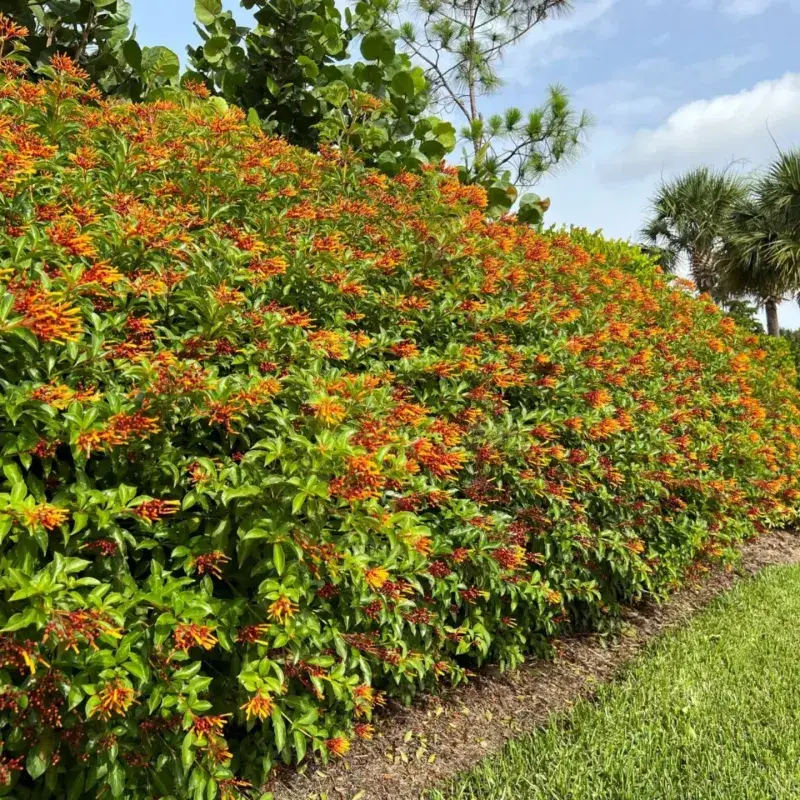
Zebra longwings drift in, a hummingbird zips past, and your firebush (Hamelia patens) looks like the best decision you ever made. Then you notice how thick it has become near the ground.
Firebush is a fast grower. In South Florida, where frost rarely visits, it can reach 8 to 15 feet and fill out quickly.
Left alone, that lush growth turns into exactly the kind of dense skirt roaches love.
So the fix is simple and a little satisfying. Remove the lowest branches until you have about 12 to 18 inches of open space between soil and foliage, and do heavier shaping in late winter.
Light trims through summer keep it tidy without sacrificing many blooms.
North and Central Florida gardeners see it freeze back in cold snaps, and it usually returns from the roots in spring. Use that natural reset to cut out old, crowded stems.
Buy the true native form, sometimes sold as Florida firebush, not the compact African types. You keep the butterflies, you lose the hiding place, and the hummingbirds never know the difference.
5. Wax Myrtle
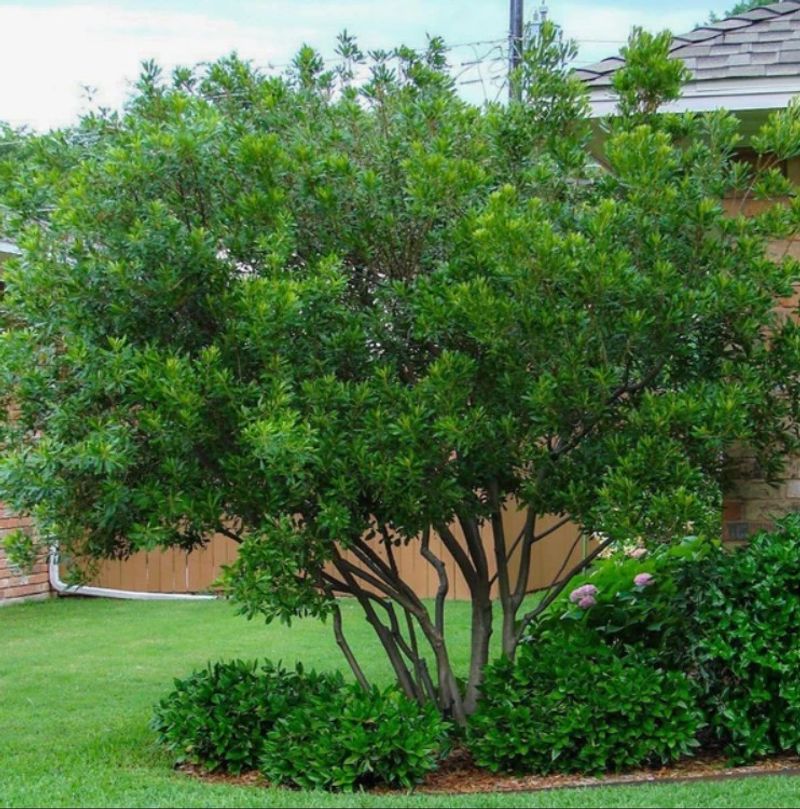
Wax myrtle (Morella cerifera) has a reputation problem. Plenty of Florida homeowners have watched one swallow a corner of the yard in a few years.
That speed is actually what makes it useful here. Because it grows fast, often 3 to 5 feet a year when young, you can shape it into a small multi-trunk tree instead of a shrub that drags on the ground.
Gardeners call this limbing up, and it changes everything.
Remove lower branches until the canopy starts around 4 feet high. You keep the privacy at eye level, but the ground underneath becomes open, bright, and easy to inspect.
Rats lose a covered highway and roaches lose a damp leaf pile.
The foliage has a spicy bayberry scent. Some sources claim rodents dislike it, but that is not well proven, so count on the pruning, not the smell.
Rake out fallen leaves under it every few months too.
Wax myrtle shrugs off salt spray along the Gulf and Atlantic Coasts and handles both soggy and sandy soil. Tame it once and it becomes the neighbor who keeps a clean porch.
6. Walter’s Viburnum
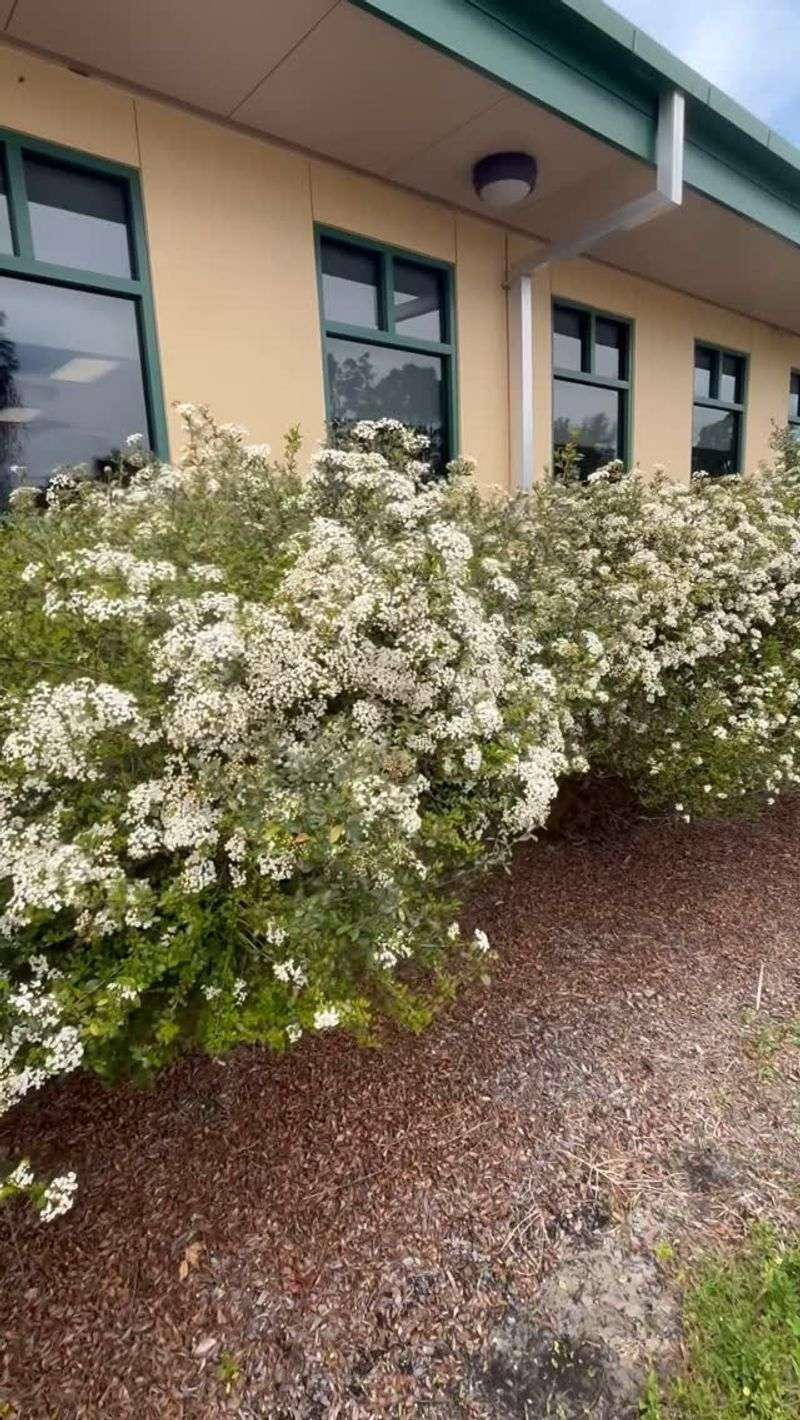
Every yard has that one shady side strip by the garbage cans. It stays damp, nobody walks there, and it quietly becomes roach headquarters.
Walter’s viburnum (Viburnum obovatum) is built for that spot. It handles partial shade, tolerates both wet and dry stretches, and takes shearing better than most natives.
UF/IFAS Extension notes it adapts to many Florida soils, from Panhandle sandy loam to Central Florida sand.
Choose a compact selection such as ‘Mrs. Schiller’s Delight’, which stays around 3 feet. Plant 3 feet apart and at least 2 feet from the wall.
Trim after the white spring flowers fade, keeping the bottom slightly narrower than the top so light reaches the soil.
Shade makes many shrubs thin and leggy, yet viburnum keeps a neat, controlled form. That means fewer collapsed stems and less trapped debris at ground level.
It is cold hardy across North Florida freezes as well.
Pair it with a 2 inch layer of mulch, not a deep heap. That forgotten strip starts to look cared for, and you will stop dreading the walk to the bins.
7. Saw Palmetto
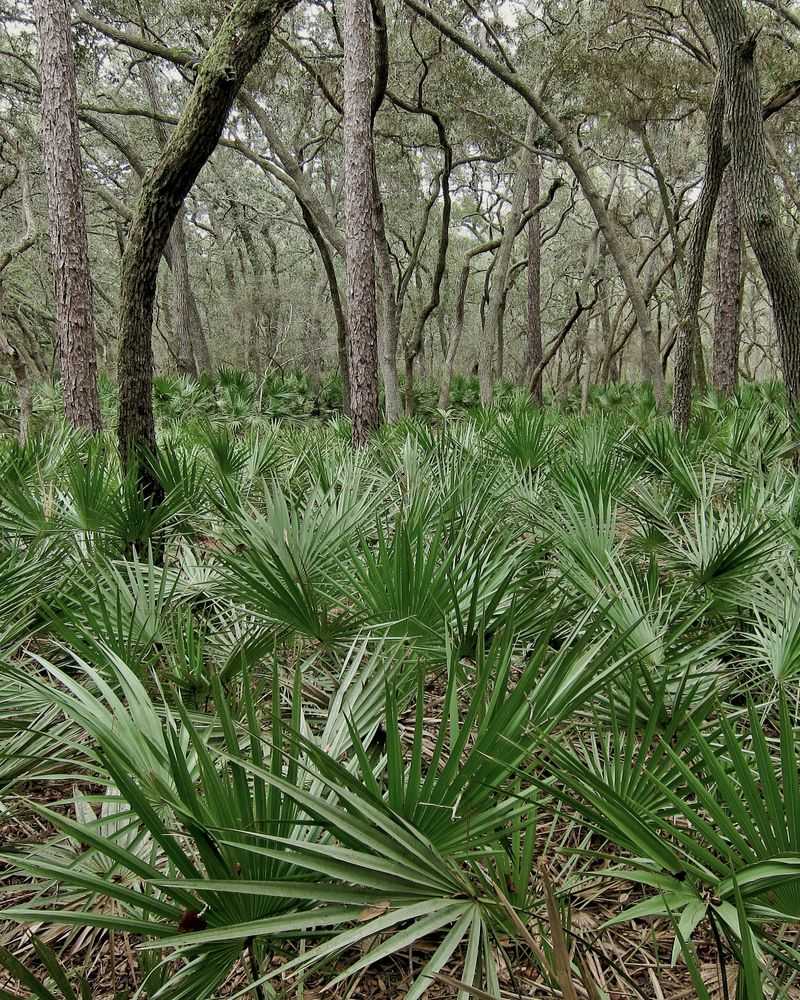
Saw palmetto (Serenoa repens) might seem like a strange pick. Wild palmetto thickets are well known shelter for wildlife, rats included.
Placement is the whole story. In a natural flatwoods, palmettos spread for decades into continuous mats with layers of dead fronds.
In your yard, a single clump planted at least 10 feet from the house, with open ground around it, behaves very differently.
The fronds are stiff fans on spiny stems, so nothing nests comfortably among the living leaves. The risk comes from dead brown fronds piling at the base.
Cut those off once or twice a year, wearing gloves, and rake the debris away.
Choose the silver form if you want a striking accent. It thrives in sandy soil across Florida, handles drought, salt, and hurricane winds, and never needs fertilizer once established.
Bees work its spring flowers hard.
Treat any shrub as one layer of protection, alongside sealed gaps, stored pet food, and mulch kept 12 inches from your foundation. Do those simple things, and the next rustle you hear may genuinely be just a lizard.
