
Cutting a Fig Branch Can Remove Its Potential Brebas, So Pause Before That Tidy Winter Cut
Follow us on Google
It’s a gray February morning, and your pruning shears are cold in your hand. The fig tree looks bare and a little messy, so a tidy trim feels like the right move.
But some of those branches may be carrying next summer’s earliest figs. Here’s how to tell what a cut really removes, and how to prune without guessing.
A Cut Can Remove Brebas, Not the Whole Crop
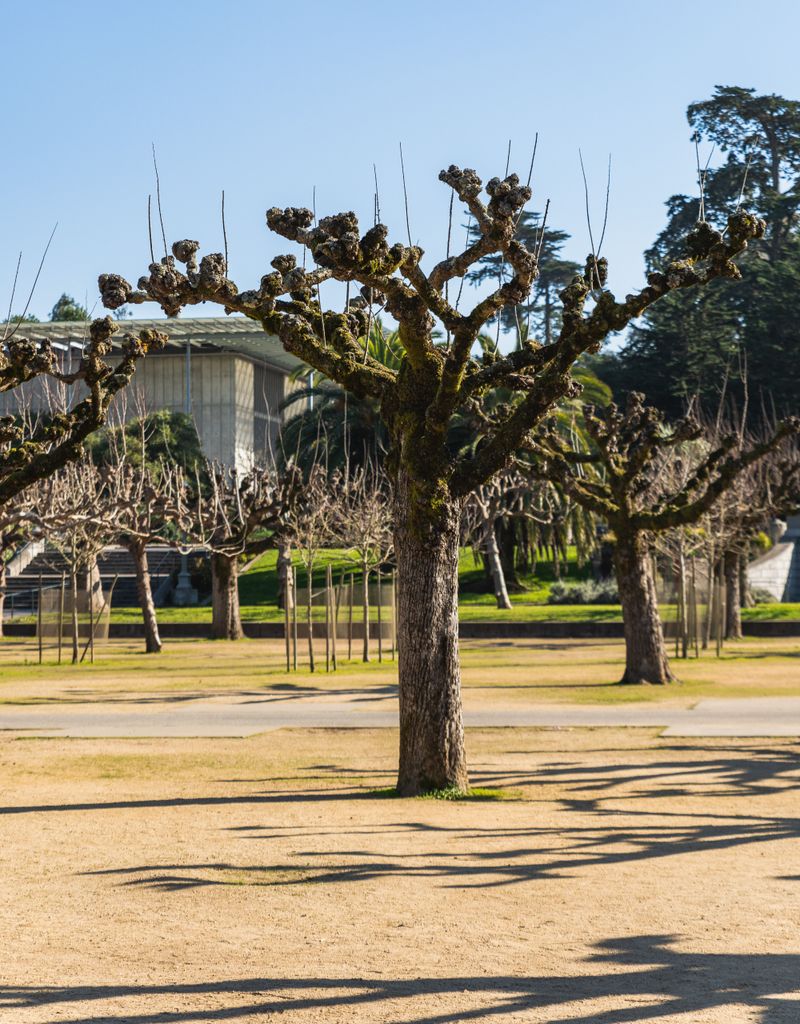
Picture the scene on a still winter morning. Frost clings to the lawn, the fig tree stands bare, and your shears are ready.
One branch crosses another, so it seems like an easy cut.
Here is the useful warning. A branch that grew last year can carry the beginnings of brebas, the early crop of figs that ripen before the main harvest.
Cut that branch, and you remove its potential brebas. That is the part of the story that is true.
Here is the part that gets overstated. Taking one branch does not automatically erase next summer’s whole harvest.
According to Rutgers Cooperative Extension, the early crop forms on last year’s shoots, while the main crop forms on the current season’s growth. So the tree still has a chance to make fruit on wood it grows this spring.
That said, nobody should treat pruning as harmless. Heavy cuts can change what a tree does in some settings, and the effect depends on your cultivar, your climate, and how much wood you remove.
Think of each cut as a small trade. You may give up some early figs in exchange for a cleaner shape, and that is fine when you choose it on purpose.
Mature trees also do not need a haircut every winter to fruit. UC IPM guidance notes that mature figs can fruit without pruning, and that dormant pruning is mostly about managing size, structure, and problem branches.
So pause before you cut, and ask what the cut is actually for.
When a Tree Makes Both Crops, They Grow on Different Wood
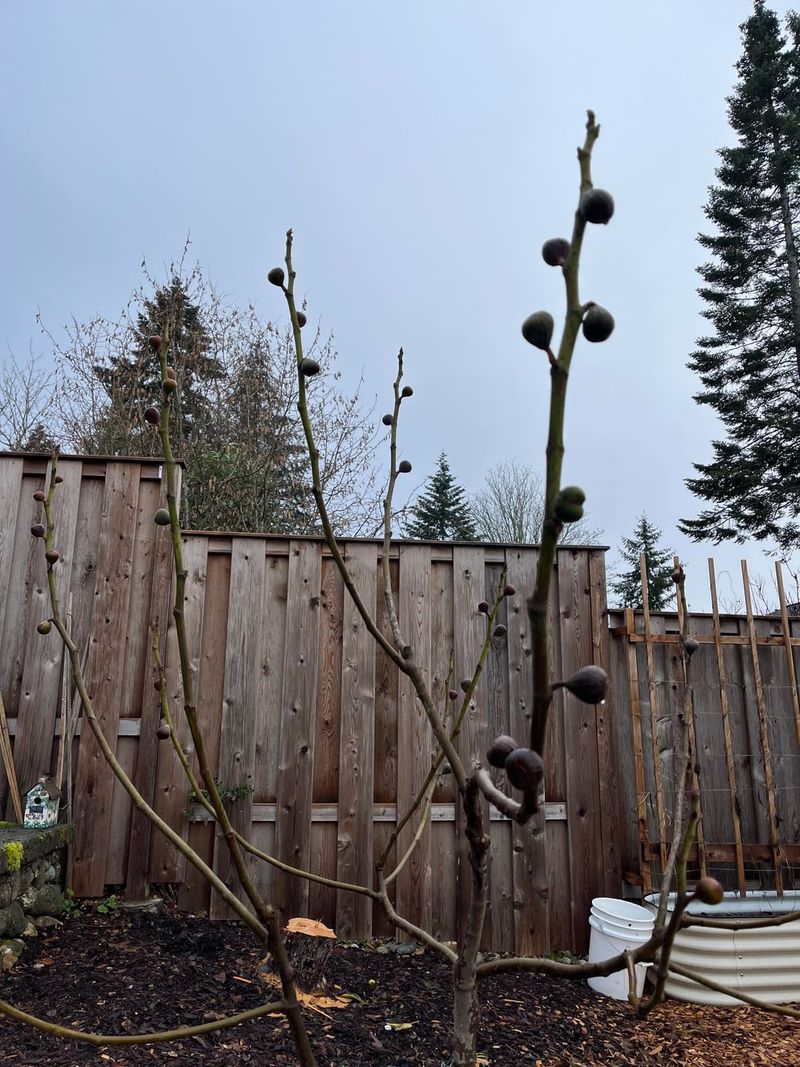
Some fig trees run on a two-shift schedule. The first shift is the breba crop.
These early figs form on shoots that grew last year, so they spend the winter as tiny buds waiting on older wood.
The second shift is the main crop. On common figs, it generally forms on the current season’s growth, meaning the new shoots that push out this spring.
Rutgers Cooperative Extension describes this same split between last year’s shoots and new growth.
Notice the careful wording. This describes how the crops form when a cultivar makes both.
It does not mean every tree does. Some figs mainly make a main crop, and a tree that can make brebas may skip them in a given year.
Here is why branch age matters in the pruning shed. A cut through last year’s wood can remove the brebas riding on it.
A cut that only affects older, heavier wood leaves the spot where new shoots will grow, and those new shoots are where the main crop usually sets. UC IPM explains that fruit on mature figs is set on current-season growth.
Conditions add another twist. Alabama Cooperative Extension separates the early and later crops in its fig guide, which shows why a single rule rarely fits every yard.
Think of the tree like a bakery with a morning batch and an afternoon batch. Knowing which batch you want tells you which shelf to leave alone.
Which Crop Does Your Tree Actually Make?
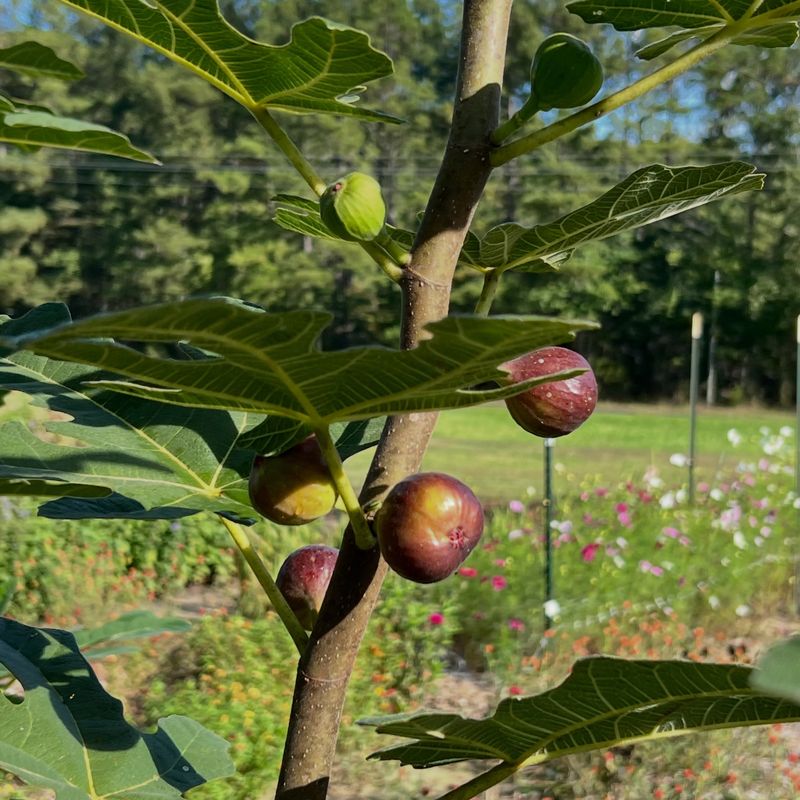
Here is a myth worth setting down. Not every fig tree gives you two crops.
Cultivars differ, and your tree’s habits depend on which one you planted.
Some varieties can produce both brebas and a main crop. Others mainly produce a main crop.
Rutgers Cooperative Extension also notes that varieties capable of two crops do not necessarily do so every year, so a heavy breba season does not promise a repeat.
Conditions matter too. Breba production varies with cultivar and the weather your tree lived through.
A cold snap that kills last year’s wood can wipe out brebas no matter how carefully you pruned.
Alabama gives a handy example. Alabama Cooperative Extension describes San Pedro type figs, where the early breba crop can set on old wood.
Their main crop, though, may need pollination in some environments, so it is not the same story as a common fig.
So how do you find out about your own tree? Look back at the last two or three summers.
Did small figs show up early on last year’s branches, before the new shoots had leaves of any size? If yes, brebas may be worth protecting.
If you only ever see figs late in the season, your pruning can lean toward shape and health instead. When you are unsure, check your cultivar name with the nursery or your local Extension office.
Keep Sound Older Wood If Brebas Matter
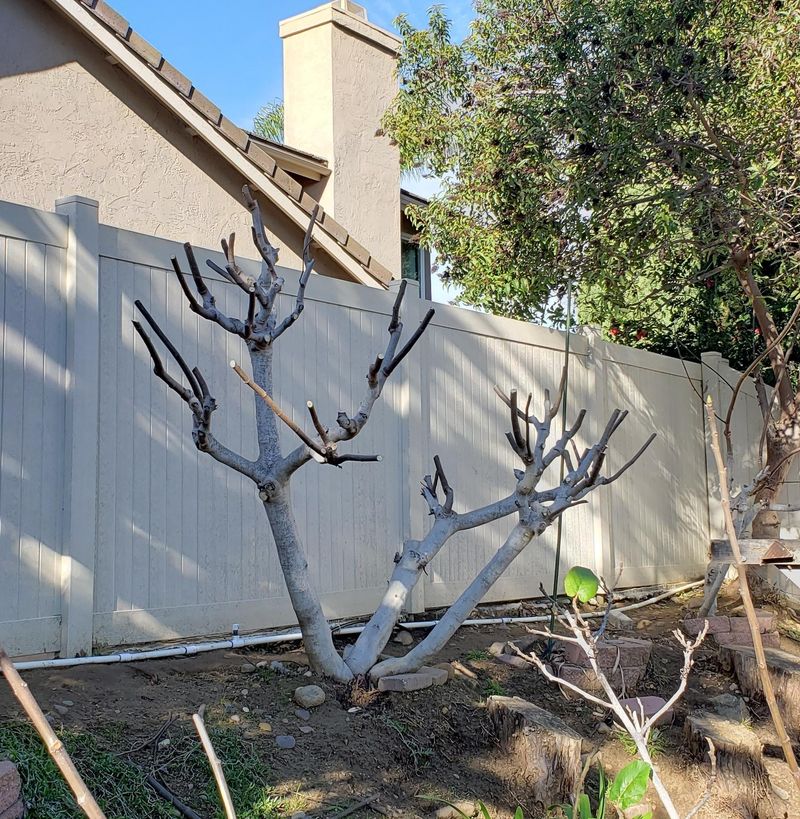
If the first crop matters to you, the plan is simple and measured. Leave some healthy, full-length branches that grew last year.
Rutgers Cooperative Extension advises leaving some full-length branches when pruning for a first crop.
Notice the word some. This is not permission to keep every branch no matter what.
Dead, broken, diseased, or rubbing wood still deserves a cut, because a crowded tree with weak limbs is not a happy one.
Think of it like sorting a pantry. You toss what is spoiled and keep what is sound.
The sound, one-year-old branches are your early crop shelf, so you leave a fair share of them standing.
It also helps to know that pruning is optional for many mature trees. UC IPM notes that mature figs can fruit without pruning.
Cuts are used to manage size, maintain structure, and remove branches that interfere, not because the tree needs a trim to produce figs.
And please skip the idea that hard pruning is a shortcut to a bigger harvest. Nothing here promises more fruit from cutting harder.
A lighter, purposeful trim of a few problem branches is a safer way to keep the shape you want and the figs you are hoping for.
Use Local Guidance, Not a Nationwide Pruning Calendar
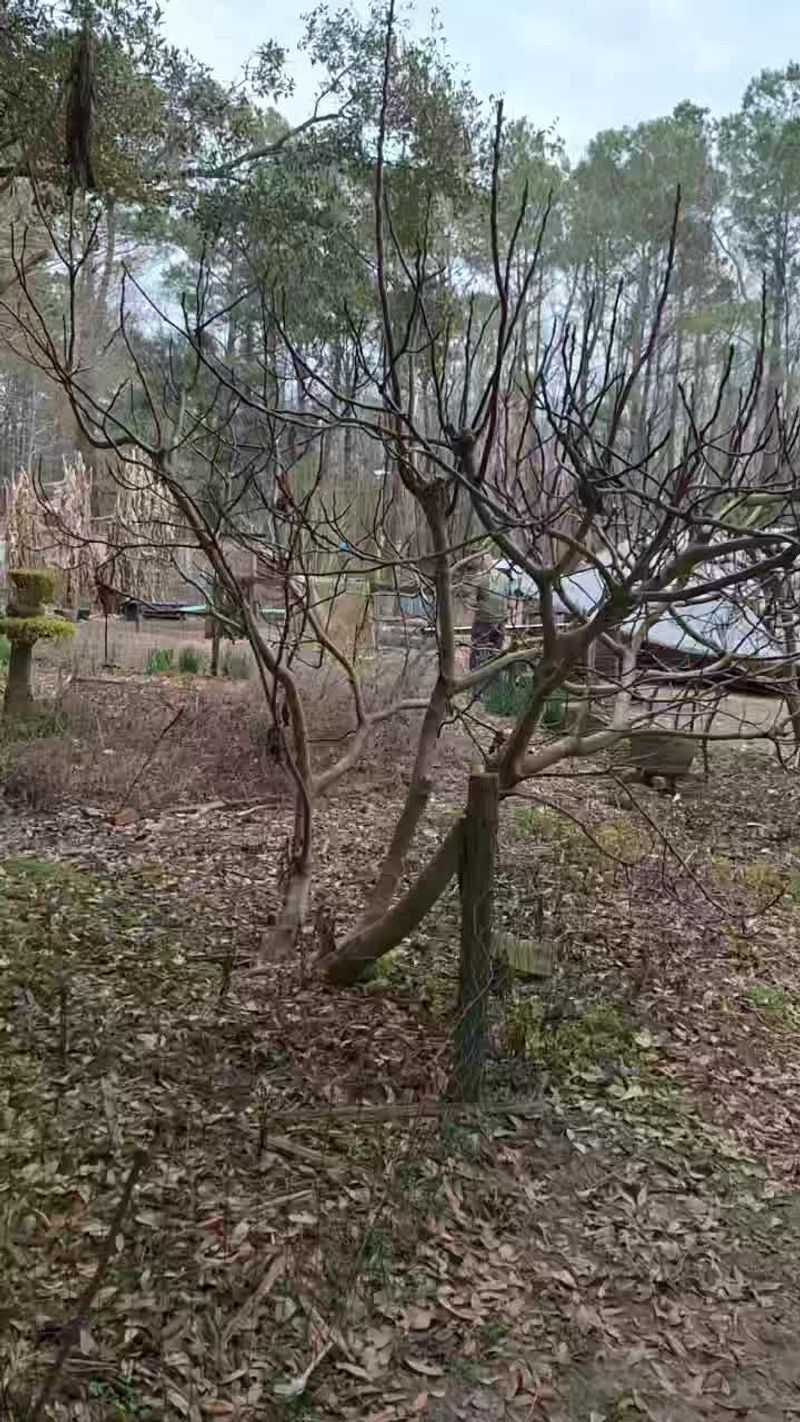
A friend in Maryland and a friend in Arizona can both grow figs and still follow different calendars. That is not a contradiction.
It is the climate talking.
In Maryland, University of Maryland Extension recommends pruning in March or April to remove dead, crowded, low-growing, or weak wood. It also advises checking branches for winter injury before you cut.
That timing fits Maryland, not every state.
Arizona’s low desert is another picture. University of Arizona Cooperative Extension advises against heavy winter pruning when you want to keep the first crop on last year’s growth.
In warm parts of the state, it suggests pruning after the second crop is harvested.
Florida adds one more voice. UF/IFAS warns that heavy winter pruning can eliminate the following year’s crop.
Again, that is a warning tied to its setting and its fruiting habits.
Put these side by side and you can see why a single national date would mislead someone. Winter lows, season length, and your crop goal all change the answer.
So instead of copying a calendar from a neighbor three states over, look up your own state Extension office. Then match what it says to what your tree actually does.
Let Your Crop Goal Set the Final Cut
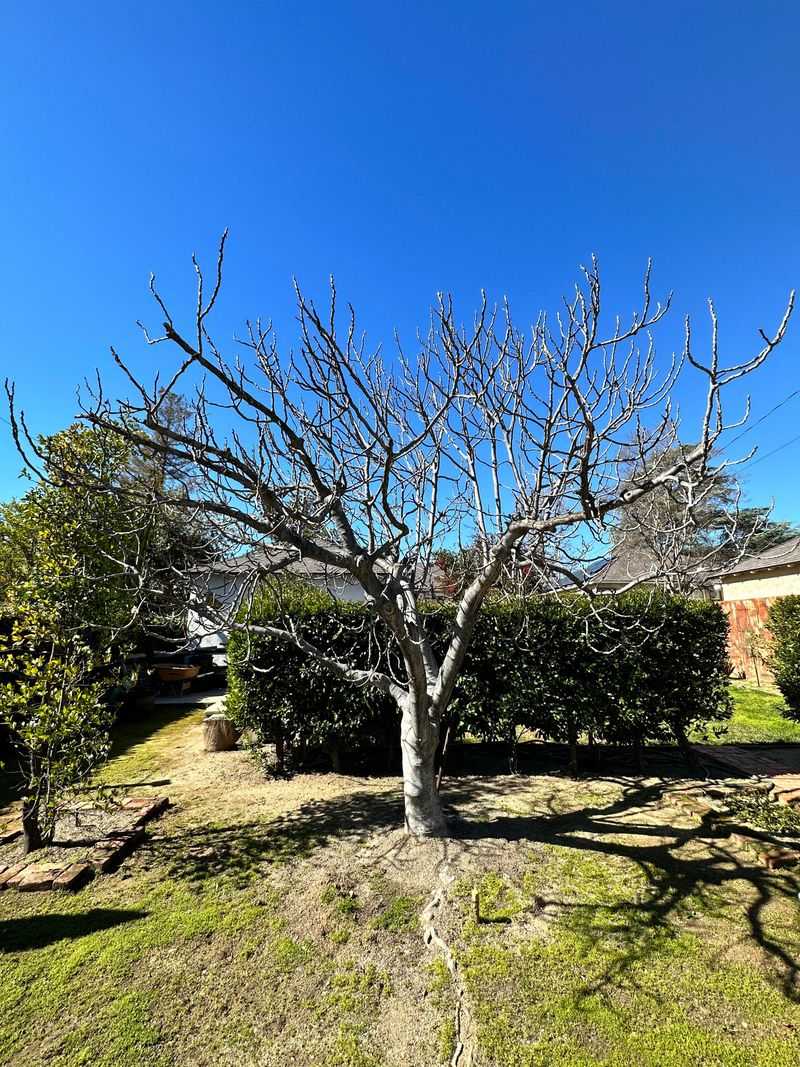
Before the shears come out, settle one question. Do early brebas matter to you, or is the main crop enough?
Your answer sets the whole plan.
If brebas matter, keep some healthy, full-length, one-year-old branches, as Rutgers Cooperative Extension suggests. Then prune only for a clear purpose, such as removing a broken limb or opening up a crowded center.
Check your local Extension guidance for timing.
Cold deserves its own mention. Winter can damage old wood no matter how you prune.
University of Maryland Extension reports that sustained temperatures below 20 degrees Fahrenheit can injure aboveground wood in its region, and severe injury can delay a return to normal production.
Pruning does not prevent that damage or bring injured wood back to life. So assess your branches first.
Scratch a little bark, and look for green tissue beneath it before deciding what stays.
One practical habit helps every time. Wear gloves, and long sleeves if you like, because fig sap can irritate skin.
The Royal Horticultural Society advises protective gloves and long sleeves when pruning.
So make the choice that fits your tree, your winter, and your goal. A fig does not ask for a perfect cut, only a thoughtful one.
