
This Underrated Pennsylvania Native Shrub Keeps Blooming From Spring Straight Through Fall
Follow us on Google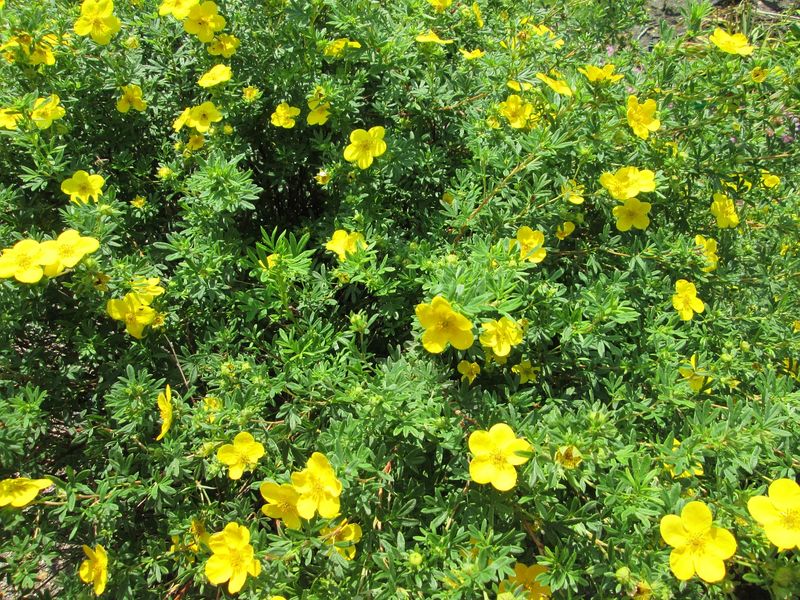
Most flowering shrubs give you two weeks of color and then go quiet for the rest of the summer.
Shrubby cinquefoil plays a different game, producing waves of five-petaled flowers from late spring into early fall in a single compact plant.
For Pennsylvania homeowners who want steady color without a complicated plant collection, that kind of staying power is genuinely rare.
The catch is that this shrub has a few real requirements, and knowing them before you plant makes all the difference.
The Shrub Behind the Long Bloom
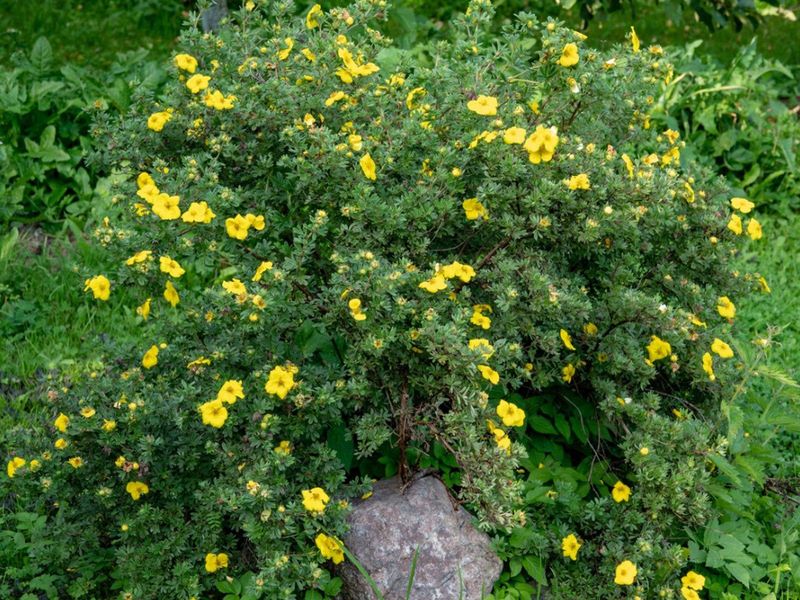
Meet shrubby cinquefoil, accepted today under the botanical name Dasiphora fruticosa, as described by the NC State Extension Gardener Plant Toolbox.
If you have shopped at a Pennsylvania nursery in the last decade or two, you may have seen it tagged as Potentilla fruticosa instead.
Both names refer to the same woody shrub, so do not let the older label confuse you at the checkout counter.
The plant is a deciduous, multi-stemmed shrub in the rose family.
At maturity it typically reaches about 2 to 4 feet tall and spreads 3 to 5 feet wide, though cultivar selection and growing conditions can nudge those numbers in either direction.
The form is rounded and dense, which makes it useful for borders, low hedges, and foundation beds where you want something that stays in its lane.
Flowers appear singly or in small clusters along new growth, and that is the key to the long display.
Rather than one dramatic flush that exhausts itself in two weeks, the shrub keeps producing buds and opening new flowers across a stretch of months.
The corrected promise here is late spring into early fall, not literally the first warm days of April through the last frost of October.
That is still a remarkable run for one compact plant.
One important clarification before moving forward: do not confuse this woody shrub with Potentilla simplex, which is a different, low-growing perennial species also called common cinquefoil.
Penn State Extension notes the cinquefoil name covers several plants, and the low perennial blooms briefly in late spring, then disappears.
Dasiphora fruticosa is the woody, long-blooming shrub worth tracking down.
Why the Flowers Keep Reappearing
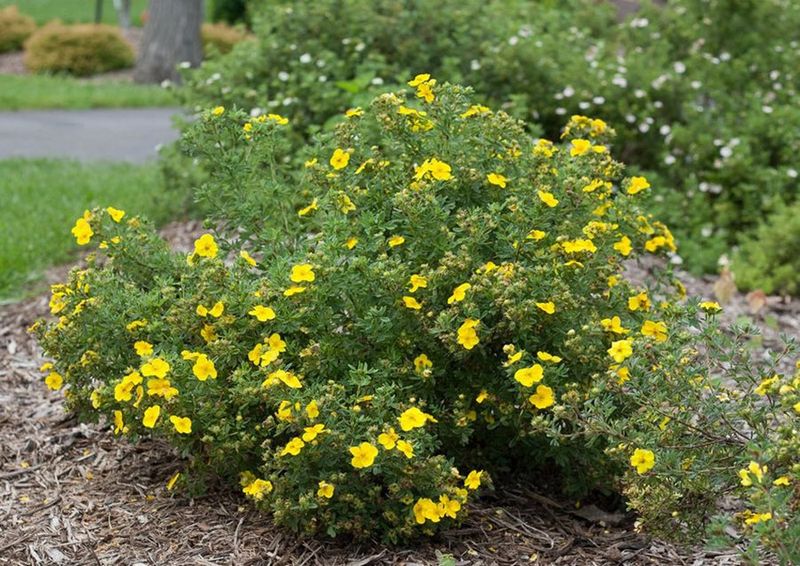
The bloom window that most university sources support runs from roughly late May or June through September, with June through September being the safer general description for Pennsylvania gardens.
That four-month stretch does not mean every branch stays covered continuously from start to finish.
Individual flowers open, last a few days, and drop, then new buds form along the same stems as the plant keeps pushing fresh growth.
Think of it less like a rose that peaks and crashes and more like a slow, steady drip of color that rarely goes completely dark.
NC State Extension describes the display as running from early summer into fall, which lines up with what many Pennsylvania gardeners actually observe.
You may notice a slight lull in the hottest weeks of August, then a second push as temperatures ease in September.
The standard flower color is yellow, a clean, butter-yellow that reads well from a distance.
Cultivars expand the palette considerably.
You can find selections with white, pink, orange, red-orange, and gold flowers, and the pink and orange types tend to hold color better in cooler conditions than in prolonged summer heat.
Weather, elevation, and site exposure can all shift the timing.
Utah State University Extension notes that shrubby cinquefoil performs across a wide range of conditions, but a yard shaded by afternoon clouds at higher elevation will behave differently than a south-facing slope in a warm valley.
The point is not to promise identical results everywhere, but to say that the flowering rhythm is genuinely long when the site cooperates.
Pennsylvania Native Requires a Local Check
Shrubby cinquefoil is listed as native in Pennsylvania, and that is worth saying plainly.
But native status is not a statewide guarantee that the plant belongs in every corner of the commonwealth or that it will perform equally well from Erie to Easton.
Pennsylvania DCNR makes this point clearly.
The Pennsylvania Natural Heritage Program’s vascular plant checklist documents native status by occurrence, and DCNR separately advises that a species native to one part of Pennsylvania may not be ecologically appropriate for another ecoregion within the same state.
Pennsylvania crosses multiple plant communities, from the glaciated northern tier and the Allegheny Plateau to the limestone valleys of the central region and the warmer, more humid southeastern corner near Philadelphia.
The practical takeaway is that cooler summer climates generally suit shrubby cinquefoil better.
Hot, humid conditions can reduce flowering and stress the plant, so sites that bake in reflected heat from pavement or south-facing walls may deliver a shorter, spottier display.
That does not mean the plant cannot grow in warmer parts of the state, but it does mean your specific yard matters more than the state’s overall native-plant list.
DCNR’s landscaping with native plants guidance encourages homeowners to match plant choices to local soils, drainage, light, and regional climate rather than assuming any native species fits every yard.
When you shop, look for nursery-propagated plants labeled Dasiphora fruticosa and ask whether the cultivar was selected for your general climate.
Buying local or regionally grown stock is a reasonable step, and verifying suitability with your county’s Penn State Extension office can save you a season of disappointment.
Full Sun and Good Drainage Set the Stage
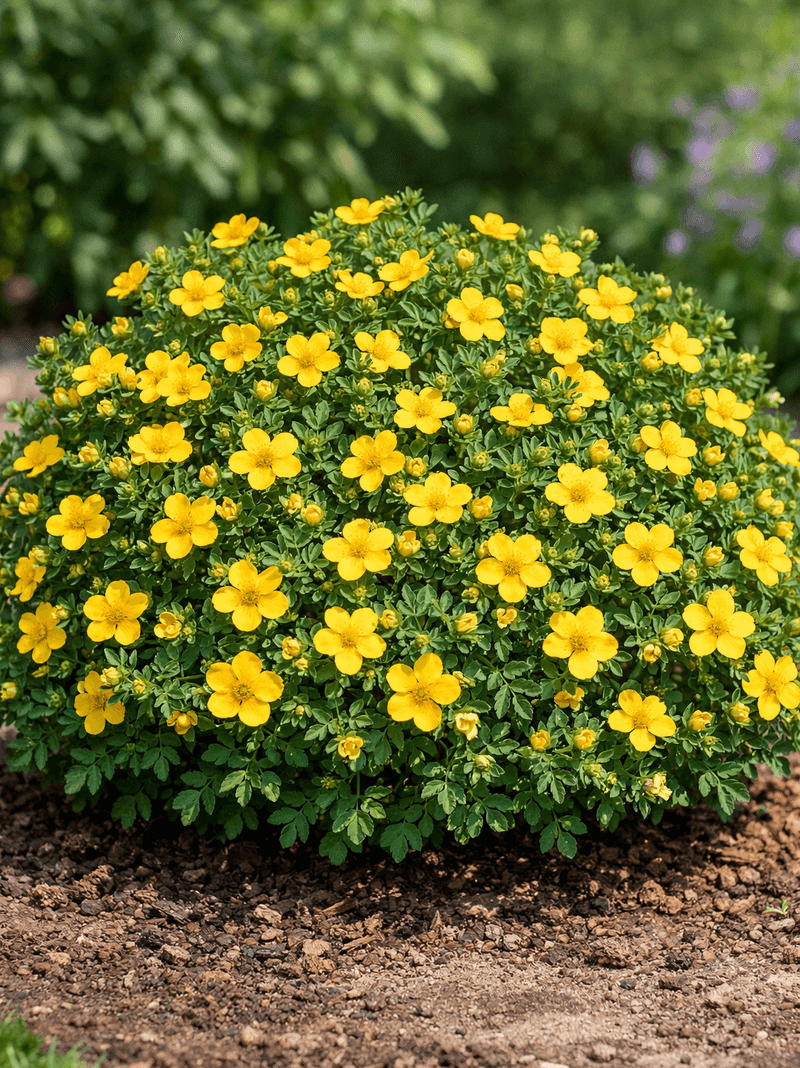
Placement is where most shrubby cinquefoil disappointments start.
The plant can tolerate partial shade, but shade is where the flowers go to thin out and the form goes loose and floppy.
For the strongest, most consistent flowering, aim for at least 6 hours of direct sunlight daily, and more is generally better through midsummer.
Walk your yard at 10 a.m. and again at 3 p.m. on a clear day and watch where the sun actually lands.
A spot that feels open can still lose two or three hours of direct light to a neighbor’s tree or a fence line.
That gap matters more than most people expect.
Soil is the second piece.
Utah State University Extension reports that shrubby cinquefoil grows across clay, loam, sandy loam, and rocky soils, which covers a wide range of Pennsylvania conditions.
The weak spots are dense, compacted clay that holds water and loose sand that dries out before roots can establish.
Neither extreme suits the plant well.
If your yard has the heavy clay common in parts of southeastern Pennsylvania, check whether water pools after a rain and lingers for more than a few hours.
That kind of drainage problem should be addressed before planting, not after.
NC State Extension recommends moist, well-drained soil as the preferred condition, and that description applies across most of the shrub’s uses: borders, foundation beds, low hedges, mass plantings, and erosion-prone slopes.
All of those can work, but only when light and drainage actually fit the site.
Allow roughly 3 to 5 feet between this shrub and its neighbors, adjusted for the mature width of the cultivar you choose.
Crowding cuts airflow, which raises humidity around the foliage and invites the kind of minor disease problems covered later.
Measure the space before you dig the hole.
Watering Still Matters After Planting

Drought tolerance is real for established shrubby cinquefoil, but new plantings do not get that grace period.
The first growing season is when roots are still finding their footing, and Pennsylvania’s rainfall is uneven enough that you cannot count on the sky to handle it for you.
A heavy July thunderstorm can drop an inch of rain in twenty minutes and send most of it running across compacted clay without soaking the root zone at all.
Water deeply rather than sprinkling the surface lightly every day.
Deep watering encourages roots to follow moisture downward, which builds the drought resilience you are counting on later.
Shallow daily sprinkling keeps roots near the surface where they are vulnerable to the next dry stretch.
Penn State Extension guidance on newly planted woody plants suggests watering every 1 to 2 days during the first weeks after planting, then shifting to every 2 to 3 days through the early establishment period.
Those ranges come from a newly planted tree resource and are general starting points, not shrub-specific rules.
Adjust for your root-ball size, soil type, current weather, and how quickly your site drains.
The reliable check is the soil itself.
Push a finger or a small trowel several inches down near the root zone before you water again.
If it feels moist, wait.
If it feels dry, water now.
A rain gauge helps too, because Penn State Extension recommends roughly 1 inch of rainfall per week for established landscape plants, and knowing what actually fell versus what ran off is more useful than guessing.
Water at the soil line, not overhead.
Wet foliage sitting in humid Pennsylvania summer air is an open invitation to the fungal problems described in a later section.
Once the shrub is established, typically after one full growing season, your intervention can ease back considerably, but dry spells of two weeks or more may still call for a deep soak.
Pruning Restores a Dense Shape
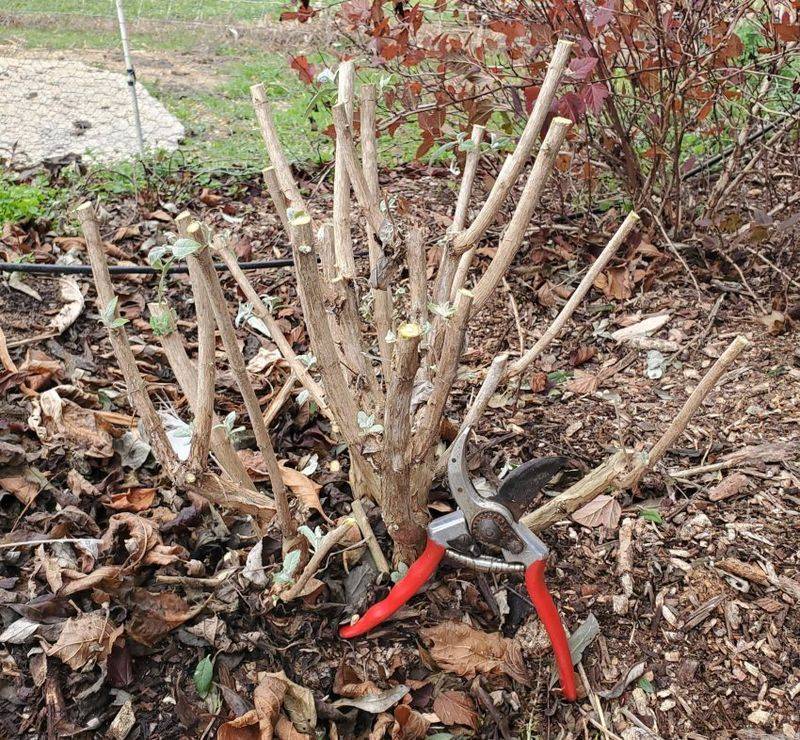
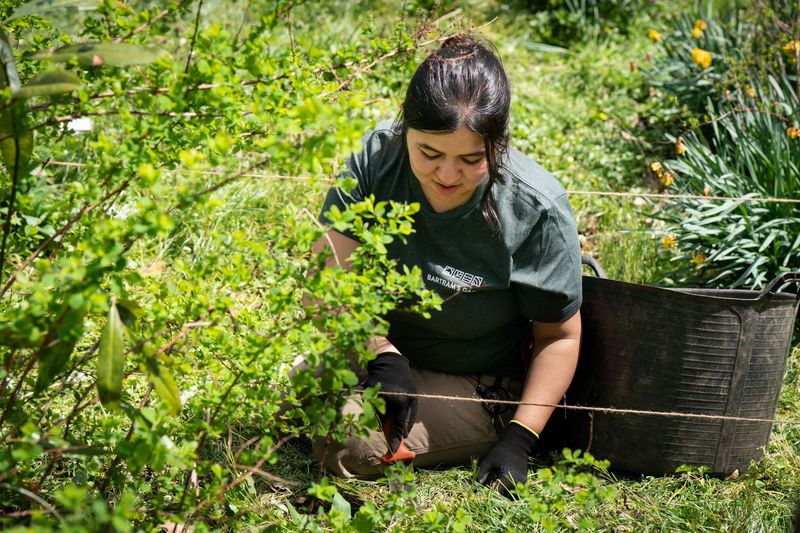
Left completely alone for several years, shrubby cinquefoil tends to get woody and open in the middle, with the best flowering pushed out to the tips of aging canes.
The plant does not collapse, but it starts to look more like a tangle than a tidy mound.
That is not a failure of the shrub; it is just what multi-stemmed deciduous shrubs do when their older wood is never removed.
The fix is straightforward.
NC State Extension recommends removing older canes during winter or cutting the entire shrub back to the ground to restore a dense, rounded form.
Cutting to the ground sounds drastic, but the plant responds with vigorous new growth from the base, and the resulting shape is usually much cleaner than trying to selectively shorten a shrub that has been neglected for five or six years.
Light spring trimming is a gentler annual option.
Once the worst of the winter cold has passed, typically late February through March in much of Pennsylvania, you can remove obviously dead or damaged stems and clip away old seed heads that make the plant look rough.
Penn State Extension guidance on pruning flowering shrubs advises keeping the timing and severity matched to the plant’s flowering habit, and since shrubby cinquefoil blooms on new growth, late-winter pruning does not sacrifice any of the coming season’s flowers.
Keep the mature footprint in mind when you prune.
A shrub allowed to spread 5 feet wide needs at least that much clear space around it for you to reach in comfortably with loppers.
If the plant has crept too close to a path or a foundation, a renewal cut is actually the most practical solution, not a cosmetic one.
Expect Minor Problems, Not Immunity
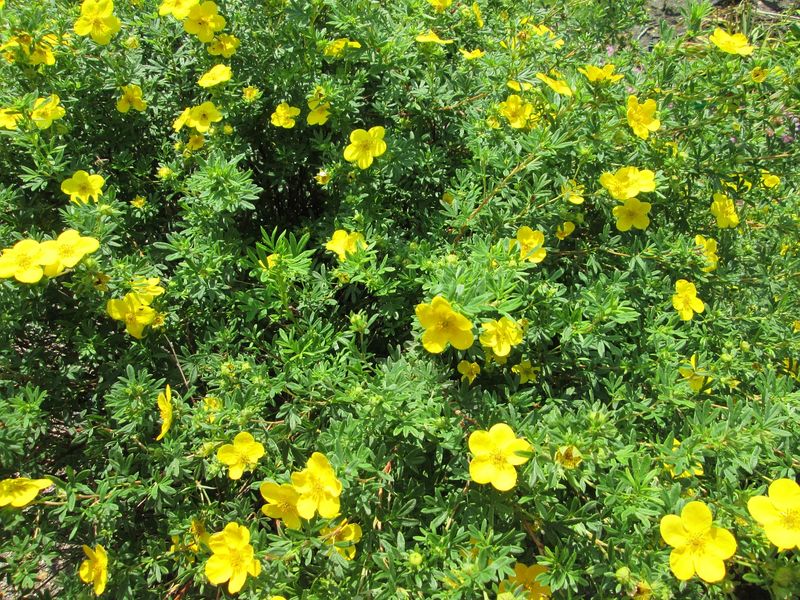
Shrubby cinquefoil does not come with a pest-proof or disease-proof label, and promising one would set you up for a frustrating season.
The good news is that the problems it does face are usually minor and manageable with simple cultural steps rather than a cabinet full of sprays.
Fungal leaf spots, powdery mildew, and spider mites are the documented concerns.
NC State Extension identifies these as possible issues while also noting no significant routine insect or disease problems, which is a fair way to frame it.
They can show up, especially when humid Pennsylvania summers combine with poor air movement, drought stress, or overhead watering.
The combination is common enough in July and August that you should plan for it rather than be surprised.
The first response to any of these problems is cultural, not chemical.
Improve airflow by not crowding the plant, water at the soil line rather than overhead, and make sure the site gets enough sun to dry foliage quickly after rain.
Those three steps address the conditions that let minor problems become bigger ones.
Avoid unnecessary pesticide applications, which can disrupt the beneficial insects that visit the flowers.
On deer, Utah State University Extension reports that shrubby cinquefoil is generally less preferred by deer, but less preferred is not the same as ignored.
Deer pressure varies sharply across Pennsylvania neighborhoods, especially near wooded edges in the northern tier or the Poconos, and a stressed or drought-weakened plant is more likely to get browsed.
New plantings are more vulnerable than established ones.
On pollinators, butterflies, bumblebees, and some specialized bee species may visit the flowers.
That is genuinely useful, but the shrub is not one of Pennsylvania’s most important pollinator plants.
Think of it as a modest, reliable contributor to the yard’s insect activity, not a guaranteed magnet.
Give the Shrub the Right Job
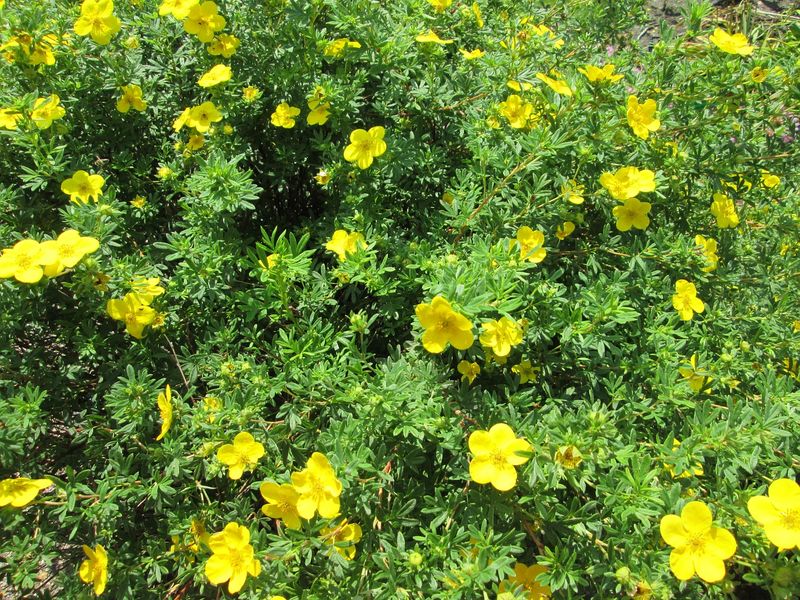
Shrubby cinquefoil earns its place in a Pennsylvania yard by doing one thing well: filling a compact spot with repeated flowers from late spring into early fall.
That is a genuinely useful job, especially in the long stretch between the spring bloomers and the fall asters when many yards go quiet.
What it does not do is equally worth knowing.
NC State Extension’s full plant profile does not list spring fragrance, showy berries, dramatic fall foliage, or strong winter structure among its features.
If you want a shrub that carries the yard through all four seasons, you will need other plants alongside it.
Native options like spicebush, serviceberry, or winterberry each bring something different to a different season, and any of those companions would need their own regional, soil, drainage, and light checks before you commit to a spot.
The decision rule is simple.
Select a properly identified Dasiphora fruticosa cultivar from a reputable nursery, confirm it was propagated rather than wild-collected, and choose a cultivar suited to your general climate.
The Pennsylvania Natural Heritage Program and DCNR’s native plant landscaping resources are good starting points for confirming regional fit before you buy.
Then give it full sun, well-drained soil, room for its mature width of 3 to 5 feet, and consistent water through the first growing season.
After that, the shrub mostly asks to be left alone with an occasional winter pruning.
A plant that can hold color for several months in one sunny spot, without demanding much once it settles in, is a quieter kind of success than the garden catalogs usually celebrate.