
Your Stalled Tomato Plant Is Not Finished, It Is Hungry, And These Feedings Bring Back The Flowers
Follow us on Google
It is mid-morning, the humid air already heavy over your garden, and you lean on the fence eyeing tall, green tomato plants with almost no flowers.
They look healthy, so why the empty stems?
Your tomatoes are not finished for the season.
They are hungry for the right things, and a few smart feedings can genuinely coax those blossoms back before your cookouts run out.
1. Too Much Nitrogen Builds A Bush, Not Tomatoes
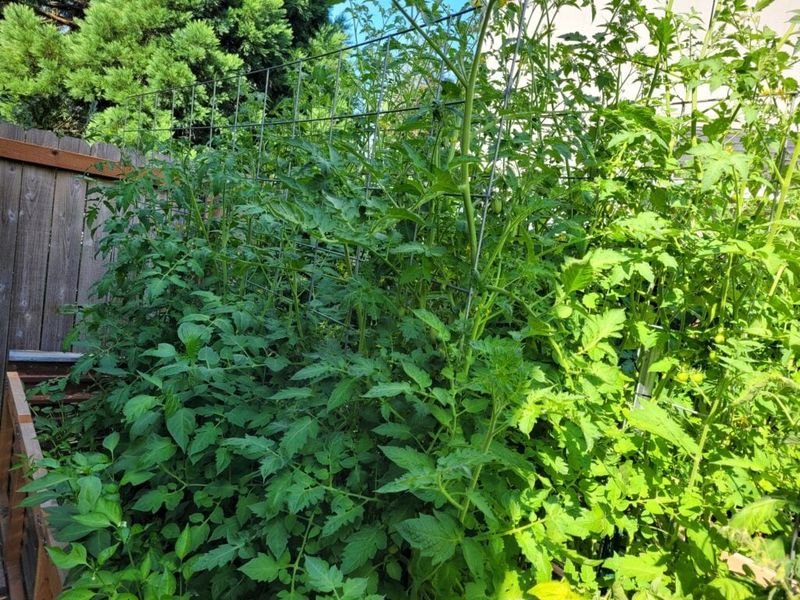
You spooned on a generous scoop of all-purpose fertilizer back in spring, hoping for muscle.
And you got it.
The plant shot up tall and leafy, a green giant leaning over the tomato cage.
But here is the trouble.
Too much nitrogen, the first number on a fertilizer bag, pushes a plant to pile on leaves and stems while ignoring flowers.
It is like feeding someone endless bread and wondering why they have no energy for real work.
Tomatoes (Solanum lycopersicum) do need nitrogen early, roughly the first 30 to 45 days after transplanting.
After that, their job shifts to flowering and fruit.
When the soil stays too rich, blossoms drop before they set.
The fix is a diet change.
Skip high-nitrogen feeds and switch to one with a low first number and higher middle and last numbers, such as 5-10-5 or 5-15-15.
These support flowering instead of foliage.
Apply according to the label, usually side-dressing a few weeks after planting or when the first flowers show.
So instead of pouring on more green, you are telling the plant it is time to make dinner.
That small shift can bring flowers back within a couple of weeks.
2. Low Phosphorus Quietly Hides Your Blossoms
Picture a runner who never ate enough to finish the race.
Your tomatoes lean on phosphorus, the middle number on the bag, for the very energy that fuels flowering and fruit.
Run low and the plant stalls, slow to grow and slow to bloom.
Cool spring weather makes this worse.
When soil temperatures dip, roots struggle to pull phosphorus in even when it is sitting right there.
Many gardeners in the Upper Midwest and Northeast notice this after a chilly May.
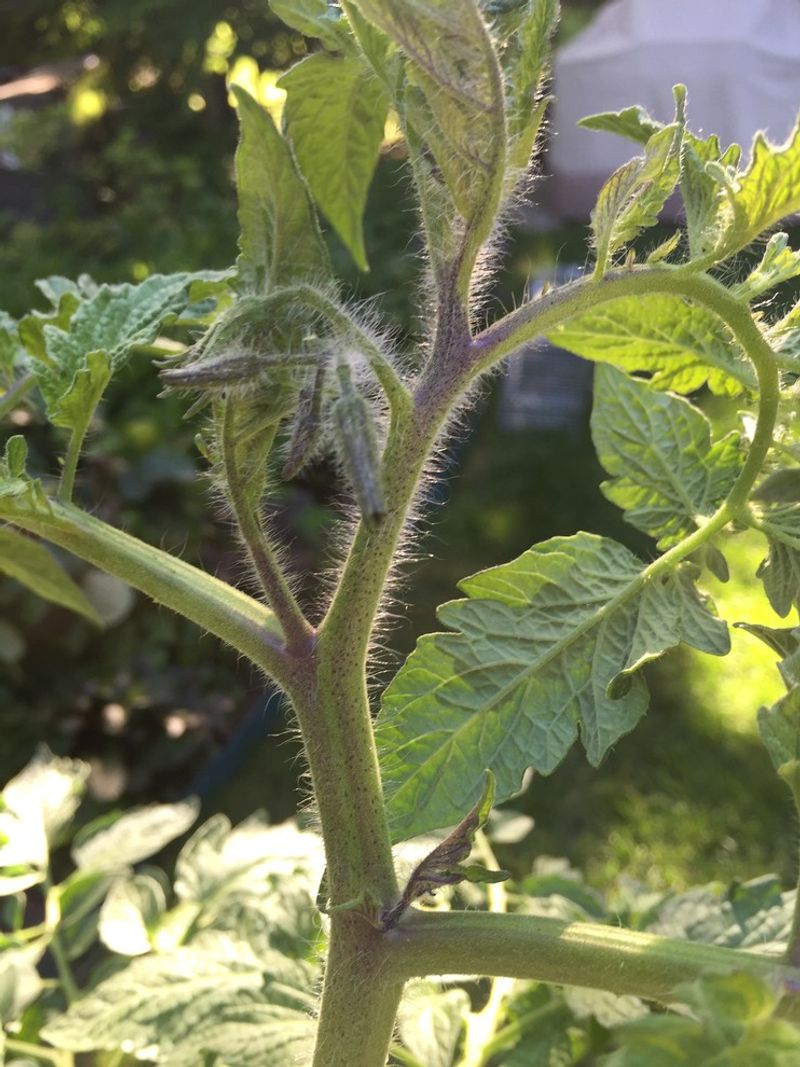
Watch for purplish stems or leaves on young plants, or older leaves turning dark green with a reddish-purple tint.
Growth simply stops, flowers stay small or fail to open, and the plant looks generally weak.
To fix it, feed a phosphorus-rich product like 5-15-15 or 10-26-26.
Bone meal or rock phosphate worked into the soil gives a slower, steady supply, while a liquid feed high in phosphorus works fast at the roots.
Temperature matters as much as the feeding here.
Once soil warms above 60 degrees, uptake usually improves on its own, so patience plus a targeted feed often does the trick.
A soil test from your local Cooperative Extension office confirms whether phosphorus is genuinely the problem.
3. A Potassium Shortage Drops Blooms Before They Set
Think of potassium, the third number on the bag, as your plant’s plumber and electrician rolled into one.
It moves water and nutrients around and builds sturdy cell walls.
When it runs short, the whole system sputters.
Flowering slows, blossoms drop before setting, and the tomatoes that do form ripen unevenly.
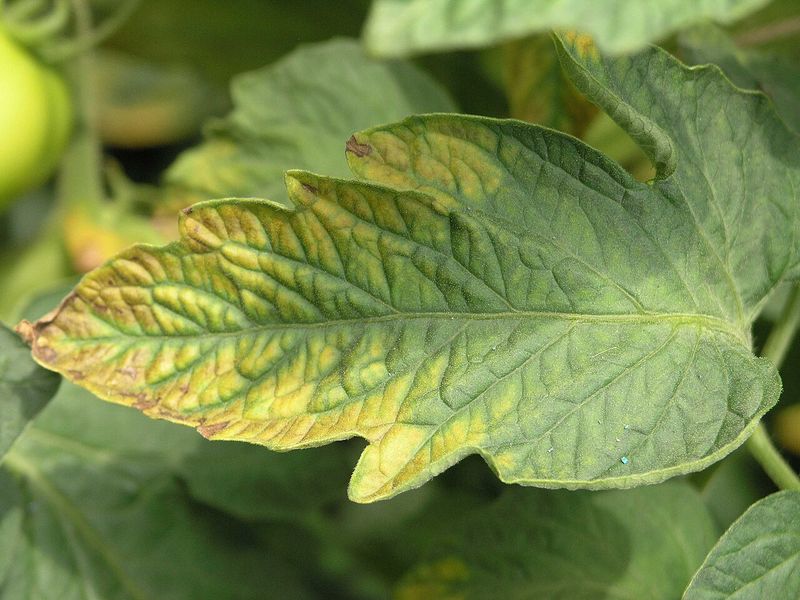
You might see the edges of older leaves yellow, then brown and turn crispy as the plant robs them to feed newer growth.
What makes this one sneaky is false hope.
Flowers form, you get excited, and then they wither and fall because the plant lacks the strength to carry them.
Yellow shoulders on ripening fruit are another quiet clue.
Reach for a fertilizer where the last number is highest.
Potassium sulfate corrects a shortage well.
Compost or a light sprinkle of wood ash adds potassium over time, though ash also raises pH, so use it sparingly.
One warning worth taking seriously.
Too much potassium blocks magnesium and iron, trading one problem for another.
So test your soil first, then feed to the gap rather than guessing.
That restraint keeps the whole nutrient balance in tune and the flowers coming.
4. Yellowing Leaves With Green Veins Mean Magnesium
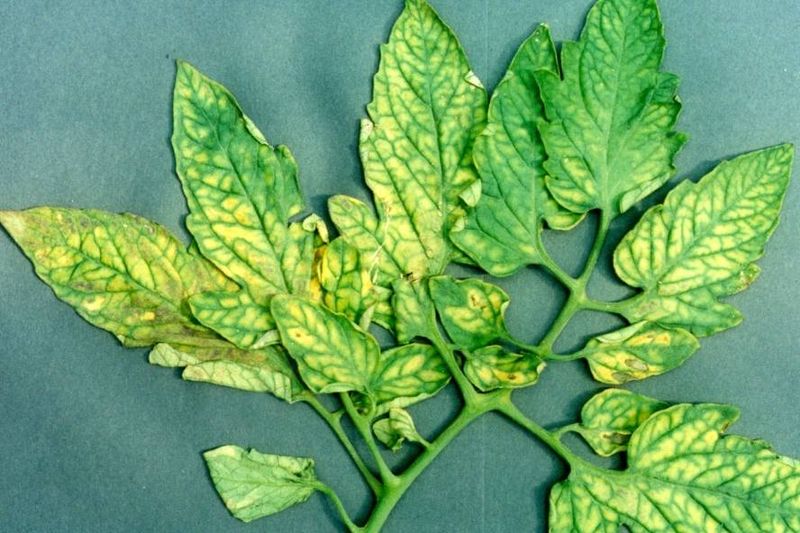
Walking your rows on a warm afternoon, you spot older leaves going yellow while the veins stay stubbornly green.
That striped, leftover-lace look has a name, interveinal chlorosis, and it usually points to a magnesium shortage.
Magnesium is a building block of chlorophyll, the green pigment that turns sunlight into food.
Without enough, leaves cannot make the energy the plant needs, so flowering and fruiting slip.
The trouble starts on older leaves because the plant shuttles its limited magnesium to new growth and developing fruit.
Container tomatoes get hit hardest, since frequent watering flushes nutrients out of the pot fast.
A common home fix is Epsom salt, which is magnesium sulfate.
Dissolve 1 to 2 tablespoons in a gallon of water and drench the base of each plant, or spray it on affected leaves for quick uptake.
Working about a quarter cup into the soil every few weeks is another route.
Do not go overboard, though.
Piling on magnesium competes with calcium and potassium, so more is not better here.
A light, steady hand fixes the yellowing and lets the plant get back to the business of blooming and setting fruit.
5. Blossom End Rot Is A Watering Story
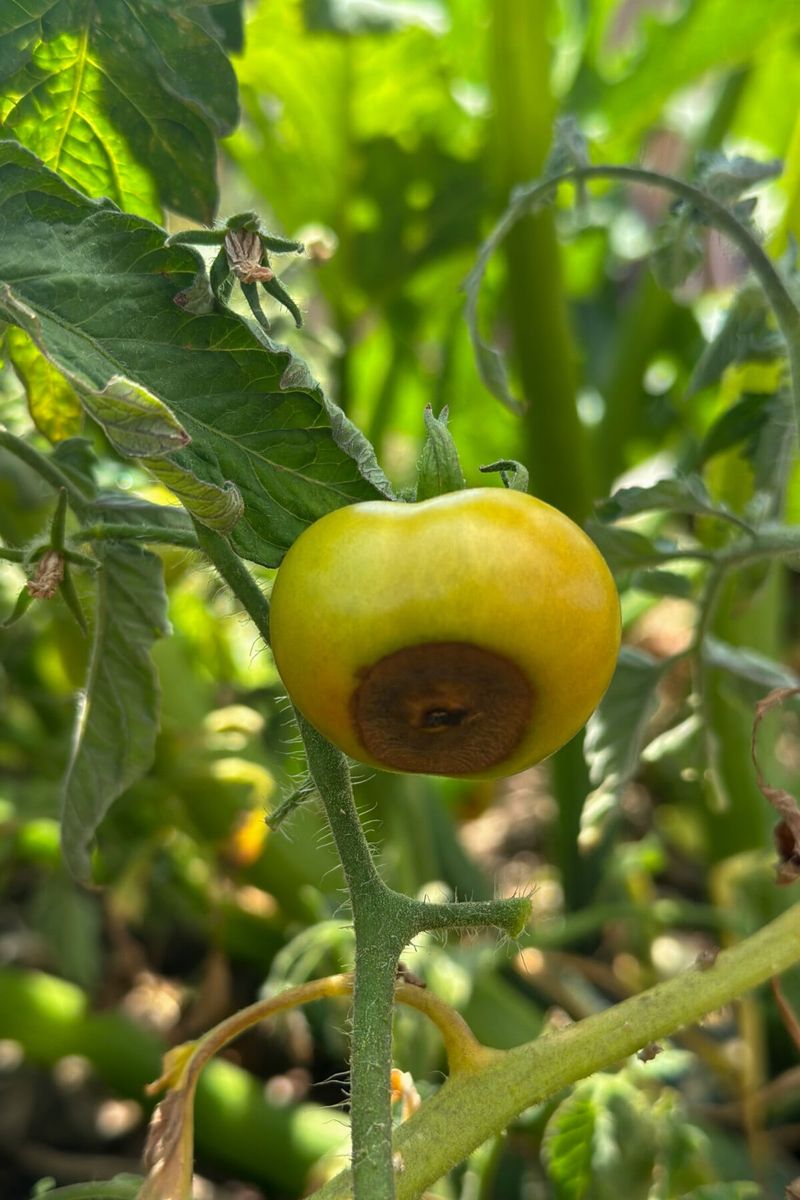
That dark, sunken, leathery patch on the bottom of a ripening tomato stops many gardeners cold.
Most reach straight for calcium.
But blossom end rot is usually a watering problem, not a soil that is short on calcium.
Here is why.
Calcium rides into the plant with water.
When moisture swings from bone dry to soaked, the fruit cannot get a steady stream of calcium even when plenty sits in the ground.
It tends to hit the first fruits of the season or shows up after a dry spell.
Fast early growth adds to it, since the plant cannot pull calcium in quickly enough for rapidly swelling fruit.
The real remedy is steady moisture.
Aim for 1 to 2 gallons per plant each week, bumping to 2 to 3 gallons in hot, dry stretches.
Water deeply at the base, not overhead, and lay 2 to 3 inches of mulch to hold that moisture even.
If a soil test shows low calcium, dolomitic lime or gypsum at about a quarter cup per plant can help.
Foliar calcium sprays are a stopgap at best.
Consistent watering remains the bedrock, and it is the one layer that actually prevents the rot.
6. Heat And Cold Stall Fruit More Than Hunger
On a scorching afternoon, air shimmering over the driveway, your tomatoes wilt even though you watered at dawn.
Or a cool front sneaks in and drops the nights into the 40s.
Weather, not hunger, is often the real thief of flowers.
Tomatoes love warmth but they are picky about it.
They set fruit best with daytime temperatures of 70 to 85 degrees and nights between 55 and 70 degrees.
Step outside that band and the plant balks.
When days climb past 90 and nights stay above 75, heat sterilizes the pollen and turns it sticky or useless.
Blossoms simply drop.
Nights below 55 do the same thing from the other direction.
The plant chooses survival over fruit.
You cannot boss the weather, but you can soften it.
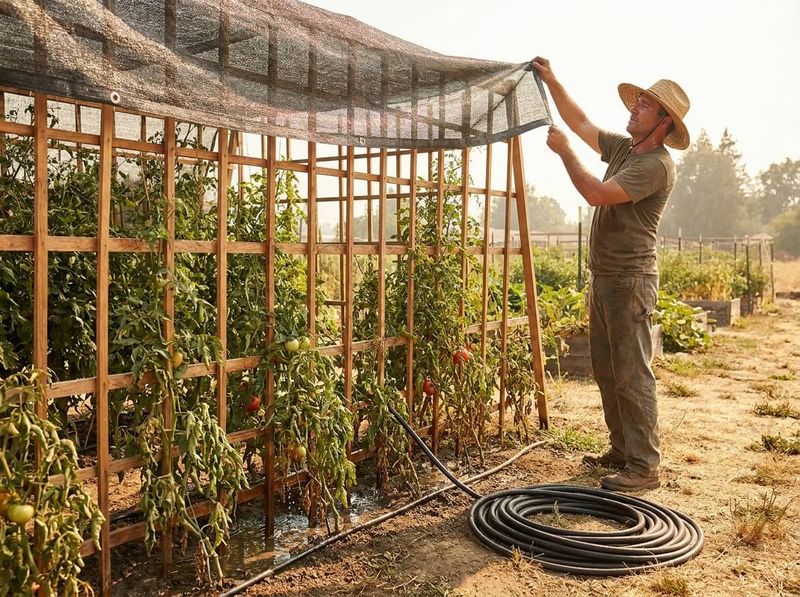
In hot regions, grow heat-tolerant types like many cherry tomatoes or cultivars bred for heat, and drape shade cloth over plants during the fiercest afternoon sun.
Keep watering deep and steady so roots stay hydrated through the stress.
For surprise cold snaps in early spring or late fall, a row cover holds warmth overnight.
Northern gardens want full sun all day, while southern gardens often welcome afternoon shade.
7. What Else Actually Helps Bring Back The Flowers
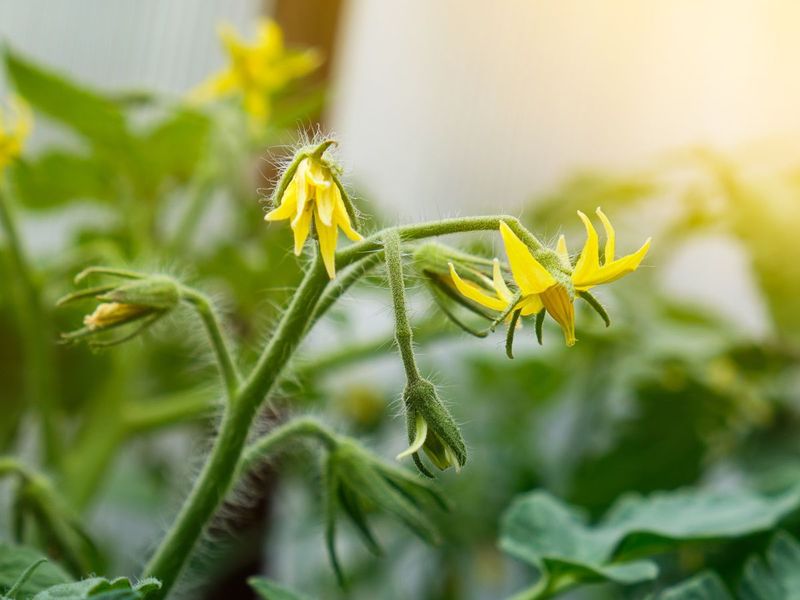
Feeding and weather are the big levers, but a few plain habits stack the odds in your favor.
Treat these as helping hands that make the plant comfortable enough to bloom.
Sunlight comes first.
Tomatoes need at least 6 hours of direct sun to fruit, and 8 or more gives the best results.
Morning light matters most, drying overnight dew and kicking photosynthesis into gear.
If a fence or tree throws shade, that alone can explain empty stems.
Watering routine is the next layer.
Deep and regular, about 1 to 2 inches a week, beats frequent shallow sips.
It drives roots down and keeps moisture even, and mulch made of straw or shredded leaves holds it there.
Check your soil pH too.
Tomatoes like slightly acidic ground, 6.2 to 6.8.
Outside that range, iron and phosphorus lock up even when present.
A soil test through your Cooperative Extension office tells you whether to add lime to raise pH or sulfur to lower it.
Finally, help pollination along.
Tomatoes pollinate themselves but need movement to shake the pollen loose.
On still days, gently tap the flower clusters mid-morning, and plant pollinator-friendly blooms nearby to invite more bees.
Put these small steps together and your plant, well fed and comfortable, gets back to doing what it wanted to do all along.